2.3 - Middah k’neged Middah: Moral Symmetry in the Plagues
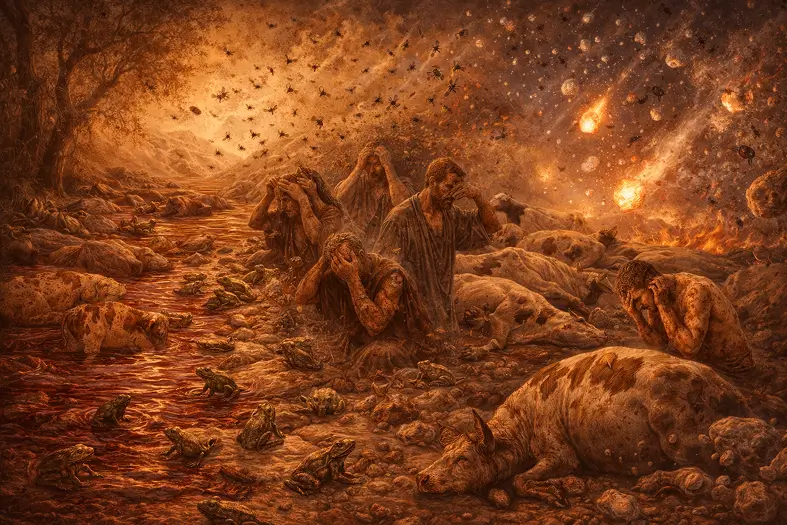
One of the Torah’s most insistent claims in Va’eira is that the plagues are not random acts of power. They are intelligible. They speak a moral language. Rav Avigdor Miller emphasizes that the makkos operate according to middah k’neged middah—measure for measure—not as poetic justice, but as explanatory justice.
The plagues do not merely punish Egypt. They explain Egypt to itself.
The Torah frames the plagues with repeated statements of purpose:
וְיָדְעוּ מִצְרַיִם כִּי אֲנִי ה׳
“Egypt shall know that I am Hashem.”
Knowledge here does not mean awareness of force. Egypt already understands force. What it lacks is moral comprehension—the recognition that actions generate consequences aligned with their nature.
Middah k’neged middah transforms suffering into meaning. Without it, pain would terrify but not instruct.
Rav Miller explains that each plague responds directly to Egypt’s crimes—not symbolically, but structurally.
The plagues mirror Egyptian behavior:
The world itself becomes a ledger. Nature records moral imbalance and restores it through consequence.
If punishment were arbitrary, Egypt could interpret the plagues as misfortune or cosmic volatility. Middah k’neged middah eliminates that escape. The form of the plague reveals its cause.
Moral symmetry teaches that:
This is why the Torah preserves detail. Each plague is crafted to communicate responsibility.
Pharaoh occasionally admits wrongdoing, yet refuses lasting submission. Rav Miller explains that recognition without internalization leaves the will intact. Middah k’neged middah presses further—it demands that Egypt see itself reflected in its suffering.
Still, Pharaoh resists. As long as he can view consequences as external force rather than internal reckoning, repentance remains avoidable.
Israel must learn how to interpret suffering before becoming a nation governed by law. A people that cannot read history morally will repeat injustice under new banners.
The plagues therefore teach Israel a crucial discipline: events must be understood, not merely endured.
This prepares the ground for Torah, where every mitzvah assumes that the world responds to moral structure.
Rav Miller stresses that the greatest danger is not cruelty but meaninglessness. The plagues refute the idea that the universe is morally silent.
Middah k’neged middah proclaims:
Redemption requires more than escape from suffering. It requires restoration of moral legibility.
Even judgment here contains mercy. By making consequences intelligible, Hashem invites recognition before annihilation. Egypt is taught repeatedly, patiently, visibly.
Only when instruction fails does judgment intensify.
The plagues therefore stand as a warning to history: the world is responsive, not indifferent.
Middah k’neged middah is not vengeance.
It is revelation.
And revelation is the first step toward redemption.
📖 Sources


2.3 - Middah k’neged Middah: Moral Symmetry in the Plagues
One of the Torah’s most insistent claims in Va’eira is that the plagues are not random acts of power. They are intelligible. They speak a moral language. Rav Avigdor Miller emphasizes that the makkos operate according to middah k’neged middah—measure for measure—not as poetic justice, but as explanatory justice.
The plagues do not merely punish Egypt. They explain Egypt to itself.
The Torah frames the plagues with repeated statements of purpose:
וְיָדְעוּ מִצְרַיִם כִּי אֲנִי ה׳
“Egypt shall know that I am Hashem.”
Knowledge here does not mean awareness of force. Egypt already understands force. What it lacks is moral comprehension—the recognition that actions generate consequences aligned with their nature.
Middah k’neged middah transforms suffering into meaning. Without it, pain would terrify but not instruct.
Rav Miller explains that each plague responds directly to Egypt’s crimes—not symbolically, but structurally.
The plagues mirror Egyptian behavior:
The world itself becomes a ledger. Nature records moral imbalance and restores it through consequence.
If punishment were arbitrary, Egypt could interpret the plagues as misfortune or cosmic volatility. Middah k’neged middah eliminates that escape. The form of the plague reveals its cause.
Moral symmetry teaches that:
This is why the Torah preserves detail. Each plague is crafted to communicate responsibility.
Pharaoh occasionally admits wrongdoing, yet refuses lasting submission. Rav Miller explains that recognition without internalization leaves the will intact. Middah k’neged middah presses further—it demands that Egypt see itself reflected in its suffering.
Still, Pharaoh resists. As long as he can view consequences as external force rather than internal reckoning, repentance remains avoidable.
Israel must learn how to interpret suffering before becoming a nation governed by law. A people that cannot read history morally will repeat injustice under new banners.
The plagues therefore teach Israel a crucial discipline: events must be understood, not merely endured.
This prepares the ground for Torah, where every mitzvah assumes that the world responds to moral structure.
Rav Miller stresses that the greatest danger is not cruelty but meaninglessness. The plagues refute the idea that the universe is morally silent.
Middah k’neged middah proclaims:
Redemption requires more than escape from suffering. It requires restoration of moral legibility.
Even judgment here contains mercy. By making consequences intelligible, Hashem invites recognition before annihilation. Egypt is taught repeatedly, patiently, visibly.
Only when instruction fails does judgment intensify.
The plagues therefore stand as a warning to history: the world is responsive, not indifferent.
Middah k’neged middah is not vengeance.
It is revelation.
And revelation is the first step toward redemption.
📖 Sources


(Exodus 20:2)
אָנֹכִי ה׳ אֱלֹקֶיךָ
Rav Avigdor Miller explains that the plagues teach da’at Elokim through moral intelligibility. Knowledge of Hashem is not abstract belief, but recognition that history responds meaningfully to human behavior. Middah k’neged middah reveals a world governed by justice rather than chaos, anchoring redemption in clarity of Divine sovereignty.
(Deuteronomy 10:20)
אֶת־ה׳ אֱלֹקֶיךָ תִּירָא
Fear of Hashem emerges not from raw terror but from recognition of moral order. The symmetry of the plagues cultivates yirah by demonstrating that Hashem’s power is disciplined, proportional, and just. When consequences reflect actions, fear becomes reverent submission rather than panic.
(Deuteronomy 28:9)
וְהָלַכְתָּ בִּדְרָכָיו
Hashem governs Egypt through proportionate response, not indiscriminate destruction. The plagues model restraint, discernment, and accountability. Israel is commanded to emulate these Divine ways—responding to wrongdoing with justice that restores order rather than perpetuating cruelty.
(Numbers 10:9)
וַהֲרֵעֹתֶם בַּחֲצֹצְרוֹת
Middah k’neged middah frames catastrophe as communicative. The plagues teach that suffering calls for recognition and return, not denial or despair. This mitzvah channels crisis into moral awareness, reinforcing that hardship is meant to awaken responsibility and reflection.
(Exodus 22:20)
וְגֵר לֹא תוֹנֶה וְלֹא תִלְחָצֶנּוּ
Egypt’s oppression of the powerless is mirrored back upon it through the plagues’ symmetry. Rav Miller’s framework highlights that oppression is not erased by time—it generates consequences aligned with its harm. This mitzvah stands at the heart of the moral logic driving the plagues.


“Middah k’neged Middah: Moral Symmetry in the Plagues”
Parshas Va’eira presents the plagues as a morally intelligible sequence rather than a series of arbitrary punishments. The Torah repeatedly emphasizes that the purpose of the makkos is knowledge—וְיָדְעוּ מִצְרַיִם כִּי אֲנִי ה׳—framing suffering as communicative rather than chaotic. Each plague corresponds to Egypt’s specific acts of cruelty and corruption, embedding moral meaning within the form of the judgment itself.
Water turned to blood responds to Egypt’s use of the Nile as an instrument of death; infestation and terror mirror the invasion of Jewish homes and lives; disease and destruction strike the economic foundations used to enforce oppression. Through this symmetry, Va’eira teaches that history is responsive to moral distortion and that consequences arise in direct proportion to human behavior. The parsha thus trains both Egypt and Israel to read events ethically, preparing Israel for a Torah-based life in which justice, accountability, and Divine governance shape reality itself.

Dive into mitzvos, tefillah, and Torah study—each section curated to help you learn, reflect, and live with intention. New insights are added regularly, creating an evolving space for spiritual growth.

Explore the 613 mitzvos and uncover the meaning behind each one. Discover practical ways to integrate them into your daily life with insights, sources, and guided reflection.

Learn the structure, depth, and spiritual intent behind Jewish prayer. Dive into morning blessings, Shema, Amidah, and more—with tools to enrich your daily connection.

Each week’s parsha offers timeless wisdom and modern relevance. Explore summaries, key themes, and mitzvah connections to deepen your understanding of the Torah cycle.