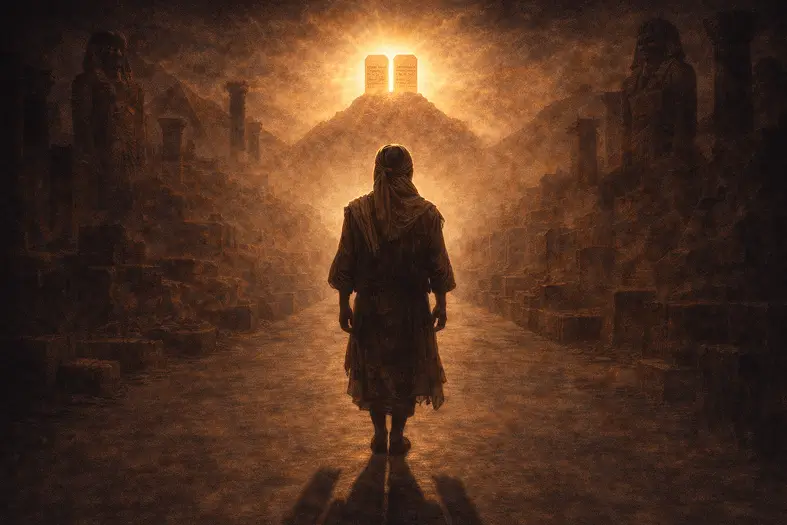
7.1 - Freedom Can Be Lost: Rabbi Jonathan Sacks on Responsibility, Memory, and Moral Drift
Rabbi Jonathan Sacks warns that the greatest threat to freedom is not oppression—it is forgetfulness. Parshas Va’eira, read through his lens, becomes a timeless caution: liberation achieved without responsibility will eventually collapse back into bondage.
Freedom is not self-sustaining.
It must be renewed daily.
The Exodus story is often told as a movement from slavery to freedom. Rabbi Sacks insists this is incomplete. The Torah’s deeper claim is that freedom without moral structure is unstable.
Egypt loses its chains suddenly. Israel gains freedom slowly. The difference matters.
Freedom is not the absence of restraint.
It is the presence of obligation.
Rabbi Sacks reads Pharaoh not as an ancient villain but as a recurring human type. Pharaoh believes power equals freedom. Control equals autonomy. Constraint equals weakness.
Va’eira exposes this illusion.
Pharaoh can command others but cannot command himself. When pressure lifts, responsibility dissolves. Relief becomes license.
This pattern is tragically modern.
The Torah repeatedly states the goal of the plagues:
וְיָדְעוּ מִצְרַיִם כִּי אֲנִי ה׳
Rabbi Sacks emphasizes that knowledge alone does not preserve freedom. Modern societies are saturated with information, yet moral clarity erodes.
Freedom decays when:
Pharaoh knows Hashem’s power. He never binds himself to it.
Rabbi Sacks famously argues that Judaism is a civilization of memory. The Exodus must be remembered daily—not to relive trauma, but to anchor responsibility.
זָכוֹר כִּי־עֶבֶד הָיִיתָ
Memory creates empathy. Empathy restrains power. Restraint preserves freedom.
When societies forget their origins, they confuse liberty with license.
Rabbi Sacks reframes yirah as moral gravity—the force that keeps freedom from flying apart. Fear of Hashem is not fear of punishment; it is reverence for limits.
Without limits:
Va’eira teaches that fear must follow liberation or liberation becomes destructive.
Rabbi Sacks highlights the Torah’s deliberate pacing. Israel is not freed overnight because freedom must be learned.
Egypt collapses because it never learned restraint. Israel ascends because it is trained in responsibility.
This distinction explains why Torah law follows redemption. Law is not the enemy of freedom—it is its architecture.
Rabbi Sacks warns that societies can regress into new forms of slavery:
When freedom loses its ethical core, it devours itself.
Va’eira teaches that liberation without covenant is temporary. Miracles can break chains, but only responsibility keeps them broken.
Freedom must be:
Otherwise, it erodes quietly.
Rabbi Sacks leaves us with a sobering truth: freedom is fragile. It survives only when anchored to something higher than desire.
Pharaoh loses freedom because he refuses limits.
Israel gains freedom because it accepts them.
Va’eira is not only the story of ancient redemption.
It is a warning to every free society.
Freedom can be lost—not all at once, but slowly,
when responsibility is treated as optional.
And the Torah insists: if freedom is to endure,
it must be guarded—by memory, by law, and by fear of Hashem.
📖 Sources


7.1 - Freedom Can Be Lost: Rabbi Jonathan Sacks on Responsibility, Memory, and Moral Drift
Rabbi Jonathan Sacks warns that the greatest threat to freedom is not oppression—it is forgetfulness. Parshas Va’eira, read through his lens, becomes a timeless caution: liberation achieved without responsibility will eventually collapse back into bondage.
Freedom is not self-sustaining.
It must be renewed daily.
The Exodus story is often told as a movement from slavery to freedom. Rabbi Sacks insists this is incomplete. The Torah’s deeper claim is that freedom without moral structure is unstable.
Egypt loses its chains suddenly. Israel gains freedom slowly. The difference matters.
Freedom is not the absence of restraint.
It is the presence of obligation.
Rabbi Sacks reads Pharaoh not as an ancient villain but as a recurring human type. Pharaoh believes power equals freedom. Control equals autonomy. Constraint equals weakness.
Va’eira exposes this illusion.
Pharaoh can command others but cannot command himself. When pressure lifts, responsibility dissolves. Relief becomes license.
This pattern is tragically modern.
The Torah repeatedly states the goal of the plagues:
וְיָדְעוּ מִצְרַיִם כִּי אֲנִי ה׳
Rabbi Sacks emphasizes that knowledge alone does not preserve freedom. Modern societies are saturated with information, yet moral clarity erodes.
Freedom decays when:
Pharaoh knows Hashem’s power. He never binds himself to it.
Rabbi Sacks famously argues that Judaism is a civilization of memory. The Exodus must be remembered daily—not to relive trauma, but to anchor responsibility.
זָכוֹר כִּי־עֶבֶד הָיִיתָ
Memory creates empathy. Empathy restrains power. Restraint preserves freedom.
When societies forget their origins, they confuse liberty with license.
Rabbi Sacks reframes yirah as moral gravity—the force that keeps freedom from flying apart. Fear of Hashem is not fear of punishment; it is reverence for limits.
Without limits:
Va’eira teaches that fear must follow liberation or liberation becomes destructive.
Rabbi Sacks highlights the Torah’s deliberate pacing. Israel is not freed overnight because freedom must be learned.
Egypt collapses because it never learned restraint. Israel ascends because it is trained in responsibility.
This distinction explains why Torah law follows redemption. Law is not the enemy of freedom—it is its architecture.
Rabbi Sacks warns that societies can regress into new forms of slavery:
When freedom loses its ethical core, it devours itself.
Va’eira teaches that liberation without covenant is temporary. Miracles can break chains, but only responsibility keeps them broken.
Freedom must be:
Otherwise, it erodes quietly.
Rabbi Sacks leaves us with a sobering truth: freedom is fragile. It survives only when anchored to something higher than desire.
Pharaoh loses freedom because he refuses limits.
Israel gains freedom because it accepts them.
Va’eira is not only the story of ancient redemption.
It is a warning to every free society.
Freedom can be lost—not all at once, but slowly,
when responsibility is treated as optional.
And the Torah insists: if freedom is to endure,
it must be guarded—by memory, by law, and by fear of Hashem.
📖 Sources


“Freedom Can Be Lost: Rabbi Jonathan Sacks on Responsibility, Memory, and Moral Drift”
(Exodus 20:2)
אָנֹכִי ה׳ אֱלֹקֶיךָ
Rabbi Sacks emphasizes that knowledge of Hashem is the starting point of freedom, not its guarantee. Va’eira shows that awareness without covenantal responsibility erodes quickly. Pharaoh knows Hashem’s power yet refuses moral allegiance, illustrating how knowledge alone cannot sustain liberty.
(Deuteronomy 10:20)
אֶת־ה׳ אֱלֹקֶיךָ תִּירָא
Fear of Hashem functions as moral gravity. Rabbi Sacks explains that reverence for limits restrains power and preserves freedom. Va’eira demonstrates that when fear does not follow liberation, autonomy dissolves into entitlement and drift.
(Deuteronomy 18:15)
אֵלָיו תִּשְׁמָעוּן
Pharaoh hears Moshe repeatedly yet treats prophecy as negotiable. Rabbi Sacks frames this as a modern danger: information without obedience. This mitzvah underscores that listening means binding action to truth, without which freedom becomes unstable.
(Deuteronomy 28:9)
וְהָלַכְתָּ בִּדְרָכָיו
Hashem’s governance in Va’eira—measured, patient, and just—models the ethical architecture needed to sustain freedom. Rabbi Sacks teaches that societies endure only when power is exercised with restraint, emulating Divine limits rather than rejecting them.
(Numbers 10:9)
וַהֲרֵעֹתֶם בַּחֲצֹרוֹת
Crisis tests whether freedom deepens responsibility or accelerates decay. Pharaoh’s cries seek relief without return; Israel is trained toward covenantal response. Rabbi Sacks highlights that how a society responds to distress determines whether it emerges freer or more enslaved.


“Freedom Can Be Lost: Rabbi Jonathan Sacks on Responsibility, Memory, and Moral Drift”
Parshas Va’eira frames redemption not as a single act of liberation but as the beginning of a demanding moral journey. Hashem’s four expressions of redemption—וְהוֹצֵאתִי… וְהִצַּלְתִּי… וְגָאַלְתִּי… וְלָקַחְתִּי—signal that freedom unfolds through stages, each requiring deeper responsibility. Rabbi Jonathan Sacks emphasizes that the Torah resists defining freedom as mere release from constraint; instead, it introduces covenant as freedom’s sustaining structure.
Pharaoh’s repeated admissions—חָטָאתִי הַפָּעַם—followed by immediate regression illustrate how liberation without obligation collapses. Knowledge of Hashem’s power increases, yet moral drift persists once pressure subsides. Va’eira thus demonstrates that awareness and even confession do not preserve freedom in the absence of binding responsibility.
By contrast, Israel’s slow formation—marked by instruction, patience, and preparation—models Rabbi Sacks’s core insight: freedom must be educated to endure. The parsha teaches that societies remain free only when memory restrains power and law channels choice. Without these anchors, liberation erodes quietly, and freedom can be lost—not suddenly, but through neglect of the moral disciplines that sustain it.

Dive into mitzvos, tefillah, and Torah study—each section curated to help you learn, reflect, and live with intention. New insights are added regularly, creating an evolving space for spiritual growth.

Explore the 613 mitzvos and uncover the meaning behind each one. Discover practical ways to integrate them into your daily life with insights, sources, and guided reflection.

Learn the structure, depth, and spiritual intent behind Jewish prayer. Dive into morning blessings, Shema, Amidah, and more—with tools to enrich your daily connection.

Each week’s parsha offers timeless wisdom and modern relevance. Explore summaries, key themes, and mitzvah connections to deepen your understanding of the Torah cycle.