6.3 - Emergent Redemption: Rav Kook on Growth, Process, and National Becoming
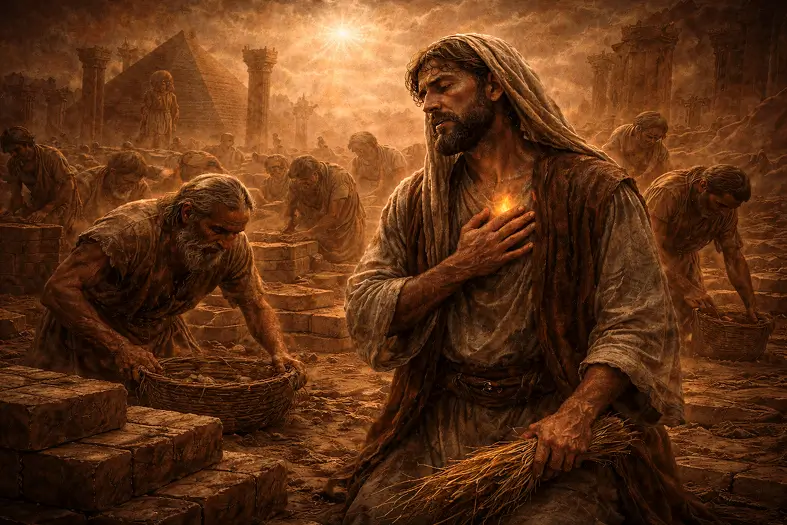
Rav Kook reads Parshas Va’eira not as a crisis of delay, but as a revelation of how redemption actually grows. Redemption, in his vision, is not an interruption of history—it is history awakening to its own inner direction.
Freedom does not descend fully formed.
It emerges.
Rav Kook insists that geulah unfolds the way life unfolds: gradually, unevenly, and from within. Sudden transformation may look impressive, but it cannot endure unless it arises from inner maturation.
This is why the Torah speaks in stages:
וְהוֹצֵאתִי… וְהִצַּלְתִּי… וְגָאַלְתִּי… וְלָקַחְתִּי
Each verb marks a developmental phase. Rav Kook understands these not merely as promises, but as laws of growth. A nation must pass through each stage or risk fragmentation.
Where the Sfas Emes speaks of kotzer ruach in the soul, Rav Kook speaks of it in history. A people crushed by slavery cannot leap immediately into spiritual sovereignty. Inner life, collective imagination, and moral confidence must be rebuilt.
Oppression does not only remove freedom—it atrophies national will.
Redemption therefore begins by restoring:
Without these, freedom becomes frightening rather than hopeful.
Rav Kook reframes delay as compassion. Hashem does not rush Israel because rushed redemption produces instability.
Emergent redemption requires:
This is why the plagues precede Sinai. Revelation without preparation overwhelms; law without inner readiness alienates.
Egypt collapses dramatically. Israel grows quietly.
This contrast is essential. Rav Kook teaches that destructive collapse and constructive emergence operate by different laws. Egypt’s downfall is sudden because it lacks inner coherence. Israel’s ascent is slow because it must be built, not merely freed.
True redemption is constructive, not merely reactive.
Rav Kook integrates fear of Hashem (yirah) with faith (emunah). Fear stabilizes; faith energizes. Together they form a vessel strong enough to hold national destiny.
Without fear, faith becomes reckless.
Without faith, fear becomes paralyzing.
Va’eira balances both—disciplining impulse while awakening hope.
Rav Kook’s revolutionary insight is that history is not neutral. It bends toward redemption when a people aligns internally with its direction.
Geulah is not imposed.
It is elicited.
This explains why Pharaoh cannot be redeemed. His resistance is static. Israel’s redemption begins the moment inner movement resumes.
Rav Kook famously teaches that spiritual renewal often precedes visible redemption. The inner stirrings—longing, dissatisfaction, reawakening—are already stages of geulah.
Va’eira records these early stirrings:
Freedom has already begun—though chains remain.
Part VI now closes its arc:
Redemption is no longer a moment to survive.
It is a process to become.
Va’eira teaches that Hashem redeems Israel not by bypassing history—but by awakening it from within.
Freedom does not arrive suddenly.
It unfolds as a people remembers who it is becoming.
And that remembering—slow, patient, irreversible—is already geulah.
📖 Sources


6.3 - Emergent Redemption: Rav Kook on Growth, Process, and National Becoming
Rav Kook reads Parshas Va’eira not as a crisis of delay, but as a revelation of how redemption actually grows. Redemption, in his vision, is not an interruption of history—it is history awakening to its own inner direction.
Freedom does not descend fully formed.
It emerges.
Rav Kook insists that geulah unfolds the way life unfolds: gradually, unevenly, and from within. Sudden transformation may look impressive, but it cannot endure unless it arises from inner maturation.
This is why the Torah speaks in stages:
וְהוֹצֵאתִי… וְהִצַּלְתִּי… וְגָאַלְתִּי… וְלָקַחְתִּי
Each verb marks a developmental phase. Rav Kook understands these not merely as promises, but as laws of growth. A nation must pass through each stage or risk fragmentation.
Where the Sfas Emes speaks of kotzer ruach in the soul, Rav Kook speaks of it in history. A people crushed by slavery cannot leap immediately into spiritual sovereignty. Inner life, collective imagination, and moral confidence must be rebuilt.
Oppression does not only remove freedom—it atrophies national will.
Redemption therefore begins by restoring:
Without these, freedom becomes frightening rather than hopeful.
Rav Kook reframes delay as compassion. Hashem does not rush Israel because rushed redemption produces instability.
Emergent redemption requires:
This is why the plagues precede Sinai. Revelation without preparation overwhelms; law without inner readiness alienates.
Egypt collapses dramatically. Israel grows quietly.
This contrast is essential. Rav Kook teaches that destructive collapse and constructive emergence operate by different laws. Egypt’s downfall is sudden because it lacks inner coherence. Israel’s ascent is slow because it must be built, not merely freed.
True redemption is constructive, not merely reactive.
Rav Kook integrates fear of Hashem (yirah) with faith (emunah). Fear stabilizes; faith energizes. Together they form a vessel strong enough to hold national destiny.
Without fear, faith becomes reckless.
Without faith, fear becomes paralyzing.
Va’eira balances both—disciplining impulse while awakening hope.
Rav Kook’s revolutionary insight is that history is not neutral. It bends toward redemption when a people aligns internally with its direction.
Geulah is not imposed.
It is elicited.
This explains why Pharaoh cannot be redeemed. His resistance is static. Israel’s redemption begins the moment inner movement resumes.
Rav Kook famously teaches that spiritual renewal often precedes visible redemption. The inner stirrings—longing, dissatisfaction, reawakening—are already stages of geulah.
Va’eira records these early stirrings:
Freedom has already begun—though chains remain.
Part VI now closes its arc:
Redemption is no longer a moment to survive.
It is a process to become.
Va’eira teaches that Hashem redeems Israel not by bypassing history—but by awakening it from within.
Freedom does not arrive suddenly.
It unfolds as a people remembers who it is becoming.
And that remembering—slow, patient, irreversible—is already geulah.
📖 Sources


“Emergent Redemption: Rav Kook on Growth, Process, and National Becoming”
(Exodus 20:2)
אָנֹכִי ה׳ אֱלֹקֶיךָ
Rav Kook understands knowledge of Hashem not as static belief but as an ever-deepening national consciousness. Va’eira reveals that recognition of Divine sovereignty unfolds gradually within history. Israel’s redemption begins when awareness matures into collective orientation, even before political freedom is achieved.
(Deuteronomy 10:20)
אֶת־ה׳ אֱלֹקֶיךָ תִּירָא
Fear of Hashem provides stability during growth. Rav Kook teaches that yirah grounds national awakening so that freedom does not dissolve into chaos. In Va’eira, yirah develops slowly alongside hope, ensuring that redemption unfolds with discipline and endurance.
(Deuteronomy 18:15)
אֵלָיו תִּשְׁמָעוּן
Prophecy guides history toward its inner direction. Rav Kook sees Moshe’s words in Va’eira as planting seeds that will later blossom. Listening does not always yield immediate response; it can initiate long-term national realignment that matures over time.
(Deuteronomy 28:9)
וְהָלַכְתָּ בִּדְרָכָיו
Hashem redeems through patience, process, and compassion. Rav Kook views Divine gradualism as a model for nation-building. Emulating Hashem means respecting developmental stages—allowing healing, identity formation, and moral confidence to arise organically.
(Numbers 10:9)
וַהֲרֵעֹתֶם בַּחֲצֹרוֹת
Rav Kook frames collective outcry as an early stage of redemption. Even when cries emerge from pain rather than clarity, they awaken national consciousness and re-engage history’s redemptive current. Va’eira shows that such stirrings are already part of geulah in motion.


“Emergent Redemption: Rav Kook on Growth, Process, and National Becoming”
Parshas Va’eira presents redemption as a staged unfolding rather than an instantaneous rescue. Hashem’s declaration—וְהוֹצֵאתִי… וְהִצַּלְתִּי… וְגָאַלְתִּי… וְלָקַחְתִּי—frames geulah as a process of becoming, not merely a change in circumstance. Rav Kook understands these verbs as developmental phases through which a nation must pass, each cultivating deeper readiness for covenantal life.
The parsha’s account of Israel’s inability to hear Moshe—מִקֹּצֶר רוּחַ—is read by Rav Kook as a national condition formed by prolonged oppression. Redemption must therefore proceed gradually, allowing inner confidence, moral imagination, and collective will to regenerate. Egypt’s collapse is sudden and destructive; Israel’s redemption is quiet and constructive, reflecting the difference between disintegration and growth.
Va’eira thus teaches that Divine redemption works through history rather than bypassing it. Delay is not failure but compassion, ensuring that liberation emerges organically from within the people. Rav Kook’s reading reveals geulah as an awakening already in motion—an irreversible inner stirring that precedes visible freedom and prepares Israel to receive Torah without fragmentation.

Dive into mitzvos, tefillah, and Torah study—each section curated to help you learn, reflect, and live with intention. New insights are added regularly, creating an evolving space for spiritual growth.

Explore the 613 mitzvos and uncover the meaning behind each one. Discover practical ways to integrate them into your daily life with insights, sources, and guided reflection.

Learn the structure, depth, and spiritual intent behind Jewish prayer. Dive into morning blessings, Shema, Amidah, and more—with tools to enrich your daily connection.

Each week’s parsha offers timeless wisdom and modern relevance. Explore summaries, key themes, and mitzvah connections to deepen your understanding of the Torah cycle.