6.3 — Shabbos as Testimony: Time as Emunah
Among the Aseres HaDibros, Shabbos is unique. It does not prohibit an act because it harms, nor command an action because it builds. Instead, it structures time itself. The Torah describes Shabbos with deliberate language:
[בֵּרַךְ… וַיְקַדְּשֵׁהוּ — “He blessed… and sanctified it”].
Shabbos is not merely a day of rest. It is a testimony—an enacted declaration of emunah written not in words, but in time.
Space can be claimed, conquered, or owned. Time cannot. By placing testimony in time rather than territory, the Torah ensures that faith is lived regularly, publicly, and without coercion.
Shabbos arrives whether one feels spiritual or not. It disciplines the week, interrupts productivity, and insists that reality has a Source beyond human control. Emunah here is not internal belief alone; it is patterned behavior.
Shabbos testifies to creation not by argument, but by rhythm. Every seventh day reenacts the structure of the world itself. The cycle teaches that existence is not accidental and labor is not ultimate.
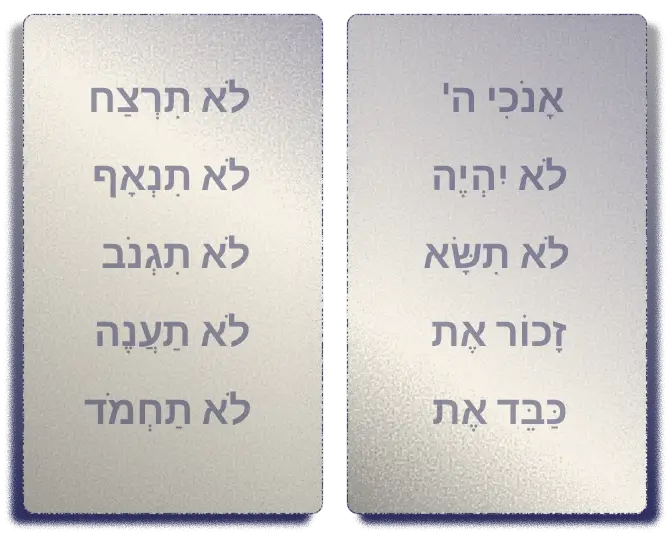
This is why Shabbos appears on the first tablet. It proclaims a truth about Hashem—Creator and Master of time. But it also reshapes society: all rest equally, regardless of status.
Time becomes the great equalizer.
The Torah connects Shabbos not only to creation, but to Exodus. This is critical. Creation explains origins; Exodus explains care. Shabbos therefore testifies both to how the world began and how it is guided.
Rest is not withdrawal from meaning. It is recognition that sustenance does not come solely from effort. Shabbos trains trust in providence by legislating cessation.
Ramban emphasizes that Shabbos functions as eidus—testimony. One who observes Shabbos bears witness to truths that cannot be proven in court. The act itself becomes the statement.
This is why violation of Shabbos is not a private lapse. It erases public testimony. Shabbos is communal emunah enacted weekly.
The Mekhilta’s pairing of Shabbos with false testimony now comes into focus. Shabbos says: the world has meaning. False testimony says: truth is negotiable. One affirms moral order; the other dissolves it.
A society that cannot tell the truth cannot truly rest. A society that does not rest cannot remember why truth matters.
Chassidic masters describe Shabbos as a vessel that holds holiness without effort. During the week, holiness must be chased. On Shabbos, it arrives. This trains a deeper emunah: that Hashem acts even when we stop acting.
Time itself becomes a teacher.
Modern life treats time as commodity—spent, saved, optimized. Shabbos resists this logic. It insists that time can be sacred, not owned. By sanctifying time, Shabbos engrains emunah more deeply than argument ever could.
Every Shabbos declares, again and again: the world is created, guided, and meaningful—even when we are not producing.
📖 Sources


6.3 — Shabbos as Testimony: Time as Emunah
Among the Aseres HaDibros, Shabbos is unique. It does not prohibit an act because it harms, nor command an action because it builds. Instead, it structures time itself. The Torah describes Shabbos with deliberate language:
[בֵּרַךְ… וַיְקַדְּשֵׁהוּ — “He blessed… and sanctified it”].
Shabbos is not merely a day of rest. It is a testimony—an enacted declaration of emunah written not in words, but in time.
Space can be claimed, conquered, or owned. Time cannot. By placing testimony in time rather than territory, the Torah ensures that faith is lived regularly, publicly, and without coercion.
Shabbos arrives whether one feels spiritual or not. It disciplines the week, interrupts productivity, and insists that reality has a Source beyond human control. Emunah here is not internal belief alone; it is patterned behavior.
Shabbos testifies to creation not by argument, but by rhythm. Every seventh day reenacts the structure of the world itself. The cycle teaches that existence is not accidental and labor is not ultimate.
This is why Shabbos appears on the first tablet. It proclaims a truth about Hashem—Creator and Master of time. But it also reshapes society: all rest equally, regardless of status.
Time becomes the great equalizer.
The Torah connects Shabbos not only to creation, but to Exodus. This is critical. Creation explains origins; Exodus explains care. Shabbos therefore testifies both to how the world began and how it is guided.
Rest is not withdrawal from meaning. It is recognition that sustenance does not come solely from effort. Shabbos trains trust in providence by legislating cessation.
Ramban emphasizes that Shabbos functions as eidus—testimony. One who observes Shabbos bears witness to truths that cannot be proven in court. The act itself becomes the statement.
This is why violation of Shabbos is not a private lapse. It erases public testimony. Shabbos is communal emunah enacted weekly.
The Mekhilta’s pairing of Shabbos with false testimony now comes into focus. Shabbos says: the world has meaning. False testimony says: truth is negotiable. One affirms moral order; the other dissolves it.
A society that cannot tell the truth cannot truly rest. A society that does not rest cannot remember why truth matters.
Chassidic masters describe Shabbos as a vessel that holds holiness without effort. During the week, holiness must be chased. On Shabbos, it arrives. This trains a deeper emunah: that Hashem acts even when we stop acting.
Time itself becomes a teacher.
Modern life treats time as commodity—spent, saved, optimized. Shabbos resists this logic. It insists that time can be sacred, not owned. By sanctifying time, Shabbos engrains emunah more deeply than argument ever could.
Every Shabbos declares, again and again: the world is created, guided, and meaningful—even when we are not producing.
📖 Sources


“Shabbos as Testimony: Time as Emunah”
אָנֹכִי ה׳ אֱלֹקֶיךָ
Shabbos reinforces knowledge of Hashem by embedding creation and providence into time itself. Emunah is sustained through lived rhythm rather than abstract belief.
שְׁמַע יִשְׂרָאֵל ה׳ אֱלֹקֵינוּ ה׳ אֶחָד
A unified rhythm governing all life reflects Divine unity. Shabbos gathers fragmented time into a single, coherent testimony.
Shabbos functions as weekly testimony to creation and providence. Rest itself—cessation from mastery—declares that the world is sustained by Hashem, not human productivity. Emunah is embedded into time through rest.
The prohibition of labor protects Shabbos as testimony. Without restraint, rest becomes symbolic only. Shamor preserves Zachor by ensuring that time’s sanctity is lived, not merely affirmed.
לֹא תַעֲנֶה בְרֵעֲךָ עֵד שָׁקֶר
Shabbos bears witness to truth about the world. False testimony undermines the moral order that Shabbos proclaims. When truth collapses below, testimony above loses force.


“Shabbos as Testimony: Time as Emunah”
Parshas Yisro presents Shabbos as a central testimony within the Aseres HaDibros. Through structured time, the Torah teaches creation, providence, and moral order, making emunah a lived, communal practice.

Dive into mitzvos, tefillah, and Torah study—each section curated to help you learn, reflect, and live with intention. New insights are added regularly, creating an evolving space for spiritual growth.

Explore the 613 mitzvos and uncover the meaning behind each one. Discover practical ways to integrate them into your daily life with insights, sources, and guided reflection.

Learn the structure, depth, and spiritual intent behind Jewish prayer. Dive into morning blessings, Shema, Amidah, and more—with tools to enrich your daily connection.

Each week’s parsha offers timeless wisdom and modern relevance. Explore summaries, key themes, and mitzvah connections to deepen your understanding of the Torah cycle.