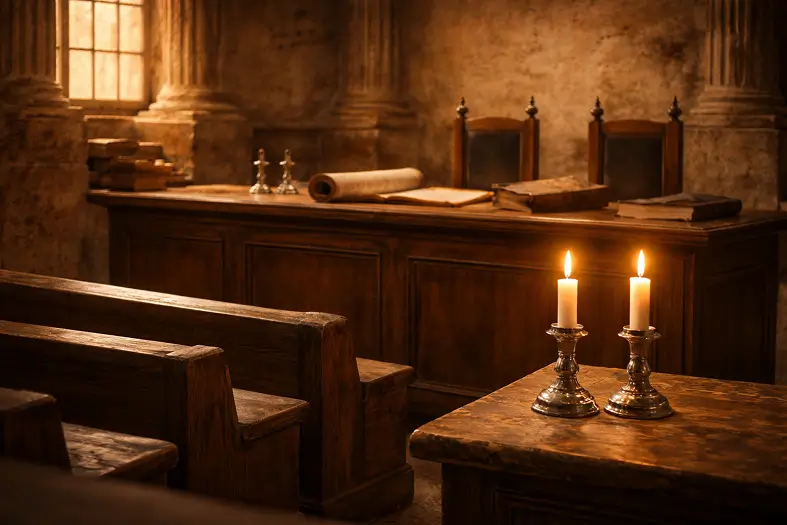
Not to do prohibited labor on the seventh day

This page is incomplete.
Help complete the
Mitzvah Minute website.

This Mitzvah's Summary
We are forbidden from doing מְלָאכָה — prohibited creative labor on the seventh day, as the Torah says, לֹא תַעֲשֶׂה כָל מְלָאכָה — “You shall not do any labor” (Exodus 20:10). This mitzvah guards Shabbos as sacred time by placing clear Torah boundaries around human creativity, work, and control.
The Torah commands, וְיוֹם הַשְּׁבִיעִי שַׁבָּת לַה׳ אֱלֹקֶיךָ לֹא תַעֲשֶׂה כָל מְלָאכָה — “The seventh day is Shabbos to Hashem your G-d; you shall not do any labor” (Exodus 20:10). This is the negative mitzvah not to perform מְלָאכָה — prohibited creative labor on Shabbos.
This mitzvah is paired with the positive mitzvah of שְׁבִיתַת שַׁבָּת — Shabbos rest. Mitzvah 87 commands a Jew to rest; Mitzvah 88 forbids the acts that violate that rest. Together, they form the Torah structure of Shabbos: sacred cessation, guarded time, and a weekly testimony that Hashem created the world.
The Torah’s prohibition is not defined by physical effort alone. Many difficult actions may not be Torah-level מְלָאכָה, while small actions can be full מְלָאכָה if they belong to the creative categories forbidden on Shabbos. Chazal identify the ל״ט מְלָאכוֹת — thirty-nine categories of labor, rooted in the work of the Mishkan — Sanctuary. These categories define the creative acts from which a Jew must refrain.
Conceptually, the mitzvah teaches that human mastery has a limit. During the week, a person shapes the world through building, writing, cooking, planting, carrying, planning, and producing. On Shabbos, the Jew steps back from creative control and enters Hashem’s kingship over time. By not doing מְלָאכָה, a person declares that the world is not his to control without boundary. It belongs to Hashem.
Commentaries
Applying this Mitzvah Today
Applying this Mitzvah Today
This mitzvah touches modern life with unusual force. People live surrounded by tools that make action instant: phones, lights, cars, devices, messages, transactions, and constant production. Shabbos comes and says that not everything available may be used. Not every power should be exercised. Not every impulse deserves expression.
The prohibition of מְלָאכָה — creative labor creates a protected space for the soul. A Jew does not merely “take a break.” He accepts Hashem’s authority over his actions. He stops shaping the world so he can remember Who created it.
This can feel challenging. Shabbos asks a person to leave tasks unfinished, messages unanswered, and plans unadvanced. Yet that restraint becomes freedom. The person discovers that life continues even when he stops controlling it. His worth is not measured by output. His peace does not depend on constant motion.
The mitzvah also protects the holiness of the home. When מְלָאכָה stops, the atmosphere changes. Meals, Torah, tefillah, zemiros, family, and quiet are no longer competing with weekday noise. Shabbos becomes a different world because the Jew guards it with real boundaries.
In a generation addicted to doing, this mitzvah teaches the holiness of not doing. Holding back for Hashem is itself avodah.
Rambam & Sefer HaChinuch
Rambam
- Source: Rambam, Sefer HaMitzvos, Negative Commandment 320.
- Rambam defines this mitzvah as the prohibition against doing מְלָאכָה — prohibited labor on Shabbos. The Torah’s words לֹא תַעֲשֶׂה כָל מְלָאכָה establish Shabbos as a day guarded by negative restraint, not only positive rest.
Rambam
- Source: Rambam, Mishneh Torah, Hilchos Shabbos 1:1.
- Rambam rules that one who performs מְלָאכָה on Shabbos violates a negative command and also fails to fulfill the positive command of rest. Shabbos observance therefore has two sides: ceasing from labor and avoiding the forbidden acts themselves.
Rambam
- Source: Rambam, Mishneh Torah, Hilchos Shabbos 7:1–2.
- Rambam explains that the Torah’s prohibited labors are organized through ל״ט מְלָאכוֹת — thirty-nine categories of creative labor. These are the main forms of מְלָאכָה from which all related Torah-level prohibitions are derived.
Sefer HaChinuch
- Source: Sefer HaChinuch, Mitzvah 32.
- Sefer HaChinuch explains that refraining from מְלָאכָה on Shabbos fixes belief in creation into the heart. When a Jew stops creating and producing every seventh day, his actions testify that Hashem created the world and rules over time.
Talmud & Midrash
Mishnah
- Source: Mishnah Shabbos 7:2.
- The Mishnah lists the ל״ט מְלָאכוֹת — thirty-nine categories of labor prohibited on Shabbos. These categories define the Torah’s framework of creative work, showing that Shabbos is guarded by precise halachic structure.
Gemara
- Source: Gemara Shabbos 49b.
- The Gemara connects the ל״ט מְלָאכוֹת to the work of the Mishkan. Shabbos forbids the same kinds of creative acts used to build sacred space, teaching that even holy creativity must stop before the holiness of Shabbos.
Gemara
- Source: Gemara Shabbos 70a.
- The Gemara discusses how separate categories of מְלָאכָה create distinct liability. This shows that Shabbos labor is not one general idea of effort, but a detailed Torah system of creative categories.
Gemara
- Source: Gemara Chagigah 10a.
- The Gemara teaches that the laws of Shabbos are like mountains hanging by a hair: few verses, with many detailed halachos. Shabbos therefore reveals the depth of Torah Shebe’al Peh — the Oral Torah, where hidden structure emerges from compact written words.
Gemara
- Source: Gemara Berachos 57b.
- The Gemara teaches that שַׁבָּת — Shabbos is אֶחָד מִשִּׁשִּׁים לָעוֹלָם הַבָּא — one-sixtieth of the World to Come. The prohibition of מְלָאכָה helps create that taste by removing the pressure of weekday striving and opening a higher experience of time.
Mechilta
- Source: Mechilta d’Rabbi Yishmael, Yisro, BaChodesh 7.
- Mechilta explains לֹא תַעֲשֶׂה כָל מְלָאכָה as applying not only to the individual, but to the household structure described in the verse. Shabbos boundaries reshape the entire domain of Jewish life.
Shemos Rabbah
- Source: Shemos Rabbah 25:11–12.
- Shemos Rabbah teaches that Shabbos is an אות — sign between Hashem and Israel. Israel testifies through Shabbos that Hashem created the world, while Shabbos testifies that Israel is Hashem’s holy nation. The prohibition of מְלָאכָה protects that mutual testimony.
Midrash Tanchuma
- Source: Midrash Tanchuma, Bereishis 3.
- Midrash Tanchuma presents Shabbos as a sign of covenant between Hashem and Israel. By refraining from weekday labor, the Jewish people reveal that the seventh day is not ordinary time, but a sacred bond with the Creator.
Rishonim — Depth & Nuance
Rashi
- Source: Rashi on Exodus 20:10.
- Rashi explains that the prohibition of מְלָאכָה applies to the Jew and to those under his authority, as listed in the verse. Shabbos is not only personal discipline; it reshapes the home, the servant, the animal, and the stranger within one’s gates.
Rashi
- Source: Rashi on Shabbos 49b.
- Rashi explains the connection between the prohibited labors and the Mishkan. The acts used in constructing the Mishkan become the categories from which Shabbos labor is defined, giving the prohibition its sacred precision.
Ramban
- Source: Ramban on Exodus 20:8–10.
- Ramban explains that Shabbos testifies to creation and to Hashem’s mastery over the world. The prohibition of מְלָאכָה is therefore not only a restriction; it is the language through which the Jew bears witness.
Ramban
- Source: Ramban on Leviticus 23:24.
- Ramban distinguishes between forbidden מְלָאכָה and the broader atmosphere of sacred rest. His approach shows that the Torah prohibition creates the core boundary, while Shabbos also calls for a full life of sanctified time.
Ibn Ezra
- Source: Ibn Ezra on Exodus 20:10.
- Ibn Ezra explains that the verse prohibits work throughout the household domain. Shabbos places the Jew’s authority under Hashem, so that even those dependent on him are not turned into extensions of weekday labor.
Sforno
- Source: Sforno on Exodus 20:10.
- Sforno teaches that refraining from labor makes room for spiritual purpose. The Jew is commanded to stop weekday work so that the day can be turned toward Hashem, Torah, and higher awareness.
Rabbeinu Bachya
- Source: Rabbeinu Bachya on Exodus 20:10.
- Rabbeinu Bachya explains that Shabbos guards emunah — faith in creation. By refraining from creative labor, a Jew shows that all human creativity is secondary to Hashem’s creation of heaven and earth.
Chizkuni
- Source: Chizkuni on Exodus 20:10.
- Chizkuni explains that the Torah lists family members, servants, animals, and the stranger to show the broad reach of Shabbos prohibition. The day creates a shared boundary across the entire household structure.
Rishonim — Conceptual
Kuzari
- Source: Kuzari II:50.
- The Kuzari presents Shabbos as a central sign of Israel’s covenant and memory of creation. The prohibition of מְלָאכָה preserves this sign by creating a visible weekly distinction between Israel and ordinary time.
Maharal
- Source: Maharal, Tiferes Yisrael, ch. 40.
- Maharal explains that Shabbos represents completion beyond the six days of activity. Refraining from מְלָאכָה allows a person to enter the wholeness of the seventh day, where creation is not advanced by human making but received from Hashem.
Ran
- Source: Ran, Derashos HaRan, Derush 1.
- Ran teaches that repeated national practices form the foundations of belief. Shabbos prohibition engraves emunah into the Jewish people by turning creation into a weekly lived testimony.
Rashba
- Source: Rashba, Responsa 1:413.
- Rashba’s treatment of Shabbos shows that sacred time creates real halachic obligation. The prohibition of מְלָאכָה flows from the kedushah of the day itself, not from human need for rest alone.
Halacha
Mishnah
- Source: Mishnah Shabbos 7:2.
- The Mishnah lists the ל״ט מְלָאכוֹת — thirty-nine categories of labor prohibited on Shabbos, including sowing, plowing, reaping, baking, writing, building, kindling, and carrying. These categories form the halachic framework of Torah-level Shabbos labor.
Rambam
- Source: Rambam, Mishneh Torah, Hilchos Shabbos 1:1.
- Rambam rules that one who performs מְלָאכָה on Shabbos violates a Torah prohibition. If done intentionally with witnesses and warning, it carries severe court liability; if done unintentionally, it requires a חַטָּאת — sin-offering when the Beis HaMikdash stands.
Rambam
- Source: Rambam, Mishneh Torah, Hilchos Shabbos 7:1–2.
- Rambam rules that the primary prohibited labors are forty less one, meaning ל״ט מְלָאכוֹת — thirty-nine categories. Each category has related derivatives called תּוֹלָדוֹת — subcategories, which share the Torah status of the primary labor.
Rambam
- Source: Rambam, Mishneh Torah, Hilchos Shabbos 12:1.
- Rambam explains that lighting fire is one of the prohibited labors on Shabbos. Although the Torah singles out fire elsewhere, it remains part of the larger system of מְלָאכָה and illustrates how even controlled energy belongs to weekday creativity.
Shulchan Aruch
- Source: Shulchan Aruch, Orach Chaim 242:1.
- Shulchan Aruch opens the practical laws of Shabbos by requiring honor for the day. This frames the prohibition of labor within kavod Shabbos — honoring Shabbos, so that refraining from מְלָאכָה leads to a dignified sacred day.
Shulchan Aruch
- Source: Shulchan Aruch, Orach Chaim 243:1.
- Shulchan Aruch discusses cases where a Jew’s property or business may continue producing work through others. These laws show that Shabbos prohibition affects not only one’s hands, but the way one’s work systems operate.
Shulchan Aruch
- Source: Shulchan Aruch, Orach Chaim 252:1.
- Shulchan Aruch rules about beginning work before Shabbos that continues on its own into Shabbos. The halacha distinguishes between human action and automatic continuation, showing the precision of Shabbos boundaries.
Shulchan Aruch
- Source: Shulchan Aruch, Orach Chaim 253:1.
- Shulchan Aruch discusses leaving food on a fire before Shabbos. These laws protect a person from actions that may lead to forbidden cooking or adjusting heat on Shabbos.
Shulchan Aruch
- Source: Shulchan Aruch, Orach Chaim 306:1.
- Shulchan Aruch rules that weekday business speech and planning are restricted on Shabbos. Even beyond formal מְלָאכָה, the day must not become filled with weekday control, anxiety, and commercial attention.
Mishnah Berurah
- Source: Mishnah Berurah 242:1.
- Mishnah Berurah explains that kavod Shabbos helps a person enter the day properly. The prohibition of labor is strengthened when Shabbos is not experienced as deprivation, but as a day prepared with dignity.
Mishnah Berurah
- Source: Mishnah Berurah 306:1.
- Mishnah Berurah explains that weekday speech can weaken the spirit of Shabbos. A Jew must guard not only physical labor, but also the tone and direction of his mind and mouth.
Aruch HaShulchan
- Source: Aruch HaShulchan, Orach Chaim 242:1–3.
- Aruch HaShulchan explains that Shabbos contains kavod, oneg, and shevisah together. The prohibition of מְלָאכָה is not isolated restraint; it creates the protected setting for a full day of holiness.
Acharonim & Modern Torah Giants
Malbim
- Source: Malbim on Exodus 20:10.
- Malbim explains that the Torah lists household members and animals to show that Shabbos is not limited to private observance. The prohibition of מְלָאכָה establishes Hashem’s rule over the whole sphere of a Jew’s activity and authority.
Netziv
- Source: Netziv, HaEmek Davar on Exodus 20:10.
- Netziv explains that Shabbos prohibition forms a covenantal structure around the Jewish home. The day is guarded when every layer of work and control is brought under Hashem’s command.
Rav Shimshon Raphael Hirsch
- Source: Rav Shimshon Raphael Hirsch on Exodus 20:10.
- Rav Hirsch teaches that מְלָאכָה is not mere physical exertion, but purposeful human mastery over the world. By refraining from מְלָאכָה, the Jew declares that his creative power is given by Hashem and limited by Hashem.
Meshech Chochmah
- Source: Meshech Chochmah on Exodus 20:10.
- Meshech Chochmah explains that Shabbos prohibition preserves the testimony of creation by removing human dominance from the center. The Jew stops shaping the world in order to recognize the One Who brought it into being.
Chasam Sofer
- Source: Chasam Sofer, Toras Moshe on Yisro.
- Chasam Sofer teaches that the restraint of Shabbos reveals the hidden faith of a Jew. When a person stops working despite financial pressure, he shows that livelihood is not controlled by human effort alone.
Rav Avraham Yitzchok HaCohen Kook
- Source: Rav Kook, Olat Re’iyah II, Shabbos.
- Rav Kook presents Shabbos as the elevation of life above fragmentation. The prohibition of מְלָאכָה quiets the scattered forces of weekday creativity so the individual and nation can return to their inner holiness.
Chassidic & Mussar Classics
Baal Shem Tov
- Source: Baal Shem Tov, Yisro 26; Tzava’as HaRivash 90.
- The Baal Shem Tov teaches that physical actions can become vessels for holiness when joined to awareness of Hashem. On Shabbos, the absence of מְלָאכָה allows eating, resting, joy, and family life to rise into avodah, revealing the hidden Divine spark within the physical world.
Tanya
- Source: Tanya, Iggeres HaKodesh, Epistle 26.
- Tanya teaches that Shabbos brings a higher spiritual light into the world. Refraining from weekday labor allows the soul to receive holiness that cannot be absorbed while scattered through ordinary creative activity.
Sfas Emes
- Source: Sfas Emes, Bereishis, 5631.
- Sfas Emes explains that Shabbos reveals the inner point of creation. During the week, the world appears fragmented through many actions; on Shabbos, מְלָאכָה stops and the hidden unity of Hashem’s life-force becomes more visible.
Kedushas Levi
- Source: Kedushas Levi, Yisro.
- Kedushas Levi teaches that Shabbos is a day of closeness and love between Hashem and Israel. The Jew refrains from weekday labor not as a burden, but as one who enters a palace of delight prepared by the King.
Shem MiShmuel
- Source: Shem MiShmuel, Yisro, 5672.
- Shem MiShmuel explains that Shabbos gathers the soul from dispersion. The prohibition of מְלָאכָה helps collect thought, speech, emotion, and action back into their root in Hashem.
Ramchal
- Source: Ramchal, Derech Hashem IV:7.
- Ramchal teaches that sacred times bring specific spiritual influence into creation. Shabbos requires withdrawal from weekday activity so the person can receive the holiness that belongs uniquely to the seventh day.
Nesivos Shalom
- Source: Nesivos Shalom, Shabbos Kodesh.
- Nesivos Shalom explains that Shabbos is the inner home of the Jewish soul. By leaving מְלָאכָה behind, the Jew steps out of pressure and returns to the simple closeness that Shabbos reveals.
Background & Foundations
This mitzvah stands at the center of the Shabbos system. Mitzvah 87 commands rest on the seventh day. Mitzvah 88 forbids prohibited labor. Mitzvah 91 commands Kiddush and Havdalah, framing Shabbos with verbal sanctification and separation.
The Torah prohibition of מְלָאכָה is rooted in creation and defined through the Mishkan. Hashem created the world in six days and rested on the seventh. Klal Yisrael built the Mishkan through creative acts of construction, preparation, and transformation. Those same categories become the model for what must stop on Shabbos.
The ל״ט מְלָאכוֹת — thirty-nine categories include the major creative acts through which human beings shape the world. By stopping them, a Jew does not reject creativity. He places creativity under Hashem. The week is for building; Shabbos is for remembering Who gives the power to build.
Notes on this Mitzvah's Fundamentals
Shabbos - שַׁבָּת
Shabbos is protected by the prohibition of melachah. The Jew enters a day where creative control stops, and the seventh day becomes a living sign that Hashem is Creator and King.
Faith – אֱמוּנָה
Faith becomes visible when a Jew stops creating, earning, building, and controlling because Hashem commanded Shabbos. The prohibition of melachah turns belief in creation into a weekly act of trust.
Core Beliefs – יְסוֹדוֹת הָאֱמוּנָה
Core belief is strengthened by the testimony of Shabbos. Every forbidden melachah reminds the Jew that the world was created by Hashem, and that human mastery must bow before the Creator.
Covenant – בְּרִית
Covenant lives in the guarded boundary of Shabbos. A Jew refrains from melachah because Shabbos is the sign between Hashem and Israel, a private loyalty carried through the rhythm of every week.
Holiness – קְדֻשָּׁה
Holiness fills time when ordinary creative labor stops. The prohibition of melachah protects the atmosphere of Shabbos, allowing the day to feel different, higher, and set apart for Hashem.
Reverence – יִרְאַת שָׁמַיִם
Reverence grows when a person holds back from actions he is able to do but may not do. Shabbos teaches awe through restraint, training the heart to honor Hashem’s command above personal convenience.
Thought – מַחֲשָׁבָה
Thought becomes clearer when weekday production is silenced. The mind can return to deeper truths: life is not only work, time is not only utility, and the world is not ownerless.
Speech – דָּבָר
Speech is guarded on Shabbos so the day does not become weekday in tone. Avoiding business talk and anxious planning helps the mouth reflect the holiness that the hands are already keeping.
Kiddush / Havdalah – קִידּוּשׁ / הַבְדָּלָה
Kiddush and Havdalah frame the boundary created by this mitzvah. The Jew enters and leaves Shabbos with words of sanctification, recognizing when melachah becomes forbidden and when weekday labor returns.
Blessing – בְּרָכָה
Blessing flows from Shabbos because the day is blessed by Hashem. Refraining from melachah teaches that brachah does not come only from more effort; it can come from holy restraint.
Home – בַּיִת
Home changes when melachah stops. The atmosphere becomes calmer, more present, and more sacred, allowing meals, Torah, family, and rest to shape the house around Hashem.
Between a person and G-d - בֵּין אָדָם לְמָקוֹם
Between a person and G-d is expressed through obedience to the boundary of Shabbos. The Jew places his power to create back before Hashem, forming a relationship of trust, loyalty, and sacred restraint.












%201.webp)