Buy and sell according to Torah law

This page is incomplete.
Help complete the
Mitzvah Minute website.

This Mitzvah's Summary
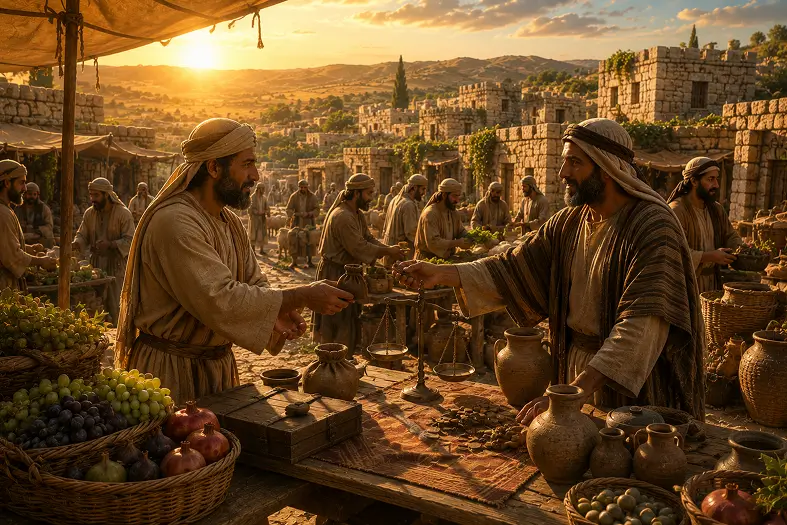
A Jew must conduct buying and selling according to Torah law. This mitzvah teaches that business is not only a private agreement, but a Torah-governed act that must follow halachic rules of ownership, acquisition, and fairness.
The Torah says: [וְכִי תִמְכְּרוּ מִמְכָּר לַעֲמִיתֶךָ אוֹ קָנֹה מִיַּד עֲמִיתֶךָ — “When you sell something to your fellow, or buy from the hand of your fellow”] (Vayikra 25:14). Chazal understand this pasuk as establishing the Torah framework for מִקָּח וּמִמְכָּר — buying and selling.
This mitzvah means that commerce must be done through the valid forms of קִנְיָן — halachic acquisition. An item does not change ownership merely because people feel it should. Torah defines how ownership transfers, how agreements become binding, and how a buyer and seller must act.
This mitzvah is closely connected to the next mitzvah, Mitzvah 500, which forbids אוֹנָאָה — overcharging or underpaying. Mitzvah 499 focuses on the positive structure of commerce: buy and sell in the way Torah recognizes. Mitzvah 500 protects that commerce from exploitation.
The mitzvah teaches that business is part of avodas Hashem — service of Hashem. A store, contract, handshake, invoice, and sale are not outside Torah. They are places where halacha gives form to ownership, trust, and responsibility.
Commentaries
Applying this Mitzvah Today
Applying this Mitzvah Today
This mitzvah is very practical. Every person buys and sells. Food, clothing, homes, cars, services, online goods, business inventory, and personal items all involve questions of ownership and agreement.
Torah law teaches that commerce needs structure. A person should know when a sale is complete, what counts as agreement, when money transfers ownership, when pulling or lifting an item matters, and when words create obligation or expectation. Even where secular law has its own rules, Torah gives the inner halachic frame.
This mitzvah also trains a person to take business seriously. A deal is not casual just because it happens every day. Buying and selling affect another person’s money, trust, and life. Torah asks a Jew to enter transactions with clarity, honesty, and respect for the other side.
In daily life, this mitzvah forms a person who does not separate religious life from financial life. The same Torah that teaches prayer and Shabbos also teaches contracts, sales, prices, and ownership. A Jew serves Hashem by making even ordinary business clean and halachically sound.
Rambam & Sefer HaChinuch
Rambam
- Source: Rambam, Sefer HaMitzvos, Positive Mitzvah 245; Mishneh Torah, Hilchos Mechirah 1:1–2.
- Rambam defines this mitzvah as the command that buying and selling be carried out through the Torah’s laws of acquisition. He explains that a sale becomes binding through recognized acts of קִנְיָן — halachic acquisition, such as money, document, or physical transfer, depending on the item and setting. Rambam’s framing shows that Torah does not leave commerce to vague intention. It gives ownership a clear legal structure.
Sefer HaChinuch
- Source: Sefer HaChinuch, Mitzvah 336.
- Sefer HaChinuch explains that the root of the mitzvah is to settle human dealings in a clear and peaceful way. If buying and selling had no defined Torah structure, people would constantly argue over ownership. The mitzvah builds order, trust, and social peace by teaching how property moves from one person to another.
Talmud & Midrash
Mishnah
- Source: Mishnah Kiddushin 1:5.
- The Mishnah teaches the basic ways different kinds of property are acquired, including money, document, and חזקה — taking possession. This is one of the core Chazal sources for the Torah structure of קִנְיָנִים — acquisitions. It shows that ownership changes through defined halachic acts.
Gemara
- Source: Gemara Bava Metzia 47b.
- The Gemara discusses whether money alone completes a sale of movable objects and explains the rabbinic enactment requiring מְשִׁיכָה — drawing or pulling the object. This shows that Torah commerce includes both biblical principles and rabbinic safeguards, so transactions remain clear and protected.
Gemara
- Source: Gemara Bava Basra 86a.
- The Gemara discusses forms of acquisition in sales, including lifting, pulling, and transferring control. These sugyos show that buying and selling are not merely social understandings. Halacha defines the action that creates ownership.
Sifra
- Source: Sifra, Behar, Parashah 3.
- Sifra expounds the verse “when you sell” and “when you buy” as part of the Torah’s structure for honest commercial life. The Midrash reads the pasuk as speaking to both sides of the transaction. Buyer and seller must relate to each other through Torah-defined fairness and order.
Vayikra Rabbah
- Source: Vayikra Rabbah 33:1.
- The Midrash places the laws of buying, selling, and wronging others inside the broader call to live with righteousness. Commerce is not spiritually neutral. The way a person handles another person’s money reveals whether holiness has entered daily life.
Tanchuma
- Source: Midrash Tanchuma, Behar 3.
- Tanchuma presents the laws of Behar as a Torah system for land, money, servants, and social order. Buying and selling according to Torah law keeps society from becoming ruled only by power or pressure. It places transactions under Hashem’s command.
Rishonim — Depth & Nuance
Rashi
- Source: Rashi on Vayikra 25:14.
- Rashi explains the pasuk as speaking about buying and selling with one’s fellow and immediately connects it to the warning against wronging another in commerce. His reading shows that Torah sales must be both legally valid and morally clean. The transaction itself must be governed by Torah.
Ramban
- Source: Ramban on Vayikra 25:14.
- Ramban explains that the Torah addresses both buyer and seller because commercial life can easily become a place of quiet wrongdoing. The mitzvah gives Torah form to the marketplace, so buying and selling do not become a struggle of advantage, but a covenantal act between Jews.
Ibn Ezra
- Source: Ibn Ezra on Vayikra 25:14.
- Ibn Ezra reads the pasuk in its plain meaning as a command that buying and selling among Jews be conducted properly. His explanation highlights the simple Torah demand: ordinary transactions must follow the laws and ethics of the covenant.
Sforno
- Source: Sforno on Vayikra 25:14.
- Sforno explains that commerce must preserve fairness between people. A sale is not only a transfer of goods. It is a relationship between two human beings, and Torah requires that relationship to be guided by justice.
Abarbanel
- Source: Abarbanel on Vayikra 25.
- Abarbanel explains that Parshas Behar builds an ordered society around land, sale, return, and economic restraint. Buying and selling according to Torah law keeps private property inside Hashem’s larger system. Commerce is allowed, but it must remain under Divine rule.
Rabbeinu Bachya
- Source: Rabbeinu Bachya on Vayikra 25:14.
- Rabbeinu Bachya teaches that business dealings require יִרְאַת שָׁמַיִם — awe of Heaven because financial wrongs can be hidden beneath normal behavior. Buying and selling according to Torah law trains a person to remember Hashem inside ordinary transactions.
Chizkuni
- Source: Chizkuni on Vayikra 25:14.
- Chizkuni explains that the Torah speaks to both selling and buying because either side can distort the deal. His reading shows that Torah commerce demands responsibility from everyone involved. The buyer and seller are both commanded to keep the transaction upright.
Rishonim — Conceptual
Kuzari
- Source: Kuzari 3:11.
- The Kuzari explains that Torah law shapes every part of Jewish society, including practical civil dealings. This mitzvah fits that vision because commerce is one of the main ways people interact. Torah enters buying and selling so society can become holy in ordinary life.
Maharal
- Source: Maharal, Nesivos Olam, Nesiv HaEmes, Chapter 1.
- Maharal teaches that truth is the foundation of lasting human order. A marketplace without truth becomes unstable, because ownership and agreement lose their meaning. Torah forms of acquisition create a world where property, words, and actions have real order.
Ran
- Source: Derashos HaRan, Derush 11.
- Ran explains that Torah law creates a society governed by Divine justice, not only practical convenience. Buying and selling according to Torah law shows that even civil structures are part of Hashem’s wisdom. Monetary order is a piece of national holiness.
Ritva
- Source: Ritva on Kiddushin 26a.
- Ritva explains the mechanics of קִנְיָן — halachic acquisition and how different forms of property require different acts. His approach shows that Torah law is precise because ownership is serious. A sale must be created through the form halacha recognizes.
Rashba
- Source: Rashba, Teshuvos 1:1010.
- Rashba discusses how agreements and transactions become binding through recognized halachic mechanisms. His treatment shows that the Torah system of commerce balances intent, action, and legal form. A person’s desire to buy or sell must be joined to a valid act of acquisition.
Halacha
Shulchan Aruch
- Source: Shulchan Aruch, Choshen Mishpat 189:1.
- Shulchan Aruch rules that land can be acquired through money, document, or חזקה — taking possession. This gives practical form to the mitzvah. Ownership over real property changes only through a halachically valid process.
Shulchan Aruch
- Source: Shulchan Aruch, Choshen Mishpat 198:1.
- Shulchan Aruch rules that movable objects are acquired through מְשִׁיכָה — drawing or pulling the object, following the rabbinic enactment that money alone does not complete the sale for movable goods. This protects both buyer and seller and gives the transaction clear completion.
Shulchan Aruch
- Source: Shulchan Aruch, Choshen Mishpat 200:1.
- Shulchan Aruch rules that lifting an item can acquire it in certain cases. This shows that halacha recognizes different forms of קִנְיָן — acquisition depending on the object and situation. Buying and selling are structured by concrete acts.
Rema
- Source: Rema, Choshen Mishpat 201:1.
- Rema discusses קִנְיָן סוּדָר — symbolic acquisition through a cloth or object, which is often used to finalize agreements. This shows that Torah commerce includes formal methods that create clarity and seriousness, even when the item itself is not being physically transferred at that moment.
Sma
- Source: Sma, Choshen Mishpat 198:1.
- Sma explains why Chazal required מְשִׁיכָה — drawing the object for movable goods, so neither side treats the sale lightly or leaves the other exposed to loss. His explanation shows that halachic acquisition protects trust in the marketplace.
Shach
- Source: Shach, Choshen Mishpat 198:1.
- Shach clarifies the force of money, pulling, and rabbinic enactment in movable-object sales. His analysis shows that a person must know the halachic structure of transactions, because ownership is not determined only by casual agreement.
Acharonim & Modern Torah Giants
Chasam Sofer
- Source: Chasam Sofer, Toras Moshe, Behar, s.v. “וְכִי תִמְכְּרוּ.”
- Chasam Sofer explains that the Torah places business law inside the holiness of Behar to teach that monetary life is part of avodas Hashem — service of Hashem. A Jew’s buying and selling must reveal that he accepts Hashem’s law even in the marketplace.
Netziv
- Source: Netziv, HaEmek Davar on Vayikra 25:14.
- Netziv emphasizes the Torah’s language of “עֲמִיתֶךָ” — your fellow. A transaction is not only between owner and customer. It is between members of the covenant. Torah commerce must preserve the dignity and trust of that relationship.
Rav Shimshon Raphael Hirsch
- Source: Rav Hirsch on Vayikra 25:14.
- Rav Hirsch teaches that the Torah sanctifies economic life by placing buying and selling under Divine law. Property is real, commerce is real, and profit can be proper. But all of it must remain accountable to Hashem’s standards of justice and human dignity.
Malbim
- Source: Malbim on Vayikra 25:14.
- Malbim highlights the double wording of selling and buying. The Torah addresses both sides because both participate in creating the transaction. The mitzvah teaches that commercial order requires responsibility from buyer and seller alike.
Meshech Chochmah
- Source: Meshech Chochmah on Vayikra 25:14.
- Meshech Chochmah reads the laws of commerce in Behar as part of a larger Torah system that limits human control over money and land. A Jew may acquire and sell, but only within the forms Hashem gives. Ownership is powerful, but it is not lawless.
Rav Kook
- Source: Rav Avraham Yitzchok HaCohen Kook, Ein Ayah, Bava Metzia 4.
- Rav Kook teaches that honest monetary order allows holiness to enter society. When buying and selling are structured by Torah, daily economic life becomes a place where justice and trust can grow. The marketplace becomes part of the nation’s spiritual building.
Chassidic & Mussar Classics
Baal Shem Tov
- Source: Baal Shem Tov al HaTorah, Behar.
- The Baal Shem Tov teaches that Hashem is found not only in prayer and learning, but also in ordinary human dealings. Buying and selling according to Torah law trains a person to find avodas Hashem — service of Hashem inside daily work.
Tanya
- Source: Tanya, Likutei Amarim, Chapter 37.
- Tanya teaches that mitzvos draw holiness into the physical world. Commerce involves money, objects, effort, and desire. When a Jew buys and sells according to Torah law, he lifts those physical dealings into kedushah — holiness.
Sfas Emes
- Source: Sfas Emes, Behar 5637.
- Sfas Emes teaches that the laws of Behar reveal Hashem’s ownership inside land and money. A person may think his business is separate from holiness, but Torah shows that even buying and selling carry a hidden point of Divine service.
Kedushas Levi
- Source: Kedushas Levi, Behar, s.v. “וְכִי תִמְכְּרוּ.”
- Kedushas Levi reads the Torah’s language of “your fellow” as a call to keep love and compassion inside commerce. A person should not let the desire for gain erase the human being across the table. Torah business keeps the heart awake.
Shem MiShmuel
- Source: Shem MiShmuel, Behar 5672.
- Shem MiShmuel explains that money can pull a person into self-focus unless it is governed by Torah. The laws of buying and selling train a person to let Hashem’s order rule even over desire, ownership, and profit.
Ramchal
- Source: Ramchal, Mesillas Yesharim, Chapter 11.
- Ramchal teaches that clean conduct in money is one of the hardest areas of avodah because people easily justify profit. This mitzvah builds נְקִיּוּת — spiritual cleanliness by requiring transactions to follow Torah law, not convenience or cleverness.
Background & Foundations
Mitzvah 499 opens the Torah’s cluster of commercial mitzvos in Parshas Behar. It establishes the positive structure of buying and selling. Mitzvah 500 then forbids overcharging or underpaying, and Mitzvah 501 forbids harming another person with words. Together, they show that Torah protects the transaction, the money, and the person.
This mitzvah belongs to the world of דִּינֵי מָמוֹנוֹת — monetary laws. Torah does not leave ownership undefined. It gives rules for how property is acquired, transferred, returned, disputed, and protected.
The mitzvah also teaches that business is not spiritually neutral. A Jew can serve Hashem through tefillah, Torah, Shabbos, and also through a clean sale. When a transaction follows halacha, it becomes part of the Torah’s vision for a just and holy society.
The pasuk speaks about selling to “your fellow” and buying from “your fellow.” This language matters. The other person is not only a buyer, seller, client, customer, or competitor. He is an עָמִית — fellow member of the covenant. Torah commerce begins with that awareness.
Notes on this Mitzvah's Fundamentals
Business / Commerce – מִשָּׂא וּמַתָּן
מִשָּׂא וּמַתָּן — business and commerce is the defining tag of this mitzvah. The Torah commands that buying and selling follow halachic structure, so ordinary trade becomes part of avodas Hashem.
Monetary Laws – דִּינֵי מָמוֹנוֹת
דִּינֵי מָמוֹנוֹת — monetary laws give this mitzvah its practical form. Ownership, payment, agreement, and acquisition must follow Torah rules, not only personal feeling.
Laws and Courts – דִּינִים
דִּינִים — laws and courts belong here because disputes over buying and selling are judged through Torah law. The mitzvah creates the legal structure that Beis Din applies.
Justice – צֶדֶק
צֶדֶק — justice is central because commerce must be straight and ordered. A valid sale must respect the rights and responsibilities of both buyer and seller.
Between a person and their fellow - בֵּין אָדָם לַחֲבֵרוֹ
בֵּין אָדָם לַחֲבֵרוֹ — between a person and another person is central because every transaction affects another person’s money, trust, and dignity.
Reverence – יִרְאַת שָׁמַיִם
יִרְאַת שָׁמַיִם — awe of Heaven is needed because business can hide many small forms of dishonesty. A person must remember Hashem in the store, office, contract, and negotiation.
Thought – מַחֲשָׁבָה
מַחֲשָׁבָה — thought is refined because proper commerce requires awareness. A person must think before agreeing, pricing, transferring, or claiming ownership.
Speech – דָּבָר
דִּבּוּר — speech is relevant because business often begins with words, promises, offers, and agreements. Torah teaches that speech in commerce must be clear, honest, and responsible.
Community – קְהִלָּה
קְהִלָּה — community depends on trust in buying and selling. When commerce follows Torah law, people can live and trade together with confidence.
Theft - גְּנֵיבָה / Robbery – גְּזֵלָה
גְּנֵיבָה / גְּזֵלָה — theft and robbery are related because unclear or invalid transactions can lead to taking what does not truly belong to a person. Torah acquisition protects ownership from confusion and wrongdoing.
Holiness – קְדֻשָּׁה
קְדֻשָּׁה — holiness enters business when money and property are governed by Hashem’s law. This mitzvah teaches that even ordinary commerce can become part of a holy life.
Between a person and G-d - בֵּין אָדָם לְמָקוֹם
בֵּין אָדָם לְמָקוֹם — between a person and Hashem also belongs here because buying and selling according to Torah law is obedience to Hashem’s command. The marketplace becomes a place of serving Him.










%201.webp)