"Behar-Bechukosai — Part III — וְלֹא תוֹנוּ: Do Not Wrong Others"

Mitzvah Minute Logo Icon

3.1 — Ona’ah — The Hidden Ethics of the Marketplace

אונאה — exploitation teaches that Torah ethics reach beyond fair prices. The Torah forbids financial deception, then moves deeper to אונאת דברים — verbal harm, where pain is often hidden and intention is מסור ללב — entrusted to the heart. Bechukosai’s ערכין — fixed Torah valuations add another layer: even sacred speech must protect human dignity. Torah life is proven when business is honest, words are clean, advice is pure, and people feel safe in one another’s hands.
4 - min read

"Behar-Bechukosai — Part III — וְלֹא תוֹנוּ: Do Not Wrong Others"

3.1 — Ona’ah — The Hidden Ethics of the Marketplace

When the Marketplace Tests the Heart

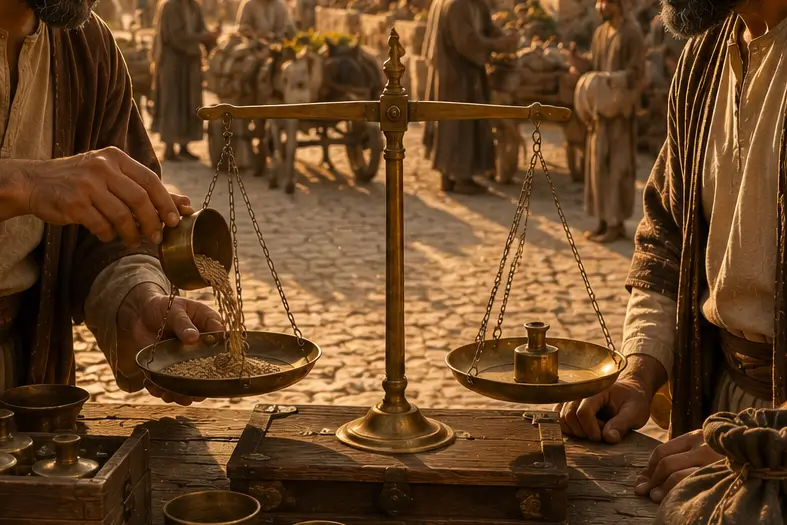
Parshas Behar brings Torah into the marketplace. After שמיטה — the Sabbatical year and יובל — the Jubilee year teach limits on land and ownership, the Torah turns to buying, selling, pricing, speech, and trust. This shift is exact. A person may know that the land belongs to Hashem and still fail when money meets another person’s dignity.

[וְכִי־תִמְכְּרוּ מִמְכָּר לַעֲמִיתֶךָ אוֹ קָנֹה מִיַּד עֲמִיתֶךָ אַל־תּוֹנוּ אִישׁ אֶת־אָחִיו — “When you sell something to your fellow, or buy from your fellow, do not wrong one another.”] This is אונאת ממון — financial exploitation. A seller may not overcharge. A buyer may not underpay. The price must follow אמת — truth, not advantage.

Torah does not allow business to become a separate world where cleverness replaces יראה — awe. Buying and selling are also places of avodas Hashem — service of Hashem. A store, contract, negotiation, estimate, and invoice all become tests of whether Torah has entered ordinary life.

But the Torah then moves deeper. [וְלֹא תוֹנוּ אִישׁ אֶת־עֲמִיתוֹ וְיָרֵאתָ מֵאֱלֹקֶיךָ — “Do not wrong one another, and you shall fear your G-d.”] Rashi explains that this refers to אונאת דברים — verbal harm. Words can wound without leaving evidence. Advice can sound generous while serving the adviser’s private interest. A joke can embarrass. A comment can reopen pain. A question can be asked only to weaken another person.

That is why the Torah adds יראה — awe of Hashem. Some things are מסור ללב — entrusted to the heart. No court can always prove what a person meant. No listener can always expose the hidden motive. But Hashem knows whether the words were clean.

This is the hidden ethics of the marketplace. A fair-looking transaction can still be corrupt when the heart is manipulating. A polite sentence can still be cruel when it is meant to cut. A Torah society cannot be measured only by what is legal on paper. It is measured by whether people feel safe in one another’s hands.

Bechukosai deepens the same point through ערכין — fixed Torah valuations. A person may pledge a human “value” to Hashem, yet the Torah refuses to turn the worth of a soul into a market judgment. The ערך — fixed valuation is structured by Torah. If the person is poor, [וְאִם־מָךְ הוּא מֵעֶרְכֶּךָ — “If he is too poor for the valuation”], the Kohen assesses according to ability. Obligation is serious, but it may not crush dignity.

This reveals a powerful chidush. Torah protects human dignity in two opposite settings:

  • in commerce, where money can overpower honesty;
  • in speech, where words can overpower confidence;
  • in sanctity, where religious seriousness can overpower compassion.

קדושה — holiness is not careless intensity. It must submit to halachah — Torah law. נדרים — vows, הקדש — consecrated property, and ערכין — fixed valuations all show that speech can create real obligation. Precisely because speech is powerful, it must be guarded.

The marketplace is therefore not outside holiness. It is one of the main places holiness is proven. A person’s Torah is tested when he can profit, pressure, hint, advise, embarrass, or stay silent. The question is not only what others can prove. The question is what Hashem sees in the heart.

A Jew must not turn another person into a tool for profit, a target for speech, or a number inside a system. Torah life is proven when business is honest, words are clean, advice is pure, and dignity remains protected even when no one else can see the truth.

Application for Today

Trust is one of the quiet foundations of life. People need to feel that a conversation is safe, that advice is sincere, and that business is honest. When that trust breaks, even ordinary life becomes heavy.

אונאה — exploitation speaks directly to that hidden world. It teaches that the fear of Hashem begins where excuses are easiest. A person can say, “I was only joking,” “I was only advising,” or “That is just business.” The Torah asks a deeper question: what was happening in the heart?

A Torah community is built when people protect one another in places that cannot be easily measured. Fair prices matter. Clean words matter. Pure motives matter. Human dignity matters. Where יראה — awe of Hashem enters the hidden places, people become safer in one another’s hands.

📖 Sources

  • Full sources available on the Mitzvah Minute Parshas Behar & Bechukosai pages under insights and commentaries

Written & Organized by
Boaz Solowitch
May 5, 2026
Mitzvah Minute Logo Icon

Connections

Mitzvah Minute Logo Icon

Mitzvah Links

Mitzvah 499

Buy and sell according to Torah law
A Siddur
Learn this Mitzvah

Mitzvah 499

499
Buy and sell according to Torah law

Mitzvah 500

Not to overcharge or underpay for an article
A Siddur
Learn this Mitzvah

Mitzvah 500

500
Not to overcharge or underpay for an article

Mitzvah 501

Not to insult or harm anybody with words
A Siddur
Learn this Mitzvah

Mitzvah 501

501
Not to insult or harm anybody with words

Mitzvah 227

To estimate the value of people (when someone pledges a person's worth) as determined by the Torah
A Siddur
Learn this Mitzvah

Mitzvah 227

227
To estimate the value of people (when someone pledges a person's worth) as determined by the Torah

Mitzvah 229

To estimate the value of consecrated houses
A Siddur
Learn this Mitzvah

Mitzvah 229

229
To estimate the value of consecrated houses
The Luchos - Ten Commandments
View Mitzvah Notes

Mitzvah Reference Notes

"x" close page navigation button

Mitzvah Reference Notes

“Ona’ah — The Hidden Ethics of the Marketplace”

Mitzvah #499 — Buy and Sell According to Torah Law (Leviticus 25:14)

וְכִי־תִמְכְּרוּ מִמְכָּר לַעֲמִיתֶךָ אוֹ קָנֹה מִיַּד עֲמִיתֶךָ

This mitzvah establishes that commerce must follow Torah structure. Buying and selling are not morally neutral acts; they are places where אמת — truth and יראה — awe of Hashem must govern ordinary financial life.

Mitzvah #500 — Not to Overcharge or Underpay (Leviticus 25:14)

אַל־תּוֹנוּ אִישׁ אֶת־אָחִיו

This mitzvah gives the essay its financial foundation. אונאת ממון — financial exploitation corrupts the marketplace by turning another person’s need, ignorance, or trust into an opportunity for unfair gain.

Mitzvah #501 — Not to Insult or Harm Anybody with Words (Leviticus 25:17)

וְלֹא תוֹנוּ אִישׁ אֶת־עֲמִיתוֹ וְיָרֵאתָ מֵאֱלֹקֶיךָ

This mitzvah is the essay’s central ethical anchor. אונאת דברים — verbal harm is judged by Hashem because its cruelty is often hidden in tone, context, advice, jokes, and intention.

Mitzvah #227 — To Estimate the Value of People as Determined by the Torah (Leviticus 27:2)

אִישׁ כִּי יַפְלִא נֶדֶר בְּעֶרְכְּךָ נְפָשֹׁת לַה׳

This mitzvah connects Behar’s marketplace ethics to Bechukosai’s laws of ערכין — fixed Torah valuations. The Torah creates a fixed system so that dedication to Hashem does not reduce human worth to market comparison.

Mitzvah #229 — To Estimate the Value of Consecrated Houses (Leviticus 27:14)

וְאִישׁ כִּי־יַקְדִּשׁ אֶת־בֵּיתוֹ קֹדֶשׁ לַה׳

This mitzvah shows that הקדש — consecrated property must be evaluated through Torah order. Even sacred generosity must be structured, measured, and protected from confusion or careless speech.

Parsha Links

בְּהַר – Behar

Haftarah: Jeremiah 32:6-22
A Siddur
Learn this Parsha

בְּהַר – Behar

בְּהַר – Behar

בְּחֻקֹּתַי – Bechukosai

Haftarah: Jeremiah 16:19 - 17:14
A Siddur
Learn this Parsha

בְּחֻקֹּתַי – Bechukosai

בְּחֻקֹּתַי – Bechukosai
A Sefer Torah
View Parsha Notes
"x" close page navigation button

Parsha Reference Notes

“Ona’ah — The Hidden Ethics of the Marketplace”

Parshas Behar-Bechukosai (Vayikra 25:14–17; 27:2–8)

Behar places אונאת ממון — financial exploitation and אונאת דברים — verbal harm inside the holiness of Torah life. The marketplace must be governed by אמת — truth, and speech must be guarded because hidden intention is known to Hashem. Bechukosai extends this concern through ערכין — fixed Torah valuations, where speech creates obligation, but human dignity is protected from becoming market worth. Together, the parshiyos teach that money, speech, sanctity, and dignity all stand before Hashem.

Mitzvah Minute
Mitzvah Minute Logo

Learn more.

Dive into mitzvos, tefillah, and Torah study—each section curated to help you learn, reflect, and live with intention. New insights are added regularly, creating an evolving space for spiritual growth.

Luchos
Live a commandment-driven life

Mitzvah

Explore the 613 mitzvos and uncover the meaning behind each one. Discover practical ways to integrate them into your daily life with insights, sources, and guided reflection.

Learn more

Mitzvah #

534

Not to lend with interest
The Luchos - Ten Commandments
Learn this Mitzvah

Mitzvah Highlight

Siddur
Connection through Davening

Tefillah

Learn the structure, depth, and spiritual intent behind Jewish prayer. Dive into morning blessings, Shema, Amidah, and more—with tools to enrich your daily connection.

Learn more

Tefillah

COMING SOON.
A Siddur
Learn this Tefillah

Tefillah Focus

A Sefer Torah
Study the weekly Torah portion

Parsha

Each week’s parsha offers timeless wisdom and modern relevance. Explore summaries, key themes, and mitzvah connections to deepen your understanding of the Torah cycle.

Learn more

בְּחֻקֹּתַי – Bechukosai

Haftarah: Jeremiah 16:19 - 17:14
A Sefer Torah
Learn this Parsha

Weekly Parsha