Not to overcharge or underpay for an article

This page is incomplete.
Help complete the
Mitzvah Minute website.

This Mitzvah's Summary
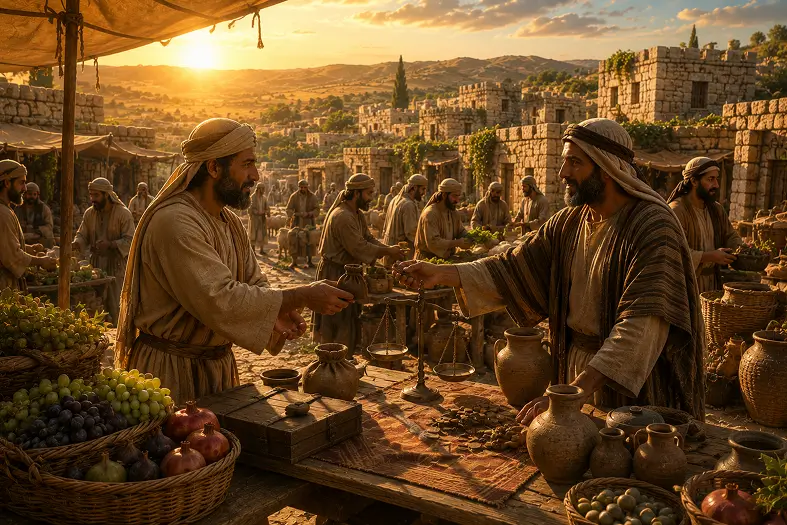
Not to overcharge or underpay means that a person may not exploit another person in buying or selling. This mitzvah protects commerce from hidden unfairness and teaches that business must be guided by צֶדֶק — justice and יִרְאַת שָׁמַיִם — awe of Heaven.
The Torah commands, “וְכִי תִמְכְּרוּ מִמְכָּר לַעֲמִיתֶךָ אוֹ קָנֹה מִיַּד עֲמִיתֶךָ, אַל תּוֹנוּ אִישׁ אֶת אָחִיו” — “When you sell something to your fellow, or buy from your fellow, do not wrong one another” (Vayikra 25:14). This is the prohibition of אוֹנָאַת מָמוֹן — monetary exploitation.
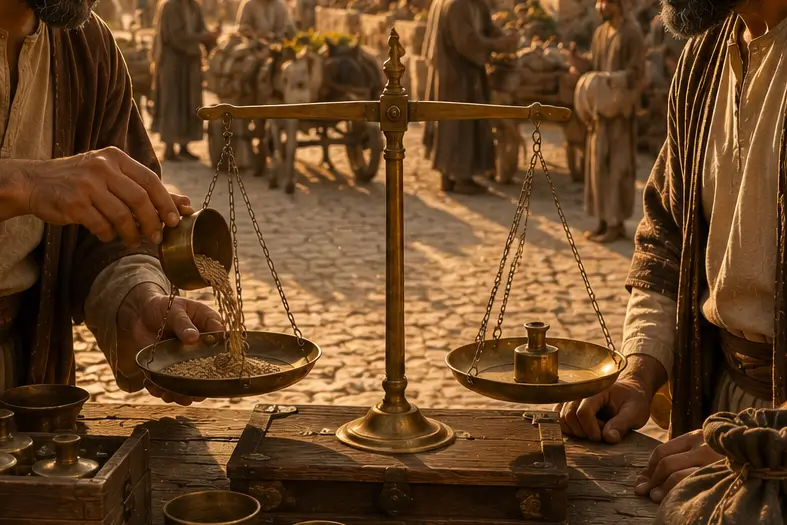
The mitzvah applies to both sides of a transaction. A seller may not overcharge a buyer by taking more than the item is worth. A buyer may not underpay a seller by taking advantage of the seller’s lack of knowledge, pressure, or mistake. The Torah does not only forbid stealing after the fact. It forbids making the deal itself unfair.
Chazal define specific halachic rules for אוֹנָאָה — overcharging or underpaying, including when a sale stands, when money must be returned, and when the sale may be canceled. But the inner message is wider: Torah commerce must be honest, measured, and clean. A marketplace can look ordinary, but Hashem sees whether each side is being treated with fairness.
Commentaries
Applying this Mitzvah Today
Applying this Mitzvah Today
This mitzvah is very practical today. It applies to buying, selling, pricing, negotiating, online sales, used items, services that involve goods, and business deals where one side knows more than the other. A person may not use another person’s ignorance as an opening for gain.
For a seller, this means pricing with honesty. It does not mean every item must be sold at the lowest possible price. Normal profit is permitted. But a seller may not misrepresent value, hide major defects, or charge in a way that crosses into halachic unfairness.
For a buyer, this mitzvah is just as important. A buyer may not pressure someone into selling far below value because the seller does not know the real price. Underpaying can also be אוֹנָאָה — exploitation. Torah does not allow a person to say, “He agreed, so it is fine,” when the agreement was built on ignorance or unfair advantage.
This mitzvah builds a clean business personality. A person learns to ask not only, “Can I get away with this?” but, “Is this fair before Hashem?” The store, contract, invoice, marketplace, and negotiation table all become places of avodas Hashem — service of Hashem.
Rambam & Sefer HaChinuch
Rambam
- Source: Rambam, Sefer HaMitzvos, Negative Mitzvah 250; Mishneh Torah, Hilchos Mechirah 12:1–3.
- Rambam defines this mitzvah as the prohibition against wronging another person in a sale. He explains that both the buyer and seller are warned, because אוֹנָאָה — exploitation can happen in either direction. If the seller overcharges, he wrongs the buyer. If the buyer underpays, he wrongs the seller. Rambam’s framing shows that Torah business law protects the fairness of the exchange itself.
Sefer HaChinuch
- Source: Sefer HaChinuch, Mitzvah 337.
- Sefer HaChinuch explains that the root of the mitzvah is to build honest dealings among people. Hashem wants society to stand on trust, fairness, and straight conduct. When people exploit each other in commerce, peace breaks down and suspicion grows. The mitzvah trains a person to see money as an area of responsibility, not only opportunity.
Talmud & Midrash
Gemara
- Source: Mishnah Bava Metzia 4:3.
- The Mishnah teaches the basic measure of אוֹנָאָה — monetary exploitation as one-sixth of the value. Below that level, the sale may stand without return. At one-sixth, the extra amount is returned. Beyond one-sixth, the sale can be canceled. This gives the mitzvah clear legal form and shows that Torah fairness is measured carefully.
Gemara
- Source: Gemara Bava Metzia 50b–51a.
- The Gemara discusses the laws of overcharging and underpaying and shows that the prohibition applies to both the buyer and seller. This is central to the mitzvah. The Torah does not only protect the weaker-looking side. It protects the fairness of the transaction, whoever is being exploited.
Gemara
- Source: Gemara Bava Metzia 58b.
- The Gemara connects monetary wronging with the nearby prohibition of אוֹנָאַת דְּבָרִים — verbal wronging. This shows that the Torah is concerned with both money and dignity. A person may not injure another through unfair pricing, and may not injure him through words.
Sifra
- Source: Sifra, Behar, Parashah 3.
- Sifra expounds “אַל תּוֹנוּ אִישׁ אֶת אָחִיו” — “do not wrong one another” as the prohibition against unfair dealing in commerce. The Torah calls the other person “your brother,” teaching that business may not erase brotherhood. Even when money changes hands, the other Jew remains a brother.
Vayikra Rabbah
- Source: Vayikra Rabbah 33:1.
- The Midrash places the laws of honest conduct within the larger demand that Israel live with righteousness before Hashem. Monetary honesty is not a side matter. It shows whether holiness has entered ordinary life. A person’s dealings reveal the truth of his יִרְאַת שָׁמַיִם — awe of Heaven.
Rishonim — Depth & Nuance
Rashi
- Source: Rashi on Vayikra 25:14.
- Rashi explains that “אַל תּוֹנוּ” in this pasuk refers to אוֹנָאַת מָמוֹן — monetary exploitation. This means the Torah forbids wronging another person through unfair buying or selling. His explanation keeps the mitzvah practical and direct: the marketplace must be honest.
Ramban
- Source: Ramban on Vayikra 25:14.
- Ramban explains that the Torah warns both sides in commerce because business can become a place where people quietly harm one another. The command protects the covenantal bond between Jews. A sale is not only a private financial exchange. It is part of the moral life of Klal Yisrael.
Ibn Ezra
- Source: Ibn Ezra on Vayikra 25:14.
- Ibn Ezra reads the pasuk as a warning not to wrong another person in buying and selling. His plain reading highlights the balance of the verse: whether one sells or buys, he must not exploit. The mitzvah applies whenever one side has the chance to take unfair advantage.
Sforno
- Source: Sforno on Vayikra 25:14.
- Sforno explains that the Torah forbids unfair dealing because trade must preserve justice between people. Commerce can easily become a place of hidden wrongdoing. The mitzvah demands that business be guided by truth, not only by desire for gain.
Rabbeinu Bachya
- Source: Rabbeinu Bachya on Vayikra 25:14.
- Rabbeinu Bachya teaches that the Torah’s warning in business is tied to fear of Hashem, because many financial wrongs are hidden from other people. A person may fool the buyer or seller, but he cannot fool Hashem. The mitzvah trains inner honesty where public pressure may be weak.
Chizkuni
- Source: Chizkuni on Vayikra 25:14.
- Chizkuni explains that the Torah warns against wronging a fellow Jew in sales, whether through price or value. His explanation shows that the mitzvah is not limited to obvious fraud. Even a deal that appears normal may be forbidden if one side is unfairly harmed.
Rishonim — Conceptual
Kuzari
- Source: Kuzari 3:11.
- The Kuzari presents Torah law as shaping a holy society through details of justice and daily conduct. אוֹנָאָה — exploitation belongs to this system because business is where trust is tested constantly. A Torah society is not only holy in prayer. It is holy in the marketplace.
Maharal
- Source: Maharal, Nesivos Olam, Nesiv HaEmes, Chapter 1.
- Maharal teaches that אֱמֶת — truth is the foundation of lasting order. Commerce without truth creates separation and distrust. The prohibition of אוֹנָאָה — exploitation protects the straightness of human relationships and keeps money from becoming a force of falsehood.
Ran
- Source: Ran, Derashos HaRan, Derush 11.
- Ran explains that Torah law builds a nation where justice reflects Divine order. Monetary law is not only practical regulation. It teaches how human society should mirror Hashem’s justice. The prohibition of overcharging and underpaying forms a marketplace governed by Torah, not only by power.
Rashba
- Source: Rashba, Teshuvos 3:227.
- Rashba discusses how halacha evaluates transactions and financial claims with precision. His approach shows that Torah commerce depends on real value, real consent, and clear terms. The mitzvah of אוֹנָאָה — exploitation protects the deal from being built on unfair imbalance.
Halacha
Shulchan Aruch
- Source: Shulchan Aruch, Choshen Mishpat 227:1.
- Shulchan Aruch rules that one who overcharges or underpays violates the prohibition of אוֹנָאָה — monetary exploitation. The law applies to both the buyer and seller. This is the practical heart of the mitzvah: a transaction must not be used to take unfair money from another person.
Shulchan Aruch
- Source: Shulchan Aruch, Choshen Mishpat 227:2–4.
- Shulchan Aruch explains the levels of אוֹנָאָה — exploitation. If the unfairness is less than one-sixth, the sale stands. If it is one-sixth, the extra money must be returned. If it is more than one-sixth, the harmed party can cancel the sale. Halacha gives fairness a precise structure.
Rema
- Source: Rema, Choshen Mishpat 227:6.
- Rema discusses cases where people clearly accept unusual pricing or where market conditions affect value. This shows that אוֹנָאָה — exploitation depends on real context. Halacha does not erase normal market judgment, but it also does not allow hidden unfairness.
Sma
- Source: Sma, Choshen Mishpat 227:1.
- Sma explains that the prohibition applies because the Torah wants business to be conducted with fairness and awareness of true value. The wrong is not only the lost money. It is the misuse of a transaction that should have been honest.
Shach
- Source: Shach, Choshen Mishpat 227:1–2.
- Shach clarifies practical applications of אוֹנָאָה — exploitation and how the halachic measures are applied. His discussion shows that business honesty requires knowledge, not only good intentions. A person must learn enough halacha to avoid unfair gain.
Acharonim & Modern Torah Giants
Chasam Sofer
- Source: Chasam Sofer, Toras Moshe, Behar, s.v. “אַל תּוֹנוּ.”
- Chasam Sofer explains that the Torah places monetary honesty inside the holiness of Parshas Behar. Business is not outside avodas Hashem — service of Hashem. A Jew’s conduct in pricing and negotiation reveals whether he truly lives with Hashem’s law in ordinary life.
Netziv
- Source: Netziv, HaEmek Davar on Vayikra 25:14.
- Netziv emphasizes the Torah’s language of “עֲמִיתֶךָ” — your fellow and “אָחִיו” — his brother. The buyer or seller must be seen as a brother, not as a target. The mitzvah protects the moral closeness of Klal Yisrael even inside financial exchange.
Rav Shimshon Raphael Hirsch
- Source: Rav Shimshon Raphael Hirsch on Vayikra 25:14.
- Rav Hirsch teaches that Torah law demands moral self-control in commerce. The marketplace can become a place where sharpness is praised even when it harms others. This mitzvah teaches that business success may not come from exploiting another person’s lack of knowledge.
Malbim
- Source: Malbim on Vayikra 25:14.
- Malbim distinguishes the wording of selling and buying in the pasuk and shows that both sides are warned. The seller must not overcharge, and the buyer must not underpay. The Torah’s language is balanced because exploitation can come from either side of the deal.
Meshech Chochmah
- Source: Meshech Chochmah on Vayikra 25:14.
- Meshech Chochmah reads the mitzvah as part of the Torah’s effort to keep society from being ruled by hidden power. Money can create quiet forms of pressure. By forbidding אוֹנָאָה — exploitation, the Torah protects trust and brotherhood within daily economic life.
Rav Moshe Feinstein
- Source: Igros Moshe, Choshen Mishpat 1:49.
- Rav Moshe Feinstein discusses modern monetary questions with careful attention to market value, agreement, and fairness. His approach shows that אוֹנָאָה — exploitation remains active in contemporary commerce. New kinds of sales and business forms still require Torah honesty.
Chassidic & Mussar Classics
Tanya
- Source: Tanya, Likutei Amarim, Chapter 37.
- Tanya teaches that mitzvos draw holiness into the physical world. Business honesty is one of the clearest ways this happens. When a person refuses unfair profit, he brings kedushah — holiness into money, goods, and daily dealings.
Sfas Emes
- Source: Sfas Emes, Behar 5637.
- Sfas Emes teaches that the laws of Parshas Behar reveal that ownership itself belongs under Hashem. A person may buy and sell, but he may not treat money as independent from Torah. Avoiding אוֹנָאָה — exploitation shows that financial life is held inside Hashem’s truth.
Kedushas Levi
- Source: Kedushas Levi, Behar, s.v. “וְכִי תִמְכְּרוּ.”
- Kedushas Levi reads the Torah’s language of “your fellow” and “your brother” as a call to compassion inside commerce. A Jew must not let business make his heart cold. The mitzvah teaches that even while negotiating, he stands before another child of Hashem.
Shem MiShmuel
- Source: Shem MiShmuel, Behar 5672.
- Shem MiShmuel explains that money can pull a person into self-interest unless it is guarded by kedushah — holiness. The prohibition of אוֹנָאָה — exploitation refines the desire to gain. It trains a person to let truth rule even when profit is possible.
Ramchal
- Source: Ramchal, Mesillas Yesharim, Chapter 11.
- Ramchal warns that monetary desire is one of the hardest areas to keep clean, because a person can justify many forms of gain. This mitzvah belongs to that work of נְקִיּוּת — cleanliness. A person must not only avoid theft. He must remove subtle unfairness from his business life.
Background & Foundations
This mitzvah appears in Parshas Behar, in the Torah’s laws of land, sale, return, and economic life. The pasuk speaks directly to buying and selling: when you sell to your fellow or buy from your fellow, do not wrong one another. The Torah places business inside the covenant, not outside it.
Mitzvah 500 is closely related to Mitzvah 501, which forbids harming another person with words. Chazal distinguish between אוֹנָאַת מָמוֹן — monetary exploitation and אוֹנָאַת דְּבָרִים — verbal wronging. One protects a person’s money; the other protects his dignity. Together, they teach that a Jew may not use power, knowledge, or speech to harm another person.
The mitzvah also belongs to the broader system of דִּינֵי מָמוֹנוֹת — monetary laws. Torah business is not measured only by contracts and consent. It is measured by fairness before Hashem. A sale may look ordinary, but the Torah asks whether it was honest, balanced, and free of exploitation.
Notes on this Mitzvah's Fundamentals
Overcharging - אוֹנָאָה
אוֹנָאָה — overcharging or underpaying is the defining tag of this mitzvah. The Torah forbids using a sale to take unfair value from another person. Both the buyer and seller must guard the honesty of the transaction.
Business / Commerce – מִשָּׂא וּמַתָּן
מִשָּׂא וּמַתָּן — business and commerce are the main setting of this mitzvah. Buying and selling are normal parts of life, but the Torah requires them to be clean, fair, and guided by truth.
Monetary Laws – דִּינֵי מָמוֹנוֹת
דִּינֵי מָמוֹנוֹת — monetary laws give structure to financial relationships. This mitzvah teaches that money is not outside Torah. Price, value, agreement, and fairness all belong under halacha.
Justice – צֶדֶק
צֶדֶק — justice is central because a transaction must not hide unfairness. A deal is not righteous simply because both sides signed. It must also respect the real value and dignity of the people involved.
Between a person and their fellow - בֵּין אָדָם לַחֲבֵרוֹ
בֵּין אָדָם לַחֲבֵרוֹ — between a person and another person is central because this mitzvah protects people from financial harm. A buyer or seller must see the other person as a fellow Jew, not as an opportunity to exploit.
Reverence – יִרְאַת שָׁמַיִם
יִרְאַת שָׁמַיִם — awe of Heaven is needed because many unfair deals can be hidden. A person may convince others that the price is fair, but Hashem knows the truth. Fear of Heaven keeps business honest even when no one can prove wrongdoing.
Torah – תּוֹרָה
תּוֹרָה — Torah belongs here because truthful commerce is part of living by Hashem’s instruction. The mitzvah teaches that Torah is not only learned in the beis midrash. It must guide the store, the contract, the invoice, and the negotiation.
Community – קְהִלָּה
קְהִלָּה — community depends on trust. When people exploit each other in business, suspicion grows. This mitzvah helps build a community where people can buy, sell, and work together without fear of hidden harm.
Thought – מַחֲשָׁבָה
מַחֲשָׁבָה — thought is refined because honest business requires awareness before acting. A person must think about value, fairness, and the other person’s knowledge. The mitzvah trains him not to chase gain without reflection.
Compassion – רַחֲמִים
רַחֲמִים — compassion matters because exploitation often happens when one side is pressured, uninformed, or vulnerable. The Torah teaches a person not to turn another person’s weakness into profit.
Between a person and G-d - בֵּין אָדָם לְמָקוֹם
בֵּין אָדָם לְמָקוֹם — between a person and Hashem also belongs here because honest commerce is avodas Hashem — service of Hashem. A person serves Hashem by refusing unfair gain and keeping money under Torah truth.











%201.webp)