"Living Fully When the Future Is Hidden"

Mitzvah Minute Logo Icon

Parshas Vayechi — Lessons for Today

Living Fully When the Future Is Hidden explores Parshas Vayechi as the Torah’s guide for moments when clarity fades and responsibility must be internalized. As Yaakov prepares to leave this world, he does not resolve exile or reveal the end of days; instead, he teaches how to live faithfully without guarantees. This essay shows how emunah is strengthened in uncertainty, how words shape generations, how forgiveness frees the future from the past, and how true strength expresses itself through restraint and responsibility. Vayechi teaches that redemption is prepared quietly — through disciplined character, honest speech, and lives lived with courage even when the outcome remains unseen.

"Living Fully When the Future Is Hidden"

Parshas Vayechi — Lessons for Today

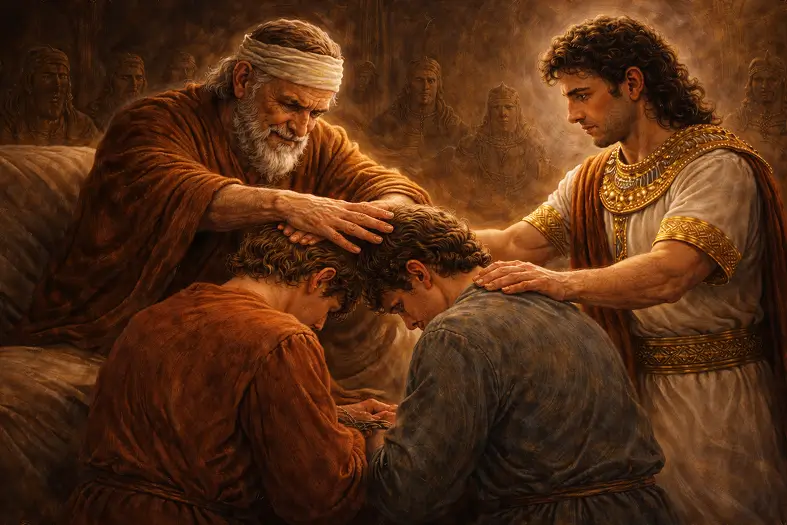
Parshas Vayechi teaches us how to live at moments of transition — when clarity fades, when guidance must be internalized, and when responsibility shifts from teachers to students, from parents to children, from past to future. Yaakov’s life does not end in triumph or resolution, but in instruction. He blesses, warns, and entrusts the future to others. The Torah’s message is unmistakable: the most decisive moments in life are often quiet ones.

One of the parsha’s central lessons is that life does not pause because the future is uncertain. Yaakov seeks to reveal the End of Days and is prevented — not as punishment, but as pedagogy. We are meant to act without guarantees. Faith that depends on full visibility cannot survive exile. Faith that is practiced in uncertainty becomes unbreakable.

Faith Without Timetables

Parshas Vayechi trains us to live responsibly even when outcomes remain hidden:

  • We are not meant to predict redemption
  • We are meant to prepare for it through character
  • We are not asked to know the end
  • We are asked to remain faithful in the middle

Much of modern anxiety stems from the demand to know — plans, timelines, assurances. Vayechi insists that spiritual maturity means learning how to act correctly even when clarity is withheld.

The parsha also reminds us that words shape reality. Yaakov’s blessings and rebukes mold generations. Rav Avigdor Miller emphasizes that blessing is not indulgence, and love is not silence. Avoiding difficult truths often causes greater harm than speaking them honestly.

Speaking With Responsibility

From Yaakov’s final words, we learn that Torah speech requires courage:

  • Encouragement without flattery
  • Rebuke without cruelty
  • Truth spoken מתוך אחריות
  • Silence used only when it protects, not when it avoids

Our words — to children, students, colleagues, and ourselves — leave lasting imprints. Vayechi calls us to speak with care, clarity, and moral seriousness.

Another enduring application emerges from Yosef’s conduct. Yosef refuses to define himself by past injury. He acknowledges wrongdoing, but he does not live inside resentment. His question — “Am I in the place of Hashem?” — is not resignation; it is liberation.

Freedom From the Past

Yosef models emotional and spiritual freedom:

  • He recognizes wrongdoing without weaponizing it
  • He accepts Hashem’s governance over outcomes
  • He refuses to let resentment dictate his future
  • He transforms memory into responsibility, not revenge

When a person accepts that Hashem governs events, emotional energy is released for generosity, growth, and peace of mind.

Vayechi also teaches that strength is quiet. Yehudah is compared to a lion not because he dominates, but because he is restrained. Leadership rooted in Torah is marked by humility, self-control, and responsibility — not volume or force.

The Torah’s Definition of Strength

True strength, as revealed in Vayechi, looks like this:

  • Self-mastery rather than aggression
  • Calm confidence rather than noise
  • Responsibility rather than entitlement
  • Courage grounded in fear of Hashem

In a culture that equates confidence with dominance, the Torah offers a different model: inner firmness combined with moral restraint.

Perhaps the most subtle application of the parsha is this: holiness endures through continuity, not spectacle. Yaakov does not die dramatically; he gathers his feet into the bed and is gathered to his people. Yosef dies in exile, yet his bones wait patiently for redemption.

Preparing Redemption in Advance

Vayechi teaches that redemption begins long before it arrives:

  • Through lives lived faithfully in exile
  • Through discipline practiced without applause
  • Through covenant carried quietly across generations
  • Through people who refuse to disconnect from Hashem even in concealment

Parshas Vayechi leaves us with a powerful charge. We are not responsible for finishing history — but we are responsible for how we carry it forward.

By cultivating character, speaking truth, accepting regret, practicing faith without certainty, and living with inner discipline, we become worthy links in a chain that never breaks.

Life does not end when clarity is withdrawn.
It deepens.
And when lived with emunah, responsibility, and courage, it quietly prepares the world for redemption — one faithful life at a time.

📖 Sources

  • Full sources available on the Mitzvah Minute Parshas Vayechi page under insights and commentaries.

Organized by:
Boaz Solowitch
December 26, 2025
Mitzvah Minute Logo Icon

Connections

Mitzvah Minute Logo Icon

Mitzvah Links

Mitzvah 5

To fear Him
A Siddur
Learn this Mitzvah

Mitzvah 5

5
To fear Him

Mitzvah 11

To emulate His ways
A Siddur
Learn this Mitzvah

Mitzvah 11

11
To emulate His ways

Mitzvah 20

Not to take revenge
A Siddur
Learn this Mitzvah

Mitzvah 20

20
Not to take revenge

Mitzvah 21

Not to bear a grudge
A Siddur
Learn this Mitzvah

Mitzvah 21

21
Not to bear a grudge

Mitzvah 214

To fulfill what was uttered and to do what was avowed
A Siddur
Learn this Mitzvah

Mitzvah 214

214
To fulfill what was uttered and to do what was avowed
The Luchos - Ten Commandments
View Mitzvah Notes

Mitzvah Reference Notes

"x" close page navigation button

Mitzvah Reference Notes

“Living Fully When the Future Is Hidden”

Mitzvah #5 — To Fear Him (Deuteronomy 10:20)

אֶת־ה׳ אֱלֹקֶיךָ תִּירָא

Parshas Vayechi frames yirat Hashem not as fear born of spectacle or revelation, but as disciplined reverence practiced in concealment. Yaakov’s inability to reveal the End of Days teaches that authentic yirah does not depend on certainty or foreknowledge. The parsha models fear of Hashem as the inner restraint that guides action when clarity is withheld, anchoring moral responsibility even when outcomes remain unseen.

Mitzvah #11 — To Emulate His Ways (Deuteronomy 28:9)

וְהָלַכְתָּ בִדְרָכָיו

Vayechi emphasizes continuity of character as the primary vehicle of covenant. Yaakov’s final blessings, Yosef’s restraint, and the quiet preparation for redemption reflect Divine patience, mercy, and faithfulness enacted through human behavior. Emulating Hashem here means acting with steadiness, humility, and responsibility even when redemption is distant and the path forward unclear.

Mitzvah #20 — Not to Take Revenge (Leviticus 19:18)

לֹא תִקֹּם

Yosef’s refusal to exact vengeance upon his brothers serves as a living embodiment of this mitzvah. He acknowledges wrongdoing without weaponizing memory, recognizing that ultimate judgment belongs to Hashem. Vayechi teaches that refraining from revenge is not moral passivity, but spiritual strength — freeing the future from being governed by past injury.

Mitzvah #21 — Not to Bear a Grudge (Leviticus 19:18)

וְלֹא תִטֹּר

Beyond refusing revenge, Yosef releases resentment itself. By declaring “הֲתַחַת אֱלֹקִים אָנִי,” he models emotional and spiritual freedom rooted in trust in Divine governance. Vayechi presents this mitzvah as essential for continuity in exile: a people burdened by grudges cannot carry covenant forward with clarity or peace.

Mitzvah #214 — To Fulfill What Was Uttered and to Do What Was Avowed (Deuteronomy 23:24)

מוֹצָא שְׂפָתֶיךָ תִּשְׁמֹר וְעָשִׂיתָ

Yaakov’s burial request and Yosef’s oath to fulfill it anchor this mitzvah at the heart of Vayechi. When prophecy recedes and leadership transitions, the Torah insists that spoken commitments bind generations. Vayechi teaches that covenantal life is sustained not by vision of the end, but by fidelity to one’s word — especially in moments when fulfillment requires patience, exile, and trust beyond one’s lifetime.

Parsha Links

וַיְחִי – Vayechi

Haftarah: Kings I 2:1-12
A Siddur
Learn this Parsha

וַיְחִי – Vayechi

וַיְחִי – Vayechi
The Luchos - Ten Commandments
View Parsha Notes
"x" close page navigation button

Parsha Reference Notes

“Living Fully When the Future Is Hidden”

Parshas Vayechi (Bereishis 47:28–50:26)

Parshas Vayechi presents the Torah’s model for faithful living at moments of transition and concealment. Yaakov’s life does not conclude with resolution or revealed redemption, but with instruction, blessing, and entrusted responsibility. His attempt to disclose the End of Days is deliberately withheld, teaching that covenantal life is sustained not through foreknowledge but through disciplined action and enduring emunah. Throughout the parsha, words are shown to shape generations — blessings and rebukes determine destiny, oaths bind the future, and silence is used only where it preserves peace rather than avoids truth. Yosef’s refusal to exact vengeance, his acceptance of Hashem’s governance over outcomes, and his quiet preparation for redemption model spiritual maturity within exile. Vayechi thus teaches that life deepens when clarity fades: faith is practiced without timetables, leadership expresses itself through restraint, and redemption is prepared quietly through character, responsibility, and continuity across generations.

Mitzvah Minute
Mitzvah Minute Logo

Learn more.

Dive into mitzvos, tefillah, and Torah study—each section curated to help you learn, reflect, and live with intention. New insights are added regularly, creating an evolving space for spiritual growth.

Luchos
Live a commandment-driven life

Mitzvah

Explore the 613 mitzvos and uncover the meaning behind each one. Discover practical ways to integrate them into your daily life with insights, sources, and guided reflection.

Learn more

Mitzvah #

5

To fear Him
The Luchos - Ten Commandments
Learn this Mitzvah

Mitzvah Highlight

Siddur
Connection through Davening

Tefillah

Learn the structure, depth, and spiritual intent behind Jewish prayer. Dive into morning blessings, Shema, Amidah, and more—with tools to enrich your daily connection.

Learn more

Tefillah

COMING SOON.
A Siddur
Learn this Tefillah

Tefillah Focus

A Sefer Torah
Study the weekly Torah portion

Parsha

Each week’s parsha offers timeless wisdom and modern relevance. Explore summaries, key themes, and mitzvah connections to deepen your understanding of the Torah cycle.

Learn more

וָאֵרָא – Va’eira

Haftarah: Ezekiel 28:25 - 29:21
A Sefer Torah
Learn this Parsha

Weekly Parsha