Each Parsha page on Mitzvah Minute is designed as a guided, three-level journey through the weekly Torah reading—integrating the narrative, the mitzvos, and the classical commentaries into one unified experience.
Begin with the foundations of the Parsha:
This level gives you the storyline, the key mitzvos, and the essential connections between them.
A complete journey through the parsha—moving from clarity and depth to inner connection and real-world meaning, culminating in a way to live its ideas in everyday life.
These sections show how the Parsha speaks to the mind, the heart, and the real world — offering wisdom rooted in enduring Torah.
A complete, structured commentary on the parsha—presented pasuk by pasuk, with chapter and overall summaries for clarity and flow.
This level reveals the structural depth of the Parsha and the classical underpinnings of each theme.
Together, these layers create a complete Parsha journey —
narrative, mitzvah, and commentary — all flowing toward deeper understanding, spiritual insight, and meaningful growth.
Tap the Page Navigation tab on the right side of your screen anytime to access quick-links to the entire Parsha page.

The quick-link panel gives instant access to every section — Parsha Summary, Mitzvos, Divrei Torah, Insights, and Commentaries.
“Every word of Torah and every mitzvah lifts us higher — may your learning bring you closer to Hashem.”

Parshas Vayechi closes the book of Bereishis with legacy, blessing, and promise. Yaakov’s final years in Egypt are marked not by settling, but by transmission. He binds Yosef with an oath to be buried in the land of promise, blesses Ephraim and Menasheh as heirs of the covenant, and addresses each son with words that shape the destiny of the tribes. After Yaakov’s passing, Yosef reaffirms forgiveness, declaring that what humans intended for harm, Hashem intended for good. Bereishis ends in exile — but anchored in certainty of redemption.


Deuteronomy 23:24
Yaakov requires Yosef to swear to bury him in Eretz Kena’an, and Yosef fulfills this oath precisely and publicly. The parsha presents vow-keeping not as technical legality but as moral fidelity across generations. A spoken commitment binds the soul and shapes destiny.
Numbers 30:3
Both Yaakov and Yosef insist that promises made at life’s end be honored without delay or reinterpretation. Vayechi portrays broken vows as spiritual fracture, while faithfulness to one’s word preserves continuity even in exile.
Numbers 27:8
Yaakov’s blessings establish tribal destinies and redefine inheritance, elevating Ephraim over Menashe and granting Yosef a double portion. This moment becomes the Torah’s prototype for lawful transmission of legacy, authority, and identity.
Exodus 20:12
Yosef’s extraordinary care for Yaakov in life and death — honoring burial wishes, public mourning, and dignified transport — models Kibbud Av va’Em beyond proximity or convenience. Vayechi frames honor as action taken even at great personal and political cost.
Leviticus 19:3
The brothers’ restraint, Yosef’s emotional composure, and Yaakov’s authority at life’s end reflect reverence rooted not in fear alone, but in awe of parental spiritual stature. Yaakov’s presence governs even after his passing.
Leviticus 10:19
The seven-day mourning at Goren Ha-Atad and the national lament underscore that mourning is not private emotion alone, but a commanded ritual of kavod ha-met. Egypt itself is drawn into honoring Yaakov’s life.
Deuteronomy 21:23
Yaakov’s insistence on burial in Me’arat HaMachpelah highlights burial as a Torah obligation tied to dignity, land, and covenant. Even embalming and delay serve burial, not replacement of it.
Deuteronomy 21:23
The parsha carefully distinguishes necessary delay (embalming for transport) from neglect. Yosef’s urgency reflects Torah sensitivity to the honor of the departed, even amid royal protocol.
Leviticus 19:18
Yosef’s refusal to retaliate against his brothers after Yaakov’s death transforms betrayal into reconciliation. Love here is expressed as restraint, reassurance, and provision — not sentiment alone.
Leviticus 19:18
Despite absolute power, Yosef declares: “הֲתַחַת אֱלֹהִים אָנִי” — “Am I in place of Elokim?” The Torah presents non-revenge as theological clarity: justice belongs to Hashem alone.
Leviticus 19:18
Yosef goes beyond restraint and actively comforts his brothers. Vayechi frames forgiveness not as forgetting, but as choosing not to let the past govern the future.
Numbers 5:7
The brothers’ fear after Yaakov’s death and their appeal for forgiveness reflect an enduring process of teshuvah. Even decades later, moral reckoning remains active and necessary.
Exodus 20:2
Yosef’s declaration that all events were guided by Hashem transforms historical suffering into theological clarity. Vayechi teaches that recognizing Divine agency is the foundation of Jewish endurance.
Deuteronomy 6:4
The unifying vision of Yaakov’s blessings and Yosef’s final words affirms that fragmented history is governed by a single Divine will. Unity of destiny reflects unity of Hashem.
Deuteronomy 23:24
Yosef’s final oath — commanding his bones be carried from Egypt — bookends the parsha with future-oriented fidelity. Even in death, commitment to redemption is verbalized and binding.
Rashi reads Parshas Vayechi as the Torah’s lesson in how covenant survives concealment. This is not a parsha of new revelation, but of disciplined transmission. As prophecy withdraws and life fades, responsibility moves from vision to action, from the patriarch to the next generation.
Rashi opens Vayechi by noting that the parsha is setumah — closed. With Yaakov’s passing, both the end of days and spiritual clarity are concealed. Yet this closure does not signal abandonment. It marks the moment when redemption must be carried forward not by knowledge of the future, but by loyalty to instruction and oath.
Though Yaakov’s physical vision dims, Rashi emphasizes that his spiritual clarity remains intact. The adoption of Ephraim and Menashe and the crossing of hands are acts of deliberate foresight. Destiny is determined not by birth order or power, but by future spiritual capacity. Blessing becomes an act of wisdom, not instinct.
In the blessings of the tribes, Rashi shows Yaakov speaking with uncompromising truth. Praise and rebuke are precisely measured. Leadership is granted where responsibility was accepted, and withdrawn where impulse ruled. Each son is addressed according to his moral reality, shaping national roles through honest speech.
Rashi closes the parsha by returning to sworn obligation. Yaakov’s burial request and Yosef’s final oath bind the future beyond any lifetime. When prophecy is withheld, covenant persists through fulfilled words. Bereishis ends not with resolution, but with responsibility — exile entered knowingly, redemption entrusted to faithfulness.
Across Vayechi, Rashi teaches that when Divine clarity recedes, holiness is preserved through precision: precise speech, precise action, and unwavering commitment to what was avowed. Redemption does not begin with revelation, but with reliability.
📖 Source
Ramban reads Parshas Vayechi as the Torah’s transition from narrative to structure. This parsha does not resolve exile; it defines how exile functions within Divine design. Yaakov’s final acts — burial instructions, tribal elevation, and measured blessings — are not emotional farewells but legally and theologically binding decisions that shape Jewish history.
Ramban emphasizes that exile begins through human action but unfolds under Divine supervision. Yaakov descends to Egypt expecting return, yet dies there, teaching that covenantal destiny is not always completed within one lifetime. Nevertheless, identity remains anchored in the Land through burial, inheritance, and oath.
The blessings of the tribes reflect moral realism. Leadership is assigned where restraint and responsibility were demonstrated; zeal without discipline is scattered, while kingship rests where moral authority endured. Even Yosef’s greatness emerges not through power, but through endurance under pressure.
For Ramban, Vayechi teaches that redemption does not begin with revelation, but with precision, continuity, and faithfulness to structure. When prophecy is withheld, covenant survives through law, memory, and fulfilled obligation.
📖 Source
Rambam’s writings provide a precise philosophical framework for understanding Parshas Vayechi as the Torah’s transition from foundational narrative to disciplined covenantal life. This parsha does not present miracles or new revelation; instead, it depicts how righteous individuals think, choose, and act at the threshold of exile. For Rambam, this is where true avodat Hashem is tested.
Rambam teaches that Divine providence (hashgachah pratit) operates most fully through the human intellect aligned with truth
– Moreh Nevuchim III:17–18
Yosef’s declaration:
וְאַתֶּם חֲשַׁבְתֶּם עָלַי רָעָה אֱלֹקִים חֲשָׁבָהּ לְטֹבָה
[“You intended harm against me; Elokim intended it for good”]
is not fatalism. Rambam would read this as a statement of causal hierarchy:
This aligns with Rambam’s insistence that prophecy and providence do not suspend natural causation, but direct it toward purpose.
In Hilchot De’ot and Hilchot Melachim, Rambam defines leadership as mastery over impulse, emotion, and ego.
Yehudah’s elevation in Vayechi—rooted in repentance, responsibility, and restraint—embodies Rambam’s principle that:
This anticipates Rambam’s ruling that a Jewish king is bound by Torah law and humility, not charisma or force.
Yaakov’s insistence on burial in the ancestral land reflects Rambam’s teaching that belief is validated through action, not sentiment
– Sefer HaMitzvot, Positive Commandments 4, 153
For Rambam:
Egypt provides sustenance, but it cannot define telos. Burial in Eretz Yisrael is not nostalgia; it is ontological alignment—a declaration of ultimate purpose.
Rambam rejects the notion that holiness requires withdrawal from history. In Moreh Nevuchim III:51, he argues that the perfected individual remains engaged with society while internally aligned with Hashem.
Vayechi exemplifies this:
Exile becomes the setting in which virtue is refined.
Yosef’s final oath:
פָּקֹד יִפְקֹד אֱלֹקִים אֶתְכֶם
[“Elokim will surely remember you”]
reflects Rambam’s view that redemption is a process recognized through understanding, not spectacle
– Hilchot Teshuvah 9:1–2
Hope is transmitted through covenantal memory and rational trust, not immediacy.
Through Rambam’s philosophy, Parshas Vayechi teaches that covenantal survival depends on clarity of mind, disciplined action, and moral responsibility. The righteous do not await redemption passively; they live truthfully within history, confident that Hashem’s will unfolds through intellect guided by Torah.
Bereishis ends not with escape from exile, but with a blueprint for how to remain faithful within it.
📖 Sources
Ralbag reads Parshas Vayechi as the Torah’s most explicit ethical–philosophical summation of Sefer Bereishis. Unlike mefarshim who focus on prophecy or symbolism, Ralbag organizes the parsha around toʿalot—practical moral and intellectual benefits—demonstrating that Torah narrative is a systematic guide for human perfection. Vayechi is not merely the end of Yaakov’s life; it is the culmination of a curriculum in foresight, character, governance, and belief.
Ralbag emphasizes that Yaakov’s concern for burial before illness teaches that wisdom requires anticipatory action. A rational person does not delay preparation until necessity removes choice. This principle, foundational for Ralbag’s ethics, frames Vayechi as a lesson in intellectual vigilance: excellence lies in acting early, deliberately, and with clarity.
Ralbag highlights Yaakov’s insistence on being gathered with his family—even after death—as evidence that human flourishing depends on sustained relational bonds. Ethical life is not solitary; it is communal. Even Yosef’s obedience, despite political burden and authority, models the rational submission of power to obligation. Authority does not exempt one from duty; it intensifies it.
Ralbag devotes significant attention to gestures of honor—Yaakov strengthening himself before Yosef, bowing in gratitude, Yosef honoring his father publicly. These are not emotional flourishes but instruments of social stability. For Ralbag, respect for authority, gratitude for benefit, and dignity in conduct are necessary to preserve the tikkun ha-medinah (order of the state).
In the tribal blessings, Ralbag reads Yaakov’s words as ethical evaluation, not deterministic fate. Reuven’s instability, Shimon and Levi’s anger, and Yosef’s restraint are presented as lessons in how traits shape outcomes. Human success follows discipline; failure follows ungoverned impulse. Destiny emerges from character refined—or neglected—over time.
Ralbag explains that prophecy operates through focused intellect: Yaakov positions Menasheh and Ephraim intentionally so his mind may apprehend their futures. Divine providence, including rescue “through a malach,” reflects Ralbag’s doctrine that Hashem’s governance works through intellectual and causal intermediaries, not arbitrary suspension of nature.
One of Ralbag’s most striking teachings in Vayechi is that peace may justify deviation from literal truth. The brothers’ message to Yosef—though not factually precise—is ethically sanctioned because it preserves harmony. From this, Ralbag derives the principle later affirmed by Chazal: one may, and sometimes must, alter speech for the sake of peace.
Yosef’s forgiveness is, for Ralbag, the hallmark of the yarei Hashem. To forgive readily, to abandon vengeance, and to reframe harm within Divine purpose is not emotional weakness but intellectual and moral strength. The righteous do not cling to grievance; they pursue the greater good with clarity and restraint.
For Ralbag, Parshas Vayechi teaches that the Torah perfects humanity through reasoned ethics enacted in lived reality. Preparation, honor, restraint, peace, and forgiveness are not peripheral virtues—they are the mechanisms through which Divine wisdom shapes history. Bereishis ends not with myth or miracle, but with a disciplined vision of human excellence unfolding under Hashem’s guidance.
📖 Source
When a Tzaddik’s Body Becomes a Test of Exile
Parshas Vayechi concludes with an act that appears technical but is spiritually charged. Upon Yaakov’s death, the Torah records:
וַיְצַו יוֹסֵף אֶת־עֲבָדָיו אֶת־הָרֹפְאִים לַחֲנֹט אֶת־אָבִיו
[“Yosef commanded his servants, the physicians, to embalm his father.”] (Bereishis 50:2)
The Torah offers no explicit critique. Yet Chazal and the ba’alei mussar treat this moment as a subtle test—one that reveals how exile reshapes spiritual judgment even at the highest levels.
The question is not logistical, but theological: how should the body of a tzaddik be treated in exile?
The Gemara teaches that burial is not merely respectful, but spiritually functional. In Sanhedrin 47b, bodily decomposition is described as a form of kaparah—atonement—for those who require it.
This immediately sharpens the question regarding Yaakov Avinu.
Yaakov is not presented as a righteous individual among others, but as the bechir she’ba’avos, a foundational bearer of Torah truth. Chazal famously declare:
“יַעֲקֹב אָבִינוּ לֹא מֵת”
[“Yaakov Avinu did not truly die.”] (Ta’anis 5b)
If decomposition serves atonement, and if Yaakov did not require such kaparah, embalming him risks treating him as spiritually ordinary—measured by human norms rather than recognized as a tzaddik whose body itself reflected holiness.
Bereishis Rabbah (100:3) records a dispute concerning Yosef’s shortened lifespan. One view associates it with the embalming of Yaakov; another defends Yosef by asserting that Yaakov himself instructed the procedure.
This disagreement is essential. Chazal are not issuing a simple indictment, but preserving a layered spiritual tension:
In both readings, the act remains spiritually charged. The Torah records it to teach that the greatest figures are judged not only by overt transgression, but by the assumptions embedded in reasonable decisions.
Rashi draws attention to a detail that fundamentally reframes the act:
The Torah specifies רֹפְאִים—physicians—not professional embalmers.
Rashi explains that standard Egyptian embalmers would open the body and remove internal organs, an act of profound bizayon. By entrusting Yaakov’s body to physicians, Yosef deliberately limited the process to the minimum required to delay decomposition, avoiding invasive desecration.
This distinction is decisive.
Rashi reveals that Yosef:
The act was not careless assimilation, but constrained accommodation under exile.
Chazal raise an additional, often overlooked concern that reframes Yosef’s decision from another angle. Egypt was a civilization steeped in idolatry, where extraordinary bodies were quickly transformed into objects of worship. A corpse that did not decay would not be seen as holy in the Torah sense, but as divine in the Egyptian imagination.
If Yaakov’s body were to remain intact through natural means, Yosef faced a grave risk: that Egyptians would deify Yaakov’s remains, turning the greatest opponent of idolatry into its unintended object.
From this perspective, embalming was not merely political accommodation or filial concern, but preventative spiritual damage control. Yosef sought to ensure that Yaakov’s body would not become:
This concern aligns powerfully with Yosef’s role throughout Egypt: guarding holiness within a corrupt spiritual environment. Just as Yosef resisted assimilation in life, he now sought to prevent posthumous corruption of his father’s legacy.
Yet even this justification does not dissolve the question — it sharpens it.
If Yaakov Avinu truly “did not die,” if his body transcended ordinary decay, then perhaps that very reality should have been allowed to testify to Hashem’s greatness rather than be concealed. The same miraculous preservation that risked idolatry could also have served as the ultimate negation of idolatry, revealing that holiness belongs only to Hashem and those who cleave to Him.
This leaves Yosef suspended between two dangers:
Even with Rashi’s mitigation and the prevention of avaodah zarah, the question does not disappear. Yosef still chose some form of embalming rather than none.
Here the Mesillas Yesharim (Chapter 4) provides the governing framework. The more righteous a person is, the more exacting the standard by which actions are measured. Even justified, well-intended decisions can carry consequence when they reflect unnecessary reliance on natural means.
Yosef’s act may have been defensible—even necessary—but it still emerged from an exile mindset: preserving dignity through physical intervention rather than trusting fully in Yaakov’s transcendent status.
This explains how Chazal can both:
The Torah itself draws a quiet contrast:
Yaakov represents a life that never surrendered its spiritual center.
Yosef represents holiness preserved within exile—navigating compromise without collapse.
The embalming of Yaakov is not a technical debate about funerary practice. It is a Torah meditation on:
Vayechi does not resolve the tension. It preserves it—teaching that exile introduces situations where no option is spiritually perfect. In such moments, the Torah trains its readers to examine not only actions, but the assumptions beneath them.
Parshas Vayechi teaches that true reverence for Hashem is often expressed not through visible miracles, but through restraint exercised in uncertainty:
Yosef’s decision to embalm Yaakov was not born of indifference, nor of spiritual ignorance. It emerged from leadership lived in exile — where holiness can be misunderstood, exploited, or turned into avodah zarah. In such moments, reverence demands caution. The fear is not failure, but distortion.
This tension speaks directly to modern religious life. Not every truth must be showcased. Not every act of kedushah belongs on display. Yiras Shamayim sometimes requires hiding what is sacred so it is not corrupted by the gaze of those unprepared to receive it.
Parshas Vayechi thus reframes spiritual responsibility:
Holiness is not only what is revealed — it is also what is preserved.
📖 Sources
Parshas Vayechi opens with a paradox that defines the Chassidic reading of the end of Sefer Bereishis:
וַיְחִי יַעֲקֹב בְּאֶרֶץ מִצְרַיִם [“And Yaakov lived in the land of Egypt”].
Life, the Torah insists, does not cease in exile. On the contrary — it is precisely there that true spiritual vitality is revealed.
Chassidus notes that Vayechi is a closed parsha, its opening sealed. The Baal Shem Tov explains that this closure is not accidental. Redemption does not arrive through visible rupture, prophetic spectacle, or historical upheaval. It comes quietly, while people are immersed in ordinary life — working, enduring, believing without clarity. Geulah, in this view, is not postponed; it is concealed. Life continues, faith is practiced without certainty, and suddenly redemption arrives.
This explains why Yaakov is prevented from revealing the End of Days. The Sfas Emes teaches that there are two modes of Divine relationship: clarity and emunah. Clear vision cannot coexist with exile; exile exists to cultivate faith without illumination. If the future were revealed, emunah would collapse into knowledge. Concealment, then, is not punishment — it is spiritual necessity. Exile trains the soul to remain attached to Hashem even when vision is withheld.
This idea lies behind the Chazal that “Yaakov Avinu lo met” [“Yaakov did not die”]. The Degel Machaneh Ephraim explains that Yaakov represents Torah itself — eternal, indestructible. Truth does not vanish; it withdraws from visibility. Death language disappears because spiritual life continues beneath the surface, even when it is no longer perceptible.
Chassidus insists that exile is not the absence of Hashem but the hiding place of Hashem. The deepest galus is not chains or servitude, but blocked inner sight — hearts and minds unable to perceive Divine nearness. Yet it is precisely there that the most potent holiness resides. Just as circumcision marks the most concealed part of the body, the deepest Divine light is found where it is least visible.
Yosef embodies this truth. After Yaakov’s passing, the brothers already feel exiled, fearing retribution and loss. Yosef weeps — not from grief, but from recognition. He understands that they already experience galus inwardly, while he does not. He reassures them that what appeared as cruelty was, in truth, the mechanism of survival. אַתֶּם חֲשַׁבְתֶּם עָלַי רָעָה וֶאֱלֹהִים חֲשָׁבָהּ לְטֹבָה [“You intended evil, but Hashem intended it for good”]. Redemption was embedded within the suffering itself.
This principle governs Yaakov’s blessings. The Kedushas Levi explains that blessing is not prediction but activation — an awakening of latent spiritual motion. This is why Ephraim precedes Menashe. Menashe represents forgetting, pain, and exile; Ephraim represents expansion and fruitfulness. Healing is implanted before the wound appears. Redemption precedes exile in Divine intent, even if it is revealed later in history.
The same dynamic appears in the tribe of Yehudah. Kingship, Chassidus teaches, is not domination but intimacy with Hashem. Yehudah’s greatness lies in addressing Hashem directly — אַתָּה — serving not for reward but for Divine pleasure. The highest avodah is not drawing blessing downward, but acting solely to give satisfaction Above. True malchus is self-nullification in service.
Issachar, depicted as bearing the burden of materiality, reveals another core Chassidic teaching. Reward is born not from escape from the physical, but from engaging it. The donkey, חֲמוֹר, symbolizes חֹמֶר — material substance. Spiritual elevation occurs through eating, labor, resistance, and restraint. When thought becomes speech, inner rest emerges. Holiness is forged in struggle, not withdrawal.
The blessings of Asher and Gad deepen this vision. Tzedakah, prayer, and humility dissolve spiritual barriers. When a person forgets the self and acts purely for Hashem, infinite attachment becomes possible. The greatest delight is not what a person receives, but the pleasure Hashem takes in human avodah. Even concealment increases that pleasure, preserving freshness and longing.
Vayechi thus closes Bereishis not with endings, but with continuity. Yosef dies, yet promises redemption. His bones wait in Egypt, testimony that nothing truly ends when joined to Hashem. Life does not conclude when clarity fades. It begins when faith learns to see in the dark.
Vayechi teaches that holiness is strongest where it is most hidden, that exile itself is a vessel for redemption, and that true life persists even when vision is withheld. The book of beginnings ends by teaching how life continues — quietly, faithfully, and eternally.
Sources
Hope, Freedom, and the Ethics of the Future
Rabbi Jonathan Sacks reads Parshas Vayechi not as a story of endings, but as Judaism’s most powerful meditation on how human beings face the future. Bereishis closes in exile, with Yaakov’s death and Yosef’s burial in Egypt, yet the parsha insists that Jewish destiny is never defined by circumstance alone. Through themes of blessing, forgiveness, generational continuity, moral courage, and covenantal time, Rav Sacks shows how Vayechi teaches responsibility in a world whose final chapter has not yet been written.
Yosef is the most emotionally expressive figure in Bereishis. Rav Sacks identifies seven moments of Yosef’s tears, culminating in Parshas Vayechi after Yaakov’s death. These tears are not weakness; they are the mark of moral maturity. Yosef’s weeping signals empathy without revenge — the capacity to feel pain without letting it dictate the future. True leadership, Rav Sacks argues, requires emotional honesty combined with restraint.
Forgiveness, Rav Sacks teaches, is the ultimate expression of freedom. Yosef’s declaration — “You intended harm, but Hashem intended it for good” — reframes the past without denying it. Forgiveness does not erase wrongdoing; it releases the future from captivity to the past. Judaism, therefore, is the only civilization whose golden age lies ahead, because it refuses to let yesterday dictate tomorrow.
Vayechi marks the first time an entire family remains united at the end of a generation. Yaakov blesses all twelve sons together. This unity, Rav Sacks explains, is a prerequisite for becoming a people. A nation cannot survive externally if it is fractured internally. Forgiveness within the family becomes the foundation of freedom in history.
Yaakov’s blessing of Ephraim and Menashe introduces a uniquely Jewish idea: continuity without coercion. Rav Sacks highlights the radical notion that the greatest legacy is not control over children, but space for grandchildren to surpass us. The blessing flows across generations without anxiety about hierarchy or dominance.
Jewish continuity depends on memory shaped toward the future. Rav Sacks shows how Vayechi balances remembrance and renewal. Memory becomes destructive when it fuels resentment; it becomes redemptive when it inspires responsibility. The Jewish task is not to live in the past, but to redeem it through action.
Yaakov wishes to reveal the End of Days, but the vision is withheld. Rav Sacks explains that prophecy ends where freedom begins. The future cannot be predicted because it is created by moral choice. Judaism rejects fate — not because the future is unknowable, but because it is unfinished.
Yosef embodies covenantal resilience. He survives betrayal, loss, and power without surrendering moral clarity. Rav Sacks emphasizes Yosef’s insight into Divine providence: recognizing that one is a co-author, not the author, of history allows a person to move forward without bitterness or despair.
The brothers’ message after Yaakov’s death may not be literally true — yet Yosef accepts it. Rav Sacks explores the ethics of “peace-preserving truth.” In Judaism, truth is not merely factual accuracy but moral responsibility. Sometimes the highest truth is the one that prevents cruelty.
Bereishis ends without resolution: the land is not entered, redemption has not begun. Rav Sacks contrasts Jewish time with cyclical and tragic models of history. Jewish time is covenantal — open-ended, hopeful, and unfinished. The story continues because human responsibility continues.
The power of Vayechi lies in reinterpretation. Yosef transforms suffering into purpose, memory into mission. Rav Sacks shows that Judaism does not deny tragedy; it redeems it by insisting that meaning is discovered through moral response.
At the heart of Vayechi stands one principle: freedom. Human beings are not objects governed by destiny but subjects shaped by choice. Rav Sacks teaches that Hashem’s gift of freedom is what allows blessing, forgiveness, and hope to exist at all.
Parshas Vayechi teaches that endings are never final. Life continues in exile, blessings continue after death, forgiveness continues beyond fear, and the future remains open. Judaism’s faith is not in certainty, but in responsibility — the courage to write the next chapter with integrity.
📖 Source
Life, Exile, and Redemption from Within
Parshas Vayechi stands at the threshold between life and death, revelation and concealment, promise and exile. Rav Kook reads this parsha not as the closing of Bereishis, but as its deepest unveiling: a Torah meditation on how eternal life, redemption, and Divine service persist precisely when clarity is withdrawn.
Across these teachings, Rav Kook develops a single unifying vision:
true spiritual greatness is forged not through spectacle or rupture, but through hidden continuity, inner discipline, and patient faith.
Chazal declare: “Yaakov Avinu lo met” — our father Yaakov did not die. Rav Kook insists this is not poetic exaggeration, nor a claim about physical immortality. Rather, it describes a qualitative difference in Yaakov's life mission.
There are two dimensions to death:
Avraham and Yitzchak required mitah, because part of their life’s labor involved transitional means — raising Ishmael and Esav — necessary steps, but not eternal outcomes. Yaakov, however, reached a singular completeness: “mitato sheleimah” — his entire family entered the covenantal destiny of Israel.
Because Yaakov’s life work aligned fully with Hashem’s eternal purpose, nothing in his soul required purging. His mission did not terminate; it continued through his children. This is why the Torah speaks of Yaakov “expiring” but never explicitly says that he died. His life persists wherever Israel lives.
Yaakov sought to reveal אַחֲרִית הַיָּמִים — the End of Days. Rav Kook explains that this desire flowed from love, not impatience. Yaakov wanted his sons to strive consciously toward redemption, to shape history through moral and spiritual effort.
But redemption governed solely by human calculation would lack something essential: awe.
Rav Kook draws a critical distinction:
If the End of Days were known, redemption might arrive as an achievement — but not as surrender. Therefore, Hashem conceals the moment of redemption, ensuring that geulah arrives not only through merit, but through humility and submission.
Redemption, then, is not withheld as punishment —
it is withheld so that faith remains alive.
Rav Kook confronts a painful theological question:
Why is exile so long?
Drawing on prophetic sources, he explains that Israel’s destiny is not merely moral survival, but intimate love of Hashem — a love so embedded that it cannot be shaken by sin, fear, or confusion.
Such love requires deep purification. Exile performs two tasks simultaneously:
This is why Chazal speak of double sin, double punishment, and double consolation. Exile cleanses not only actions, but the conditions that allow estrangement to recur.
When Yaakov blesses Yosef, he declares his blessing superior to that of his fathers. Rav Kook explains that Avraham and Yitzchak’s blessings were largely miraculous interventions — moments where nature was suspended.
Yaakov’s blessing is different.
He blesses Yosef with sanctified nature:
a world where Divine abundance flows through the physical order, not around it.
This is the meaning of:
Yaakov envisions a future where holiness permeates the material world itself — a quiet, continuous ascent “unto the eternal hills.”
Why bless Ephraim and Menashe to multiply like fish?
Rav Kook explains that fish live concealed beneath the surface, immune to the Evil Eye. They flourish not through visibility, but through inner coherence.
Yosef embodied this trait. Whether enslaved, imprisoned, or exalted, he remained anchored to his inner truth. His children inherit this capacity: to live within the world without being defined by its gaze.
True spiritual strength does not demand recognition.
It grows where others are not looking.
Rav Kook offers a penetrating insight into moral failure among the righteous.
Great souls are vulnerable not because they lack integrity —
but because they trust it too much.
Reuven’s restraint teaches that even noble impulses require scrutiny. Sometimes, the most effective safeguard against moral error is not lofty idealism, but simple accountability — a sober awareness of consequence.
True greatness includes the humility to doubt one’s own righteousness.
Yaakov’s claim to have conquered with sword and bow astonishes — until Chazal reveal that these are metaphors for tefillah.
Rav Kook explains:
Prayer is not passive. It requires preparation, refinement, and mental courage. Through prayer, Yaakov overcame not external enemies, but spiritual confusion.
Vayechi teaches that life does not end when certainty fades.
It endures when faith learns to operate without guarantees.
Yaakov lives on not because he escaped death, but because his life became indistinguishable from Israel’s destiny.
Redemption, Rav Kook teaches, is not always announced.
Sometimes it unfolds quietly —
through continuity, patience, and souls that refuse to disconnect from Hashem even in concealment.
📖 Sources
Parshas Vayechi teaches us how to live at moments of transition — when clarity fades, when guidance must be internalized, and when responsibility shifts from teachers to students, from parents to children, from past to future. Yaakov’s life does not end in triumph or resolution, but in instruction. He blesses, warns, and entrusts the future to others. The Torah’s message is unmistakable: the most decisive moments in life are often quiet ones.
One of the parsha’s central lessons is that life does not pause because the future is uncertain. Yaakov seeks to reveal the End of Days and is prevented — not as punishment, but as pedagogy. We are meant to act without guarantees. Faith that depends on full visibility cannot survive exile. Faith that is practiced in uncertainty becomes unbreakable.
Parshas Vayechi trains us to live responsibly even when outcomes remain hidden:
Much of modern anxiety stems from the demand to know — plans, timelines, assurances. Vayechi insists that spiritual maturity means learning how to act correctly even when clarity is withheld.
The parsha also reminds us that words shape reality. Yaakov’s blessings and rebukes mold generations. Rav Avigdor Miller emphasizes that blessing is not indulgence, and love is not silence. Avoiding difficult truths often causes greater harm than speaking them honestly.
From Yaakov’s final words, we learn that Torah speech requires courage:
Our words — to children, students, colleagues, and ourselves — leave lasting imprints. Vayechi calls us to speak with care, clarity, and moral seriousness.
Another enduring application emerges from Yosef’s conduct. Yosef refuses to define himself by past injury. He acknowledges wrongdoing, but he does not live inside resentment. His question — “Am I in the place of Hashem?” — is not resignation; it is liberation.
Yosef models emotional and spiritual freedom:
When a person accepts that Hashem governs events, emotional energy is released for generosity, growth, and peace of mind.
Vayechi also teaches that strength is quiet. Yehudah is compared to a lion not because he dominates, but because he is restrained. Leadership rooted in Torah is marked by humility, self-control, and responsibility — not volume or force.
True strength, as revealed in Vayechi, looks like this:
In a culture that equates confidence with dominance, the Torah offers a different model: inner firmness combined with moral restraint.
Perhaps the most subtle application of the parsha is this: holiness endures through continuity, not spectacle. Yaakov does not die dramatically; he gathers his feet into the bed and is gathered to his people. Yosef dies in exile, yet his bones wait patiently for redemption.
Vayechi teaches that redemption begins long before it arrives:
Parshas Vayechi leaves us with a powerful charge. We are not responsible for finishing history — but we are responsible for how we carry it forward.
By cultivating character, speaking truth, accepting regret, practicing faith without certainty, and living with inner discipline, we become worthy links in a chain that never breaks.
Life does not end when clarity is withdrawn.
It deepens.
And when lived with emunah, responsibility, and courage, it quietly prepares the world for redemption — one faithful life at a time.
Rashi’s commentary on Parshas Vayechi guides the reader through the Torah’s most delicate transition: from living patriarchs to inherited destiny. The parsha opens not with revelation but with concealment — sealed prophecy, fading sight, and the quiet gravity of final speech. Rashi consistently draws attention to what is withheld as much as to what is said: the hidden end of days, the restrained rebuke, the deliberate choice of words that bind generations through oath and obligation. Across burial requests, blessings, and final commands, Rashi reveals Vayechi as a parsha where covenant is preserved not through miracles, but through precise speech, moral accountability, and faithful execution of what was promised.
“And Yaakov lived”
לָמָּה פָּרָשָׁה זוֹ סְתוּמָה?
[“Why is this parsha closed (without the usual spacing)?”]
Rashi offers two explanations for why Parshas Vayechi begins as a parsha setumah:
“And the days of Israel drew near to die”
Rashi states a general principle:
כָּל מִי שֶׁנֶּאֱמְרָה בּוֹ קְרִיבָה לָמוּת, לֹא הִגִּיעַ לִימֵי אֲבוֹתָיו
[“Anyone of whom it is said that his days drew near to die did not reach the lifespan of his forefathers.”]
Rashi illustrates this pattern:
The phrase “drawing near to die” signals a life curtailed relative to lineage.
“And he called his son Yosef”
Rashi explains why Yaakov calls Yosef specifically:
לְמִי שֶׁהָיָה יְכֹלֶת בְּיָדוֹ לַעֲשׂוֹת
[“He called the one who had the power in his hands to do [what was requested].”]
This is not favoritism. It is practical authority. Yosef alone has the political capacity to fulfill Yaakov’s burial request.
“Please place your hand”
Rashi explains succinctly:
וְהִשָּׁבַע
[“And swear an oath.”]
The gesture is not symbolic affection. It is a formal act of binding obligation.
“Kindness and truth”
Rashi defines this phrase precisely:
חֶסֶד שֶׁעוֹשִׂין עִם הַמֵּתִים הוּא חֶסֶד שֶׁל אֱמֶת
[“Kindness done for the dead is true kindness.”]
Why? Because it carries no expectation of repayment. This is חסד devoid of self-interest — the purest form of loyalty.
“Please do not bury me in Egypt”
Rashi gives three reasons:
Each reason reflects a different dimension: physical dignity, eschatological belief, and theological integrity.
Yosef responds simply and affirmatively: אָנֹכִי אֶעֱשֶׂה כִּדְבָרֶךָ [“I will do as you have spoken”], but Yaakov insists on an oath. Once Yosef swears, the Torah concludes:
וַיִּשְׁתַּחוּ יִשְׂרָאֵל עַל־רֹאשׁ הַמִּטָּה
[“And Israel bowed at the head of the bed.”]
Rashi offers no further comment here — the silence itself underscores the gravity of fulfilled speech.
For Rashi, Vayechi opens not with death, but with concealment — of vision, of redemption, and of clarity. Yet within that closure, Yaakov anchors the future through oath-bound speech, teaching that when prophecy is withheld, covenant is preserved through faithful action.
This passage is the textbook activation of Mitzvah #214:
to fulfill what was uttered and to do what was avowed.
“And it came to pass after these things”
Rashi understands this phrase as a deliberate transition. After Yaakov secures an oath from Yosef regarding burial, the Torah turns to the next act of transmission: blessing and inheritance. Yosef is informed of his father’s illness so that the blessings will be given with full awareness and intent, not in a moment of sudden decline.
“Israel summoned his strength and sat upon the bed”
Rashi emphasizes Yaakov’s effort. Though physically weakened, he gathers strength intentionally. Blessing requires presence, dignity, and conscious readiness. This is not a passive act but a final exertion of spiritual authority.
“El Shaddai appeared to me at Luz”
Rashi explains that Yaakov recalls Hashem’s revelation to establish the legal and spiritual foundation for what follows. This is not memory alone, but covenantal justification. The blessing of Yosef’s sons rests on a promise already given by Hashem.
“And He said to me: Behold, I will make you fruitful”
Rashi notes that the phrase קְהַל עַמִּים
[“an assembly of peoples”]
signals an expansion beyond the existing sons. Yaakov understands this promise as authorization to elevate additional tribes through Yosef.
“Your two sons… they shall be mine”
Rashi explains that Ephraim and Menashe are granted full tribal status. They are equal to Reuven and Shimon regarding inheritance and identity. Yosef thus receives a double portion, not as favoritism, but as fulfillment of Divine promise.
“Children born after them shall be yours”
Rashi clarifies that only these two are elevated to tribal status. Any later descendants of Yosef are subsumed within Ephraim and Menashe and do not form independent tribes.
“When I was returning from Paddan, Rachel died upon me”
Rashi explains that Yaakov invokes Rachel’s death as moral grounding. Rachel was buried on the road, not in the ancestral tomb, yet Yosef accepted this without complaint. So too, Yosef is asked to accept Yaakov’s decisions without resentment. The memory is not incidental; it is an ethical appeal.
“Who are these?”
Rashi explains that although Yaakov’s eyesight had dimmed, this question is not merely physical confusion. It formally initiates the blessing process, drawing attention and intention to the moment.
“Whom Hashem has given me here”
Rashi emphasizes Yosef’s humility. Even in exile and success, he attributes his children entirely to Hashem’s gift, not to personal merit or achievement.
“Israel’s eyes were heavy with age”
Rashi explains this literally. Physical sight has diminished, yet what follows demonstrates that prophetic and spiritual vision remain intact.
“I never expected to see your face”
Rashi notes Yaakov’s astonishment. Not only has Yosef returned alive, but Yaakov is granted the added kindness of seeing grandchildren. The restoration exceeds expectation.
“Yosef removed them from his knees”
Rashi explains this as preparation for a formal blessing posture. Yosef repositions his sons out of reverence for the act of blessing.
“He crossed his hands with intent”
Rashi stresses that this was deliberate wisdom, not confusion. Yaakov knowingly places his right hand on Ephraim, despite Menashe being the firstborn. Spiritual destiny overrides birth order.
“And he blessed Yosef”
Rashi clarifies that blessing the sons constitutes blessing the father. A parent’s blessing flows through descendants.
“The angel who redeemed me from all harm”
Rashi explains that this refers to the angel consistently sent by Hashem to protect Yaakov throughout his life. This is not an independent force, but a Divine emissary.
וְיִדְגּוּ לָרֹב
“May they multiply like fish”
Rashi explains that fish multiply abundantly and are hidden from the evil eye. The blessing is for growth without vulnerability.
“It displeased him”
Rashi explains that Yosef assumes the hand placement is a mistake due to blindness. His response is respectful; he attempts to adjust, not challenge.
“Not so, my father”
Rashi explains that Yosef’s objection is logical, rooted in firstborn convention, not defiance.
“I know, my son, I know”
Rashi explains that Yaakov acknowledges Menashe’s future greatness, foretold through Gideon. Yet Ephraim’s descendants will surpass him through Torah leadership, warranting precedence.
“By you shall Israel bless”
Rashi explains that this establishes the eternal formula of blessing for Jewish children:
“May Hashem make you like Ephraim and Menashe.”
“I am about to die, but Hashem will be with you”
Rashi emphasizes continuity. Leadership departs; Divine presence does not.
“One portion more than your brothers”
Rashi explains that this refers to Shechem. Yosef receives a double portion through his sons. The phrase “with my sword and bow” refers not to physical combat, but to Yaakov’s prayer and merit.
Chapter 48 centers on intentional transmission under fading strength. Though physically weakened, Yaakov summons clarity to anchor the future of Israel. He adopts Ephraim and Menashe as full tribes, transforming Yosef’s private lineage into national inheritance and fulfilling Hashem’s promise of קְהַל עַמִּים [“an assembly of peoples”]. The crossed hands are no mistake but conscious foresight: spiritual destiny, not birth order, determines precedence. Yosef’s humility, Yaakov’s memory of Rachel, and the blessing invoking lifelong Divine protection together frame leadership for exile — growth without visibility, blessing without dominance, and continuity guided by Hashem even as human sight dims.
“Yaakov called his sons”
Rashi explains that Yaakov gathered all twelve sons together because he intended to reveal matters that applied to them collectively. This was not private instruction but national address.
“That I may tell you what will befall you at the end of days”
Rashi explains that Yaakov sought to reveal the קֵץ [the time of redemption]. At that moment, the Divine Presence departed from him, and he was prevented from disclosing it. Seeing this, Yaakov feared that perhaps one of his sons was unworthy.
“Gather and listen, sons of Yaakov”
Rashi explains that Yaakov reassures himself when all his sons respond together with unity and faith, affirming Hashem’s Oneness. Just as Avraham and Yitzchak produced no flawed offspring, Yaakov realizes his bed is complete.
“Listen to Israel your father”
Rashi explains the shift from “Yaakov” to “Yisrael” as deliberate. When addressing rebuke and destiny, he speaks as Israel — the patriarch of the nation, not merely the father.
“Reuven, you are my firstborn”
Rashi explains that Yaakov enumerates Reuven’s rightful privileges:
All were fitting for him by status.
“Unstable as water, you shall not excel”
Rashi explains that Reuven lost all three privileges due to haste and impulsiveness. Just as water rushes without restraint, Reuven acted without deliberation. Therefore:
“Shimon and Levi are brothers”
Rashi explains that they were united not only by birth, but by behavior — specifically their joint action at Shechem.
“Let my soul not enter their counsel”
Rashi explains that Yaakov distances himself from:
He refuses association with violence driven by anger.
“Cursed be their anger, for it is fierce”
Rashi explains that Yaakov does not curse the brothers themselves, but their anger. Their punishment is dispersion — not annihilation.
“Yehudah — your brothers shall praise you”
Rashi explains this praise stems from Yehudah’s public admission in the Tamar episode. Because he acknowledged truth, leadership is granted to him.
“A lion cub is Yehudah”
Rashi explains this as symbolic of strength and dominance, both in Davidic kingship and future sovereignty.
“The scepter shall not depart from Yehudah”
Rashi explains:
Rashi understands שִׁילֹה as a reference to the king to whom dominion belongs.
Rashi explains the vine, wine, milk, and garments as metaphors for abundance and blessing in Yehudah’s portion.
“Zevulun shall dwell by the seashore”
Rashi explains that Zevulun engages in commerce and trade, supporting Yissachar’s Torah study.
“Yissachar is a strong-boned donkey”
Rashi explains this as metaphor for bearing the yoke of Torah. Yissachar submits to toil willingly, choosing learning over comfort.
Rashi explains this as a reference to Shimshon, who judges Israel alone, striking enemies through cunning rather than open warfare.
“For Your salvation I hope, Hashem”
Rashi explains that Yaakov foresaw Shimshon’s death and prayed for true redemption beyond temporary deliverers.
Rashi explains this as prophecy of military struggle and eventual victory.
Rashi explains Asher’s land yields delicacies fit for kings.
Rashi explains this as swiftness in delivering good news and eloquence.
Rashi explains Yosef’s blessing as resilience under attack, remaining righteous despite provocation.
Rashi explains “archers” as Yosef’s brothers and Potiphar’s wife. Yosef’s strength comes from Divine support alone.
Rashi explains these as material and spiritual abundance surpassing previous generations.
Rashi explains this as reference to King Shaul and later Mordechai and Esther — warriors and defenders of Israel.
“All these are the tribes of Israel”
Rashi emphasizes that each son received a blessing suited uniquely to him.
Rashi explains that Yaakov commands burial with the patriarchs to affirm continuity of covenant. When finished, Yaakov gathers his feet and dies peacefully, fully conscious until the end.
Chapter 49 records Yaakov’s final address to his sons, transforming family history into national destiny. Seeking to reveal the end of days, Yaakov is withheld from disclosing it and instead delivers blessings and rebuke tailored to each son’s character and future role. Reuven’s haste costs him leadership; Shimon and Levi’s anger leads to dispersion; Yehudah emerges as bearer of kingship. Other tribes are defined by Torah labor, commerce, strategy, sustenance, or resilience. Yosef’s blessing crowns steadfast faith under suffering. The chapter closes with Yaakov completing his mission, shaping Israel’s future through truthful speech before death.
“Yosef commanded his servants, the physicians”
Rashi explains that Yosef ordered physicians rather than embalmers directly so that Yaakov’s body would not be treated as an object of idolatry. This preserved dignity and avoided Egyptian ritual excess.
“They completed forty days for him”
Rashi explains that forty days is the standard period required for embalming. This detail underscores the thoroughness of the process and the honor accorded to Yaakov.
“Egypt bewailed him seventy days”
Rashi explains that this period exceeded that of Pharaoh himself, reflecting the immense honor Yaakov commanded even among the Egyptians.
“My father made me swear”
Rashi explains that Yosef emphasizes the oath to Pharaoh because Pharaoh himself feared oaths. Yosef knew this would secure permission without suspicion.
“As he made you swear”
Rashi explains that Pharaoh’s consent is rooted specifically in the oath’s binding force. Even kings recognize sworn obligation.
“Yosef went up to bury his father”
Rashi explains that Yosef himself leads the procession, demonstrating supreme filial honor. Authority does not excuse personal responsibility.
“The camp was very great”
Rashi explains that Egypt’s full dignity accompanied Yaakov’s burial, signaling recognition of his stature.
“The threshing floor of Atad”
Rashi explains that the Egyptians crowned Yaakov’s coffin with royal crowns. The abundance of crowns resembled a threshing floor ringed with thorns.
“Seven days of mourning”
Rashi notes this as the source for the seven-day mourning period later formalized in halachah.
“The mourning of Egypt”
Rashi explains that the Canaanites attributed the mourning to Egypt, unaware of Yaakov’s true identity, naming the place accordingly.
“His sons did thus”
Rashi emphasizes obedience. Every instruction was fulfilled precisely.
“His sons carried him”
Rashi explains that only Yaakov’s sons carried the coffin, excluding Egyptians, in fulfillment of his command.
“Perhaps Yosef will bear hatred”
Rashi explains that once Yaakov died, the brothers lost their protective buffer and feared Yosef’s suppressed resentment.
“Your father commanded”
Rashi explains that the brothers altered the truth for the sake of peace. Yaakov never issued such a command, but peace justified the statement.
“Yosef wept”
Rashi explains that Yosef cried because the brothers still suspected him. Their fear revealed lingering mistrust.
“We are your servants”
Rashi explains that the brothers offered themselves as slaves, unwittingly fulfilling Yosef’s dreams.
“Am I in place of Hashem?”
Rashi explains that Yosef refuses divine prerogative. Judgment belongs to Hashem alone.
“You intended evil against me”
Rashi explains that Yosef acknowledges their intent honestly but reframes the outcome as Divine design.
“He comforted them”
Rashi explains that Yosef reassured them materially and emotionally, sustaining their families.
“Yosef lived one hundred and ten years”
Rashi explains that Yosef’s life was shortened because he heard his brothers refer to Yaakov as “your servant” and did not protest.
“Yosef saw Ephraim’s third generation”
Rashi explains this as a sign of blessing and continuity, mirroring Yaakov’s vision of grandchildren.
Chapter 50 completes the transition from patriarchal life to national memory. Yosef honors Yaakov with extraordinary dignity, ensuring his burial in the ancestral land and fulfilling every sworn instruction precisely. Egypt itself mourns Yaakov, recognizing his stature. After the burial, the brothers fear Yosef’s retaliation, but Yosef rejects vengeance, affirming that human intent cannot override Hashem’s design. He comforts and sustains his family, modeling restraint and faith. The chapter closes with Yosef binding the future nation through an oath of redemption, leaving Bereishis suspended between exile and promise.
Rashi closes Vayechi by returning us to the power of fulfilled words. Yaakov dies having completed his task — not by resolving exile, but by anchoring it with instruction, clarity, and trust in Hashem’s unfolding plan. Yosef, in turn, embodies that legacy: honoring oaths, refusing vengeance, and binding the future with a final command that reaches beyond his lifetime. For Rashi, the end of Bereishis is not an ending at all, but a suspension — Israel stands in Egypt, sealed by promises yet to be redeemed. The Torah moves forward not because the future is known, but because sacred speech has been spoken and must now be carried forward, faithfully and without distortion, until its fulfillment.
📖 Source
Ramban approaches Parshas Vayechi as the Torah’s architectural blueprint for exile and destiny. Where earlier parshiyot narrate events, Vayechi establishes structure: who inherits, who leads, how exile functions, and how covenantal identity survives displacement. Ramban consistently reads Yaakov’s final actions not as emotional farewell, but as deliberate legal–theological design. Burial choices, tribal elevation, blessings, and rebuke are all treated as binding acts that shape Jewish history far beyond the patriarchal era. For Ramban, Vayechi is the moment when family becomes nation through law, precision, and foresight.
“And Yaakov lived in the land of Egypt seventeen years”
Ramban explains that Yaakov’s descent to Egypt is not an isolated historical episode but a prototype for later Jewish exile. He explicitly identifies this descent as an allusion to the present exile under the fourth kingdom, Rome. The exile began through internal causation: Yaakov’s own sons initiated it by selling Yosef. Yaakov followed due to famine, assuming the descent would be temporary.
Ramban emphasizes that Yaakov believed he would find refuge through Yosef, whom Pharaoh loved and treated as a son. The family fully expected to return once the famine ended, as they themselves stated that they had come only to sojourn. Yet this return never occurred. Instead, Yaakov died in exile, and only his bones were later brought up — accompanied by Egyptian dignitaries and public mourning.
Ramban draws a parallel to later history. Israel’s subjugation to Rome likewise resulted from internal political choices and famine-driven collapse. Just as Yaakov’s exile prolonged itself unexpectedly, so too the Roman exile has extended beyond comprehension. Ramban describes Israel’s condition within exile as one of suspended life, likened to the declaration:
“יָבְשׁוּ עַצְמוֹתֵינוּ נִגְזַרְנוּ לָנוּ”
[“Our bones have dried up; we are cut off.”]
Yet Ramban concludes with certainty of reversal. The nations will ultimately bring Israel back as an offering to Hashem, mourn their former humiliation upon witnessing Israel’s restored glory, and Israel will live again before Him.
“And the days of Israel drew near to die”
Ramban explains that this phrase does not indicate illness. Rather, Yaakov sensed within himself unusual weakness and exhaustion, understanding intuitively that his end was approaching. This recognition occurred during the final year of his life.
Ramban supports this interpretation by comparison to King David, of whom the Torah uses similar language: awareness of death approaching rather than physical sickness. Only later, after Yosef returned to Egypt, did Yaakov become ill — prompting Yosef to return with Ephraim and Menashe to receive the blessings.
“And he called his son Yosef”
Ramban explains that Yaakov summoned Yosef because Yosef alone possessed the political authority to carry out his burial request. The command was not sentimental, but strategic. Yaakov understood that Pharaoh might refuse permission for Yosef to leave Egypt if Yosef were not legally bound by oath.
This concern later proves correct: Yosef must plead through Pharaoh’s court, and Pharaoh explicitly permits the journey only because of the sworn oath.
“I will lie with my fathers… and you shall bury me in their burial place”
Ramban analyzes the phraseology carefully and discusses the meaning of the word אֶל (“to / with / in”). He explains that the verse is concise and should be understood as:
“Carry me from Egypt and bury me with my fathers in the cave.”
He notes that אֶל can mean:
Ramban brings multiple Scriptural examples to demonstrate this usage and rejects the suggestion that Yaakov merely meant that the brothers should accompany Yosef. Yaakov required all his sons to participate in the burial to ensure fulfillment and prevent obstruction.
“Swear to me… and Israel bowed”
Ramban explains that the oath was essential. Without it, Pharaoh might have refused permission out of fear that Yosef would remain in Canaan. Indeed, Pharaoh later agrees only because of the oath. Yaakov therefore bound Yosef with formal obligation to guarantee execution.
Ramban does not elaborate on the bowing itself, allowing the action to stand as the natural conclusion of sworn certainty.
For Ramban, these verses establish exile not as accident, but as Divinely permitted consequence shaped by human choice. Yet exile is never permanent. Burial outside Egypt, sworn fidelity, and collective participation ensure that even when life ends in foreign soil, identity and destiny remain anchored in the promised land.
“But your offspring born after them shall be yours”
Ramban explains that Yaakov’s designation of Ephraim and Menasheh as tribes does not create additional tribal divisions beyond twelve. Rather, the Torah preserves the fixed tribal structure while granting Yosef the status of firstborn with respect to inheritance.
Ramban rejects the notion that Yosef’s elevation creates new tribal identity categories. Instead, Ephraim and Menasheh replace Reuven and Shimon numerically within the tribal count, while Yosef’s other descendants remain subsumed under those tribal identities.
The key principle is legal precision, not symbolic excess: Yosef receives double inheritance through sons, not through tribal inflation.
“As for me, when I came from Paddan, Rachel died upon me”
Ramban challenges Rashi’s implication that Rachel was buried outside the Land. He insists emphatically that Rachel died within Eretz Yisrael and was buried there properly.
Ramban clarifies that Yaakov’s statement here is not apologetic but explanatory. He explains to Yosef why Rachel was not buried in Me’arat HaMachpelah: her burial site was divinely ordained along the road, not due to neglect or inability.
This moment contextualizes Yaakov’s burial request later. He is demonstrating that burial location reflects Divine intent, not emotional preference.
“They are my sons, whom Elokim has given me here”
Ramban highlights Yosef’s deliberate phrasing. Yosef attributes his children explicitly to Elokim, not to Egypt, success, or circumstance.
Though born in exile, Ephraim and Menasheh are framed as gifts of Divine will, not products of assimilation. Ramban reads this as Yosef’s spiritual defense: Egypt shaped the environment, but Elokim shaped destiny.
This framing prepares the ground for Yaakov’s full tribal adoption of Yosef’s sons.
“Elokim who shepherded me from my inception until this day”
Ramban offers a linguistic insight: ha-ro’eh (the shepherd) may also carry the sense of rei’a — companion or intimate guide.
Hashem’s role here is not only provider but relational presence. Ramban explains that Yaakov’s life involved Divine guidance even when Divine truth could not be fully manifest — particularly outside the Land and during morally complex situations such as Lavan’s deception.
This blessing acknowledges Hashem’s accompaniment even when clarity was partial.
“May my name be called upon them”
Ramban explicitly rejects Ibn Ezra’s claim that all Israel would be called by Ephraim’s name alone.
Instead, Ramban explains that this phrase ensures continuity of covenantal identity: the names of Avraham, Yitzchak, and Yaakov will endure through Ephraim and Menasheh forever.
The emphasis is not nomenclature but survival — their lineage, name, and spiritual continuity will persist across generations.
“It displeased him”
Ramban explains Yosef’s reaction psychologically and spiritually.
Yosef initially believed Yaakov had made a mistake in crossing his hands. Yosef feared that a blessing delivered without conscious intent or Ruach HaKodesh would fail to take effect.
When Yaakov responds, “יָדַעְתִּי בְנִי יָדַעְתִּי”, Yosef is reassured. Ramban clarifies that Yosef’s concern was not jealousy but validity: a blessing must be knowingly bestowed to endure.
“Through you shall Israel bless”
Ramban explains that Ephraim’s precedence establishes a future liturgical and cultural formula. Jewish blessing language will invoke Ephraim and Menasheh as archetypes of continuity without rivalry.
This is not a historical prediction alone, but a spiritual model: children who flourish without displacing one another.
“I give you one portion more than your brothers”
Ramban devotes extended legal analysis here.
He explains that Yosef’s additional portion reflects firstborn inheritance law, not favoritism. Whether the Land was divided by tribes or population, Yosef’s sons collectively receive a double share equal to Reuven and Shimon.
Ramban rejects interpretations suggesting symbolic territory alone. This is a concrete legal grant grounded in inheritance structure, consistent with later halachic distribution.
For Ramban, Chapter 48 is about structure, legitimacy, and continuity. Blessings must be consciously bestowed, inheritance must follow law, and Divine presence accompanies exile without resolving it. Ephraim and Menasheh embody covenantal survival — born in Egypt, claimed by Hashem, and anchored to the Land yet to be reclaimed.
“Gather yourselves, and I will tell you”
Ramban explains that Yaakov intended to reveal אחרית הימים — the final redemption. This knowledge was not speculative but prophetic.
However, the Divine vision was withdrawn at that moment. Ramban stresses that this concealment was not punishment but Divine restraint: the end of days cannot be fixed or disclosed when Israel’s conduct may yet alter its timing.
As a result, Yaakov shifts from eschatology to moral and tribal destiny, blessing each son according to character and future role.
“Reuven, you are my firstborn”
Ramban explains that Yaakov opens with Reuven to acknowledge his rightful status before explaining its loss.
Reuven’s strength and priority were real, but his impulsive action permanently displaced him from leadership. Ramban emphasizes that leadership requires restraint, not force.
“Unstable as water”
Ramban explains that water symbolizes uncontrolled movement. Reuven’s nature lacked boundaries, making him unsuitable for authority.
Ramban stresses that this is character analysis, not anger. Yaakov’s words are diagnostic, not retaliatory.
“Shimon and Levi are brothers”
Ramban explains that Yaakov binds Shimon and Levi together because their defining trait is uncontrolled zeal.
Their violence at Shechem was rooted in passion rather than justice. Ramban emphasizes that righteous ends cannot justify lawless means.
“Let my soul not enter their council”
Ramban explains that Yaakov distances himself from secret plotting and mob action.
He clarifies that Yaakov condemns method, not intent. Ramban notes that later, Levi will refine zeal into sanctity, while Shimon remains fragmented.
“The scepter shall not depart from Yehudah”
Ramban explains that kingship belongs permanently to Yehudah.
He rejects interpretations that limit this to Davidic times alone. Ramban understands this as an enduring covenant, extending through exile until ultimate redemption.
“His eyes are red with wine”
Ramban interprets this as material blessing and abundance, not indulgence.
Yehudah’s land will produce richness naturally, allowing leadership to arise without moral decay.
“Dan shall judge his people”
Ramban understands this as reference to Shimshon, who will judge Israel alone.
Dan’s strength lies in tactical disruption, not centralized authority.
“A serpent upon the road”
Ramban explains this as strategic asymmetry.
Dan overcomes stronger forces through surprise, not confrontation.
“For Your salvation I await”
Ramban explains that Yaakov foresaw Shimshon’s death and recognized that he was not the final redeemer.
This cry expresses longing for a future salvation beyond temporary deliverance.
“Gad shall be raided”
Ramban explains Gad’s role as border defense.
Constant conflict defines Gad’s destiny, yet resilience allows recovery and counterattack.
“Naftali is a swift deer”
Ramban interprets this as eloquence and speed.
Naftali excels in communication and inspiration rather than power.
“A fruitful son is Yosef”
Ramban explains Yosef’s blessing as reward for moral endurance under oppression.
Yosef thrives despite attack, showing that righteousness strengthens rather than weakens.
“His bow remained firm”
Ramban interprets this as spiritual discipline.
Yosef’s strength came not from force but Divine assistance guiding restraint.
“I am gathered to my people”
Ramban explains this phrase affirms afterlife continuity, not burial location.
Yaakov joins ancestral souls regardless of geography.
“There they buried”
Ramban explains that Yaakov recounts burial history to establish legal clarity.
Machpelah is the uncontested ancestral site.
“Yaakov finished commanding”
Ramban explains that Yaakov dies with purpose completed.
No prophecy remains unfinished; no instruction left unclear.
For Ramban, Chapter 49 transforms prophecy into moral cartography. Each tribe receives destiny aligned with character. Leadership flows from restraint, redemption from patience, and covenant from disciplined truth. Yaakov does not predict history — he shapes it.
Ramban closes Vayechi by emphasizing completion without resolution. Yaakov dies in exile, redemption unrevealed, yet nothing essential is left unfinished. Tribal boundaries are fixed, leadership assigned, burial anchored in the Land, and the future bound by oath rather than prophecy. Yosef inherits this legacy, sustaining the family while deferring redemption to its proper time. For Ramban, the end of Bereishis teaches that covenantal continuity does not depend on visible salvation, but on fidelity to structure, law, and Divinely guided restraint. Exile begins not as chaos, but as a carefully framed stage upon which redemption will later unfold.
📖 Source
Sforno approaches Parshas Vayechi as a study in clarity under finality. As Yaakov’s life draws to a close, every word and action is weighed not for emotion, but for consequence. Sforno consistently highlights intentionality: blessings must be conscious, burial must be strategic, and speech must guide future conduct. Unlike approaches that emphasize hidden prophecy, Sforno reads Vayechi as a parsha of ethical instruction and practical wisdom, where the patriarchs prepare their descendants to live faithfully within history rather than escape it.
“Please do not bury me in Egypt.”
Sforno explains that Yaakov’s request is absolute — not merely permanent burial, but even temporary placement in Egypt is rejected.
Yaakov insists that he not be placed even in a coffin, as was later done with Yosef:
וַיִּישֶׂם בָּאָרוֹן בְּמִצְרָיִם (50:26)
Sforno explains Yaakov’s reasoning with precision:
This concern reflects Egyptian culture, which centered heavily on burial, embalming, and the cult of death.
Once interred, removal would be seen as unnecessary and dishonorable.
Thus, Yaakov preempts future resistance by forbidding any burial in Egypt whatsoever.
“And I shall lie with my fathers.”
Sforno clarifies that this phrase does not mean burial in the ancestral tomb itself.
Rather, it refers to:
This language is used broadly in Tanakh — including in Sefer Melachim — for kings both righteous and wicked.
It describes the ceremonial phase of death, not the final burial location.
“And you shall carry me out of Egypt.”
Sforno explains the practical strategy behind Yaakov’s instructions.
By delaying burial and allowing only the mourning period to pass:
This is explicitly anchored in the later verse:
וַיַּעַבְרוּ יְמֵי בְכִיתוֹ (50:4)
Once grief fades, opposition fades with it.
Yaakov is orchestrating his burial with psychological and political foresight, ensuring compliance without confrontation.
“I will do as you have spoken.”
Sforno notes the emphatic force of אָנֹכִי.
Yosef declares that:
This is not polite assent; it is a statement of personal obligation and commitment.
“Swear to me.”
Sforno explains that the oath is not for Yosef’s integrity, but for external legitimacy.
The oath serves as Yosef’s legal and moral leverage:
The oath is a political instrument, not a test of loyalty.
“And Israel bowed.”
Sforno explains that Yaakov’s bowing is directed to Hashem, not to Yosef.
It is an act of gratitude:
Sforno explicitly parallels this to Eliezer’s response when Rivkah’s family consented:
וַיִּשְׁתַּחוּ אַרְצָה לַה׳ (24:52)
In both cases, bowing marks Divine assistance realized through human agreement.
For Sforno, Yaakov’s final request is neither symbolic nor emotional — it is strategic, theological, and historical.
Burial is not merely about honor of the dead; it is about:
Yaakov secures the future not through miracles, but through foresight, oath-binding, and precise action — teaching that fidelity to promise often requires wisdom more than force.
“Israel summoned his strength and sat upon the bed.”
Sforno explains that Yaakov’s act of strengthening himself is intentional preparation for prophecy and blessing.
Despite physical weakness, Yaakov must be seated upright because:
The Torah signals that Yaakov is fully present, not fading.
“Hashem appeared to me at Luz.”
Sforno explains that Yaakov invokes this earlier revelation to establish legal authority for what follows.
Yaakov is not inventing new status for Ephraim and Menasheh; he is implementing an existing Divine promise of national multiplication.
This moment links past prophecy to present action.
“I will make you fruitful and numerous.”
Sforno emphasizes that this promise refers not only to population, but to tribal differentiation.
Multiplicity here means structured expansion — distinct tribes with identity, inheritance, and mission.
Ephraim and Menasheh fulfill this promise within Yaakov’s lifetime, not generations later.
“Ephraim and Menasheh shall be to me like Reuven and Shimon.”
Sforno explains this as a legal adoption, not symbolic affection.
Key points:
Yaakov is correcting structural imbalance, not favoring Yosef emotionally.
“Your later offspring shall be yours.”
Sforno explains that this prevents excess tribal fragmentation.
Later descendants of Yosef retain lineage but not independent tribal status. They will be absorbed under Ephraim or Menasheh.
This ensures:
“Rachel died upon me.”
Sforno explains that Yaakov recalls Rachel’s death to justify why Yosef’s sons are elevated.
Rachel’s early death prevented her from fully shaping the family structure. By elevating her sons, Yaakov restores her role posthumously, ensuring her legacy endures within Israel.
This is moral completion, not regret.
“Who are these?”
Sforno explains that Yaakov’s question is not ignorance.
Rather, he asks deliberately to:
Blessing requires explicit recognition, not assumption.
“They are my sons, whom Hashem has given me here.”
Sforno highlights Yosef’s emphasis on Divine origin.
By stating “here,” Yosef affirms that even in exile:
This legitimizes their tribal elevation.
“Israel’s eyes were heavy from age.”
Sforno explains that physical blindness heightens spiritual intentionality.
Yaakov does not act by sight; he acts by knowledge and discernment. This prepares the reader for the crossing of the hands.
“Yosef took the two of them.”
Sforno explains that Yosef positions the boys according to natural hierarchy.
This demonstrates Yosef’s humility — he assumes Yaakov will follow conventional order.
The contrast with Yaakov’s action emphasizes that the reversal is deliberate, not accidental.
“He crossed his hands.”
Sforno stresses that this was done with full awareness.
Yaakov knowingly places the right hand on Ephraim, indicating that spiritual destiny overrides birth order.
This moment establishes a recurring Torah principle: leadership follows merit and mission, not chronology.
“The Hashem who shepherded me… the messenger who redeemed me.”
Sforno explains that Yaakov describes Divine guidance in two modes:
Together, they form a complete theology of providence — steady guidance punctuated by protection.
“It displeased him.”
Sforno explains that Yosef’s concern is reverent, not resentful.
Yosef fears that the blessing may not take effect if delivered unintentionally. His objection reflects respect for the gravity of blessing, not favoritism.
“Not so, my father… I know, my son, I know.”
Sforno explains that Yaakov reassures Yosef that:
Destiny, not virtue, determines precedence.
“Through you shall Israel bless.”
Sforno explains that Ephraim and Menasheh become a model blessing because they represent harmony.
They achieve growth without rivalry, making them the ideal paradigm for future generations.
“I am about to die, but Hashem will be with you.”
Sforno explains that Yaakov offers reassurance, not escape.
Divine presence will accompany them in exile, but redemption will unfold in its time.
“One portion more than your brothers.”
Sforno interprets this as material inheritance, not metaphor.
Yosef’s double portion reflects his role in sustaining the family and preserving covenant during famine.
For Sforno, Chapter 48 teaches that covenantal continuity depends on intentional structure. Blessing must be conscious, hierarchy purposeful, and exile faced with clarity rather than denial. Ephraim and Menasheh embody growth without erosion — children born in exile yet fully claimed by destiny.
“Gather yourselves, and I will tell you…”
Sforno explains that Yaakov’s intent is not to reveal distant prophecy, but to speak words that will shape his sons’ future conduct.
The phrase אַחֲרִית הַיָּמִים is understood here as the future course of their lives — how each son’s character will unfold historically.
Yaakov speaks as a teacher and guide, not as a seer disclosing hidden timelines.
“Assemble and listen.”
Sforno explains the repetition as emphasis on attentiveness and receptivity.
These words require full presence. Blessings and rebuke only shape destiny when they are consciously received.
“Reuven, you are my firstborn.”
Sforno explains that Yaakov begins by affirming Reuven’s original stature, establishing that his loss of leadership was not arbitrary.
Reuven possessed natural strength and priority, but leadership demands discipline beyond raw capacity.
“Unstable as water.”
Sforno interprets water as lacking fixed boundaries.
Reuven’s failing was not wickedness, but lack of restraint. Without self-containment, authority cannot endure.
Leadership requires firmness of character, not emotional overflow.
“Shimon and Levi are brothers.”
Sforno explains that they are paired because they acted with shared intent and method.
Their zeal was intense, but it was not governed by measured judgment. Passion without restraint leads to destruction even when motivations appear righteous.
“Let my soul not enter their counsel.”
Sforno explains that Yaakov rejects secret plotting and unrestrained violence.
He distances himself from action taken without consultation, due process, or restraint.
This condemnation is methodological, not ideological.
“Cursed be their anger.”
Sforno explains that Yaakov curses the anger itself, not the individuals.
Anger is destructive when it governs action rather than being governed by reason. This explains why their inheritance will be fragmented.
“Yehudah — your brothers will acknowledge you.”
Sforno explains that Yehudah earned leadership through self-control, responsibility, and moral courage.
His willingness to accept responsibility — particularly in the Yosef narrative — qualifies him for kingship.
Leadership arises from accountability, not force.
“A lion cub is Yehudah.”
Sforno interprets the lion imagery as contained strength.
Yehudah does not act impulsively; his power is dormant until needed. True authority is calm, not volatile.
“The scepter shall not depart from Yehudah.”
Sforno understands this as permanent political authority, enduring through exile.
Even when kingship is obscured, governance and leadership capacity remain tied to Yehudah.
“Binding his donkey to the vine…”
Sforno explains these verses as imagery of material abundance without moral decay.
Yehudah’s land will be fertile enough that excess does not corrupt character. Wealth will be stable, not indulgent.
“Zevulun shall dwell by the shore.”
Sforno explains Zevulun’s destiny as commercial and outward-facing.
His role is to support national needs through trade, enabling Torah life sustained by economic strength.
“Yissachar is a strong-boned donkey.”
Sforno interprets this as willingness to bear burden.
Yissachar chooses the yoke of Torah study, accepting material limitation in exchange for intellectual and spiritual labor.
“Dan shall judge his people.”
Sforno explains that Dan’s leadership will be situational and tactical.
Dan does not rule broadly, but intervenes decisively at moments of crisis, often unexpectedly.
“For Your salvation I hope.”
Sforno explains this as Yaakov’s recognition that partial deliverers are not final redemption.
Human saviors have limits; ultimate salvation comes only from Hashem.
“Gad will be raided.”
Sforno explains Gad’s destiny as constant struggle.
Gad’s strength lies not in avoiding conflict, but in endurance and recovery.
“From Asher comes rich bread.”
Sforno explains Asher’s role as provider of quality sustenance.
This blessing emphasizes nourishment that supports physical and national vitality.
“Naftali is a swift deer.”
Sforno interprets this as speed in speech and action.
Naftali excels in communication, diplomacy, and inspiration.
“A fruitful son is Yosef.”
Sforno explains Yosef’s blessing as reward for moral endurance.
Despite isolation, temptation, and hostility, Yosef remained steadfast. His fruitfulness reflects inner resilience, not circumstance.
“I am gathered to my people.”
Sforno explains this as affirmation of spiritual continuity beyond death.
Yaakov completes his mission and prepares to join the righteous ancestors.
For Sforno, Yaakov’s words are not mystical predictions but ethical cartography. Each tribe’s destiny flows directly from cultivated character. Strength without discipline dissolves; restraint becomes leadership. Redemption unfolds gradually through human responsibility, sustained by trust in Hashem rather than dramatic intervention.
“Forty days were completed for him.”
Sforno explains that the forty days refer specifically to the technical period of embalming, not mourning.
Egyptian embalming required a fixed duration to complete the preservation process. This was a cultural and medical procedure, not an expression of grief.
“Egypt wept for him seventy days.”
Sforno explains that the seventy days of mourning were extraordinary.
Egypt mourned Yaakov not merely because he was Yosef’s father, but because Yaakov was known as Yisrael, a figure of stature and wisdom. Egypt regarded him as a man worthy of national grief, comparable to royalty or a supreme sage.
This demonstrates that Yaakov’s spiritual presence was recognized even among a foreign civilization.
“Yosef spoke to Pharaoh’s household.”
Sforno explains that Yosef did not approach Pharaoh directly.
A mourner, dressed in garments of mourning, was not permitted to appear before the king. Therefore Yosef spoke to Pharaoh’s court officials, who would relay the request.
This detail highlights the Torah’s realism and Yosef’s respect for protocol.
“My father made me swear.”
Sforno explains that Yosef emphasizes the oath deliberately.
By framing the request as fulfillment of an oath, Yosef removes personal discretion. He is not asking for permission out of desire, but stating a binding obligation.
This places Pharaoh in a position where refusal would mean obstructing an oath — something Pharaoh does not challenge.
“As he made you swear.”
Sforno explains that Pharaoh explicitly acknowledges the oath.
By doing so, Pharaoh affirms that Yosef’s departure is legitimate and temporary, not an act of disloyalty or escape.
“Yosef went up to bury his father.”
Sforno emphasizes that Yosef himself goes up — not merely sends others.
This reflects Yosef’s personal sense of obligation and honor toward his father.
“All of Pharaoh’s servants went up with him.”
Sforno explains that these officials accompanied Yosef voluntarily, out of respect.
Their presence demonstrates that Yaakov was esteemed not only emotionally, but intellectually and morally, even among Egypt’s ruling class.
“Only their children and livestock remained.”
Sforno explains that this was a strategic necessity.
Leaving families and property behind guaranteed that Yosef and his brothers would return. This prevented any suspicion of permanent departure.
“Chariots and horsemen as well.”
Sforno explains that the military escort was an honorific gesture.
Egyptian warriors accompanied Yaakov’s bier because he was regarded as a man of power and dignity. Such escort was customary for figures of great importance.
“He observed seven days of mourning.”
Sforno explains that this mourning was performed outside the Land.
The seven-day mourning occurred before burial, consistent with Yaakov’s earlier instructions to avoid burial in Egypt while still allowing formal mourning.
“This is a grievous mourning for Egypt.”
Sforno explains that the Canaanites interpreted the spectacle as Egyptian mourning because the procession was led by Egyptian dignitaries.
This reinforced Yaakov’s stature as a figure honored by an empire.
“His sons did as he commanded them.”
Sforno emphasizes the precision of fulfillment.
Every instruction Yaakov gave was executed exactly — no additions, no deviations.
“His sons carried him to the land of Canaan.”
Sforno explains that the sons themselves carried Yaakov, despite the presence of nobles.
This reflects filial honor and adherence to Yaakov’s will.
“Yosef returned to Egypt.”
Sforno explains that Yosef returns immediately after burial.
This confirms that his ascent was temporary and faithful to his oath to Pharaoh.
“Perhaps Yosef will bear hatred toward us.”
Sforno explains that the brothers’ fear resurfaces only after Yaakov’s death.
While Yaakov lived, they assumed his presence restrained Yosef. With Yaakov gone, they fear retribution.
“They instructed [a message] to Yosef.”
Sforno clarifies that they did not command Yosef, but sent messengers to convey the message.
The Torah uses commanding language to describe the act of dispatching emissaries.
“Please forgive the offense.”
Sforno explains that the brothers frame their appeal in religious terms, invoking Yaakov’s legacy and shared service of Hashem.
Yosef’s tears reflect pain — not anger — that his brothers still doubt his forgiveness.
“We are your servants.”
Sforno explains that this is an offer of total submission.
The brothers are prepared to surrender status entirely to avoid retaliation.
“Am I in place of Elokim?”
Sforno explains that Yosef rejects the role of ultimate judge.
Even if Yosef holds power, moral reckoning belongs to Elokim alone. Yosef refuses to assume Divine prerogative.
“You intended evil against me.”
Sforno makes a critical distinction.
The brothers acted under a mistaken belief that Yosef was a rodef — a dangerous threat. Their intent was not cruelty but error in judgment.
“Elokim intended it for good.”
Sforno explains that Hashem transformed their mistaken action into a vehicle for preservation.
Divine providence does not erase error, but redirects it toward life-saving ends.
“He comforted them.”
Sforno emphasizes Yosef’s emotional intelligence.
Yosef does not merely forgive — he reassures, sustains, and speaks gently, restoring trust.
“Yosef lived one hundred and ten years.”
Sforno explains that this lifespan reflects completion, not deficiency.
Yosef’s life encompassed suffering, leadership, reconciliation, and continuity.
“Born upon Yosef’s knees.”
Sforno explains that Yosef personally raised his grandchildren.
This emphasizes generational continuity and Yosef’s role as moral educator.
“Elokim will surely remember you.”
Sforno explains that Yosef affirms future redemption without specifying time.
Faith is preserved through promise, not timetable.
“You shall carry up my bones.”
Sforno explains that Yosef binds Israel to the future.
The oath ensures that memory of redemption never fades.
“He was placed in a coffin in Egypt.”
Sforno explains that Yosef was not buried.
His remains were preserved intentionally, allowing future fulfillment of the oath when Israel leaves Egypt.
For Sforno, the final chapter of Bereishis teaches that faith outlives individuals. Yaakov anchors burial to the Land; Yosef anchors hope to the future. Exile begins with memory preserved, obligation sworn, and redemption awaited — not through prophecy revealed, but through trust maintained.
Sforno closes Vayechi by emphasizing continuity without illusion. Yaakov and Yosef do not resolve exile; they frame it responsibly. Honor is preserved through correct action, forgiveness through moral restraint, and hope through obligation rather than revelation. Burial choices anchor identity to the Land, while oaths bind future generations to redemption they will not yet see. For Sforno, the end of Bereishis teaches that covenantal survival depends not on dramatic salvation, but on disciplined judgment, ethical clarity, and unwavering trust that Hashem’s purposes unfold through time.
📖 Source
Abarbanel approaches Parshas Vayechi as the constitutional closing of Sefer Bereishis. This is not merely a narrative of deathbed blessings, but a carefully structured transmission of national destiny. Yaakov’s words are analyzed not as poetic prophecy alone, but as deliberate responses to historical vulnerability: exile, leadership succession, economic survival, and moral authority. Abarbanel consistently frames each pasuk within broader שאלות about governance, continuity, and covenantal responsibility, reading Vayechi as Yaakov’s final act of nation-building before history turns from family to people.
וַיְחִ֤י יַעֲקֹב֙ בְּאֶ֣רֶץ מִצְרַ֔יִם שְׁבַ֥ע עֶשְׂרֵ֖ה שָׁנָ֑ה
[“Yaakov lived in the land of Egypt seventeen years.”]
Abarbanel opens Parshas Vayechi not with commentary on events, but with methodical שאלות (conceptual questions). His goal is to uncover why the Torah frames Yaakov’s final years specifically this way, and how this pasuk functions as the architectural key to everything that follows: burial, blessings, tribal destiny, and redemption.
Abarbanel asks:
Why does the Torah need to tell us how long Yaakov lived in Egypt, when his total lifespan is already known?
Answer:
This is not redundant chronology. The Torah is emphasizing that:
The Torah thereby teaches that exile begins not with death, but with life.
Abarbanel notes the deliberate wording:
Not “and he remained”, not “and he stayed”, but “and he lived.”
Answer:
This pasuk testifies that:
This explains why the parsha is called Vayechi, even though it immediately transitions into death.
Abarbanel explains that Yaakov originally intended to descend to Egypt only to reunite with Yosef — and then return.
But this pasuk teaches that:
Thus, the Torah highlights the seventeen years to show that this was not sudden fate, but a settled Divine plan.
Abarbanel sees this verse as the hinge between life and legacy.
Because Yaakov truly lived in Egypt:
His death is therefore not collapse, but completion.
Abarbanel frames this pasuk as a statement about how tzaddikim relate to exile:
This is why Yaakov’s longest uninterrupted period of peace since leaving Lavan occurs specifically in Egypt.
According to Abarbanel, 47:28 is the thesis sentence of the entire parsha:
• It justifies Yaakov’s burial request
• It legitimizes the transfer of spiritual authority
• It prepares the reader for prophetic blessing
• It reframes exile as Divine choreography, not tragedy
Abarbanel reads this single verse as a declaration that:
Yaakov did not merely die in exile —
he lived there fully, intentionally, and prophetically,
and from within exile he shaped the future of Israel.
[“Yisrael saw Yosef’s sons and said, ‘Who are these?’”]
Abarbanel treats 48:8 as a major “pasuk marker” under which he explains the entire scene of Yaakov with Ephraim and Menashe — including the adoption language, the blessing structure, the crossing of hands, and the closing gift of שְׁכֶם. So even though the marker is 48:8, his comments range across the chapter’s core ideas.
Abarbanel’s first focus is the obvious question: Yaakov knows Yosef has children — and Yosef explicitly brought them. So why ask מִי־אֵלֶּה?
He explains that the Torah is not depicting ignorance for its own sake. Rather, the pasuk is setting up the intentional form of the blessing:
This is also consistent with the narrative’s emphasis on Yaakov’s weakened state and the need to establish the blessing with care and order.
[“They are my sons, whom Elokim has given me here.”]
Abarbanel highlights Yosef’s phrasing as intentional:
Abarbanel explains that Yaakov’s statements that follow are not emotional sentiment; they are legal-spiritual designation:
[“Ephraim and Menashe shall be mine, like Reuven and Shimon.”]
Abarbanel’s explanation includes these layers:
Abarbanel stresses that this move is deliberate and foundational: Yaakov is shaping the nation’s architecture before death.
Abarbanel explains Yosef’s arrangement as the natural order:
But then Yaakov does something that requires interpretation:
[“He crossed his hands deliberately.”]
Abarbanel emphasizes that this is not confusion; it is conscious, prophetic intention. The Torah describes Yaakov as acting with דעת—with informed purpose.
Abarbanel treats Yosef’s objection as respectful but mistaken: Yosef assumes the order should follow visible hierarchy (birth order).
Yaakov answers:
[“I know, my son, I know.”]
Abarbanel explains the doubled language as Yaakov asserting:
Yaakov is not denying Menashe’s greatness. He is differentiating between:
Abarbanel explains that Yaakov’s blessing is not a single line; it is constructed with distinct elements:
[“Elokim… Elokim Who shepherds… the angel/messenger who redeems…”]
Abarbanel’s breakdown includes:
Abarbanel treats this as a deliberate theological framing: Yaakov is blessing them not only with “success,” but with the spiritual infrastructure required to survive exile and history.
[“Through you Israel will bless… ‘May Elokim make you like Ephraim and Menashe.’”]
Abarbanel explains that this is not merely describing Yaakov’s moment. It establishes a national liturgy:
He also explains why this comes here: it seals the adoption and blessing into an enduring communal practice.
[“I am dying, but Elokim will be with you.”]
Abarbanel emphasizes the tone:
[“I have given you Shechem—one portion more than your brothers.”]
Abarbanel explains that this statement has layered meaning and addresses how it is justified:
Abarbanel also explains the phrase that follows:
[“Which I took… with my sword and my bow.”]
He clarifies that this is not a simplistic claim of conquest only. The Torah is describing Yaakov’s “acquisition” in the manner Yaakov could truthfully say it—through the means that secured it for him, whether in direct struggle or in the concrete forms of “power” and “possession” by which one obtains territory and right.
Abarbanel concludes this unit by tying it back to the broader שאלות he raised earlier (including his reference to השאלה הי״ו): the end of the chapter is not an add-on; it is the legal-historical closure to the adoption and blessing narrative.
Abarbanel reads this scene as Yaakov’s final act of nation-building:
[“Yaakov called his sons and said: Gather yourselves, and I will tell you what will happen to you in the end of days.”]
Abarbanel treats this opening of the ברכות השבטים as a new unit (beginning Genesis 49:1) and introduces it with an organized set of שאלות on the entire section.
Abarbanel asks on the doubled language:
Why command gather and listen twice—especially when the first time includes “אַחֲרִית הַיָּמִים” and the second does not, shifting instead to “Hear, O sons of Yaakov… hear to Yisrael your father”?
(Abarbanel frames this as a question of structure: what is added in each call, and why does the Torah present two parallel openings?)
Abarbanel asks about the תכלית of the blessings as a whole.
He rejects the idea that their purpose was simply to foretell each son’s future portion or situation, because there are tribes (he notes examples like Yosef and Binyamin) where that style is not consistently followed. So what, then, is the overarching goal of this prophetic-address?
השאלה הג׳ — “אֲחַלְּקֵם… וַאֲפִיצֵם” and Shimon’s apparent absence
On Yaakov’s words to Shimon and Levi:
Abarbanel asks: Levi’s dispersion is visible (distributed through cities), but Shimon does not seem explicitly described as “scattered among the tribes” in the same way. How does the pasuk’s תוכן match the historical reality?
Abarbanel raises the famous difficulty: the pasuk sounds like rulership remains with Yehudah until “Shiloh” comes—implying that after that arrival the rulership might cease. That reading is theologically and historically complex, so Abarbanel signals that he will present the interpretations and address the problem in the פירוש itself.
Abarbanel asks why the descriptions of Yissachar and Dan are unclear in valence—do they indicate virtue or deficiency? And why does Dan uniquely include:
Why is this declaration inserted here, and not with other tribes?
Abarbanel asks what the metaphor means:
Abarbanel asks about the sequencing: why does Yaakov mention Zevulun before Yissachar, and why are some sons of the שפחות positioned as they are—given the known birth order.
Abarbanel asks how to understand:
What does it mean that each received “his” blessing? And why does the Torah phrase it in a way that seems unclear or self-referential?
Abarbanel asks why Yaakov repeats so many identifying details:
What is the Torah teaching by this “over-identification”?
Abarbanel asks why Yaakov’s death description is phrased without an explicit “וַיָּמָת” at that moment, and how that interfaces with later language and with the brothers’ message.
(He flags this as a precision-question in the Torah’s death-phrasing.)
Abarbanel asks why the Torah needs to tell us that they left the children and livestock in Goshen:
Abarbanel asks why the episode of the Canaanites seeing the mourning at גֹּרֶן הָאָטָד is included at all—what enduring teaching requires its place in Torah.
After listing the שאלות, Abarbanel begins his פירוש from:
He frames Yaakov’s gathering and speech as the formal entry into the tribal destinies—setting the stage for the blessings themselves.
In the source, Abarbanel’s first run of פירוש here is explicitly marked as covering:
and he notes (as recorded) that within this opening he resolves one of the earlier difficulties (he references the resolution as tied to later historical developments connected to the Mishkan/Mikdash trajectory, and flags that this answers the relevant question accordingly).
[“Yehudah—you, your brothers shall acknowledge; your hand shall be on the nape of your enemies; your father’s sons shall bow to you.”]
Abarbanel treats this pasuk as the formal turning point of the blessings: the moment where Yaakov explicitly confers leadership and establishes the royal destiny of Yehudah. His commentary here is dense and multi-layered, addressing several of the earlier שאלות he raised at 49:1.
Abarbanel opens by clarifying that this is not merely praise but a constitutional declaration. Yaakov is not predicting honor; he is assigning authority. The pasuk establishes Yehudah as the tribe of leadership by right, not by force, seniority, or circumstance.
Abarbanel notes the unusual phrasing. Yaakov does not say “Yehudah will be praised” but “Yehudah—you”, directly addressing him.
This signals:
Abarbanel ties this directly to Yehudah’s earlier actions:
Abarbanel stresses that “your brothers will acknowledge you” means consensual leadership.
This is not domination.
Abarbanel contrasts this with rulership achieved through coercion, emphasizing that the Torah models leadership as earned recognition.
Abarbanel explains that this phrase does not glorify violence but indicates protective strength.
Key point:
The image of the “nape” indicates:
Abarbanel emphasizes that this bowing is within the family.
This resolves one of his earlier שאלות:
The bowing of the brothers signifies:
Abarbanel explicitly notes that Reuven’s loss of leadership due to instability makes this transfer both just and necessary.
Within this pasuk, Abarbanel addresses multiple earlier questions:
Abarbanel states that this pasuk applies across multiple eras:
This verse is the root declaration from which all later royal legitimacy flows.
Abarbanel concludes that Yehudah’s blessing is not about personal greatness but about national necessity.
Leadership is framed as:
This pasuk establishes that Israel’s kingship is meant to be:
[“Zevulun shall dwell by the seashores; he shall be a haven for ships, and his flank shall reach toward Tzidon.”]
Abarbanel treats this verse as a strategic-economic blessing, not merely a geographic description. His commentary here completes an essential component of Yaakov’s national design: leadership and spiritual greatness require material infrastructure to endure.
Abarbanel asks why Zevulun—neither the firstborn nor a central narrative figure—receives a blessing so focused on commerce, geography, and maritime access.
He answers that Yaakov is not distributing honor evenly, but assigning national functions. Zevulun’s role is economic support, and that role is indispensable.
Abarbanel explains that dwelling by the sea is not portrayed as leisure or expansionism, but as deliberate positioning.
Key points:
Abarbanel emphasizes that Yaakov blesses Zevulun not with wealth itself, but with access—the conditions through which wealth may responsibly flow.
Abarbanel highlights the phrase “haven for ships” as indicating infrastructure, not conquest.
Zevulun is not described as a naval power, but as:
This reflects Abarbanel’s broader thesis that Israel is not meant to be isolated economically, but must engage the world without losing identity.
Abarbanel devotes careful attention to Tzidon.
He notes:
Abarbanel stresses that Yaakov does not bless Zevulun with Tzidon itself, only with reach toward it—access without absorption.
Abarbanel situates Zevulun’s blessing within the broader tribal system:
This is the foundation of the later Zevulun–Yissachar partnership, which Abarbanel treats as structural, not incidental.
This verse resolves a key issue Abarbanel raised at the start of the chapter:
Answer:
A nation devoted to Hashem requires sustainable worldly systems. Sanctity without stability collapses.
Abarbanel concludes that Zevulun’s blessing teaches that material success is only meaningful when subordinated to national mission.
The sea is not freedom; it is responsibility.
Trade is not power; it is support.
Geography is not destiny; it is opportunity harnessed for covenantal purpose.
Zevulun’s greatness lies not in dominance, but in enabling others to endure.
[“He instructed them and said to them: I am being gathered to my people; bury me with my ancestors.”]
Abarbanel treats this verse as the formal seal of Yaakov’s life and mission. It is not a logistical request, but a theological and national declaration that concludes the blessings and anchors the future of Israel.
Why does Yaakov return—again—to burial instructions immediately after completing the blessings?
Abarbanel answers that the blessings would remain theoretical without a final act that embodies belief. Burial in the ancestral land is the proof of everything Yaakov has just said.
Abarbanel emphasizes the verb וַיְצַו.
This is not a plea.
It is a binding command.
Key implications:
This transforms the sons from recipients of blessing into bearers of duty.
Abarbanel explains that Yaakov deliberately avoids language of annihilation.
“Gathered to my people” teaches:
Abarbanel notes that this phrase affirms belief in the soul’s endurance without speculative detail—faith expressed through restraint.
For Abarbanel, burial location is doctrine enacted.
By insisting on burial with the Avot, Yaakov asserts:
This is the culmination of the parsha’s recurring theme: exile may sustain life, but it cannot replace origin.
Abarbanel stresses sequence.
First:
Then:
Blessings describe destiny.
Burial instructions anchor it geographically and spiritually.
Without this closing act, the blessings could be misread as adaptable to Egypt. Yaakov prevents that misunderstanding decisively.
Abarbanel highlights that Yaakov does not speak privately to Yosef here, but to all his sons.
This ensures:
Burial becomes Israel’s first national act of remembrance.
This pasuk resolves Abarbanel’s earlier inquiries:
The answer:
Because covenant must be lived, not merely foretold.
Abarbanel concludes that Yaakov’s final instruction teaches the most enduring lesson of Bereishis:
A nation survives not through miracles, power, or prosperity—
but through memory disciplined into action.
Yaakov dies, but Israel is bound—through burial, land, and obligation—to a future that exile cannot erase.
Abarbanel concludes Vayechi by demonstrating that the parsha’s power lies not in revelation, but in discipline. Yaakov does not solve exile; he structures it. Through blessings, rebukes, geographic assignments, and binding burial commands, he ensures that identity will outlast circumstance. Yosef completes this vision by refusing vengeance and anchoring hope through oath rather than immediacy. For Abarbanel, Vayechi teaches that Israel survives not by escaping history, but by entering it armed with memory, responsibility, and unwavering trust that Hashem’s covenant unfolds through time.
📖 Source
Across seven booklets on Parshas Vayechi, Rav Avigdor Miller unfolds a penetrating moral portrait of the Torah’s final parsha in Bereishis. He reads Yaakov’s last words not as poetry or prophecy alone, but as a rigorous education in character. Blessings and rebuke, strength and restraint, regret and peace of mind — all are revealed as instruments through which Hashem shapes individuals into a nation. Rav Miller’s approach is uncompromising: spiritual growth is not emotional, mystical, or abstract. It is practical, disciplined, and demanding. Vayechi, in his hands, becomes a manual for inner mastery at the moment history itself transitions from family to peoplehood.
Words That Shape Destiny
Parshas Vayechi confronts the reader with a profound truth about life, destiny, and responsibility: words shape reality. When Yaakov gathers his sons to bless them, he is not offering poetic encouragement or mystical fortune-telling. Rav Avigdor Miller emphasizes that these blessings — and rebukes — function as spiritual laws, revealing how Hashem governs the world through moral cause and effect.
Yaakov’s words contain both blessing and censure, because love without truth is not love. A father who sees clearly must articulate consequences as well as promise. Rav Miller stresses that this is not cruelty; it is compassion grounded in reality. To ignore faults is to abandon a child to future failure.
Yaakov therefore speaks with precision. Reuven is addressed as firstborn in potential, yet warned that instability forfeits leadership. Shimon and Levi are condemned not for zeal itself, but for unrestrained anger. Yehudah, by contrast, receives kingship not merely because of courage, but because he accepted responsibility, admitted wrongdoing, and acted for others at personal cost. Blessing follows character, not position.
Rav Miller underscores that blessings are not guarantees. They operate only when a person aligns himself with Hashem’s will. A blessing creates opportunity, not exemption. Likewise, a curse is not a sentence of despair, but a warning meant to awaken repentance. The Torah’s insistence on consequences is itself an expression of Divine kindness, guiding man away from self-destruction.
A critical theme Rav Miller develops is that true blessing often arrives disguised as restraint. Yaakov limits, redirects, and defines his sons because unlimited potential without discipline becomes ruin. The modern instinct to offer only affirmation is foreign to Torah thought. Growth demands honesty.
Parshas Vayechi thus teaches that life is not random. Success and failure are not accidents. Hashem has embedded moral structure into the universe, and Yaakov, at the threshold of death, transmits this knowledge to the founders of the nation. Every generation inherits not only promises, but conditions.
The enduring message of Rav Avigdor Miller’s teaching is that blessing begins when a person listens. To hear rebuke without resentment, to accept guidance without defensiveness, and to recognize that Hashem’s love expresses itself through truth — this is the foundation of lasting success, both spiritually and materially.
Inner Mastery in a World of Pressure
Parshas Vayechi reveals that greatness is not measured by talent, intelligence, or outward success, but by strength of character. Rav Avigdor Miller emphasizes that Yaakov’s final words to his sons are not merely blessings; they are evaluations of inner discipline. At the end of life, what matters most is not what a person achieved, but who he became.
Yaakov identifies Reuven as possessing immense potential — “my might and the first of my strength” — yet immediately declares that this promise was lost through instability. Rav Miller explains that Torah strength is not emotional intensity or ambition. It is the ability to govern oneself, especially when no one is watching. A moment of uncontrolled impulse can undo years of spiritual labor.
This principle becomes clearer when contrasted with Yosef. Yosef endured isolation, temptation, injustice, and power without surrendering inner control. Rav Miller notes that Yosef’s greatness lay not in brilliance or charisma, but in his refusal to let circumstances dictate his conduct. Whether enslaved or exalted, Yosef remained internally free.
True strength, Rav Miller teaches, is quiet. It does not announce itself. It appears in restraint, patience, and the refusal to rationalize wrongdoing. Many people imagine themselves strong because they feel passionately. Torah teaches the opposite: passion without discipline is weakness.
Yaakov’s blessings therefore distinguish between raw energy and refined character. Shimon and Levi are condemned not because of courage, but because anger governed them. Yehudah is elevated because he mastered himself — admitting fault, restraining pride, and assuming responsibility. Kingship flows from self-command.
Rav Miller applies this lesson directly to daily life. The battlefield of character is not dramatic. It is found in speech, appetite, reaction, and thought. Strength is forged through thousands of small victories that no one applauds. Hashem values these invisible triumphs more than public achievement.
Parshas Vayechi thus teaches that character is the foundation upon which all blessing rests. Talent may open doors, but only discipline keeps them open. Rav Avigdor Miller reminds us that the strongest person is not the one who conquers others, but the one who conquers himself — quietly, repeatedly, and for the sake of Hashem.
Serenity Born of Faithful Living
Parshas Vayechi teaches that true peace of mind is not the absence of struggle, but the presence of inner alignment with Hashem’s will. Rav Avigdor Miller explains that serenity is not a personality trait or emotional state granted to a fortunate few. It is the natural outcome of a life lived with purpose, discipline, and faith.
Yaakov’s final years are described with the word vayechi — “and he lived.” Rav Miller stresses that this is not mere biological survival. It signals a life of inner composure, even in exile. Yaakov lives in Egypt, a land of moral danger and spiritual concealment, yet his inner world remains settled. Peace of mind, then, does not depend on environment; it depends on clarity of values.
The brothers, by contrast, lack this serenity after Yaakov’s death. Despite Yosef’s repeated assurances, they are consumed by fear and suspicion. Rav Miller notes that guilt disturbs the soul long after circumstances change. A person who knows he acted wrongly cannot rest easily, even when forgiven. Peace of mind requires more than external reassurance; it requires an honest reckoning with one’s conduct.
Yosef stands as the Torah’s model of inner calm. Having accepted Hashem’s governance over his life, Yosef is no longer threatened by the past. Rav Miller emphasizes that Yosef’s declaration — “Am I in the place of Elokim?” — is not philosophical abstraction. It is the foundation of his tranquility. When a person recognizes that Hashem directs events, resentment dissolves.
Rav Miller cautions that many people seek peace through distraction, comfort, or emotional avoidance. Torah rejects this approach. Lasting peace comes from living correctly, not from numbing discomfort. The conscience is Hashem’s gift; silencing it leads only to deeper unrest. Only when actions align with truth does calm follow.
Peace of mind, therefore, is not a reward added onto mitzvos. It is a byproduct of integrity. Yaakov’s ability to bless, instruct, and depart this world with composure flows from a lifetime of faithful striving. His inner stillness becomes the inheritance he leaves his children.
Parshas Vayechi thus teaches that peace of mind is not something to pursue directly. It emerges when a person lives truthfully, restrains his impulses, and entrusts outcomes to Hashem. Rav Avigdor Miller reminds us that a calm soul is not a luxury — it is the natural state of a life lived with purpose.
How Remorse Refines the Soul
Parshas Vayechi teaches that regret is not a weakness, but a necessary instrument of spiritual growth. Rav Avigdor Miller explains that the Torah does not seek to free a person from discomfort; it seeks to refine him through truth. Regret, when properly understood, is one of Hashem’s greatest gifts, guiding a person back toward clarity and responsibility.
The brothers’ fear after Yaakov’s death reveals the enduring power of conscience. Despite years of Yosef’s kindness, their inner unrest resurfaces. Rav Miller emphasizes that regret cannot be bypassed through time, success, or rationalization. A wrong action leaves a mark on the soul until it is confronted honestly. This discomfort is not punitive — it is corrective.
Rav Miller distinguishes between constructive regret and destructive self-reproach. Torah regret does not paralyze a person with shame; it motivates him to change. It sharpens awareness, humbles pride, and awakens responsibility. Without regret, repentance becomes superficial and character remains unchanged.
Yosef’s response models the proper role of regret. He does not deny the brothers’ wrongdoing, nor does he exploit it. Instead, he reframes their failure within Hashem’s plan, allowing regret to lead to humility rather than despair. Rav Miller notes that Yosef’s reassurance does not erase their past; it gives them the courage to confront it without fleeing.
Modern culture often seeks to eliminate regret entirely, treating it as psychologically harmful. Rav Miller challenges this notion. A person without regret is a person without moral sensitivity. The goal is not to silence conscience, but to educate it — to allow regret to inform future behavior rather than dominate the soul.
In Yaakov’s final teachings, regret becomes part of blessing itself. By naming faults openly, Yaakov enables growth beyond them. Honest recognition of failure is not the end of a person’s story; it is often the beginning of wisdom.
Parshas Vayechi thus teaches that regret, when guided by Torah, refines rather than destroys. Rav Avigdor Miller reminds us that the pain of recognition is temporary, but the growth it produces is lasting. Through regret, the soul learns to return to Hashem with humility, clarity, and renewed strength.
Developing the Self Without Losing the Soul
Parshas Vayechi demonstrates that Hashem does not demand uniformity from human beings. Rav Avigdor Miller teaches that each of Yaakov’s sons possessed a distinct personality, temperament, and set of challenges. The Torah does not erase these differences; it assigns responsibility within them. Growth does not mean becoming someone else. It means refining who you are.
Yaakov’s blessings do not attempt to reshape his sons into identical spiritual figures. Instead, he addresses each according to his nature. Rav Miller emphasizes that Torah recognizes natural tendencies — strength, passion, caution, ambition — as morally neutral. What matters is whether these traits are directed or left ungoverned.
This insight is critical for understanding spiritual struggle. Rav Miller explains that people often fail not because they are deficient, but because they attempt to imitate personalities unsuited to them. Authentic growth begins when a person understands his own nature and commits to elevating it, rather than suppressing it.
Yehudah’s ascent illustrates this principle. His leadership emerges not from perfection, but from responsibility within imperfection. He confronts his own failings, learns restraint, and grows into kingship. Conversely, traits that are ignored or indulged without discipline — as with Shimon and Levi — become destructive.
Rav Miller cautions against confusing personality with destiny. Temperament may influence struggle, but it does not excuse behavior. Torah demands effort from every soul, regardless of inclination. The measure of success is not comparison to others, but progress relative to oneself.
Parshas Vayechi thus offers a blueprint for lifelong development. Hashem expects growth that is personal, honest, and disciplined. The Torah’s genius lies in its refusal to flatten human complexity, while simultaneously insisting on moral accountability.
Parshas Vayechi teaches that Hashem’s covenant embraces individuality. Rav Avigdor Miller reminds us that the path of Torah is broad enough to include every personality — but demanding enough to require effort from each. Growth begins when a person accepts who he is and commits to who he must become.
Unity Forged Through Shared Destiny
Parshas Vayechi marks a decisive turning point in Jewish history. Until now, the Torah has focused on individuals and families. At the end of Yaakov’s life, Rav Avigdor Miller teaches, the foundation is laid for something greater: the transformation of a family into a people. Unity does not emerge automatically; it must be forged through shared values, discipline, and responsibility.
Yaakov gathers all his sons together and addresses them collectively before blessing them individually. Rav Miller emphasizes that this order is deliberate. A nation cannot exist without internal cohesion. Differences of temperament, role, and function are preserved, but they are subordinated to a single covenantal mission. Diversity without unity leads to fragmentation; unity without diversity leads to stagnation. Torah demands both.
The brothers’ earlier history demonstrates the danger of disunity. Jealousy, mistrust, and competition nearly destroyed the family. Only after repentance, forgiveness, and shared responsibility can Yaakov address them as a collective whole. Rav Miller notes that Yosef’s restraint and generosity play a critical role here. By refusing vengeance, Yosef removes the final barrier to national unity.
Rav Miller stresses that becoming one people does not mean erasing past failures. It means transcending them. The brothers do not forget what happened; they learn from it. True unity is built on truth, not denial. A nation that cannot face its own history cannot move forward together.
This lesson applies to every generation. Rav Miller warns that unity achieved through convenience or external pressure is shallow. Lasting unity requires shared submission to Hashem’s authority. When individuals accept Divine standards above personal interest, cooperation becomes possible. Without that anchor, unity collapses under stress.
Parshas Vayechi thus teaches that Jewish peoplehood is not ethnic alone. It is moral and spiritual. Yaakov’s final act is not merely to bless individuals, but to bind them into a single destiny — one that can survive exile, suffering, and time itself.
Parshas Vayechi teaches that Jewish unity is an achievement, not an assumption. Rav Avigdor Miller reminds us that becoming one people requires effort, humility, and shared responsibility — but when achieved, it creates a nation capable of enduring history.
Moral Courage Without Aggression
Parshas Vayechi culminates in Yaakov’s blessing to Yehudah, described as “a lion’s cub.” Rav Avigdor Miller explains that this metaphor is not a celebration of force or domination, but a model of moral courage restrained by responsibility. The Torah’s lion is not reckless or violent; it is composed, confident, and disciplined.
Rav Miller stresses that true courage is not loud. A lion does not need to roar constantly to assert strength. It rests calmly, secure in its power. Yehudah’s greatness lies precisely in this quality. He acts decisively when needed, but he does not act impulsively. His leadership emerges from self-command, not aggression.
This stands in contrast to Shimon and Levi, whose zeal lacked restraint. Rav Miller highlights that courage divorced from discipline becomes destructive. Torah leadership requires the ability to hold power without abusing it. The lion’s strength is revealed not in constant motion, but in controlled readiness.
Yehudah’s moral courage is first displayed in moments of humility. He admits fault in the episode of Tamar and accepts responsibility for Binyamin. Rav Miller emphasizes that this willingness to lower oneself is the true test of strength. A person who cannot admit error is weak, regardless of external power.
Rav Miller applies this lesson broadly. Many people confuse assertiveness with dominance and confidence with arrogance. The Torah rejects this confusion. Strength that is not anchored in fear of Hashem ultimately corrodes character. The lion of Yehudah stands firm because it bows only to Hashem.
Parshas Vayechi therefore teaches that Jewish leadership is built on quiet confidence, moral clarity, and inner restraint. Yehudah’s lionhood becomes the template for kingship — not conquest for its own sake, but responsibility carried with dignity.
Parshas Vayechi closes with a vision of leadership rooted in character. Rav Avigdor Miller reminds us that becoming a lion does not mean overpowering others, but mastering oneself — standing firm, acting justly, and carrying responsibility with quiet strength.
Taken together, these seven teachings form a unified vision of Torah life. Rav Avigdor Miller insists that greatness is achieved quietly — through self-control, honest self-assessment, moral courage, and submission to Hashem’s will. Vayechi does not end with triumph or revelation, but with responsibility carried forward into exile. The message is clear: continuity depends not on charisma or circumstance, but on character. By mastering oneself, accepting rebuke, cultivating peace of mind, and standing firm without aggression, a person becomes worthy to carry the covenant. Rav Miller’s teachings leave us with a final charge — that true strength is not inherited, but earned, and that the future of Israel rests upon the inner victories of each generation.
📖 Sources

Dive into mitzvos, tefillah, and Torah study—each section curated to help you learn, reflect, and live with intention. New insights are added regularly, creating an evolving space for spiritual growth.
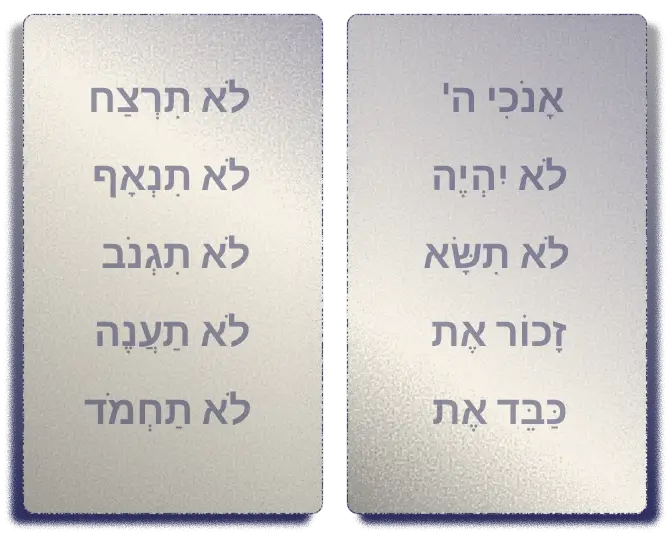
Explore the 613 mitzvos and uncover the meaning behind each one. Discover practical ways to integrate them into your daily life with insights, sources, and guided reflection.

Learn the structure, depth, and spiritual intent behind Jewish prayer. Dive into morning blessings, Shema, Amidah, and more—with tools to enrich your daily connection.
Each week’s parsha offers timeless wisdom and modern relevance. Explore summaries, key themes, and mitzvah connections to deepen your understanding of the Torah cycle.