When Drawing Near Becomes The Step That Changed History
Parshas Vayigash opens with one of the quietest verbs in the Torah — and one of the most consequential:
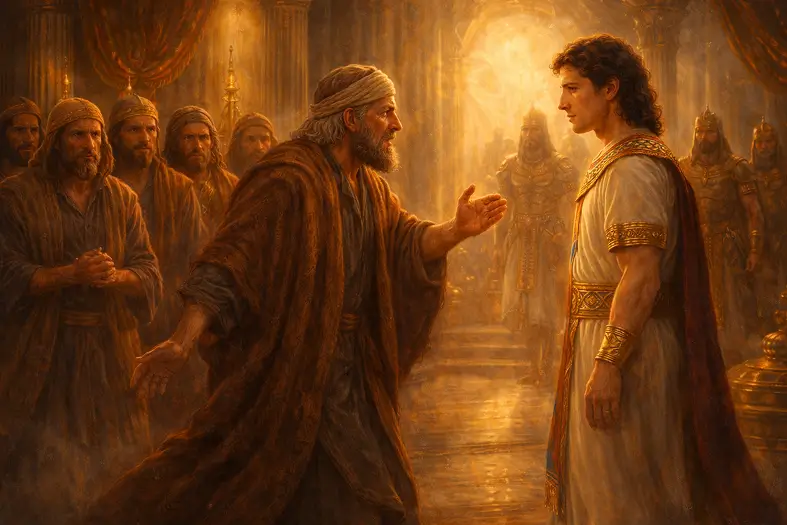
“וַיִּגַּשׁ אֵלָיו יְהוּדָה”
[“And Yehudah drew near to him.”] (Bereishis 44:18)
No miracles follow immediately. No dreams, plagues, or supernatural signs erupt. Nothing visibly changes in the world at all. And yet Chazal, the mefarshim, and Chassidus agree: this step forward is the beginning of redemption.
The Torah is teaching something radical. Geulah does not begin with revelation. It does not begin with power, exposure, or truth announced from above. It begins with moral proximity — with a human being who refuses to maintain distance when responsibility demands closeness.
Yehudah’s approach does what decades of concealment, power, strategy, and silence could not. It collapses exile from the inside by replacing distance with responsibility. This is קִרְבָה שֶׁמְּבַטֶּלֶת גָּלוּת — closeness that ends exile.
This essay explores how vayigash functions as the Torah’s model of redemption: through Rashi’s reading of approach as confrontation, Rabbi Jonathan Sacks’ vision of moral courage, Chassidus’ theology of closeness, and Rav Kook’s insight that confusion itself can be the womb of wisdom.
Rashi famously explains that vayigash does not mean mere physical movement. It denotes approach with intent — for confrontation, for prayer, and for war. Yehudah’s step is multidimensional. He is not advancing spatially; he is crossing a moral boundary.
Until this moment, the entire Yosef narrative has been defined by distance:
Yehudah’s approach collapses these separations. He refuses to speak about the problem. He speaks to the one who holds power. This is the first time in the story that someone steps fully into responsibility without disguise or calculation.
Rashi’s insight reveals that redemption begins when confrontation is driven not by anger or dominance, but by accountability.
Rabbi Jonathan Sacks frames Yehudah’s approach as the decisive moral act of the Torah’s narrative. Until now, Yosef has been managing history from above — controlling outcomes, orchestrating tests, and shaping consequences. Yehudah changes the axis entirely.
Rabbi Sacks notes that Yehudah does not appeal to justice, rights, or emotion alone. He appeals to responsibility. He binds himself to another’s fate and speaks from within that bond.
This is moral courage of the highest order:
Rabbi Sacks emphasizes that distance preserves conflict; closeness makes repair possible. The exile between brothers, once internalized, becomes geographic exile. Yehudah reverses that trajectory by collapsing relational distance first.
Chassidus radicalizes this idea. Exile, it teaches, is not merely a place. It is a condition of distance — distance between people, between truth and responsibility, between Hashem and the world.
Redemption therefore does not begin by escaping exile, but by shortening distance within it.
Yehudah’s vayigash embodies this truth. He does not know Yosef’s identity. He does not know how the encounter will end. He steps forward anyway. Chassidus teaches that this movement itself weakens concealment. When responsibility replaces avoidance, exile begins to unravel.
קִרְבָה שֶׁמְּבַטֶּלֶת גָּלוּת means:
Closeness here is not sentiment. It is risk.
One of the Torah’s most striking choices is that Yosef does not reveal himself until after Yehudah approaches. The Torah could have resolved the story instantly. It does not.
This teaches a fundamental law of redemption: revelation follows responsibility, not the other way around.
Truth announced too early becomes destructive. Identity revealed without moral readiness shatters rather than heals. Yosef waits because the moral distance that caused the rupture has not yet been repaired.
Yehudah’s approach repairs it.
Only then can Yosef say:
“אֲנִי יוֹסֵף”
Redemption does not override moral process. It completes it.
Rav Kook offers a profound lens for understanding why redemption must begin in uncertainty. In his metaphor of the Shepherd-Philosopher, Rav Kook teaches that wisdom is not born from clarity, but from wandering. Confusion is not spiritual failure. It is the womb of authentic insight.
Yosef’s life embodies this truth. His descent into Egypt is a descent into obscurity, power without belonging, clarity without intimacy. Yehudah’s life, by contrast, is marked by failure, loss, and moral struggle.
Rav Kook teaches that redemption requires both:
Yehudah does not wait until the path is clear. He walks into the darkness. That is why clarity follows.
Yosef cannot ascend alone. Power and insight are insufficient without relational repair. Rav Kook explains that wisdom detached from human proximity becomes sterile. Yosef governs Egypt flawlessly — but exile persists.
Only when Yehudah draws near does Yosef’s clarity gain meaning. Only then can insight turn into reconciliation. The Torah is insisting that truth requires proximity to heal.
The Torah’s teaching is uncomfortably contemporary. We live in an age of distance:
Vayigash offers a different ethic. Redemption begins when someone steps forward instead of explaining from afar.
The Torah asks:
קִרְבָה is costly. But exile is costlier.
Parshas Vayigash teaches that redemption does not begin with miracles, revelation, or certainty. It begins with a human being who refuses to remain distant.
“וַיִּגַּשׁ”
Yehudah’s step forward collapses decades of concealment by replacing distance with responsibility. Chassidus names this movement קִרְבָה שֶׁמְּבַטֶּלֶת גָּלוּת — closeness that ends exile.
Rashi shows us that approach is confrontation.
Rabbi Sacks shows us that moral courage shrinks distance.
Rav Kook shows us that darkness precedes wisdom.
And the Torah shows us that redemption begins not when truth is revealed — but when someone draws near.
📖 Sources


When Drawing Near Becomes The Step That Changed History
Parshas Vayigash opens with one of the quietest verbs in the Torah — and one of the most consequential:
“וַיִּגַּשׁ אֵלָיו יְהוּדָה”
[“And Yehudah drew near to him.”] (Bereishis 44:18)
No miracles follow immediately. No dreams, plagues, or supernatural signs erupt. Nothing visibly changes in the world at all. And yet Chazal, the mefarshim, and Chassidus agree: this step forward is the beginning of redemption.
The Torah is teaching something radical. Geulah does not begin with revelation. It does not begin with power, exposure, or truth announced from above. It begins with moral proximity — with a human being who refuses to maintain distance when responsibility demands closeness.
Yehudah’s approach does what decades of concealment, power, strategy, and silence could not. It collapses exile from the inside by replacing distance with responsibility. This is קִרְבָה שֶׁמְּבַטֶּלֶת גָּלוּת — closeness that ends exile.
This essay explores how vayigash functions as the Torah’s model of redemption: through Rashi’s reading of approach as confrontation, Rabbi Jonathan Sacks’ vision of moral courage, Chassidus’ theology of closeness, and Rav Kook’s insight that confusion itself can be the womb of wisdom.
Rashi famously explains that vayigash does not mean mere physical movement. It denotes approach with intent — for confrontation, for prayer, and for war. Yehudah’s step is multidimensional. He is not advancing spatially; he is crossing a moral boundary.
Until this moment, the entire Yosef narrative has been defined by distance:
Yehudah’s approach collapses these separations. He refuses to speak about the problem. He speaks to the one who holds power. This is the first time in the story that someone steps fully into responsibility without disguise or calculation.
Rashi’s insight reveals that redemption begins when confrontation is driven not by anger or dominance, but by accountability.
Rabbi Jonathan Sacks frames Yehudah’s approach as the decisive moral act of the Torah’s narrative. Until now, Yosef has been managing history from above — controlling outcomes, orchestrating tests, and shaping consequences. Yehudah changes the axis entirely.
Rabbi Sacks notes that Yehudah does not appeal to justice, rights, or emotion alone. He appeals to responsibility. He binds himself to another’s fate and speaks from within that bond.
This is moral courage of the highest order:
Rabbi Sacks emphasizes that distance preserves conflict; closeness makes repair possible. The exile between brothers, once internalized, becomes geographic exile. Yehudah reverses that trajectory by collapsing relational distance first.
Chassidus radicalizes this idea. Exile, it teaches, is not merely a place. It is a condition of distance — distance between people, between truth and responsibility, between Hashem and the world.
Redemption therefore does not begin by escaping exile, but by shortening distance within it.
Yehudah’s vayigash embodies this truth. He does not know Yosef’s identity. He does not know how the encounter will end. He steps forward anyway. Chassidus teaches that this movement itself weakens concealment. When responsibility replaces avoidance, exile begins to unravel.
קִרְבָה שֶׁמְּבַטֶּלֶת גָּלוּת means:
Closeness here is not sentiment. It is risk.
One of the Torah’s most striking choices is that Yosef does not reveal himself until after Yehudah approaches. The Torah could have resolved the story instantly. It does not.
This teaches a fundamental law of redemption: revelation follows responsibility, not the other way around.
Truth announced too early becomes destructive. Identity revealed without moral readiness shatters rather than heals. Yosef waits because the moral distance that caused the rupture has not yet been repaired.
Yehudah’s approach repairs it.
Only then can Yosef say:
“אֲנִי יוֹסֵף”
Redemption does not override moral process. It completes it.
Rav Kook offers a profound lens for understanding why redemption must begin in uncertainty. In his metaphor of the Shepherd-Philosopher, Rav Kook teaches that wisdom is not born from clarity, but from wandering. Confusion is not spiritual failure. It is the womb of authentic insight.
Yosef’s life embodies this truth. His descent into Egypt is a descent into obscurity, power without belonging, clarity without intimacy. Yehudah’s life, by contrast, is marked by failure, loss, and moral struggle.
Rav Kook teaches that redemption requires both:
Yehudah does not wait until the path is clear. He walks into the darkness. That is why clarity follows.
Yosef cannot ascend alone. Power and insight are insufficient without relational repair. Rav Kook explains that wisdom detached from human proximity becomes sterile. Yosef governs Egypt flawlessly — but exile persists.
Only when Yehudah draws near does Yosef’s clarity gain meaning. Only then can insight turn into reconciliation. The Torah is insisting that truth requires proximity to heal.
The Torah’s teaching is uncomfortably contemporary. We live in an age of distance:
Vayigash offers a different ethic. Redemption begins when someone steps forward instead of explaining from afar.
The Torah asks:
קִרְבָה is costly. But exile is costlier.
Parshas Vayigash teaches that redemption does not begin with miracles, revelation, or certainty. It begins with a human being who refuses to remain distant.
“וַיִּגַּשׁ”
Yehudah’s step forward collapses decades of concealment by replacing distance with responsibility. Chassidus names this movement קִרְבָה שֶׁמְּבַטֶּלֶת גָּלוּת — closeness that ends exile.
Rashi shows us that approach is confrontation.
Rabbi Sacks shows us that moral courage shrinks distance.
Rav Kook shows us that darkness precedes wisdom.
And the Torah shows us that redemption begins not when truth is revealed — but when someone draws near.
📖 Sources


"וַיִּגַּשׁ — Vayigash"
וְהָלַכְתָּ בִּדְרָכָיו
Yehudah’s act of drawing near models halicha bidrachav: just as Hashem draws close to humanity with patience, responsibility, and covenantal commitment, so too Yehudah approaches rather than withdraws. Vayigash teaches that redemption begins when human beings imitate Divine relational closeness, replacing distance with moral presence.
וּבוֹ תִדְבָּק
Chazal explain cleaving to Hashem as attachment to His values and those who embody them. Yehudah’s vayigash expresses this mitzvah in lived form: cleaving to truth, responsibility, and covenant even in uncertainty. Kirvah becomes an act of dveikut when it aligns human action with Divine purpose within concealment.
וְאָהַבְתָּ לְרֵעֲךָ כָּמוֹךָ
Yehudah’s willingness to bind his fate to Binyamin’s survival defines love as responsibility rather than emotion. Loving another “as oneself” means refusing to preserve one’s own safety through distance when another’s future is at stake. Vayigash teaches that ahavah becomes redemptive when it motivates approach instead of retreat.
לֹא תִשְׂנָא אֶת אָחִיךָ בִּלְבָבֶךָ
Hidden resentment thrives on distance. Yehudah’s approach repairs the inner fracture that once allowed the brothers to separate themselves from Yosef’s fate. By stepping forward rather than remaining silent, Yehudah uproots the posture of concealed hostility that sustains exile, demonstrating that redemption requires confronting inner distance as much as outer conflict.
הוֹכֵחַ תּוֹכִיחַ אֶת עֲמִיתֶךָ
Yehudah’s speech before Yosef exemplifies rebuke grounded in closeness and dignity. He does not accuse from afar but confronts responsibly from within relationship. Vayigash reveals tochachah as an act of kirvah: truthful speech offered through presence rather than humiliation, capable of repairing rather than rupturing.


"וַיִּגַּשׁ — Vayigash"
Vayigash marks the precise moment when redemption begins through moral proximity rather than revelation. Yehudah’s approach—“וַיִּגַּשׁ אֵלָיו יְהוּדָה”—is not physical movement alone but the collapse of relational distance that sustained exile. By stepping forward to assume responsibility for Binyamin, Yehudah replaces avoidance with presence, enabling truth to be revealed without humiliation and reconciliation to emerge without force. The parsha teaches that exile unravels when responsibility draws near, and that concealment dissolves only after moral courage precedes clarity.
Vayechi confirms that Yehudah’s act of approach produces lasting transformation. Leadership is consolidated, fear gives way to stability, and Yaakov’s blessings reflect a reordered spiritual hierarchy rooted in responsibility rather than charisma or power. The parsha shows that closeness achieved through accountability reshapes destiny beyond the immediate crisis, allowing family, nationhood, and future redemption to proceed without the fractures that once defined them.

Dive into mitzvos, tefillah, and Torah study—each section curated to help you learn, reflect, and live with intention. New insights are added regularly, creating an evolving space for spiritual growth.

Explore the 613 mitzvos and uncover the meaning behind each one. Discover practical ways to integrate them into your daily life with insights, sources, and guided reflection.

Learn the structure, depth, and spiritual intent behind Jewish prayer. Dive into morning blessings, Shema, Amidah, and more—with tools to enrich your daily connection.

Each week’s parsha offers timeless wisdom and modern relevance. Explore summaries, key themes, and mitzvah connections to deepen your understanding of the Torah cycle.