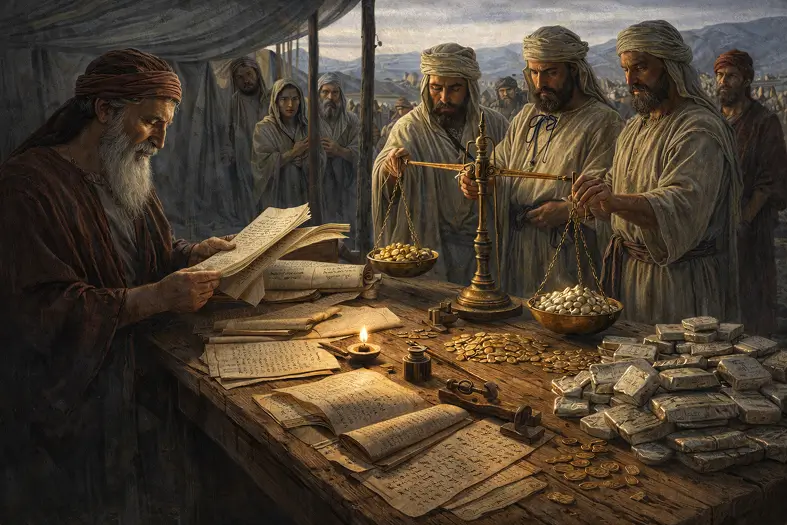
1.5 — Trust: The First Vessel of the Shechinah
As Parshas Pekudei begins to describe the completion of the Mishkan, the Torah introduces the sanctuary not with celebration or ritual, but with a careful accounting:
שמות ל״ח:כ״א–ל״א
“אֵלֶּה פְקוּדֵי הַמִּשְׁכָּן.”
“These are the accounts of the Mishkan.”
The Torah proceeds to list in precise detail the gold, silver, and copper that had been donated for the construction of the sanctuary and how each resource was used. At first glance, this moment appears administrative, even mundane. Yet the Torah places this accounting at the threshold of the Mishkan’s completion.
Rambam’s broader vision of Torah society helps illuminate the significance of this choice. The presence of holiness within a community depends not only on ritual or sacred space but also on the ethical character of its institutions.
Before the Mishkan can become the dwelling place of the Divine Presence, the Torah establishes that the resources entrusted to its leaders have been handled with complete integrity.
The sanctuary therefore begins not with ritual but with accountability.
In doing so, the Torah teaches that holiness must rest upon ethical foundations.
Ramban explains that the Mishkan represents the continuation of the revelation that began at Mount Sinai. The Divine Presence that appeared upon the mountain now seeks a permanent dwelling among the people of Israel.
Yet the Torah’s narrative reveals that this presence does not descend immediately upon the completion of the sanctuary’s physical structure.
Before the Shechinah appears, the Torah pauses to recount the accounting of the Mishkan materials. This moment emphasizes that the sanctuary must first stand upon a foundation of trust within the community itself.
The Mishkan is not merely a physical structure constructed from wood, metal, and fabric. It is the institutional center of a covenant society. Such a society must be built upon relationships of honesty and responsibility between leaders and the people they serve.
Only when that trust exists can the sanctuary truly become a dwelling place for the Divine Presence.
Rabbi Jonathan Sacks often wrote that the most important structures in a society are often invisible. Institutions may appear strong from the outside, yet their true strength depends on the trust that binds people together.
Without trust, communities fragment. Suspicion erodes cooperation, and shared projects become difficult to sustain.
The Torah’s decision to place the accounting of the Mishkan materials at the beginning of Pekudei reflects a deep awareness of this reality.
The sanctuary could not stand as a symbol of holiness if the people believed their contributions had been mishandled. By presenting a transparent record of how every donation was used, Moshe ensured that the Mishkan would be built not only from precious materials but from confidence and trust.
Trust thus becomes the invisible architecture supporting the visible sanctuary.
Rav Avigdor Miller frequently emphasized that honesty in financial and communal matters is among the most important ethical principles in the Torah. When leaders handle communal resources, they carry a responsibility that extends beyond practical management.
Their conduct shapes the moral atmosphere of the community.
The Mishkan represents the place where the Divine Presence rests among Israel. Yet the Torah teaches that such holiness cannot exist where suspicion or mistrust clouds the relationship between leaders and the people.
By publicly accounting for every donation, Moshe demonstrates that integrity is itself a form of sacred service.
The sanctuary becomes worthy of hosting the Divine Presence precisely because it stands upon a foundation of honesty.
The Mishkan contains many vessels—the Ark, the Menorah, the Altar—each crafted with extraordinary care. Yet the opening of Parshas Pekudei suggests that another vessel precedes them all.
That vessel is trust.
Before the Ark can house the Tablets, before the Menorah can illuminate the sanctuary, the community itself must become a vessel capable of sustaining the Divine Presence.
Trust between leaders and the people creates the moral environment in which holiness can dwell.
The Torah therefore begins the completion of the Mishkan by demonstrating that the society surrounding the sanctuary has been built upon integrity.
Only then can the Divine Presence rest within it.
The message of Parshas Pekudei resonates strongly in contemporary life, where institutions often struggle to maintain public confidence.
Communities flourish when individuals trust that their leaders act with honesty and responsibility. When that trust is weakened, even well-intentioned institutions find it difficult to sustain their mission.
The Torah’s description of the Mishkan teaches that spiritual communities must cultivate transparency and ethical leadership as foundational values.
Sacred institutions do not exist independently of the moral culture that surrounds them. They depend upon relationships built on honesty, responsibility, and accountability.
The Mishkan reminds us that the Divine Presence does not dwell merely in beautiful structures or inspiring rituals.
It dwells where communities build their lives upon trust.
📖 Sources


1.5 — Trust: The First Vessel of the Shechinah
As Parshas Pekudei begins to describe the completion of the Mishkan, the Torah introduces the sanctuary not with celebration or ritual, but with a careful accounting:
שמות ל״ח:כ״א–ל״א
“אֵלֶּה פְקוּדֵי הַמִּשְׁכָּן.”
“These are the accounts of the Mishkan.”
The Torah proceeds to list in precise detail the gold, silver, and copper that had been donated for the construction of the sanctuary and how each resource was used. At first glance, this moment appears administrative, even mundane. Yet the Torah places this accounting at the threshold of the Mishkan’s completion.
Rambam’s broader vision of Torah society helps illuminate the significance of this choice. The presence of holiness within a community depends not only on ritual or sacred space but also on the ethical character of its institutions.
Before the Mishkan can become the dwelling place of the Divine Presence, the Torah establishes that the resources entrusted to its leaders have been handled with complete integrity.
The sanctuary therefore begins not with ritual but with accountability.
In doing so, the Torah teaches that holiness must rest upon ethical foundations.
Ramban explains that the Mishkan represents the continuation of the revelation that began at Mount Sinai. The Divine Presence that appeared upon the mountain now seeks a permanent dwelling among the people of Israel.
Yet the Torah’s narrative reveals that this presence does not descend immediately upon the completion of the sanctuary’s physical structure.
Before the Shechinah appears, the Torah pauses to recount the accounting of the Mishkan materials. This moment emphasizes that the sanctuary must first stand upon a foundation of trust within the community itself.
The Mishkan is not merely a physical structure constructed from wood, metal, and fabric. It is the institutional center of a covenant society. Such a society must be built upon relationships of honesty and responsibility between leaders and the people they serve.
Only when that trust exists can the sanctuary truly become a dwelling place for the Divine Presence.
Rabbi Jonathan Sacks often wrote that the most important structures in a society are often invisible. Institutions may appear strong from the outside, yet their true strength depends on the trust that binds people together.
Without trust, communities fragment. Suspicion erodes cooperation, and shared projects become difficult to sustain.
The Torah’s decision to place the accounting of the Mishkan materials at the beginning of Pekudei reflects a deep awareness of this reality.
The sanctuary could not stand as a symbol of holiness if the people believed their contributions had been mishandled. By presenting a transparent record of how every donation was used, Moshe ensured that the Mishkan would be built not only from precious materials but from confidence and trust.
Trust thus becomes the invisible architecture supporting the visible sanctuary.
Rav Avigdor Miller frequently emphasized that honesty in financial and communal matters is among the most important ethical principles in the Torah. When leaders handle communal resources, they carry a responsibility that extends beyond practical management.
Their conduct shapes the moral atmosphere of the community.
The Mishkan represents the place where the Divine Presence rests among Israel. Yet the Torah teaches that such holiness cannot exist where suspicion or mistrust clouds the relationship between leaders and the people.
By publicly accounting for every donation, Moshe demonstrates that integrity is itself a form of sacred service.
The sanctuary becomes worthy of hosting the Divine Presence precisely because it stands upon a foundation of honesty.
The Mishkan contains many vessels—the Ark, the Menorah, the Altar—each crafted with extraordinary care. Yet the opening of Parshas Pekudei suggests that another vessel precedes them all.
That vessel is trust.
Before the Ark can house the Tablets, before the Menorah can illuminate the sanctuary, the community itself must become a vessel capable of sustaining the Divine Presence.
Trust between leaders and the people creates the moral environment in which holiness can dwell.
The Torah therefore begins the completion of the Mishkan by demonstrating that the society surrounding the sanctuary has been built upon integrity.
Only then can the Divine Presence rest within it.
The message of Parshas Pekudei resonates strongly in contemporary life, where institutions often struggle to maintain public confidence.
Communities flourish when individuals trust that their leaders act with honesty and responsibility. When that trust is weakened, even well-intentioned institutions find it difficult to sustain their mission.
The Torah’s description of the Mishkan teaches that spiritual communities must cultivate transparency and ethical leadership as foundational values.
Sacred institutions do not exist independently of the moral culture that surrounds them. They depend upon relationships built on honesty, responsibility, and accountability.
The Mishkan reminds us that the Divine Presence does not dwell merely in beautiful structures or inspiring rituals.
It dwells where communities build their lives upon trust.
📖 Sources


1.5 — Trust: The First Vessel of the Shechinah
Exodus 25:8 — וְעָשׂוּ לִי מִקְדָּשׁ
The commandment to build the Mishkan establishes the central institution through which the Divine Presence dwells among Israel. The accounting recorded in Pekudei demonstrates that fulfilling this mitzvah required careful stewardship of communal resources and ethical leadership.
Deuteronomy 28:9 — וְהָלַכְתָּ בִּדְרָכָיו
The Torah commands humanity to imitate the attributes of Hashem, including justice, honesty, and integrity. The transparency demonstrated in the accounting of the Mishkan materials reflects these Divine qualities and establishes ethical leadership as a sacred responsibility.
Deuteronomy 10:20 — וּבוֹ תִדְבָּק
Communities are encouraged to attach themselves to leaders whose lives reflect devotion to Hashem and moral integrity. Moshe’s willingness to account publicly for the Mishkan materials reinforces the trust that allows the people to follow his leadership with confidence.
Deuteronomy 15:8 — פָּתֹחַ תִּפְתַּח אֶת יָדֶךָ
The Mishkan was built through voluntary contributions from the people. The accounting recorded in Pekudei highlights the ethical responsibility of leaders to manage communal donations faithfully and transparently, preserving the trust necessary for communal life.


1.5 — Trust: The First Vessel of the Shechinah
The Torah opens the completion of the Mishkan with a detailed accounting of the gold, silver, and copper used in its construction. This inventory demonstrates that the sanctuary was built upon transparency and ethical responsibility, establishing trust between the leaders of the community and the people who contributed to the sacred project.

Dive into mitzvos, tefillah, and Torah study—each section curated to help you learn, reflect, and live with intention. New insights are added regularly, creating an evolving space for spiritual growth.

Explore the 613 mitzvos and uncover the meaning behind each one. Discover practical ways to integrate them into your daily life with insights, sources, and guided reflection.

Learn the structure, depth, and spiritual intent behind Jewish prayer. Dive into morning blessings, Shema, Amidah, and more—with tools to enrich your daily connection.

Each week’s parsha offers timeless wisdom and modern relevance. Explore summaries, key themes, and mitzvah connections to deepen your understanding of the Torah cycle.