www.Mitzvah-Minute.com
"Pekudei — Part III — “וַיָּקֶם מֹשֶׁה אֶת הַמִּשְׁכָּן”: Human Effort and Divine Completion"
3.4 — Moshe’s Blessing: When Work Becomes Sacred
Rashi — A Blessing for the Work of Their Hands
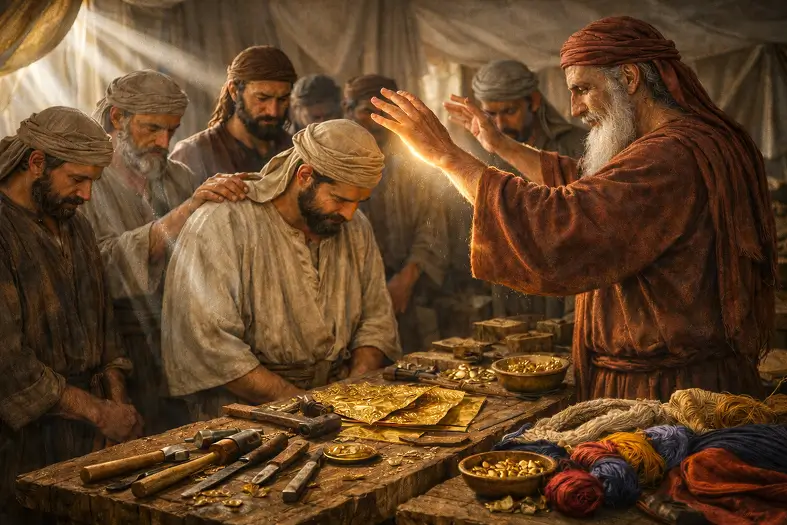
As the Torah concludes its description of the Mishkan’s construction, it records a brief but powerful moment:
שמות ל״ט:מ״ג
“וַיְבָרֶךְ אֹתָם מֹשֶׁה.”
“And Moshe blessed them.”
After examining the completed work and confirming that everything had been carried out “כַּאֲשֶׁר צִוָּה ה׳”, Moshe offers a blessing to the people who built the sanctuary.
Rashi explains the content of this blessing by connecting it to the words later recorded in Tehillim:
תהילים צ׳:י״ז
“וִיהִי נֹעַם ה׳ אֱלֹקֵינוּ עָלֵינוּ וּמַעֲשֵׂה יָדֵינוּ כּוֹנְנָה עָלֵינוּ.”
“May the pleasantness of Hashem our G-d be upon us, and may the work of our hands be established.”
Moshe’s blessing expresses a profound hope: that the Divine Presence should rest upon the work created by the people.
Although the artisans had already completed the Mishkan, Moshe recognized that its ultimate sanctity depended upon something beyond craftsmanship alone. The sanctuary would become holy only if the Shechinah chose to dwell within it.
His blessing therefore asks that the work of human hands become a vessel for the Divine Presence.
Rabbi Jonathan Sacks — Work That Transcends Itself
Rabbi Jonathan Sacks often reflected on the deeper meaning of human work within the Torah’s vision of life. In many cultures, work is seen primarily as a means of survival or material advancement. Yet the Torah offers a more expansive understanding.
Human labor can become a form of spiritual service.
The artisans who built the Mishkan did not simply construct an architectural structure. Through their generosity, skill, and devotion, they transformed ordinary materials into a sanctuary dedicated to the presence of Hashem.
Moshe’s blessing acknowledges this transformation.
He recognizes that their work has the potential to transcend its physical form. If the Divine Presence rests within the Mishkan, the labor of the people will become part of a sacred relationship between Hashem and Israel.
Work thus acquires meaning far beyond its immediate outcome.
Rav Avigdor Miller — Inviting the Divine Presence
Rav Avigdor Miller often emphasized that the Torah teaches individuals to seek the presence of Hashem within every aspect of life. Spiritual life does not exist only in moments of prayer or study. It extends into the work people perform and the responsibilities they carry.
The Mishkan illustrates this principle with remarkable clarity.
The sanctuary is built through the contributions of ordinary individuals—craftsmen, donors, and leaders who devote their efforts to a shared sacred goal. Yet their work becomes truly meaningful only when it invites the Divine Presence.
Moshe’s blessing reflects this understanding.
He asks that the work of the people not remain merely a human achievement, but become a dwelling place for the Shechinah.
Through this blessing, the labor of the people becomes part of a sacred partnership with Hashem.
When Work Becomes Sacred
The brief verse describing Moshe’s blessing captures a fundamental insight about the nature of holiness.
Completion alone does not guarantee sanctity.
The artisans completed the Mishkan with extraordinary care. Every vessel and garment had been crafted according to the Divine instructions. Yet the sanctuary would remain only a remarkable human creation unless the Divine Presence entered it.
Moshe’s blessing therefore acknowledges the final step in the transformation of human work into sacred service.
When human effort aligns with the Divine purpose, the work of human hands becomes a vessel for holiness.
Application for Today
The lesson of Moshe’s blessing extends far beyond the construction of the Mishkan.
Every generation confronts the challenge of finding meaning within the work that fills daily life. Careers, responsibilities, and creative endeavors often occupy much of human attention, yet they can sometimes appear disconnected from spiritual purpose.
The Torah offers a different vision.
Human work acquires deeper meaning when it becomes part of a larger commitment to values that reflect the presence of Hashem within the world.
Individuals who approach their work with integrity, purpose, and awareness of their responsibilities to others transform ordinary labor into a form of spiritual service.
Moshe’s blessing reminds us that the work of our hands reaches its highest potential when it invites the presence of the Divine into the life we build.
📖 Sources
- Full sources available on the Mitzvah Minute Parshas Pekudei page under insights and commentaries