www.Mitzvah-Minute.com
"Pesach — The Architecture of Geulah: From Da’as to Revelation"
Introduction: Shabbos HaGadol as the Gateway to Geulah
There is a foundational question that sits at the threshold of Pesach — one that is so familiar, it is often overlooked:
Why does the Torah introduce the very foundation of all mitzvos with the words:
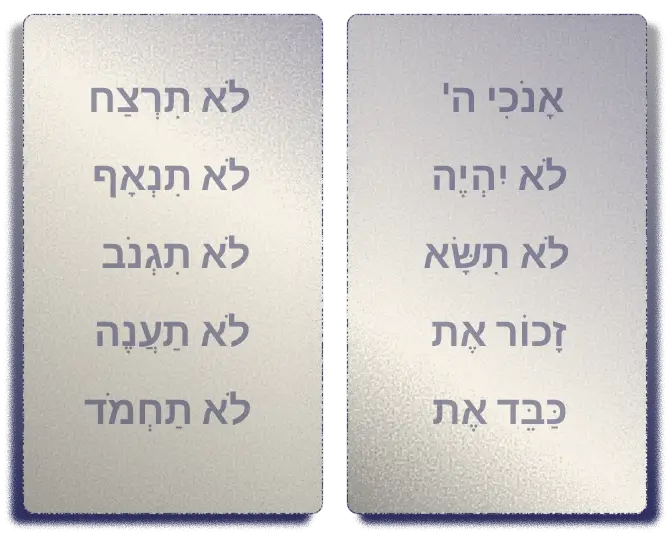
אָנֹכִי ה׳ אֱלֹקֶיךָ אֲשֶׁר הוֹצֵאתִיךָ מֵאֶרֶץ מִצְרָיִם
“I am Hashem your G-d who took you out of the land of Egypt”
Why not say instead:
“I am Hashem your G-d who created heaven and earth”?
Creation is more universal. More absolute. It establishes Hashem as the source of all existence. And yet, mitzvah of אנכי ה׳ does not begin there. It begins with Yetziyas Mitzrayim — the Exodus.
And perhaps even more striking:
Why does the entire experience of Pesach begin not with the Seder night itself, but with Shabbos HaGadol — the Great Shabbos?
What is the relationship between Shabbos and Geulah — גאולה (redemption)?
Understanding Geulah — Not Escape, but Revelation
To approach this properly, we must first understand what Geulah actually is.
Geulah is often understood as liberation — a movement from oppression to freedom, from suffering to relief. But Chazal and the deeper layers of Torah describe something far more precise and far more radical:
The Zohar teaches that Geulah — גאולה, redemption — is not merely a change in circumstance, but a state of התגלות — revelation, a התגלות האור שהיה נסתר — the revealing of a light that was previously hidden.
Exile — גלות — is not only physical displacement. it is a state in which truth exists, but is concealed. Truth concealed beneath layers of טבע — nature, habit, and perception.
Geulah, then, is not the creation of something new.
It is the unveiling of what was always there — a truth that becomes revealed and recognizable.
This idea is expressed with striking clarity in the words of the Rambam's Mishneh Torah, who describes the end of days::
ומלאה הארץ דעה את ה׳ כמים לים מכסים
“The earth will be filled with knowledge of Hashem as the waters cover the sea.”
The defining feature of redemption is not political independence, nor even spiritual inspiration — but דעת — da’as (deep knowledge, awareness, integration).
We can now state a foundational principle:
Geulah is when hidden reality becomes known reality.
Why Yetziyas Mitzrayim — and Not Creation — the Birth of Da’as
With this, we can return to our original question.
Why does the Torah anchor everything in Yetziyas Mitzrayim?
Because creation establishes that Hashem exists.
But Yetziyas Mitzrayim establishes that Hashem is known.
Creation can be contemplated.
But the Exodus was experienced.
It was not an abstract truth — it was a lived, undeniable reality in which:
- Nature was overturned
- History was redirected
- And the presence of Hashem became visible within the world itself
Yetziyas Mitzrayim did not merely free a nation.
It formed a nation of Da’as — a people who do not only believe, but know.
And that is why the Torah begins:
אָנֹכִי ה׳ אֱלֹקֶיךָ אֲשֶׁר הוֹצֵאתִיךָ
Not “who created the world,”
but “who you experienced directly.”
Because Torah is not built on abstraction —
it is built on reality that has been revealed and internalized.
Shabbos HaGadol — The Opening of the Gate
With this framework, we can begin to understand the role of Shabbos HaGadol.
The Sfas Emes teaches that this Shabbos is not merely a preparation for Pesach, but something far deeper:
It is a moment in which the structure of time itself begins to shift —
a שער החירות — gateway of freedom.
Shabbos, by its very nature, is מעין עולם הבא — a taste of the World to Come. It is a state in which the inner truth of existence becomes more visible, where the noise of the weekday recedes and the deeper layer of reality begins to emerge.
But Shabbos HaGadol is not just another Shabbos.
It is the point at which:
- The hidden begins to surface
- It is מתאספין כל נ׳ שבתות השנה — when all fifty Shabbosos of the year converge
- And the process of Geulah begins internally before it unfolds externally
The Sfas Emes explains that the beginning of redemption was not in the splitting of the sea, nor even in the plagues — but in a quiet, internal shift:
משכו ידיכם מעבודה זרה — “Withdraw your hands from idolatry.”
Before the world changes —
the האדם (person) must change.
Before redemption appears —
falsehood must be released.
Geulah does not begin with miracles.
It begins with clarity.
Shabbos and Geulah — One Reality
Chazal teach (Sanhedrin 97a):
שית אלפי שני הוי עלמא וחד חרוב
“The world exists for six thousand years, and one [thousand] is Shabbos.”
The Zohar and the Arizal explain that history itself is structured like a week:
- Six millennia of development
- Followed by a seventh — a cosmic Shabbos
This seventh stage — the era of Geulah — is not a break from reality, but its fulfillment.
Just as Shabbos reveals the inner truth of the week,
Geulah reveals the inner truth of history.
They are not separate ideas.
Geulah is the Shabbos of the world.
The First Light of Redemption
There is a striking remez — a symbolic allusion — that reflects this idea.
We know that Shabbos can be accepted early through תוספת שבת — the addition to Shabbos, and Shabbos is always initiated by lighting the נר — candle.
The word נר — candle — carries the idea of illumination, of light beginning to spread even before its full time.
And its first letter, נ — Nun, hints to:
- נ׳ שבתות — the fifty Shabbosos
- שער הנ׳ — the fiftieth gate, the level of freedom
This is not a calculation, but a remez:
Just as one can bring in Shabbos early through תוספת שבת — adding from the weekday into Shabbos — so too the אור of the great Shabbos of history is not bound strictly to its סוף הזמן — its final moment — but can begin to illuminate earlier, when the world becomes ready to receive it.
From Opening to Experience
We can now return to Pesach with a new understanding.
Pesach is not merely a remembrance — זכר — of the past.
It is a re-entry into the state of Da’as — knowledge — through which התגלות — revelation becomes possible.
Through:
- זכר יציאת מצרים — remembering the Exodus
we are not recalling history, but reawakening knowledge.
Thus:
Shabbos HaGadol opens the gate, Pesach activates the experience, and Zecher Yetziyah restores Da’as.
And therefore:
Geulah is not something we merely wait for — it is something that begins when Da’as Hashem becomes real.
Each year, we are given a moment:
- Shabbos HaGadol — the opening
- Pesach — the opportunity
And the question is not only:
Do we remember?
But:
Do we know?
Because when:
אנכי ה׳ אלקיך — “I am Hashem your G-d”
becomes real —
then the light of Shabbos begins to shine, restoring אמת — truth to the world, and allowing Geulah not only to be awaited, but to be revealed, and in that revelation, drawing the world into בימות המשיח — the era of Mashiach.
📖 Sources
This essay series is based on the teachings of the Sfas Emes and Kedushas Levi on Pesach, reflecting their יסודות (foundational principles) of גאולה (redemption) as התגלות דרך דעת (revelation through Da’as — experiential knowledge of Hashem).