Shemos — Faith That Cannot Be Destroyed — Rav Kook and the Indestructibility of Emunah
Parshas Shemos opens not only with physical exile, but with a deeper collapse: the apparent failure of belief itself.
When Moshe first speaks to the people, the Torah records a painful moment:
“וְלֹא שָׁמְעוּ אֶל־מֹשֶׁה מִקֹּצֶר רוּחַ וּמֵעֲבֹדָה קָשָׁה”
[“They did not listen to Moshe, from shortness of spirit and hard labor.”]
This is not rebellion. It is exhaustion. Faith does not erupt in protest; it simply goes quiet.
If Part I explored the danger of speech divorced from conscience, Part II confronts a more unsettling question:
What happens when faith itself seems absent?
Moshe’s reaction reveals a critical tension. He assumes that if the people do not respond, faith must be broken.
Yet Hashem does not rebuke the people. Instead, He redirects Moshe.
Rav Kook identifies a subtle but decisive error: Moshe confuses concealment with disappearance. He mistakes silence for spiritual collapse.
But emunah, Rav Kook teaches, is not a mood. It is not enthusiasm. It is not articulation. It is ontological — woven into the Jewish soul itself.
Even when speech fails, faith endures.
Rav Kook’s insight reshapes the entire parsha.
Faith does not vanish under pressure; it withdraws inward. Under crushing labor, the soul contracts for survival. The voice of emunah grows quiet not because it is false, but because it is too precious to be exposed.
This is why Hashem’s signs to Moshe are not arguments or proofs. They are revelations of essence:
Each sign declares the same truth:
What appears corrupted is intact beneath the surface.
Parshas Shemos warns against a perennial spiritual mistake: judging belief by visibility.
Moshe’s concern is sincere, but incomplete. He assumes that if people cannot listen, they cannot believe. Rav Kook reverses the logic.
Faith does not require expression to exist.
Speech is an outcome of emunah — not its proof.
This reframes leadership itself. The role of the leader is not to generate faith, but to protect it until it can re-emerge.
Here the arc of the series becomes clear.
In Part I, Moshe’s heavy mouth guarded truth from manipulation.
In Part II, Moshe must learn to guard people from despair.
Leadership demands knowing:
Hashem does not abandon the people for failing to listen. He deepens His engagement.
Redemption accelerates not when faith becomes loud — but when it is honored even in silence.
There are moments when faith does not inspire, uplift, or articulate itself.
Parshas Shemos teaches that this is not failure — it is galus ha-da’as, exile of consciousness.
In such moments:
Faith that survives silence is stronger than faith that depends on feeling.
Sometimes the most authentic emunah is the one that continues quietly, waiting for breath to return.
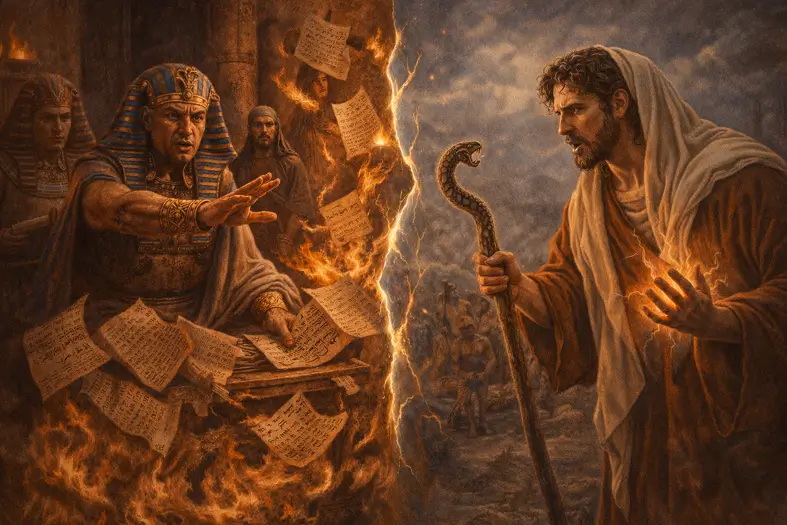
Pharaoh believed power was proven by voice.
Moshe learned that truth survives without one.
And redemption began the moment silence was no longer mistaken for loss.
📖 Sources


Shemos — Faith That Cannot Be Destroyed — Rav Kook and the Indestructibility of Emunah
Parshas Shemos opens not only with physical exile, but with a deeper collapse: the apparent failure of belief itself.
When Moshe first speaks to the people, the Torah records a painful moment:
“וְלֹא שָׁמְעוּ אֶל־מֹשֶׁה מִקֹּצֶר רוּחַ וּמֵעֲבֹדָה קָשָׁה”
[“They did not listen to Moshe, from shortness of spirit and hard labor.”]
This is not rebellion. It is exhaustion. Faith does not erupt in protest; it simply goes quiet.
If Part I explored the danger of speech divorced from conscience, Part II confronts a more unsettling question:
What happens when faith itself seems absent?
Moshe’s reaction reveals a critical tension. He assumes that if the people do not respond, faith must be broken.
Yet Hashem does not rebuke the people. Instead, He redirects Moshe.
Rav Kook identifies a subtle but decisive error: Moshe confuses concealment with disappearance. He mistakes silence for spiritual collapse.
But emunah, Rav Kook teaches, is not a mood. It is not enthusiasm. It is not articulation. It is ontological — woven into the Jewish soul itself.
Even when speech fails, faith endures.
Rav Kook’s insight reshapes the entire parsha.
Faith does not vanish under pressure; it withdraws inward. Under crushing labor, the soul contracts for survival. The voice of emunah grows quiet not because it is false, but because it is too precious to be exposed.
This is why Hashem’s signs to Moshe are not arguments or proofs. They are revelations of essence:
Each sign declares the same truth:
What appears corrupted is intact beneath the surface.
Parshas Shemos warns against a perennial spiritual mistake: judging belief by visibility.
Moshe’s concern is sincere, but incomplete. He assumes that if people cannot listen, they cannot believe. Rav Kook reverses the logic.
Faith does not require expression to exist.
Speech is an outcome of emunah — not its proof.
This reframes leadership itself. The role of the leader is not to generate faith, but to protect it until it can re-emerge.
Here the arc of the series becomes clear.
In Part I, Moshe’s heavy mouth guarded truth from manipulation.
In Part II, Moshe must learn to guard people from despair.
Leadership demands knowing:
Hashem does not abandon the people for failing to listen. He deepens His engagement.
Redemption accelerates not when faith becomes loud — but when it is honored even in silence.
There are moments when faith does not inspire, uplift, or articulate itself.
Parshas Shemos teaches that this is not failure — it is galus ha-da’as, exile of consciousness.
In such moments:
Faith that survives silence is stronger than faith that depends on feeling.
Sometimes the most authentic emunah is the one that continues quietly, waiting for breath to return.
Pharaoh believed power was proven by voice.
Moshe learned that truth survives without one.
And redemption began the moment silence was no longer mistaken for loss.
📖 Sources


“Speech, Leadership, and Responsibility — Part II
Shemos — Faith That Cannot Be Destroyed — Rav Kook and the Indestructibility of Emunah”
אֵלָיו תִּשְׁמָעוּן
Parshas Shemos complicates the mitzvah of listening to a prophet by presenting a moment when the people are emotionally unable to hear Moshe’s words. “וְלֹא שָׁמְעוּ אֶל־מֹשֶׁה” is not framed as defiance, but as collapse under “קֹצֶר רוּחַ וַעֲבֹדָה קָשָׁה.” Rav Kook explains that this mitzvah does not demand constant emotional receptivity or spiritual clarity, but covenantal alignment even when faith cannot be articulated. The obligation to heed the prophet assumes that belief may at times retreat inward, surviving beneath exhaustion and despair. The Torah thus teaches that temporary inability to listen does not sever the bond of prophecy; it reveals the depth of emunah that endures even when expression fails.
אֶת־ה׳ אֱלֹקֶיךָ תִּירָא
Fear of Hashem in Parshas Shemos is not displayed through overt awe or inspiration, but through quiet endurance. Rav Kook teaches that yirat Shamayim is not measured by emotional intensity but by fidelity under concealment. When faith withdraws inward due to suffering, reverence remains embedded in the soul’s refusal to abandon Hashem even in silence. This mitzvah reframes fear of Heaven as spiritual gravity—the pull that keeps a person oriented toward Hashem even when consciousness is constricted and speech cannot rise.
וְהָלַכְתָּ בִּדְרָכָיו
Hashem’s response to the people’s silence models Divine patience rather than rebuke. Instead of condemning their inability to listen, Hashem deepens His engagement and continues the redemptive process. Emulating His ways therefore means learning to recognize hidden faith and protect it rather than demanding immediate expression. Moshe is taught that leadership requires trust in the indestructibility of emunah, mirroring Hashem’s compassion toward a nation whose belief survives even when it cannot yet speak. This mitzvah anchors Rav Kook’s insight that true leadership walks in Hashem’s ways by honoring faith in its quietest form.


“Speech, Leadership, and Responsibility — Part II
Shemos — Faith That Cannot Be Destroyed — Rav Kook and the Indestructibility of Emunah”
Parshas Shemos records one of the Torah’s most painful moments of spiritual silence: “וְלֹא שָׁמְעוּ אֶל־מֹשֶׁה מִקֹּצֶר רוּחַ וּמֵעֲבֹדָה קָשָׁה.” The people’s inability to listen is not framed as rebellion or heresy, but as emotional and existential collapse under crushing labor. Rav Kook explains that this silence does not signal the disappearance of emunah, but its concealment. Faith retreats inward when consciousness is constricted, preserving itself beneath despair. The signs given to Moshe are therefore not proofs meant to convince skeptics, but revelations meant to reassure a leader: the inner essence of Israel remains intact even when expression fails. Shemos thus teaches that redemption begins when leaders learn to distinguish between lost faith and hidden faith, honoring the quiet endurance of belief until it can safely re-emerge.

Dive into mitzvos, tefillah, and Torah study—each section curated to help you learn, reflect, and live with intention. New insights are added regularly, creating an evolving space for spiritual growth.

Explore the 613 mitzvos and uncover the meaning behind each one. Discover practical ways to integrate them into your daily life with insights, sources, and guided reflection.

Learn the structure, depth, and spiritual intent behind Jewish prayer. Dive into morning blessings, Shema, Amidah, and more—with tools to enrich your daily connection.

Each week’s parsha offers timeless wisdom and modern relevance. Explore summaries, key themes, and mitzvah connections to deepen your understanding of the Torah cycle.