www.Mitzvah-Minute.com
"Terumah — Part II — “וְעָשׂוּ לִי מִקְדָּשׁ”: Creation and the Architecture of Holiness"
2.1 — The Mishkan as a Second Creation
From Creation to Sanctuary
The opening chapters of Bereishis describe the creation of the world. The universe emerges through ordered speech, measured stages, and a carefully structured process. Each day adds a new layer to existence until the world becomes a place fit for the presence of life and, ultimately, for the presence of man.
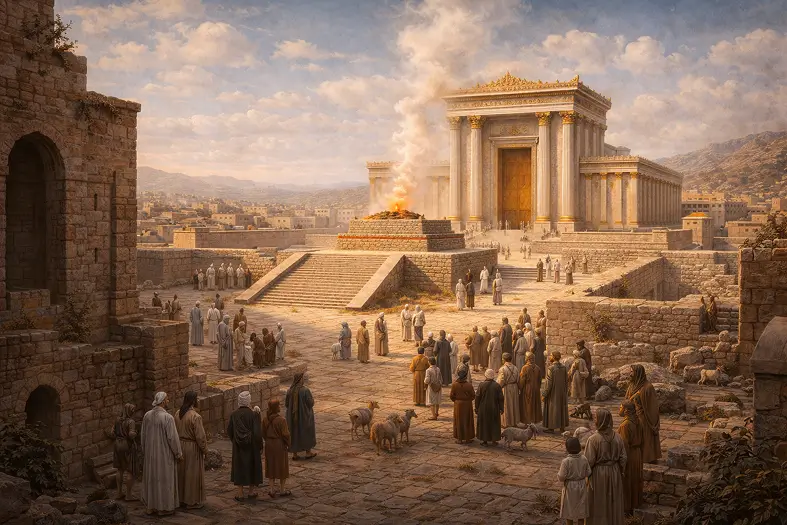
Parshas Terumah introduces a different kind of creation. Instead of the formation of heaven and earth, the Torah now describes the construction of the Mishkan. At first glance, the parsha seems to be a technical blueprint: measurements, materials, vessels, coverings, and architectural details. Yet the classical commentators reveal that this is no ordinary building project.
The Mishkan is a second creation.
Just as the world was formed as a dwelling place for humanity, the Mishkan is formed as a dwelling place for the Shechinah.
The Torah commands:
וְעָשׂוּ לִי מִקְדָּשׁ וְשָׁכַנְתִּי בְּתוֹכָם
“They shall make for Me a sanctuary, and I shall dwell among them” (Shemos 25:8)
This verse echoes the language of creation itself. The world was created so that the Divine presence could rest within it. The Mishkan becomes a concentrated version of that same idea—a microcosm of the universe, structured to host the presence of Hashem.
Ramban: The Sanctuary as a Continuation of Creation
The Ramban explains that the Mishkan is not only a continuation of Sinai; it is also a reflection of creation itself. The Divine glory that appeared on the mountain now rests within the sanctuary, just as the presence of Hashem fills the world.
At Sinai, the Torah says:
וַיִּשְׁכֹּן כְּבוֹד ה׳ עַל הַר סִינַי
“The glory of Hashem rested upon Mount Sinai” (24:16)
At the completion of the Mishkan:
וּכְבוֹד ה׳ מָלֵא אֶת הַמִּשְׁכָּן
“The glory of Hashem filled the Mishkan” (40:34)
But the parallel runs even deeper. Just as the world was created with order, measure, and purpose, so too the Mishkan is constructed with precise dimensions and intentional design. Nothing is random. Every board, curtain, and vessel is placed according to a Divine pattern.
The Mishkan is therefore a small-scale universe, ordered according to the same wisdom that shaped creation itself.
Rabbi Jonathan Sacks: A World Made for the Divine
Rabbi Jonathan Sacks develops this idea into a profound philosophical insight. He explains that just as Hashem created the world as a space for human beings, human beings are now commanded to create a space for Hashem.
Creation begins with a Divine act of generosity. Hashem makes room for humanity. The Mishkan represents the human response: humanity makes room for Hashem.
This reciprocal movement lies at the heart of the covenant. The world is not merely a place where people live. It is a place where the Divine presence can dwell—if human beings shape it accordingly.
The Mishkan teaches that holiness is not imposed from above alone. It is constructed from below, through human effort, intention, and design.
The Sevenfold Pattern
The connection between creation and the Mishkan becomes even clearer when we consider their shared structure.
Creation unfolds in a sevenfold pattern:
- Six days of creative activity.
- A seventh day of completion and rest.
The Mishkan follows a similar pattern in the Torah’s narrative. The instructions for its construction are given in multiple sections, culminating in its completion and the resting of the Divine presence within it.
Just as creation ends with:
וַיְכַל אֱלֹקִים בַּיּוֹם הַשְּׁבִיעִי
“And G-d completed on the seventh day” (Bereishis 2:2)
So too the Mishkan concludes with:
וַיְכַל מֹשֶׁה אֶת־הַמְּלָאכָה
“And Moshe completed the work” (Shemos 40:33)
In both cases, completion is followed by the resting of the Divine presence. Creation ends with Shabbos. The Mishkan ends with the Shechinah filling the sanctuary.
The message is unmistakable: the Mishkan is a reenactment of creation.
Order as the Foundation of Holiness
In the creation story, the world emerges from chaos into order. Light is separated from darkness. Waters are divided. Land appears. Life unfolds in measured stages.
The Mishkan reflects this same movement from disorder to structure. Its design is marked by:
- Precise measurements.
- Hierarchies of sanctity.
- Defined spaces and boundaries.
- Ordered arrangements of vessels.
There is an outer courtyard, an inner sanctuary, and the Kodesh HaKodashim at the center. Each area has its own level of holiness and its own function.
This layered structure mirrors the universe itself, where different realms possess different degrees of sanctity and purpose.
Holiness, the Torah teaches, is not chaos or emotional excess. It is order, proportion, and design.
The Human Role in Sacred Creation
In Bereishis, creation is entirely Divine. Human beings do not participate in the formation of the world. They enter a reality already shaped by the will of Hashem.
In Terumah, something new occurs. Human beings are invited to become creators themselves. They gather materials, fashion vessels, weave curtains, and construct a sanctuary.
This is the first time in the Torah that a sacred space is built by human hands.
The Mishkan represents the elevation of human creativity. The same intelligence, skill, and artistry that build homes and tools are now directed toward the service of the Divine.
Human beings become partners in sacred creation.
The Mishkan as a Microcosm
Many commentators explain that each component of the Mishkan reflects an aspect of the world.
The sanctuary becomes a miniature cosmos:
- The Aron represents the spiritual center, like the hidden core of creation.
- The Menorah symbolizes light, echoing the first day of creation.
- The Shulchan represents sustenance and abundance.
- The altar represents transformation and elevation.
The structure as a whole reflects the ordered harmony of the universe.
Just as the world was created as a dwelling place for humanity, the Mishkan is built as a dwelling place for the Shechinah.
The Meaning of Sacred Architecture
The Torah’s detailed descriptions of the Mishkan’s dimensions may seem technical at first. But through the lens of the commentators, those details reveal a profound idea.
Architecture is theology in physical form.
The Mishkan teaches that space itself can express spiritual truths. Measurements, materials, and arrangements become symbols of order, harmony, and purpose.
The sanctuary is not only a place of service. It is a statement about the structure of reality.
The world is not random.
It is designed.
And the Mishkan mirrors that design.
Application for Today — Becoming Builders of Sacred Worlds
The idea that the Mishkan is a second creation carries a powerful message for everyday life.
Each person is given a small portion of the world to shape: a home, a workplace, a community, a circle of relationships. In these spaces, we have the ability to create either chaos or order, either emptiness or holiness.
The Torah teaches that just as Hashem created a world for humanity, we are called to create environments that make space for the Divine.
This begins with the structures we build into our lives:
- A home centered around Shabbos and Torah.
- A daily schedule that includes tefillah and learning.
- A workplace guided by honesty and dignity.
- A community built on responsibility and care.
When these structures are in place, the spaces we inhabit become small Mishkanim. They become environments where the presence of Hashem can be felt.
The Mishkan is not only a sanctuary in the desert. It is a model for how to shape the world itself.
Every act of order, kindness, discipline, and holiness is an act of creation. Every space shaped by Torah becomes a dwelling place for the Shechinah.
📖 Sources
- Full sources available on the Mitzvah Minute Parshas Terumah page under insights and commentaries.