www.Mitzvah-Minute.com
"Terumah — Part II — “וְעָשׂוּ לִי מִקְדָּשׁ”: Creation and the Architecture of Holiness"
2.2 — The Sanctuary as the Structure of Reality
Not Just a Building
At first glance, the Mishkan appears to be a sacred structure built for ritual service. The Torah describes its dimensions, materials, vessels, and coverings with remarkable precision. It reads almost like an architectural manual.
Yet the classical commentators insist that the Mishkan is far more than a building. It is a symbolic structure that reflects the deepest truths about reality itself.
The Mishkan is not only a place where holiness happens.
It is a model of how holiness is structured.
Its design reveals a fundamental principle: the world itself is built in layers of meaning, sanctity, and purpose. The sanctuary simply makes that hidden structure visible.
Three Zones of Holiness
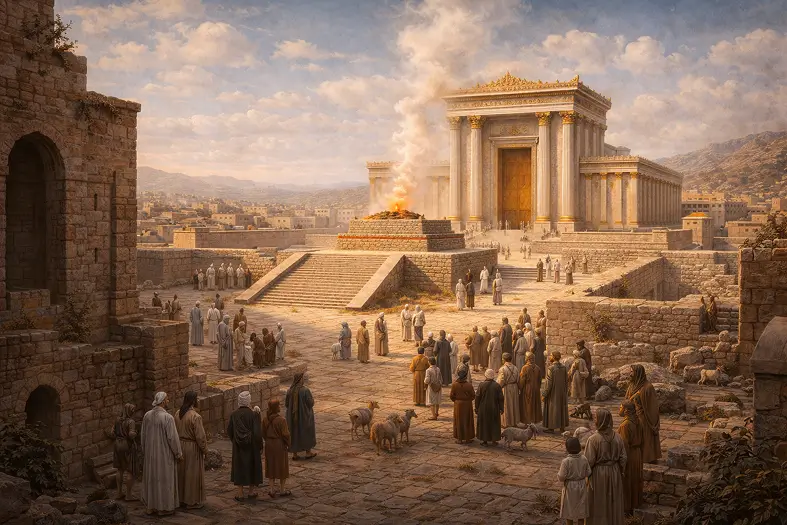
One of the most striking features of the Mishkan is its layered structure. It is not a single open space. Instead, it is organized into distinct zones, each with its own level of sanctity and access.
The Mishkan is divided into three primary areas:
- The Outer Courtyard — the area accessible to the people, where the altar stands and offerings are brought.
- The Holy Chamber (Kodesh) — the inner sanctuary containing the Menorah, the Shulchan, and the Golden Altar.
- The Holy of Holies (Kodesh HaKodashim) — the innermost chamber, housing the Aron, entered only by the Kohen Gadol on Yom Kippur.
This structure reflects a profound truth: not all spaces are equal. Reality itself is layered. There are outer realms and inner realms, visible dimensions and hidden centers.
The Mishkan gives physical form to this spiritual hierarchy.
Ramban: The Center of the World
Ramban explains that the Mishkan functions as the focal point of the Divine presence in the world. Just as Sinai was the place where the Shechinah descended in fire and cloud, the Mishkan becomes the permanent location of that presence among the people.
At its heart lies the Kodesh HaKodashim, where the Aron rests beneath the wings of the keruvim. This is the symbolic center of holiness, the point where heaven and earth meet.
The structure teaches that holiness is not evenly distributed. It radiates outward from a sacred center.
The closer one comes to that center, the greater the sanctity.
The Universe as a Layered Structure
The sanctuary’s structure mirrors the structure of creation itself. The world, too, is built in layers:
- The physical world we see and touch.
- The realm of life, consciousness, and moral choice.
- The hidden spiritual dimension at the core of existence.
The Mishkan makes this invisible structure visible. Its architecture is a map of reality.
The outer courtyard represents the physical world, where action takes place. The inner chamber represents the realm of illumination, sustenance, and spiritual service. The Holy of Holies represents the hidden core of existence—the place of pure Divine presence.
By walking through the Mishkan, one symbolically journeys from the outer layers of reality toward its sacred center.
Rabbi Yehudah HaLevi: The Point of Divine Contact
Rabbi Yehudah HaLevi, in the Kuzari, describes the world as a system in which the Divine presence rests in specific places and among specific people, much like life flows through particular organs of the body.
Just as the heart is the center of life within the human organism, the Mishkan becomes the spiritual heart of the nation. It is the place where the Divine presence is most intensely felt, and from which holiness radiates outward.
The sanctuary is therefore not only a place of service. It is the central organ of the spiritual body of Israel.
The Meaning of Boundaries
The layered structure of the Mishkan also teaches the importance of boundaries. Each zone has its own rules, its own level of access, and its own requirements of purity.
Not everyone may enter every space. Not every action may be performed in every area.
These boundaries are not meant to exclude. They are meant to preserve the integrity of holiness. Just as the human body has protective systems around its vital organs, the Mishkan surrounds its sacred center with layers of protection.
Holiness requires structure.
Structure requires boundaries.
Without boundaries, sanctity dissolves into chaos.
The Vessels as Elements of Reality
Within the inner chamber stand the three primary vessels: the Menorah, the Shulchan, and the Golden Altar. These are not random ritual objects. Each represents a fundamental dimension of existence.
Together, they form a symbolic structure:
- The Menorah represents light, wisdom, and spiritual illumination.
- The Shulchan represents sustenance, material blessing, and physical life.
- The Golden Altar represents prayer, elevation, and the connection between earth and heaven.
These three elements correspond to the major aspects of human existence: mind, body, and soul.
The Mishkan teaches that reality is not divided between the spiritual and the physical. Both must coexist within a structured, harmonious system.
The Hidden Center
At the core of the Mishkan lies the Aron. It is placed in the Kodesh HaKodashim, hidden behind the curtain, unseen by the people.
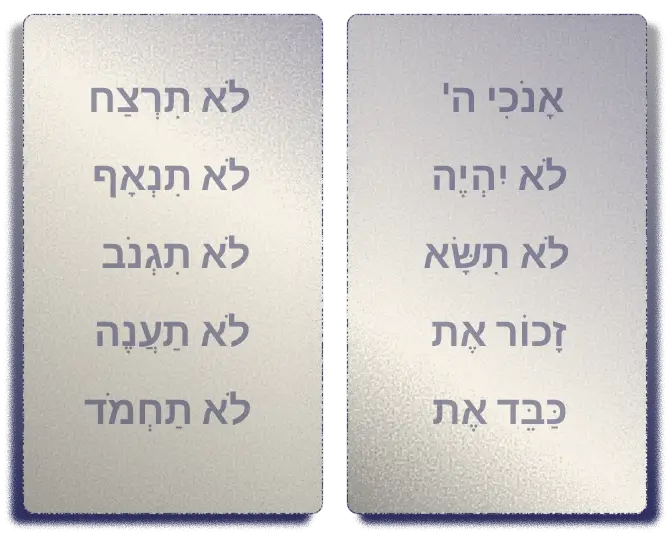
Inside the Aron rest the Luchos—the word of Hashem.
This placement teaches a powerful lesson: the true center of reality is not visible. The deepest truths are hidden, not displayed. The spiritual core of existence lies beyond ordinary perception.
The Mishkan is structured so that its most sacred element is also its most concealed.
Reality itself is built the same way. What is most essential is often what is least visible.
A Blueprint for the World
When all these elements are seen together, the Mishkan emerges as more than a sanctuary. It becomes a blueprint for understanding the world.
It teaches:
- That reality is layered, not flat.
- That holiness radiates from a sacred center.
- That boundaries preserve sanctity.
- That the physical and spiritual must coexist in harmony.
- That the deepest truths lie hidden at the core.
The Mishkan is therefore not only a place where the Divine presence dwells. It is a model of how the world itself is structured.
Application for Today — Building a Life with a Sacred Center
The structure of the Mishkan offers a powerful lesson for personal life. Many people live in a world without structure. Everything feels equally important, equally urgent, and equally demanding. Life becomes a flat landscape of responsibilities and distractions.
The Mishkan teaches a different approach. Life must be structured around a sacred center.
Just as the sanctuary has layers of holiness, so too a person’s life should have layers of priority:
- An outer layer of work, responsibilities, and daily tasks.
- An inner layer of learning, growth, and spiritual development.
- A hidden core of faith, purpose, and connection to Hashem.
When a life is built this way, it becomes stable and meaningful. The outer activities are guided by the inner values, and the inner values are rooted in a sacred center.
This requires boundaries. Not every activity deserves equal space. Time must be protected for what is most sacred: Torah, tefillah, family, and acts of kindness.
A life without a center becomes scattered.
A life with a sacred center becomes a Mishkan.
The lesson of Terumah is that holiness is not accidental. It is structured. It is built around priorities, boundaries, and purpose.
📖 Sources
- Full sources available on the Mitzvah Minute Parshas Terumah page under insights and commentaries.