www.Mitzvah-Minute.com
"Terumah — Part III — “וְשָׁכַנְתִּי בְּתוֹכָם”: The Sanctuary Within the Human Soul"
3.3 — The Vessels as the Faculties of the Soul
The Inner Meaning of the Vessels
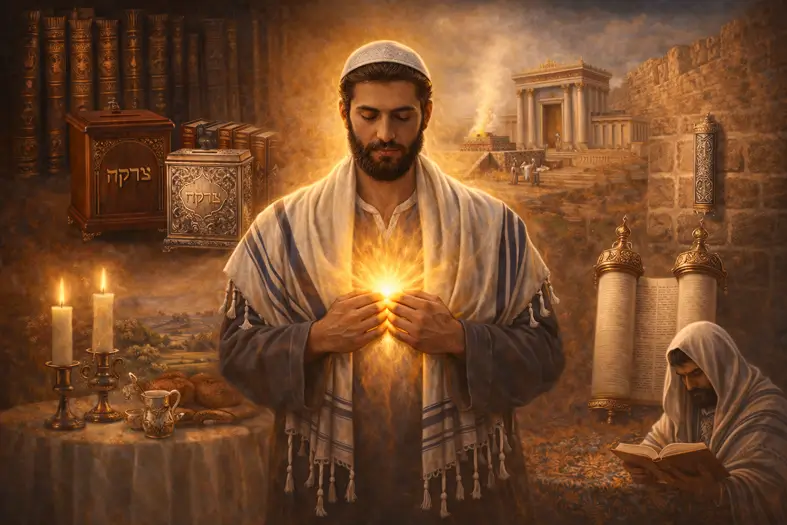
At the heart of Parshas Terumah stands the description of the sacred vessels: the Aron, the Menorah, the Shulchan, and the altars. Each vessel is constructed with precise measurements and materials, and each occupies a specific place within the Mishkan.
On the surface, these are physical objects used for ritual service. But the Chassidic masters explain that the vessels also represent the inner faculties of the human being.
If the Mishkan as a whole reflects the human soul, then its vessels represent the different powers within that soul—intellect, emotion, nourishment, and spiritual connection.
The sanctuary is therefore not only a structure in the desert.
It is a map of the human inner world.
The Aron: The Mind and the Core of Torah
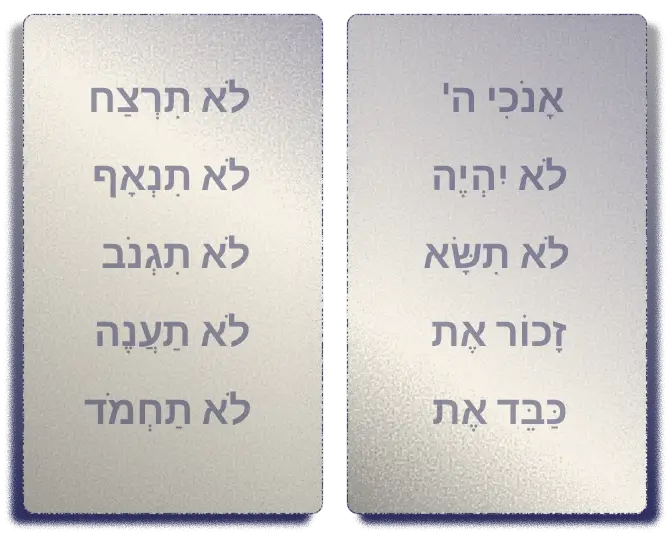
The first vessel described in the Torah is the Aron—the Ark. It stands in the Kodesh HaKodashim, the innermost chamber of the Mishkan. Inside it rest the Luchos, the tablets of the covenant.
The Chassidic masters explain that the Aron represents the intellectual and spiritual core of a person. Just as the Ark houses the Torah, the human mind houses knowledge, awareness, and understanding.
The position of the Aron teaches an important lesson. It is hidden behind the curtain, unseen by the people. This suggests that the deepest spiritual truths are not found in external display, but in the quiet inner chambers of the mind and heart.
Torah is not meant to be a decoration.
It is meant to be the hidden center of the personality.
When the mind is filled with Torah, it becomes a dwelling place for the Divine word, just as the Ark is the dwelling place of the Luchos.
The Menorah: The Light of Understanding
In the inner chamber of the Mishkan stands the Menorah, its lamps shining constantly. The Menorah is associated with light, wisdom, and illumination.
The Sfas Emes explains that the Menorah represents the light of understanding within the human being. Just as the Menorah spreads light throughout the sanctuary, the intellect spreads clarity throughout the personality.
When a person learns Torah or reflects deeply, he kindles the lamps of the inner Menorah. Insight and awareness illuminate the darkness of confusion and ignorance.
The Menorah’s light is not a sudden flash. It is steady, gentle, and continuous. This reflects the nature of true understanding, which grows gradually and spreads quietly through the soul.
The Shulchan: Sustenance and the World of Action
Opposite the Menorah stands the Shulchan, the table upon which the showbread is placed. The Shulchan represents nourishment, material sustenance, and physical life.
The Chassidic masters explain that the Shulchan symbolizes the realm of action—how a person engages with the material world. Food represents livelihood, provision, and the physical dimension of existence.
The placement of the Shulchan inside the sanctuary teaches that the physical world is not outside of holiness. It, too, belongs within the sacred structure of life.
When a person earns honestly, eats with gratitude, and uses material resources for good, his “table” becomes part of the Mishkan.
The Shulchan teaches that the physical world can be elevated when it is brought into the service of Hashem.
The Golden Altar: The Power of Prayer
In front of the curtain that leads to the Holy of Holies stands the Golden Altar, the Mizbeach HaZahav, where incense is offered daily.
This altar represents prayer—the power of speech and longing that rises from the heart toward heaven. The rising incense symbolizes the ascent of the soul, the yearning to connect with the Divine.
Speech occupies a unique place in human life. It stands between thought and action. It expresses the inner world and shapes the outer world.
The Golden Altar teaches that speech can become sacred. Words of prayer, blessing, and Torah elevate the soul, just as incense rises upward.
Ralbag: The Sanctuary as the Model of the Perfected Human Being
Ralbag explains that the vessels of the Mishkan are not only ritual objects, but symbols of the faculties of the human being. The sanctuary is structured in a way that reflects the proper ordering of the human soul. The Aron, which contains the Torah, represents the intellect—the highest faculty, which must be centered upon Divine wisdom. The Menorah represents understanding and insight, spreading intellectual light throughout the personality. The Shulchan represents material sustenance and the physical dimension of life, which must be properly guided and restrained. The altar represents the elevation of action and intention. According to Ralbag, the Mishkan is therefore a model of the perfected person, whose intellect, material life, emotions, and actions are all arranged in proper order and directed toward the service of Hashem.
The Human Being as a Living Mishkan
When these vessels are viewed together, they form a complete picture of the human personality.
Each vessel corresponds to a different inner faculty:
- The Aron represents the mind and the hidden core of Torah.
- The Menorah represents understanding and illumination.
- The Shulchan represents material life and action.
- The Golden Altar represents speech and prayer.
Together, they form a complete inner sanctuary.
The Mishkan teaches that holiness is not confined to one part of life. It must encompass the mind, the emotions, the actions, and the words. Only when all these faculties are aligned does a person become a true dwelling place for the Shechinah.
Harmony Within the Inner Sanctuary
The vessels are not scattered randomly. Each has its place, its function, and its relationship to the others. The Mishkan is a system of harmony.
This teaches that the inner life must also be ordered and balanced.
- Intellect must guide emotion.
- Material life must be aligned with spiritual values.
- Speech must express truth and kindness.
- Prayer must connect the inner and outer worlds.
When these faculties are in harmony, the human being becomes a living Mishkan.
Application for Today — Building the Inner Vessels
The symbolism of the vessels invites each person to ask: What does my inner Mishkan look like?
Is the Aron present—do I give my mind regular contact with Torah?
Is the Menorah lit—do I cultivate understanding, reflection, and wisdom?
Is the Shulchan elevated—do I use my material life for higher purposes?
Is the Golden Altar active—do I use my speech for prayer, blessing, and encouragement?
A person builds the inner vessels through daily choices. Each act of learning, each moment of honest work, each word of prayer, and each expression of kindness becomes part of the inner sanctuary.
Over time, these choices create an ordered inner world. The mind becomes an Ark, the understanding becomes a Menorah, the table becomes sacred, and the voice becomes incense.
The Mishkan is not only a structure in the desert.
It is the blueprint of the human soul.
📖 Sources
- Full sources available on the Mitzvah Minute Parshas Terumah page under insights and commentaries