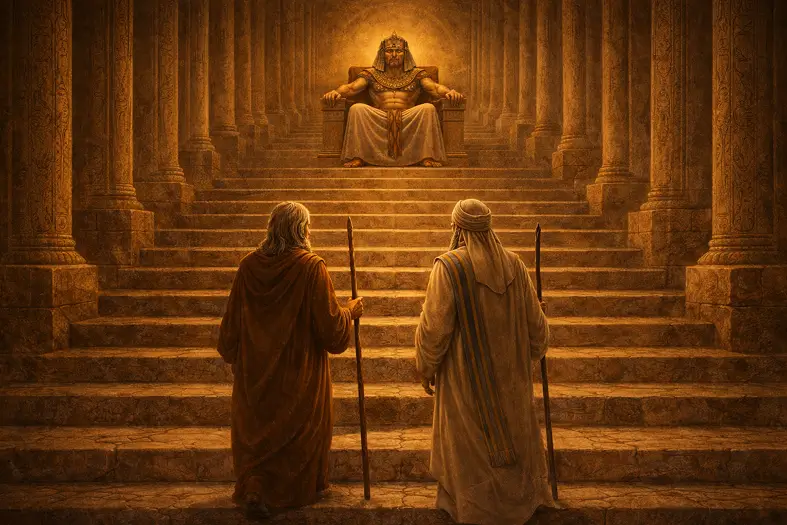
1.4 - The Plagues as a Curriculum: Learning Before Liberation (Ramban)
Parshas Va’eira introduces the plagues not as acts of punishment, but as lessons. Ramban insists that if Hashem’s goal were merely to free Israel, a single act would have sufficed. Egypt could have collapsed overnight. Pharaoh could have been removed instantly. The fact that redemption unfolds through ten measured blows reveals a deeper purpose: the plagues are a curriculum in Divine truth.
Redemption, Ramban teaches, is not achieved through force alone. It requires education—of Egypt, of Israel, and of history itself.
The Torah does not hide the objective of the plagues. It repeats it insistently:
וְיָדְעוּ מִצְרַיִם כִּי אֲנִי ה׳
“Egypt shall know that I am Hashem.”
And again:
בַּעֲבוּר תֵּדַע כִּי אֵין כָּמֹנִי בְּכָל הָאָרֶץ
“So that you shall know that there is none like Me in all the earth.”
Ramban emphasizes that “knowing” here does not mean awareness of power. Egypt already believes in power. What it denies is sovereignty—moral, absolute, and unchallenged. The plagues therefore teach how the world works, not merely who is stronger.
A single miracle could prove dominance. It could not dismantle worldview.
Egypt believed that:
These assumptions could not be overturned in one blow. They had to be systematically contradicted.
The plagues function as a structured curriculum:
Each plague refutes a specific falsehood. Together, they form an education in sovereignty.
One of Ramban’s most critical insights is that the plagues teach through distinction. Goshen is spared. Israel is protected. Boundaries appear where Egypt assumed uniformity.
This is not collateral mercy. It is instruction.
Through distinction, the plagues teach that:
Chaos destroys randomly. Sovereignty separates intentionally.
The Torah carefully records that Egyptian magicians replicate the early plagues—but fail as the curriculum progresses. Ramban reads this not as magical rivalry, but as pedagogical design.
Imitation can copy effects. It cannot generate reality. It cannot create life, reverse decay, or command boundaries.
The moment the magicians say:
אֶצְבַּע אֱלֹקִים הִוא
“This is the finger of G-d,”
the lesson is complete. Egypt’s tools have reached their limit. The curriculum has advanced beyond what counterfeit power can reproduce.
The plagues are not aimed at Egypt alone. Israel, crushed by slavery, must learn that redemption is not random and not reckless. Hashem does not merely shatter oppressors. He reveals order.
The people who will soon receive Torah must first learn that the world itself is governed by law, meaning, and accountability. The plagues prepare Israel to accept command by showing that obedience is built into reality.
Ramban explains that Pharaoh’s resistance is not a flaw in the plan. It is part of the curriculum. Each refusal allows another layer of falsehood to be exposed.
If Pharaoh surrendered too early:
Instead, resistance clarifies truth. The longer Egypt clings to illusion, the more thoroughly it is dismantled.
Only after Egypt has been taught—through water, land, sky, animals, bodies, and boundaries—can Israel leave without carrying Egypt’s worldview with them.
The plagues do not merely break chains.
They break assumptions.
Ramban’s insight completes Part I’s foundation: redemption is not escape from suffering, but education in truth. Liberation without learning would be temporary. Freedom without clarity would collapse.
Va’eira therefore insists on curriculum before covenant, instruction before inheritance, and knowledge before movement.
Redemption begins when reality itself becomes a teacher.
📖 Sources


1.4 - The Plagues as a Curriculum: Learning Before Liberation (Ramban)
Parshas Va’eira introduces the plagues not as acts of punishment, but as lessons. Ramban insists that if Hashem’s goal were merely to free Israel, a single act would have sufficed. Egypt could have collapsed overnight. Pharaoh could have been removed instantly. The fact that redemption unfolds through ten measured blows reveals a deeper purpose: the plagues are a curriculum in Divine truth.
Redemption, Ramban teaches, is not achieved through force alone. It requires education—of Egypt, of Israel, and of history itself.
The Torah does not hide the objective of the plagues. It repeats it insistently:
וְיָדְעוּ מִצְרַיִם כִּי אֲנִי ה׳
“Egypt shall know that I am Hashem.”
And again:
בַּעֲבוּר תֵּדַע כִּי אֵין כָּמֹנִי בְּכָל הָאָרֶץ
“So that you shall know that there is none like Me in all the earth.”
Ramban emphasizes that “knowing” here does not mean awareness of power. Egypt already believes in power. What it denies is sovereignty—moral, absolute, and unchallenged. The plagues therefore teach how the world works, not merely who is stronger.
A single miracle could prove dominance. It could not dismantle worldview.
Egypt believed that:
These assumptions could not be overturned in one blow. They had to be systematically contradicted.
The plagues function as a structured curriculum:
Each plague refutes a specific falsehood. Together, they form an education in sovereignty.
One of Ramban’s most critical insights is that the plagues teach through distinction. Goshen is spared. Israel is protected. Boundaries appear where Egypt assumed uniformity.
This is not collateral mercy. It is instruction.
Through distinction, the plagues teach that:
Chaos destroys randomly. Sovereignty separates intentionally.
The Torah carefully records that Egyptian magicians replicate the early plagues—but fail as the curriculum progresses. Ramban reads this not as magical rivalry, but as pedagogical design.
Imitation can copy effects. It cannot generate reality. It cannot create life, reverse decay, or command boundaries.
The moment the magicians say:
אֶצְבַּע אֱלֹקִים הִוא
“This is the finger of G-d,”
the lesson is complete. Egypt’s tools have reached their limit. The curriculum has advanced beyond what counterfeit power can reproduce.
The plagues are not aimed at Egypt alone. Israel, crushed by slavery, must learn that redemption is not random and not reckless. Hashem does not merely shatter oppressors. He reveals order.
The people who will soon receive Torah must first learn that the world itself is governed by law, meaning, and accountability. The plagues prepare Israel to accept command by showing that obedience is built into reality.
Ramban explains that Pharaoh’s resistance is not a flaw in the plan. It is part of the curriculum. Each refusal allows another layer of falsehood to be exposed.
If Pharaoh surrendered too early:
Instead, resistance clarifies truth. The longer Egypt clings to illusion, the more thoroughly it is dismantled.
Only after Egypt has been taught—through water, land, sky, animals, bodies, and boundaries—can Israel leave without carrying Egypt’s worldview with them.
The plagues do not merely break chains.
They break assumptions.
Ramban’s insight completes Part I’s foundation: redemption is not escape from suffering, but education in truth. Liberation without learning would be temporary. Freedom without clarity would collapse.
Va’eira therefore insists on curriculum before covenant, instruction before inheritance, and knowledge before movement.
Redemption begins when reality itself becomes a teacher.
📖 Sources


“The Plagues as a Curriculum: Learning Before Liberation (Ramban)”
אָנֹכִי ה׳ אֱלֹקֶיךָ
Ramban understands the plagues as a sustained education in da’at Elokim. Knowledge of Hashem here is not abstract belief but recognition of Divine sovereignty over nature, history, and moral order. The repeated refrain וְיָדְעוּ מִצְרַיִם כִּי אֲנִי ה׳ teaches that redemption requires the world itself to testify to Hashem’s exclusive authority.
אֶת־ה׳ אֱלֹקֶיךָ תִּירָא
The plagues distinguish between fear born of chaos and yirah born of order. Ramban shows that escalating, measured judgment cultivates reverent submission rather than panic. True fear of Hashem emerges when power is revealed as moral, purposeful, and bounded—not arbitrary or negotiable.
אֵלָיו תִּשְׁמָעוּן
Moshe’s prophetic warnings preceding each plague underscore that redemption unfolds through Divine speech before Divine action. Ramban emphasizes that the plagues are intelligible only when received as prophecy, not spectacle. Listening to the prophet means accepting the educational process, even when immediate liberation is desired.
וְהָלַכְתָּ בִּדְרָכָיו
Hashem’s governance during the plagues models restraint, precision, and moral clarity. By teaching through distinction, escalation, and measured response, the Torah presents Divine action as a template for human conduct. Israel is called to emulate this disciplined order, recognizing that lasting change requires structure rather than force.
וַהֲרֵעֹתֶם בַּחֲצֹצְרוֹת
The plagues establish the Torah’s model for responding to crisis: catastrophe is not random but communicative. Ramban’s framework aligns with this mitzvah by teaching that suffering must prompt reflection, recognition, and return rather than despair or denial. Crying out to Hashem transforms crisis into instruction and prepares the ground for redemption.


“The Plagues as a Curriculum: Learning Before Liberation (Ramban)”
Parshas Va’eira presents the plagues not as isolated punishments but as a deliberate sequence of instruction designed to dismantle Egypt’s worldview. Repeated declarations—וְיָדְעוּ מִצְרַיִם כִּי אֲנִי ה׳ and בַּעֲבוּר תֵּדַע כִּי אֵין כָּמֹנִי—frame the makkos as acts of revelation rather than raw force. Ramban emphasizes that the gradual escalation, varied targets, and recurring distinctions between Egypt and Israel reveal Divine sovereignty as precise, moral, and ordered.
The parsha underscores that true authority is demonstrated through differentiation: Goshen is spared, boundaries are enforced, and imitation reaches its limit. The failure of the Egyptian magicians marks a pedagogical turning point, exposing the inability of counterfeit power to create or command reality. Va’eira thus teaches that redemption must educate before it liberates—clarifying nature, authority, and accountability so that Israel may leave Egypt without carrying Egypt’s assumptions with them.

Dive into mitzvos, tefillah, and Torah study—each section curated to help you learn, reflect, and live with intention. New insights are added regularly, creating an evolving space for spiritual growth.

Explore the 613 mitzvos and uncover the meaning behind each one. Discover practical ways to integrate them into your daily life with insights, sources, and guided reflection.

Learn the structure, depth, and spiritual intent behind Jewish prayer. Dive into morning blessings, Shema, Amidah, and more—with tools to enrich your daily connection.

Each week’s parsha offers timeless wisdom and modern relevance. Explore summaries, key themes, and mitzvah connections to deepen your understanding of the Torah cycle.