2.2 - Staff vs. Magicians: Imitation and Its Limits
The confrontation between Moshe and the Egyptian magicians opens the plague narrative not with devastation, but with definition. Before blood fills the Nile and darkness descends upon Egypt, the Torah stages a quieter but more revealing contest: a staff becomes a serpent—and then becomes something more.
This opening scene is not spectacle. It is instruction. The Torah is clarifying a boundary that will govern everything that follows: imitation is not sovereignty.
When Aharon casts his staff before Pharaoh, the Torah describes:
וַיַּשְׁלֵךְ אַהֲרֹן אֶת־מַטֵּהוּ לִפְנֵי פַרְעֹה… וַיְהִי לְתַנִּין
“Aharon cast his staff before Pharaoh… and it became a serpent.”
Pharaoh summons his magicians—and they do the same.
At first glance, the contest appears inconclusive. Power is matched. Signs are duplicated. Egypt seems vindicated.
But the Torah immediately introduces the decisive moment:
וַיִּבְלַע מַטֵּה אַהֲרֹן אֶת־מַטֹּתָם
“Aharon’s staff swallowed their staffs.”
This is not merely victory. It is classification.
The magicians’ success is not denied. The Torah records it deliberately. Their failure, however, is structural, not technical.
Imitation can:
Imitation cannot:
The swallowing of the staffs is the curriculum’s first lesson: true power does not cancel rivals—it absorbs and nullifies them.
Ramban emphasizes that Hashem permits the magicians to imitate early signs intentionally. If false power collapsed immediately, its limits would never be exposed. The Torah allows imitation to flourish just long enough for its insufficiency to become undeniable.
This is why the contest begins with a staff—an object associated with authority. Egypt’s power is not illusory; it is derivative. It borrows, manipulates, and copies. But it cannot generate authority that stands on its own.
As the curriculum advances, imitation falters. When lice appear, the magicians reach their limit:
אֶצְבַּע אֱלֹקִים הִוא
“This is the finger of G-d.”
This admission is not theological conversion. It is professional recognition. Egypt’s experts concede that what they are witnessing lies beyond technique.
The boundary has been crossed:
The plagues now move into domains that cannot be mimicked because they involve creation, distinction, and sustained order.
This confrontation is not staged for Pharaoh alone. Israel must learn that redemption is not achieved through cleverness, strategy, or counter-power. It proceeds through alignment with truth.
A nation emerging from a culture steeped in sorcery must be taught that Torah is not a rival system of magic. It is submission to command. Moshe’s staff does not compete—it absorbs.
Pharaoh is not persuaded because imitation still exists. As long as counterfeit power appears viable, he can postpone submission. This is not confusion—it is willful delay.
Only when imitation collapses entirely does the confrontation shift from contest to judgment.
The Torah begins the plagues here for a reason. Before nature is overturned, before Egypt is broken, before Israel is freed, one principle must be established:
Power that can be copied is not ultimate.
Authority that can be swallowed is not sovereign.
The staff that absorbs others becomes the symbol of redemption’s path. Not domination. Not escalation. But truth so complete that falsehood has nowhere to stand.
The plagues will now proceed—not as rivalry, but as revelation.
📖 Sources


2.2 - Staff vs. Magicians: Imitation and Its Limits
The confrontation between Moshe and the Egyptian magicians opens the plague narrative not with devastation, but with definition. Before blood fills the Nile and darkness descends upon Egypt, the Torah stages a quieter but more revealing contest: a staff becomes a serpent—and then becomes something more.
This opening scene is not spectacle. It is instruction. The Torah is clarifying a boundary that will govern everything that follows: imitation is not sovereignty.
When Aharon casts his staff before Pharaoh, the Torah describes:
וַיַּשְׁלֵךְ אַהֲרֹן אֶת־מַטֵּהוּ לִפְנֵי פַרְעֹה… וַיְהִי לְתַנִּין
“Aharon cast his staff before Pharaoh… and it became a serpent.”
Pharaoh summons his magicians—and they do the same.
At first glance, the contest appears inconclusive. Power is matched. Signs are duplicated. Egypt seems vindicated.
But the Torah immediately introduces the decisive moment:
וַיִּבְלַע מַטֵּה אַהֲרֹן אֶת־מַטֹּתָם
“Aharon’s staff swallowed their staffs.”
This is not merely victory. It is classification.
The magicians’ success is not denied. The Torah records it deliberately. Their failure, however, is structural, not technical.
Imitation can:
Imitation cannot:
The swallowing of the staffs is the curriculum’s first lesson: true power does not cancel rivals—it absorbs and nullifies them.
Ramban emphasizes that Hashem permits the magicians to imitate early signs intentionally. If false power collapsed immediately, its limits would never be exposed. The Torah allows imitation to flourish just long enough for its insufficiency to become undeniable.
This is why the contest begins with a staff—an object associated with authority. Egypt’s power is not illusory; it is derivative. It borrows, manipulates, and copies. But it cannot generate authority that stands on its own.
As the curriculum advances, imitation falters. When lice appear, the magicians reach their limit:
אֶצְבַּע אֱלֹקִים הִוא
“This is the finger of G-d.”
This admission is not theological conversion. It is professional recognition. Egypt’s experts concede that what they are witnessing lies beyond technique.
The boundary has been crossed:
The plagues now move into domains that cannot be mimicked because they involve creation, distinction, and sustained order.
This confrontation is not staged for Pharaoh alone. Israel must learn that redemption is not achieved through cleverness, strategy, or counter-power. It proceeds through alignment with truth.
A nation emerging from a culture steeped in sorcery must be taught that Torah is not a rival system of magic. It is submission to command. Moshe’s staff does not compete—it absorbs.
Pharaoh is not persuaded because imitation still exists. As long as counterfeit power appears viable, he can postpone submission. This is not confusion—it is willful delay.
Only when imitation collapses entirely does the confrontation shift from contest to judgment.
The Torah begins the plagues here for a reason. Before nature is overturned, before Egypt is broken, before Israel is freed, one principle must be established:
Power that can be copied is not ultimate.
Authority that can be swallowed is not sovereign.
The staff that absorbs others becomes the symbol of redemption’s path. Not domination. Not escalation. But truth so complete that falsehood has nowhere to stand.
The plagues will now proceed—not as rivalry, but as revelation.
📖 Sources


“Staff vs. Magicians: Imitation and Its Limits”
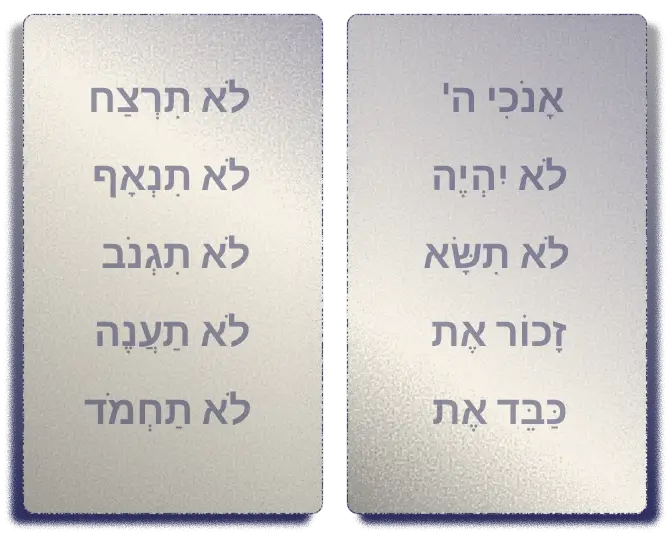
אָנֹכִי ה׳ אֱלֹקֶיךָ
The opening confrontation between Moshe and the magicians establishes that knowing Hashem means recognizing the difference between surface power and ultimate sovereignty. The magicians’ ability to imitate signs does not challenge Divine authority; it clarifies its uniqueness. True knowledge of Hashem emerges when imitation collapses and creation, command, and sustained order are revealed as exclusively His.
אֶת־ה׳ אֱלֹקֶיךָ תִּירָא
Fear of Hashem is not produced by spectacle, but by the realization that no rival power can endure before Him. The swallowing of the magicians’ staffs and their eventual admission—אֶצְבַּע אֱלֹקִים הִוא—cultivates yirah grounded in sovereignty rather than panic. The episode teaches that reverence arises when false power is exposed as limited and dependent.
אֵלָיו תִּשְׁמָעוּן
Moshe’s authority is affirmed not by outperforming Egypt’s magicians, but by representing a power they cannot replicate. Listening to the prophet means recognizing the difference between Divine command and human technique. Va’eira shows that prophecy does not compete within the arena of magic—it redefines the arena entirely.
וְהָלַכְתָּ בִּדְרָכָיו
Hashem’s response to imitation is not escalation but absorption. By allowing false power to function briefly and then revealing its limits, the Torah models restraint, clarity, and confidence in truth. Israel is called to emulate this Divine way—rejecting rivalry and spectacle in favor of integrity, patience, and moral authority.
אַל־תִּפְנוּ אֶל־הָאֱלִילִים
Egypt’s sorcery represents a worldview that seeks power through manipulation of forces detached from Divine command. The failure of the magicians exposes this approach as hollow. This mitzvah aligns with Va’eira’s lesson that turning toward autonomous powers—however impressive—leads to confusion, while truth resides only in submission to Hashem’s sovereignty.


“Staff vs. Magicians: Imitation and Its Limits”
Parshas Va’eira opens the plague narrative with a confrontation between Moshe, Aharon, and the Egyptian magicians, establishing a critical boundary before the makkos unfold. Aharon’s staff becomes a serpent, and the magicians replicate the sign, demonstrating that Egyptian power is real but derivative. The Torah immediately clarifies the distinction when וַיִּבְלַע מַטֵּה אַהֲרֹן אֶת־מַטֹּתָם—Aharon’s staff swallows theirs—signaling that true authority does not merely compete with imitation but absorbs and nullifies it.
As the plagues progress, the magicians’ capacity to imitate reaches its limit. When they fail to reproduce the plague of lice, they concede אֶצְבַּע אֱלֹקִים הִוא, acknowledging that the events now unfolding exceed technique and manipulation. This transition marks a pedagogical turning point in the parsha: the curriculum moves from rivalry to revelation. Va’eira thus teaches that redemption begins by exposing the limits of counterfeit power, preparing both Egypt and Israel to recognize sovereignty rooted in creation, command, and sustained order rather than imitation.

Dive into mitzvos, tefillah, and Torah study—each section curated to help you learn, reflect, and live with intention. New insights are added regularly, creating an evolving space for spiritual growth.

Explore the 613 mitzvos and uncover the meaning behind each one. Discover practical ways to integrate them into your daily life with insights, sources, and guided reflection.

Learn the structure, depth, and spiritual intent behind Jewish prayer. Dive into morning blessings, Shema, Amidah, and more—with tools to enrich your daily connection.

Each week’s parsha offers timeless wisdom and modern relevance. Explore summaries, key themes, and mitzvah connections to deepen your understanding of the Torah cycle.