6.2 - Kotzer Ruach: When the Soul Is Too Constricted to Be Free (Sfas Emes)
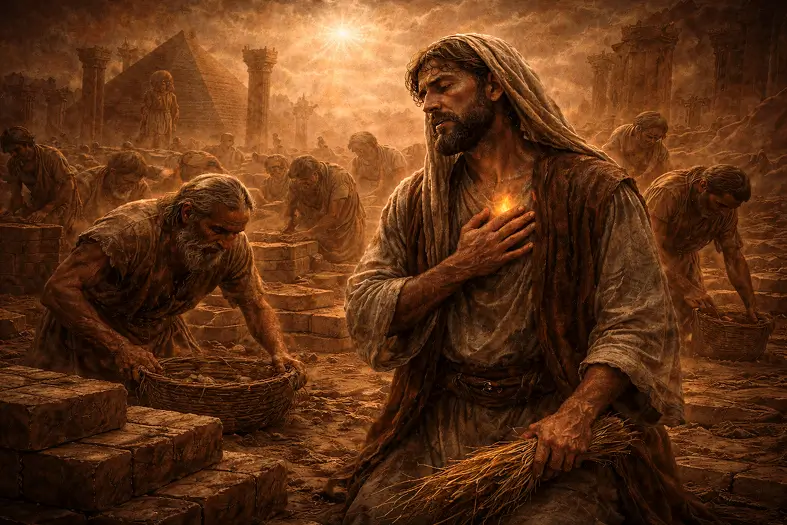
The Sfas Emes reads Parshas Va’eira not as a failure of persuasion, but as a diagnosis of inner constriction. Moshe speaks truth. The message is accurate. The promise is immediate. And yet the Torah records:
וְלֹא שָׁמְעוּ אֶל־מֹשֶׁה מִקֹּצֶר רוּחַ וּמֵעֲבֹדָה קָשָׁה
“They did not listen to Moshe because of shortness of spirit and hard labor.”
This verse names the quiet enemy of redemption: a soul that has no room.
The Sfas Emes insists that kotzer ruach is not cynicism, disbelief, or rebellion. It is constriction—a life narrowed by survival, urgency, and exhaustion.
Truth does not fail here.
Capacity does.
A constricted soul cannot receive expansive promises. Not because they are false, but because they demand space the soul does not yet possess.
Avodah kashah does not only break bodies. It compresses inner life.
Kotzer ruach emerges when:
Under such pressure, even good news feels threatening. Freedom requires trust; trust requires room.
Moshe speaks of stages of redemption—וְהוֹצֵאתִי… וְהִצַּלְתִּי… וְגָאַלְתִּי… וְלָקַחְתִּי. The Sfas Emes explains that each verb assumes a widening of inner space.
But Israel is still compressed. They cannot hold sequence, patience, or process. A soul trained only for immediacy cannot receive gradual redemption.
The Torah says they did not listen—not that they did not believe.
Chassidus distinguishes between:
Kotzer ruach allows the first and blocks the second.
The Sfas Emes deepens the earlier insight: the plagues are not only judgments against Egypt; they are expansions within Israel.
As Egypt’s power fractures, Israel’s inner compression begins to ease. Each collapse of false authority loosens the grip of inevitability.
Inner expansion begins when:
Redemption starts when the soul can breathe.
Fear of Hashem (yirah) plays a subtle role here. The Sfas Emes teaches that fear, properly understood, creates order, not panic. It quiets the noise of survival long enough for truth to settle.
Without yirah, revelation agitates. With yirah, it organizes.
Chassidus warns that forcing redemption onto a constricted soul can be destructive. Sudden freedom without inner expansion produces anxiety, rebellion, or collapse.
This explains why Hashem does not extract Israel immediately. Vessels must be widened before they are filled.
Pharaoh is rigid, not constricted. Israel is constricted, not rigid.
This difference matters:
The Sfas Emes sees Israel’s silence not as failure, but as a stage.
Delay here is not punishment. It is mercy.
Hashem waits not because Israel doubts—but because their souls are still tight. Redemption proceeds at the pace of expansion, not urgency.
Va’eira teaches that before chains can fall, the soul must be widened. Before freedom can be commanded, it must be imaginable.
Kotzer ruach is not a sin.
It is a wound.
And the Torah does not shame wounds.
It heals them—slowly, patiently, truthfully.
The Sfas Emes leaves us with a quiet truth:
Redemption does not fail when souls are small.
It waits until they can grow.
Only a soul that can breathe can be free.
📖 Sources


6.2 - Kotzer Ruach: When the Soul Is Too Constricted to Be Free (Sfas Emes)
The Sfas Emes reads Parshas Va’eira not as a failure of persuasion, but as a diagnosis of inner constriction. Moshe speaks truth. The message is accurate. The promise is immediate. And yet the Torah records:
וְלֹא שָׁמְעוּ אֶל־מֹשֶׁה מִקֹּצֶר רוּחַ וּמֵעֲבֹדָה קָשָׁה
“They did not listen to Moshe because of shortness of spirit and hard labor.”
This verse names the quiet enemy of redemption: a soul that has no room.
The Sfas Emes insists that kotzer ruach is not cynicism, disbelief, or rebellion. It is constriction—a life narrowed by survival, urgency, and exhaustion.
Truth does not fail here.
Capacity does.
A constricted soul cannot receive expansive promises. Not because they are false, but because they demand space the soul does not yet possess.
Avodah kashah does not only break bodies. It compresses inner life.
Kotzer ruach emerges when:
Under such pressure, even good news feels threatening. Freedom requires trust; trust requires room.
Moshe speaks of stages of redemption—וְהוֹצֵאתִי… וְהִצַּלְתִּי… וְגָאַלְתִּי… וְלָקַחְתִּי. The Sfas Emes explains that each verb assumes a widening of inner space.
But Israel is still compressed. They cannot hold sequence, patience, or process. A soul trained only for immediacy cannot receive gradual redemption.
The Torah says they did not listen—not that they did not believe.
Chassidus distinguishes between:
Kotzer ruach allows the first and blocks the second.
The Sfas Emes deepens the earlier insight: the plagues are not only judgments against Egypt; they are expansions within Israel.
As Egypt’s power fractures, Israel’s inner compression begins to ease. Each collapse of false authority loosens the grip of inevitability.
Inner expansion begins when:
Redemption starts when the soul can breathe.
Fear of Hashem (yirah) plays a subtle role here. The Sfas Emes teaches that fear, properly understood, creates order, not panic. It quiets the noise of survival long enough for truth to settle.
Without yirah, revelation agitates. With yirah, it organizes.
Chassidus warns that forcing redemption onto a constricted soul can be destructive. Sudden freedom without inner expansion produces anxiety, rebellion, or collapse.
This explains why Hashem does not extract Israel immediately. Vessels must be widened before they are filled.
Pharaoh is rigid, not constricted. Israel is constricted, not rigid.
This difference matters:
The Sfas Emes sees Israel’s silence not as failure, but as a stage.
Delay here is not punishment. It is mercy.
Hashem waits not because Israel doubts—but because their souls are still tight. Redemption proceeds at the pace of expansion, not urgency.
Va’eira teaches that before chains can fall, the soul must be widened. Before freedom can be commanded, it must be imaginable.
Kotzer ruach is not a sin.
It is a wound.
And the Torah does not shame wounds.
It heals them—slowly, patiently, truthfully.
The Sfas Emes leaves us with a quiet truth:
Redemption does not fail when souls are small.
It waits until they can grow.
Only a soul that can breathe can be free.
📖 Sources


“Kotzer Ruach: When the Soul Is Too Constricted to Be Free (Sfas Emes)”
(Exodus 20:2)
אָנֹכִי ה׳ אֱלֹקֶיךָ
The Sfas Emes emphasizes that knowing Hashem requires inner expansiveness. Israel’s silence in Va’eira does not reflect denial of Hashem’s existence, but inability to internalize Divine promise due to kotzer ruach. This mitzvah highlights that awareness alone does not equal da’at when the soul is constricted by suffering.
(Deuteronomy 10:20)
אֶת־ה׳ אֱלֹקֶיךָ תִּירָא
Fear of Hashem, understood by Chassidus as ordered reverence rather than panic, creates stability within the soul. The Sfas Emes explains that yirah can widen inner space by quieting survival-driven anxiety, allowing truth to settle. Without yirah, revelation agitates; with it, redemption becomes receivable.
(Deuteronomy 18:15)
אֵלָיו תִּשְׁמָעוּן
Israel’s failure to listen to Moshe stems from incapacity rather than rejection. This mitzvah underscores that listening requires emotional and spiritual bandwidth. Va’eira teaches that prophetic truth may be fully authentic yet temporarily unhearable when inner life has been compressed by affliction.
(Deuteronomy 28:9)
וְהָלַכְתָּ בִּדְרָכָיו
Hashem’s patience in Va’eira models compassion toward constricted souls. Chassidus reads Divine gradualism as sensitivity to human capacity. Emulating Hashem means recognizing when firmness must be paired with gentleness, allowing space for inner expansion before demanding transformation.
(Numbers 10:9)
וַהֲרֵעֹתֶם בַּחֲצֹרוֹת
Genuine outcry can widen the soul by releasing internal pressure. The Sfas Emes teaches that when cries emerge from truth rather than desperation, they create vessels for redemption. Va’eira contrasts Israel’s muted silence with the potential of authentic outcry to reopen spiritual breathing room.


“Kotzer Ruach: When the Soul Is Too Constricted to Be Free (Sfas Emes)”
Parshas Va’eira records a striking response to Moshe’s announcement of redemption: וְלֹא שָׁמְעוּ אֶל־מֹשֶׁה מִקֹּצֶר רוּחַ וּמֵעֲבֹדָה קָשָׁה. The Torah does not attribute Israel’s silence to disbelief or rebellion, but to kotzer ruach—shortness or constriction of spirit. The Sfas Emes understands this phrase as an inner condition formed by prolonged oppression, in which the soul lacks the space required to absorb expansive promise.
Hashem’s message in Va’eira unfolds as a sequence—וְהוֹצֵאתִי… וְהִצַּלְתִּי… וְגָאַלְתִּי… וְלָקַחְתִּי—each stage presuming patience, imagination, and trust. Israel’s inability to hear reflects not rejection of truth, but incapacity to contain process. The parsha thus frames redemption as dependent on inner readiness as much as Divine initiative.
Va’eira situates the plagues as preparatory to this inner expansion. As Egypt’s power begins to fracture, Israel’s constriction slowly loosens, making room for hope and receptivity. The narrative teaches that silence in the face of promise can signal wounded spirit rather than hardened heart, and that redemption advances at the pace required for the soul to widen.

Dive into mitzvos, tefillah, and Torah study—each section curated to help you learn, reflect, and live with intention. New insights are added regularly, creating an evolving space for spiritual growth.

Explore the 613 mitzvos and uncover the meaning behind each one. Discover practical ways to integrate them into your daily life with insights, sources, and guided reflection.

Learn the structure, depth, and spiritual intent behind Jewish prayer. Dive into morning blessings, Shema, Amidah, and more—with tools to enrich your daily connection.

Each week’s parsha offers timeless wisdom and modern relevance. Explore summaries, key themes, and mitzvah connections to deepen your understanding of the Torah cycle.