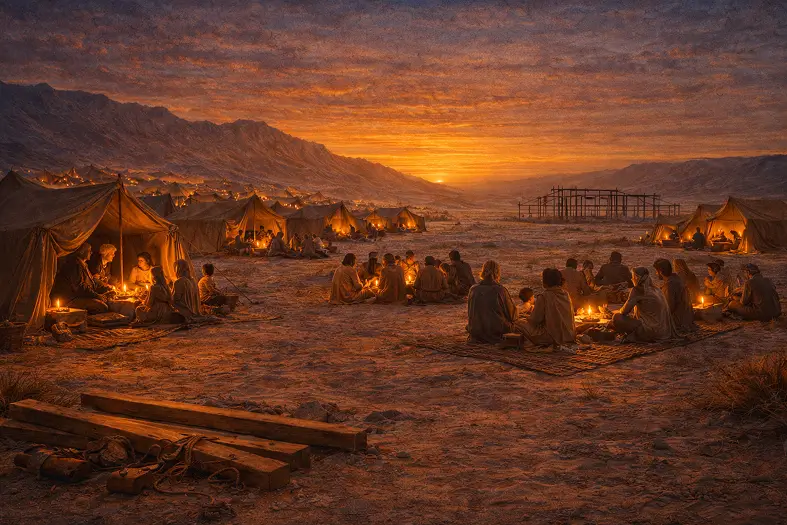
2.4 — The Sanctuary in Time
Before the Torah describes the construction of the Mishkan, it pauses to remind the nation of the sanctity of Shabbos:
“שֵׁשֶׁת יָמִים תֵּעָשֶׂה מְלָאכָה וּבַיּוֹם הַשְּׁבִיעִי יִהְיֶה לָכֶם קֹדֶשׁ שַׁבַּת שַׁבָּתוֹן לַה׳.”
The sequence is deliberate. Before Israel can build a sanctuary in space, they must first learn to inhabit sacred time.
Rambam’s understanding of Torah life emphasizes that Judaism does not depend primarily on places but on rhythms. Sacred locations can inspire devotion, yet the moral and spiritual life of a people must be sustained through regular patterns that shape everyday existence.
Shabbos creates such a pattern.
Every week the nation pauses from labor, returning its attention to the Creator of the world. This rhythm forms the spiritual backbone of Jewish life. Through the discipline of sacred rest, individuals and communities learn to step out of the relentless cycle of production and remember the deeper purpose of their existence.
The Mishkan, by contrast, is a physical structure situated in a particular place. While it serves as a focal point for Divine service, it cannot accompany the people everywhere. Shabbos, however, travels with them wherever they live.
For this reason the Torah introduces Shabbos before the Mishkan. Sacred time becomes the enduring foundation upon which sacred space can be built.
Ramban explains that the Mishkan extends the revelation of Sinai into the life of the nation. At Sinai the Divine Presence descended upon the mountain, and the people experienced an unparalleled closeness with Hashem. The sanctuary allows that presence to dwell within the camp of Israel.
Yet the Mishkan does not stand alone.
Shabbos, too, originates in the experience of Sinai and the creation of the world itself. Each week, the sanctity of the seventh day reconnects the people to the moment when Hashem completed creation and rested. In this sense, Shabbos becomes a recurring reminder of the covenant between Hashem and His people.
The Torah therefore places Shabbos before the Mishkan to show that sacred space derives its meaning from sacred time.
The sanctuary gathers the people around a central place of worship, but Shabbos gathers them within a shared rhythm of holiness that transcends location. Wherever the people dwell, the arrival of the seventh day transforms ordinary life into an encounter with the Divine.
The Mishkan reveals the presence of Hashem in space. Shabbos reveals His presence in time.
Rav Kook describes Shabbos as one of the most profound spiritual gifts given to humanity. Human beings naturally become absorbed in the work of shaping the material world. Creativity, labor, and achievement fill the days of the week.
Without interruption, this constant activity can obscure the deeper purpose of existence.
Shabbos restores balance.
When the seventh day arrives, the creative impulse that dominates the week becomes quiet. The world that human beings shape through labor is momentarily set aside, allowing the soul to reconnect with the source of all creation.
Rav Kook sees this transformation as the creation of an inner sanctuary.
Just as the Mishkan provides a space where the Divine Presence becomes manifest within the physical world, Shabbos provides a moment in time where the soul becomes receptive to that presence. The sanctity of the day opens a doorway through which spiritual awareness can enter ordinary life.
In this sense, Shabbos becomes the deeper Mishkan.
The sanctuary gathers the people in one place, but the sanctity of time gathers them within a shared spiritual experience that renews their inner lives week after week.
Rabbi Jonathan Sacks often emphasized that Judaism is unique among civilizations in the way it sanctifies time. Many cultures build monumental structures to express their devotion, investing immense resources in temples, monuments, and sacred architecture.
Judaism certainly recognizes the importance of sacred space, as seen in the Mishkan and later in the Beis HaMikdash. Yet the Torah ultimately anchors spiritual life in sacred time rather than in sacred buildings.
Shabbos becomes the center of that vision.
Unlike a sanctuary, which can exist only in one location, sacred time belongs to everyone. Wherever Jews live, the arrival of Shabbos transforms homes and communities into places of holiness.
This weekly rhythm creates a civilization structured around spiritual renewal. Families gather around the table, communities assemble for prayer, and individuals step back from the pressures of work to rediscover the deeper meaning of life.
In this way Shabbos accomplishes something that no building can achieve. It shapes the moral character of an entire society.
Seen in this light, the Torah’s ordering becomes profoundly meaningful. Before the nation begins constructing the Mishkan, they are taught to construct something even more enduring: a life organized around sacred time.
The Mishkan stands at the center of the camp, but its influence depends on the spiritual readiness of the people who approach it. Shabbos cultivates that readiness.
Each week the people pause from labor and remember that the world is not sustained by human effort alone. They step back from the pursuit of productivity and rediscover the presence of Hashem within their lives.
Through this rhythm the nation learns how to inhabit holiness.
The sanctuary in space becomes meaningful because the people already live within a sanctuary in time.
Modern life often erodes the rhythms that once shaped human existence. Technology allows work to continue at every hour. Communication never truly stops. The boundaries between labor and rest grow increasingly blurred.
In such an environment, the wisdom of Shabbos becomes even more powerful.
The weekly pause restores a sense of balance that modern culture frequently loses. When the seventh day arrives, individuals step away from constant activity and reconnect with family, community, and spiritual reflection.
This rhythm nourishes the inner life.
Instead of allowing work and technology to dominate every moment, Shabbos reminds people that rest itself possesses spiritual value. The pause creates space for gratitude, contemplation, and relationships that cannot flourish amid constant productivity.
In a world often defined by speed and efficiency, Shabbos offers a different vision of human flourishing. It teaches that a meaningful life requires sacred rhythms that renew the soul.
The Mishkan once stood at the center of the desert camp, but the sanctuary of Shabbos accompanies the Jewish people wherever they live. Through the sanctity of time, the covenant continues to shape the moral and spiritual life of the nation.
📖 Sources


2.4 — The Sanctuary in Time
Before the Torah describes the construction of the Mishkan, it pauses to remind the nation of the sanctity of Shabbos:
“שֵׁשֶׁת יָמִים תֵּעָשֶׂה מְלָאכָה וּבַיּוֹם הַשְּׁבִיעִי יִהְיֶה לָכֶם קֹדֶשׁ שַׁבַּת שַׁבָּתוֹן לַה׳.”
The sequence is deliberate. Before Israel can build a sanctuary in space, they must first learn to inhabit sacred time.
Rambam’s understanding of Torah life emphasizes that Judaism does not depend primarily on places but on rhythms. Sacred locations can inspire devotion, yet the moral and spiritual life of a people must be sustained through regular patterns that shape everyday existence.
Shabbos creates such a pattern.
Every week the nation pauses from labor, returning its attention to the Creator of the world. This rhythm forms the spiritual backbone of Jewish life. Through the discipline of sacred rest, individuals and communities learn to step out of the relentless cycle of production and remember the deeper purpose of their existence.
The Mishkan, by contrast, is a physical structure situated in a particular place. While it serves as a focal point for Divine service, it cannot accompany the people everywhere. Shabbos, however, travels with them wherever they live.
For this reason the Torah introduces Shabbos before the Mishkan. Sacred time becomes the enduring foundation upon which sacred space can be built.
Ramban explains that the Mishkan extends the revelation of Sinai into the life of the nation. At Sinai the Divine Presence descended upon the mountain, and the people experienced an unparalleled closeness with Hashem. The sanctuary allows that presence to dwell within the camp of Israel.
Yet the Mishkan does not stand alone.
Shabbos, too, originates in the experience of Sinai and the creation of the world itself. Each week, the sanctity of the seventh day reconnects the people to the moment when Hashem completed creation and rested. In this sense, Shabbos becomes a recurring reminder of the covenant between Hashem and His people.
The Torah therefore places Shabbos before the Mishkan to show that sacred space derives its meaning from sacred time.
The sanctuary gathers the people around a central place of worship, but Shabbos gathers them within a shared rhythm of holiness that transcends location. Wherever the people dwell, the arrival of the seventh day transforms ordinary life into an encounter with the Divine.
The Mishkan reveals the presence of Hashem in space. Shabbos reveals His presence in time.
Rav Kook describes Shabbos as one of the most profound spiritual gifts given to humanity. Human beings naturally become absorbed in the work of shaping the material world. Creativity, labor, and achievement fill the days of the week.
Without interruption, this constant activity can obscure the deeper purpose of existence.
Shabbos restores balance.
When the seventh day arrives, the creative impulse that dominates the week becomes quiet. The world that human beings shape through labor is momentarily set aside, allowing the soul to reconnect with the source of all creation.
Rav Kook sees this transformation as the creation of an inner sanctuary.
Just as the Mishkan provides a space where the Divine Presence becomes manifest within the physical world, Shabbos provides a moment in time where the soul becomes receptive to that presence. The sanctity of the day opens a doorway through which spiritual awareness can enter ordinary life.
In this sense, Shabbos becomes the deeper Mishkan.
The sanctuary gathers the people in one place, but the sanctity of time gathers them within a shared spiritual experience that renews their inner lives week after week.
Rabbi Jonathan Sacks often emphasized that Judaism is unique among civilizations in the way it sanctifies time. Many cultures build monumental structures to express their devotion, investing immense resources in temples, monuments, and sacred architecture.
Judaism certainly recognizes the importance of sacred space, as seen in the Mishkan and later in the Beis HaMikdash. Yet the Torah ultimately anchors spiritual life in sacred time rather than in sacred buildings.
Shabbos becomes the center of that vision.
Unlike a sanctuary, which can exist only in one location, sacred time belongs to everyone. Wherever Jews live, the arrival of Shabbos transforms homes and communities into places of holiness.
This weekly rhythm creates a civilization structured around spiritual renewal. Families gather around the table, communities assemble for prayer, and individuals step back from the pressures of work to rediscover the deeper meaning of life.
In this way Shabbos accomplishes something that no building can achieve. It shapes the moral character of an entire society.
Seen in this light, the Torah’s ordering becomes profoundly meaningful. Before the nation begins constructing the Mishkan, they are taught to construct something even more enduring: a life organized around sacred time.
The Mishkan stands at the center of the camp, but its influence depends on the spiritual readiness of the people who approach it. Shabbos cultivates that readiness.
Each week the people pause from labor and remember that the world is not sustained by human effort alone. They step back from the pursuit of productivity and rediscover the presence of Hashem within their lives.
Through this rhythm the nation learns how to inhabit holiness.
The sanctuary in space becomes meaningful because the people already live within a sanctuary in time.
Modern life often erodes the rhythms that once shaped human existence. Technology allows work to continue at every hour. Communication never truly stops. The boundaries between labor and rest grow increasingly blurred.
In such an environment, the wisdom of Shabbos becomes even more powerful.
The weekly pause restores a sense of balance that modern culture frequently loses. When the seventh day arrives, individuals step away from constant activity and reconnect with family, community, and spiritual reflection.
This rhythm nourishes the inner life.
Instead of allowing work and technology to dominate every moment, Shabbos reminds people that rest itself possesses spiritual value. The pause creates space for gratitude, contemplation, and relationships that cannot flourish amid constant productivity.
In a world often defined by speed and efficiency, Shabbos offers a different vision of human flourishing. It teaches that a meaningful life requires sacred rhythms that renew the soul.
The Mishkan once stood at the center of the desert camp, but the sanctuary of Shabbos accompanies the Jewish people wherever they live. Through the sanctity of time, the covenant continues to shape the moral and spiritual life of the nation.
📖 Sources


2.4 — The Sanctuary in Time
Exodus 23:12 — וּבַיּוֹם הַשְּׁבִיעִי תִּשְׁבֹּת
The commandment to rest on Shabbos establishes the rhythm of sacred time that shapes Jewish life. By ceasing from labor each week, the covenant community creates space for spiritual renewal and reflection.
Exodus 20:10 — לֹא תַעֲשֶׂה כָל מְלָאכָה
The prohibition of melachah protects the sanctity of Shabbos by setting boundaries around human creative activity. Through this discipline, sacred time becomes a sanctuary that renews the spiritual life of the nation.
Exodus 20:8 — זָכוֹר אֶת יוֹם הַשַּׁבָּת לְקַדְּשׁוֹ
The mitzvah of sanctifying Shabbos affirms that the seventh day is not merely a pause from labor but a positive act of holiness. Through Kiddush and Havdalah, the Jewish people mark sacred time as the center of covenant life.
Exodus 25:8 — וְעָשׂוּ לִי מִקְדָּשׁ
The Mishkan represents the dwelling place of the Divine Presence among the people. Its placement after the commandment of Shabbos teaches that sacred space derives its meaning from a society already shaped by sacred time.


2.4 — The Sanctuary in Time
"שַׁבַּת שַׁבָּתוֹן לַה׳"
Moshe introduces the commandment of Shabbos before the instructions for constructing the Mishkan, establishing sacred time as the foundation of covenant life. By observing the rhythm of Shabbos, the people learn to inhabit holiness before building a sanctuary in space. The parsha therefore reveals that the sanctity of the Mishkan emerges from a nation already shaped by the discipline of sacred time.

Dive into mitzvos, tefillah, and Torah study—each section curated to help you learn, reflect, and live with intention. New insights are added regularly, creating an evolving space for spiritual growth.

Explore the 613 mitzvos and uncover the meaning behind each one. Discover practical ways to integrate them into your daily life with insights, sources, and guided reflection.

Learn the structure, depth, and spiritual intent behind Jewish prayer. Dive into morning blessings, Shema, Amidah, and more—with tools to enrich your daily connection.

Each week’s parsha offers timeless wisdom and modern relevance. Explore summaries, key themes, and mitzvah connections to deepen your understanding of the Torah cycle.