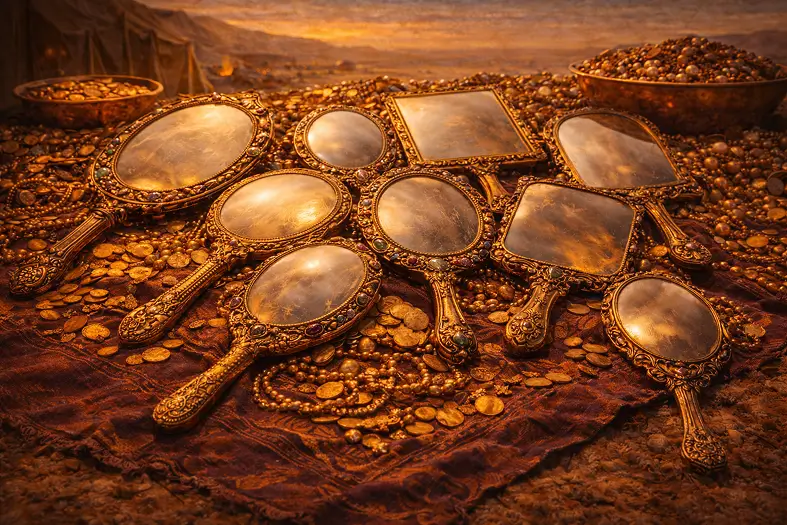
3.2 — Redeeming the Gold of the Golden Calf
Parshas Vayakhel describes a remarkable moment in the spiritual history of the Jewish people. When Moshe invites the nation to contribute materials for the Mishkan, the Torah records:
“וַיָּבֹאוּ הָאֲנָשִׁים עַל הַנָּשִׁים… כָּל נְדִיב לֵב.”
Men and women come forward together, bringing jewelry and precious metals—especially gold. These materials will be melted, shaped, and transformed into the vessels of the sanctuary.
Yet the reader cannot overlook the powerful echo behind this scene. Only a short time earlier, that same gold had been used to create the Golden Calf.
The contrast is striking. The material that once fueled idolatry now becomes the foundation of the Mishkan.
Rambam’s understanding of repentance offers a framework for understanding this transformation. True repentance does not simply erase the past. Instead, it redirects human energy toward a new purpose. The impulses that once led a person astray can become sources of growth when guided by wisdom and discipline.
The Torah therefore does not require the nation to discard the gold associated with their earlier failure. Instead, that very material becomes the raw substance from which holiness is built.
The Mishkan emerges not despite the nation’s past, but through its transformation.
Ramban emphasizes that the Mishkan itself represents a restoration of the relationship between Hashem and the people after the sin of the Golden Calf. The sanctuary allows the Divine Presence to dwell among Israel once again.
In this context, the use of gold acquires deeper meaning.
Gold was the central material in the creation of the idol. The people removed their jewelry, melted it down, and fashioned the Calf as an object of worship. The same metal that once symbolized rebellion now becomes the material from which the Ark, the Menorah, and other sacred vessels are formed.
The Torah therefore demonstrates that repentance does not require the destruction of human creativity. Instead, it requires the redirection of that creativity toward the service of Hashem.
The people who once misused their resources now use those same resources to build a sanctuary for the Divine Presence.
The Sfas Emes explores the deeper spiritual dynamic behind this transformation. The sin of the Golden Calf did not arise from a lack of religious feeling. On the contrary, it emerged from intense spiritual longing.
The people desired a tangible expression of the Divine presence that had guided them through the wilderness. When Moshe delayed returning from Sinai, that longing turned into a misguided attempt to create a visible representation of holiness.
The problem, therefore, was not the presence of spiritual energy but its lack of proper direction.
The Mishkan corrects this mistake.
Instead of inventing a form of worship, the people now follow the structure that Hashem commands. Their devotion remains just as strong, but it is now guided by Divine instruction.
The gold that once expressed uncontrolled enthusiasm becomes the material through which disciplined devotion is expressed.
The Kedushas Levi sees in this transformation a broader principle about the nature of holiness. Judaism does not seek to escape the material world. Instead, it seeks to elevate it.
Gold itself is morally neutral. It can become the substance of idolatry or the material of sacred vessels. What determines its meaning is the intention and purpose for which it is used.
The Mishkan therefore becomes a powerful example of spiritual elevation. The same material that once served an idol is lifted into the service of the Divine Presence.
Through this transformation, the Torah teaches that even elements associated with failure can be redeemed when they are redirected toward holiness.
Rabbi Jonathan Sacks often emphasized that the Mishkan represents one of the Torah’s most profound examples of collective repair.
The Golden Calf was not merely an individual sin; it was a national crisis. The covenant itself appeared to be in jeopardy. Rebuilding the relationship between Hashem and the people required more than private repentance. It required a communal act of renewal.
The construction of the Mishkan provides exactly that opportunity.
The same people who once contributed gold to an idol now contribute gold to a sanctuary. The act of giving becomes a form of collective teshuvah. Each donation represents a conscious decision to redirect the nation’s resources toward a sacred purpose.
In this way, the Mishkan becomes the architectural expression of a people rebuilding its moral identity.
Rav Avigdor Miller often emphasized that human drives and desires are not inherently negative. The Torah does not attempt to eliminate human energy but to guide it toward constructive ends.
The story of the Golden Calf demonstrates what happens when powerful emotions operate without guidance. Fear, anxiety, and longing for spiritual connection combined to produce a disastrous result.
The Mishkan demonstrates the opposite possibility.
When the same emotional energy is guided by Torah, it produces something magnificent. The generosity that once contributed to idolatry now produces the sanctuary where the Divine Presence dwells.
This transformation illustrates the Torah’s confidence in human potential. Even after failure, the same energies that led to sin can become instruments of holiness when directed properly.
The journey from the Golden Calf to the Mishkan reveals a profound truth about the nature of repentance.
The Torah does not ask the people to suppress their creativity, passion, or generosity. Instead, it asks them to transform those qualities.
The gold that once formed an idol becomes the gold of the Menorah. The same hands that once shaped the Calf now shape the vessels of the sanctuary. The same communal energy that once produced chaos now produces sacred order.
The Mishkan therefore stands as a monument to the possibility of transformation. It embodies the idea that failure can become the starting point for deeper holiness when human energy is redirected toward the service of Hashem.
Communities and individuals inevitably face moments of failure. Mistakes are made, trust is broken, and collective confidence can be shaken. In such moments, the instinct may be to reject the past entirely or to suppress the energies that led to the problem.
The Torah offers a different path.
The story of the Mishkan teaches that the most powerful form of repair comes not from destroying human energy but from redirecting it. The same talents, passions, and resources that once produced harm can become sources of renewal when guided by moral purpose.
This insight applies not only to individuals but also to societies. Communities recover from crisis by transforming the forces that once led to failure into instruments of constructive creativity.
The gold of the Golden Calf was not discarded. It was redeemed.
When human energy is aligned with wisdom and discipline, even the materials of past mistakes can become the foundation for building something sacred.
📖 Sources


3.2 — Redeeming the Gold of the Golden Calf
Parshas Vayakhel describes a remarkable moment in the spiritual history of the Jewish people. When Moshe invites the nation to contribute materials for the Mishkan, the Torah records:
“וַיָּבֹאוּ הָאֲנָשִׁים עַל הַנָּשִׁים… כָּל נְדִיב לֵב.”
Men and women come forward together, bringing jewelry and precious metals—especially gold. These materials will be melted, shaped, and transformed into the vessels of the sanctuary.
Yet the reader cannot overlook the powerful echo behind this scene. Only a short time earlier, that same gold had been used to create the Golden Calf.
The contrast is striking. The material that once fueled idolatry now becomes the foundation of the Mishkan.
Rambam’s understanding of repentance offers a framework for understanding this transformation. True repentance does not simply erase the past. Instead, it redirects human energy toward a new purpose. The impulses that once led a person astray can become sources of growth when guided by wisdom and discipline.
The Torah therefore does not require the nation to discard the gold associated with their earlier failure. Instead, that very material becomes the raw substance from which holiness is built.
The Mishkan emerges not despite the nation’s past, but through its transformation.
Ramban emphasizes that the Mishkan itself represents a restoration of the relationship between Hashem and the people after the sin of the Golden Calf. The sanctuary allows the Divine Presence to dwell among Israel once again.
In this context, the use of gold acquires deeper meaning.
Gold was the central material in the creation of the idol. The people removed their jewelry, melted it down, and fashioned the Calf as an object of worship. The same metal that once symbolized rebellion now becomes the material from which the Ark, the Menorah, and other sacred vessels are formed.
The Torah therefore demonstrates that repentance does not require the destruction of human creativity. Instead, it requires the redirection of that creativity toward the service of Hashem.
The people who once misused their resources now use those same resources to build a sanctuary for the Divine Presence.
The Sfas Emes explores the deeper spiritual dynamic behind this transformation. The sin of the Golden Calf did not arise from a lack of religious feeling. On the contrary, it emerged from intense spiritual longing.
The people desired a tangible expression of the Divine presence that had guided them through the wilderness. When Moshe delayed returning from Sinai, that longing turned into a misguided attempt to create a visible representation of holiness.
The problem, therefore, was not the presence of spiritual energy but its lack of proper direction.
The Mishkan corrects this mistake.
Instead of inventing a form of worship, the people now follow the structure that Hashem commands. Their devotion remains just as strong, but it is now guided by Divine instruction.
The gold that once expressed uncontrolled enthusiasm becomes the material through which disciplined devotion is expressed.
The Kedushas Levi sees in this transformation a broader principle about the nature of holiness. Judaism does not seek to escape the material world. Instead, it seeks to elevate it.
Gold itself is morally neutral. It can become the substance of idolatry or the material of sacred vessels. What determines its meaning is the intention and purpose for which it is used.
The Mishkan therefore becomes a powerful example of spiritual elevation. The same material that once served an idol is lifted into the service of the Divine Presence.
Through this transformation, the Torah teaches that even elements associated with failure can be redeemed when they are redirected toward holiness.
Rabbi Jonathan Sacks often emphasized that the Mishkan represents one of the Torah’s most profound examples of collective repair.
The Golden Calf was not merely an individual sin; it was a national crisis. The covenant itself appeared to be in jeopardy. Rebuilding the relationship between Hashem and the people required more than private repentance. It required a communal act of renewal.
The construction of the Mishkan provides exactly that opportunity.
The same people who once contributed gold to an idol now contribute gold to a sanctuary. The act of giving becomes a form of collective teshuvah. Each donation represents a conscious decision to redirect the nation’s resources toward a sacred purpose.
In this way, the Mishkan becomes the architectural expression of a people rebuilding its moral identity.
Rav Avigdor Miller often emphasized that human drives and desires are not inherently negative. The Torah does not attempt to eliminate human energy but to guide it toward constructive ends.
The story of the Golden Calf demonstrates what happens when powerful emotions operate without guidance. Fear, anxiety, and longing for spiritual connection combined to produce a disastrous result.
The Mishkan demonstrates the opposite possibility.
When the same emotional energy is guided by Torah, it produces something magnificent. The generosity that once contributed to idolatry now produces the sanctuary where the Divine Presence dwells.
This transformation illustrates the Torah’s confidence in human potential. Even after failure, the same energies that led to sin can become instruments of holiness when directed properly.
The journey from the Golden Calf to the Mishkan reveals a profound truth about the nature of repentance.
The Torah does not ask the people to suppress their creativity, passion, or generosity. Instead, it asks them to transform those qualities.
The gold that once formed an idol becomes the gold of the Menorah. The same hands that once shaped the Calf now shape the vessels of the sanctuary. The same communal energy that once produced chaos now produces sacred order.
The Mishkan therefore stands as a monument to the possibility of transformation. It embodies the idea that failure can become the starting point for deeper holiness when human energy is redirected toward the service of Hashem.
Communities and individuals inevitably face moments of failure. Mistakes are made, trust is broken, and collective confidence can be shaken. In such moments, the instinct may be to reject the past entirely or to suppress the energies that led to the problem.
The Torah offers a different path.
The story of the Mishkan teaches that the most powerful form of repair comes not from destroying human energy but from redirecting it. The same talents, passions, and resources that once produced harm can become sources of renewal when guided by moral purpose.
This insight applies not only to individuals but also to societies. Communities recover from crisis by transforming the forces that once led to failure into instruments of constructive creativity.
The gold of the Golden Calf was not discarded. It was redeemed.
When human energy is aligned with wisdom and discipline, even the materials of past mistakes can become the foundation for building something sacred.
📖 Sources


3.2 — Redeeming the Gold of the Golden Calf
Exodus 25:8 — וְעָשׂוּ לִי מִקְדָּשׁ
The Mishkan represents the restoration of the covenant after the sin of the Golden Calf. The sanctuary is constructed from the contributions of the people, transforming materials once associated with failure into vessels of Divine service.
Deuteronomy 15:8 — פָּתֹחַ תִּפְתַּח אֶת יָדֶךָ
The voluntary generosity that builds the Mishkan reflects the Torah’s broader commandment of charitable giving. Generosity becomes a means through which individuals and communities repair and strengthen the moral fabric of society.
Exodus 30:13 — זֶה יִתְּנוּ כָּל הָעֹבֵר עַל הַפְּקֻדִים
The half-shekel contribution represents the collective responsibility of the entire nation to support sacred institutions. Through shared participation, the covenant community sustains the sanctuary and its service.


3.2 — Redeeming the Gold of the Golden Calf
"וַיָּבֹאוּ הָאֲנָשִׁים עַל הַנָּשִׁים… כָּל נְדִיב לֵב"
Men and women come forward together to donate gold jewelry and other materials for the construction of the Mishkan. The same precious metals that had once been misused in the creation of the Golden Calf now become the materials of the sanctuary, illustrating the Torah’s teaching that repentance redirects human energy toward holiness.

Dive into mitzvos, tefillah, and Torah study—each section curated to help you learn, reflect, and live with intention. New insights are added regularly, creating an evolving space for spiritual growth.

Explore the 613 mitzvos and uncover the meaning behind each one. Discover practical ways to integrate them into your daily life with insights, sources, and guided reflection.

Learn the structure, depth, and spiritual intent behind Jewish prayer. Dive into morning blessings, Shema, Amidah, and more—with tools to enrich your daily connection.

Each week’s parsha offers timeless wisdom and modern relevance. Explore summaries, key themes, and mitzvah connections to deepen your understanding of the Torah cycle.