www.Mitzvah-Minute.com
"Vayakhel — Part IV — “חָכְמַת לֵב”: Craftsmanship, Leadership, and Sacred Creativity"
4.3 — Oholiav and the Equality of Sacred Work
Rambam — Leadership Shared Across the Nation
As the Torah describes the leadership of the Mishkan project, it introduces two figures entrusted with guiding the work: Betzalel ben Uri from the tribe of Yehudah and Oholiav ben Achisamach from the tribe of Dan. Together they are charged with overseeing the artisans and ensuring that the sanctuary is constructed according to the Divine instructions.
The pairing itself is striking. Yehudah was among the most prominent tribes of Israel, destined to produce kings and leaders. Dan, by contrast, stood among the smaller and less prestigious tribes of the nation.
Rambam’s broader vision of Torah society sheds light on this arrangement. The covenant community is not built upon hierarchy alone but upon the recognition that every member of the nation possesses the capacity to contribute to sacred work. While individuals may occupy different roles, the opportunity to participate in Divine service extends across the entire people.
The Mishkan therefore reflects a society in which holiness is not restricted to elite lineage. By pairing leaders from different tribes, the Torah demonstrates that the responsibility of building the sanctuary belongs to the entire nation.
Rashi — A Lesson in Humility
Rashi highlights the significance of Oholiav’s background. While Betzalel came from the tribe of Yehudah—one of the most honored tribes in Israel—Oholiav came from Dan, a tribe often considered among the least prominent.
The Torah deliberately joins these two figures together in the leadership of the Mishkan.
Rashi explains that this pairing conveys an essential lesson: in the work of the sanctuary, distinctions of social status fade. Before the Divine Presence, the contributions of every individual carry equal value.
The sanctuary therefore becomes a place where humility and cooperation replace hierarchy and competition.
Ramban — Unity in Sacred Work
Ramban emphasizes that the construction of the Mishkan required extraordinary coordination. Dozens of artisans worked with different materials and skills—metalwork, weaving, carving, and design. Bringing these efforts together demanded leadership capable of uniting diverse talents.
Betzalel and Oholiav fulfilled this role together.
Their partnership ensured that the Mishkan project reflected the unity of the nation itself. The sanctuary was not the creation of one tribe or one class of society. It emerged from the combined efforts of individuals across the entire community.
The Torah’s description of this partnership therefore highlights a deeper truth about covenant life: sacred work flourishes when people with different backgrounds and abilities collaborate toward a shared purpose.
Rabbi Jonathan Sacks — A Model of Collaborative Leadership
Rabbi Jonathan Sacks often observed that the Torah consistently resists models of leadership that concentrate authority in a single individual. Instead, biblical leadership frequently emerges through partnership.
Moshe works alongside Aharon. Yehoshua leads with the elders of Israel. The Sanhedrin governs collectively rather than through a solitary ruler.
The leadership of the Mishkan reflects the same principle.
By pairing Betzalel and Oholiav, the Torah demonstrates that sacred work benefits from collaborative leadership. Different perspectives and experiences enrich the process of building something meaningful.
This model also reinforces the message that holiness belongs to the entire nation. The sanctuary is not the achievement of one individual but the collective accomplishment of a people working together.
Rav Avigdor Miller — The Honor of Every Contribution
Rav Avigdor Miller often emphasized that the Torah teaches respect for every individual’s role within the covenant community. The Mishkan provides a powerful example of this principle.
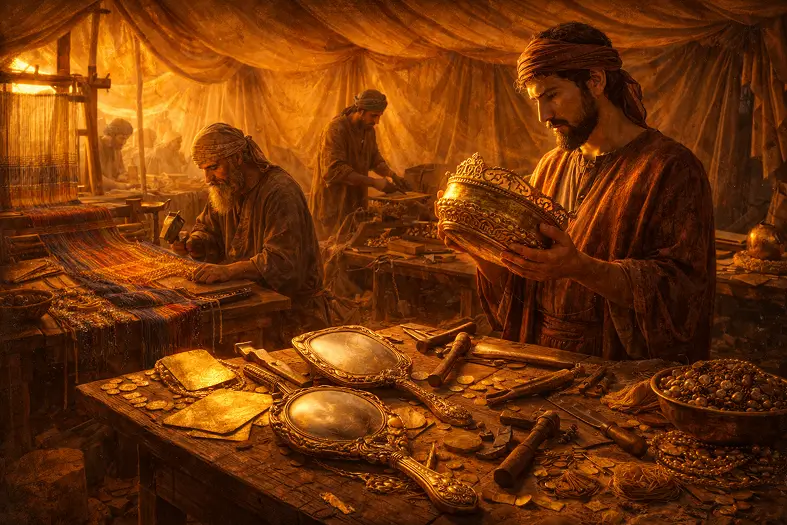
The sanctuary required countless tasks—some visible and celebrated, others quiet and unnoticed. Each artisan contributed according to his or her ability. Some shaped gold vessels; others spun threads or prepared materials.
By appointing leaders from tribes of differing status, the Torah sends a clear message: before Hashem, the dignity of sacred work does not depend on social standing.
Every individual who participates in building holiness shares in the honor of the sanctuary.
Teaching Wisdom to Others
The Torah adds another remarkable detail about the leadership of Betzalel and Oholiav:
“וְלִלְמֹד נָתַן בְּלִבּוֹ.”
“He placed in his heart the ability to teach.”
This phrase reveals that their role extended beyond personal craftsmanship. They were entrusted with transmitting knowledge to others, ensuring that the skills required for constructing the Mishkan would spread throughout the community.
Leadership in the Torah therefore involves the ability to elevate others through teaching and the transmission of wisdom.
By teaching the artisans under their guidance, Betzalel and Oholiav transformed individual skill into collective capability. The sanctuary could only be built when knowledge and wisdom flowed throughout the entire community.
Application for Today
The Torah’s description of Betzalel and Oholiav offers a powerful model for leadership in contemporary society.
Modern organizations often struggle with hierarchical structures that concentrate authority among a small group while undervaluing the contributions of others. The Mishkan narrative proposes a different approach.
Sacred work thrives when individuals from diverse backgrounds collaborate with mutual respect and shared purpose. Leadership becomes most effective when it empowers others rather than dominating them.
The partnership between Betzalel and Oholiav reminds us that dignity and wisdom are not limited to those who occupy prestigious positions. Holiness emerges when every member of a community recognizes the value of their contribution and works together toward a common mission.
The Mishkan therefore becomes not only a sanctuary but also a model for building a society rooted in equality, humility, and collaboration.
📖 Sources
- Full sources available on the Mitzvah Minute Parshas Vayakhel page under insights and commentaries