www.Mitzvah-Minute.com
"When Vision Overshadows Obligation"
Rav Kook on Yosef’s Silence and the Moral Hazards of Greatness
The Quiet Cost of Greatness
Yosef HaTzaddik stands among the Torah’s most luminous figures. He resists temptation in private, governs wisely in public, forgives those who betrayed him, and preserves an entire civilization during famine. Few biblical personalities wield such power with such restraint. Yet Chazal record a troubling note: Yosef dies earlier than his brothers. The Torah itself never rebukes him. Yaakov never complains. Yosef’s righteousness is unquestioned. Why, then, does his life burn shorter?
Rav Avraham Yitzchak HaKohen Kook offers a startling answer. Yosef’s shortened lifespan is not punishment for wrongdoing, but a warning encoded within greatness itself. It reveals a subtle moral danger faced only by those who carry historic vision and national responsibility: the risk that large missions can eclipse small obligations — and that silence, even when well-intentioned, can diminish dignity where it must be defended.
This essay explores Rav Kook’s penetrating insight into Yosef’s silence in Parshas Vayigash, and the Torah’s enduring lesson: no redemptive vision ever excuses neglect of personal kavod — especially kavod av.
I. The Textual Moment — Silence in the Presence of Diminished Honor
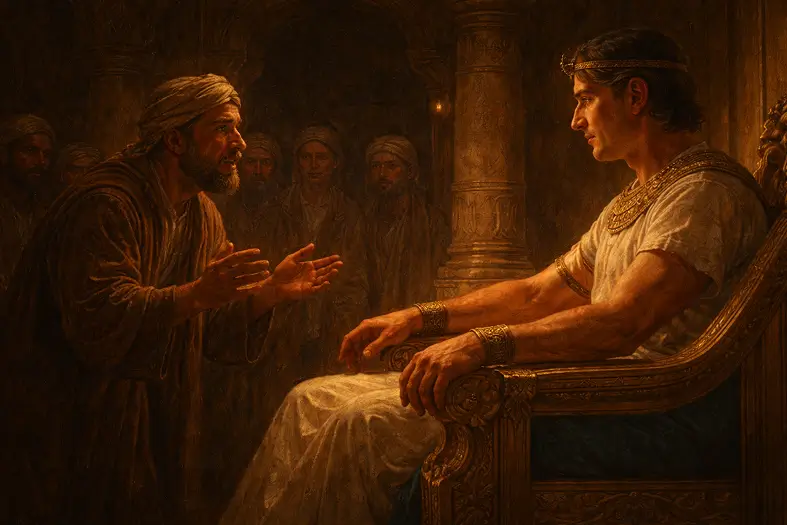
The critical moment unfolds during Yehudah’s climactic speech. Again and again, the brothers refer to Yaakov as subordinate to Yosef:
“שָׁלוֹם לְעַבְדְּךָ אָבִינוּ”
[“Peace to your servant, our father”] (Bereishis 43:28)
And later:
“וְהָיָה כִּרְאוֹתוֹ כִּי אֵין הַנַּעַר… וָמֵת”
[“When he sees that the lad is not there… he will die”] (Bereishis 44:31)
The entire plea assumes Yosef’s absolute dominance and Yaakov’s vulnerability. Linguistically and socially, Yaakov’s honor is diminished — not maliciously, but undeniably.
At this moment, Yosef possesses:
- Supreme political authority
- Moral clarity
- Emotional control
- Complete power to reframe the narrative
A single sentence could have restored balance:
“My father is not your servant.”
Yosef says nothing.
II. Rav Kook’s Reading — Silence Born of Mission, Not Neglect
Rav Kook is careful and precise. Yosef’s silence is not indifference, disrespect, or rebellion against kibbud av. It is born of absorption in redemptive mission.
Yosef understands himself as the instrument through which Hashem’s covenant unfolds:
- The survival of Yaakov’s family
- The descent into Egypt foretold at Brit Bein HaBetarim
- The preservation of life during famine
- The psychological repair of the brothers through moral confrontation
In Yosef’s inner calculus:
- Maintaining Egyptian authority is necessary
- Interrupting the process risks destabilizing the fragile reconciliation
- Personal protest might disrupt national repair
This is not moral laziness. It is vision narrowed by responsibility.
III. Kavod Av — A Moral Axis That Cannot Be Deferred
Rav Kook’s insight sharpens here. Yosef did not dishonor his father. He failed to actively defend his father’s honor when it was diminished in his presence.
This distinction matters deeply in Torah ethics.
Silence is morally neutral only when nothing is at stake. When dignity is threatened, silence becomes action.
Especially when:
- One holds power
- One represents Torah publicly
- One shapes history
For someone of Yosef’s stature, inaction carries weight.
Rav Kook teaches that kibbud av is not only expressed through care, provision, and affection — all of which Yosef later displays abundantly — but also through defense of honor in public space.
IV. “Yosef Dies First” — Consequence, Not Punishment
Chazal note that Yosef’s lifespan is shortened:
“משמת יוסף — נתקצרו שנותיו”
[“From the time Yosef died, his years were shortened”] (cf. Berachos 55a)
Rav Kook reframes this entirely. This is not punitive. It is spiritual consequence.
A life that burns intensely for the collective — without equal attentiveness to intimate obligation — risks depletion.
Key insight:
- Greatness concentrates energy
- Concentration narrows attention
- Narrowed attention, even briefly, can cost longevity
Yosef’s life is not diminished in value — it is compressed in intensity.
V. Why the Torah Remains Silent
The Torah never rebukes Yosef explicitly.
Yaakov never protests.
Yosef later honors his father with extraordinary devotion.
This silence is deliberate.
Rav Kook explains:
- This is not a sin of rebellion
- It is a hairline fracture visible only at the highest level
- The Torah whispers this lesson because it is aimed at leaders, not novices
The greatest dangers are not gross failures — they are subtle eclipses.
VI. The Broader Rav Kook Principle — Mission Must Not Eclipse Relationship
Rav Kook universalizes the lesson:
- Collective destiny never suspends personal mitzvos
- National vision never overrides relational fidelity
- Cosmic purpose never licenses quiet neglect
This applies beyond Yosef:
- Rabbinic leadership
- Communal activism
- Educational vision
- Institutional building
Big causes can justify small silences. That is where holiness erodes.
VII. Application — Guarding the Quiet Obligations
Rav Kook’s teaching presses uncomfortably close.
Questions the parsha asks us:
- Where has my vision narrowed my moral attention?
- Whose dignity depends on my voice?
- What quiet obligation have I postponed in the name of something larger?
Practical guidance:
- Parents are not collateral damage for communal success
- Family is not secondary to mission
- Integrity is tested in unrecorded moments
As Rav Kook teaches, spiritual longevity depends on balance — holding the large and the small simultaneously.
VIII. Yosef Remains Yosef — And That Is the Point
Rav Kook does not diminish Yosef.
He elevates him by using his greatness to teach with precision.
Yosef remains:
- The tzaddik
- The forgiver
- The sustainer of life
- The ethical ruler
And also:
- The warning to all who lead
Conclusion — Leadership Measured in Silence
Parshas Vayigash teaches that redemption advances through responsibility, restraint, and closeness. Rav Kook adds a quieter truth: holiness is also measured by what we protect when no one is watching.
Yosef’s silence was born of love for the future. Its cost teaches us that even the most sacred visions never excuse neglect of present dignity.
Leadership is not only about carrying destiny.
It is about guarding honor — especially when silence would be easier.
That is the Torah’s warning, and its blessing.
📖 Sources
- Full sources available on the Mitzvah Minute Parshas Vayigash page under insights and commentaries.