Each Parsha page on Mitzvah Minute is designed as a guided, three-level journey through the weekly Torah reading—integrating the narrative, the mitzvos, and the classical commentaries into one unified experience.
Begin with the foundations of the Parsha:
This level gives you the storyline, the key mitzvos, and the essential connections between them.
A complete journey through the parsha—moving from clarity and depth to inner connection and real-world meaning, culminating in a way to live its ideas in everyday life.
These sections show how the Parsha speaks to the mind, the heart, and the real world — offering wisdom rooted in enduring Torah.
A complete, structured commentary on the parsha—presented pasuk by pasuk, with chapter and overall summaries for clarity and flow.
This level reveals the structural depth of the Parsha and the classical underpinnings of each theme.
Together, these layers create a complete Parsha journey —
narrative, mitzvah, and commentary — all flowing toward deeper understanding, spiritual insight, and meaningful growth.
Tap the Page Navigation tab on the right side of your screen anytime to access quick-links to the entire Parsha page.

The quick-link panel gives instant access to every section — Parsha Summary, Mitzvos, Divrei Torah, Insights, and Commentaries.
“Every word of Torah and every mitzvah lifts us higher — may your learning bring you closer to Hashem.”

Parshas Vayigash brings the Yosef story to its turning point. Yehudah offers himself in place of Binyamin, proving the brothers’ repentance and unity. Yosef reveals his identity, reframing years of suffering as Divine purpose. Yaakov descends to Egypt with Hashem’s reassurance, the family settles in Goshen, and Israel begins to grow into a nation — even as the roots of exile quietly take hold.


Source: Exodus 20:2
Vayigash completes Yosef’s long arc of revealing Hashem’s hidden governance. What appeared as betrayal, famine, exile, and political manipulation is now explicitly reframed as Divine orchestration.
Narrative roots:
Bereishis 45:5–8 — “כִּי לְמִחְיָה שְׁלָחַנִי אֱלֹקִים לִפְנֵיכֶם” [“For G-d sent me ahead of you to sustain life.”]
Source: Deuteronomy 6:4
The unification of Yehudah and Yosef mirrors the deeper unity of Hashem’s will — where moral responsibility, national destiny, and personal suffering converge into one truth.
Narrative roots:
Bereishis 46:29 — Chazal teach that Yaakov recited Shema at the moment of reunion, affirming unity precisely when fragmentation was healed.
Source: Deuteronomy 6:5
Yosef’s love of Hashem expresses itself not in withdrawal from power, but in sanctifying His Name within the heart of Egypt.
Narrative roots:
Bereishis 45:7–9 — Yosef acts not for revenge or vindication, but מתוך אהבת ה׳, trusting the goodness of Divine intent.
Source: Deuteronomy 10:20
Yehudah’s approach — “וַיִּגַּשׁ אֵלָיו יְהוּדָה” — is saturated with awe: moral courage restrained by reverence, not aggression.
Narrative roots:
Bereishis 44:18 — Yehudah speaks softly before absolute power, modeling yirat Shamayim even in existential crisis.
Source: Deuteronomy 28:9
Yosef embodies Divine compassion — sustaining enemies, forgiving wrongdoers, feeding the starving, and preserving life beyond strict justice.
Narrative roots:
Bereishis 47:12 — Yosef sustains his family “לְפִי הַטָּף” [according to the children], echoing Hashem’s nurturing providence.
Source: Leviticus 19:18
The brothers’ reconciliation is the emotional core of the parsha — love reborn after betrayal.
Narrative roots:
Bereishis 45:14–15 — Yosef weeps upon his brothers and kisses them, restoring fraternity.
Source: Leviticus 19:17
Hatred fueled the sale of Yosef; Vayigash is the antidote — the moment hatred dissolves into responsibility and repair.
Narrative roots:
Bereishis 44:33 — Yehudah’s self-sacrifice proves hatred has been uprooted.
Source: Leviticus 19:17
Yosef’s first act upon revealing himself is to clear the room — refusing to shame his brothers publicly.
Narrative roots:
Bereishis 45:1 — “הוֹצִיאוּ כָּל־אִישׁ מֵעָלָי” [“Remove everyone from before me.”]
Source: Leviticus 19:18
Why this mitzvah appears here:
Yosef possesses absolute power — and chooses mercy instead.
Narrative roots:
Bereishis 45:5 — “אַל־תֵּעָצְבוּ” [“Do not be distressed.”]
Source: Leviticus 19:18
Beyond forgiveness, Yosef actively reassures, comforts, and provides — erasing lingering resentment.
Narrative roots:
Bereishis 50:21 (trajectory begins here in Vayigash)
Source: Deuteronomy 6:7
Shema becomes the language of unity at the reunion of generations.
Narrative roots:
Bereishis 46:29 with Rashi — Yaakov recites Shema instead of embracing.
Source: Exodus 20:12
Yosef rushes to Goshen, weeps, sustains, and protects Yaakov — yet Rav Kook notes the tension between leadership and filial sensitivity.
Narrative roots:
Bereishis 46:29–47:12
Source: Numbers 10:9
Famine drives not only migration, but spiritual realignment and dependence on Hashem.
Narrative roots:
Bereishis 47:13 — the land collapses economically, forcing reliance beyond human systems.
Source: Deuteronomy 15:11
Yosef’s governance transforms centralized power into sustenance for all.
Narrative roots:
Bereishis 47:12, 17 — food distribution preserves life universally.
Source: Leviticus 19:16
Yehudah intervenes when Binyamin’s life — and Yaakov’s soul — hang in the balance.
Narrative roots:
Bereishis 44:30–34 — Yehudah offers himself instead.
Parshas Vayigash is not a legal parsha — yet it is densely halachic in spirit.
Here, mitzvot emerge before Sinai, not as commands, but as lived truths:
• Leadership without revenge
• Power without cruelty
• Unity without erasure
• Responsibility before destiny
Vayigash teaches that mitzvot are not only obeyed — they are rehearsed in history.
And history itself becomes the classroom where Torah is born.
Rashi frames Yehudah’s speech not as persuasion alone, but as moral confrontation. Yehudah speaks with calculated intensity — respectful yet unyielding — revealing that true repentance requires clarity, courage, and personal cost.
Rashi reads Yosef’s revelation as an act of restraint more than emotion. Yosef controls the moment to preserve dignity, prevent shame, and reframe suffering as Divine design.
Rashi emphasizes that Yaakov does not descend casually. Every step toward Egypt is preceded by Divine reassurance, honor to ancestors, and spiritual infrastructure.
Rashi reads Egypt’s political and economic restructuring as part of Hashem’s plan to preserve Israel’s dignity and separateness.
Across Vayigash, Rashi shows that redemption does not begin with revelation, but with responsibility; not with escape, but with structure. Speech repairs rupture, exile is entered deliberately, and growth begins precisely when identity is most protected.
📖 Source
Ramban reads Yehudah’s approach to Yosef as the decisive moral repair of the brothers’ earlier failure. This moment is not emotional persuasion alone, but a transformation of leadership and accountability that enables the family’s healing.
In Yosef’s revelation, Ramban emphasizes how Divine intention operates through history without negating human accountability. Yosef reframes suffering as mission, not accident.
Ramban identifies Yaakov’s journey to Egypt as the formal beginning of galut. The Torah’s careful language, naming, and genealogical structure signal a shift from patriarchal wandering to national displacement.
Ramban views Yosef’s economic policy and the family’s settlement in Goshen as necessary yet dangerous. What begins as protection and wisdom gradually becomes dependency and loss of autonomy.
📖 Source
Leadership, Providence, Teshuvah, and Human Responsibility
Parshas Vayigash presents the Rambam’s worldview in lived form: human choice operating fully within Divine providence, moral responsibility refined through reason, and leadership defined not by power but by restraint. Rambam does not read Torah narratives as emotional drama alone, but as case studies in ethics, psychology, and the architecture of a just society. Through that lens, Yehudah, Yosef, and even Pharaoh become exemplars of how Hashem’s will unfolds through rational human action—not in spite of it.
For Rambam, teshuvah is not regret or confession alone, but a re-orientation of the will. True repentance is proven when a person encounters the same test and chooses differently.
Yehudah’s offer—“יֵשֶׁב נָא עַבְדְּךָ תַּחַת הַנַּעַר” (Genesis 44:33)—is, in Rambam’s terms, complete teshuvah (תשובה גמורה). He stands before the same moral crossroads as the Yosef episode: a younger brother at risk, personal safety on the line, and a chance to escape responsibility.
This time, Yehudah’s intellect governs his impulse. He accepts lifelong loss to prevent injustice. Rambam would identify this as repentance perfected not in speech, but in identical circumstance with transformed choice.
Rambam sharply rejects the idea that Divine providence excuses human wrongdoing. Even when Hashem brings good from evil, the moral status of the act remains unchanged.
Yosef’s words—“לֹא אַתֶּם שְׁלַחְתֶּם אֹתִי הֵנָּה כִּי הָאֱלֹקִים” (Genesis 45:8)—are not, in Rambam’s view, a legal acquittal of the brothers. Rather, Yosef distinguishes between causal agency and teleological purpose.
• The brothers acted freely and bear moral responsibility
• Hashem directed outcomes toward preservation and survival
• The good result does not redefine the sin—but it does reveal Hashem’s governance
Rambam would see Yosef as modeling intellectual clarity: acknowledging providence without collapsing ethics into determinism.
Rambam’s Hilchos Melachim defines leadership not by domination, but by the promotion of order, justice, and societal stability. Yosef’s administration during famine exemplifies this principle precisely.
He centralizes grain, institutes predictable economic policy, avoids personal enrichment, and ensures continuity of food supply. Crucially, he does not rule through terror or chaos, but through structured law (“וַיָּשֶׂם אֹתָהּ יוֹסֵף לְחֹק” — Genesis 47:26).
For Rambam, this is the ideal ruler: one who governs rationally so that society can function and individuals may pursue moral perfection. Yosef’s restraint with his brothers further proves his fitness—power that is not used for revenge is power properly ordered.
Rambam consistently frames exile not only as punishment, but as historical necessity for spiritual and national development. Egypt, in Rambam’s philosophy, becomes the environment where Israel transforms from a family into a people.
The Divine assurance—“אַל תִּירָא מֵרְדָה מִצְרָיְמָה… לְגוֹי גָּדוֹל אֲשִׂימְךָ שָׁם” (Genesis 46:3)—signals that this descent is not accidental. Rambam would emphasize that Hashem’s providence attaches to individuals and nations in proportion to their intellectual and moral readiness.
Goshen, separation from Egyptian culture, and Yosef’s mediation all preserve Israel’s identity while allowing demographic growth—an intentional preparation for future revelation.
Across Moreh Nevuchim and Hilchos Teshuvah, Rambam insists that the highest form of Divine service is choosing the good because it is true, not because of fear, reward, or emotional impulse.
Vayigash embodies this principle:
The parsha teaches that Hashem’s plan advances not through miracles alone, but through disciplined moral choice. That, for Rambam, is the highest dignity granted to humanity.
📖 Sources
Ethics of Reason, Prudence, Leadership, and Moral Strategy
Ralbag approaches Parshas Vayigash as a disciplined manual of ethical reasoning. Unlike approaches that emphasize inner emotion or mystical causality, Ralbag reads the narrative as a sequence of deliberate human choices governed by intellect, foresight, and moral calculation. For him, the Torah teaches how wise people act when stakes are high—before rulers, within families, and at the level of national leadership. Vayigash becomes a curriculum in applied ethics.
Ralbag opens by framing Yehudah’s speech as a model of ethical rhetoric. When facing power, wisdom lies not in accusation but in measured persuasion.
Yehudah speaks softly, honors Yosef’s authority, avoids inflammatory claims, and asks only for what is realistically attainable. He does not demand Binyamin’s release—an impossible request—but offers himself instead. Ralbag emphasizes that true wisdom is knowing what to ask for, not merely what is just.
Equally critical is Yehudah’s refusal to explicitly accuse Yosef, even when logical inference could suggest Yosef’s culpability. Respect for authority, even when one suspects wrongdoing, is itself an ethical virtue when it prevents escalation and achieves a just end.
Ralbag sharply insists that a ruler must not display uncontrolled emotion before subordinates. Yosef’s decision to dismiss the Egyptians before weeping is not sentimental—it is political wisdom.
Public emotion diminishes authority, erodes fear, and destabilizes leadership. Yosef cries only in private, preserving both dignity and governance. For Ralbag, emotional restraint is not coldness; it is responsibility.
Ralbag identifies Yosef as the paradigm of the shalem—the morally complete individual. Yosef not only refrains from vengeance, despite having full power to retaliate, but actively reframes the brothers’ guilt to remove shame and conflict.
Yosef’s explanation—“Hashem sent me before you to sustain life”—is not theological abstraction. It is a moral strategy: preventing recrimination, preserving family unity, and stabilizing the future nation. Ralbag highlights that Yosef even provides clothing and dignity to his brothers so that they not appear disgraced before others.
Forgiveness, in this view, is not weakness. It is the highest exercise of strength.
Ralbag stresses Yosef’s obligation to act for his father and household once he possesses the means. Yosef’s greatness is not measured by his proximity to Pharaoh, but by his urgency to prevent Yaakov’s suffering.
Ethical success creates responsibility. When one has capacity, inaction becomes moral failure.
Ralbag repeatedly emphasizes anticipatory ethics: removing barriers before they arise.
Yosef anticipates Yaakov’s fears—leaving the chosen land, exposure to Egyptian corruption, insecurity—and neutralizes each concern:
Ethical action must account not only for truth, but for human psychology.
Ralbag praises Yaakov’s refusal to act hastily, even in joy. Despite longing to see Yosef, Yaakov delays relocation until prophecy confirms its correctness.
Ralbag teaches that even righteous desire must submit to reasoned deliberation. Acting slowly in matters is not hesitation—it is wisdom.
Ralbag reads Goshen not merely as geography but as ethical zoning.
Yosef deliberately engineers circumstances so that:
Ethics demand foresight at the societal level, not just personal virtue.
Ralbag devotes extensive attention to Yosef’s economic administration. Despite controlling all grain, land, money, and livestock, Yosef:
This is the ethical apex of governance: power without personal advantage.
Even more striking, Yosef earns the gratitude of the Egyptian populace—proof that justice, when paired with wisdom, stabilizes rather than threatens authority.
Finally, Ralbag highlights Yosef’s political intelligence. Before imposing difficult policies, Yosef ensures the support of Egypt’s elites, preventing rebellion and bloodshed.
Ralbag teaches that ethical leadership requires consensus-building, not coercion. Even just laws fail if imposed without social groundwork.
Parshas Vayigash, through Ralbag’s lens, teaches that:
Hashem’s plan advances not through impulsive righteousness, but through calculated moral wisdom exercised by disciplined human agents.
📖 Source
Vayigash opens with a single step forward. “וַיִּגַּשׁ אֵלָיו יְהוּדָה” — Yehudah approaches Yosef. No thunder, no revelation, no miracle. Just proximity. Chassidus teaches that geulah does not always begin with light from Above, but with a human being daring to come close. Before Yosef can reveal himself, Yehudah must step into the space between accusation and compassion, fear and responsibility. Redemption begins not with escape, but with approach.
The Baal Shem Tov teaches that exile persists wherever truth remains hidden behind fear. Yehudah does not argue law. He speaks from the soul. He brings Yaakov into the room — not as leverage, but as presence. In Chassidic thought, this is the work of hisgalus hanefesh: revealing the inner truth that dissolves concealment. Yosef’s tears do not come from persuasion; they come from recognition. When inner truth is spoken without agenda, the walls of exile cannot stand.
The Kedushas Levi explains that Yosef could not reveal himself while the brothers still saw him as ruler rather than brother. Authority sustains concealment; relationship dissolves it. Yehudah’s willingness to substitute himself for Binyamin is the moment the power dynamic collapses. Yosef no longer stands above them — he stands among them. The Kedushas Levi teaches that geulah occurs when hierarchy gives way to achdus, when leadership becomes responsibility rather than control.
The Sfas Emes reads Vayigash as the rectification of all prior distance. Dreams once separated the brothers; now reality reunites them. Yosef does not say, “You wronged me.” He says, “Hashem sent me before you.” The Sfas Emes teaches that the deepest unity comes not from erasing pain, but from discovering its purpose. When suffering is reframed as mission, the soul is freed from resentment. This is why Yosef insists, “אַל תִּרְגְּזוּ בַּדָּרֶךְ” — do not argue on the way. Once meaning is revealed, conflict no longer serves.
Vayigash reveals a deeper truth about exile itself. Egypt does not fall. Yosef does not leave. Instead, holiness enters the palace. Chassidus teaches that the final stage before redemption is not flight from darkness, but transformation within it. Yosef becomes the provider for Egypt, not despite exile, but through it. The spark hidden in Yosef’s descent now feeds the world.
Vayigash calls us to our own moment of approach. To step forward instead of retreating. To speak truth without dominance. To replace judgment with responsibility. Sometimes geulah waits not for history to change, but for one soul to move closer.
The exile ends when we stop standing at a distance.
And dare to draw near.
📖 Sources
Vayigash: Responsibility, Reconciliation, and the Birth of Moral Leadership
Rabbi Jonathan Sacks frames Parshas Vayigash as one of the great turning points in the moral history of humanity. The Torah’s opening word, וַיִּגַּשׁ — “and he drew close” — signals more than physical approach. It marks a decisive ethical movement: the moment when responsibility replaces blame, when courage takes the place of calculation, and when reconciliation becomes possible not through power, but through moral growth.
Across his essays, Rabbi Sacks shows that Vayigash is the parsha in which Judah becomes Judah, and in doing so, lays the groundwork for Jewish leadership, forgiveness, and covenantal identity.
Rabbi Sacks highlights that וַיִּגַּשׁ appears at only three defining moments of prayer and moral confrontation in Tanach: Avraham before G-d, Yehudah before Yosef, and Eliyahu before the people. Each represents a different moral stance — justice, mercy, and revelation — but all require approach, not retreat.
Judah’s act of drawing close is not aggression, defiance, or negotiation. It is vulnerability in the presence of power. He approaches not to demand justice for himself, but to plead mercy for another.
Key insights:
One of Rabbi Sacks’ most penetrating insights contrasts Vayigash with the beginning of the Yosef story. Yosef’s brothers first see him from afar — unable to see his face, only his coat. Distance turns a person into a symbol. Symbols can be hated; human beings cannot.
Only when Judah comes close does reconciliation begin.
Key insights:
Rabbi Sacks identifies Vayigash as the moment Judah earns leadership. Earlier, Judah proposed selling Yosef — a cold, utilitarian calculation. Now, he offers himself as a slave to save Binyamin. Leadership, Sacks argues, is not destiny but earned moral growth.
Joseph has brilliance, vision, and administrative genius. Judah has something rarer: the ability to take responsibility for another’s fate.
Key insights:
When Yosef forgives his brothers, Rabbi Sacks calls it a civilizational breakthrough. Forgiveness frees human beings from being imprisoned by their past. Without forgiveness, history repeats itself endlessly. With it, new futures become possible.
Yosef reframes suffering not as meaningless cruelty, but as part of a larger Divine narrative — not to excuse wrongdoing, but to prevent despair.
Key insights:
Rabbi Sacks emphasizes Yosef’s ability to reinterpret his life not as a chain of injustices, but as a sequence of purposeful moments. This reframing — “What does this enable me to do?” — is transformative.
Yosef does not deny human wrongdoing, but he refuses to allow it to define the future. In doing so, he models a religious response to trauma grounded in meaning and mission.
Key insights:
Rabbi Sacks highlights Yosef’s integrity in wielding power. Despite absolute authority, Yosef refuses to act beyond Pharaoh’s consent, refuses to enrich his family unjustly, and administers Egypt’s economy with discipline and fairness.
This restraint defines ethical leadership: power held in trust, not exploited for personal loyalty.
Key insights:
Rabbi Sacks closes the arc by noting that Jewish identity is not named after Yosef the visionary, but Judah the penitent. Jewish destiny is shaped not by brilliance alone, but by the courage to change.
Vayigash, then, is not merely a family reconciliation. It is the birth of a people defined by responsibility, forgiveness, and moral closeness.
Key insights:
📖 Source
Rav Kook reads Yosef’s shortened lifespan not as a punishment, but as a warning embedded in greatness itself. Leadership, especially when animated by lofty visions and national purpose, carries a subtle spiritual danger: the erosion of personal obligation. Yosef understood his role as viceroy of Egypt as the instrument through which G-d’s covenantal plan would unfold. Yet in subordinating all else to that historic mission, he momentarily failed to defend the dignity of his father. Rav Kook teaches that no collective destiny — however exalted — permits the neglect of personal, moral, or relational duties. True holiness demands fidelity to the small obligations even while carrying the weight of the large ones.
According to Rav Kook (based on Chazal), Yosef’s lapse was not a dramatic act of disrespect, nor a conscious rebellion against kibbud av. It was a momentary silence at a critical juncture — precisely the kind of lapse that only a great person under immense responsibility could make.
The pivotal episodes occur when the brothers repeatedly refer to Yaakov as “your servant” in Yosef’s presence:
“שָׁלוֹם לְעַבְדְּךָ לְאָבִינוּ”
“Peace to your servant, our father.”
“וְהָיָה כִּרְאוֹתוֹ כִּי אֵין הַנַּעַר… וּמֵתוּ”
The entire plea assumes Yosef’s dominance and Yaakov’s subservience.
From a halachic–moral standpoint, Yosef should have protested:
“My father is not your servant.”
He did not.
Rav Kook explains that Yosef’s silence was not indifference, but absorption:
In Yosef’s inner calculus:
That calculation — even if noble — carried a cost.
Rav Kook connects this to the teaching in Berachot 55a:
“משמתו של יוסף — נתקצרו שנותיו”
“Yosef’s years were shortened.”
Not as punishment — but as spiritual consequence.
Yosef did not dishonor Yaakov —
but he failed to actively defend his honor when it was diminished in his presence.
For someone of Yosef’s stature, that silence mattered.
Notice:
That is precisely Rav Kook’s point.
This is not a sin of rebellion —
it is the hazard of greatness.
Rav Kook is teaching something very exacting:
Especially:
In this light, Yosef’s shorter lifespan is not tragic — it is instructive:
Rav Kook’s warning is timeless:
Holiness is measured not only by what we build for the future,
but by how faithfully we protect the dignity entrusted to us in the present.
Yosef’s lapse was his silence when Yaakov was called “your servant” — a moment where national mission momentarily outweighed filial defense, teaching that even the greatest visions never excuse neglecting personal honor and obligation.
Key insights:
Closing thought:
Rav Kook reminds us that wholeness is measured not only by what we build for the future, but by how faithfully we uphold the quiet duties of the present. Leadership that preserves personal integrity becomes a source of lasting blessing rather than spiritual cost.
Rav Kook understands the encounter between Yehudah and Yosef in Vayigash as far more than a family reconciliation. It is the healing of a fundamental tension within Jewish destiny itself: the balance between inward spiritual development and outward moral responsibility. Every individual, and the nation as a whole, must divide limited time and energy between cultivating inner holiness and engaging the wider world. Yosef and Yehudah represent two sacred but incomplete paths — Eidut (testimony to humanity) and Torah (the unique inner holiness of Israel). Their reunion signals not the victory of one over the other, but their integration into a single, higher harmony.
Key insights:
Rav Kook highlights a striking Midrash: while Yosef wept at their reunion, Yaakov recited Shema. This was not emotional detachment, but spiritual synthesis. The Shema proclaims two dimensions of Divine unity:
Yehudah represents the first dimension; Yosef the second. Yaakov’s Shema binds them together, affirming that neither path alone completes the Divine purpose.
The Leviathan as a symbol of unity:
Closing thought:
Rav Kook teaches that Vayigash marks the moment when Jewish destiny learns to breathe with both lungs — inward sanctity and outward responsibility. When Torah and testimony draw near “with no space between them,” the world moves closer to the day when Hashem’s oneness is revealed not only within Israel, but throughout all creation.
Rav Kook frames the descent to Egypt not merely as a historical necessity, but as the archetype of all Jewish exile. The Midrash’s startling claim — that Yaakov deserved to be led into Egypt in chains — forces a deeper inquiry: What is exile meant to accomplish? Rav Kook explains that exile is not a single punishment with a single goal, but a Divine process with two distinct purposes, each shaping the form exile takes.
Two purposes of exile:
These two aims demand opposite conditions:
Yaakov’s unique status:
Because of this, Yaakov was spared degradation. He descended to Egypt not in chains, but escorted by Yosef — ruler of the empire. Honor did not corrupt him; it magnified his mission.
Why chains were still necessary — for his descendants:
Key insights:
Closing reflection:
Rav Kook teaches that exile is shaped by the soul it encounters. For Yaakov, honor elevated the world; for his descendants, hardship purified it. Together, they reveal exile as a Divine instrument — sometimes clothed in chains, sometimes in royal garments — always guiding Israel toward its ultimate spiritual destiny.
Rav Kook reads this Midrashic exchange not as an incidental curiosity, but as a window into the spiritual psychology of Jewish thought. Rabbi Zeira’s question about goats and sheep is, in truth, a profound inquiry into how wisdom itself emerges. The shepherd’s world — quiet, reflective, yet grounded in lived reality — becomes the ideal environment for cultivating authentic spiritual and intellectual depth.
At the heart of Rav Kook’s insight is the idea that great Jewish leadership grows from a life that balances inner contemplation with concrete engagement. This is why the patriarchs, Moshe, and David were shepherds. Shepherding does not overwhelm the soul with material labor, yet it does not detach a person from reality. It creates space for thought without severing responsibility.
The shepherd as philosopher:
Rav Kook then deepens the metaphor of dark goats leading white sheep into a theory of cognition and creativity. Human understanding does not begin with clarity. It begins with obscurity.
The development of thought:
Darkness, Rav Kook explains, is not a flaw in the process — it is a necessary precondition for light. Just as creation began with darkness, so too does human insight. Attempts to bypass uncertainty stifle originality and spiritual growth.
Why opacity is essential:
Closing reflection:
Rav Kook teaches that the Jewish path does not flee from darkness — it sanctifies it. The shepherd-philosopher learns to listen to the murmur of unformed thoughts, trusting that through discipline, humility, and time, they will mature into enduring wisdom. Like Vayigash itself, redemption begins not with certainty, but with the courage to draw near — even while clarity is still forming.
📖 Sources
Parshas Vayigash is not merely a story of reconciliation; it is a blueprint for moral living in moments of power, fear, fracture, and transition. Drawing together Rashi, Ramban, Sforno, Abarbanel, Rambam, Ralbag, the Chassidic masters, Rav Kook, Rav Avigdor Miller, and Rabbi Jonathan Sacks, a single through-line emerges: redemption begins when human beings choose responsibility over distance, integrity over convenience, and meaning over resentment. This parsha teaches us how to live faithfully inside imperfect systems—families, communities, institutions, and even exile itself.
Below is a synthesized application of these teachings for our own lives.
Vayigash opens with a single decisive act: וַיִּגַּשׁ אֵלָיו יְהוּדָה — Yehudah steps forward. Across Rashi, Ramban, Rambam, Rav Miller, and Rabbi Sacks, this step is understood as the moment that history changes.
Yehudah does not argue innocence.
He does not reframe the past.
He does not assign blame.
He assumes responsibility — not abstractly, but personally, existentially.
Application for today:
In family conflict, communal tension, or professional failure, Vayigash teaches that healing begins not with explanations but with ownership. Yehudah becomes the ancestor of kings not because he is flawless, but because he is willing to carry the cost of repair.
Rashi and Ralbag both emphasize Yehudah’s precision: his speech is layered, sharp, and emotionally charged — yet carefully restrained. He confronts power without collapsing into rage or flattery. Yosef, in turn, refuses to reveal himself while humiliation is possible.
Application for today:
In an age of social media outrage and public shaming, Vayigash insists on a higher ethic:
This applies equally to parenting, leadership, education, and public discourse.
Yosef’s words — “It was not you who sent me here, but G-d” — are among the most dangerous sentences in the Torah if misunderstood. Rambam, Ramban, and Rabbi Sacks are clear: this is not moral absolution. The brothers sinned. They remain accountable.
But Yosef does something revolutionary:
He refuses to let the past imprison the future.
Application for today:
Yosef models a mature religious stance:
In personal relationships and collective trauma alike, Yosef teaches that healing comes when suffering is integrated into purpose — not erased, but transformed.
Yosef holds absolute authority. He controls food, land, labor, and life itself. Yet Rashi, Ramban, Ralbag, Rambam, and Rav Miller all stress the same point: Yosef never uses power for personal gain or revenge.
He:
Application for today:
Whether in business, rabbinic leadership, parenting, or public service, Vayigash teaches that integrity is measured most when no one could stop you from abusing power.
Rav Kook, the Chassidic masters, and Rabbi Sacks all identify a core tension embodied by Yosef and Yehudah:
The tragedy begins when these paths are split.
Redemption begins when they are reunited.
Application for today:
We must ask ourselves:
Vayigash teaches that holiness matures when Torah and responsibility draw near — with no space between them, like the scales of the Leviathan.
Yaakov does not descend to Egypt impulsively. Rashi and Ramban stress every detail:
Rav Kook deepens this: exile has two purposes — purification and influence — and each demands different conditions.
Application for today:
For Jews living in modern exile, Vayigash teaches intentional engagement:
Rav Kook’s warning about Yosef’s shortened lifespan is haunting: leadership shortens life when vision eclipses personal obligation. Yosef momentarily allowed national destiny to overshadow filial honor.
Application for today:
In activism, leadership, or communal work, Vayigash reminds us:
The people closest to you are not collateral damage for your ideals.
Rav Kook’s Shepherd-Philosopher reframes confusion itself as sacred. Insight begins as darkness. Growth requires patience with ambiguity.
Application for today:
Vayigash itself unfolds this way:
Do not rush past the darkness — walk through it faithfully.
Yehudah and Yosef do not reconcile through compromise.
They reconcile through transformation.
Judah becomes responsible.
Yosef becomes merciful.
Yaakov becomes whole again.
Application for today:
This is the Torah’s answer to polarization: not erasure, but responsibility.
Vayigash teaches that history changes not with miracles, but with a human being who steps closer.
Not escape.
Not dominance.
Not ideology.
But approach.
Final application:
The exile ends, Chassidus teaches, not when the world changes — but when someone dares to draw near.
And say: I am responsible.
Rashi reads Vayigash as the moment where hidden truth breaks through disciplined concealment — not only in Yosef’s revelation, but in the moral architecture behind it. He highlights Yehudah’s fearless responsibility and the brothers’ shame, Yosef’s deliberate mercy and restraint, and Yaakov’s cautious transition into exile under explicit Divine reassurance. Along the way, Rashi shows how private family drama becomes national formation: speech becomes teshuvah, reunion becomes prophecy, and even political and economic details (Goshen, wagons, appointments, taxation) become instruments of Hashgachah, preserving Israel’s identity inside Egypt without erasing their distinctness.
Rashi commentary opens with Yehudah’s speech not as a single plea, but as a layered confrontation — emotional, legal, moral, and even threatening — calibrated word by word to break Yosef’s resistance. Each phrase carries intent beyond its surface meaning.
[“Judah drew near to him… let your servant speak a word in my lord’s ears”]
Rashi explains that Yehudah is not merely asking permission to speak, but asking that his words penetrate:
“May my words enter your ears” — words meant to pierce resistance and not be dismissed politely. Yehudah signals that what follows will not be ceremonial diplomacy, but a forceful appeal meant to be heard in the deepest sense.
[“Let not your anger burn”]
From this request alone, Rashi derives a striking conclusion: Yehudah did speak harshly. One only warns against anger when confrontation is imminent. Yehudah couches sharp words in humility, but the edge is real.
[“For you are like Pharaoh”]
Rashi offers multiple layers — each more severe than the last:
What appears as flattery is, in Rashi’s reading, a coded threat. Yehudah signals that he knows the stakes and is prepared to escalate if necessary.
[“My lord asked his servants”]
Rashi hears accusation beneath the narrative recap. Yehudah implies that Yosef initiated suspicion unnecessarily.
Why ask about family?
Were we seeking your daughter?
Were you seeking ours?
The questions were intrusive, and Yehudah exposes them as such — yet he continues respectfully.
[“We said to my lord”]
Rashi emphasizes their honesty: they concealed nothing. Every painful detail was volunteered willingly, strengthening Yehudah’s claim that the brothers acted in good faith.
[“And his brother is dead”]
Rashi notes bluntly: this was not true. Yehudah spoke falsely out of fear. Had he admitted Yosef might still be alive, Yosef could have demanded that brother as well. Survival dictated the lie.
[“He alone is left of his mother”]
Rashi clarifies: Binyamin has no other brother from that mother. This highlights the depth of Yaakov’s attachment and explains why Binyamin’s loss would be unbearable.
[“If he leaves his father, he will die”]
Rashi reads this as fear for the journey itself. Binyamin’s mother died on the road; history threatens to repeat itself. The danger is not hypothetical — it is precedent-backed.
[“And disaster will befall him”]
Rashi invokes a spiritual principle: Satan prosecutes in times of danger. Moments of vulnerability invite catastrophe. The road itself is spiritually perilous.
[“You will bring my gray hair down”]
Rashi deepens Yaakov’s pain. While Binyamin lives, Yaakov is comforted for both Rachel and Yosef. If Binyamin dies, it will feel as though all three were lost in one day. This is compounded grief, not merely additive sorrow.
[“When he sees… he will die”]
Rashi is explicit: Yaakov will die from grief, not old age. Emotional devastation itself will be fatal.
[“For your servant became surety for the lad”]
Rashi anticipates the unspoken question: why does Yehudah alone champion Binyamin?
Answer: Yehudah bound himself with a bond so severe that failure would exile him from both worlds — this one and the next. The others are observers; Yehudah is existentially entangled.
[“Please let your servant remain instead of the lad”]
Rashi closes with a practical claim: Yehudah is superior for every purpose — strength, war, or service. If a slave is required, Yehudah is the more capable substitute.
Rashi presents Yehudah not as a broken supplicant, but as a master strategist:
This is not mere repentance.
It is responsibility weaponized for righteousness.
With this speech, Yehudah does not beg Yosef to relent —
he makes it impossible for Yosef not to reveal himself.
Rashi presents Yosef’s revelation not as emotional overflow alone, but as a carefully calibrated act of dignity, restraint, and spiritual signaling. Each verse clarifies Yosef’s inner world and the brothers’ gradual ability to face truth.
[“Yosef could not restrain himself”]
Rashi explains that Yosef’s inability was not weakness but moral intolerance. He could not bear that Egyptians should stand by while his brothers were publicly shamed at the moment of revelation. The removal of the Egyptians is an act of compassion — Yosef refuses to let truth humiliate.
[“The house of Pharaoh heard”]
Rashi clarifies that בית פרעה refers not to a physical building but to Pharaoh’s household — his servants and attendants. This is a collective term, like בית ישראל or בית יהודה, describing a people-group rather than walls.
[“They were stunned before him”]
Rashi states plainly: their shock was shame. The brothers are not frozen by fear alone, but by sudden exposure — the collapse of decades of concealment.
[“Please come close to me”]
Seeing the brothers recoil in humiliation, Yosef softens his tone. Rashi records a striking Midrash: Yosef showed them that he was circumcised, proving he was their brother and not an Egyptian impostor. The reassurance is physical, covenantal, and intimate — truth without accusation.
[“For preservation of life”]
Rashi reads this as functional purpose: Yosef was sent to be their sustenance. His role is not symbolic alone; it is materially redemptive.
[“For these two years of famine”]
Rashi clarifies that two years of the famine have already passed, and five remain. Yosef’s reassurance is grounded in realism, not sentiment.
[“A father to Pharaoh”]
Rashi defines father here as advisor and patron — a position of authority and counsel, not biological intimacy. Yosef holds real power, not ceremonial honor.
[“Go up to my father”]
Rashi notes that Eretz Yisrael is spiritually and geographically elevated above other lands. “Up” is not metaphor — it is theological geography.
[“Lest you become impoverished”]
Rashi connects תורש to the root meaning to make poor, as in מוריש ומעשיר. Yosef warns not of hunger alone, but of systemic collapse.
[“Behold, your eyes see”]
Rashi layers three proofs of Yosef’s identity:
Yosef proves brotherhood culturally, physically, and spiritually.
[“And the eyes of my brother Binyamin”]
Rashi explains the emotional logic: Yosef singles out Binyamin to declare — just as he bears no hatred toward Binyamin (who was uninvolved in the sale), so too he bears no hatred toward the others. Forgiveness is explicit, not implied.
[“He fell upon Binyamin’s neck and wept”]
Rashi introduces prophetic grief. Yosef weeps not only for the present, but for the two Batei Mikdash destined to stand in Binyamin’s territory — and to be destroyed.
[“And Binyamin wept on his neck”]
Binyamin weeps for the Mishkan of Shiloh, destined for Yosef’s territory and also for destruction. Each brother mourns the other’s future losses — grief turned outward.
[“Afterwards his brothers spoke with him”]
Only once Yosef weeps and demonstrates full peace of heart do the brothers regain the ability to speak. Shame initially silenced them; reassurance restores speech.
[“The report was heard in Pharaoh’s house”]
Here בית means the literal palace. Rashi distinguishes this usage from verse 2, showing precision in language.
[“Load your beasts”]
Rashi clarifies simply: load them with grain.
[“The best of the land of Egypt”]
Rashi identifies this as Goshen, and adds a profound prophetic irony: Pharaoh unknowingly prophesies that Israel will ultimately drain Egypt of its wealth at the Exodus.
[“The fat of the land”]
Rashi states categorically: cheilev always means the choicest portion.
Rashi explains that Yosef instructs them to say this is by Pharaoh’s authority, not Yosef’s personal favor — ensuring legitimacy.
[“He sent accordingly”]
This refers to a precise measure: what ten donkeys could carry.
Rashi records two traditions:
• Talmud: aged wine, pleasing to elders
• Midrash: split beans
Both emphasize sensitivity to Yaakov’s age.
[“Do not be agitated on the way”]
Rashi offers three interpretations:
[“His heart went numb”]
Rashi explains that Yaakov’s heart ceased to process — like spice losing flavor. The news was emotionally unassimilable.
[“All the words of Yosef”]
Rashi reveals the decisive sign: Yosef reminded them of the Torah topic he was learning with Yaakov when he left — עגלה ערופה. This explains why the verse emphasizes the עגלות Yosef sent, not Pharaoh. The wagons carry memory, not cargo.
[“The spirit of Yaakov revived”]
Rashi states explicitly: the Shechinah returned. Prophetic spirit, absent during mourning, now rests upon him again.
[“Enough / much”]
Rashi explains: Yaakov declares that he still possesses abundant joy and vitality — not merely relief, but renewed life — because Yosef lives.
Rashi portrays Chapter 45 as truth without cruelty and revelation without humiliation. Yosef controls space, tone, and timing so that reconciliation heals rather than crushes. Shame gives way to speech, prophecy returns, and exile begins not in fear — but in restored רוח.
Rashi frames the descent to Egypt as both a historical movement and a spiritual crossing: Yaakov leaves the Land with reluctance, enters exile with Divine reassurance, and secures Jewish continuity by building Torah infrastructure before anything else. The names, counts, and phrases are all read with precision.
[“To Beer-sheba”]
Rashi explains the grammar: the final ה functions like a prefixed ל (“to/toward”). The suffix ה indicates locale — “to Beer-sheba.”
[“To the G-d of his father Yitzchak”]
Rashi derives a principle: honoring one’s father outweighs honoring one’s grandfather. Therefore the verse associates the offerings specifically with Yitzchak, not Avraham.
[“Yaakov, Yaakov”]
Rashi: repetition of the name is a language of affection — a Divine calling of closeness and love.
[“Do not fear to go down to Egypt”]
Rashi explains why this reassurance was needed: Yaakov was distressed that he was compelled to leave Eretz Yisrael for outside the Land. The fear is not merely physical danger, but spiritual displacement.
[“And I will also surely bring you up”]
Rashi: this is a promise that Yaakov will be buried in the Land — “bringing up” refers to his return for burial.
[“Which they had acquired in the land of Canaan”]
Rashi contrasts: what Yaakov acquired in Paddan Aram, he gave to Esav as payment for Esav’s share in Ma’arat HaMachpelah. Yaakov considered possessions outside the Land not worth keeping.
Rashi ties this to the phrase “אֲשֶׁר כָּרִיתִי לִי” [“which I acquired for myself”] by reading כריתי as acquisition “by means of a כְּרִי (heap).” Yaakov piled gold and silver like a heap of grain and told Esav: take this for your portion in the cave.
[“And his sons’ daughters”]
Rashi identifies them: Serach bat Asher and Yocheved bat Levi.
[“Those coming to Egypt”]
Rashi explains the tense: Scripture calls them “coming” because it speaks relative to that moment of travel, so it uses a participle (“coming”), not past tense (“who came”).
[“Shaul son of the Canaanite woman”]
Rashi: this refers to Dinah’s son from her association with Shechem. After Shechem was killed, Dinah refused to leave until Shimon swore he would marry her and accept the child.
[“These are the sons of Leah… and Dinah his daughter”]
Rashi notes the Torah’s attribution pattern: the males are associated with Leah; the females with Yaakov — teaching the Talmudic principle about who “seeds first” in conception.
[“Thirty-three”]
Rashi addresses the count problem: the list seems to yield only 32. The missing one is Yocheved, born “between the walls” as they entered Egypt — born in Egypt, but not conceived there.
[“The sons of Rachel, Jacob’s wife”]
Rashi notes: only Rachel is explicitly called “wife” here — because she was the mainstay (the principal mistress) of the household.
[“All the persons coming with Yaakov…”]
Rashi makes a grammatical/halachic-style precision point:
Rashi adds: according to the view that each shevet had twin sisters, those twins must have died before the descent, since they are not listed.
Then Rashi brings a striking contrast from Vayikra Rabbah: Esav had six “souls” yet is called “souls” in plural because they served many gods; Yaakov had seventy yet is called “soul” singular because they served one G-d.
[“To direct/prepare before him”]
Rashi gives two readings:
[“Before him”]
Plain meaning: before Yaakov arrived.
[“Yosef harnessed his chariot”]
Rashi stresses honor: Yosef himself harnessed the horses, eager to show kavod to his father.
[“He appeared to him”]
Rashi clarifies: Yosef appeared before Yaakov (not the reverse).
[“He wept on his neck עוד”]
Rashi defines עוֹד as indicating abundant, extended weeping — an added, intensified weeping beyond the usual.
He then notes a striking asymmetry: Yaakov did not fall on Yosef’s neck nor kiss him. Chazal explain: Yaakov was reciting Shema, reaffirming allegiance to Hashem upon entering a new land.
[“Now I can die”]
Rashi gives:
[“And I will say to him: my brothers…”]
Rashi: Yosef will also add the key occupational framing: “וְהָאֲנָשִׁים רֹעֵי צֹאן” [“the men are shepherds…”].
[“So that you may dwell in Goshen”]
Rashi explains strategy: Goshen is exactly what they need — pastureland. If they emphasize they are not skilled in other work, Pharaoh will keep them distant and place them there.
[“For every shepherd is an abomination to Egypt”]
Rashi: because sheep are worshipped by Egyptians as deities, shepherding is despised.
Rashi continues to read every diplomatic move in Pharaoh’s court—and every economic policy Yosef implements—as purposeful: protecting Yaakov’s family from assimilation, preventing their conscription, and even removing future shame from the brothers. At the same time, he highlights how Yaakov’s arrival itself brings blessing that shortens the famine.
[“And from some of his brothers”]
Rashi: Yosef selected from the weaker-looking brothers, “inferior in strength,” so they would not appear fit for war. If Pharaoh saw them as strong, he might draft them into the army.
Rashi lists those weaker brothers (per the Midrash version he cites):
He then brings a major source-contrast:
Rashi resolves the counting issue: Moshe repeats six names, yet Yosef brought five. Answer: Yehudah is repeated not because he is weak—his repetition has a different reason (as explained in Bava Kamma and Sifrei).
[“Men of ability”]
Rashi: not military heroes—rather skilled professionals in their shepherding craft.
[“Over what is mine”]
Rashi: Pharaoh means over my sheep.
[“Yaakov blessed”]
Rashi: this is a greeting of peace, the customary salutation given when appearing before kings after a long interval (Rashi notes the Old French: saluer).
[“The years of my sojourn”]
Rashi: Yaakov means days of my strangerhood—all his life he has lived as a “ger,” a stranger among others.
[“And they have not attained”]
Rashi adds a qualifier: not in quantity, but in goodness/happiness—his years did not reach his fathers’ years in wellbeing.
Rashi first keeps it peshat: like anyone leaving a ruler’s presence, he blesses and takes leave.
Then Rashi brings a Midrash: Yaakov’s blessing was that the Nile should rise at Pharaoh’s approach, since Egypt is irrigated by the Nile rather than rainfall. From Yaakov’s blessing onward, Pharaoh would come to the Nile and it would rise and water the land (Tanchuma Yashan).
Rashi: Raamses is within Goshen.
[“Bread according to the little ones”]
Rashi: meaning according to the needs of the entire household—everyone dependent, down to the children.
Rashi: the Torah now returns to the earlier storyline—back to the beginning phase of the famine years.
Rashi: like וַתִּלְאֶה—weariness/faintness, as the Targum renders. He parallels it to a similar root usage (Mishlei 26:18).
Rashi: they gave Yosef the money as payment for the grain they were buying.
Rashi: like the Targum—שְׁלִים, “finished / at an end.”
Rashi: same as וַיְנַהֲגֵם—he led / guided them. He supports it with parallels: “אין מנהל לה” (Yeshayahu) and “על מי מנוחות ינהלני” (Tehillim).
Rashi: the second year of the famine.
Rashi: parse it as “כי אשר תם”—“it is a fact that the money is exhausted,” and everything has come into Yosef’s hands.
Rashi: means “if not our bodies”—nothing remains except ourselves.
Rashi: seed to sow. And here he adds a major point:
Even though Yosef earlier said there would still be five years with no plowing or harvest, as soon as Yaakov arrived, blessing came “to his feet”—they began sowing and the famine ended early. Rashi cites the Tosefta Sotah.
Rashi: “it shall not become desolate.” Targum: לא תבור—not an uncultivated “field of bur” (an unplowed field).
Rashi: meaning the land became acquired / owned by Pharaoh.
Rashi: Yosef moved the population from city to city as a lasting reminder they no longer had hereditary claim to their land.
But Rashi emphasizes why the Torah bothers to tell us: it is to teach Yosef’s praise—he intended to remove shame from his brothers. Since Egyptians themselves were now “relocated strangers,” they could not mock Yaakov’s family as foreigners or exiles (Chullin 60b).
Rashi: he did this across the entire realm, from one border extremity to the other.
Rashi clarifies: these are the idolatrous priests (kumarin). In general, “kohen” means a minister to deity—except where it means a noble title (e.g., “kohen Midyan,” “kohen On”).
Rashi: a fixed daily ration—a set amount of bread per day.
Rashi: like הִנֵּה (“behold”), with a prooftext from Yechezkel.
Rashi: seed for annual sowing.
Rashi: food for the servants and maidservants in your homes.
Rashi: your small children.
Rashi: “Let us find favor” meaning: do for us exactly as you said.
Rashi: i.e., we will pay Pharaoh this tax every year.
Rashi: a statute that will not be repealed.
Rashi immediately specifies: where in Egypt? In Goshen, which is part of Egypt.
Rashi: the term means they acquired holdings—a language of achuzah (possession).
By the end of the Parsha, Rashi has framed the descent to Egypt not as a collapse, but as a guided lowering — an exile entered with promise, structure, and purpose. Yehudah’s guarantee, Yosef’s tears, Yaakov’s revived spirit, and the settlement in Goshen all form one through-line: the family survives because responsibility replaces rivalry and because Hashem’s plan can operate even through courts, caravans, and famine policy. The section closes with a quiet but decisive note — “וַיִּפְרוּ וַיִּרְבּוּ מְאֹד” — signaling that the seed of a nation is already taking root, precisely in the place that seems least hospitable.
📖 Source
Ramban approaches Parshas Vayigash not merely as a continuation of the Yosef narrative, but as the moment when exile becomes structurally real. For Ramban, these chapters mark the transition from personal family drama to national destiny: moral responsibility, political wisdom, demographic accounting, and Divine providence begin operating on a collective scale. He reads the dialogue with Pharaoh, the genealogical listings, the settlement in Goshen, and Yosef’s economic governance not as incidental details, but as deliberate steps through which Hashem engineers both survival and subjugation. Throughout his commentary, Ramban consistently weaves together peshat, historical realism, and theological depth, revealing how the descent to Egypt initiates exile while simultaneously planting the seeds of redemption.
Ramban explains that Yehudah’s phrase “דָבָר” means he will speak briefly, so as not to burden Yosef — but Ramban’s core pshat is deeper: “דָבָר” refers specifically to the single request Yehudah truly wants to make — the exchange, that Yosef take Yehudah instead of Binyamin. Everything else is persuasion and softening to lead to that one substitution.
He adds that “וְאַל יִחַר אַפְּךָ” means: don’t be angry at me for daring to speak before you. And “כִּי כָמוֹךָ כְּפַרְעֹה” means: I’m speaking in fear before you, as one speaks before Pharaoh himself.
Ramban is bothered: Why does Yehudah repeat so much history Yosef already knows?
He rejects as an argument the midrashic reading (as a strict claim) that Yehudah is protesting “Is this your ‘setting your eye upon him’?” Ramban says that is not logically binding: a ruler’s request to see someone does not mean the person is exempt from later wrongdoing — especially not theft from the king’s own house (the goblet).
Ramban notes that Yosef already “set his eye” favorably upon Binyamin earlier:
Ramban’s pshat: Yehudah’s repetition is not legal argumentation — it is supplication meant to awaken compassion. Yehudah assumes Yosef is a G-d-fearing man (as Yosef had said), and since Yosef had shown mercy and comforted them earlier like one who fears sin, Yehudah structures the narrative as follows:
Ramban states: this is the meaning of the entire section.
He then adds two additional layers:
Ramban disputes Ibn Ezra’s claim that “setting the eye” here means merely “to see him.” In Tanach, “setting one’s eye upon” commonly means supervision for good / protection, not mere sight (e.g., “I will set My eyes upon them for good,” and “Take him… set your eye upon him, and do him no harm”).
So Ramban explains: Yosef had effectively pledged to guard Binyamin and deal kindly with him, even if the earlier narrative did not spell out all details explicitly — because the Torah was concise there, and Yehudah also omits certain sensitive details (like Shimon’s imprisonment and the “spies” accusation) either out of etiquette or fear of royal authority.
Ramban again challenges Ibn Ezra. If the meaning is “his father will die,” the phrasing should have been different (our father cannot leave his son… etc.). Ramban argues the verse’s structure shows the concern is for the lad:
So the plea is not merely “father will die of grief,” but also “the lad is vulnerable and may not survive such separation and travel.”
Ramban clarifies Yehudah’s timeline:
Ramban explains that Yaakov’s phrase cannot merely mean “he is the only one left to his mother,” because Yaakov has many sons and grandchildren, and Rachel has already passed away.
Rather, Ramban’s key idea:
Ramban supports this by noting how Scripture often places Rachel before Leah, reflecting Yaakov’s inner precedence (e.g., “Rachel and Leah…”; “he called Rachel and Leah…”). He also mentions the commentators’ point about “בְּנֵי רָחֵל אֵשֶׁת יַעֲקֹב” — though Ramban says his own view is that this phrase appears because Rachel is listed there among the handmaids, and that context required clarifying her status (as Ramban noted elsewhere).
Ramban reads Yaakov’s fear in two possible ways:
Ramban emphasizes that Yehudah’s areivut is the turning point that finally moved Yaakov to allow Binyamin to go. Therefore Yehudah can now say: let me remain instead.
And Ramban adds: if “וְהוֹרִידוּ עֲבָדֶיךָ…” is taken literally (not as euphemism), then Yehudah is also saying: we will be the direct cause of the old man’s death from grief — because I personally guaranteed the lad.
Ramban explains that Yehudah is saying: how could I return and tell Yaakov that I chose permanent slavery rather than returning with the lad — because I could not bear seeing Yaakov’s suffering; he would weep and mourn constantly.
Ramban adds a practical subtext: Yehudah says this so Yosef should not suspect him of plotting deception — since Yehudah, being more capable than the lad, would have a better chance to escape if this were a trick.
Ramban opens by mapping the interpretive options for לְהִתְאַפֵּק:
Ramban’s pshat: Many Egyptians and people from Pharaoh’s household were present and were pleading with Yosef to pardon Binyamin, since Yehudah’s plea stirred their compassion. Yosef could not “strengthen himself” against all of them — so he called to his servants: remove every foreign man, because he must speak privately with these men. After they left, he raised his voice in weeping — and Egypt heard, including Pharaoh’s people who had been expelled, since they were still in the outer court.
Ramban adds two clarifications:
And Ramban gives a decisive reason for the secrecy: Yosef did not want Egyptians to hear about the sale, because it would become a scandal and a danger:
Ramban asks why Yosef tells them something obvious (“two years of famine”). His answer: Yosef is emphasizing the logic of survival:
A land that has already endured two years of famine (consuming stored resources and driving prices extremely high) and still faces five more years would provide them no viable sustenance at all — unless Hashem had sent Yosef ahead to preserve them.
Ramban explains Yosef’s sensitivity to Yaakov’s dignity:
Yosef knew Yaakov would not want to live in the royal/palace region of Egypt. Therefore Yosef reassures him in advance: he will be settled in Goshen.
He also notes a grammatical point: “אַתָּה וּבָנֶיךָ” connects back to the previous verse — “Come down to me… you and your children and your children’s children…” together with flocks, herds, and possessions.
Ramban says Yosef spoke here derech kavod to his father:
To the brothers Yosef could say openly: Hashem sent me to preserve you and leave you a remnant (implying death without this rescue). But to Yaakov he avoids that harsh framing and instead says: if you remain in Canaan, you will become impoverished.
Why? Ramban explains Yosef could not keep sending large royal provisions to Canaan without suspicion:
Ramban brings the common explanation (and Onkelos): Yosef means, he is speaking directly to them in Lashon HaKodesh without an interpreter.
But Ramban adds an important caution: this is not airtight proof Yosef is Yosef, because (in Ramban’s view) Lashon HaKodesh is essentially the language of Canaan, not a private family code:
Ramban says the brothers already had stronger proof when Yosef identified himself and referenced the sale: “I am Yosef your brother whom you sold into Egypt.”
Ramban’s preferred pshat of the verse: Yosef is saying:
Ramban notes the Gemara’s line (Megillah 16): “As my mouth, so is my heart” — as his speech shows no hatred, so too his heart.
Ramban explains why Pharaoh’s house reacts so strongly:
Ramban explains why Pharaoh frames it as a direct command:
Pharaoh knew Yosef’s integrity — he does not touch royal wealth for personal use. Pharaoh therefore suspected Yosef might refrain from sending substantial gifts/provisions to his father. So Pharaoh says: I command you to do it regardless.
Ramban challenges Rashi’s reading that כְּזֹאת means “according to this calculation/amount.” Ramban says that is not correct (and he notes the grammatical tension).
Ramban offers alternatives, and then rules what he considers best:
Ramban’s conclusion: the correct interpretation is that the comparison is about travel provisions, not matching status.
He adds: Scripture mentions both male and female donkeys to show Yosef sent both:
Ramban defines rogez as trembling/motion, typically from fear. Therefore Yosef’s meaning is:
Why would they fear? Because they are traveling with food, supplies, and the “best of Egypt” during famine — they might worry about bandits, especially later when returning with all their possessions. Fear could slow them down.
So Yosef tells them to hurry and not fear at all, because:
Ramban disputes Rashi’s framing and insists that פּוּגָה / הֲפֻגוֹת means cessation / interruption / suspension, not “weakening of taste” as a primary idea.
Thus “וַיָּפָג לִבּוֹ” means:
Ramban describes (in medical terms) how sudden joy can cause fainting: the heart expands suddenly, natural heat disperses outward, the heart cools and “stops,” and the person collapses like dead. Therefore the Torah adds: “for he believed them not” — he lay in that state a long time because he could not yet accept it.
Then Ramban explains why the verse says they kept speaking and he saw the wagons:
Ramban notes Onkelos’ interpretive layer: “ruach” here hints to the return of ruach nevu’ah / Shechinah, because the verse says not “Yaakov lived,” but “the spirit of Yaakov revived,” paralleling verses where “ruach” denotes a Divine spirit.
Ramban’s pshat here is major:
Yaakov never learned during his lifetime that the brothers sold Yosef. He believed Yosef wandered in the field and was found and sold by others.
Why?
Ramban brings proof from later: the brothers send a message to Yosef after Yaakov’s death — “Your father commanded before he died…” Ramban argues: if Yaakov had known the truth, the right move would have been to have Yaakov directly command Yosef to forgive them at the end of his life; Yosef would obey his father and they would not need to fabricate a message.
Ramban opens by challenging Rashi’s explanation. Rashi suggests the Torah singles out Yitzchak because a person is obligated in honoring his father more than his grandfather. Ramban says this does not fully account for the pasuk’s phrasing: the Torah could have said “לֵאלֹהֵי אֲבוֹתָיו” (the G-d of his fathers) without singling out one, as Yaakov himself later says, “הָאֱלֹהִים אֲשֶׁר הִתְהַלְּכוּ אֲבֹתַי… אַבְרָהָם וְיִצְחָק”. Or it could have simply said he sacrificed “לַה׳,” as it does by Avraham.
Instead, Ramban explains that the verse carries a deeper intention: Yaakov is standing at a turning point. He senses that the descent to Egypt is not merely a relocation to reunite with Yosef, but the opening of exile — the beginning of the process of “גֵּרוּת” and national formation through suffering. That realization produces fear, and his response is not panic but avodah: he offers many sacrifices in Be’er Sheva — a place tied to the avos’ tefillah, and a place from which Yaakov previously “took permission” before traveling to Charan.
Ramban frames “Elokei Yitzchak” as more than genealogy. It signals a spiritual posture: Yitzchak represents gevurah / din, and Yaakov, approaching the threshold of exile, is concerned that the attribute of strict judgment might be “stretched” against him and his children. Therefore, he directs the korbanos toward the G-dliness associated with Yitzchak’s path, to seek rachamim within din — a “softened judgment,” not the unleashing of severity.
This also reframes the well-known phrase “פַּחַד יִצְחָק” (“the Fear of Yitzchak”): Ramban brings Midrashic and deeper traditions (including the Bahir) that read this as a reference to a power-aspect rooted in Yitzchak — awe, restraint, and the consuming fire imagery used by Tanach to express overwhelming Divine intensity. Yaakov is stepping into a historical furnace; he answers with korbanos meant to bring order, alignment, and protection.
Ramban emphasizes the Torah’s word choice: “זְבָחִים” implies offerings of the sh’lamim family (peace-offerings), not olah (burnt-offerings). He notes the contrast: earlier generations (and the Noachide paradigm) are associated with olos, but here Yaakov specifically offers sh’lamim because his goal is not pure ascent alone, but shalom and integration — to “complete” (להשלים) the Divine attributes toward him, and to draw harmony at the beginning of a long, dangerous process.
Sh’lamim are the korbanos that “bring peace into the world” — and that is exactly what Yaakov seeks: peace between heavenly attributes, peace within the family history, and peace as the nation enters the crucible of Egypt.
Ramban then connects Yaakov’s korbanos to what follows immediately: Hashem appears to him “בְּמַרְאֹת הַלַּיְלָה”. The night setting itself matches the theme — exile is a kind of night — but the message is reassurance: “אָנֹכִי הָאֵל אֱלֹהֵי אָבִיךָ… אָנֹכִי אֵרֵד עִמְּךָ מִצְרַיְמָה… וְאָנֹכִי אַעַלְךָ גַם עָלֹה”. Yaakov is promised not only survival, but ultimate ascent — redemption after affliction.
In a major expansion, Ramban critiques Rambam’s explanation (in the Moreh Nevuchim) of why Onkelos sometimes translates “movement” language literally (like “I will go down with you”) and other times avoids it. Rambam argues that in “visions of the night,” Onkelos can translate more literally because it’s clearly not physical occurrence.
Ramban pushes back: Onkelos is not consistent in the way Rambam claims. Sometimes he does paraphrase even in dreams; sometimes he doesn’t paraphrase even outside dreams. Ramban argues that Onkelos’s choices reflect a deeper method — not merely philosophical “anti-corporeality” editing, but a framework tied to sod / kabbalah categories (like Memra, Shechinah, Yekara) and the Torah’s own distinctions between Divine Names and modes of revelation. In short: Onkelos is not “patching problems” ad hoc; he is translating with a coherent inner map.
Yaakov’s sacrifices are the Torah’s way of showing that the descent to Egypt begins not with politics or famine, but with spiritual preparation. Exile is entered with korban, tefillah, and a plea that din be tempered — and with the promise that even in Egypt, the Presence goes down with us, and the end of the story is “גם עלה” — ascent.
Ramban is struck by the Divine address: “Yaakov, Yaakov.” After all, Hashem had already declared, “לֹא יִקָּרֵא שִׁמְךָ עוֹד יַעֲקֹב כִּי אִם יִשְׂרָאֵל” — Yaakov’s elevated name should seemingly be used here. Indeed, the Torah will refer to him as Yisrael elsewhere in this very parsha. Why, then, does Hashem deliberately call him Yaakov at this moment?
Ramban explains that names reflect spiritual posture. “Yisrael” signifies mastery — striving with both the Divine and human forces and prevailing. “Yaakov,” by contrast, reflects humility, vulnerability, and existence under pressure. At the moment Hashem speaks, Yaakov is not ascending or contending — he is descending into exile. He is about to enter “בֵּית עֲבָדִים”, a house of bondage, and therefore he is addressed by the name that reflects contraction rather than triumph.
This distinction clarifies the Torah’s phrasing shortly afterward:
“וְאֵלֶּה שְׁמוֹת בְּנֵי יִשְׂרָאֵל הַבָּאִים מִצְרַיְמָה — יַעֲקֹב וּבָנָיו.”
The sons go as Bnei Yisrael, destined to multiply, expand, and gain national identity. Yaakov himself goes as Yaakov — the bearer of the burden of descent, the first to feel the weight of exile.
Ramban then alludes to a deeper layer by noting that Er and Onan are included among those “coming to Egypt,” despite having died earlier in Canaan. This inclusion, repeated later in Bamidbar and Divrei HaYamim, signals a hidden accounting of souls and lineage, rooted in sod. Ramban deliberately withholds explicit explanation, indicating that the matter touches the inner structure of tribal identity and continuity — something grasped only by those versed in the deeper tradition.
Turning to 46:7, Ramban revisits Rashi’s statement that “his sons’ daughters” refers to Serach bat Asher and Yocheved bat Levi. Ramban questions the formulation. If the Torah already uses plural language for Yaakov’s daughters — when he had only one, Dinah — why should we assume additional granddaughters are explicitly listed?
Ramban answers with a linguistic principle: the Torah often uses plural phrasing even when referring to a single individual, especially within genealogical lists. Examples include “וּבְנֵי דָן חוּשִׁים” and “וּבְנֵי פַלּוּא אֱלִיאָב.” Accordingly:
As for Yocheved, Ramban states clearly: the Torah does not count her explicitly, since the verse concludes that the total number of souls entering Egypt is sixty-six. Nevertheless, following the teaching of Chazal, the Torah hints to her presence — acknowledging her significance without disrupting the numerical structure of the count.
Here too, Ramban reinforces a central theme of the parsha: the Torah is not merely tracking bodies crossing borders, but souls entering a formative process. Inclusion and omission are deliberate. What is stated openly and what is only hinted both shape how exile, continuity, and redemption are encoded into the text.
The verse counts Leah’s descendants who came to Egypt as “thirty-three”, yet if you enumerate the names explicitly, you only reach thirty-two. Rashi follows Chazal: the missing one is Yocheved, who was born at the border upon entry — “born in Egypt, but not conceived in Egypt,” as implied by “אֲשֶׁר יָלְדָה אֹתָהּ לְלֵוִי בְּמִצְרָיִם” (and explained in the sugya in Sotah).
Ramban records Ibn Ezra’s objection sharply: if Yocheved is being inserted here, then the Torah is quietly implying an astonishing chronology — Yocheved giving birth to Moshe at an extremely advanced age. If so, why would the Torah highlight Sarah at ninety while remaining silent about Yocheved at (roughly) one hundred and thirty? Ibn Ezra also mocks the later poetic tradition that pushes the lifespan further (into the “two hundred and fifty” range), arguing that this is aggadah or individual tradition, not the plain implication of the text.
Ramban answers with a striking move: even if you reject the Chazal framing, you don’t remove the פלא — you multiply it.
He notes two fixed Torah anchors:
So however you build the timeline, the ages become wondrous:
In short: the Torah’s own genealogy forces “wonder” into the story; arguing with Chazal doesn’t eliminate that, it just changes where the wonder sits.
Here Ramban pivots into one of his most famous יסודות: the Torah does not always announce miracles when they occur quietly within life, without a public rupture of nature.
He distinguishes:
Then he drops the thunder line (in paraphrase):
All the foundations of Torah are built on hidden miracles.
The covenantal life of Israel is not “nature + religion,” but a world where reward, consequence, blessing, drought, national survival, and spiritual outcomes are all ultimately Divine orchestration, even when the surface looks “natural.”
That is why the Torah may not pause to announce every פלא. A miracle that doesn’t publicly tear the fabric of the world can still be a miracle — and in Ramban’s worldview, that is precisely how the Torah usually operates.
To show how Tanach contains “ordinary” chronology that is actually extraordinary, Ramban points to the timeline from entry into Eretz Yisrael to the birth of David — roughly 370 years distributed across only four generations (Salmon → Boaz → Oved → Yishai). That forces unusually late fatherhood or unusually long lifespans — yet the Torah does not trumpet it as a miracle.
Ramban’s point: you already accept these “silent anomalies” in the text. So you can’t dismiss Yocheved’s age as impossible merely because the Torah doesn’t spotlight it.
Ramban ends by reframing the “late birth” (however exactly you calculate it) not as random biology but as providence:
Hashem wanted the redemption to come through these brothers (Moshe and Aharon), but the time had not yet arrived, so their births were delayed until their mother was old — a hidden miracle serving the timetable of geulah.
And he seals it with: “לֹא יִפָּלֵא מֵה׳ דָּבָר” — nothing is too wondrous for Hashem.
Ramban explains that the Torah has multiple valid “systems” for listing the shevatim:
Here, however, the Torah’s aim is not merely genealogy. It is to establish a headcount: that “with seventy souls” Yaakov’s household descended to Egypt. Therefore, the Torah front-loads the grouping that is largest in number (“הִקְדִּים הַמְרֻבֶּה בִּנְפָשׁוֹת”), even if it creates a surprising juxtaposition in the ordering.
That is why Rachel, who normally stands with the geviros, appears in the flow of the “handmaid” listings.
But precisely because that placement could feel diminishing, the Torah corrects the impression with honor-language: “בְּנֵי רָחֵל אֵשֶׁת יַעֲקֹב” — not merely “Rachel,” but Rachel as Yaakov’s wife, stated explicitly as a marker of kavod. The ordering serves the arithmetic; the title preserves the dignity.
Rashi brings Chazal: Yaakov did not embrace Yosef because he was reciting Krias Shema. Ramban does not reject Chazal — but he argues that the peshat of the verse reads awkwardly under Rashi’s framing.
He raises two textual objections:
He then deals with a linguistic point:
Ramban proposes a very human, text-driven read:
So the Torah tells you the missing step:
Only then does the “real reunion” happen:
Ramban adds a psychological point that lands hard: whose tears are more “constant”?
The old father who mourned for decades, or the grown son in power? The Torah’s emotional logic points to Yaakov’s tears.
And he closes the grammatical concern (“but the verse says ‘וַיֹּאמֶר יִשְׂרָאֵל’ afterward”) by showing that Tanach often re-states the subject’s name after an action, even when the subject never changed.
Ramban reads Yosef as coaching the brothers in presentation.
Yosef tells Pharaoh:
Rather:
So the phrase functions as a dignified clarification:
It’s a subtle move: Yosef preserves the truth (“they’re in that profession”) while removing the social disgrace Pharaoh’s culture might attach to the word.
Ramban is puzzled by the brothers’ rationale to Pharaoh: if the famine is crushing Egypt too (and perhaps even more, since “עִקַּר הַגְּזֵרָה” is directed at Egypt), why say the issue is pasture?
He offers two grounded possibilities:
And he adds a practical geographic note: even in famine, Egypt can still have pockets of grazing—reedgrass near the Nile, marshes, ponds (“הַיְאוֹרִים וְהָאֲגַמִּים”).
Net effect: the brothers’ words are not “ignorant,” but strategic—they argue not that Egypt is plentiful, but that it is livable for livestock in a way Canaan is not.
Ramban reads Pharaoh’s line as more than information. It is a deliberate framing:
Not merely: “I heard they arrived.”
But: “They came to you—because of your honor—and they are leaning on you.”
Pharaoh is essentially saying:
It’s a polite royal sentence with an implicit message: “Handle your family well; Egypt is placing this in your hands.”
Rashi says it’s she’eilas shalom (a customary greeting). Ramban objects: that’s not royal protocol—a servant doesn’t “give greetings” to his king (“כְּלוּם יֵשׁ עֶבֶד שֶׁנּוֹתֵן שָׁלוֹם לְרַבּוֹ”).
So Ramban insists it was a literal berachah:
And he brings Chazal’s famous tradition: Yaakov blessed Pharaoh that the Nile should rise at his approach—i.e., a blessing of economic survival in a land whose life depends on the river.
Ramban is bothered on two fronts:
His solution is sharp: Yaakov isn’t “complaining.” He is explaining Pharaoh’s astonishment.
Pharaoh sees a man who looks unusually aged. Ramban says:
Yaakov answers:
So Ramban reframes the whole exchange as social realism + peshat psychology, not melodrama.
Ramban reads this as Yosef intentionally preventing them from living like gerim:
Key tension: they said “לָגוּר” (to sojourn), implying temporary refuge until famine ends. Pharaoh, however, tells Yosef: “הוֹשֵׁב אֶת אָבִיךָ”—settle them like toshavim, residents of Goshen.
So Yosef isn’t merely providing food; he is changing their civic status from “guests” into “rooted inhabitants,” legally and practically.
Ramban says the Torah expands this entire economic narrative for a reason: to publicize Yosef’s ma’alos:
Instead, he serves as an “ish emunim”—trusted steward—so fully that he ends up acquiring for Pharaoh not only Egypt’s wealth but even land and (eventually) their labor/“bodies” under royal ownership.
And Ramban adds the meta-lesson: Yosef succeeds socially too—he finds chein in the eyes of the people—because Hashem is the One who grants success to those who fear Him.
Ramban says the Torah adds “and in the land of Canaan” because it is part of the Egyptians’ argument to Yosef.
They are essentially saying:
Meaning: this is not only desperation—it’s economic logic. Yosef’s system will have to move from “cash sale” to another structure (livestock/land/labor), and the Torah is showing you how the policy shift becomes inevitable.
Ramban uses this verse as a pressure point between midrashic tradition and peshat chronology.
Rashi (citing Tosefta Sotah and echoed in Bereishis Rabbah) reads: although Yosef predicted seven years of famine, once Yaakov came down, “ברכה באה לרגלו”—a blessing accompanied him, they began to sow, and the famine ceased (at least in Egypt).
Ramban immediately flags the problem:
If the famine truly ended after only two years, Yosef’s interpretation looks false, and that would invite suspicion about his chochmah and credibility (“וְיָבֹא הָעִנְיָן לַחְשֹׁד אוֹתוֹ בְּחָכְמָתוֹ”).
He proposes a partial harmonization: maybe the famine continued in Canaan as Yosef said, but in Egypt Yaakov’s arrival triggered visible blessing—Chazal’s image of Yaakov approaching the Nile and it rising—so Egypt experienced relief that was clearly a berachah tied to the tzaddik/prophet.
But even with that, Ramban says he is still uneasy: it would imply Pharaoh’s dream showed a decree, but not “what would ultimately happen” during those years—i.e., the dream would be “true” yet not map cleanly onto historical unfolding.
Ramban cites another tradition: when Yaakov died, the famine returned; meaning: Yaakov’s presence may have suspended the famine’s force, but it wasn’t “cancelled,” and the remaining years were still completed later.
He brings an internal debate (from the midrashic material he quotes) about Kiddush Hashem:
Ramban then concludes: in any case, the remaining five years were completed (“הִשְׁלִים הָרָעָב חָמֵשׁ הַשָּׁנִים הַנּוֹתָרוֹת”).
Ibn Ezra suggests re-dating parts of the economic story (money/cattle/land) to make the years work out, and even floats that later famine-years may have been lighter.
Ramban rejects this sharply: the dream and its interpretation present all seven famine years as equivalent, and if there were materially different years, the Torah would have said so. (“וְאֵין דְּבָרָיו נְכוֹנִים כְּלָל…”)
Ramban’s own plain-meaning reconstruction is elegant and practical:
This also explains (within peshat) why the pasuk says Yosef sustained “לְפִי הַטָּף”: it implies rationing by need, not abundance—an administrative phrase that fits famine policy.
Ramban is doing two things at once here:
Ramban notices a sharp textual tension:
Ramban’s move: Yosef did not accept the Egyptians’ offer of total personal slavery as they proposed it. Instead, he restructured it into a land-tenancy system.
They offered to become servants in the direct sense: performing the king’s labor “כִּרְצוֹנוֹ” — whatever Pharaoh wants.
Ramban reads this as: they are volunteering for an “absolute” servitude model (king’s workforce).
Yosef’s goal, per Ramban, was narrower and more economic:
So “buying them” means: they belong to Pharaoh with the land, not as detached slaves who can be relocated into any royal work.
Ramban frames Yosef’s system as surprisingly lenient within a world where Pharaoh now owns everything:
But there’s still a binding clause: they are “acquired” in the sense that they cannot abandon the fields; they become permanently attached to Pharaoh’s landholding.
Ramban explains their grateful response very precisely:
And “וְהָאֲדָמָה לֹא תֵשָׁם” becomes, in Ramban’s reading, not just “this year” but forever: the land won’t lie desolate because the people are now legally bound to keep it cultivated.
By the end of Vayigash, Ramban leaves the reader with a sobering but clarifying vision: exile begins quietly, rationally, and even benevolently. Yaakov enters Egypt with Divine reassurance, dignity, and blessing; Yosef governs with integrity and wisdom; the family is granted land, stability, and honor. Yet beneath this apparent security, Ramban shows how permanence replaces sojourning, ownership becomes dependence, and blessing gives way to structural bondage. His commentary insists that galut is not born from cruelty alone, but from gradual accommodation and necessary compromise. In this way, Ramban transforms Vayigash into a foundational lens for Jewish history itself — teaching that redemption-conscious living must begin even at the moment of descent.
📖 Source
Sforno reads Parshas Vayigash as a study in moral clarity under pressure — where speech, leadership, economy, and survival are all subjected to ethical scrutiny. His commentary follows the unfolding drama from Yehudah’s plea through Yosef’s revelation, Yaakov’s descent, and the restructuring of Egyptian society during famine. Throughout, Sforno is less concerned with dramatic tension than with responsibility: how words must be measured, how power must restrain itself, and how even acts of necessity must be governed by justice. Vayigash, in Sforno’s hands, becomes a parsha about how righteous governance functions inside exile, without surrendering dignity, compassion, or accountability.
Sforno explains that Yehudah’s opening words are not an emotional plea but a legal and moral argument. Yehudah builds his case on Yosef’s own declaration that he does not wish to commit injustice, even against the guilty.
Sforno stresses that the brothers’ argument is grounded in psychological reality, not exaggeration. Yaakov’s attachment to Binyamin is singular and life-preserving.
Sforno emphasizes that the brothers did not act freely — they were forced by famine, and Yaakov warned them explicitly of the consequences.
At the core of Yehudah’s plea is personal moral accountability, not collective guilt.
Sforno frames Yehudah’s offer as an act of lifelong ethical necessity, not heroism.
Through this episode, Sforno presents Yehudah as the model of leadership defined by:
Sforno explains that Yosef’s loss of composure is not emotional weakness but practical limitation.
Yosef’s question, “הַעוֹד אָבִי חָי” is not informational but incredulous.
Sforno identifies two purposes in Yosef’s request, “גְּשׁוּ נָא אֵלַי.”
Sforno presents a nuanced theology of Divine providence.
Each of Yosef’s titles reflects distinct authority, not honorific exaggeration.
Speed is demanded not for convenience but to prevent further harm.
Sforno highlights linguistic recognition as decisive evidence.
Pharaoh’s reaction is strategic, not merely generous.
Sforno stresses the psychological importance of command.
Material preparation becomes emotional persuasion.
Sforno clarifies the structure of the gifts.
“וַיְשַׁלַּח” denotes formal release.
Sforno gives a strikingly physical explanation.
The brothers deliberately temper the message.
Yaakov’s final words are precise.
Sforno presents redemption as a measured process, governed by:
Yaakov’s offering is directed specifically to the G-d of Yitzchak.
Sforno explains that the message comes because Yaakov is now “Yisrael.”
Sforno frames Hashem’s reassurance as a direct contrast to the earlier prohibition.
Sforno reads “אַעַלְךָ גַם עָלֹה” as referring to Yaakov personally and to the national future.
“Yosef will place his hand on your eyes” (46:4)
Sforno interprets this as freedom from mundane burdens.
Sforno explains the shift in title as a shift in mission.
“Yaakov their father” (46:5)
Sforno hears a prophetic resonance in Yaakov’s journey.
Sforno draws a distinction within the seventy.
Sforno explains why Rachel is singled out as “אשת יעקב.”
Sforno gives a practical purpose, not symbolic.
Sforno emphasizes Yosef’s urgency and the public setting.
Sforno hears this as a theological-psychological plea.
Sforno explains Yosef’s careful political framing.
Sforno explains why Yosef took only “some” of the brothers.
Sforno notes a striking detail about Yaakov’s posture.
Sforno reads Pharaoh’s question as genuine disbelief.
Sforno makes Yaakov’s answer precise and philosophical.
Why Yaakov says he hasn’t reached his fathers’ “life-years”
Sforno distinguishes “sojourning years” from “life-years.”
Sforno hears moral restraint, not favoritism.
Sforno emphasizes Yosef’s integrity.
Sforno reads “vayenahalem” literally: to lead gently, slowly, in controlled increments.
Timing details (47:17–18)
Sforno marks which famine year is being described.
“We will not hide from my lord” (47:18)
Sforno clarifies their claim.
Sforno reads this as an ethical appeal.
Sforno explains the relocation as creating public backing and stability.
Sforno frames Yosef’s policy as an ordered legal structure with duties on both sides.
“Behold I have bought you today…” (47:23)
“Here is seed… and you shall sow” (47:23)
“When it comes to the crops…” (47:24)
“You shall give a fifth to Pharaoh” (47:24)
“And the four parts shall be yours…” (47:24)
“For you to eat…” (47:24)
Sforno explains Yosef’s final step: legal legitimacy, not coercive innovation.
By the close of the parsha, Sforno presents Yosef not merely as a savior in crisis, but as a model of ethical administration in a broken world. Yosef feeds without excess, collects without corruption, legislates without coercion, and sustains life without exploiting vulnerability. Yaakov, for his part, enters exile with spiritual stature intact — blessing without bowing, enduring without illusion. Together, these readings reveal Sforno’s central insight: exile is not defined by loss of values, but by the challenge to apply them faithfully under constraint. In Vayigash, holiness does not retreat from power or policy — it disciplines them.
📖 Source
Abarbanel approaches Parshas Vayigash the way a master dayan approaches a complex case: he begins by isolating every textual tension—every extra word, every doubled phrase, every shift in tone—and then rebuilds the narrative until nothing is accidental. In his hands, Yehudah’s plea becomes not only moral courage but legal strategy; Yosef’s revelation becomes not only family reconciliation but a carefully staged public act; and the descent to Mitzrayim becomes not only survival but the first architecture of exile—chosen, managed, and providentially directed. What follows is Abarbanel’s full “seder” of questions and resolutions, showing how the Torah’s smallest details carry the weight of leadership, psychology, statecraft, and the hidden hand of Hashem guiding Klal Yisrael into history.
וַיִּגַּשׁ אֵלָיו יְהוּדָה
[“And Yehudah approached him”]
Abarbanel opens by noting that this parsha, like others in the Yosef narrative, demands careful scrutiny, for nearly every phrase in Yehudah’s speech raises difficulties of logic, language, and intent. He therefore begins by listing a wide series of fundamental questions, and only afterward reconstructs the scene in a way that resolves them all.
The first difficulty concerns the very phrase “וַיִּגַּשׁ אֵלָיו”. Yehudah had already been standing before Yosef and speaking to him. From where, then, did he “approach,” and to where did he move? Likewise, the phrase “יְדַבֶּר נָא עַבְדְּךָ דָבָר בְּאָזְנֵי אֲדֹנִי” seems redundant. Anyone speaking to another already speaks “into his ears.” Nor does the word נָא usually modify hearing; it modifies speech. Finally, what is the force of the personal appeal “בִּי אֲדֹנִי”?
Abarbanel explains that Yehudah’s approach was not physical movement within a conversation, but a deliberate private advance. The house was filled with Egyptian officials and attendants. Yehudah wished to propose something that could not be spoken publicly: a substitution of punishment, in which the innocent would replace the guilty. Such a proposal would appear as bribery or judicial corruption if overheard. Therefore, Yehudah drew close, lowered his voice, and spoke directly into Yosef’s ear, requesting secrecy.
This also explains the plea “אַל יִחַר אַפְּךָ”. Yehudah feared that such proximity and intimacy — an inferior approaching the ruler of the land face-to-face — could be perceived as insolence. He therefore preemptively asks forgiveness, emphasizing “כִּי כָמוֹךָ כְּפַרְעֹה” — not to flatter, but to acknowledge Yosef’s absolute authority. A king, unlike a judge, may override strict justice when he chooses.
Abarbanel then addresses why Yehudah recounts the entire history of the brothers’ interactions with Yosef. If his goal is simply to arouse compassion, would it not suffice to say that Yaakov cannot survive separation from Binyamin, and that Yehudah himself stands as guarantor?
Abarbanel explains that Yehudah anticipates suspicion. Yosef might assume that this appeal is a fabricated emotional manipulation, invented to rescue Binyamin. Yehudah therefore reconstructs the history in a way that proves that Yosef himself already knew these facts long before the present crisis. The brothers disclosed Binyamin’s status voluntarily, without coercion. Yosef himself demanded his presence. Their claims are therefore not inventions of desperation, but consistent truths.
Another difficulty is Yehudah’s statement that Yosef “asked” whether they had a father or a brother. In fact, Yosef accused them of being spies, and they volunteered that information themselves.
Abarbanel resolves this by reading Yehudah’s words as rhetorical. Yehudah is effectively saying: Did my master ask us these things? No — we volunteered them of our own accord. This proves sincerity. From that voluntary disclosure flowed Yosef’s command to bring Binyamin, which in turn proves Yosef’s prior awareness of Yaakov’s emotional dependence on him.
Abarbanel devotes extended attention to the ambiguous phrase “וְעָזַב אֶת אָבִיו וָמֵת”. Grammatically, it is unclear whether the subject of “and he will die” is the son or the father. Logic demands it refer to the father, yet the syntax appears to point otherwise.
Abarbanel explains that Yehudah means something subtler: Binyamin knows that if he leaves his father permanently, his father will die. Therefore, the phrase attributes the consequence to the act of separation itself, not to the physical vulnerability of the son.
Why does Yehudah say “and I said” instead of “and he said” regarding Yaakov’s belief that Yosef was torn apart?
Abarbanel explains that Yaakov never fully accepted the brothers’ account. He suspected foul play but refrained from accusation. Yehudah therefore says, “I said” — meaning I allowed myself to say what you claimed, without reopening that painful question. The phrase reflects suppression, not ignorance.
The core of Yehudah’s plea is constructed as a kal va’chomer:
If Yaakov’s soul was bound to Binyamin while Binyamin was still with him, how much more will Yaakov collapse now, when the brothers return without him?
This resolves the apparent grammatical gap in “וְעַתָּה כְּבוֹאִי”, which is not missing a conclusion but functioning as a conditional premise.
Yehudah then introduces a new, personal argument: his role as guarantor. This explains “בִּי אֲדֹנִי” — the responsibility is uniquely his. His sin would not be momentary but eternal, for he pledged lifelong accountability.
Only at this stage does Yehudah propose substitution: “וְעַתָּה יֵשֶׁב נָא עַבְדְּךָ תַּחַת הַנַּעַר”. The guarantee is the cause; the offer of servitude is the consequence.
Abarbanel closes with a striking theological observation. Yehudah was the architect of Yosef’s sale into slavery. Divine justice therefore demands that Yehudah himself now offer permanent servitude, not symbolically, but literally — and specifically in place of Binyamin, Yosef’s brother from the same mother.
At this moment, the moral debt is fully repaid.
וְלֹא יָכֹל יוֹסֵף לְהִתְאַפֵּק…
[“And Yosef could not restrain himself…”]
Abarbanel frames this moment as the third and culminating wave of Yosef’s compassion. Twice already the Torah described Yosef’s emotions overflowing—first when he heard the brothers confess guilt (“אבל אשמים אנחנו”), and again when he saw Binyamin and his mercy “burned within him,” prompting him to rush out and weep privately. But now, after Yehudah’s plea reaches its peak, Yosef’s mercy becomes even stronger than before. In earlier instances, Yosef could still turn away, enter another room, cry, regain control, and return. Here, he cannot.
Abarbanel explains that Yosef wanted to do what he had done earlier—withdraw, cry privately, compose himself, and then re-enter. But he was trapped by circumstance: “כל הנצבים עליו”—attendants of his own house and of Pharaoh’s court—were surrounding him “front and back,” pressing close upon him, awaiting orders, seeking favors, and occupying his space. Yosef could not leave them to enter his chamber without making a scene, and he could not begin the disclosure while they stood there.
So he called out: “הוציאו כל איש מעלי”—not because he suddenly desired privacy in general, but because only by clearing the room could he both weep and reveal himself to his brothers without interruption. This, Abarbanel says, resolves his earlier question (the one he flagged as השאלה הי״א) about what exactly prevented Yosef’s self-restraint.
The Torah emphasizes: “וַיִּתֵּן אֶת קֹלוֹ בִּבְכִי… וַיִּשְׁמְעוּ מִצְרַיִם וַיִּשְׁמַע בֵּית פַּרְעֹה.”
Abarbanel argues this was not the natural crying of reunion—the tender weeping that comes from love alone (that kind appears later, when Yosef embraces and kisses his brothers). Rather, this crying had a purpose aimed outward:
Abarbanel notes a common human weakness: when someone rises from lowliness to greatness, he can become embarrassed by humble relatives and treat them as an affront to his status. Yosef does the opposite. He raises his voice so Egypt will conclude: these are people of quality; Yosef grieves the years of separation; he is not ashamed of them—he is dignified through them. Without this intention, Abarbanel says, the Torah’s detail about who heard the weeping would be needless.
When Yosef says: “אֲנִי יוֹסֵף הַעוֹד אָבִי חָי”, Abarbanel insists Yosef is not asking for information—the brothers had already stated Yaakov was alive, and Yosef himself had asked earlier about their father’s welfare.
Instead, Yosef begins this way as a strategy of entry. His first impulse was to protect them from shame: do not mention the sale; do not open the wound; speak of family matters first. Hence, he says “אָבִי” (“my father”) rather than “our father”—as if to say: the father who loved me, the father bound to me—tell me truthfully: is he alive, or has he died of anguish? Yosef intended to continue gently—asking after their households, children, livestock, and the condition of the home.
But the brothers could not respond. They were stunned, terrified, and speechless. Yosef realized that silence could be dangerous: they might suspect this is a trap, or that he learned his identity from some external source, and fear retaliation.
To remove the mask of dread and shame, Yosef gives them proof that only Yosef could know:
“אֲנִי יוֹסֵף אֲחִיכֶם אֲשֶׁר מְכַרְתֶּם אֹתִי מִצְרָיְמָה.”
Abarbanel highlights Yosef’s precision:
But Yosef also takes precautions:
Yosef then says: “וְעַתָּה אַל תֵּעָצְבוּ… כִּי מְכַרְתֶּם אֹתִי הֵנָּה, כִּי לְמִחְיָה שְׁלָחַנִי אֱלֹקים לִפְנֵיכֶם.”
Abarbanel insists Yosef is not saying, “you didn’t sell me.” He is giving a reason they should not sink into despair: sorrow is appropriate when a deed is essentially evil in its outcome. But if the deed—through the purpose it served—became the channel of saving life, then their crushing regret must be tempered, because the deed was ultimately harnessed toward good.
He supports this by explaining the famine timeline:
Abarbanel now expands into a major theological-philosophical argument.
He distinguishes three categories:
His claim: great, necessary, nation-preserving outcomes cannot reasonably be attributed to mere coincidence. Large, structured benefit—particularly the saving of many lives—indicates purposeful governance, not randomness.
He illustrates this with an analogy:
So too, Yosef tells the brothers: what looks like coincidence from your viewpoint is arranged from the viewpoint of the One Who governs outcomes.
Abarbanel addresses a sensitive issue: if the entire process was providential, does that remove guilt?
He argues carefully:
Yet Abarbanel does not portray the brothers as righteous in motive. Their inner intent was flawed:
In Abarbanel’s formulation: they were not condemned for the historical outcome, but their moral deficiency lay in their intention and character—the “חובה ע״י חייב” dynamic: guilt rolls through guilty dispositions.
When Yosef says: “וְעַתָּה לֹא אַתֶּם שְׁלַחְתֶּם אֹתִי הֵנָּה כִּי הָאֱלֹקים”, Abarbanel interprets it as follows:
Therefore Yosef shifts them from paralyzing guilt into awe at providence: you were the instruments; the plan was higher than you.
Finally Yosef says he was made:
Abarbanel reads these as measure-for-measure reversals of the brothers’ intent:
He also notes Yosef’s wording uses ל־ (“as/for”) rather than “I was made X” in an essential sense, because these are functional roles—like a father, like a master, like a ruler—bestowed as authority and position.
After Yosef finished his comforting arguments (that the sale was ultimately guided by Divine providence), Abarbanel says he immediately pivots to the goal of the whole mission: bringing Yaakov down to Egypt without delay, because “והרעב כבד בארץ” and hesitation is no longer responsible.
Yosef instructs them to tell Yaakov: “שָׂמַנִי אֱלֹקים לְאָדוֹן לְכָל מִצְרָיִם”—not literally “I am a master” in essence, but in the sense of a ruler with authority, acting “as if” he is master over the land. Precisely because of that role, Yosef explains, he cannot leave Egypt to go honor his father in person. Therefore: “רְדָה אֵלַי אַל תַּעֲמֹד”—it is easier and more realistic that Yaakov comes to Yosef than Yosef abandons the governance of Egypt.
Abarbanel anticipates Yaakov’s hesitation: Egypt is an immoral royal center, and shepherds are despised there (תועבת מצרים כל רועי צאן). A father who wants his children to live with dignity and discipline would recoil from living among “עבדי המלך,” where corruption and theft are common.
So Yosef promises a remedy: Goshen will be a place of calm, separation, and safety—“אין שטן ואין פגע רע.”
From Goshen, Yosef describes three practical benefits:
Abarbanel rejects the common reading that “תורש” merely means “you’ll become impoverished.” He argues the phrase “אתה וביתך וכל אשר לך” demands something broader: being uprooted/removed—in the sense of perishing from the world through famine, including children and future generations. It ties back to Yosef’s earlier language about ensuring a “remnant.”
Abarbanel explains Yosef is saying: you don’t need secondhand proofs; you are eyewitnesses.
He adds (like Onkelos) that speaking in Hebrew without an interpreter is also evidence: the translator was part of Yosef’s disguise until now.
Abarbanel says Yosef’s later crying is true affection, distinct from the earlier “public” crying meant to establish the brothers’ dignity in Egypt.
But the brothers do not weep on Yosef: Abarbanel’s sharp line is that a person naturally cries over the harm done to him by others, not over the harm he himself inflicted. Their dominant emotion is shame, not release.
Then the Torah says: “ואחרי כן דברו אחיו אתו”—specifically “his brothers,” to show they now speak not like crushed defendants, but like beloved brothers, once they internalized that “מאת ה׳ היתה זאת.” This resolves Abarbanel’s questions about Yosef’s proof-language and the asymmetry of tears (his השאלות י״ד–ט״ו).
Abarbanel stresses that Pharaoh and his servants were pleased when they heard Yosef’s brothers had come. This is also Divine providence: nobody complained, “these foreigners will consume Egypt’s wealth.” Instead, Yosef’s prestige made them rejoice, and it elevated the perceived honor of Yaakov’s household.
Abarbanel adds: Yosef likely told Pharaoh he had been “stolen” from the land of the Hebrews and that his family thought him dead—but he would not reveal the sale, lest Egyptians despise the brothers for it. That secrecy helps explain Pharaoh’s warmth.
Pharaoh commands Yosef to instruct the brothers and promises them Egypt’s best. But Abarbanel zooms in on the wagons:
Pharaoh repeats “carry your father and come” because the wagons are especially for honoring the aged father and transporting him, the women, children, and supplies—Yaakov is the centerpiece Pharaoh wants to see, as the root of such a remarkable son.
Pharaoh also says “ועיניכם אל תחוס על כליכם… כי טוב כל ארץ מצרים לכם הוא” so they don’t imagine Egypt wants their possessions; Pharaoh can enrich them beyond anything they leave behind.
This resolves Abarbanel’s “why wagons specifically?” question (השאלה י״ו).
Abarbanel reads Yosef’s distribution as dignifying:
“וישלח את אחיו” can mean Yosef had to send them off because they were emotionally unable to detach; or it can mean he escorted them out of humility—despite being ruler, he accompanies his brothers.
Abarbanel reads Yosef’s parting words not mainly as “don’t quarrel,” but as a berachah: may you not encounter agitation, danger, or harm—like the principle that שלוחי מצוה אינם ניזוקין (those on a mitzvah mission are protected).
Abarbanel says the Torah emphasizes that the brothers “ויעלו ממצרים” even though it was emotionally hard to tear away from Yosef. They went up not out of desire to return home, but to reach “יעקב אביהם”—to replace the grief they caused him long ago (the “טָרֹף טֹרַף” report) with living consolation and joy.
Abarbanel critiques both major approaches:
Abarbanel’s peshat: Yaakov’s heart weakened because he did not believe them. The mere mention of Yosef—whom he had mourned as dead for 22 years—reopened the wound. Hearing “Yosef is alive” but not trusting it created a new surge of anguish: as if Yosef “died again” in that moment.
How does Yaakov become convinced?
Then “וַתְּחִי רוּחַ יַעֲקֹב”: his spirit revives. Abarbanel explains the emotional physiology:
He notes the Torah says “ותחי רוח יעקב אביהם” (not “ויפג לב… אביהם”) to signal that the brothers’ intention was to restore the spirit of their father (whom they owe honor), not to shatter him.
Abarbanel says the brothers reported two things:
Yaakov responds: “רב”—enough. For him, the kingship is secondary. The main point is: “עוד יוסף בני חי.”
So when Yaakov says “אלכה ואראנו”, Abarbanel reads it narrowly:
Abarbanel adds: Yaakov likely intended to return to Canaan afterward (“see him and come back”), akin to Moshe’s “let me cross and see.”
Abarbanel rejects two famous readings:
His peshat: Yaakov feared leaving the Land—not because he didn’t want Yosef, but because he knew a spiritual danger in Egypt.
So he offers sacrifices specifically to the G-d of his father Yitzchak—the One who had once said “don’t go to Egypt”—as if to ask: If it was forbidden for my father, how can it be right for me?
Abarbanel explains Yaakov carried four fears, and Hashem answers each:
Abarbanel also offers an additional peshat possibility: “Yosef will place his hand on your eyes” can mean Yosef will take care of you, sparing you degrading entanglements with Egyptians—like a “covering of the eyes” from mundane burdens.
Abarbanel adds a broader layer: sometimes Torah speaks to the father as a stand-in for the nation.
So:
He parses “ואנכי אעלך גם עלה” carefully:
Abarbanel gives a striking second read:
Abarbanel returns to his earlier “question 18” and resolves the apparent contradictions:
Thus Abarbanel says the Torah’s numbers are exact once you track who is being counted in each verse.
How could Yaakov send Yehudah “to instruct before him Goshen” if they still didn’t have permission to settle there? And why does the Torah immediately say “וַיָּבֹאוּ אַרְצָה גֹּשֶׁן”—as if they arrived on their own before Yosef even responded?
If Yosef said, “אעלה ואגידה לפרעה”, why do the brothers also need to say “we are shepherds”? And what’s the logic of “כי תועבת מצרים כל רועה צאן”—does being an “abomination” get you the best land?
Yosef said he’d tell Pharaoh: “my brothers… are shepherds,” yet when he actually speaks he doesn’t explicitly say “shepherds,” only: “אבי ואחי… וצאנם ובקרם… והנם בארץ גושן.” Why the difference?
Why does the Torah report the brothers speaking to Pharaoh twice, with a repeated “וַיֹּאמְרוּ”?
Yosef didn’t instruct them to explicitly ask for Goshen—he wanted Pharaoh to offer it naturally. Why do they request it directly?
Why does Pharaoh “inform” Yosef of something Yosef himself already reported? What’s the purpose of that statement?
How can Yaakov say his years won’t reach the years of his fathers—who told him? And why say “מגורי” (sojourning) instead of “life”?
Why does Torah record at length the Egyptians’ collapse: money gone, livestock gone, selling land and bodies, the 20% law, moving populations city-to-city, the priest exemption—this sounds like Egyptian state history, not Torah. Also, why would Egyptians say “we won’t hide it” (לא נכחד) when the facts are obvious?
Answer to Q1
Abarbanel says everyone already aimed for Goshen because Yosef had earlier told them:
“וישבת בארץ גושן והיית קרוב אלי.”
So when Yaakov arrives, they head to Goshen to camp and reunite there. The phrase:
Then Yaakov sends Yehudah not to “show Yaakov where Goshen is,” but:
So “להורות לפניו גושנה” means:
to instruct Yosef about “Goshen”—i.e., the location in Goshen where Yaakov is presently stationed.
That resolves the “how did they arrive before Yosef” issue: they’re already there; Yehudah’s mission is to locate Yaakov for Yosef.
Yosef’s urgency and the chariot
Once Yehudah reports Yaakov is in Goshen, Yosef personally harnesses his chariot (“אסר יוסף מרכבתו”)—not delegating—because of his burning desire to see his father.
Recognition + who “fell on the neck”
Abarbanel adds a vivid detail: Yosef arrives in royal Egyptian style, with a headdress (מצנפת), so he isn’t immediately recognizable.
When he removes it and becomes recognizable, the Torah says “וירא אליו”—he reveals himself to his father—and then:
Then Israel says:
Yosef speaks to “brothers and all his father’s house”
Abarbanel notes: Yosef says “אעלה ואגידה לפרעה” not to Yaakov directly, but to the brothers and household, because Yosef does not want Yaakov to feel that his place in Goshen is “uncertain.” Yosef is assuring the brothers: he will handle it diplomatically.
Yosef’s deeper intent: keep them out of court life
Abarbanel says Yosef deliberately did not elevate them into Egyptian government positions, even though he could have made them officers. He wanted them to remain in the holy, ancestral occupation of shepherding, and also to avoid jealousy / political dangers.
So Yosef wants a setup where:
Answer to Q2 & Q5 (why they talk / why they ask for Goshen)
Abarbanel’s core: Yosef’s plan is two-layered.
That’s why Yosef tells them:
“והיה כי יקרא אליכם פרעה… ואמרתם אנשי מקנה…”
Why “אנשי מקנה” and not “רועי צאן” at first?
Because “אנשי מקנה” sounds more respectable—landed, wealthy pastoral owners—so Pharaoh won’t downgrade them into another profession. It keeps them “noble nomads,” not low servants.
The line “כי תועבת מצרים כל רועה צאן”
Abarbanel offers a novel read:
But Abarbanel will later insist the narrative itself proves shepherding was not truly despised, because Pharaoh has his own livestock and appoints “שרי מקנה”.
Answer to Q3 (why Yosef changes his report)
Yosef does adjust his words on purpose.
He tells Pharaoh:
Instead Yosef highlights:
So Yosef’s “change” is deliberate diplomacy: same reality, different framing.
The five brothers
Yosef brings five selected brothers—“מקצה אחיו”—the more distinguished ones—to stand before Pharaoh.
Pharaoh asks: “מה מעשיכם?”
First answer (their “hint”)
They answer strongly:
Abarbanel says they intentionally did not ask for Goshen yet—they assumed this identity statement would prompt Pharaoh to offer Goshen on his own.
Answer to Q4 (why two “ויאמרו”)
When Pharaoh still doesn’t respond with an offer, they realize the hint didn’t land. So they deliver a second statement—explicit request:
Thus, two “ויאמרו” = two stages:
Answer to Q5 (why they asked for Goshen directly)
Same point: they only asked directly because Pharaoh didn’t react to the hint.
Answer to Q6
Abarbanel says Pharaoh understood the whole subtext:
So Pharaoh does not answer the brothers directly. He speaks to Yosef:
Then Pharaoh grants:
And Abarbanel highlights: this proves shepherding is not inherently “abominable,” because Pharaoh has his own herds and needs capable “shepherd-officers.”
Answer to Q7
Abarbanel reads Pharaoh’s question not as: “what is your age?” but as astonishment:
Yaakov answers by reframing age: it’s not merely year-count; it’s life experience:
He says: “They are 130, but they’ve been ‘מעט ורעים’”—compressed and embittered by distress. His fathers also “sojourned,” but their lives contained more settled טוב—so his years did not “reach” theirs in quality, not necessarily in raw duration.
That resolves Abarbanel’s problem: Yaakov isn’t claiming prophecy about lifespan; he’s comparing the lived goodness of the years.
Abarbanel adds: Yaakov blesses Pharaoh both on arrival and on departure.
Abarbanel’s timeline (key to Q8)
He proposes a structured sequence:
What does “לא נכחד מאדוני” mean?
Abarbanel says it does not mean “we won’t hide the obvious fact that we’re broke.”
It means:
So they request:
Yosef’s response and the 20% law
Yosef purchases their land for Pharaoh, relocates the population city-to-city (so no one remains anchored to former property claims), then establishes:
They respond:
Abarbanel suggests this agreement becomes operative early in the later famine stage, and then conditions improve—he even suggests (as a possibility) that Yaakov’s arrival brings blessing, the Nile rises, and the land becomes productive enough for survival.
Abarbanel gives four Torah reasons (not “Egyptian history”):
That is why the Torah records it.
By the time Abarbanel completes his reading, Vayigash no longer feels like a single dramatic reunion—it becomes the Torah’s blueprint for how redemption begins inside exile. Yehudah learns responsibility not by winning, but by offering himself; Yosef learns kingship not by punishing, but by revealing and sustaining; and Yaakov learns that descent is not always defeat—sometimes it is the corridor through which Hashem builds a nation. Even the “Egyptian” economic narrative is no mere side note: in Abarbanel’s frame it becomes testimony that Hashem feeds, shields, and prepares His people in the very place that will later enslave them. The parsha closes, then, with a paradox that will define Sefer Shemos: the family arrives seeking refuge, and in that very arrival the story of Galus—and the certainty of Geulah—quietly begins.
📖 Source
The Torah records a moment of absolute silence:
וְלֹא־יָכְלוּ אֶחָיו לַעֲנוֹת אֹתוֹ
[“His brothers could not answer him”]
This is not merely shock.
This is not fear of punishment.
This is the terror of truth revealed.
Rav Avigdor Miller explains that the most frightening experience a human being can encounter is not suffering, loss, or even death — it is the moment when all one’s explanations collapse at once. A lifetime of reasoning, justification, rationalization, and moral confidence suddenly evaporates. What remains is naked reality.
That moment is “אֲנִי יוֹסֵף.”
Not accusation.
Not anger.
Just truth.
Rav Miller emphasizes something unsettling:
The brothers were not villains. They were righteous men, sons of Yaakov Avinu, builders of Klal Yisrael.
And yet — they were wrong.
How does that happen?
It happens when a אדם בונה סברא על סברא — a person builds layer upon layer of reasoning until the structure feels unassailable.
The brothers saw Yosef’s dreams and concluded:
Once that conclusion was reached, everything Yosef did became evidence:
Each new data point didn’t challenge the theory — it reinforced it.
Rav Miller describes this as a skyscraper of logic:
One of Rav Miller’s sharpest warnings is that the most dangerous mistakes are made with holy intentions.
The brothers believed they were:
They weren’t acting out of petty hatred — they were acting מתוך אחריות.
And that’s exactly why the mistake lasted 22 years.
Rav Miller teaches:
This is why the Torah records no rebuke from Yaakov.
No courtroom scene.
No argument.
Truth didn’t arrive through debate.
Truth arrived through identity.
When Yosef says:
אֲנִי יוֹסֵף
He is not informing them of a fact.
He is dismantling their universe.
In that instant, the brothers realize:
Rav Miller stresses that this moment was not dramatic — it was paralyzing.
The Torah does not say they cried.
The Torah does not say they protested.
It says:
וְלֹא יָכְלוּ לַעֲנוֹת
They had no words.
Why?
Because words belong to argument.
And argument ends when truth arrives.
Chazal say:
“Woe to us from the day of judgment; woe to us from the day of rebuke.”
Rav Miller explains that rebuke is more frightening than judgment.
Judgment asks:
Rebuke asks:
On Yom HaDin, Hashem does not need to accuse.
He does not need to shout.
He does not need to punish.
He says:
אֲנִי ה׳
And suddenly:
A person sees their life exactly as it was — not as they told it.
That is the fear of Yosef.
That is the fear of Vayigash.
That is the fear Rav Miller wants us to prepare for.
Rav Miller observes that people avoid mussar not because it’s harsh — but because it threatens identity.
Mussar says:
And that feels like Yosef saying:
“Ani Yosef.”
That’s why people prefer:
Rav Miller insists:
If a person does not create small “Ani Yosef” moments now, Hashem will create a large one later.
Rav Miller doesn’t leave us afraid — he leaves us equipped.
He teaches practical training for honesty:
The goal is not guilt.
The goal is clarity.
Because the אדם גדול is not the one who never errs —
It is the one who is not afraid to discover that he did.
Vayigash is not only about reconciliation.
It is about moral vulnerability.
Judah steps forward.
Yosef reveals himself.
And the Torah teaches us:
And when it arrives, it asks only one question:
Who are you — really?
Parshas Vayigash reveals something astonishing:
an entire national destiny pivots on a single act of responsibility.
Yehudah steps forward and says:
כִּי עַבְדְּךָ עָרַב אֶת־הַנַּעַר
[“For your servant guaranteed the lad.”]
Rav Avigdor Miller teaches that this was not simply bravery.
It was not rhetoric.
It was not emotion.
It was the completion of a good deed begun years earlier — and its consequences reached farther than Yehudah could ever imagine.
This essay is about how one correct action reshapes the future, even when the person performing it never sees the full result.
Most people remember Yehudah’s dramatic plea before Yosef.
Few remember where it began.
Years earlier, in a private moment, Yehudah approached his father and said:
אָנֹכִי אֶעֶרְבֶנּוּ
[“I will personally guarantee him.”]
Rav Miller emphasizes:
That moment was small.
There was no audience.
No applause.
No visible consequence.
But Heaven recorded it.
Because a good deed does not expire.
It waits.
Rav Miller draws a sharp distinction:
The brothers felt remorse earlier.
They cried.
They regretted.
But regret does not redeem.
What redeems is binding oneself to consequences.
Yehudah did not say:
He said:
“If I fail, I will carry the blame forever.”
Rav Miller teaches:
This is why Yehudah becomes king.
Not because of strength.
Not because of eloquence.
But because he accepts permanent responsibility.
For 22 years, Yosef remained hidden.
For 22 years, Yaakov mourned.
For 22 years, history seemed frozen.
Why didn’t Hashem reunite the family earlier?
Rav Miller answers:
Because the story wasn’t finished.
The sale of Yosef fractured the family through irresponsibility.
The repair required the opposite force — someone stepping forward without excuses.
Only when Yehudah completed his act of arvus did the seal break.
Only then could Yosef say:
אֲנִי יוֹסֵף
Good deeds do not work instantly.
They ripen.
Rav Miller reveals a profound symmetry:
Originally:
Now:
This is tikun — correction — not through suffering alone, but through reversal of character.
Heaven does not want punishment.
Heaven wants transformation.
When Yehudah says:
וְעַתָּה יֵשֶׁב נָא עַבְדְּךָ תַּחַת הַנַּעַר
[“Now let your servant remain instead of the lad”]
Yosef is undone.
Why?
Because Rav Miller explains:
This was not strategy.
It was not negotiation.
It was the pure act of a man who no longer protects himself.
A person who reaches that level becomes untouchable.
Truth recognizes truth.
At that moment, Yosef realizes:
The brothers are no longer the same men.
And history can finally move forward.
Rav Miller emphasizes a principle that overturns modern thinking:
Most of the good that shapes your life happens invisibly.
These are not “small deeds.”
They are time-delayed forces.
Just as radioactive material decays slowly and powerfully, so too a good deed continues working long after it is forgotten by the doer.
Yehudah did not know:
He was simply keeping his word.
Rav Miller warns against a dangerous expectation:
“If this mitzvah mattered, I would see results.”
That is false.
Hashem is not interested in quick feedback.
He is interested in eternal architecture.
Sometimes:
Vayigash teaches:
If you demand immediate payoff, you will abandon the very deeds that matter most.
Rav Miller’s message is not theoretical.
It is demanding.
He challenges every Jew:
Because Heaven is always watching who steps forward.
And when history needs someone to move —
it looks for the one who already proved he will carry the weight.
Yehudah’s good deed produced:
All from one sentence spoken years earlier.
Rav Miller concludes:
You will never know which of your good deeds is that deed.
So treat every one as if it is.
Parshas Vayigash is not merely the story of reconciliation.
It is the story of vision.
Yosef stands before his brothers — the same men who once looked at him and saw nothing but a nuisance, a threat, a dreamer. Now, suddenly, everything changes.
וְלֹא יָכֹל יוֹסֵף לְהִתְאַפֵּק
[“Yosef could no longer restrain himself.”]
Rav Avigdor Miller explains that this was not emotional collapse.
It was clarity breaking through concealment.
For the first time, the brothers were ready to see the world as it really is.
Rav Miller insists on a foundational distinction:
A person may look at events for decades and understand nothing.
The brothers had:
But they had not yet seen Hashem inside the story.
Until Vayigash.
A superficial reading suggests Yosef delayed revealing himself to test his brothers.
Rav Miller says that is only partially true.
The deeper reason:
Truth cannot be revealed to people who are not prepared to see it.
If Yosef had said “I am Yosef” earlier:
Hashem waited until their moral eyesight matured.
Only when Yehudah accepted responsibility — fully — could Yosef safely uncover reality.
Rav Miller teaches that Yosef possessed something rare:
He learned to interpret events while they were happening.
Most people understand their lives backward — years later, if ever.
Yosef understood his life in real time.
All of it was orchestration.
That is why Yosef could later say:
לֹא אַתֶּם שְׁלַחְתֶּם אֹתִי הֵנָּה כִּי הָאֱלֹקים
[“It was not you who sent me here, but G-d.”]
This is not poetry.
It is trained perception.
Rav Miller uses a powerful metaphor:
Reality is like a drawing with faint lines underneath.
Most of humanity lives reacting to surface events:
But Yosef learned to read the lines beneath the surface.
Vayigash is the moment the brothers finally see those lines too.
When Yosef reveals himself, the Torah says:
וְלֹא יָכְלוּ אֶחָיו לַעֲנוֹת אֹתוֹ כִּי נִבְהֲלוּ מִפָּנָיו
[“His brothers could not answer him, for they were terrified before him.”]
Rav Miller explains:
They were not afraid of Yosef.
They were afraid of what they suddenly understood.
In one instant they saw:
All illuminated by truth.
Seeing reality clearly is more frightening than suffering blindly.
Rav Miller emphasizes a crucial lesson:
Hashem hides not to deceive —
He hides to train vision.
If truth were obvious:
The world is designed so that:
Only the disciplined mind learns to see Hashem behind the curtain.
Yosef mastered this.
The brothers had to grow into it.
Rav Miller points out something subtle:
Yosef does not say:
“You hurt me, but I forgive you.”
He says:
“You didn’t hurt me at all.”
That is a higher level entirely.
When a person truly sees Hashem’s hand:
Not because pain wasn’t real —
but because it was purposeful.
Rav Miller teaches that this parsha reveals one of the most powerful secrets in existence:
Nothing is random. Ever.
But this knowledge is dangerous if misunderstood.
It is not permission to be passive.
It is a demand to interpret life correctly.
Yosef did not sit back.
He acted responsibly, wisely, and morally — while trusting Hashem completely.
That balance is the secret.
Rav Miller insists that spiritual vision is acquired, not inherited.
He challenges the reader:
Because the person who never practices seeing —
will never see.
The brothers needed 22 years.
Yosef needed years of discipline.
No one gets vision for free.
Parshas Vayigash is the moment when:
But Rav Miller warns:
This moment does not happen only once in history.
It happens quietly in the life of anyone who learns to see.
And when it happens, a person realizes:
The world was never chaotic.
Only concealed.
Parshas Vayigash opens with a deceptively simple phrase:
וַיִּגַּשׁ אֵלָיו יְהוּדָה
[“And Yehudah approached him.”]
Rav Avigdor Miller explains that this is one of the most important moments in the Torah — not because of noise, force, or power, but because moral courage finally takes form.
This is the emergence of the lion — not roaring, not striking, but standing firm when it matters most.
Rav Miller draws a sharp distinction:
Yosef possessed power.
Yehudah revealed strength.
True leadership is never impulsive, loud, or theatrical. It is calm, deliberate, and morally anchored.
That is why Yehudah does not shout.
He does not threaten.
He does not bargain recklessly.
He steps forward — measured, responsible, and unafraid.
Rav Miller emphasizes that Yehudah’s leadership was earned, not assigned.
Reuven had seniority.
Shimon and Levi had force.
Yehudah had something rarer:
The ability to accept responsibility without excuses.
Yehudah had already failed once — grievously — in the sale of Yosef.
But instead of defending himself or rewriting history, he grew.
Leadership in Torah is not about being flawless.
It is about becoming accountable.
The Torah does not describe Yehudah running, shouting, or attacking.
It says:
וַיִּגַּשׁ — he approached.
Rav Miller notes:
A lion does not leap prematurely.
He advances with certainty.
Yehudah’s speech is carefully structured:
This restraint is not weakness.
It is controlled force.
Yehudah makes a silent calculation before stepping forward:
No one else will do this.
Not because they do not care —
but because they are afraid.
Rav Miller teaches that moral leadership almost always requires standing alone.
The lion is not surrounded.
The lion advances anyway.
Yehudah’s defining words are not dramatic:
כִּי עַבְדְּךָ עָרַב אֶת הַנַּעַר
[“For your servant became guarantor for the lad.”]
Rav Miller stresses:
Kingship begins the moment a man says,
“I am responsible — even if it costs me.”
Yehudah does not say:
He says:
Take me instead.
That sentence transforms history.
Rav Miller explains that Yosef’s emotional collapse was not because of tears.
It was because he saw something he had waited decades to see:
The lion had awakened.
The brothers were no longer acting from fear or guilt.
They were acting from responsibility.
Once Yehudah stepped forward fully,
the concealment was no longer necessary.
Rav Miller connects Yehudah’s moment to Jewish destiny:
That is why Mashiach comes from Yehudah —
not because of strength,
but because of self-sacrifice anchored in truth.
Rav Miller teaches that loud people often compensate for weakness.
The lion:
Yehudah speaks only when silence would be immoral.
That is the Torah’s model of courage.
Rav Miller turns the parsha toward the reader:
Every generation has moments of Vayigash.
Moments when:
The question is not:
“Who is right?”
The question is:
Who will step forward?
Rav Miller emphasizes:
You do not need a palace to become Yehudah.
Opportunities arise daily:
The lion is formed in quiet decisions long before dramatic moments.
There is no roar in this parsha.
No explosion.
No violence.
And yet, the world changes.
Because one man stepped forward,
took responsibility,
and refused to retreat from truth.
That is why Yehudah is remembered —
not as a warrior,
but as a lion.
Parshas Vayigash marks the moment when a fractured family becomes a nation-in-formation. Rav Avigdor Miller insists that this is not a story of emotional reconciliation alone. It is the Torah’s blueprint for kedushah born from unity — and unity, in Torah terms, is never sentimental or casual. It is disciplined alignment around truth.
Unity without sanctity is fragile.
Sanctity without unity is incomplete.
Vayigash teaches how the two are forged together.
The Torah does not move from separation to harmony by avoidance. It moves through truth spoken at personal cost.
Yehudah’s approach is not an act of appeasement. It is an act of responsibility. Only after responsibility is accepted can unity be real.
Rav Miller emphasizes:
Yehudah does not say “let’s all get along.”
He says, “I will bear the consequence.”
That is why unity becomes possible.
Rav Miller returns repeatedly to this principle:
Kedushah begins when self-interest retreats.
Each brother had to relinquish something:
Yosef relinquishes vengeance.
Yehudah relinquishes freedom.
The brothers relinquish denial.
Only then does Hashem’s Presence enter the scene — quietly but decisively.
The Torah tells us:
וְלֹא יָכֹל יוֹסֵף לְהִתְאַפֵּק
[“And Yosef could no longer restrain himself.”]
Rav Miller explains that Yosef’s restraint was spiritual, not emotional. He had been holding back revelation until the family was ready to bear sanctity together.
Unity creates a vessel.
Sanctity fills it.
Without unity, holiness spills.
Without holiness, unity decays.
Rav Miller stresses that Torah unity does not erase differences.
Yehudah and Yosef remain fundamentally different:
Unity is not sameness.
It is complementary obedience to Hashem.
This is why all twelve tribes remain essential.
Rav Miller warns sharply against a counterfeit unity:
Such peace invites spiritual collapse.
The brothers could have embraced earlier — but that would have been false unity. Torah unity demands that truth precede closeness.
Each brother must accept his place:
Sanctity emerges when people stop competing for honor and begin serving their assigned role faithfully.
Rav Miller notes that the Shechinah does not rest where jealousy reigns.
Vayigash is not merely personal reconciliation — it is the seed of Jewish nationhood.
Rav Miller draws a direct line:
Unity is not the reward of redemption.
It is the precondition.
Before descending into Egypt, the family must be whole.
Rav Miller explains:
Hashem does not exile fragments.
He exiles nations.
Unity gives resilience.
Sanctity gives identity.
Without both, exile would erase them.
There is no explicit mention of Hashem in the dramatic climax of Vayigash.
Rav Miller teaches:
That silence is the Presence.
When people act with humility, responsibility, and restraint, Hashem does not need to announce Himself.
He is already there.
Rav Miller warns:
Unity is not a moment — it is maintenance.
It requires:
Unity breaks easily.
Sanctity departs quietly.
Rav Miller turns the lesson inward:
You build unity when you:
Small acts of unity create large vessels for holiness.
Parshas Vayigash teaches that unity is not emotional closeness — it is moral alignment.
And sanctity is not mystical feeling — it is Hashem dwelling where truth, humility, and responsibility converge.
That is how families survive exile.
That is how nations endure history.
That is how holiness enters the world.
Parshas Vayigash places Yosef at the apex of the most powerful civilization on earth. Egypt is wealthy, organized, technologically advanced, and confident in its permanence. To the casual observer, Egypt looks unshakable — a civilization built to last forever.
Rav Avigdor Miller teaches that this is precisely the Torah’s setup.
The higher the skyscraper, the more dramatic its collapse.
Egypt’s grandeur is not presented to impress us. It is presented to warn us.
Egypt’s strength rests on:
Yosef manages all of it flawlessly.
Yet Rav Miller emphasizes a startling point:
Egypt’s greatness is functionally irrelevant to eternity.
A civilization can be brilliant, efficient, and prosperous — and still be hollow at its core.
Why?
Because it is built without sanctity.
Yosef wears Egyptian garments, speaks Egyptian language, and governs Egyptian systems. But Rav Miller stresses:
Yosef never internalizes Egyptian values.
He uses Egypt.
He does not become Egypt.
This distinction is everything.
Rav Miller explains that Hashem allows civilizations to soar for a reason:
So their collapse will be unmistakable.
A weak structure can be dismissed.
A towering empire that collapses reveals truth.
Egypt’s skyscrapers are meant to fall — so the world can see what doesn’t endure.
While Egypt consolidates power, Yosef places his family in Goshen.
Rav Miller highlights the symbolism:
No palaces.
No towers.
No spectacle.
Just families, sheep, modest living, and sanctity.
That is where the future grows.
Yosef could have done it.
He could have:
Rav Miller says Yosef deliberately refuses.
Why?
Because Jewish survival does not come from political skyscrapers.
It comes from:
Rav Miller reframes collapse.
When civilizations crumble, Hashem is not “destroying.”
He is revealing.
He reveals:
Egypt’s fall exposes its emptiness.
Yosef demonstrates the rarest trait in history:
authority without allegiance.
He governs:
Rav Miller stresses:
Most leaders collapse before their civilizations do — morally, spiritually, internally.
Yosef does not.
Rav Miller issues a direct warning to later generations:
Do not be impressed by:
These are scaffolds, not foundations.
Judaism survives not because it is impressive — but because it is true.
Rav Miller explains that whenever Jews anchor themselves to the permanence of empires, disaster follows.
Egypt.
Babylon.
Rome.
Modern civilizations.
The pattern never changes.
Skyscrapers rise.
They crumble.
Torah continues.
Torah does not build vertically.
It builds inward.
Its architecture includes:
No skyline.
No headlines.
No monuments.
Just endurance.
Egypt does not fall in Vayigash.
But the Torah already tells us that it will.
Rav Miller notes:
The Torah teaches us how to read history before history unfolds.
The skyscrapers are already cracking — even at their peak.
Yosef’s mission is not to witness Egypt’s downfall.
It is to prepare Israel not to be crushed by it.
Once Goshen is established,
Once unity is formed,
Once sanctity is secured,
Yosef’s role is complete.
The collapse can come later.
Rav Miller concludes with the Torah’s quiet verdict:
Skyscrapers crumble.
Families endure.
Torah remains.
Rav Miller leaves us with a sobering, clarifying truth:
If your life is built on:
It will crumble.
If it is built on:
It will stand — even when empires fall.
Parshas Vayigash does not end with triumph.
It ends with positioning.
Egypt rises.
Israel settles.
One reaches upward.
The other roots downward.
Only one survives history.
📖 Sources

Dive into mitzvos, tefillah, and Torah study—each section curated to help you learn, reflect, and live with intention. New insights are added regularly, creating an evolving space for spiritual growth.
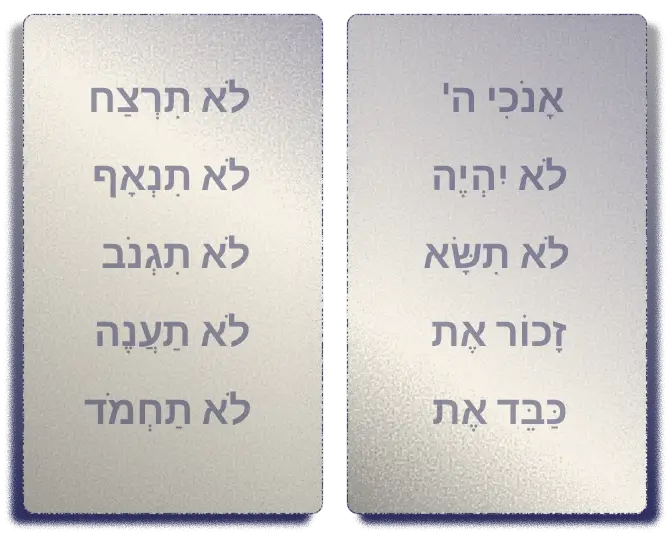
Explore the 613 mitzvos and uncover the meaning behind each one. Discover practical ways to integrate them into your daily life with insights, sources, and guided reflection.

Learn the structure, depth, and spiritual intent behind Jewish prayer. Dive into morning blessings, Shema, Amidah, and more—with tools to enrich your daily connection.
Each week’s parsha offers timeless wisdom and modern relevance. Explore summaries, key themes, and mitzvah connections to deepen your understanding of the Torah cycle.