3.4 — Freedom Needs Public Moral Memory: Why Revelation Could Not Be Private
Parshas Yisro presents a paradox at the heart of freedom. The Exodus liberates the body; Sinai liberates the conscience. Yet the Torah insists that this second liberation cannot occur through private insight or mystical elevation. Ethics, if they are to endure, must be anchored in shared memory, not individual experience.
This essay explores a core claim articulated powerfully by Rabbi Jonathan Sacks: a free society requires public moral memory. Without it, freedom dissolves into subjectivity, and morality fractures into preference.
Private spiritual experiences are intense—but unstable. They cannot be verified, transmitted, or enforced without coercion. One person’s vision cannot bind another’s conscience. A society built on inward revelation eventually fragments, because no shared reference point remains.
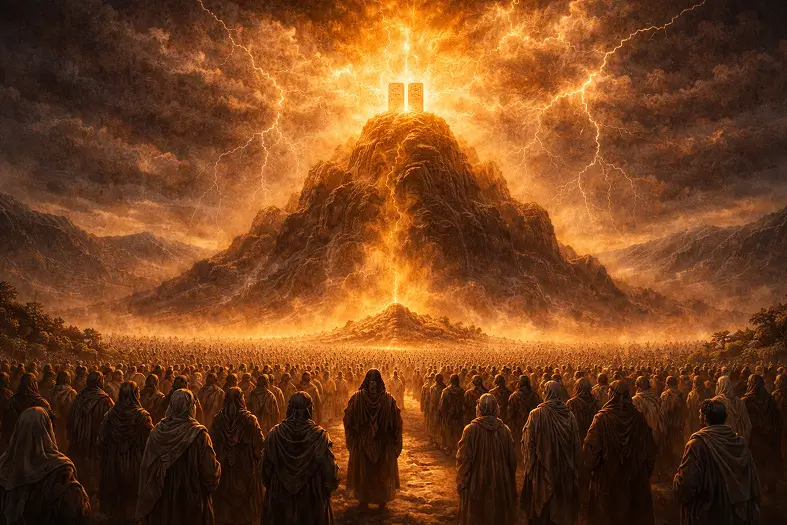
The Torah rejects this model decisively. Sinai is not a private ascent of mystics. It is a national encounter, witnessed by an entire people, embedded in collective memory.
Rabbi Sacks often emphasized that freedom without structure becomes chaos. True freedom depends on law, and law depends on memory—specifically, memory of a moment when authority was not seized, but received.
Sinai provides exactly that:
Because everyone stood there, no one owns the truth.
Private revelation repeats endlessly. Public revelation does not. Sinai occurs once because its function is foundational, not inspirational. Its purpose is not to be relived emotionally, but to be remembered faithfully.
This is why later prophecy never recreates Sinai. The authority of Torah rests on a memory that belongs to all, not on recurring personal experience.
Public revelation democratizes obligation. No elite claims superior access. No charismatic leader can rewrite the past. The shared memory of Sinai stands above rulers, prophets, and generations.
This is the Torah’s genius: morality anchored in memory resists both tyranny and relativism.
Part III has shown that Sinai blocks metaphor, psychology, and reduction. This essay completes the arc by explaining why. Ethics grounded in private mysticism cannot survive freedom. Ethics grounded in public revelation can.
Sinai is not anti-spiritual. It is anti-fragmentation.
Chassidic masters teach that light must dwell in vessels. Public memory is the vessel that holds revelation across generations. Without it, truth flashes and fades. With it, obligation endures.
Modern culture often seeks meaning through personal spirituality. Judaism answers differently: meaning must be shared to be binding. Freedom is preserved not by private truth, but by remembered truth.
The Torah’s enduring claim is simple and demanding: a free people must remember together, or they will not remain free at all.
📖 Sources


3.4 — Freedom Needs Public Moral Memory: Why Revelation Could Not Be Private
Parshas Yisro presents a paradox at the heart of freedom. The Exodus liberates the body; Sinai liberates the conscience. Yet the Torah insists that this second liberation cannot occur through private insight or mystical elevation. Ethics, if they are to endure, must be anchored in shared memory, not individual experience.
This essay explores a core claim articulated powerfully by Rabbi Jonathan Sacks: a free society requires public moral memory. Without it, freedom dissolves into subjectivity, and morality fractures into preference.
Private spiritual experiences are intense—but unstable. They cannot be verified, transmitted, or enforced without coercion. One person’s vision cannot bind another’s conscience. A society built on inward revelation eventually fragments, because no shared reference point remains.
The Torah rejects this model decisively. Sinai is not a private ascent of mystics. It is a national encounter, witnessed by an entire people, embedded in collective memory.
Rabbi Sacks often emphasized that freedom without structure becomes chaos. True freedom depends on law, and law depends on memory—specifically, memory of a moment when authority was not seized, but received.
Sinai provides exactly that:
Because everyone stood there, no one owns the truth.
Private revelation repeats endlessly. Public revelation does not. Sinai occurs once because its function is foundational, not inspirational. Its purpose is not to be relived emotionally, but to be remembered faithfully.
This is why later prophecy never recreates Sinai. The authority of Torah rests on a memory that belongs to all, not on recurring personal experience.
Public revelation democratizes obligation. No elite claims superior access. No charismatic leader can rewrite the past. The shared memory of Sinai stands above rulers, prophets, and generations.
This is the Torah’s genius: morality anchored in memory resists both tyranny and relativism.
Part III has shown that Sinai blocks metaphor, psychology, and reduction. This essay completes the arc by explaining why. Ethics grounded in private mysticism cannot survive freedom. Ethics grounded in public revelation can.
Sinai is not anti-spiritual. It is anti-fragmentation.
Chassidic masters teach that light must dwell in vessels. Public memory is the vessel that holds revelation across generations. Without it, truth flashes and fades. With it, obligation endures.
Modern culture often seeks meaning through personal spirituality. Judaism answers differently: meaning must be shared to be binding. Freedom is preserved not by private truth, but by remembered truth.
The Torah’s enduring claim is simple and demanding: a free people must remember together, or they will not remain free at all.
📖 Sources


“Freedom Needs Public Moral Memory: Why Revelation Could Not Be Private”
אָנֹכִי ה׳ אֱלֹקֶיךָ
Knowing Hashem is anchored in shared historical revelation. Public memory transforms belief into knowledge that binds a people rather than isolating individuals.
לֹא יִהְיֶה לְךָ אֱלֹקִים אֲחֵרִים עַל פָּנָי
Public revelation prevents fragmentation of allegiance. Competing private truths cannot override a shared national encounter with Hashem.
אֵלָיו תִּשְׁמָעוּן
Prophetic authority derives from Sinai’s public memory. Listening to prophecy is grounded in a known, collective source of Divine command.
אֶת ה׳ אֱלֹקֶיךָ תִּירָא
Yirah here emerges as civic awe—the recognition that moral authority transcends individual preference. Public revelation instills responsibility that preserves freedom.


“Freedom Needs Public Moral Memory: Why Revelation Could Not Be Private”
Parshas Yisro presents revelation as a national memory rather than a private ascent. The public nature of Sinai ensures that Torah obligation rests on shared experience, preserving freedom through law grounded in collective history rather than individual mysticism.

Dive into mitzvos, tefillah, and Torah study—each section curated to help you learn, reflect, and live with intention. New insights are added regularly, creating an evolving space for spiritual growth.

Explore the 613 mitzvos and uncover the meaning behind each one. Discover practical ways to integrate them into your daily life with insights, sources, and guided reflection.

Learn the structure, depth, and spiritual intent behind Jewish prayer. Dive into morning blessings, Shema, Amidah, and more—with tools to enrich your daily connection.

Each week’s parsha offers timeless wisdom and modern relevance. Explore summaries, key themes, and mitzvah connections to deepen your understanding of the Torah cycle.