וַיִּקְרָא – Vayikra

A Sefer Torah
Each Parsha page on Mitzvah Minute brings together timeless voices — Rashi, Ramban, Sforno, Abarbanel, R' Avigdor Miller and others — offering classical insight, philosophical depth, Chassidic reflection, and modern meaning. Explore how Torah wisdom unfolds each week through layered commentary and enduring life lessons.

Parsha Page Navigation Guide

Page Navigation Guide
Mitzvah Minute Logo Icon

Parsha Summary

Mitzvah Minute Logo Icon

Parshas Vayikra opens with Hashem calling to Moshe from the Mishkan, inaugurating a new stage in Klal Yisroel’s relationship with the Divine — one defined not by revelation alone, but by sustained closeness through avodah. The parsha introduces the system of korbanos, detailing the עולה, מנחה, and שלמים as expressions of devotion, gratitude, and harmony, alongside the חטאת offerings that address human failure and restore spiritual balance. Through precise structure and sacred procedure, the Torah establishes the Mishkan as the מקום where אדם draws near to Hashem, teaching that closeness is achieved through intentional action, personal investment, and the transformation of both offering and self.

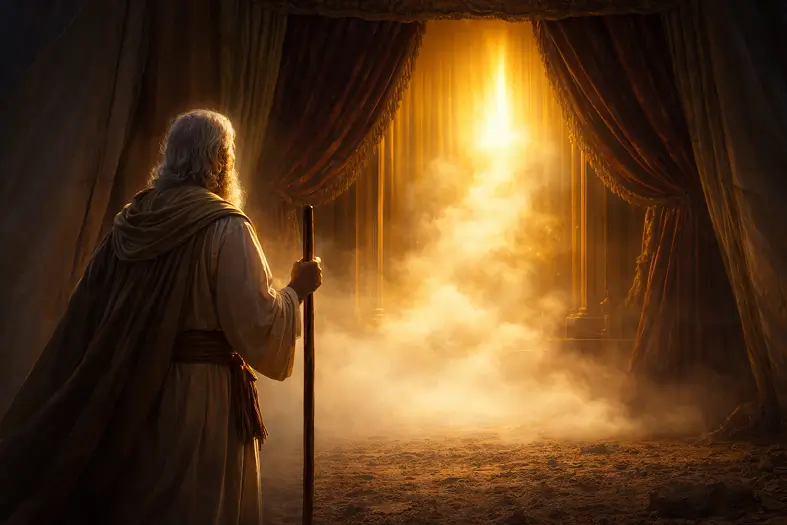
Moshe at the entrance of the MishkanA Sefer Torah

Narrative Summary

The Book of Vayikra opens not with movement, but with a call — a quiet, intimate summons from the Mishkan: “וַיִּקְרָא אֶל־מֹשֶׁה”. After the thunder of Sinai and the construction of the Mishkan, the relationship between Hashem and Klal Yisroel enters a new phase. The Divine Presence now dwells among them, and from within that sacred space, Moshe is called to receive a system that will govern closeness itself — the avodah of korbanos.

The Torah begins by addressing “אָדָם כִּי־יַקְרִיב מִכֶּם קׇרְבָּן” — when a person brings from among you an offering. The language is precise and deeply personal. A korban is not merely something offered; it is something brought from within oneself. The individual approaches the Mishkan not as a spectator, but as a participant in a process of drawing near. The offering may come from the herd, the flock, or even from birds, reflecting a system that meets each person according to their means, yet demands sincerity and completeness — “תָּמִים,” without blemish.

The עולה (burnt offering) is entirely consumed upon the mizbeach. Through semichah — the laying of hands — the person identifies with the offering, and through shechitah, zerikas hadam, and the arranging of its parts upon the fire, the act becomes a symbolic surrender. The עולה rises wholly upward, “רֵיחַ נִיחֹחַ לַה׳,” expressing a total orientation toward the Divine. Whether from cattle, sheep, or birds, the structure remains consistent: the האדם gives, the kohanim facilitate, and the mizbeach becomes the meeting point between heaven and earth.

From there, the Torah transitions to the מנחה — a grain offering. Unlike the animal korbanos, this offering emerges from the simplest elements: flour, oil, and frankincense. It is prepared in various forms — baked, fried, or pan-cooked — yet always remains unleavened, without chametz or honey. Instead, it must be seasoned with salt — “מֶלַח בְּרִית אֱלֹקֶיךָ” — symbolizing permanence and covenant. A portion is burned, while the remainder becomes sustenance for the kohanim, transforming the act of giving into both elevation and continuity.

The Torah then introduces the זבח שלמים, the offering of wholeness and peace. Unlike the עולה, which is entirely consumed, the שלמים is shared — part for the mizbeach, part for the kohanim, and part for the owner. It represents harmony: between האדם and Hashem, between body and soul, and within the community itself. Yet even here, boundaries remain firm: certain fats belong exclusively to Hashem, and the prohibition of consuming blood underscores the sanctity of life itself.

The narrative then shifts from voluntary offerings to the realm of חטאת — the sin offering. Here, the Torah confronts human fallibility. “נֶפֶשׁ כִּי־תֶחֱטָא בִשְׁגָגָה” — when a soul sins unintentionally. Whether the offender is the Kohen Gadol, the entire community, a nasi, or an individual, each case carries its own korban and procedure. The hierarchy reflects not only status but impact: the greater the influence, the deeper the consequences. Blood is brought into the Mishkan, sprinkled before the paroches, placed upon the mizbeach, and the remaining parts are burned — sometimes even outside the camp. Sin is not ignored; it is processed, acknowledged, and transformed through avodah.

Throughout the parsha, a pattern emerges. Every act — whether voluntary devotion or response to failure — follows a precise structure. האדם approaches, offers, identifies, and ultimately finds kapparah or closeness. The Mishkan is not merely a place; it is a system that translates inner movement into physical action. The korban becomes the language through which the soul speaks.

Parshas Vayikra, then, is not simply about offerings. It is about proximity — how a finite human being draws near to the Infinite. It teaches that closeness to Hashem is neither abstract nor accidental. It is built through intention, discipline, and structured encounter. Whether in elevation, gratitude, or repair, the הדרך is clear: to come close, one must bring something of oneself — “מִכֶּם קׇרְבָּן לַה׳.”

Divrei Torah on

וַיִּקְרָא – Vayikra

...and other related content.

"Ladder of Worlds, Ladder of Life" — What Yaakov’s Dream Means Today

Five classic readings of the ladder — and four ways to apply it in real life.

7 - min read

Five classic readings of the ladder — and four ways to apply it in real life.

A Sefer Torah
Read
November 23, 2025

“The Covenant of Salt: Why Jewish Life Begins With a Pinch of Salt”

Salt: A Covenant of Permanence, Purity, and Presence

11 - min read

Salt: A Covenant of Permanence, Purity, and Presence

A Sefer Torah
Read
November 12, 2025
Mitzvah Minute Logo Icon

Parsha Insights

Mitzvah Minute Logo Icon

Classical Insight

Rashi on Parshas Vayikra — Classical Insight

The Language of Calling: Intimacy and Exclusivity of Nevuah

Rashi opens Sefer Vayikra by drawing attention to its very first word: “וַיִּקְרָא.” This is not a technical introduction to prophecy, but a revelation of relationship. Every form of Divine communication to Moshe — whether expressed as דיבור, אמירה, or ציווי — is preceded by a “calling,” and Rashi explains that this calling is לשון חיבה, a language of affection. In contrast to the prophets of the nations, whose encounters are described as מקרֶה (happenstance) and even associated with impurity (במדבר כ״ג:ד; דברים כ״ג:י״א), Moshe’s nevuah is deliberate, intimate, and direct. The voice of Hashem, though described in Tehillim as overwhelmingly powerful — “קוֹל ה׳ בַּכֹּחַ… קוֹל ה׳ שֹׁבֵר אֲרָזִים” (תהילים כ״ט) — is miraculously contained within the Ohel Moed, heard only by Moshe and no one else. Even Aharon does not hear it. Revelation, from the outset, is precise, bounded, and personal.

Torah Learning Model: Pause, Reflection, and Internalization

This precision extends not only to the content of Torah, but to its structure. Rashi highlights the significance of the textual breaks — the הפסקות — between sections of the Torah. These pauses were given to Moshe in order to reflect, to absorb, and to internalize each segment of Divine instruction. From here, Rashi derives a fundamental principle of Torah learning: if Moshe Rabbeinu required pauses for contemplation, certainly every student of Torah must create space to process what they learn. Torah is not merely information to be received; it is truth that must be digested.

“לֵאמֹר”: Responsibility of Transmission

The word “לֵאמֹר” further reveals that revelation is not static, but relational. Rashi explains that Moshe is not only commanded to transmit the message, but to engage the people — to speak words of rebuke when necessary and to return with their response, as at Har Sinai (שמות י״ט). At times, Rashi notes, Moshe’s access to direct Divine communication was itself dependent on the spiritual state of the nation, as seen in the 38-year interruption following the sin of the meraglim (דברים ב׳). Torah is thus a dialogue, not a monologue.

Korbanos and Moral Integrity: אדם כי יקריב

When the Torah transitions to korbanos with the phrase “אָדָם כִּי יַקְרִיב,” Rashi immediately reframes the entire system in ethical terms. The word “אָדָם” alludes to אדם הראשון, who offered only from what was rightfully his. Just as Adam could not bring a stolen offering, so too every korban must be free of theft (ויקרא רבה ב:ז). Rashi systematically excludes any animal tainted by moral or halachic deficiency — whether through sin (רובע ונרבע), idolatry (נעבד, מוקצה), physical defect (טרפה), or even prior violence. The message is unmistakable: a korban is not a ritual act detached from life, but an extension of moral integrity. What a person brings reflects who they are.

Communal and Shared Avodah

At the same time, korbanos are not limited to individual expression. From subtle shifts in language — תקריבו and קרבנכם — Rashi derives that offerings may be brought jointly or even communally, such as עולת קיץ המזבח (שבועות י״ב). Avodas Hashem is both personal and shared; the Mizbeach becomes a place where individual intention and communal responsibility converge.

The Structure of Obligation: רצון and Coercion

Rashi also introduces a profound psychological insight into obligation and free will. When the Torah requires that a korban be brought “לרצונו,” yet Chazal teach that Beis Din may compel a person to fulfill his obligation, the resolution is striking: coercion continues only until the person declares, “רוצה אני.” The deeper assumption is that a Jew’s inner will is aligned with Hashem; resistance is external, not essential. The role of דין is not to impose רצון, but to reveal it.

Atonement Defined: Limits of the עולה

The system of korbanos is further defined by its precision. The עולה, for example, does not atone for all sins indiscriminately. Rashi carefully limits its scope: it does not address transgressions punishable by כרת, מיתת בית דין, or מלקות. Rather, it atones for failures of positive commandments and certain related prohibitions. Kaparah is not a blanket mechanism; it is a refined and targeted process of תיקון.

Roles in Avodah: Owner vs. Kohen

This precision continues in the structure of the avodah itself. Rashi delineates clear roles: while שחיטה may be performed even by a non-כהן, all subsequent stages — from קבלת הדם onward — belong exclusively to the כהנים. Even within the כהונה, legitimacy matters: only valid כהנים, wearing the correct garments, may serve. The avodah is not only spiritual; it is rigorously ordered, with defined roles and boundaries.

Precision in Avodah: Blood, Placement, and Structure

The handling of the korban reflects this same exactness. The sprinkling of blood must follow precise patterns — שתי מתנות שהן ארבע — applied at specific locations and in specific ways. The wood arrangement must remain entirely on the Mizbeach. Even in cases of mixtures — whether of animals or of blood — the halachah carefully distinguishes between what remains valid and what does not. Every detail matters. There is no randomness in avodas Hashem.

Human Effort Within Divine Presence

And yet, within this highly structured system, Rashi emphasizes the indispensable role of human effort. Even though fire descends from Heaven, there remains a mitzvah to bring fire מן ההדיוט (יומא כ״א:). Divine presence does not eliminate human participation; it demands it. Avodah is a partnership between Heaven and earth.

Kavod Shamayim: Dignity in Physical Detail

Rashi is equally sensitive to the dignity embedded in the physical act of offering. The placement of fats to cover the מקום השחיטה, the careful arrangement of limbs, and the insistence on aesthetic completeness all reflect כבוד שמים. Even the external appearance of the korban is part of its meaning. Avodah is not only correct — it must be respectful.

Intent (לשמה): Defining the Korban

At the heart of everything lies כוונה. The korban must be offered לשמה, with conscious intent defining its identity. Without proper intent, the act loses its essence. This becomes most powerful in Rashi’s treatment of the poor person’s offering. The Torah describes both large animal offerings and simple bird offerings as “ריח ניחוח,” which Rashi explains not as physical pleasure, but as “נחת רוח לפני — שאמרתי ונעשה רצוני.” Whether one brings much or little, the determining factor is not quantity, but sincerity — “אחד המרבה ואחד הממעיט,” provided that one directs his heart toward Heaven. Even the inclusion of feathers, which produce an unpleasant odor, is preserved so that the offering of the poor appears full and dignified (ויקרא רבה ג׳). The Torah protects the honor of the one who has less.

The Minchah: Offering of the Soul

This theme reaches its peak in the מנחה. Here alone the Torah uses the word “נפש” — “וְנֶפֶשׁ כִּי תַקְרִיב.” Rashi explains that the poor person who brings a simple flour offering is regarded as if he has offered his very soul (מנחות ק״ד:). The meticulous laws governing the מנחה — its measurements, oil, לבונה, and קמיצה — do not diminish its simplicity; they elevate it. A handful of flour becomes אזכרתה, a remembrance before Hashem.

Structure, Symbol, and Covenant

Rashi also uncovers symbolic dimensions within the korbanos. Salt, for example, represents a ברית from the Six Days of Creation, when the lower waters were promised inclusion in Divine service through the offerings and the water libations (מנחות כ׳:). The exclusion of חמץ and sweetness reflects a discipline of restraint, while their limited inclusion in specific offerings (שתי הלחם, ביכורים) highlights context and purpose. Every physical element carries meaning.

Shelamim: Harmony and Distribution

In the קרבן שלמים, Rashi presents a different model altogether — one of harmony rather than total ascent. The offering is shared between the מזבח, the כהנים, and the בעלים, creating שלום between all participants. It is an offering of balance, where Divine service and human experience meet in partnership.

Chatas: Responsibility and Leadership

Finally, in the laws of חטאת, Rashi introduces the dimension of responsibility. A sin-offering is brought only for specific categories of transgression — those involving a לאו with כרת — when committed בשגגה (שבת ס״ט:). Even partial violations can generate liability, emphasizing the seriousness of action. Most strikingly, when the כהן גדול sins בשגגה, the entire people are affected, because leadership shapes communal reality. Responsibility in Torah is never isolated.

In Closing: Korban as Structured Relationship

Taken together, Rashi’s reading of Parshas Vayikra reveals a unified vision. Divine communication is intimate and precise. Torah learning demands reflection. Korbanos require moral integrity, halachic exactness, and intentional awareness. Human effort is essential, even in the presence of the Divine. And above all, the value of an offering is not measured by its size, but by the sincerity behind it.

Korban, in Rashi’s world, is not sacrifice in a crude or external sense. It is a disciplined encounter between האדם and Hashem — where action, intention, structure, and meaning converge to restore closeness and create true תיקון.

📖 Source

Ramban on Parshas Vayikra — Classical Insight

Vayikra as the Continuation of Sinai

Ramban opens Sefer Vayikra by framing it as the direct continuation of Sefer Shemos. If Shemos culminates in the resting of the Shechinah within the Mishkan, then Vayikra teaches how that Divine Presence is sustained. The Mishkan is not a static structure—it is spiritually responsive. The presence of Hashem remains among Klal Yisrael only when holiness is actively preserved. Thus, korbanos emerge not as ritual acts alone, but as a system of kapparah designed to prevent sin from causing a סילוק השכינה. In this way, Vayikra becomes a Torah of ongoing relationship—תורת כהנים ולויים—governing closeness, responsibility, and continuity of Divine presence.

Boundaries of Holiness and the Role of the Kohanim

With the Shechinah dwelling among the people comes a new demand: structure. Ramban emphasizes that proximity to Hashem requires גבול—clear boundaries. The Kohanim, as those who approach most closely, must undergo sanctification, and the Torah warns against improper entry into sacred space, paralleling the restrictions at Har Sinai. Just as Sinai required boundaries to protect the people from overwhelming holiness, so too the Mishkan requires discipline and hierarchy. Kedushah is not casual; it is precise, guarded, and mediated.

The Mishkan as a Perpetual Sinai

One of Ramban’s central insights is that the Mishkan is essentially Har Sinai in permanent form. The cloud, the מקום ההתגלות, and the גבולות all reappear within its structure. Vayikra is therefore not introducing a new system, but preserving the experience of Sinai within daily life. Revelation is no longer a one-time event—it becomes an ongoing reality sustained through avodah.

The Structure of Sefer Vayikra

Ramban outlines the sefer as a carefully ordered progression. It begins with voluntary offerings (נדבה), expressing a desire for closeness, and then moves into korbanos for sin, addressing failure and repair. From there, the Torah transitions into laws of forbidden foods and tumah, which restrict access to the Mikdash, followed by detailed systems of purification. The progression then deepens into moral impurity—particularly עריות—which Ramban identifies as a force that can drive away the Shechinah and even lead to exile. Finally, the sefer culminates in Shabbos and mo’adim, where time itself becomes sanctified through korbanos. The entire structure reflects a unified goal: preserving holiness across action, body, morality, and time.

The Inner Meaning of Korbanos

Ramban presents korbanos as a profound system of inner transformation. A korban is not symbolic—it is experiential. Through סמיכה, confession, and the offering itself, a person confronts the reality that what is happening to the animal should, in truth, have happened to him. The limbs correspond to the human being: action, speech, and thought. The blood represents life-force; the burning represents total surrender. In this way, korbanos restore the integrity of the נפש and realign the האדם with Hashem.

“וַיִּקְרָא אֶל מֹשֶׁה” — The Nature of Divine Calling

Ramban explains that Moshe could not enter the Mishkan on his own initiative; he required a קריאה. This reflects both awe and intimacy. Just as at Sinai, where Moshe was called from within the cloud, so too here Divine communication begins with invitation. Chazal teach that every דיבור is preceded by such a call, expressing חיבה and זירוז. This establishes a principle: access to the Divine is not assumed—it is granted.

Precision in Halacha: Who Brings the Korban?

Ramban carefully distinguishes between types of offerings. A korban must come specifically from domesticated animals—cattle or sheep—not wild species. He further clarifies the difference between individual offerings, partnerships, and true ציבור offerings. Even if many individuals contribute, the offering remains a קרבן שותפין unless it originates from communal funds under Beis Din authority. These distinctions affect key halachos such as סמיכה and נסכים, revealing the precision with which the Torah defines communal versus individual avodah.

סמיכה and Personal Responsibility

The act of סמיכה must be performed with two hands, yet the Torah uses singular language—“ידו”—to teach that it must be done personally, not through a proxy. Even though generally “שלוחו של אדם כמותו,” here the Torah insists on direct involvement. A person must physically and emotionally identify with the korban. Atonement cannot be outsourced.

The Purpose of the עולה — רצוי, Not Just כפרה

Ramban redefines the function of the עולה. Unlike a חטאת, which atones for specific sins, the עולה serves as ריצוי—restoring favor before Hashem. It addresses neglected positive commandments and inner failures, including even thoughts of the heart. The Torah’s language—“ונרצה לו”—signals not punishment, but reconciliation. Through the עולה, a person becomes once again acceptable before Hashem.

The Debate: Why Korbanos Exist

Ramban strongly challenges the Rambam’s view that korbanos were instituted to counter idolatry. He argues that korbanos predate idolatry—Hevel, Noach, and even Bilaam brought offerings. Therefore, korbanos are not a concession, but a fundamental spiritual system. They are rooted in human nature itself: a structured process through which a person confronts sin, accepts responsibility, and restores alignment with Hashem.

Fire, Transformation, and Total Elevation

The korban must be consumed by a true, active fire—not partially burned or placed on dying embers. “אִשֶּׁה” signifies complete transformation. The offering must be fully elevated, symbolizing total submission and refinement. This reinforces that korbanos are not partial gestures—they demand wholeness.

The Symbolism of Bird Offerings

Ramban explains that turtledoves and young pigeons are chosen not only for accessibility, but for their symbolic qualities. Turtledoves represent loyalty—they never replace a lost mate. Young pigeons represent attachment—they do not abandon their nest. These traits reflect the relationship between ישראל and Hashem: exclusivity, constancy, and unwavering connection. Other birds, associated with negative traits, are excluded.

Order, Precision, and Non-Linear Torah Structure

Ramban emphasizes that the Torah does not always present procedures in chronological order. The pesukim are thematic, not sequential. For example, זריקת הדם is mentioned early to establish its importance, even though other preparations occur first in practice. This teaches that the Torah’s structure conveys conceptual priorities, not merely technical steps.

Language Matters: Exactness in Every Word

Ramban consistently defends the precision of Torah language. Terms like “נוצה” (feathers) and “כנפיים” (wings) must be understood exactly, not loosely. Even anatomical details of the korban reflect halachic and conceptual meaning. Translation may capture function, but the original לשון carries exact structure and intent.

The Covenant of Salt — Balance in Creation

Salt, required in every korban, represents a deep metaphysical principle. It is born from water and fire—two opposing forces—and embodies both preservation and destruction. Ramban explains that this reflects the nature of a ברית: a system of balance. The phrase “ברית אלוקיך” hints to דין—the structured balance that sustains existence. Salt thus symbolizes the underlying equilibrium of creation itself.

Final Insight: Korban as Self

Ramban ultimately reframes the entire מערכת הקרבנות. A korban is not something a person brings—it is something a person becomes. The offering represents the האדם עצמו: his גוף, his נפש, his actions, his thoughts. Through this process, a person does not merely atone—he realigns, restores, and returns to closeness with Hashem. Vayikra, therefore, is not a book of ritual—it is a guide to sustaining Divine presence within human life.

📖 Source

Philosophical Thought

*Full sedra will אם ירצה השם resume in the next week or two. Thank you!

Chassidic Reflection

Modern Voice

Application for Today

Mitzvah Minute Logo Icon

Rashi

Mitzvah Minute Logo Icon

Rashi on Parshas Vayikra – Commentary

Introduction to Rashi on Parshas Vayikra

Parshas Vayikra marks a transition from revelation to relationship, from the thunder of Har Sinai to the quiet, structured intimacy of the Mishkan. Rashi frames this opening word — “וַיִּקְרָא” — as an expression of love, a deliberate and gentle calling from Hashem to Moshe, setting the tone for the entire sefer. What follows is not merely a system of korbanos, but a language of closeness, where each offering reflects a different dimension of the human condition — generosity, failure, doubt, responsibility, and return. Through precise halachic detail and layered Midrashic insight, Rashi reveals that the korbanos are not about ritual mechanics alone, but about restoring harmony between האדם, the community, and Hashem. Every פעולה, every omission, every nuance — from the placement of blood to the identification of fats — becomes part of a larger structure of תיקון, where even imperfection is given a path back to wholeness.

Chapter 1

1:1 — “וַיִּקְרָא אֶל מֹשֶׁה…”

וַיִּקְרָא אֶל מֹשֶׁה וַיְדַבֵּר ה׳ אֵלָיו מֵאֹהֶל מוֹעֵד לֵאמֹר

“And He called to Moshe, and Hashem spoke to him from the Tent of Meeting, saying:”

וַיִּקְרָא אֶל מֹשֶׁה

Rashi explains that every form of Divine communication — whether expressed as דיבור, אמירה, or ציווי — was preceded by a “calling” (קריאה).

This calling is:

  • A language of affection (לשון חיבה)
  • The mode used by the ministering angels, as it states:
    וְקָרָא זֶה אֶל זֶה (ישעיהו ו:ג)

In contrast:

  • The prophets of the nations receive revelation in a language of chance and impurity
  • As it states: וַיִּקָּר אֱלֹקִים אֶל בִּלְעָם (במדבר כ״ג:ד)
    The term ויקר implies:
    • מקרֶה — happenstance
    • Also connotes impurity (דברים כ״ג:י״א)

Thus, the very opening word establishes the unique intimacy between Hashem and Moshe.

וַיִּקְרָא אֶל מֹשֶׁה — Nature of the Voice

The Divine voice:

  • Reached Moshe alone
  • Was not heard by the rest of כלל ישראל

One might have thought:

  • That even between smaller subsections (הפסקות), there was a separate calling

Therefore the pasuk states:

  • וַיְדַבֵּר — only full “dibbur” sections required a preceding call

The purpose of the subdivisions (הפסקות):

  • To give Moshe space to reflect
  • Between parsha and parsha
  • Between subject and subject

From here, a קל וחומר:

  • If Moshe required pauses for contemplation
  • Certainly an ordinary person learning from another requires time to process
אֵלָיו — “To Him”

This phrase excludes Aharon.

Rashi brings Rabbi Yehudah:

  • There are 13 instances where the Torah appears to address Moshe and Aharon together
  • Corresponding to these are 13 limiting expressions

These limitations teach:

  • The communication was actually to Moshe alone
  • Who would then transmit it to Aharon

Examples include:

  • לְדַבֵּר אִתּוֹ
  • מִדַּבֵּר אֵלָיו
  • וַיְדַבֵּר אֵלָיו (במדבר ז׳)
  • וְנוֹעַדְתִּי לְךָ (שמות כ״ה)

One might think:

  • Others at least heard the sound of the Divine voice

Therefore the pasuk states:

  • וַיִּשְׁמַע אֶת הַקּוֹל מְדַבֵּר אֵלָיו (במדבר ז׳:פ״ט)

Implication:

  • The voice extended specifically to him (אליו)
  • Moshe alone heard it
  • All Israel did not hear it
מֵאֹהֶל מוֹעֵד

This teaches:

  • The voice stopped within the Ohel Moed
  • It did not extend outward

One might think:

  • The voice was weak

Therefore the Torah clarifies:

  • It was the powerful Divine voice described in Tehillim:
    קוֹל ה׳ בַּכֹּחַ… קוֹל ה׳ שֹׁבֵר אֲרָזִים (תהילים כ״ט)

If so, why was it not heard outside?

Because:

  • The voice was miraculously contained and ceased at the boundary of the Ohel

A parallel case:

  • The sound of the Keruvim’s wings (יחזקאל י׳:ה׳)
  • Though powerful like “קול א-ל ש-ד-י”
  • Was only heard until a certain point, where it ceased
מֵאֹהֶל מוֹעֵד לֵאמֹר

One might think:

  • The voice came from anywhere within the Tent

Therefore:

  • מֵעַל הַכַּפֹּרֶת — from above the Ark cover

One might still think:

  • From anywhere on the cover

Therefore:

  • מִבֵּין שְׁנֵי הַכְּרֻבִים

Conclusion:

  • “מאהל מועד” describes the area where the voice was heard
  • Not the precise origin of the speech
לֵאמֹר

Rashi gives two explanations:

First explanation:

  • “Go and tell them words of rebuke” (דברי כיבושין)
  • Message: “For your sake this communication is given to me”

Proof:

  • For 38 years after the sin of the meraglim
  • There was no intimate Divine speech with Moshe
  • As it states:
    וַיְדַבֵּר ה׳ אֵלַי לֵאמֹר (דברים ב׳) — only then did speech resume

Second explanation:

  • “Go and report back”
  • Moshe must convey the message and return with the people’s response

As seen at Sinai:

  • וַיָּשֶׁב מֹשֶׁה אֶת דִּבְרֵי הָעָם אֶל ה׳ (שמות י״ט)

1:2 — “אָדָם כִּי יַקְרִיב מִכֶּם…”

אָדָם כִּי יַקְרִיב מִכֶּם קָרְבָּן לַה׳ מִן הַבְּהֵמָה מִן הַבָּקָר וּמִן הַצֹּאן תַּקְרִיבוּ אֶת קָרְבַּנְכֶם

“When a man from among you brings an offering to Hashem, from the animals, from cattle or from sheep shall you bring your offering.”

אָדָם כִּי יַקְרִיב מִכֶּם

This means:

  • “When he offers”

The section refers specifically to:

  • Voluntary offerings (קרבנות נדבה)
אָדָם

Why use the term “Adam”?

Rashi explains:

  • It alludes to אדם הראשון

Just as:

  • Adam did not bring from stolen property
  • Because everything was his

So too:

  • One must not bring a korban from theft

(ויקרא רבה ב:ז)

מִן הַבְּהֵמָה

One might think:

  • Even wild animals are included

Therefore:

  • The Torah specifies cattle and sheep
מִן הַבְּהֵמָה — limitation

The phrase implies:

  • Not all animals qualify

Excludes:

  • Animals involved in forbidden relations
    (רובע ונרבע)
מִן הַבָּקָר

Excludes:

  • An animal that was worshipped as an idol
מִן הַצֹּאן

Excludes:

  • An animal designated for idolatry (מוקצה)
וּמִן הַצֹּאן

The extra ו teaches:

  • Exclusion of a goring ox that killed a person

Additionally:

  • The later phrase מִן הַבָּקָר (v. 3), though seemingly unnecessary
  • Teaches exclusion of a טרפה (fatally diseased animal)
תַּקְרִיבוּ

The plural form teaches:

  • Multiple individuals may bring a korban together
  • A shared voluntary offering
קָרְבַּנְכֶם

This teaches:

  • The korban may also be communal

Specifically:

  • עולת קיץ המזבח
  • A communal offering brought from surplus funds

(שבועות י״ב)

Closing Summary — Rashi’s Opening Framework

Rashi’s opening to Sefer Vayikra establishes three foundational principles:

  • Divine communication is precise, intimate, and purposeful — directed exclusively to Moshe with אהבה and clarity
  • Torah learning requires pause, reflection, and internalization — modeled even at the level of nevuah
  • Korbanos demand absolute integrity — both in substance (no stolen or invalid animals) and in intent (נדבה, voluntary offering)

Through these opening pesukim, Rashi frames Vayikra not merely as a system of sacrifices, but as a disciplined encounter between האדם and Hashem — grounded in purity, responsibility, and relational closeness.

1:3 — “אִם עֹלָה קָרְבָּנוֹ…”

אִם עֹלָה קָרְבָּנוֹ מִן הַבָּקָר זָכָר תָּמִים יַקְרִיבֶנּוּ אֶל פֶּתַח אֹהֶל מוֹעֵד יַקְרִיב אֹתוֹ לִרְצֹנוֹ לִפְנֵי ה׳

“If his offering is a burnt offering from cattle, a male without blemish shall he offer it; to the entrance of the Tent of Meeting shall he bring it, for his acceptance before Hashem.”

זָכָר

A male — and not a female.

Rashi adds:

  • The later repetition of “זכר” (v. 10), which seems unnecessary, teaches:
    • Not only must it be male
    • It must not be:
      • טומטום (indeterminate sex)
      • אנדרוגינוס (hermaphrodite)

((ספרא; בכורות מ״א:)

תָּמִים

This means:

  • Without blemish (בלא מום)
אֶל פֶּתַח אֹהֶל מוֹעֵד

The owner must personally:

  • Attend to bringing the offering
  • Up to the entrance of the Azarah

Rashi addresses the double expression “יַקְרִיב… יַקְרִיבֶנּוּ”:

It teaches:

  • Even if offerings become mixed:
    • For example:
      • Reuven’s burnt offering mixed with Shimon’s
    • Each person brings one animal:
      • On behalf of its rightful owner

Similarly:

  • If an עולה becomes mixed with non-consecrated animals:
    • The חולין are sold for עולה purposes
    • All animals become עולה
    • Each is offered for its proper owner

However:

  • One might think this applies even:
    • If mixed with invalid animals
    • Or with different types of korbanos

Therefore:

  • The Torah says “יַקְרִיבֶנּוּ”
  • Limiting the rule only to valid comparable mixtures
יַקְרִיב אֹתוֹ

This extra word teaches:

  • Beis Din compels a person
  • To bring a korban he obligated himself to bring

One might think:

  • Even against his will

Therefore:

  • The pasuk says לִרְצֹנוֹ — “for his acceptance”

How is this reconciled?

  • They compel him
  • Until he says:
    • “רוֹצֶה אֲנִי” — “I desire to do it”

(ספרא)

לִפְנֵי ה׳ — וְסָמַךְ

The סמיכה (laying of hands):

  • Applies only “before Hashem”

Implication:

  • סמיכה is not performed:
    • On a במה (private altar)

(ספרא)

1:4 — “וְסָמַךְ יָדוֹ…”

וְסָמַךְ יָדוֹ עַל רֹאשׁ הָעֹלָה וְנִרְצָה לוֹ לְכַפֵּר עָלָיו

“And he shall lay his hand upon the head of the burnt offering, and it shall be accepted for him to atone for him.”

עַל רֹאשׁ הָעֹלָה

This phrase includes:

  • Obligatory burnt offerings (עולת חובה)
  • In the law of סמיכה

It also includes:

  • Sheep offerings (עולת הצאן)

(ספרא)

הָעֹלָה

This excludes:

  • A bird offering (עולת העוף)

(ספרא)

וְנִרְצָה לוֹ

For what does this offering provide atonement?

It does NOT atone for:

  • כרת
  • מיתת בית דין
  • מיתה בידי שמים
  • מלקות

Because:

  • Those punishments are explicitly defined by Torah law

Therefore:

  • The עולה atones only for:
    • Neglect of a positive command (עשה)
    • Violation of a לאו הניתק לעשה

(ספרא)

1:5 — “וְשָׁחַט… וְהִקְרִיבוּ…”

וְשָׁחַט אֶת בֶּן הַבָּקָר לִפְנֵי ה׳ וְהִקְרִיבוּ בְּנֵי אַהֲרֹן הַכֹּהֲנִים אֶת הַדָּם וְזָרְקוּ אֶת הַדָּם עַל הַמִּזְבֵּחַ סָבִיב אֲשֶׁר פֶּתַח אֹהֶל מוֹעֵד

“And he shall slaughter the bull before Hashem, and the sons of Aharon, the priests, shall bring near the blood and dash the blood upon the altar, around about, at the entrance of the Tent of Meeting.”

וְשָׁחַט… וְהִקְרִיבוּ הַכֹּהֲנִים

From the stage of:

  • קבלה (receiving the blood) and onward

These are:

  • Duties of the כהנים

This teaches:

  • שחיטה (slaughtering) is valid:
    • Even by a non-priest (זר)

(ספרא; זבחים ל״ב:)

לִפְנֵי ה׳

This means:

  • In the Azarah (Temple courtyard)
וְהִקְרִיבוּ

This refers to:

  • קבלת הדם (receiving the blood in a vessel)

Although:

  • The word also implies הולכה (bringing it to the altar)

Thus:

  • Both receiving and bringing
  • And all subsequent rites
  • Are priestly functions

(זבחים ד.)

בְּנֵי אַהֲרֹן הַכֹּהֲנִים

One might think:

  • Even חללים (disqualified כהנים) may serve

Therefore:

  • The Torah adds “הכהנים”

Meaning:

  • Only valid כהנים
  • Fit for priestly service

(ספרא)

אֶת הַדָּם… וְזָרְקוּ אֶת הַדָּם

Why is “דם” repeated?

To include:

  • Blood of an עולה mixed:
    • With same-type blood
    • Or with other valid korbanos

One might think:

  • Even mixtures with:
    • Invalid sacrifices
    • Inner sin-offerings (חטאות פנימיות)
    • Outer sin-offerings (חטאות חיצוניות)

Therefore:

  • The Torah later says:
    • דָּמוֹ (v. 11)
  • Limiting the inclusion

(ספרא; זבחים פ״א)

וְזָרְקוּ… סָבִיב

The כהן:

  • Stands below
  • Sprinkles from a vessel
  • Onto the altar wall

Placement:

  • Below the red line (חוט הסיקרא)
  • At opposite corners

Purpose of “סביב”:

  • Blood must reach all four sides

One might think:

  • A continuous line around the altar

But:

  • “וזרקו” implies throwing
  • Not smearing

One might think:

  • A single throw is sufficient

Therefore:

  • “סביב” teaches:

Final halachah:

  • Two applications
  • That count as four (שתי מתנות שהן ארבע)

(ספרא)

אֲשֶׁר פֶּתַח אֹהֶל מוֹעֵד

This applies:

  • Only when the Mishkan is standing

Excludes:

  • Times when the Mishkan is dismantled
  • Even if the altar remains

(ספרא)

Closing Summary — Rashi on 1:3–5

Rashi deepens the structure of korbanos by establishing:

  • The offering must be physically perfect and halachically valid
  • The process must follow precise legal structure — distinguishing between roles of owner and כהן
  • Even voluntary offerings operate within a framework of obligation and דין (e.g., coercion until רצון)
  • Atonement is limited and targeted — not a blanket mechanism, but a refined spiritual repair

Through these halachos, Rashi reveals that korbanos are not symbolic gestures, but exacting acts of עבודת ה׳ — where intention, ownership, physical integrity, and halachic precision converge into one unified avodah.

1:6 — “וְהִפְשִׁיט אֶת הָעֹלָה…”

וְהִפְשִׁיט אֶת הָעֹלָה וְנִתַּח אֹתָהּ לִנְתָחֶיהָ

“And he shall flay the burnt offering and cut it into its pieces.”

וְהִפְשִׁיט אֶת הָעֹלָה

Why does the Torah say “הָעֹלָה”?

To include:

  • All types of burnt offerings

This includes:

  • Voluntary and obligatory
  • From cattle or sheep
  • Offered by:
    • A man or a woman
    • A free person or an עבד

All are subject to:

  • Flaying (הפשט)
  • Dismembering (ניתוח)

(ספרא)

לִנְתָחֶיהָ

“He shall cut it into its pieces” — but:

  • He may not cut:
    • The pieces further into smaller fragments

(ספרא)

1:7 — “וְנָתְנוּ… אֵשׁ…”

וְנָתְנוּ בְּנֵי אַהֲרֹן הַכֹּהֵן אֵשׁ עַל הַמִּזְבֵּחַ

“And the sons of Aharon the priest shall place fire upon the altar.”

אֵשׁ

Even though:

  • Fire descended from Heaven

Nevertheless:

  • There is a mitzvah
  • To bring fire from human effort (מן ההדיוט)

(ספרא; יומא כ״א:)

בְּנֵי אַהֲרֹן הַכֹּהֵן

They must serve:

  • In their proper priestly status

Implication:

  • If Aharon (or any כהן גדול):
    • Serves in the garments of a regular כהן
  • The service is invalid

(ספרא; זבחים י״ח:)

1:8 — “וְעָרְכוּ… אֶת הַנְּתָחִים…”

וְעָרְכוּ בְּנֵי אַהֲרֹן הַכֹּהֲנִים אֶת הַנְּתָחִים אֶת הָרֹאשׁ וְאֶת הַפָּדֶר

“And the sons of Aharon the priests shall arrange the pieces, the head, and the fat.”

בְּנֵי אַהֲרֹן הַכֹּהֲנִים

They must function:

  • As valid כהנים

Implication:

  • A regular כהן wearing the garments of the כהן גדול
  • His service is invalid

(ספרא; זבחים י״ח:)

אֶת הַנְּתָחִים אֶת הָרֹאשׁ

Why mention the head separately?

Because:

  • It was already partially separated during slaughter
  • It was not included in flaying

Therefore:

  • It must be listed independently
  • To ensure it is placed on the Mizbeach

(ספרא; חולין כ״ז.)

וְאֶת הַפָּדֶר

Why mention the fat separately?

To teach:

  • It is placed together with the head
  • It is used to cover:
    • The מקום השחיטה (cut of the throat)

This is:

  • A דרך כבוד — a respectful presentation before Hashem

(חולין כ״ז.)

אֲשֶׁר עַל הַמִּזְבֵּחַ

This teaches:

  • The wood arrangement (מערכה):
    • Must remain fully on the altar
    • Logs must not protrude outward

(ספרא)

1:9 — “וְהִקְטִיר… עֹלָה…”

וְהִקְטִיר הַכֹּהֵן אֶת הַכֹּל הַמִּזְבֵּחָה עֹלָה אִשֵּׁה רֵיחַ נִיחוֹחַ לַה׳

“And the priest shall cause all to go up in smoke upon the altar — a burnt offering, a fire offering, a pleasing aroma to Hashem.”

עֹלָה

The burning must be:

  • With intention that it is an עולה

Not:

  • Another type of offering

(ספרא)

אִשֶּׁה

This term relates to אש (fire)

Meaning:

  • At the time of slaughter:
    • One must have intent
    • That it is destined for the fire

(ספרא)

רֵיחַ נִיחוֹחַ

This does not mean physical pleasure.

Rather:

  • “נחת רוח לפני”
  • Satisfaction before Hashem

Meaning:

  • “I commanded — and My will was fulfilled”

(ספרא; זבחים מ״ו:)

1:10 — “וְאִם מִן הַצֹּאן…”

וְאִם מִן הַצֹּאן קָרְבָּנוֹ

“And if his offering is from the sheep…”

וְאִם

The ו connects:

  • This section to the previous one

Why then a break in the text?

  • To give Moshe time to reflect
  • Between sections

(ספרא)

מִן הַצֹּאן מִן הַכְּשָׂבִים מִן הָעִזִּים

Three exclusions:

  • “מן הצאן” → excludes an old animal
  • “מן הכשבים” → excludes a sick animal
  • “מן העזים” → excludes a foul-smelling animal

(ספרא; בכורות מ״א.)

1:11 — “עַל יֶרֶךְ הַמִּזְבֵּחַ…”

עַל יֶרֶךְ הַמִּזְבֵּחַ צָפֹנָה לִפְנֵי ה׳

“On the side of the altar, northward before Hashem.”

עַל יֶרֶךְ הַמִּזְבֵּחַ

This means:

  • On the side of the altar
צָפֹנָה לִפְנֵי ה׳

The requirement of north side applies:

  • In the Mishkan / Beis HaMikdash

But not:

  • On a במה

(ספרא; זבחים קי״ט:)

1:14 — “וְאִם מִן הָעוֹף…”

וְאִם מִן הָעוֹף עֹלָה קָרְבָּנוֹ לַה׳

“And if his offering to Hashem is a burnt offering from fowl…”

מִן הָעוֹף

“From the birds” — but not all birds.

Since:

  • Requirements of:
    • זכר (male)
    • תמים (unblemished)
      Apply only to animals

One might think:

  • Any bird is valid

Therefore:

  • “מן העוף” excludes:
    • A bird missing a limb

(ספרא; קידושין כ״ד:)

תֹּרִים

Turtledoves:

  • Must be mature (גדולים)
  • Not young
בְּנֵי יוֹנָה

Young doves:

  • Must be young (קטנים)
  • Not mature

(ספרא; חולין כ״ב:)

מִן הַתֹּרִים אוֹ מִן בְּנֵי הַיּוֹנָה

Excludes:

  • Birds in the intermediate stage
  • When feathers begin turning golden

Because:

  • At that stage:
    • They are too old for בני יונה
    • Too young for תורים

(ספרא; חולין כ״ב:)

Closing Summary — Rashi on 1:6–14

Rashi here reveals the deeper structure of korbanos through precise halachic detail:

  • Every act of the korban — flaying, cutting, arranging — is governed by exact דין
  • Human participation is essential even where Divine fire exists
  • כבוד שמים is reflected even in physical presentation (e.g., covering the מקום השחיטה)
  • Intent (לשמה) is central — defining the identity of the offering
  • The Torah carefully delineates fitness — excluding anything deficient, improper, or liminal

Through these laws, Rashi shows that the korban is not merely an offering, but a fully ordered avodah — where physical action, inner intention, and halachic precision unite in the service of Hashem.

1:15 — “וְהִקְרִיבוֹ הַכֹּהֵן…”

וְהִקְרִיבוֹ הַכֹּהֵן אֶל הַמִּזְבֵּחַ וּמָלַק אֶת רֹאשׁוֹ וְהִקְטִיר הַמִּזְבֵּחָה וְנִמְצָה דָמוֹ עַל קִיר הַמִּזְבֵּחַ

“And the priest shall bring it to the altar, and nip off its head, and cause it to ascend in smoke on the altar, and its blood shall be wrung out on the wall of the altar.”

וְהִקְרִיבוֹ

Even a single bird:

  • May be brought as an offering

Despite:

  • The plural wording “תורים” and “בני יונה”

(ספרא; זבחים ס״ה:)

הַכֹּהֵן — וּמָלַק

The act of מליקה:

  • Must be performed by the כהן himself
  • Not with a כלי (instrument)

Procedure:

  • Using his fingernail
  • From the back of the neck (מול העורף)
  • Cutting through:
    • The neck bone
    • Until reaching the סימנים
    • And severing them

(ספרא; זבחים ס״ה:)

וְנִמְצָה דָמוֹ

The term “נמצה” implies:

  • Pressing / squeezing

Process:

  • The כהן presses:
    • The מקום השחיטה
  • Against the wall of the מזבח

Result:

  • The blood is squeezed out
  • And flows downward

Related to:

  • מיץ אפים (משלי ל׳)
  • כי אפס המץ (ישעיהו ט״ז)

(זבחים ס״ד:)

וּמָלַק… וְהִקְטִיר… וְנִמְצָה

The sequence appears difficult:

  • How can burning occur before blood is extracted?

Rashi explains:

Two layers:

  1. Halachic comparison:
    • Just as:
      • Burning separates head and body
    • So too:
      • מליקה must fully sever the head
  2. Peshat (literal reading):
    • The pasuk is out of order (מסורס)
    • Proper sequence:
      • מליקה → הקטרה
      • Blood already extracted before burning

Thus:

  • “ונמצה” functions as:
    • A future-perfect (already completed prior to burning)

(ספרא; זבחים ס״ה:)

1:16 — “וְהֵסִיר אֶת מֻרְאָתוֹ…”

וְהֵסִיר אֶת מֻרְאָתוֹ בְּנֹצָתָהּ וְהִשְׁלִיךְ אֹתָהּ אֵצֶל הַמִּזְבֵּחַ קֵדְמָה אֶל מְקוֹם הַדָּשֶׁן

“And he shall remove its crop with its entrails and cast it beside the altar eastward, to the place of the ashes.”

מֻרְאָתוֹ

Refers to:

  • The crop (זפק)

Connected to:

  • רעי — digested food

(ספרא)

בְּנֹצָתָהּ

Rashi presents multiple interpretations:

  1. With its entrails:
    • נוצה = something loathsome
    • Refers to digested contents
  2. Abba Yose ben Chanan:
    • Removes the stomach with it
  3. Chazal:
    • Cuts around the crop
    • Removes it with:
      • The surrounding skin
      • Including feathers
Moral contrast

Rashi adds a striking comparison:

  • Animal offering:
    • Eats from its owner’s feeding
    • Therefore:
      • Its innards are washed and offered
  • Bird offering:
    • Feeds from what it finds
    • Potentially from theft

Therefore:

  • Its innards are discarded

(ויקרא רבה ג׳)

אֵצֶל הַמִּזְבֵּחַ קֵדְמָה

Placement:

  • On the eastern side
  • Of the כבש (ramp)

(ספרא)

אֶל מְקוֹם הַדָּשֶׁן

This is:

  • The place where ashes are deposited

Includes:

  • תרומת הדשן
  • Ashes from:
    • Inner altar
    • Menorah

Miracle:

  • All ashes were absorbed into the ground

(יומא כ״א:)

1:17 — “וְשִׁסַּע אֹתוֹ…”

וְשִׁסַּע אֹתוֹ בִכְנָפָיו לֹא יַבְדִּיל וְהִקְטִיר אֹתוֹ הַכֹּהֵן הַמִּזְבֵּחָה

“And he shall split it with its wings, but not separate it completely, and the priest shall cause it to ascend in smoke on the altar.”

וְשִׁסַּע

This term means:

  • Tearing by hand

As seen:

  • וַיְשַׁסְּעֵהוּ (שופטים י״ד)

(זבחים ס״ה:)

בִּכְנָפָיו

He tears:

  • With its wings / feathers

No need:

  • To remove the feathers beforehand
בִּכְנָפָיו — deeper meaning

Rashi explains:

  • Burning feathers produces an unpleasant odor

Why include them?

  • So the offering of the poor:
    • Appears full and dignified

Thus:

  • The מזבח is:


    • “Satisfied” and adorned

(ויקרא רבה ג׳)

לֹא יַבְדִּיל

He must not:

  • Fully separate it into two pieces

Rather:

  • Tear it partially
  • From the back
רֵיחַ נִיחוֹחַ — equality of offerings

The Torah states:

  • “ריח ניחוח” for:
    • Animal offerings
    • Bird offerings

To teach:

  • Whether one offers:
    • Much
    • Or little

It is equal before Hashem —

Provided:

  • One directs his heart to Heaven

(ספרא; מנחות ק״י:)

Closing Summary — Rashi on 1:15–17

Rashi concludes the opening chapter of korbanos with a powerful synthesis:

  • The avodah of the poor (bird offering) is no less significant than that of the wealthy
  • The physical differences between offerings highlight:
    • Moral sensitivity
    • Ethical awareness (e.g., concern for theft)
  • Precision in avodah extends even to:
    • Method (מליקה vs שחיטה)
    • Order of actions
    • Physical handling

Above all, Rashi emphasizes:

  • The essence of korban is not quantity — but כוונה
  • “אחד המרבה ואחד הממעיט” — the one who offers much and the one who offers little are equal

As long as:

  • “יכוון את לבו לשמים” — the heart is directed toward Heaven

This closing note frames the entire עולם הקרבנות as an inner עבודת ה׳ — expressed through exact halachah, but ultimately measured by sincerity and devotion.

Chapter 1 Summary

Korban Olah (Burnt Offering)

Rashi presents the עולה as the paradigm of total devotion, an offering entirely consumed upon the מזבח, symbolizing complete submission to Hashem. He emphasizes that the Torah’s opening laws reflect Divine sensitivity — allowing offerings from cattle, sheep, goats, and even birds — ensuring accessibility across all economic levels while preserving the same spiritual value: “אחד המרבה ואחד הממעיט.” The detailed procedures — slaughter in the north, proper intent (לשמה), sprinkling of blood, and the precise arrangement of limbs — underscore that closeness to Hashem is achieved through disciplined action and intention. Rashi also highlights distinctions within the offerings (animal vs. bird), teaching that even when means differ, the רצון (inner will) defines the offering’s worth. The עולה thus emerges not merely as a sacrifice, but as an act of elevation, where a person symbolically offers themselves — their will, identity, and being — entirely upward.

Chapter 2

2:1 — “וְנֶפֶשׁ כִּי תַקְרִיב…”

וְנֶפֶשׁ כִּי תַקְרִיב קָרְבַּן מִנְחָה לַה׳ סֹלֶת יִהְיֶה קָרְבָּנוֹ וְיָצַק עָלֶיהָ שֶׁמֶן וְנָתַן עָלֶיהָ לְבֹנָה

“And when a soul offers a meal-offering to Hashem, his offering shall be of fine flour; and he shall pour oil upon it and place frankincense upon it.”

וְנֶפֶשׁ כִּי תַקְרִיב

The Torah uses the word “נפש” only here among voluntary offerings.

Why?

Because:

  • Who typically brings a מנחה?
    • A poor person

Therefore Hashem says:

  • “I consider it as if he offered his very soul (נפשו)”

(מנחות ק״ד:)

סֹלֶת יִהְיֶה קָרְבָּנוֹ

If one says:

  • “I accept upon myself to bring a מנחה” (without specification)

He must bring:

  • מנחת סולת (fine flour offering)

Reason:

  • It is the first listed
  • And unique among מנחות:
    • The קמיצה is taken while still flour

Whereas:

  • Other מנחות are baked first

There are five types of מנחות:

  • All baked before קמיצה
  • Except this one

Therefore:

  • It is specifically called מנחת סולת

(מנחות ק״ד:)

סֹלֶת

Means:

  • Fine flour of wheat

As it states:

  • סֹלֶת חִטִּים (שמות כ״ט)

Minimum quantity:

  • One עשרון (tenth of an ephah)

As it states:

  • וְעִשָּׂרוֹן סֹלֶת… לְמִנְחָה (ויקרא י״ד)

(ספרא; מנחות צ״ט:)

וְיָצַק עָלֶיהָ שֶׁמֶן

The oil is poured:

  • On the entire offering

(ספרא)

וְנָתַן עָלֶיהָ לְבֹנָה

The frankincense is placed:

  • Only on part of it
  • On one side

Reason:

  • Oil:
    • Is mixed with the flour
    • Included in קמיצה
    • Therefore covers the whole
  • Frankincense:
    • Not mixed
    • Not included in קמיצה
    • Therefore placed separately

After קמיצה:

  • The entire לבונה is collected
  • And burned

(ספרא)

וְיָצַק… וְנָתַן… וְהֵבִיאָהּ

These actions teach:

  • Pouring oil
  • Mixing (בלילה)

Are valid:

  • Even if done by a non-כהן

(ספרא; מנחות ט׳:)

2:2 — “וֶהֱבִיאָהּ אֶל בְּנֵי אַהֲרֹן…”

וֶהֱבִיאָהּ אֶל בְּנֵי אַהֲרֹן הַכֹּהֲנִים וְקָמַץ מִשָּׁם מְלֹא קֻמְצוֹ מִסָּלְתָּהּ וּמִשַּׁמְנָהּ עַל כָּל לְבֹנָתָהּ

“And he shall bring it to the sons of Aharon the priests, and he shall take from it his full handful of its flour and of its oil, besides all its frankincense…”

הַכֹּהֲנִים — וְקָמַץ

From the stage of קמיצה onward:

  • The service belongs to the כהנים

(מנחות ט׳:)

וְקָמַץ מִשָּׁם

“From there” means:

  • From a place accessible to a non-כהן

This teaches:

  • קמיצה is valid:
    • Anywhere in the Azarah
  • Even in the area where ישראל may stand

(יומא ט״ז:)

מְלֹא קֻמְצוֹ

One might think:

  • The handful may overflow

Or:

  • Be insufficient

Therefore:

  • “בְּקֻמְצוֹ” → only what fits inside
  • “מְלֹא” → must be full

How is it done?

  • He inserts his hand
  • Bends three fingers over the palm
  • Removes excess with thumb and little finger

This defines:

  • The precise halachic קמיצה

(מנחות י״א:)

מִסָּלְתָּהּ וּמִשַּׁמְנָהּ

Implication:

  • If foreign elements enter the handful:
    • Salt grain
    • Frankincense particle

The offering becomes:

  • Invalid

(ספרא; מנחות ו׳:)

עַל כָּל לְבֹנָתָהּ

The handful is taken:

  • Separate from the frankincense
וְהִקְטִיר

The frankincense:

  • Is also burned on the מזבח

(ספרא)

אַזְכָּרָתָהּ

The קומץ is:

  • The memorial portion

Meaning:

  • Through it:
    • The owner is remembered favorably
    • Before Hashem

2:3 — “וְהַנּוֹתֶרֶת…”

וְהַנּוֹתֶרֶת מִן הַמִּנְחָה לְאַהֲרֹן וּלְבָנָיו קֹדֶשׁ קָדָשִׁים מֵאִשֵּׁי ה׳

“And what remains of the meal-offering shall belong to Aharon and his sons — it is most holy, from the fire-offerings of Hashem.”

לְאַהֲרֹן וּלְבָנָיו

Distribution:

  • כהן גדול:
    • Takes his portion first
    • Not through equal division
  • Regular כהנים:
    • Divide equally

(ספרא; יומא י״ד:)

קֹדֶשׁ קָדָשִׁים

It is:

  • Most holy

Meaning:

  • Reserved exclusively for the כהנים
מֵאִשֵּׁי ה׳

They receive their portion:

  • Only after
  • The portions designated for the fire (קומץ) are offered

(ספרא)

Closing Summary — Rashi on 2:1–3

Rashi reveals the מנחה as a deeply personal korban:

  • It represents the offering of the poor — elevated to the level of offering one’s very נפש
  • Every detail is precise:
    • Measurement
    • Composition
    • Process
  • The distinction between:
    • Human preparation
    • Priestly service
    • Divine remembrance

Above all, Rashi highlights:

  • The מנחה is not defined by material value
  • But by inner meaning

A handful of flour, when brought with sincerity, becomes:

  • אזכרתה — a lasting remembrance before Hashem
  • A testimony that even the smallest offering can carry the weight of the soul itself.

2:4 — “וְכִי תַקְרִיב מִנְחַת מַאֲפֵה תַנּוּר…”

וְכִי תַקְרִיב

Refers to one who says:

  • “I accept upon myself a מנחת מאפה תנור”

The Torah teaches:

  • He may bring:
    • חלות (cakes) — mixed with oil
    • רקיקין (wafers) — anointed with oil
משיחת הרקיקין (Anointing of wafers)

Dispute among Chazal:

  • One view:
    • Repeatedly anoints
    • Until entire log of oil is used
  • Another view:
    • Applies oil in the shape of a Greek “כ” (like an X)
    • Remaining oil eaten by כהנים

All מנחות:

  • Require a לוג of oil
בשמן (repeated)

The double usage teaches:

  • Even second and third grade olive oil:
    • Are valid for מנחות

However:

  • First-grade oil:
    • Reserved for the מנורה
    • As it says “זך”
Quantity

All baked מנחות:

  • Require breaking before קמיצה

Standard amount:

  • Ten units:
    • Ten חלות or ten רקיקין

(מנחות ע"ו)

2:5 — “וְאִם מִנְחָה עַל הַמַּחֲבַת…”

מַחֲבַת

A Temple vessel:

  • Flat (not deep)

Result:

  • Oil burns quickly
  • Offering becomes:
    • Hard
Oil usage

All such מנחות require three applications:

  1. יציקה — pouring after preparation
  2. בלילה — mixing into flour
  3. נתינה בכלי — oil placed in vessel before preparation
סֹלֶת בְּלוּלָה בַשֶּׁמֶן

Teaches:

  • Oil is mixed:
    • While still flour
    • Before baking

2:6 — “פָּתוֹת אֹתָהּ פִּתִּים…”

פָּתוֹת

Breaking into pieces:

  • Applies to:
    • All baked מנחות

Purpose:

  • Enables קמיצה
וְיָצַק עָלֶיהָ שֶׁמֶן

This phrase expands:

  • All מנחות require pouring oil

Exception:

  • מנחת מאפה תנור
    • Excluded by “עליה”

Even:

  • רקיקין are excluded

2:7 — “וְאִם מִנְחַת מַרְחֶשֶׁת…”

מַרְחֶשֶׁת

A deep vessel:

  • Oil gathers
  • Fire does not burn it

Result:

  • Soft, “moving” texture
  • Appears to “bubble” or “creep”

2:8 — “וְהֵבֵאתָ…”

אֲשֶׁר יֵעָשֶׂה מֵאֵלֶּה

Refers to:

  • Any one of the listed types
וְהִקְרִיבָהּ

The owner:

  • Brings it to the כהן
וְהִגִּישָׁהּ

The כהן:

  • Brings it to the מזבח

Placement:

  • South-west corner

(זבחים ס״ג:)

2:9 — “וְהֵרִים…”

אַזְכָּרָתָהּ

Refers to:

  • The קומץ

This is:

  • The portion burned
  • The “memorial” of the offering

2:11 — “כָּל שְׂאֹר וְכָל דְּבַשׁ…”

דְּבַשׁ

Means:

  • Any fruit sweetness

Not limited to:

  • Bee honey

2:12 — “קָרְבַּן רֵאשִׁית…”

Exceptions

What may include:

  • חמץ or דבש?

Only:

  • קרבן ראשית

Examples:

  • שתי הלחם (Shavuos) — chametz
  • ביכורים — fruits (sweet)

(מנחות נ״ח:)

2:13 — “מֶלַח בְּרִית…”

מֶלַח בְּרִית

A covenant was made with salt:

  • From the Six Days of Creation

The lower waters:

  • Were promised inclusion in avodah via:
    • Salt on offerings
    • Water libations on Sukkos
עַל כָּל קָרְבָּנְךָ

Salt applies to:

  • Animal offerings
  • Bird offerings
  • All sacred fats

(מנחות כ׳:)

2:14 — “וְאִם תַּקְרִיב מִנְחַת בִּכּוּרִים…”

וְאִם תַּקְרִיב

“אם” here means:

  • “When” (not optional)

Because:

  • This refers to:
    • מנחת העומר (obligatory)
מִנְחַת בִּכּוּרִים

Refers specifically to:

  • The Omer offering

Characteristics:

  • Brought:
    • At early ripening (אביב)
  • From:
    • Barley

Derived from:

  • Comparison of “אביב” across verses
קָלוּי בָּאֵשׁ

Process:

  • Roasted in fire
  • Using a כלי (tube for roasting grain)

Reason:

  • Fresh grain cannot be ground unless dried
גֶּרֶשׂ כַּרְמֶל
  • גֶּרֶשׂ:
    • Crushed / ground
  • כַּרְמֶל:
    • Fresh, full grain
    • Still moist and in husk

Closing Summary — Rashi on 2:4–14

Rashi maps the עולם המנחות with remarkable precision:

  • Multiple forms:
    • Oven
    • Pan
    • Deep vessel
  • Each with:
    • Distinct texture
    • Unique preparation process

He reveals:

  • The Torah’s exacting structure:
    • Measurements
    • Oil application
    • כלי distinctions

Alongside profound themes:

  • Exclusion of:
    • Chametz and sweetness
  • Inclusion of:
    • Salt — symbol of eternal covenant

And ultimately:

  • Even agricultural beginnings (עומר):
    • Become offerings

The מנחה emerges as:

  • A transformation of simple grain
  • Into structured עבודת ה׳

Where:

  • Physical process
  • Halachic precision
  • Spiritual meaning

All converge into:

  • A unified act of קדושה and remembrance before Hashem.

Chapter 2 Summary

Korban Minchah (Meal Offering)

In Chapter 2, Rashi shifts focus to the מנחה, the offering of the poor, revealing the Torah’s profound valuation of even the smallest act given with sincerity. The term “נפש” — used uniquely here — teaches that one who brings a humble flour offering is regarded as if he offered his very soul. Rashi explains the many forms of מנחה — baked, fried, or pan-prepared — all governed by strict halachic detail, including the prohibition of חמץ and the requirement of salt, symbolizing permanence and covenant. The exclusion of oil and לבונה in the sinner’s מנחה further reflects a sensitivity to the emotional and spiritual state of the individual — this is not a moment of adornment, but of humility. Through these laws, Rashi reveals a central principle: the Torah does not measure offerings by magnitude, but by intention and sacrifice. The מנחה becomes a powerful expression of dignity within limitation, affirming that closeness to Hashem is never dependent on wealth, but on the authenticity of the heart.

Chapter 3

3:1 — “וְאִם זֶבַח שְׁלָמִים…”

שְׁלָמִים

Why are they called שלמים?

Two explanations:

  1. They bring:
    • שלום (peace) into the world
  2. They create harmony between:
    • The מזבח
    • The כהנים
    • The בעלים

Because:

  • All receive a portion

(ספרא)

3:3 — “וְהִקְרִיב… כָּל הַחֵלֶב…”

כָּל הַחֵלֶב

The extra wording teaches inclusion:

  • Rabbi Yishmael:
    • Includes fat on the קיבה
  • Rabbi Akiva:
    • Includes fat on the intestines

(ספרא; חולין מ״ט:)

3:4 — Details of the fats

הַכְּסָלִים

Refers to:

  • The flanks

Specifically:

  • Fat located near the kidneys
  • Visible upper fat
  • Covered lower fat
הַיֹּתֶרֶת
  • Membrane over the liver

(Aramaic: חצרא דכבדא)

עַל הַכָּבֵד

Meaning:

  • A small portion of liver is taken with it

Derived from:

  • Comparison with other pesukim
עַל הַכְּלָיוֹת

Clarifies:

  • Removal occurs:
    • Separate from kidneys and liver

3:5 — “עַל הָעֹלָה…”

עַל הָעֹלָה

Means:

  • In addition to the עולה

Teaches:

  • קרבן תמיד (daily עולה)
    • Must precede all other offerings

(זבחים פ״ט:)

3:7 — “אִם כֶּשֶׂב…”

Distinction: Sheep vs Goat

Why separate sections?

Because:

  • Sheep includes:
    • אליה (fat tail)

Which:

  • Is offered on the מזבח

Goat:

  • Does not have this element

(ספרא)

3:8 — “וְזָרְקוּ…”

וְזָרְקוּ אֶת הַדָּם

Blood application:

  • Two applications
  • That count as four

Method:

  • Thrown using a כלי

Contrast:

  • חטאת:
    • Applied by finger

(זבחים נ״ה:)

3:9 — “חֶלְבּוֹ…”

חֶלְבּוֹ

Refers to:

  • The choicest fat

Specifically:

  • The entire fat tail (אליה)
לְעֻמַּת הָעֶצֶה

Meaning:

  • Above the kidneys

Why “עצה”?

  • Kidneys are associated with counsel

3:11 — “לֶחֶם אִשֶּׁה לַה׳”

לֶחֶם

Means:

  • Food

Thus:

  • “Food of the fire”
  • Offered:
    • For Hashem

Not literal food — but:

  • Expression of offering

3:17 — “חֻקַּת עוֹלָם…”

חֻקַּת עוֹלָם

Rashi notes:

  • The full explanation:
    • Is elaborated in Torat Kohanim (ספרא)

Closing Summary — Rashi on 3:1–17

Rashi frames קרבן שלמים as the korban of harmony:

  • It uniquely distributes portions:
    • מזבח
    • כהנים
    • בעלים

He emphasizes:

  • Precision in identifying:
    • Specific fats
    • Their locations
    • Their removal

And introduces key principles:

  • סדר הקרבנות:
    • תמיד precedes all
  • Distinction between:
    • Types of animals
    • Methods of blood application

Most importantly:

  • שלמים embodies:
    • Integration rather than separation

A korban where:

  • Divine service
  • Human participation
  • Communal structure

All meet in balance and peace —

Making it:

  • The offering that literally and spiritually creates שלום.

Chapter 3 Summary

Korban Shelamim (Peace Offering)

Rashi presents the שלמים as the offering of harmony and wholeness, uniquely shared between the מזבח, the כהנים, and the בעלים. Unlike the עולה, which is entirely consumed, the שלמים embodies partnership — a sacred distribution that creates שלום between Heaven and earth. Rashi explains that its very name reflects this integration, as all parties receive a portion. He carefully details the specific fats to be offered, emphasizing precision in avodah, while also highlighting distinctions between animals — such as the אליה (fat tail) of sheep — to teach that each offering carries its own halachic identity. The requirement that the תמיד precedes all offerings reinforces order within Divine service. Ultimately, the שלמים reflects a state not of ascent alone, but of balance — where spiritual connection is experienced within shared reality, elevating both the individual and the community in unity.

Chapter 4

4:2 — “נֶפֶשׁ כִּי תֶחֱטָא בִשְׁגָגָה…”

מִכָּל מִצְוֹת ה׳

Chazal establish a key rule:

  • A חטאת is brought only for:
    • A transgression whose intentional violation:
      • Is a לאו
      • Carries כרת

(ספרא; שבת ס״ט:)

מֵאַחַת מֵהֵנָּה

The phrase implies:

  • Even partial violation counts

Example:

  • Writing on Shabbos:
    • Writing only part of a word
    • Still incurs liability

(שבת ק״ג:)

4:3 — “אִם הַכֹּהֵן הַמָּשִׁיחַ…”

לְאַשְׁמַת הָעָם

Two levels:

Halachic meaning:
  • Liability only when:
    • Error in ruling (העלם דבר)
    • Combined with mistaken action
Aggadic meaning:
  • When the כהן גדול sins:
    • The people bear guilt

Because:

  • They depend on him:
    • For atonement
    • For prayer
פַּר

What kind of animal?

  • Not too old
  • Not too young

Conclusion:

  • A three-year-old bull

(ספרא)

4:5 — “אֶל אֹהֶל מוֹעֵד”

אֹהֶל מוֹעֵד

Refers to:

  • The Mishkan

Later:

  • The Heichal in the Beis HaMikdash

4:6 — “אֶת פְּנֵי פָּרֹכֶת הַקֹּדֶשׁ”

Before the Paroches

Meaning:

  • Opposite:
    • The space between the Aron’s poles

Details:

  • Blood is sprinkled:
    • Toward the paroches
  • It does not need to touch it
  • If it does:
    • Still valid

(יומא נ״ז:)

4:7 — “וְאֵת כָּל דָּם…”

כָּל הַדָּם

Refers to:

  • The remainder of the blood

After:

  • Initial applications

(זבחים כ״ה:)

4:8 — “וְאֶת כָּל חֵלֶב…”

כָּל חֵלֶב פַּר

The wording teaches inclusion:

  • Includes:
    • Bull of Yom Kippur
  • Same halachos:
    • Kidneys
    • Fats
    • Liver lobe
הַחַטָּאת

Expands further:

  • Includes:
    • Goat offerings for עבודה זרה

Same rules apply:

  • Removal and burning of fats
יָרִים מִמֶּנּוּ

Teaches:

  • Fat must be removed:
    • While animal is intact

Not:

  • After dismemberment

4:10 — “כַּאֲשֶׁר יוּרַם…”

Comparison to שלמים

Even though details seem identical:

  • The Torah compares it to שלמים

To teach:

  1. It must be burned:
    • Properly, with intent
  2. It brings:
    • שלום (peace) to the world
Principle in Kodashim

This comparison also supports:

  • A halachic rule:
    • One cannot derive a law from something that itself was derived

(זבחים מ״ט:)

“עַל” expressions

Terms like:

  • עַל הַכָּבֵד
  • עַל הַכְּלָיוֹת

Mean:

  • “In addition to”

4:12 — “אֶל מָקוֹם טָהוֹר…”

מָקוֹם טָהוֹר

Why specify?

Because:

  • There existed:
    • Places of impurity outside the city

Therefore:

  • The burning site must be:
    • Specifically pure
מִחוּץ לַמַּחֲנֶה

In the wilderness:

  • Outside three camps:
    • מחנה שכינה
    • מחנה לויה
    • מחנה ישראל

In the Beis HaMikdash:

  • Outside the city

(יומא ס״ח:)

אֶל שֶׁפֶךְ הַדֶּשֶׁן

Location:

  • Where ashes from the מזבח are placed
עַל שֶׁפֶךְ הַדֶּשֶׁן

Teaches:

  • Even if no ashes are currently there:
    • It must still be burned in that place

(ספרא)

Closing Summary — Rashi on 4:2–12

Rashi introduces the עולם החטאת:

  • A korban for:
    • שגגה (unintentional sin)
  • Defined by:
    • Severity (כרת-level prohibition)
    • Precision in action

He emphasizes:

  • Responsibility of leadership:
    • The כהן גדול’s failure impacts the nation
  • Exact procedural structure:
    • Blood placement
    • Fat removal
    • Burning location

And introduces a profound shift:

  • Unlike voluntary offerings:
    • This korban addresses failure

Yet even here:

  • The system restores:
    • Order
    • Purity
    • Peace

Transforming error into:

  • תיקון
  • And מחדש relationship with Hashem.

4:13 — “וְאִם כָּל עֲדַת יִשְׂרָאֵל…”

עֲדַת יִשְׂרָאֵל

Refers to:

  • The Sanhedrin

(ספרא)

וְנֶעְלַם דָּבָר

Meaning:

  • The court erred in ruling
  • Permitting something:
    • Actually prohibited with כרת

(הוריות ח׳:)

הַקָּהָל וְעָשׂוּ

Indicates:

  • The ציבור acted:
    • Based on the ruling

4:17 — “אֶת פְּנֵי הַפָּרֹכֶת”

שינוי לשון — deeper message

Earlier:

  • “פרכת הקדש”

Here:

  • “פרכת” בלבד

Rashi explains with a משל:

  • If a minority sins:
    • The king’s court remains intact
  • If all sin:
    • The court collapses

So too:

  • When only the כהן גדול sins:
    • Sanctity remains
  • When all sin:
    • The קדושה is diminished

(זבחים מ״א:)

4:18 — “יְסוֹד מִזְבַּח הָעֹלָה…”

יְסוֹד מַעֲרָבִי

Refers to:

  • Western base of the מזבח

Because:

  • It faces:
    • The entrance

(זבחים נ״א:)

4:19 — “וְאֶת כָּל חֶלְבּוֹ יָרִים…”

Missing details

Why are:

  • Certain fats not explicitly listed?

Rashi explains:

  • They are learned:


    • From earlier section

Parable:

  • A king angry at his beloved:
    • Minimizes recounting his offense

So too:

  • The Torah shortens details:
    • Out of affection for ישראל

4:20 — “וְעָשָׂה לַפָּר…”

Comparison to previous חטאת

Purpose:

  1. Include:
    • Liver lobe
    • Kidneys
  2. Emphasize:
    • Every step is essential

If:

  • Even one application is missing:
    • The korban is invalid

Contrast:

  • Outer מזבח:
    • One application may suffice

Here:

  • Each step is critical
Principle in Kodashim
  • Cannot derive:
    • A law from something already derived

4:22 — “אֲשֶׁר נָשִׂיא יֶחֱטָא…”

אַשְׁרֵי הַדּוֹר

“Ashrei” is implied in “אשר”

Meaning:

  • Fortunate is the generation:
    • Whose leader admits error

If he repents for:

  • Unintentional sins

Certainly:

  • He will repent for intentional ones

(ספרא)

4:23 — “אוֹ הוֹדַע…”

אוֹ = אם

The word “או” here means:

  • “If”
הוֹדַע אֵלָיו

Meaning:

  • At time of sin:
    • He thought it was permitted

Later:

  • He realizes:
    • It was forbidden

4:24 — “בִּמְקוֹם אֲשֶׁר יִשְׁחַט…”

צפון המזבח

Slaughter must occur:

  • On the north side
חַטָּאת הוּא

Intent matters:

  • If slaughtered:
    • With intent for חטאת → valid
  • Without proper intent:
    • Invalid

(זבחים י׳:)

4:25 — “וְאֶת דָּמוֹ…”

דָּמוֹ

Refers to:

  • Remaining blood

4:26 / 4:31 — Comparison to שלמים

כְּחֵלֶב זֶבַח הַשְּׁלָמִים

Teaches:

  • Same fats are removed:
    • As in שלמים (goat)
כַּאֲשֶׁר הוּסַר

Again:

  • Refers to:
    • Goat fats of שלמים

4:33 — “וְשָׁחַט אֹתָהּ לְחַטָּאת”

לשמה requirement

The slaughter must be:

  • For the sake of חטאת

Otherwise:

  • Invalid

4:35 — “כַּאֲשֶׁר יוּסַר חֵלֶב הַכֶּשֶׂב…”

Lamb-specific law

Since lamb includes:

  • אליה (fat tail)

Therefore:

  • חטאת of a lamb:
    • Also includes removal of the fat tail
עַל אִשֵּׁי ה׳

Refers to:

  • The fire-arrangements on the מזבח
  • Prepared for Hashem

Closing Summary — Rashi on 4:13–35

Rashi expands the system of חטאת from individual to communal:

  • Sanhedrin error:
    • Leads to national responsibility
  • Leadership failure:
    • Shapes spiritual reality of the people

He highlights:

  • Accountability at every level:
    • Court
    • Leader
    • Individual

And introduces profound themes:

  • The greater the role:
    • The greater the impact of error
  • The greater the humility:
    • The greater the תיקון

Through:

  • Precise avodah
  • Proper intent
  • Public acknowledgment of error

The Torah builds a system where:

  • Even systemic failure
  • Even leadership mistakes

Can be transformed into:

  • כפרה
  • Restoration
  • And renewed alignment with Hashem

— reaffirming that responsibility, when met with honesty, becomes the foundation of קדושה.

Chapter 4 Summary

Korban Chattas (Sin Offering)

In Chapter 4, Rashi develops the system of חטאת, introducing a structured response to שגגה — unintentional sin. He establishes that liability applies specifically to transgressions whose intentional violation incurs כרת, emphasizing the seriousness of even inadvertent error. Rashi distinguishes between different categories of responsibility — the כהן משיח, the Sanhedrin representing כלל ישראל, the נשיא, and the individual — demonstrating that leadership carries amplified consequence. He highlights the intricate procedures of the חטאת, including precise blood applications and the requirement that each step be performed correctly, underscoring that atonement depends on both action and intent. At the same time, Rashi reveals a deeper emotional tone: when describing communal sin, the Torah shortens details out of affection for ישראל, reflecting a relationship that endures even in failure. The חטאת thus becomes a mechanism of restoration, transforming error into opportunity for renewed alignment with Hashem.

Chapter 5

5:1 — “וְשָׁמְעָה קוֹל אָלָה…”

קוֹל אָלָה

Refers to:

  • A witness who is adjured (placed under oath)
  • To testify regarding something he knows

If he:

  • Withholds testimony

Then:

  • He bears sin

(ספרא)

5:2 — “אוֹ נֶפֶשׁ אֲשֶׁר תִּגַּע…”

טומאה and liability

This refers to:

  • Someone who became טמא

And then:

  • Eats קדשים
  • Or enters the מקדש

These are acts:

  • Whose intentional violation incurs כרת

(שבועות י״ד:)

וְנֶעְלַם מִמֶּנּוּ

What was hidden?

  • The fact that he was טמא

Not:

  • The קדשים
  • Nor the מקדש
וְאָשֵׁם

The guilt applies to:

  • Eating holy things
  • Or entering the Mikdash while impure

5:3 — “אוֹ כִּי יִגַּע בְּטֻמְאַת אָדָם…”

טֻמְאַת אָדָם

Specifically:

  • Impurity from a corpse
לְכָל טֻמְאָתוֹ

Expands to include:

  • זב and זבה
  • נדה
  • יולדת
אֲשֶׁר יִטְמָא

Includes:

  • One who touches:
    • Someone who had relations with a נדה
בָּהּ

Includes:

  • One who swallows:
    • נבלת עוף טהור
וְנֶעְלַם

He forgot:

  • His state of impurity

Later:

  • He becomes aware
וְאָשֵׁם

Again:

  • Liability arises through:
    • Eating קדשים
    • Entering the Mikdash

5:4 — “אוֹ נֶפֶשׁ כִּי תִשָּׁבַע…”

בִּשְׂפָתַיִם

An oath must be:

  • Verbalized

Not merely:

  • Intended in the heart
לְהָרַע / לְהֵיטִיב

Examples:

  • “I will eat”
  • “I will not eat”
  • “I will sleep”
  • “I will not sleep”

Applies to:

  • Personal actions
לְכָל אֲשֶׁר יְבַטֵּא

Expands to include:

  • Oaths about the past
וְנֶעְלַם מִמֶּנּוּ

He:

  • Forgets the oath
  • Violates it
Korban type

These cases require:

  • קרבן עולה ויורד (variable offering)

However:

  • False oath involving money:
    • Requires אשם (different category)

5:8 — “וְהִקְרִיב… לַחַטָּאת רִאשׁוֹנָה”

Order of korbanos

Rule:

  • חטאת precedes עולה

(ספרא)

משל — The Advocate

Rashi gives a parable:

  • חטאת = advocate
  • עולה = gift

Process:

  1. Advocate gains forgiveness
  2. Then gift is presented

(זבחים ז׳:)

וְלֹא יַבְדִּיל

In bird offering:

  • Only one סימן is cut
  • Head not fully separated

(חולין כ״א:)

עֹרֶף / מוּל עָרְפּוֹ

Defines:

  • Back of the neck
  • Sloping part toward neck

Precise location:

  • Where מליקה is performed

5:9 — “וְהִזָּה מִדַּם הַחַטָּאת…”

Bird חטאת vs עולה

Difference:

  • עולה:
    • Only מיצוי (pressing blood)
  • חטאת:
    • הזאה (sprinkling)
    • Plus מיצוי
חַטָּאת הוּא

Intent requirement:

  • לשמה → valid
  • שלא לשמה → invalid

5:10 — “וְאֶת הַשֵּׁנִי…”

כַּמִּשְׁפָּט

Refers to:

  • Laws of bird עולה
  • Described earlier (1:14)

Closing Summary — Rashi on 5:1–10

Rashi develops a new category of חטאת:

  • Not only for actions
  • But for:
    • Speech
    • Oaths
    • Testimony
    • Awareness

He highlights:

  • Responsibility of knowledge:
    • A witness must speak
  • Responsibility of awareness:
    • One must track their state of טומאה
  • Responsibility of speech:
    • Words create obligation

And introduces:

  • קרבן עולה ויורד
    • A flexible system
    • Adjusted to one’s means

Most powerfully:

  • חטאת comes first

Because:

  • Repair precedes elevation

Only after:

  • Accountability
  • Admission
  • Correction

Can one bring:

  • The עולה

— a symbol of ascent and renewed closeness to Hashem.

5:11 — “כִּי חַטָּאת הוּא”

No oil and no frankincense

Why is the מנחה of a sinner lacking beauty?

Rashi explains:

  • This is a חטאת
  • It is not fitting:
    • To beautify a sinner’s offering

Therefore:

  • No oil
  • No לבונה

(מנחות ו׳:)

5:12 — “חַטָּאת הוּא”

לשמה requirement

The repetition teaches:

  • If קמיצה and הקטרה are done:
    • לשם חטאת → valid
  • שלא לשמה → invalid

(ספרא)

5:13 — “עַל חַטָּאתוֹ…”

שינוי לשון — deep halachic nuance

Earlier verses say:

  • “מחטאתו”

Here:

  • “על חטאתו”

Rashi explains:

This teaches financial flexibility:

  • If someone:
    • Was wealthy → set aside funds for animal
    • Became poor → may downgrade offering
  • If poorer still:
    • May bring flour offering
  • If later becomes wealthy:
    • Must upgrade

Thus:

  • The Torah allows:
    • Adjustment based on current means

(כריתות כ״ז:)

מֵאַחַת מֵאֵלֶּה

Refers to:

  • Three levels of korban:
  1. Wealthy → animal
  2. Poor → birds
  3. Destitute → flour
Equality principle

The phrase teaches:

  • No hierarchy of sins in this category

Meaning:

  • Severe and lighter sins:
    • Follow same financial system
וְהָיְתָה לַכֹּהֵן כַּמִּנְחָה

Two interpretations:

Simple meaning:
  • Remainder of offering:
    • Eaten by כהנים
Additional דרשה:
  • If the sinner is a כהן:
  • Then:
    • Entire offering is burned
    • Like a כהן’s voluntary מנחה

(ספרא; מנחות ע״ג:)

5:15 — “כִּי תִמְעֹל מַעַל…”

מְעִילָה — definition

Rashi defines:

  • מעל = change

Examples:

  • Idolatry:
    • Changing allegiance from Hashem
  • Sotah:
    • Changing loyalty in marriage

Thus:

  • מעילה means:
    • Misuse / misappropriation
    • Of sacred property
בְּשָׁגָגָה מִקָּדְשֵׁי ה׳

Refers to:

  • Benefiting from הקדש

Even:

  • Without intent
Scope of prohibition

Derived via comparison:

  • To תרומה

But expanded:

  • Not only eating
  • Any form of benefit

(ספרא)

מִקָּדְשֵׁי ה׳

Includes:

  • Items exclusively consecrated to Hashem

Excludes:

  • קדשים קלים
אִיל

Means:

  • A strong ram
  • Two years old
בְּעֶרְכְּךָ שְׁקָלִים

Minimum value:

  • Two shekels

(כריתות י׳:)

5:16 — “וְאֵת אֲשֶׁר חָטָא…”

Restitution requirement

The sinner must pay:

  1. Principal (קרן)
  2. Additional fifth (חומש)

Paid to:

  • הקדש

Closing Summary — Rashi on 5:11–16

Rashi reveals a profound shift in the korban system:

1. Sensitivity to the sinner
  • The poorest bring:
    • Flour
  • Without adornment:
    • Reflecting humility
2. Fluid financial responsibility
  • Korban adjusts:
    • To current means
  • Torah demands:
    • Responsibility, not uniformity
3. Sanctity of property
  • מעילה introduces:
    • Misuse of holiness

Even:

  • Unintentional benefit
  • Requires:
    • Korban
    • Restitution
4. Integrity in avodah
  • לשמה is essential:
    • Intent defines validity

Ultimately, Rashi presents:

  • A system where:
    • Wealth does not define access
    • Error does not sever connection

But rather:

  • Every אדם
  • At every level

Can return through:

  • Accountability
  • Precision
  • And restored relationship with Hashem.

5:17 — “וְלֹא יָדַע וְאָשֵׁם…”

אשם תלוי — the “suspended” offering

This section refers to:

  • A case of ספק כרת

Meaning:

  • A person may have committed a severe sin
  • But is uncertain

Example:

  • Forbidden fat (חלב) and permitted fat before him
  • He ate one
  • Later told:
    • One was forbidden
  • But he does not know which he ate
דין

He brings:

  • אשם תלוי

Purpose:

  • Protects him:
    • Until certainty is established

If later he discovers:

  • He did sin → brings חטאת

(כריתות כ״ב:)

וְנָשָׂא עֲוֹנוֹ

Rashi brings multiple teachings:

1. Severity of sin
  • If Torah holds accountable:
    • One who is unsure

How much more so:

  • One who knowingly sins
2. Measure of reward vs punishment
  • From אדם הראשון:
    • One sin → vast consequences

Yet:

  • מדה טובה מרובה

Meaning:

  • Reward is greater than punishment

Thus:

  • Even small mitzvos
  • Generate immense reward
3. Associating with others
  • Joining sinners:
    • Brings liability

Therefore:

  • Joining righteous:
    • Brings reward
4. Unintentional merit

Example:

  • Forgotten sheaf → blessing
  • Coin falls → poor benefits

Conclusion:

  • Even unintended mitzvos:
    • Earn reward

5:18 — “בְּעֶרְכְּךָ לְאָשָׁם…”

Standard valuation
  • Same requirement as earlier:
  • Ram worth:
    • At least two shekels
Limitation of אשם תלוי

If later:

  • He learns he definitely sinned

Then:

  • This offering does NOT complete atonement

He must:

  • Bring a חטאת
משל — Eglah Arufah

Comparable to:

  • Case where unknown murderer → עגלה ערופה

If later murderer found:

  • He is still punished

So too:

  • אשם תלוי does not replace חטאת

5:19 — “אָשָׁם הוּא אָשֹׁם אָשַׁם…”

Linguistic nuance

Rashi notes:

  • First “אשם” → noun
  • Second → verb
דרשה — inclusion

The repetition teaches:

  • Includes:
    • אשם שפחה חרופה

Requirement:

  • Ram worth two sela

Excludes:

  • Nazir
  • Metzora

(ספרא)

5:21 — “וְנֶפֶשׁ כִּי תֶחֱטָא…”

מעל בה׳ — why against Hashem?

Even though:

  • Sin is against another person

Rashi explains:

  • Financial dealings:
    • Usually involve witnesses

But:

  • A deposit:
    • Is private

Only:

  • Hashem knows

Therefore:

  • Denial = betrayal of Hashem

(רבי עקיבא)

בִּתְשׂוּמֶת יָד

Refers to:

  • Money entrusted:
    • For business
    • Or loan
גָּזֵל / עֹשֶׁק
  • גזל:
    • Theft by force
  • עשק:
    • Withholding wages

5:22 — “וְכִחֵשׁ בָּהּ…”

Denial + false oath

This refers to:

  • Denying monetary obligation
  • Accompanied by:
    • False oath

5:23 — “כִּי יֶחֱטָא וְאָשֵׁם…”

Moment of recognition

Meaning:

  • He recognizes his wrongdoing
  • Chooses:
  • תשובה
  • Confession

5:24 — “בְּרֹאשׁוֹ… וְחֲמִשִׁתָיו…”

Restitution

He must repay:

  1. Principal (קרן)
  2. Additional fifth (חומש)
Multiple fifths

If he:

  • Denies the fifth
  • Swears falsely again

Then:

  • Adds another fifth

This continues:

  • Until amount becomes negligible

(בבא קמא ק״ג:)

לַאֲשֶׁר הוּא לוֹ

Payment must go:

  • To rightful owner

Closing Summary — Rashi on 5:17–24

Rashi concludes the section of korbanos with three profound expansions:

1. Responsibility for doubt
  • Even uncertainty:
    • Requires action

The Torah teaches:

  • Moral sensitivity:
    • Even without certainty
2. Integrity in private dealings
  • Hidden sins:
    • Are still לפני ה׳
  • Betrayal of trust:
    • Is betrayal of Hashem
3. Teshuvah as restoration

True return requires:

  • Recognition
  • Confession
  • Financial restitution

Not only:

  • Spiritual repair

But:

  • Concrete correction

Ultimately, Rashi reveals:

  • The Torah’s system is not only about:
    • Ritual
    • Korbanos

But about:

  • Awareness
  • Honesty
  • Responsibility
  • And integrity

Where even:

  • Doubt
  • Speech
  • Private actions

Are brought into:

  • Accountability
  • And ultimately
  • קדושה before Hashem.

Chapter 5 Summary

Asham, Oaths, and Moral Responsibility

Rashi expands the korban system further in Chapter 5, moving beyond physical acts to include speech, awareness, and doubt as sources of obligation. He introduces cases such as withheld testimony, impurity forgotten, and violated oaths, emphasizing that responsibility extends to what a person knows, says, and even forgets. The קרבן עולה ויורד reflects the Torah’s sensitivity to financial reality, allowing offerings to scale according to one’s means while preserving equal spiritual standing. Most striking is the introduction of אשם תלוי, where even uncertainty in sin requires response — teaching a profound level of moral awareness. Rashi also develops the laws of מעילה and monetary dishonesty, framing private betrayal as a breach against Hashem Himself, who stands as the unseen witness. True תשובה, therefore, requires not only confession and offering, but concrete restitution and integrity. Chapter 5 culminates in a vision of Torah where holiness encompasses every dimension of life — action, speech, thought, and even doubt — all brought into accountability and ultimately into renewed closeness with Hashem.

Summary of Rashi on Parshas Vayikra

By the conclusion of Parshas Vayikra, Rashi has guided us through an intricate system that transforms human vulnerability into spiritual opportunity. From voluntary offerings of devotion to obligatory responses to sin — whether certain, doubtful, communal, or personal — the Torah constructs a world in which no failure is final and no האדם is beyond return. Rashi emphasizes that responsibility extends beyond action into awareness, speech, leadership, and even uncertainty itself. The introduction of categories like אשם תלוי and קרבן עולה ויורד demonstrates a התורה deeply attuned to both moral sensitivity and human reality. At the same time, the התורה insists on integrity — restitution for harm, accountability for hidden wrongdoing, and the recognition that even private betrayal is לפני ה׳. In Rashi’s reading, Vayikra is not only a manual of korbanos; it is a blueprint for a חיים of consciousness, where closeness to Hashem is rebuilt through honesty, humility, and precise action — transforming האדם from distant to called once again: וַיִּקְרָא.

📖 Source

Mitzvah Minute Logo Icon

Ramban

Mitzvah Minute Logo Icon

Ramban on Parshas Vayikra – Commentary

Introduction to Ramban on Sefer Vayikra

Ramban opens Sefer Vayikra by framing it as the natural continuation and completion of Sefer Shemos. If Shemos was the sefer of galus and geulah — culminating in the resting of the Shechinah within the Mishkan — then Vayikra is the sefer that teaches how that Divine Presence is maintained among Klal Yisrael.

He presents Vayikra as fundamentally “תּוֹרַת כֹּהֲנִים וְהַלְוִיִּם” — a Torah of avodah, kedushah, and proximity to Hashem. It is not merely a manual of ritual, but the system through which the relationship between Hashem and Yisrael is preserved in an ongoing, lived reality.

1:1 — “וַיִּקְרָא אֶל מֹשֶׁה”

הַסֵּפֶר הַזֶּה הוּא תּוֹרַת כֹּהֲנִים וְהַלְוִיִּם...

“This book is the law of the priests and the Levites…”

Ramban explains that Sefer Vayikra emerges directly from the completion of the Mishkan:

  • Sefer Shemos concluded with the building of the Mishkan and the filling of it with כְבוֹד ה׳
  • Once the Shechinah dwells among Yisrael, a new problem arises: how to sustain that presence without it being driven away by sin

Therefore, the Torah now introduces:

  • The system of korbanos — as a mechanism of kapparah
  • The guarding of the Mishkan — to prevent defilement and spiritual breakdown

The purpose of korbanos is explicitly defined:

  • They serve as atonement for Yisrael
  • They prevent the sins of the people from causing סִלּוּק הַשְּׁכִינָה

This establishes a foundational principle:

  • The Mishkan is not static — it is spiritually responsive
  • The presence of Hashem depends on the moral and ritual state of the people

Sanctity of the Kohanim and Boundaries of Approach

וְצִוָּה בַּכֹּהֲנִים הַנִּגָּשִׁים אֶל ה' שֶׁיִּתְקַדְּשׁוּ...

Ramban emphasizes that alongside korbanos, the Torah commands:

  • The sanctification of the Kohanim — those who approach Hashem directly
  • Warnings against טֻמְאַת מִקְדָּשׁ וְקָדָשָׁיו

He anchors this in explicit pesukim:

  • “דַּבֵּר אֶל אַהֲרֹן אָחִיךָ וְאַל יָבֹא בְכָל עֵת אֶל הַקֹּדֶשׁ…”
  • The prohibition against entering improperly into the Kodesh HaKodashim

This is parallel to:

  • “פֶּן יֶהֶרְסוּ אֶל ה׳ לִרְאוֹת” at Har Sinai (שמות י״ט:כ״א)

Ramban draws a direct comparison:

  • The Mishkan is a continuation of Har Sinai
  • Just as Sinai required גבולות (boundaries), so too the Mishkan requires strict limits

Key insight:

  • Proximity to Hashem is dangerous without discipline
  • Kedushah demands structure, hierarchy, and גבול

Thus:

  • The Kohanim must sanctify themselves
  • Access to the Divine Presence is controlled and mediated

The Mishkan as Sinai Continued

וְאַחַר כָּךְ יַגְבִּיל הַמִּשְׁכָּן כְּהַגְבָּלַת הַר סִינַי...

Ramban articulates one of his central themes:

  • The Mishkan is essentially Har Sinai in permanent form

Just as:

  • Sinai had revelation, cloud, and boundaries

So too:

  • The Mishkan contains the cloud of the Shechinah
  • The Aron and Kapores mirror the מקום ההתגלות
  • The restrictions replicate Sinai’s guarded holiness

This transforms our understanding:

  • Vayikra is not a new system — it is the preservation of Sinai
  • The avodah ensures that Sinai does not fade, but continues in daily life

Structure and Content of Sefer Vayikra

וְהִנֵּה רֹב הַסֵּפֶר הַזֶּה בַּקָּרְבָּנוֹת...

Ramban then outlines the structure of the entire sefer:

Primary focus:

  • Laws of korbanos
  • The korban itself
  • The מקריב (one who brings it)
  • The מקום הקרבה (the Mikdash)

Secondary mitzvos are included because they are conceptually connected.

Progression of Topics

Ramban carefully maps the flow of the sefer:

  1. Korbanos Nedavah (voluntary offerings)
    • Opening with generosity and voluntary closeness
    • Includes prohibition of חֵלֶב וְדָם
  2. Korbanos for Sin
    • Addressing failure and error
    • Establishing the system of חטאת
  3. Forbidden Foods
    • Introduced because they create טומאה
    • One who is defiled:
      • May not touch קדשים
      • May not enter the Mikdash
    • If he does so, he must bring a קרבן עולה ויורד
  4. Laws of Tumah
    • מצורע
    • יולדת
    • זב וזבה

Purpose:

  • To obligate korbanos at the end of impurity
  • To warn against defilement

As the Torah states:

  • “וְהִזַּרְתֶּם אֶת בְּנֵי יִשְׂרָאֵל מִטֻּמְאָתָם… וְלֹא יָמֻתוּ…” (ויקרא ט״ו:ל״א)
From Ritual Impurity to Moral Impurity

וְנִגְרָר אַחַר זֶה שֶׁיַּזְהִיר עַל הָעֲרָיוֹת...

Ramban explains the transition to עריות:

  • Forbidden relationships are also called טומאה
  • Their impact is not only moral, but metaphysical

They:

  • Cause סילוק השכינה
  • Lead to גלות

Additionally:

  • Even unintentional violation requires a חטאת
    • “אִם נֶפֶשׁ אַחַת תֶּחֱטָא בִשְׁגָגָה”

Thus Ramban unifies:

  • Ritual impurity
  • Moral impurity

Both:

  • Damage the presence of the Shechinah
  • Require systems of תיקון
Shabbos and Mo’adim — The Rhythm of Avodah

וְאַחֲרֵי כֵן הִזְכִּיר מִצְוַת הַשַּׁבָּת וּמוֹעֲדֵי ה׳...

The sefer then expands to:

  • Shabbos
  • Yomim Tovim

Why here?

Because:

  • They are defined through korbanos

As the pasuk states:

  • “אֵלֶּה מוֹעֲדֵי ה׳… לְהַקְרִיב אִשֶּׁה לַה׳” (ויקרא כ״ג:ל״ז)

This reinforces:

  • Time itself becomes a vessel for avodah
  • The calendar is structured around הקרבה
Addressing the Kohanim vs. Klal Yisrael

וְרֹב פָּרָשִׁיּוֹת הַסֵּפֶר הַזֶּה יְדַבֵּר בָּהֶן עִם הַכֹּהֲנִים...

Ramban notes:

  • Most of Sefer Vayikra is addressed to the Kohanim
    • “דַּבֵּר אֶל אַהֲרֹן וְאֶל בָּנָיו”
    • “צַו אֶת אַהֲרֹן וְאֶת בָּנָיו”

However:

  • In Parshas Kedoshim, the Torah turns to all of Yisrael

Even there:

  • Most mitzvos are still connected to korbanos or similar structures

This highlights:

  • The centrality of the Mikdash to all areas of life
  • Even general mitzvos are orbiting the axis of kedushah and avodah

Closing Summary of Ramban’s Introduction

Ramban presents Sefer Vayikra as the living continuation of Sinai within the Mishkan. The sefer is not merely a technical manual of offerings, but a comprehensive system designed to sustain the presence of the Shechinah among Yisrael.

Its structure reflects a deep progression:

  • From voluntary closeness (nedavah)
  • To atonement for failure (chatas)
  • To guarding against impurity (tumah)
  • To moral boundaries (arayos)
  • To sanctified time (Shabbos and mo’adim)

All of these converge on a single principle:

  • The Shechinah dwells among Yisrael — but only when holiness is protected

Thus, Vayikra teaches not only how to approach Hashem, but how to preserve His Presence — ensuring that the revelation of Sinai continues within the life of the nation.

Introduction to Ramban on Parshas Vayikra

The Inner Meaning of Korbanos

Sefer Vayikra, as illuminated by Ramban, marks a profound transition in the relationship between האדם and Hashem — from revelation to refinement, from national experience to inner avodah. Whereas Sefer Shemos culminates in the resting of the שכינה within the Mishkan, Vayikra begins with the question of how man responds to that closeness. Ramban reveals that korbanos are not symbolic rituals nor primitive offerings, but a deeply structured spiritual system through which a person confronts the reality of חטא and restores the integrity of the נפש. Every act within the korban — the סמיכה, the שחיטה, the burning — corresponds to what should have occurred to the sinner himself, transforming the offering into a vehicle of substitution, awareness, and return. Through precise language, differentiated korban categories, and layered halachic detail, Ramban presents a unified vision: that closeness to Hashem demands responsibility, and that spiritual repair is both exacting and attainable.

Chapter 1

1:1 — “וַיִּקְרָא אֶל מֹשֶׁה וַיְדַבֵּר ה׳ אֵלָיו מֵאֹהֶל מוֹעֵד”

“And He called to Moshe, and Hashem spoke to him from the Tent of Meeting.”

Ramban opens by addressing a textual anomaly: the Torah here introduces the דיבור with “וַיִּקְרָא” — a calling — which is not consistently stated elsewhere.

He explains:

  • Moshe could not enter the אוהל מועד on his own initiative
  • The מקום was the מקום השכינה — where “ה׳ יושב הכרובים”
  • Therefore, Moshe required an explicit קריאה before entering

This is anchored in the earlier promise:

  • “וְנוֹעַדְתִּי לְךָ שָׁם… מֵעַל הַכַּפֹּרֶת” (שמות כ״ה:כ״ב)

Because Moshe knew that the Shechinah dwelled there:

  • He was afraid to enter without permission
  • Just as at Har Sinai:
    • “וַיִּקְרָא אֶל מֹשֶׁה… מִתּוֹךְ הֶעָנָן” (שמות כ״ד:ט״ז)

Ramban offers an alternative explanation:

  • Perhaps Moshe did not yet know that the כבוד ה׳ had settled in the Mishkan
  • Since, according to Chazal, the cloud only fully rested on the eighth day (תורת כהנים)
  • After the קריאה, Moshe entered even into the innermost sanctum

Chazal further teach:

  • “אַהֲרֹן בְּבַל יָבֹא — וְאֵין מֹשֶׁה בְּבַל יָבֹא”
    • Aharon is restricted, but Moshe is uniquely permitted (תורת כהנים)

Ramban notes:

  • This reading is not the simple peshat, and he has discussed it previously (שמות מ:ל״ד)
Chazal’s Principle — Every דיבור Begins with a Call

Ramban brings a foundational teaching of Chazal:

  • Every form of Divine communication:
    • דיבור (speak)
    • אמירה (say)
    • ציווי (command)

Was always preceded by a קריאה:

  • Hashem would call:
    • “מֹשֶׁה מֹשֶׁה”
  • Moshe would respond:
    • “הִנֵּנִי”

This קריאה expresses:

  • חיבה (affection)
  • זירוז (encouragement, readiness)

Why is it written explicitly here?

  • Because this is the first דיבור from אוהל מועד
  • It establishes the pattern for all future communications in the Torah
Structure of the Pasuk — Peshat vs. Midrash

Ramban carefully distinguishes readings:

According to Chazal:

  • “מֵאֹהֶל מוֹעֵד” modifies the קריאה
  • Meaning:
    • Hashem called from the Tent
    • And then spoke to Moshe while Moshe was already inside

According to פשט:

  • The pasuk reads straightforwardly:
    • Hashem called to Moshe
    • And spoke to him from the Tent

This preserves the natural flow of the verse.

על דרך האמת — The Deeper Dimension

Ramban adds a brief but profound allusion:

  • This pasuk parallels:
    • “וְאֶל מֹשֶׁה אָמַר עֲלֵה אֶל ה׳” (שמות כ״ד:א׳)

He states:

  • The secret of this verse is tied to:
    • מעמד הר סיני
    • עשרת הדברות

This signals:

  • The continuity between Sinai and the Mishkan
  • The same Divine communication structure persists

He does not elaborate further, indicating its sod (esoteric nature).

1:2 — “אָדָם כִּי יַקְרִיב מִכֶּם קָרְבָּן לַה׳”

“When a person from among you brings an offering to Hashem…”

Ramban begins with a grammatical clarification:

  • The correct reading of the pasuk is:
    • “אָדָם מִכֶּם כִּי יַקְרִיב… מִן הַבְּהֵמָה… מִן הַבָּקָר וּמִן הַצֹּאן תַּקְרִיבוּ”

Meaning:

  • When one brings a korban מן הבהמה
  • It must be specifically:
    • מן הבקר (cattle)
    • או מן הצאן (sheep/goats)

Not:

  • חיה (wild animals)
  • Nor other species

Halachic implication:

  • Offering a חיה violates a לאו הבא מכלל עשה
  • As stated in זבחים (לד):
    • “הַמַּעֲלֶה אֵבְרֵי חַיָּה… עוֹבֵר בַּעֲשֵׂה”
Partnership in Korbanos — “תַּקְרִיבוּ” and “קָרְבַּנְכֶם”

Ramban engages directly with Rashi’s interpretation.

Rashi teaches:

  • “תַּקְרִיבוּ”:
    • Multiple people can bring a korban together
  • “קָרְבַּנְכֶם”:
    • There exists a category of ציבור offering (e.g., קיץ המזבח)

Ramban explains and analyzes:

  1. Partnership vs. Public Offering
  • If many individuals donate:
    • Even hundreds or thousands
    • It is still:
      • קרבן שותפין (offering of partners)
  • Why?
    • There is no essential difference between:
      • 2 partners
      • 1,000 partners
  1. True ציבור Offering
  • Only offerings from communal funds (e.g., surplus שקלים)
  • Where:
    • לב בית דין מתנה עליהן
    • The Beis Din conditions their use
  • These are:
    • קרבנות ציבור

Halachic distinctions:

  • קרבן שותפין:
    • Requires סמיכה (laying of hands)
    • נסכים come from the owners
  • קרבן ציבור:
    • Does not require סמיכה
    • נסכים come from communal funds
Expanding the Framework

Ramban explores further implications:

  • עולת העוף:
    • Can be brought by partners
    • Cannot be brought as a ציבור offering
  • שלמים:
    • Same rule — שותפין yes, ציבור no (תורת כהנים)

He suggests a possible scenario:

  • If the ציבור initially establishes a dedicated fund for voluntary offerings
  • Collected like מחצית השקל

Then:

  • A true נדבת ציבור could exist even for בהמה

Conditions:

  • Majority of Israel participates
  • Then:
    • It becomes קרבן ציבור
    • No סמיכה required

However:

  • This does not apply to:
    • עוף
    • שלמים

If only a minority participates:

  • Even a large group is treated as individuals
  • The offering remains:
    • קרבן שותפין

Ramban concludes:

  • This distinction is the correct understanding of the sugya

Closing Summary of 1:1–2

In these opening pesukim, Ramban establishes foundational principles:

  • Divine communication requires invitation — even Moshe cannot enter unbidden
  • The Mishkan continues the structure of Sinai — with awe, גבול, and revelation
  • Korbanos are governed by precise categories:
    • Species limitations
    • Individual vs. partnership vs. ציבור

Through careful textual reading and halachic analysis, Ramban reveals:

  • The opening of Vayikra is not only narrative — it is structural
  • It defines how man approaches Hashem:
    • With permission
    • With precision
    • And within a system that preserves קדושה

1:4 — “וְסָמַךְ יָדוֹ עַל רֹאשׁ הָעֹלָה וְנִרְצָה לוֹ לְכַפֵּר עָלָיו”

“And he shall place his hand upon the head of the עולה, and it shall be accepted for him to atone for him.”

The Nature of סמיכה — One Hand or Two?

Ramban addresses the phrase “יָדוֹ” (his hand):

  • Although the Torah uses singular language
  • The halachah is that סמיכה is performed with two hands

Proofs:

  • “וְסָמַךְ אַהֲרֹן וּבָנָיו אֶת יְדֵיהֶם…” (שמות כ״ט:י׳, ט״ו)
  • “וְסָמַךְ אַהֲרֹן אֶת שְׁתֵּי יָדָיו…” (ויקרא ט״ז:כ״א)

Chazal derive:

  • Each individual performs סמיכה with both hands

Thus:

  • סמיכה is fundamentally a two-handed act

Why then does the Torah say “יָדוֹ”?

Ramban explains:

  • To exclude a שליח (proxy)

Even though:

  • “שלוחו של אדם כמותו” generally applies

Here:

  • סמיכה must be performed personally
  • Not through an agent

The singular wording teaches:

  • “יָדוֹ — ולא יד שלוחו” (מנחות צ״ג)

Thus:

  • Two hands are required
  • But they must be the owner’s own hands

Toras Kohanim establishes:

  • “שְׁתֵּי יָדַיִם” is the כלל (general rule) for all סמיכות
“וְנִרְצָה לוֹ” — What Does the עולה Atone For?

Ramban engages deeply with Rashi’s position.

Rashi (based on Toras Kohanim) states:

  • The עולה does not atone for:
    • כריתות
    • מיתות בית דין
    • מלקות
    • מיתה בידי שמים

Because:

  • “כבר עונשן אמור” — their punishments are already specified

Therefore:

  • The עולה atones only for:
    • ביטול מצוות עשה
    • לאו הניתק לעשה
Ramban’s Challenge

Ramban questions this premise:

  • Where exactly is their punishment fully “already stated”?
  • Korbanos typically atone for שוגג (unintentional sins)

He proposes an alternative understanding:

Possibility 1:

  • The עולה could atone for שוגג violations of severe sins:
    • מיתה בידי שמים
    • מלקות
    • מיתות בית דין

In cases where:

  • No חטאת is required
  • e.g., מכה אביו ואמו, מקלל

Just as:

  • חטאת atones for שוגג כריתות
Ramban’s Deeper Resolution

He explains the logic of Chazal more precisely:

  • For some sins (e.g., כריתות, מיתות בית דין):
    • The Torah specifies:
      • Punishment for מזיד
      • Korban (חטאת) for שוגג
  • For others (e.g., מיתה בידי שמים, מלקות):
    • The Torah specifies only:
      • Punishment for מזיד
    • But gives no שוגג atonement

Therefore:

  • Chazal conclude:
    • The Torah has already fully defined their framework
    • There is no additional need for atonement in שוגג

This is what they mean:

  • “כבר עונשן אמור”
    • Their entire system of consequence is complete
So What Does עולה Accomplish?

Ramban explains:

  • עולה addresses violations where:
    • No punishment is explicitly given

Specifically:

  • מצוות עשה (positive commandments)
  • לאו הניתק לעשה

These cannot go unaddressed:

  • It is impossible that such violations have no consequence

Thus:

  • The עולה serves as ריצוי (appeasement)
  • A voluntary gift to restore favor before Hashem
Why the Language “וְנִרְצָה”?

Ramban notes:

  • The Torah does not say:
    • “לכפר על שגגתו” (as in חטאת)

Instead:

  • It says:
    • “וְנִרְצָה” — it will be accepted

Implication:

  • This korban is not for classic שוגג
  • But for restoring favor after מזיד violations lacking punishment

The sinner:

  • Is not “רצוי” (acceptable) before Hashem

Through the עולה:

  • He becomes רצוי again

Ramban frames it powerfully:

  • “ובמה יתרצה אל אדוניו? בדורון הזה”
    • With what shall he appease his Master? With this gift
Aggadic Dimension — Thoughts of the Heart

Ramban brings a teaching from Vayikra Rabbah:

  • עולה atones for:
    • הרהורי עבירה — sinful thoughts

Proofs:

  • “וְהָעוֹלָה עַל רוּחֲכֶם…” (יחזקאל כ:ל״ב)
  • Iyov’s offerings:
    • “אוּלַי חָטְאוּ בָנַי… בִּלְבָבָם” (איוב א:ה׳)

Why specifically עולה?

  • Thought is known only to Hashem
  • Therefore:
    • The offering is entirely burned (כליל לה׳)
    • Given wholly to Him
Meaning of “וְנִרְצָה”

Ramban offers two interpretations:

  1. The korban makes the person favorable before Hashem
    • Like:
      • “ובמה יתרצה…” (שמואל א כ״ט:ד׳)
      • “כי רציתם” (תהלים מ״ד:ד׳)
  2. The sin itself becomes “finished” or “resolved”
    • Like:
      • “כי נרצה עוונה” (ישעיהו מ׳:ב׳)
      • “והם ירצו את עונם” (ויקרא כ״ו:מ״ג)

A deeper nuance:

  • The sin is no longer provocative
  • Hashem’s anger is no longer aroused

1:5 — “וְשָׁחַט… וְהִקְרִיבוּ בְּנֵי אַהֲרֹן”

“And he shall slaughter… and the sons of Aharon shall offer…”

Who Performs Which Avodah?

Rashi explains:

  • From קבלה onward — כהונה
  • שחיטה:
    • Valid even by a זר
  • “וְהִקְרִיבוּ”:
    • Refers to קבלה (receiving blood)
    • And הולכה (bringing it)
Ramban’s Disagreement

Ramban rejects Rashi’s interpretation:

  • “וְהִקְרִיבוּ” does not mean הולכה

Rather:

  • It refers to:
    • קבלת הדם
    • And זריקת הדם

Reason:

  • לשון “הקרבה” is from קרבן
  • It means:
    • Making the blood into a korban
    • Through:
      • Receiving
      • Sprinkling
Textual Proof

Ramban builds from structure:

  • The בעל הקרבן performs:
    • הבאה
    • סמיכה
    • שחיטה

Immediately after שחיטה:

  • The Torah introduces:
    • “בני אהרן”

Therefore:

  • The next step — קבלה — must already be כהונה

Thus:

  • קבלת הדם:
    • Must be done by a כהן
    • With כלי שרת
    • In full כהונה status

And certainly:

  • הולכה and זריקה:
    • Require כהן
Further Proof — Holachah Requires a Kohen

Ramban strengthens his case:

  • Even carrying limbs to the מזבח ramp requires a כהן

From:

  • “וְהִקְרִיב הַכֹּהֵן אֶת הַכֹּל…” (ויקרא א׳:י״ג)

Chazal interpret:

  • This includes:
    • הולכת איברים לכבש

Therefore:

  • If even limbs require כהן

Then certainly:

  • הולכת הדם requires כהן

Closing Summary of 1:4–5

Ramban reveals deep structural and conceptual foundations:

  • סמיכה:
    • Requires both hands
    • Must be done personally — no שליח
  • עולה:
    • Functions as ריצוי, not standard כפרה
    • Addresses:
      • מצוות neglected without explicit punishment
      • Inner spiritual failures
      • Even thoughts of the heart
  • Avodah sequence:
    • Owner: הבאה, סמיכה, שחיטה
    • Kohen: קבלה, הולכה, זריקה

Through this, Ramban defines:

  • The precision of korban avodah
  • The psychology of atonement
  • And the intimate relationship between human action, intention, and Divine favor

1:6 — “וְהִפְשִׁיט אֶת הָעֹלָה וְנִתַּח אֹתָהּ לִנְתָחֶיהָ”

“And he shall flay the עולה and cut it into its pieces.”

Ramban explains that the Torah here continues to speak about the בעל הקרבן:

  • “וְהִפְשִׁיט”
  • “וְנִתַּח”

just as earlier it said:

  • “וְסָמַךְ”
  • “וְשָׁחַט”

The reason is that הפשט and ניתוח are not themselves עבודות הקרבן in the formal halachic sense, and therefore:

  • They are כשרים בזר
  • They may be done by the owner, even if he is not a kohen

That is why the Torah then returns and says:

  • “וְנָתְנוּ בְּנֵי אַהֲרֹן”

to mark the transition back to acts of כהונה.

Ramban adds that the same is true of רחיצת הקרביים:

  • “וְקִרְבּוֹ וּכְרָעָיו יִרְחַץ בַּמָּיִם” (ויקרא א׳:ט׳)

This too refers to the בעל הקרבן, because washing the innards and legs is also valid when done by a זר. Only afterward does the Torah say:

  • “וְהִקְטִיר הַכֹּהֵן”

showing that the actual העלאה on the מזבח belongs to כהונה.

Ramban also notes the plural language:

  • “וְנָתְנוּ”
  • “וְעָרְכוּ”

He explains that the Torah commonly speaks in the plural for priestly acts because:

  • Many kohanim gather in the Beis Hashem to perform the avodah
  • “וּבְרָב עָם הַדְרַת מֶלֶךְ” (משלי י״ד:כ״ח)

Still, this plurality is not מעכב. Proof:

  • Later the Torah says:
    • “וְעָרַךְ הַכֹּהֵן אֹתָם” (ויקרא א׳:י״ב)

showing that even one kohen may perform the act.

The Order of the Pesukim Is Not the Procedural Order

Ramban warns that the pesukim here are not giving the chronological order of performance.

The Torah says:

  • first: “וְהִפְשִׁיט… וְנִתַּח”
  • then: “וְנָתְנוּ בְּנֵי אַהֲרֹן אֵשׁ”

But this is not the actual order. In practice, the proper procedure would be:

  • The kohanim first arrange the fire or the מערכה
  • Only afterward are the limbs prepared for burning

So too in the next pesukim:

  • “וְעָרְכוּ… אֶת הַנְּתָחִים אֶת הָרֹאשׁ וְאֶת הַפָּדֶר…”
  • and only afterward:
    • “וְהַקֶּרֶב וְהַכְּרָעַיִם יִרְחַץ בַּמָּיִם”

This cannot mean that the limbs are already placed on the fire before the washing of the innards and legs, because later the Torah says:

  • “וְהִקְטִיר הַכֹּהֵן אֶת הַכֹּל” (ויקרא א׳:ט׳)

So the actual order must be:

  • The animal is cut up
  • The innards and legs are washed
  • Then everything is brought up together
  • Then all is burned as one complete offering

This is the force of:

  • “אֶת הַכֹּל”

Ramban explains that the Torah first mentioned זריקת הדם in order to teach:

  • It comes before everything else

Only after that does it turn to הקטרת האיברים, describing the necessary preparations for that later stage.

Why Does the Torah Repeat the Arrangement of the Limbs?

Ramban explains the repeated language about arranging the limbs on the fire:

  • “וְעָרְכוּ… עַל הָאֵשׁ”
  • “וְהִקְטִיר”

This teaches that once the limbs are placed on the fire:

  • They are not to be abandoned immediately
  • The kohen remains until the fire truly catches the limbs
  • The fire begins to consume them
  • Their smoke rises upward

Thus “עריכה” is not a casual placement, but the beginning of a real burning process.

Why Mention Flaying and Cutting Before the Fire?

Ramban says the Torah’s order also teaches a halachic distinction between:

  • עולת נדבה
  • עולת התמיד

For the daily Tamid, there is an obligation to arrange the fire first, as stated:

  • “וּבִעֵר עָלֶיהָ הַכֹּהֵן עֵצִים בַּבֹּקֶר בַּבֹּקֶר” (ויקרא ו׳:ה׳)

and the Tamid precedes all other altar service, as discussed in Yoma.

But for an עולת נדבה, the Torah does not require that a special prior מערכה be prepared before the flaying and cutting. By mentioning:

  • “וְהִפְשִׁיט וְנִתַּח”
    before
  • “וְנָתְנוּ בְּנֵי אַהֲרֹן אֵשׁ”

the Torah shows that this sequence is not essential for נדבה the way it is for תמיד.

1:8 — “אֶת הַנְּתָחִים אֶת הָרֹאשׁ וְאֶת הַפָּדֶר”

“the pieces, the head, and the פדר”

Ramban discusses the word “פָּדֶר.”

He notes:

  • Onkelos translates it as “תַּרְבָּא” — fat
  • All the commentators agree in this general direction
  • The word has no exact parallel elsewhere in Tanach

Still, Ramban offers a more precise interpretation.

In his view, “פדר” is not a generic word for all fats. Rather, it refers specifically to:

  • The thin, spread-out layer of fat
  • That lies over and separates between the innards

He suggests the word is related by letter interchange to:

  • “פֶּרֶד” — separation

because this fat divides between the upper and lower inner organs.

This also explains the teaching of Chazal (יומא כ״ו):

  • The פדר was spread over the בית השחיטה, the place of slaughter at the throat

Why?

  • This is דרך כבוד של מעלה
  • That particular fat is suited to be spread out and serve as a covering

Ramban even notes that among important nobles of the nations, such fat was customarily spread over roasted meat.

He then allows for an alternate possibility:

  • If “פדר” is in fact a general name for all fat
  • It may still derive from the same root idea of “that which is separated” from the flesh

He adds that this is also how students of nature use the term for fat, and he says he will return to the point later (ויקרא ג׳:ט׳).

Closing Summary of 1:6–8

In these pesukim Ramban clarifies three major principles.

First, he distinguishes between acts that are true avodah and acts that are only preparatory:

  • הפשט
  • ניתוח
  • רחיצת הקרביים

These may be done by a זר, whereas the actual altar service belongs to kohanim.

Second, he explains that the Torah’s presentation here is thematic, not strictly chronological:

  • זריקת הדם is mentioned first to establish its priority
  • The burning of the limbs is described afterward together with all its preparations
  • “אֶת הַכֹּל” teaches that the final העלאה is done as a complete whole

Third, he defines “פדר” with unusual precision:

  • not merely “fat” in general
  • but the distinct layer of separating fat that can be spread in a dignified way over the מקום השחיטה

Through all of this, Ramban continues to show that the parshah’s language is exact, its order is purposeful, and every technical detail in the korban carries both halachic and conceptual meaning. 

1:9 — “עוֹלָה אִשֶּׁה רֵיחַ נִיחֹחַ לַה׳”

Ramban begins by engaging with Rashi’s explanation:

  • “אִשֶּׁה” — לשון אש (a fire-offering)
  • “רֵיחַ נִיחֹחַ” — נחת רוח לפניי שאמרתי ונעשה רצוני

However, Ramban presses deeper:
What does it mean “לשם האש” — that the offering is done “for the fire”?

The Proper Intention of the Korban

Ramban explains that the intent must be:

  • That the korban be placed on a true, active fire
  • Not on dying embers
  • Not partially roasted (“כִּיבָא”)
  • But that the fire should consume it entirely

This defines “אִשֶּׁה”:

  • Not just burning
  • But complete transformation through fire

He adds another dimension:

  • The fire must be a proper fire of wood (“עַל הָעֵצִים”)
  • Not straw or inferior fuel

So the korban must be offered:

  • With intent for complete elevation
  • Through a true, enduring fire
The Great Debate: Why Korbanos Exist

Here Ramban launches into one of his most famous and foundational discussions.

He presents the position of Moshe ben Maimon (the Rambam):

  • Korbanos were commanded as a response to idolatry
  • Egyptians worshipped sheep
  • Chaldeans worshipped goat-like forces
  • Therefore, Hashem commanded bringing these animals as offerings
  • This would uproot false beliefs — healing the “disease of the soul”
Ramban’s Strong Rejection

Ramban forcefully disagrees:

  • This reduces korbanos to a mere psychological tool
  • It makes the “שולחן ה׳” seem like a concession to foolishness

He challenges:

  • If korbanos are only to counter idolatry
    • Why did Noah bring offerings immediately after the flood?
    • Why was Abel’s offering accepted — before idolatry existed?
    • Why did Balaam bring korbanos to draw prophecy?

These examples show:

  • Korbanos are not a reaction to idolatry
  • They are a fundamental spiritual mechanism
Ramban’s Core Explanation of Korbanos

Ramban offers a deeply transformative understanding:

Human action operates through three dimensions:

  • מחשבה (thought)
  • דיבור (speech)
  • מעשה (action)

The korban mirrors and rectifies all three:

  • סמיכה (leaning hands) → corresponds to action
  • וידוי (confession) → corresponds to speech
  • Burning of innards → corresponds to thought and desire

Additionally:

  • Blood → represents the person’s life-force
  • Limbs → represent the person’s body

The message:

  • A person should recognize:
    • “What is happening to this animal should have happened to me”
  • But Hashem, in His mercy, provides a substitute

Thus the korban becomes:

  • A moment of total self-confrontation
  • A path to kaparah (atonement)
  • A reorientation of the entire human being
A Deeper Layer — The Hidden Secret

Ramban then hints to a deeper, mystical dimension:

  • Korbanos contain a “סוד נעלם” — a hidden secret

He brings Chazal:

  • The Torah uses specifically the Divine Name of Hashem (י־ה) in korbanos
  • Not other names like Elokim, Shakkai, etc.

Why?

  • To affirm absolute unity
  • To prevent any misconception of multiplicity

Korbanos are therefore:

  • Directed only to Hashem alone
  • With no intermediary or secondary force

This aligns with the deeper meaning of:

  • “קרבן” — from “קרב”
    • To draw near
    • To achieve unity
“רֵיחַ נִיחֹחַ” — What Does It Mean?

Ramban explains:

  • “ניחוח” is from “נחה רוח”
    • A resting, settling, alignment

It does not mean:

  • Hashem “needs” the offering

Rather:

  • It expresses that the act has created
    • alignment with Divine Will
    • rest and harmony in the relationship

1:10 — “וְאִם מִן הַצֹּאן קָרְבָּנוֹ”

Ramban explains that the Torah now moves to:

  • עולת הצאן (offering from the flock)

But instead of repeating everything, the Torah:

  • shortens the description

Why?

  • Because its laws are identical to עולת הבקר
Why Add “צָפֹנָה”?

The Torah adds:

  • “עַל יֶרֶךְ הַמִּזְבֵּחַ צָפֹנָה לִפְנֵי ה׳”

Ramban explains:

  • “לִפְנֵי ה׳” earlier (by cattle) means:
    • The north side of the Mizbeach

This teaches:

  • The layout of the Mizbeach:


    • Ramp is on the south
    • North side is מקום השחיטה
Why Are Details Omitted?

The Torah omits:

  • סמיכה
  • רצון
  • הפשט

Because:

  • They were already stated earlier

Key principle:

  • “הפרשיות מלמדות זו מזו”
    • Sections of the Torah complete each other
One Kohen Is Enough

The verse says:

  • “וְעָרַךְ הַכֹּהֵן”

Singular — not plural

This teaches:

  • Even one kohen can perform the entire avodah

(As Ramban already established earlier)

Closing Summary of 1:9–10

Ramban reveals here one of the deepest frameworks in all of Torah:

1. The nature of “אִשֶּׁה”

  • Complete burning
  • Total transformation through fire

2. The purpose of korbanos

  • Not psychological or historical
  • But existential and spiritual
  • A reenactment of האדם עצמו

3. האדם and the korban

  • Thought, speech, action → all rectified
  • גוף ונפש → both addressed

4. Absolute unity

  • Korban is directed only to Hashem
  • No intermediaries, no duality

5. Torah structure

  • Sections complement each other
  • Not every detail is repeated

Through this, Ramban transforms korbanos from:

  • Ritual procedure

into:

  • A profound encounter with
    • Responsibility
    • Identity
    • And closeness to Hashem

1:14 — “מִן הַתֹּרִים אוֹ מִן בְּנֵי הַיּוֹנָה”

Ramban addresses a fundamental question:

Why were specifically these two types of birds chosen for korbanos?
Practical Reason — Accessibility

First, Ramban gives a practical explanation:

  • These birds are:
    • Common
    • Easily obtainable
  • A person does not need to:
    • Hunt
    • Travel far

Just as with sheep and goats:

  • The Torah chooses offerings that are accessible to everyone
Symbolic Meaning — The Nature of the Birds

Ramban then develops a profound symbolic layer.

Turtledoves (תֹּרִים):

  • Known for loyalty and exclusivity
  • Once they lose a mate:
    • They never attach to another

This reflects:

  • ישראל’s bond with Hashem
  • A relationship of exclusive attachment

Young pigeons (בני יונה):

  • Adult pigeons are:
    • Jealous
    • Prone to switching mates

So they are not suitable symbolically.

But:

  • Young pigeons (before mating):
    • Are deeply attached to their nest
    • Exhibit strong טבע of connection

Chazal note:

  • Most birds abandon a disturbed nest
  • A pigeon does not

This represents:

  • ישראל’s unwavering bond:
    • Never abandoning Hashem
    • Never replacing Him
Why Not Other Birds?

Ramban adds:

  • Chickens (תרנגולים) are excluded
  • Because of their association with:
    • זנות / promiscuity

The korban must reflect:

  • Purity
  • Loyalty
  • Spiritual integrity
Rambam’s Approach — and Ramban’s Response

Ramban again brings the view of Moshe ben Maimon:

  • These birds were chosen because:
    • They are the “best” of their species (in terms of quality)

Ramban disagrees:

  • Young pigeons are not even ideal for eating
  • So this explanation is insufficient

However, he allows:

  • There may be natural properties (segulos):
    • Turtledoves → sharpen the mind
    • Young pigeons → beneficial for physical development

Still, the primary meaning remains symbolic.

1:15 — “וְהִקְרִיבוֹ הַכֹּהֵן אֶל הַמִּזְבֵּחַ”

Ramban explains a key difference in bird offerings:

Melikah — Unique to Birds

Unlike animals (which are slaughtered):

  • Birds undergo מליקה (nipping with the fingernail)

Key points:

  • This must be done:
    • By a kohen
    • On top of the Mizbeach

The phrase:

  • “וְהִקְרִיבוֹ הַכֹּהֵן”

means:

  • The kohen brings the bird onto the Mizbeach itself
  • And performs melikah there
Why Emphasize “הכהן”?

Chazal derive:

  • Of course a non-kohen cannot serve at the Mizbeach
  • So why state “הכהן”?

To teach:

  • מליקה must be done:
    • Directly by the kohen
    • Not באמצעות כלי (not with an instrument)
The Order of the Pasuk — A Major Issue

The pasuk reads:

  • מליקה → הקטרה → מיצוי הדם

But this creates a problem:

  • Blood must always come before burning
  • Because:
    • “הדם הוא בנפש יכפר”

So how can the Torah say:

  • Burn first → then blood?
Ramban’s Resolution

Ramban gives two approaches:

1. דרשת חז״ל (Interpretive Reading)

The sequence is not literal. Instead:

  • The pasuk is teaching a comparison:

Just as:

  • The burning is done:
    • Head separately
    • Body separately

So too:

  • מליקה must be done:
    • Head separately
    • Body separately
2. פשט (Straight Reading)

Ramban prefers a refined pshat:

  • The wording is slightly rearranged conceptually:

Correct order:

  1. מליקה
  2. מיצוי הדם
  3. הקטרה

Meaning:

  • “ומלק… להקטיר”
    • The purpose of melikah is to enable burning
Why Does It Say “וְהִקְטִיר אֹתוֹ” (Not “את הכל”)?

Earlier (by animals):

  • “והקטיר הכהן את הכל”

But here:

  • “והקטיר אותו”

Ramban explains:

  • Because the process is split into stages:
  1. Burn the head
  2. Remove crop (מוראה)
  3. Split the body
  4. Burn the body

So:

  • It is not one unified burning
  • But a two-stage process

Closing Summary of 1:14–15

Ramban reveals layered meaning in even the smallest korban:

1. Accessibility

  • Korbanos must be within reach of every person

2. Symbolism of species

  • תורים → loyalty and permanence
  • בני יונה → attachment and constancy

3. Avodah precision

  • מליקה must be:
    • By a kohen
    • On the Mizbeach
    • Done directly

4. Order matters deeply

  • Blood precedes burning
  • Torah language is sometimes:
    • Non-linear
    • Conceptual

5. Structure of the offering

  • Bird korban differs from animal:
    • Not “הכל” at once
    • But a staged elevation
Through this, Ramban shows again:
  • Even the smallest korban (a bird)
  • Contains the same depth of:
    • Symbolism
    • Halacha
    • Spiritual meaning

as the greatest offerings on the Mizbeach.

1:16 — “וְהֵסִיר אֶת מֻרְאָתוֹ בְּנֹצָתָהּ”

Ramban analyzes two key terms:

  • מֻרְאָתוֹ
  • בְּנֹצָתָהּ
What is “מֻרְאָתוֹ”?

Ramban explains:

  • This refers to:
    • The crop (זפק)
    • The מקום where food collects and begins digestion

It represents:

  • The מקום of פסולת (waste / digestion)
What Does “בְּנֹצָתָהּ” Mean?

Rashi explains:

  • “נוצה” = something מאוס (repulsive), i.e. the waste

Ramban strongly disagrees:

  • Nowhere does “נוצה” mean “repulsive matter”
  • Rather:
    • It always means actual feathers

He brings linguistic support:

  • “נוצה” consistently refers to:
    • Plumage / feathering
  • Even in other pesukim:
    • It relates to movement, flight, or feathered expansion
Correct Understanding (Ramban)

The pasuk means:

  • Remove:
    • The crop
    • Together with:
      • Its feathers and outer covering

Thus:

  • The kohen removes:
    • The digestive pouch
    • Along with its attached feathers/skin
The View of Chazal — and Reconciliation

Chazal describe:

  • Removing:
    • Crop
    • Feathers
    • Associated digestive parts

Ramban clarifies:

  • There is no disagreement

Rather:

  • All digestive organs:
    • Crop
    • Esophagus
    • Stomach-related elements

are conceptually included under:

  • “מֻרְאָתוֹ”

So:

  • The removal is comprehensive
  • But the word “נוצה” still means:
    • literal feathers, not waste
Onkelos’ Translation

Onkelos translates:

  • “בְּאֻכְלֵהּ” (with its food)

Ramban explains:

  • This is not redefining “נוצה”
  • Rather:

It reflects the functional result:

  • The kohen grabs the crop
  • Removes the food within it

So Onkelos expresses:

  • The פעולה (action outcome)
  • Not the literal anatomy

1:17 — “וְשִׁסַּע אֹתוֹ בִּכְנָפָיו”

Rashi explains:

  • “כנפיו” = feathers

Ramban again disagrees.

What Does “כנפיו” Mean?

Ramban explains:

  • “כנפיים” always means:
    • wings, not feathers

He supports this from multiple pesukim:

  • “כל ציפור כל כנף”
  • “יפרוש כנפיו”

Thus:

  • כנפיו ≠ נוצות
  • כנפיו = wings
Meaning of the Pasuk

The phrase:

  • “בִּכְנָפָיו”

means:

  • At the מקום of the wings

The letter “ב” is:

  • A functional / locational prefix
    (בֵּית הכלי)

So the instruction is:

  • Tear the bird:
    • along its wings / from the wing area
What About the Feathers?

Ramban clarifies:

  • נוצות (feathers/down) are:

A separate category:

  • Soft plumage covering the body

As seen in:

  • “מלא הנוצה”

And in halachic sources:

  • Wings and down are listed separately
Key Conceptual Distinction

Ramban is making a very precise anatomical distinction:

  • כנפיים
    • Wings (structural limbs)
  • נוצות
    • Feathers / plumage

This matters because:

  • The Torah is describing exact physical actions
  • Precision is essential for:
    • Halacha
    • Avodah

Closing Summary of 1:16–17

Ramban establishes several critical principles:

1. Precision of Language
  • “נוצה” = feathers (not waste)
  • “כנפיים” = wings (not feathers)

The Torah’s wording is exact and anatomical.

2. Removal of the Crop
  • Includes:
    • Digestive organ
    • Its contents
    • Its attached feathers/covering

This represents removing:

  • פסולת before offering
3. Structure of the Bird Offering
  • Unlike animals:
    • Bird korban requires:
      • Partial tearing (שסיעה)
      • Not full dissection
4. Torah vs Translation
  • Onkelos sometimes:
    • Translates functionally
    • Not literally

But the Hebrew must be read:

  • With exact linguistic integrity
5. Method of Interpretation

Ramban consistently:

  • Challenges imprecise readings
  • Defends:
    • לשון המקרא
    • Conceptual accuracy
    • Halachic precision
Through this, Ramban reveals:
  • Even the smallest procedural details
  • Reflect a deeper system of:
    • Order
    • Meaning
    • And exactness in עבודת הקרבנות

Chapter 1 Summary

The עולה and the Nature of Substitution

Ramban presents the עולה as the foundational model of korbanos, revealing its deeper purpose as a process of inner transformation rather than external ritual. When the Torah states “אָדָם כִּי־יַקְרִיב מִכֶּם,” Ramban emphasizes that the offering must come from within the person — the korban is a reflection of the self. Through סמיכה, confession, and the subsequent actions of שחיטה and burning, the האדם recognizes that what is done to the animal should, in truth, have been done to him. The limbs correspond to human faculties — thought, speech, and action — all of which require realignment. Ramban also highlights the precision of korban categories, noting the distinctions between cattle, sheep, and birds, and the Torah’s accommodation for differing financial capacities. Even within these variations, the unifying concept remains: the עולה ascends entirely to Hashem, symbolizing total devotion and restoration of relationship. Every detail — from the placement of the fire to the language of “ריח ניחוח” — reflects a system designed to reorient the human being toward purity, humility, and closeness.

Chapter 2

2:1 — סדר העבודה במנחה (Order of the Minchah Offering)

Rashi states:

  • From קמיצה (taking the handful) and onward:
    • עבודת כהנים (priestly service)

Ramban challenges and refines this:

Clarifying “מצות כהונה”

Ramban explains:

  • The כהן’s role does not begin at קמיצה

Because:

  • הגשה (bringing to the Mizbeach) precedes קמיצה
  • And הגשה:
    • Must be done by a כהן
    • Is פסול in a זר
The Correct Breakdown

Ramban establishes a precise sequence:

Actions valid even by a non-Kohen:
  • יציקה — pouring oil
  • בלילה — mixing
  • נתינת לבונה — placing frankincense
  • הבאה לכהן — bringing to the Kohen
Actions requiring a Kohen:
  • הגשה — bringing to the Mizbeach
  • קמיצה — taking the handful
  • הקטרה — burning on the Mizbeach
Resolving Chazal’s Statement

When Chazal say:

“מִקְּמִיצָה וְאֵילָךְ מִצְוַת כְּהֻנָּה”

Ramban explains:

  • They refer only to:
    • The process described in THIS pasuk

Since:

  • הגשה is not mentioned here explicitly
  • It appears later in the Torah

Therefore:

  • Everything listed here before קמיצה:
    • Is כשר בזר
Core Principle

The Torah:

  • Does not always list steps in full order
  • Each parsha highlights:
    • Certain aspects

Thus:

  • Halachic reconstruction requires:
    • Cross-referencing pesukim

2:11 — איסור חמץ ודבש (Leaven and Honey)

The Torah prohibits:

  • חמץ
  • דבש

in korbanos.

Two Levels of Prohibition

Ramban explains:

1. Not bringing a Minchah as chametz

2. Not burning even part of chametz/honey on the Mizbeach

Even:

  • Half a קומץ
  • Or mixed-in forms

are forbidden.

Meaning of “הקטרה”
  • Refers specifically to:
    • Burning aromatic offerings

Ramban notes:

  • Honey would enhance fragrance
  • Yet it is still forbidden
Reason for the Prohibition

Ramban brings the Rambam:

  • Idolaters:
    • Used leaven and honey in offerings

Therefore:

  • Torah excludes them
  • To separate עבודת ה׳ from עבודה זרה

He supports this with a broader pattern:

  • דברים once permitted:
    • Can later be forbidden
  • If they become:
    • Associated with idolatry
Additional Insight
  • “ממנו” teaches:
    • Even partial inclusion is prohibited

2:13 — ברית מלח (The Covenant of Salt)

The Torah commands:

  • Every korban must include salt
Rashi’s Midrash
  • A covenant with salt from Creation:
    • Lower waters were promised:
      • A role on the Mizbeach
Ibn Ezra (Pshat)
  • Salt = dignity
  • Offering without salt:
    • Is disrespectful
Ramban’s Deep Explanation

Ramban offers a profound metaphysical insight:

Nature of Salt

Salt is:

  • Born from:
    • מים (water)
      • שמש (sun/fire)

It contains:

  • Opposing forces:
    • Element: Water
      • Function:: Sustains Life
    • Element: Fire (Sun)
      • Function: Transforms
    • Element: Salt
      • Function: Preserves AND Destroys
Symbolism of Covenant

A covenant (ברית):

  • Contains:
    • Multiple opposing מידות

Just like salt:

  • Gives life (preserves)
  • Can destroy (over-saturation)
Therefore:

Salt represents:

  • The balance of existence
  • The כוח that:
    • Sustains the world
    • Or brings destruction
Why “ברית אלוקיך”?

Ramban notes:

  • The pasuk says:
    • “ברית אלוקיך” (not “ברית ה׳”)

Hinting to:

  • מידת הדין
  • The governing system of balance
הרחבה (Expansion)

Thus:

  • “ברית מלח עולם” means:
  • The covenant that:
    • Sustains reality itself
    • Through balance

This is why:

  • מלכות דוד
  • כהונה

are also called:

  • ברית מלח

2:14 — “וְאִם תַּקְרִיב מִנְחַת בִּכּוּרִים”

Rashi:

  • “אם” = “כאשר” (when)

Because:

  • This korban is obligatory
Ramban’s Approach

Ramban disagrees:

  • “אם” retains its literal meaning:
    • “if”
Why Use “If” for an חובה?

Because:

  • The Torah is not commanding it here
  • Rather:

It is teaching:

  • How to perform it
  • If/when it occurs
Pattern in the Torah

The Torah often says:

  • “If you bring…”

Meaning:

  • When this situation arises:
    • Here is the procedure
Additional Interpretation

Ramban suggests:

  • It may refer to:

Entering the Land:

  • “If Hashem brings you into the Land…”

Then:

  • When you bring first fruits:
    • Do so in this way
Broader Principle

Many mitzvos are:

  • Conditional on:
    • Eretz Yisrael
    • National מצב

Thus:

  • “אם” reflects:
    • תלות במציאות (dependency on circumstance)

Closing Synthesis of 2:1–14

Ramban reveals three major systems:

1. Precision in Avodah Structure
  • Each פעולה:
    • Has defined ownership:
      • זר vs כהן
  • Torah sections must be:
    • Integrated to understand halacha
2. Separation from Idolatry
  • חמץ ודבש:
    • Not inherently bad

But:

  • פסולים because of:
    • Association with עבודה זרה
3. Symbolism Within Korbanos
  • Salt = cosmic balance
  • Covenant = מערכת של קיום והכחדה

Korbanos reflect:

  • Not only ritual
  • But:
    • The structure of reality itself
4. Language as Instruction
  • “אם” is precise
  • Not interchangeable

The Torah teaches:

  • Law
  • Context
  • And condition

through every word

Through this section, Ramban shows:
  • Korbanos are not technical rituals alone

They are:

  • A system of:
    • Spiritual precision
    • Philosophical depth
    • And metaphysical symbolism

Chapter 2 Summary

The מנחה and the Sanctification of Simplicity

In Chapter 2, Ramban shifts from animal offerings to the מנחה, uncovering a profound message about accessibility and intention. The מנחה, composed of fine flour, oil, and לבונה, represents the offering of one who has little, yet whose devotion is no less significant. Ramban underscores that the Torah equates the poor person’s offering with that of the wealthy — “נפש כי תקריב מנחה” — emphasizing that the essence of korban lies in the נפש, not in material value. He explores the symbolic nature of its components: flour as sustenance, oil as richness, and incense as elevation. The requirement of salt, tied to the “ברית מלח,” reflects permanence and covenant, while the prohibition of חמץ and דבש teaches that offerings must avoid elements of excess, pride, and unchecked desire. Ramban also notes the varied forms of מנחה — baked, fried, or raw — each maintaining consistent halachic structure while allowing for human diversity in expression. Through this, Chapter 2 reveals that closeness to Hashem is not reserved for grandeur; even the simplest offering, when brought with sincerity and proper intent, becomes a complete and accepted act of avodah.

Chapter 3

3:1 — זכר ונקבה בקרבנות (Male vs. Female Offerings)

Ramban addresses a fundamental question:

  • Why do different korbanos require:
    • זכר (male)
    • נקבה (female)
    • or either?
Ramban’s System

Each korban reflects a different spiritual function:

עולה (Burnt Offering) — זכר בלבד
  • Entirely עולה upward
  • Represents:
    • Total elevation
    • Complete devotion

→ ולכן: requires זכר

  • Symbol of:
    • Strength
    • Ascending force
שלמים (Peace Offering) — זכר או נקבה
  • From לשון שלמות (wholeness/completion)
  • Represents:
    • Harmony
    • Fulfillment

→ ולכן: can be:

  • זכר or נקבה
  • Because:
    • It reflects balance, not ascent alone
חטאת (Sin Offering) — נקבה
  • Comes to:
    • Appease
    • Soften דין

→ ולכן: נקבה

  • Associated with:
    • רכות
    • קבלה (receptivity)
אשם (Guilt Offering) — זכר
  • Less severe than חטאת
  • Not for כרת-level sins

→ resembles:

  • עולה in nature
שעיר הנשיא (Goat of the Prince)
  • Represents:
    • Authority
    • Judgment
    • Warfare

→ לכן:

  • שעיר (goat) reflects:
    • כוח
    • הנהגה
Core Concept

Korbanos are not arbitrary:

  • Each type expresses:
    • A different spiritual מצב of the אדם

3:5 — “וְהִקְטִירוּ אֹתוֹ”

Ramban explains:

  • The language variations:
    • “אותו”
    • “הקטירו”
    • “הקטירם”

are deliberate.

מדרש חז״ל

These variations teach:

1. “אותו”
  • Only valid (כשר) offerings are burned
2. “הקטירו”
  • Do not mix fats from different korbanos
3. “הקטירם”
  • Burn them together (proper unity in offering)
Insight

Even subtle shifts in:

  • singular vs plural

teach:

  • detailed halachic rules

3:9 — חלב vs שומן (Cheilev vs Shuman)

This is one of Ramban’s most detailed linguistic + biological analyses.

Key Distinction
חֵלֶב (Cheilev)
  • Fat that is:
    • Separate from meat
    • Covered by membrane
    • Easily removed

→ This is:

  • אסור באכילה
שומן (Shuman)
  • Fat that is:
    • Embedded in meat
    • Not separable

→ This is:

  • מותר באכילה
Application to the Tail (אַלְיָה)

Ramban states clearly:

  • The fat tail:
    • Contains שומן, not חלב

Therefore:

  • Even though it is offered on the Mizbeach
    → It is not inherently forbidden to eat
Major Principle

The איסור:

“כָּל חֵלֶב לֹא תֹאכֵלוּ”

means:

  • Only what is called חלב is forbidden

NOT:

  • Everything offered on the Mizbeach
Proof Strategy

Ramban demonstrates:

  • Kidneys and liver lobe:
    • Are offered
    • But are not חלב

Thus:

  • Mizbeach-offering ≠ definition of prohibition
Structural Reading of the Pasuk

“חלבו האליה תמימה”

Ramban explains:

  • Not:
    • That the tail is חלב

But:

  • Offer:
    • חלב
    • יחד עם האליה (tail)

Meaning:

  • When removing the tail:
    • Include the attached חלב
Defense Against Tzedukim

Ramban explicitly states:

  • This clarification is necessary:

To:

  • Refute heretical misreadings

He invokes:

  • “ענה כסיל כאיוולתו”
  • חובה לדעת להשיב

3:12 — “וְאִם עֵז קָרְבָּנוֹ”

Ramban analyzes language precision.

Meaning of “עז”

Two approaches:

Onkelos:
  • “מין עזים”
  • Refers to species
Ramban:
  • Lashon HaKodesh:
    • Is not strict about gendered naming

Examples:

  • Many animals:
    • Same name for male/female

Even where distinct names exist:

  • Torah may use:
    • General terms interchangeably
Implication

“עז קרבנו” means:

  • Either:
    • Male goat
    • Female goat
Broader Linguistic Principle

Torah language:

  • Prioritizes:
    • Meaning over strict taxonomy

Closing Synthesis of 3:1–12

Ramban reveals three major frameworks:

1. Korbanos as Spiritual Archetypes

Each korban reflects:

  • A different relationship between:
    • אדם
    • Hashem

עולה → Ascent

שלמים → Wholeness

חטאת → Repair

אשם → Partial rectification

2. Precision in Language = Halacha
  • Singular vs plural
  • Word choice
  • Grammar

→ All encode:

  • Practical law
3. Conceptual vs Physical Reality

The Torah distinguishes:

  • What something is physically
    vs
  • What it represents halachically

Example:

  • Not all “fat” is חלב
  • Not all offerings define prohibition
4. Defense of Torah Integrity

Ramban shows:

  • Torah must be:
    • Interpreted carefully
    • Defended rigorously

Against:

  • Misreadings
  • Superficial logic
Through this section, Ramban demonstrates:
  • The Torah’s system is:
    • Linguistically precise
    • Philosophically layered
    • Halachically exact

Chapter 3 Summary

The שלמים and Relationship with Hashem

Ramban presents the קרבן שלמים as a distinct category that expresses not repair from sin, but harmony and relationship. Unlike the עולה, which is entirely for Hashem, the שלמים creates a shared experience — part is offered on the מזבח, while part is eaten by the owner. Ramban emphasizes that this korban reflects a state of שלמות, where the אדם is at peace with Hashem and seeks to express gratitude, joy, or devotion. The requirement that the fats (חלב) and blood belong exclusively to Hashem highlights that the innermost vitality of life is Divine, even when the person partakes. Ramban also notes the Torah’s repetition of “חקת עולם” regarding the prohibition of consuming fat and blood, reinforcing that even in moments of closeness and celebration, there are clear boundaries that preserve sanctity. Through the שלמים, the Torah teaches that avodah is not only about atonement — it is also about cultivating a relationship of wholeness, where האדם, the מזבח, and the Divine Presence are brought into alignment.

Chapter 4

4:2 — “נֶפֶשׁ כִּי תֶחֱטָא בִשְׁגָגָה”

Ramban opens with a foundational principle:

Why does the Torah say “נפש” (soul)?
  • Because:
    • מחשבה (thought) resides in the נפש
    • And it is the נפש that truly errs

Even when the sin is unintentional:

  • The inner self is affected
The Nature of Sin

Ramban explains a profound metaphysical idea:

  • Every sin creates:
    • גנאי (a blemish / stain) on the soul
  • The soul cannot:
    • “Receive the פני יוצרה” (stand before its Creator)
    • Unless it is pure

This applies even to:

  • שוגג (unintentional sin)
Why Korbanos Are Necessary
  • Without this system:
    • Even the “fools of the nations” could approach Hashem

But:

  • The Torah establishes:
    • Spiritual refinement is required

Thus:

  • The korban restores:
    • The soul’s capacity for closeness
Why “נפש” Again?

Because:

  • The korban is not about the body
  • It is about:
    • The repair of the soul
Inclusion of All People

Chazal derive:

  • “נפש” includes:
    • גרים (converts)
    • עבדים (servants)

→ Everyone’s soul stands equally before Hashem

The Unique Case of the Kohen Gadol

Ramban notes something striking:

  • By the כהן המשיח:
    • The Torah does not say:
      • “ונסלח לו” (he will be forgiven)

Why?

  • Due to his elevated status:
    • He requires more than korban

He must also:

  • Pray
  • Beseech Hashem

Because:

  • “מלאך ה׳ צבאות הוא”
  • He must be:
    • Completely pure
Differences in Language Between Korbanos

Ramban observes precise variations:

Bulls burned outside (פרים הנשרפים):
  • No:
    • “ריח ניחוח”
    • “אשה לה׳”

Because:

  • Part is burned outside the camp
  • Not fully “to Hashem”
Goat of the Nasi:
  • Mentions:
    • כפרה
  • But not:
    • “ריח ניחוח”
Individual sin-offering:
  • Mentions:
    • “ריח ניחוח”
  • But not:
    • “אשה”

Because:

  • It is obviously a fire-offering
Ramban’s Hint

He concludes:

  • “והמשכיל יבין”

→ There is a deeper, mystical structure governing:

  • Language
  • Korban type
  • Spiritual effect

4:14 — “וְנוֹדְעָה הַחַטָּאת”

Why Say “When the Sin Becomes Known”?

Ramban explains:

  • Of course:
    • A korban cannot be brought without knowledge

So why state it?

Two Explanations
1. Linguistic Style
  • The Torah often says:
    • “When it becomes known…”

Meaning:

  • When awareness occurs → action follows
2. Halachic Teaching

This may teach:

  • The obligation applies only when:
    • There is definite knowledge

Not:

  • ספק (doubt)

Unlike:

  • אשם תלוי
Chazal’s Derivation

If:

  • The court knew they erred
  • But didn’t know what exactly they permitted

→ They are not liable

Because:

  • “ונודעה החטאת”
  • The sin itself must be known
Why Not Mention This by the Kohen?

Because:

  • The כהן משיח is already equated to:
    • ציבור

Through:

  • “לאשמת העם”

4:22 — “אֲשֶׁר נָשִׂיא יֶחֱטָא”

Rashi:
  • “אשר” = “אשרי” (fortunate)

→ Fortunate is the generation:

  • Whose leader admits wrongdoing
Ramban’s Approach

Ramban offers a linguistic framework:

  • “אשר” can function as:
    • כאשר (when)

So the pasuk means:

  • “When a leader sins…”
Linguistic Principle

Ramban shows:

  • “אשר” can indicate:
    • זמן (time)
    • סיבה (cause)
    • תנאי (condition)

Examples:

  • כאשר בא יוסף
  • כאשר כלו לאכול

Thus:

  • The Torah uses:
    • Highly flexible language structures
“או הודע אליו”

Ramban rejects Ibn Ezra’s complexity.

Instead:

  • Simple reading:

The pasuk means:

  • Either:
    • He realizes his sin himself
  • Or:
    • It becomes known to him
Two Possible Outcomes

Ramban explains:

  • A person who sins:

Either:

  1. Remains guilty → punishment
  2. Brings korban → achieves כפרה
“ה׳ אלוקיו” — Why Add This?

To teach:

  • Even a king:
    • Who fears no human authority

Must still fear:

  • Hashem

Because:

  • He is:
    • “אדוני האדונים”
Leadership Insight

A true leader:

  • Recognizes:
    • He is not ultimate

There is always:

  • A higher authority

4:25 — “אֶל יְסוֹד מִזְבַּח הָעֹלָה”

Ramban notes a linguistic feature:

  • The Torah repeats:
    • “מזבח העולה”

Even though:

  • It was already ברור
Why Repeat?

Because:

  • This is normal Torah style:
  • Repeating the subject:
    • Instead of using “the”

Example:

  • “ושחט את הפר”
    (instead of just “ושחטו”)
Principle

The Torah’s language:

  • Is complete and intentional
  • Nothing is:
    • Missing
    • Extra

As Chazal say:

  • “תורת ה׳ תמימה”

Closing Synthesis of 4:2–25

Ramban builds a deeply integrated system:

1. Sin as a Soul-Reality
  • חטא affects:
    • The נפש
  • Even without intent

Korban restores:

  • Spiritual clarity
2. Levels of Responsibility

Person → Expectation

Individual → Standard Atonement

Leader → Moral Accountability

Kohen Gadol → Elevated Purity

3. Precision of Knowledge
  • Liability requires:
    • Defined awareness

Not:

  • General or vague knowledge
4. Torah Language is Multifunctional

Words like:

  • אשר
  • או

Carry:

  • Multiple layers of meaning
5. Leadership and Yiras Shamayim
  • Even kings are subject to:
    • Hashem

True greatness:

  • Includes humility
6. Nothing in Torah is Extra
  • Repetition
  • Word choice
  • Structure

All reflect:

  • A perfect system
Through this section, Ramban elevates the discussion of חטאת:
  • From legal procedure

to:

  • A profound system of:
    • Soul refinement
    • Leadership ethics
    • And Divine relationship

Chapter 4 Summary

חטאת and the Structure of Responsibility

In Chapter 4, Ramban develops a detailed framework for understanding sin, focusing on the קרבן חטאת brought for שגגה. He explains that even unintentional sin creates a real blemish on the נפש, requiring correction through korban. The Torah’s differentiation between individuals — כהן משיח, ציבור, נשיא, and ordinary person — reflects varying levels of responsibility and spiritual impact. Ramban highlights that leadership carries greater consequence: the כהן הגדול, whose role represents the spiritual state of the nation, requires a higher level of purity, and his failure affects the רבים. Similarly, the communal offering reflects collective responsibility when the בית דין errs. Ramban also analyzes the precise language of the Torah, such as “ונודעה החטאת,” emphasizing that liability depends on clear knowledge of the specific sin. The variations in korban procedure — where parts are burned, how blood is applied, and which phrases are used — all reflect deeper distinctions in the nature of each case. Through this chapter, Ramban presents sin as a structured reality with measurable impact, and atonement as a carefully calibrated system that restores both the individual and the collective.

Chapter 5

5:1 — “וְהוּא עֵד אוֹ רָאָה אוֹ יָדָע”

Ramban clarifies the structure of the pasuk:

Not Three Separate Categories
  • “עד / ראה / ידע” are not three distinct cases
  • Because:
    • A witness cannot exist without:
      • Seeing and/or knowing

Rather, the Torah means:

  • If a person is a witness:
    • Whether through direct sight
    • Or knowledge of the event

And he hears an oath (אלה) obligating him to testify:

  • If he withholds testimony → he bears sin
When Is He Liable?

Ramban establishes a key condition:

  • He is only liable if:
    • His testimony would actually affect the case

If his testimony:

  • Would not change the דין
    → He is not obligated
Two Types of Testimony

Chazal distinguish:

  • ראייה בלי ידיעה
  • ידיעה בלי ראייה

Ramban explains (pshat):

  • ראייה:
    • He saw the transaction itself
  • ידיעה:
    • He heard admission of the act
Why No “ונעלם ממנו”?

Unlike other sections:

  • The Torah does not say:
    • “and it was hidden from him”

Because here:

  • Liability exists even if:
    • He knowingly withholds testimony
  • Or:
    • He errs in the oath but intentionally suppresses truth

However:

  • If he genuinely forgot the testimony:
    • He is exempt

5:2 — “וְנֶעְלַם מִמֶּנּוּ”

Ramban refines Rashi:

What Does “Hidden” Refer To?
  • Not the act of touching impurity itself
  • But:
  • Forgetting the state of impurity
Key Principle

Touching impurity:

  • Is not a sin

Therefore:

  • The obligation arises only when:
  1. He became impure
  2. Forgot it
  3. Then:
    • Ate קדשים
    • Or entered the מקדש
Same Structure for Oaths

Similarly:

  • Forgetting an oath is not itself sinful

Only when:

  • He violates the oath
Ramban’s Core Principle

The Torah:

  • Omits obvious steps

Because:

  • It assumes:
    • Logical completion of the scenario

5:5 — “וְהִתְוַדָּה… וְהֵבִיא אֶת אֲשָׁמוֹ”

Order of the Process

Ramban notes:

  • The pasuk is not chronological

Correct order:

  1. Bring korban
  2. סמיכה (leaning hands)
  3. וידוי (confession)
Why Is Viduy Mentioned Here?

Ramban gives two approaches:

1. Pshat Explanation

וידוי is emphasized here because:

  • These cases include:
    • שבועת העדות
    • שבועת ביטוי

Which may apply even:

  • In cases of מזיד

Thus:

  • Confession is essential
2. Chazal’s Principle
  • This pasuk establishes:

→ All korbanos require viduy

Even if not explicitly stated elsewhere

כלל גדול
  • Viduy is:
    • A universal requirement

Across:

  • חטאות
  • אשמות

5:7 — “וְאִם לֹא תַגִּיעַ יָדוֹ”

Korban Oleh V’Yored

Ramban explains:

  • The Torah is lenient:
  • Allowing:
    • Different economic levels of offerings
Why Leniency Here?

Two reasons:

1. Oaths
  • These sins:
    • Do not carry כרת

→ Less severe → more leniency

2. Tumah in Mikdash/Kodashim
  • The person was:
    • Engaged in a mitzvah

Examples:

  • Entering Mikdash
  • Eating Kodashim

Thus:

  • His intention was:
    • לשם שמים
Result

Even though he sinned:

  • The Torah provides:
    • Expanded paths of atonement
Ibn Ezra’s Insight (Accepted by Ramban)
  • The עולה bird:
  • Corresponds to:
    • The fats of a full animal korban

A structural substitution:

  • Poor person’s korban
    ≈ Wealthy person’s korban

5:15 — “וְהֵבִיא אֶת אֲשָׁמוֹ לַה׳”

Why Different Names? חטאת vs אשם

Ramban asks:

  • Both come for sin
  • So why different names?
Rejected Explanations
  • Not based on:


    • Gender (male vs female)
    • Severity alone
Ramban’s Definition
חטאת (Sin Offering)
  • From:
    • “לחטוא” = to miss the mark

→ A deviation from the proper path

אשם (Guilt Offering)
  • From:
    • “אשמה” = destruction / desolation

→ A sin so severe:

  • It renders a person:
    • “liable to be ruined”
Examples
אשם גזלות / שפחה חרופה
  • Apply even to מזיד
    → Therefore:
    • Called אשם
אשם מעילות
  • Even though בשוגג:
  • Because:
    • It involves קדשי ה׳

→ Severe → אשם

מצורע
  • Considered:
    • “כמת”

→ His offering is:

  • אשם → protection from destruction
  • חטאת → atonement
אשם תלוי — The Most Striking Case
  • A person is unsure if he sinned

Yet:

  • The Torah is more stringent:
  • Requires:
    • A costly ram

More than:

  • A definite sin (which may require less)
Why?

Because:

  • The person assumes:
    • “I’m probably fine”

The Torah teaches:

  • ספק is spiritually dangerous
Meaning of “אָשָׁם הוּא אָשֹׁם אָשַׁם”
  • Even in doubt:
  • Hashem knows the truth

If he sinned:

  • He is accountable
Deeper (Sod) Layer

Ramban adds:

  • Female korban → חטאת
  • Male korban → אשם

But:

  • Exceptions exist (e.g. communal offerings)

Closing Synthesis of 5:1–15

Ramban constructs a powerful framework:

1. Responsibility to Truth
  • Withholding testimony:
    • Is a moral failure

Truth must be:

  • Actively upheld
2. Sin Requires Context
  • Not every state is sinful:
    • Tumah
      • Only when misused
    • Oath
      • Only when violated
3. Viduy is Essential
  • Korban alone is insufficient

True atonement requires:

  • Verbal acknowledgment
4. Compassion in Halacha
  • Torah adjusts obligations based on:
    • Wealth
    • Circumstance
    • Intent
5. Degrees of Sin

חטאת → Missing the path

אשם → Destructive guilt

6. The Danger of Doubt
  • ספק is not neutral

It demands:

  • Serious response
7. Torah Language is Exact
  • No word is random
  • No structure accidental

Everything reflects:

  • A complete system
Through this section, Ramban reveals:
  • A world where:
    • Truth
    • Responsibility
    • Awareness
    • And humility

are the foundations of:

  • A relationship with Hashem

Chapter 5 Summary

אשמות, שבועות, and the Ethics of Awareness

Ramban expands the discussion of sin into more complex and subtle domains, including withheld testimony, ritual impurity, and oaths. He emphasizes that responsibility extends beyond action to include knowledge, speech, and even omission — one who withholds testimony when it could affect justice bears guilt. Ramban clarifies that states such as טומאה or forgotten oaths are not inherently sinful; the sin emerges when they lead to improper action, such as entering the מקדש or violating one’s word. A central theme of the chapter is the requirement of וידוי, which Ramban establishes as a fundamental component of atonement across korbanos, transforming the process into one of conscious acknowledgment and return. He also explores the distinction between חטאת and אשם, defining חטאת as deviation from the proper path and אשם as a more severe state of liability and potential destruction. Particularly striking is the concept of אשם תלוי, where even doubt about sin demands response, teaching that uncertainty does not absolve responsibility. The Torah’s allowance for a קרבן עולה ויורד further reflects its sensitivity to human circumstance, balancing דין with compassion. Through Chapter 5, Ramban reveals a world in which awareness, honesty, and accountability are central to one’s relationship with Hashem.

Summary of Ramban on Parshas Vayikra

A System of Soul, Responsibility, and Return

Across Parshas Vayikra, Ramban constructs a comprehensive framework in which sin is understood not merely as action, but as a disruption of the soul’s alignment with its Creator. Whether through שגגה or מזיד, omission or action, האדם carries responsibility not only for what is done, but for what is known, forgotten, or ignored. The תורה’s system — with its distinctions between חטאת and אשם, its sensitivity to intent, awareness, and circumstance, and its insistence on וידוי — reflects a Divine balance of justice and compassion. Even the variations in language, the repetition of phrases, and the structure of each offering point to an exact and intentional design. In Ramban’s vision, the world of korbanos becomes a map of the human condition: fallibility met with opportunity, distance met with return, and דין always accompanied by pathways of כפרה. Through this, Vayikra teaches that living in the presence of Hashem is not static — it is a continuous process of awareness, humility, and renewal.

📖 Source

Mitzvah Minute Logo Icon

Sforno

Mitzvah Minute Logo Icon

Sforno on Parshas Vayikra – Commentary

Introduction to Sforno on Parshas Vayikra

Sforno presents Parshas Vayikra as a systematic guide to the inner life of האדם, where korbanos serve as precise instruments for spiritual refinement rather than mere ritual acts. From the outset, he frames the Mishkan as a continuation of Har Sinai—a מקום where structured access to Hashem replaces spontaneous revelation. Each korban reflects not only a category of action but a category of האדם: his level, his failure, and his potential for return. The central principle—“אָדָם כִּי יַקְרִיב מִכֶּם”—defines the entire parsha: the offering must emerge from within, through humility, awareness, and תשובה, transforming external avodah into a process of inner תיקון.

Chapter 1

1:1 — וַיִּקְרָא אֶל מֹשֶׁה

“And He called to Moshe…”

Sforno explains that the calling of Moshe always occurred from within the cloud, paralleling Har Sinai:

  • “וַיִּקְרָא אֶל מֹשֶׁה בַּיּוֹם הַשְּׁבִיעִי מִתּוֹךְ הֶעָנָן” (שמות כד:טז)

This establishes a continuity: the Mishkan is a direct extension of Sinai. The Divine voice emerges from concealment—symbolizing that access to Hashem is structured, not casual.

A critical principle emerges:

  • Moshe never entered without permission
  • Even the greatest Navi requires invitation into the Divine Presence

On “מֵאֹהֶל מוֹעֵד,” Sforno explains:

  • On the day the Mishkan was completed, Moshe could not enter because the כבוד ה׳ filled the space
  • This fulfilled the promise:
    • “וְנוֹעַדְתִּי שָׁמָּה… וְנִקְדַּשׁ בִּכְבֹדִי” (שמות כט:מג-מד)

The descent of the Divine Presence sanctifies both place and people—the Mishkan, the Mizbeach, Aharon, and his sons.

Sforno draws a parallel to the Beis HaMikdash of Shlomo:

  • “וְלֹא יָכְלוּ הַכֹּהֲנִים לַעֲמֹד… כִּי מָלֵא כְבוֹד ה׳” (מלכים א ח:יא)

This teaches that:

  • Sanctification occurs through the manifest presence of Hashem
  • The מקום becomes holy not by construction alone, but by Divine indwelling

After this initial moment:

  • Moshe could enter up to the פרוכת
  • Communication came:
    • “מֵעַל הַכַּפֹּרֶת” (במדבר ז:פט)

Thus, Sforno frames a structured relationship:

  • Initial overwhelming revelation → sanctification
  • Ongoing מוגבל access → sustained communication

1:2 — אָדָם כִּי יַקְרִיב מִכֶּם

“When a person brings an offering from among you…”

Sforno radically reframes korban:

  • “מִכֶּם” means from yourselves

The offering must begin internally:

  • Confession (וידוי דברים)
  • Humility (הכנעה)

This aligns with:

  • “וּנְשַׁלְּמָה פָרִים שְׂפָתֵינוּ” (הושע יד:ג)
  • “זִבְחֵי אֱלֹקִים רוּחַ נִשְׁבָּרָה” (תהלים נא:יט)

Key principle:

  • Hashem has no desire for external korban without inner submission

Chazal’s reading:

  • “מִכֶּם” — not all of you
  • Excludes the מומר

Thus:

  • A korban requires spiritual eligibility
  • Inner האדם must be worthy before the external offering has value
מִן הַבְּהֵמָה

“From the animal…”

Sforno clarifies that:

  • Only בקר וצאן are valid
  • Not wild animals, even if kosher (דברים יד:ד-ה)

This section establishes a comprehensive system:

1. Categories of Offerers
  • Korbanos נדבה accepted:
    • Even from non-Jews
  • Rejected:
    • משומדים (especially עבודה זרה or חילול שבת בפרהסיא)
2. Categories of Offerings
  • Animal: בקר, צאן
  • Birds: תורים, בני יונה
  • Meal offerings: סולת, שמן, לבונה
3. Types of Korbanos
  • Voluntary (sometimes):
    • עולה
    • שלמים
    • מנחה
  • Mandatory:
    • חטאת
    • אשם
The Deeper Meaning of Korbanos

Sforno explains the entire system as a structured process of kapparah and transformation.

Inner Condition of the Offerer

The אדם must:

  • Be spiritually fit
  • Choose an appropriate korban
  • Understand its purpose
  • Perform סמיכה:
    • Leaning with full force
    • As if transferring himself onto the korban

This parallels:

  • שעיר המשתלח (ויקרא טז:כא)

The act expresses:

  • תפילה
  • Submission
  • Transfer of sin

Result:

  • “וְנִרְצָה לוֹ לְכַפֵּר עָלָיו”
Types of Sin and Corresponding Korbanos

Sforno distinguishes between:

1. Sins of Thought (הרהור הלב)

Atoned through:

  • עולה
  • אימורי הקרבנות
  • אזכרת מנחה

These are entirely consumed on the Mizbeach:

  • Symbolizing elevation of inner מחשבה
2. Sins of Action (מעשה)

Atoned through:

  • Portions given to Kohanim

As stated:

  • “וְאוֹתָהּ נָתַן לָכֶם לָשֵׂאת אֶת עֲוֹן הָעֵדָה” (ויקרא י:יז)

Chazal:

  • כהנים אוכלים ובעלים מתכפרים

This reflects:

  • תיקון through human action redirected toward Divine service
Degrees of Sin and Korban Types

Sforno maps korbanos to severity:

  • Severe sin (כרת):
    • חטאת → purification of the נפש
  • Lesser but defiling sin:
    • אשם → removal of חילול

Both require:

  • הכנעה + תשובה
שלמים — Partnership with Hashem

The שלמים represents something unique:

  • A shared meal between:
    • בעלים
    • כהנים
    • מזבח

Sforno describes it as:

  • Partnership in Divine service

Echoing:

  • “לַעֲבְדוֹ שְׁכֶם אֶחָד” (צפניה ג:ט)
Kayin and Noach — Case Studies

Sforno uses early history to explain korban:

Kayin (בראשית ד:ה)
  • His offering was rejected because:
    • It was from an unfit category
    • He himself was spiritually flawed

The Torah emphasizes:

  • “וְאֶל קַיִן וְאֶל מִנְחָתוֹ לֹא שָׁעָה”

Meaning:

  • The rejection was tied to both giver and gift
Noach (בראשית ח:כא)
  • “וַיָּרַח ה׳ אֶת רֵיחַ הַנִּיחֹחַ”

Sforno explains:

  • Not literal fragrance
  • Rather:
    • Acceptance of the appropriate parts

Not all offerings were accepted:

  • Only what was fit for korban
Critique of Empty Sacrifice

Sforno ties this to broader Tanach:

  • “זֶבַח וּמִנְחָה לֹא חָפַצְתָּ” (תהלים מ:ז)
  • “לָמָּה לִּי רֹב זִבְחֵיכֶם” (ישעיהו א:יא)

Conclusion:

  • Korban without inner transformation is meaningless

Closing Summary — Sforno’s Framework

Sforno presents korbanos as a precise spiritual system:

  • The korban begins with האדם, not the animal
  • Each korban corresponds to:
    • Type of sin
    • Level of האדם
    • Required transformation

The Mishkan is not merely a מקום עבודה—it is a system of האדם rebuilding himself before Hashem.

Korban is therefore:

  • Submission
  • Self-offering
  • Realignment of thought and action

Only when the inner אדם is brought “מִכֶּם” does the external korban become “לרצון לפני ה׳.”

Chapter 1 Summary

Sforno’s treatment of Chapter 1 establishes the foundational framework of korbanos as an inward process of self-offering. The Divine call from the cloud teaches that access to Hashem is structured and conditional, even for Moshe, reinforcing that holiness requires invitation and preparation. The concept of “מִכֶּם” redefines korban as emerging from the person himself—through וידוי and הכנעה—without which the external act is meaningless. Sforno then outlines the system of korbanos in detail: the categories of valid offerings, who may bring them, and their purposes. He explains that different korbanos correspond to different types of sin—thought versus action—and different levels of האדם, with עולה addressing inner מחשבה and חטאת and אשם addressing concrete מעשה. Through examples such as Kayin and Noach, he demonstrates that the value of a korban depends on both the giver and the offering. Ultimately, Chapter 1 establishes korbanos as a structured system of transformation, aligning the האדם’s inner state with his external act in pursuit of רצון לפני ה׳. 

Chapter 4

4:3 — אִם הַכֹּהֵן הַמָּשִׁיחַ יֶחֱטָא לְאַשְׁמַת הָעָם

“If the anointed Kohen shall sin, bringing guilt upon the people…”

Sforno explains that the sin of the כהן המשיח is fundamentally different from all other sins:

  • It does not originate within him
  • Rather, it is a result of the spiritual state of the people

“לְאַשְׁמַת הָעָם” means:

  • His failure is caused by the דור
  • The ציבור influences even its highest spiritual representative

This parallels Chazal:

  • “המתפלל וטעה סימן רע לו; ואם שליח ציבור הוא, סימן רע לשולחיו” (ברכות לד:)

Meaning:

  • A private failure reflects the individual
  • A representative failure reflects the ציבור

Accordingly, the halachic structure reflects this reality:

  • His korban is completely burned
  • No benefit is derived from it at all

Additionally, the Torah omits “וְאָשֵׁם” here:

  • Unlike other sinners, there is no explicit warning for teshuvah

Because:

  • His sin was not rooted in his inner will
  • It was imposed upon him through the corruption of the people

Sforno extends this logic:

  • The כהן המשיח is the least likely to sin
  • Therefore, when he does, it reveals a deeper communal failure

4:13 — יִשְׁגּוּ וְנֶעְלַם דָּבָר מֵעֵינֵי הַקָּהָל

“If the entire assembly errs and the matter is hidden from the eyes of the congregation…”

Sforno explains that this refers to the Sanhedrin:

  • They are “עֵינֵי הַקָּהָל” — the eyes of the nation
  • Their role is to see clearly on behalf of others

Yet here:

  • They failed to see even for themselves

This produces a dual failure:

  • They mislead the ציבור
  • They themselves are in error

Therefore:

  • The Torah attributes guilt to the entire nation:
    • “וְאָשְׁמוּ”

This teaches:

  • The people bear responsibility when their leadership fails

A critical requirement:

  • Teshuvah must precede the korban

Without:

  • Confession
  • Recognition

The korban is ineffective

Because of the severity:

  • Combined guilt of:
    • Sanhedrin
    • Entire generation

The avodah reflects this:

  • Blood is brought פנימה (inside the Sanctuary)
  • The korban is completely burned

4:21 — חַטַּאת הַקָּהָל הוּא

“It is the sin-offering of the congregation.”

Sforno deepens the idea:

  • Such an error cannot occur without guilt in the generation

Thus:

  • Leadership failure = generational failure

Here, the Torah explicitly says:

  • “וְאָשְׁמוּ”

To warn:

  • Teshuvah must precede korban

The הדין reflects the gravity:

  • The korban is burned completely
  • Its blood is brought into the inner sanctum

This reflects:

  • The compounded weight of:
    • ציבור + leadership

4:22 — אֲשֶׁר נָשִׂיא יֶחֱטָא

“When a leader sins…”

Sforno notes a striking shift:

  • The Torah does not say “אם” (if)
  • Instead: “אשר” — implying expectation

Because:

  • It is common for leaders to sin

As Moshe says:

  • “וַיִּשְׁמַן יְשֻׁרוּן וַיִּבְעָט” (דברים לב:טו)

Prosperity leads to:

  • Arrogance
  • Moral failure

Unlike the כהן המשיח:

  • The נשיא sins from within himself

Therefore:

  • The Torah writes “וְאָשֵׁם”

Meaning:

  • He must recognize his own guilt
  • Teshuvah is his responsibility

4:23 — אוֹ הוֹדַע אֵלָיו

“Or it became known to him…”

Sforno explains:

  • Awareness may come:
    • Internally
    • Or through others

The grammatical note:

  • The cholam in “הוֹדַע” replaces a shuruk
  • Indicating a passive structure

Thus:

  • Recognition of sin may not originate within the sinner
  • But the obligation to respond remains

4:27 — וְאִם נֶפֶשׁ אַחַת תֶּחֱטָא בִשְׁגָגָה מֵעַם הָאָרֶץ

“If a single individual from the people sins inadvertently…”

Sforno explains:

  • This is the most common case
  • Ordinary אדם is prone to error

Here too, the Torah says:

  • “וְאָשֵׁם”

Meaning:

  • Teshuvah must precede korban

A key distinction:

  • By the נשיא → “אָשָׁם”
  • By the individual → “חָטָא”

Yet both require:

  • Recognition
  • Repentance

Sforno adds an essential dimension:

  • In these korbanos (and all אשמות):
    • Kohanim receive portions

And this is not incidental:

  • “כהנים אוכלים ובעלים מתכפרים”

Meaning:

  • The eating by the Kohanim is part of the atonement process

Structural Insight from This Section

Across these cases, Sforno maps a hierarchy:

  • כהן משיח → least likely to sin → failure reflects ציבור
  • סנהדרין → systemic failure → דור accountable
  • נשיא → likely to sin → must self-recognize
  • יחיד → most common failure → must repent

And correspondingly:

  • The deeper the communal impact → the more severe the korban structure
  • The more personal the sin → the more direct the requirement of teshuvah

Korbanos are thus:

  • Not uniform rituals
  • But precisely calibrated responses to different levels of אדם, חטא, and אחריות 

Chapter 4 Summary

In Chapter 4, Sforno develops a nuanced hierarchy of sin and responsibility, showing how different individuals and leadership roles shape both the nature of the sin and its atonement. The כהן המשיח, who is least prone to sin, only errs as a result of the spiritual failure of the ציבור, and therefore his korban reflects communal guilt and is entirely burned. The Sanhedrin, as the “eyes of the nation,” bear responsibility not only for their own error but for misleading the people, requiring collective teshuvah before any korban can be effective. In contrast, the נשיא is expected to sin due to the corrupting effects of power and prosperity, and thus must personally recognize his wrongdoing and engage in תשובה. The individual, most prone to error, represents the common human condition and likewise requires recognition and correction. Across all these cases, Sforno emphasizes that korbanos are calibrated responses to levels of responsibility and influence, and that true kapparah depends on prior awareness and repentance. Leadership failures reflect generational flaws, while personal failures demand personal accountability, revealing a system where sin is never isolated but embedded within broader spiritual realities. 

Chapter 5

5:17 — וְאָשֵׁם וְנָשָׂא עֲוֺנוֹ

“And he shall be guilty and bear his iniquity…”

Sforno, following Chazal, explains that this pasuk refers to אשם תלוי:

  • A korban brought when a person is in doubt whether he sinned
  • He does not know if he transgressed or not

As stated:

  • “ואשם ונשא עוונו” — he bears his guilt

But the nature of this guilt is nuanced:

  • If he actually sinned (בשוגג) → he bears that sin
  • If he did not sin → he is still not free of guilt

Why?

  • Because he allowed himself to reach a מצב of ספק
  • He failed in vigilance

Thus, Sforno defines a new category:

  • Guilt of carelessness, even without confirmed sin

The אדם is judged:

  • Not only for what he did
  • But for how carefully he lived

5:19 — אָשָׁם הוּא

“It is a guilt-offering…”

Sforno addresses a critical concern:

  • What if no sin actually occurred?

One might think:

  • Bringing this korban is improper
  • As if introducing חולין לעזרה

Sforno rejects this:

  • The korban is fully valid

Because:

  • “אָשׁוֹם אָשַׁם לַה׳”

Even without confirmed sin:

  • The אדם is guilty before Hashem

Why?

  • He was careless enough to fall into doubt

Therefore:

  • The korban is not only permitted
  • It is necessary

This reframes אשם תלוי:

  • It is not a “backup korban”
  • It is a תגובה to a real spiritual failure

5:23 — וְהֵשִׁיב אֶת הַגְּזֵלָה… וְאֶת אֲשָׁמוֹ יָבִיא

“He shall return the stolen item… and bring his guilt-offering…”

Sforno establishes a foundational principle:

  • Korban alone does not achieve kapparah

It is contingent upon:

  • First rectifying the interpersonal wrong

As Chazal state:

  • “הביא את אשמו עד שלא הביא גזלו — לא יצא”

Meaning:

  • If he brings the korban before restitution → it is ineffective

The correct order is:

  1. Return the theft (השבת הגזלה)
  2. Appease the injured party
  3. Then bring the korban

This reveals a critical hierarchy:

  • בין אדם לחבירו precedes בין אדם למקום

Without repairing the human relationship:

  • The Divine relationship cannot be restored

Closing Insight on This Section

Sforno expands the concept of אשמה beyond concrete sin:

  • There is guilt for:
    • Action (מעשה)
    • Thought (הרהור)
    • Carelessness (חוסר זהירות)
    • Unresolved interpersonal harm

Korbanos operate within a broader moral system:

  • Precision in behavior
  • Responsibility for consequences
  • Sensitivity to ספק
  • Integrity in relationships

Thus, kapparah is not mechanical:

  • It demands awareness
  • Responsibility
  • תיקון — both internal and external

Only then does the korban become “לרצון לפני ה׳.” 

Chapter 5 Summary

Chapter 5 introduces Sforno’s most refined expansion of guilt, extending beyond clear transgression to include ספק and negligence. Through the concept of אשם תלוי, he teaches that a person may bear responsibility even when unsure if he sinned, because the very state of doubt reflects a failure of vigilance. This reframes guilt as not only the result of action but of insufficient care in avoiding potential wrongdoing. Sforno further clarifies that such a korban is fully valid even if no sin occurred, since the individual is still accountable for the circumstances that led to uncertainty. The chapter culminates in the requirement of restitution, establishing that korban cannot atone for interpersonal wrongdoing until the harmed party has been appeased. This hierarchy places בין אדם לחבירו before בין אדם למקום, emphasizing that ethical repair precedes ritual atonement. In this way, Chapter 5 completes Sforno’s system: kapparah demands awareness, responsibility, vigilance, and the rectification of both inner states and external relationships, transforming korbanos into a comprehensive framework for moral and spiritual restoration. 

Summary of Sforno on Parshas Vayikra

Across Parshas Vayikra, Sforno constructs a unified vision of avodah in which korbanos function as a disciplined system for rebuilding the האדם. Each detail—from the eligibility of the offerer to the type of korban and its procedure—reflects a precise correspondence between human failure and its תיקון. Sin is never merely an act; it is a distortion of thought, responsibility, or awareness, and each korban addresses that distortion at its root. Whether through the humility of עולה, the accountability of חטאת and אשם, or the partnership expressed in שלמים, the process leads the אדם back toward alignment with Hashem. Ultimately, Sforno teaches that true closeness is achieved not through sacrifice alone, but through the transformation of the self—so that what is brought on the Mizbeach is not only an offering, but the אדם himself, returned and renewed.

📖 Source

Mitzvah Minute Logo Icon

Abarbanel

Mitzvah Minute Logo Icon

Abarbanel on Parshas Vayikra – Commentary

*My completed notes on Abarbanel’s commentary on Parshas Vayikra are too many pages and were causing the Vayikra parsha page to crash due to their volume. Until I implement a dedicated system for hosting full mefarshim commentaries, I will temporarily present only summarized notes of Abarbanel’s commentary.

Introduction to Abarbanel on Sefer Vayikra

1. The Torah as a Continuous System

Abarbanel presents the Torah as a structured progression:

  • Bereishis → Creation and foundations
  • Shemos → Formation of the nation and Divine revelation
  • Vayikra → Sustaining the relationship with Hashem

The endpoint of Sefer Shemos is not Sinai, but:

  • השראת השכינה — the resting of the Divine Presence in the Mishkan

This creates a new reality:

Hashem now dwells among the people.

2. The Necessity of Sefer Vayikra

Once:

  • The Shechinah is present
  • A מקום קדוש exists
  • A relationship has been established

A new question emerges:

How is that relationship maintained?

Sefer Vayikra answers this through:

  • עבודת המקדש
  • סדר הקרבנות
  • מנגנון הכפרה
  • מערכת הקרבה בין האדם ובין Hashem

🔹 3. Redefining “Korban”

קרבן ≠ זבח
  • זבח → Animal slaughter
  • קרבן → Any act of drawing near to Hashem

כל זבח הוא קרבן — אבל לא כל קרבן זבח

Two Dimensions of Korban

External (Halachic):

  • נקרב על המזבח

Internal (Experiential):

  • קרבה בין האדם ובין Hashem
Foundational Shift

Korbanos are not primarily about:

  • Ritual mechanics
  • Blood or slaughter

They are about:

  • Relationship
  • Proximity
  • Connection

פעולה + קרבה (Action + Relationship)

🔹 4. The Structural Framework (Four Causes)

Abarbanel organizes all korbanos through:

  • חומר — What is offered
  • צורה — How it is structured
  • פועל — Who brings it
  • תכלית — Why it is brought

👉 This transforms korbanos into a complete system, not isolated laws.

🔹 5. The Function of Korbanos

Korbanos serve as:

  • מנגנון כפרה — Atonement system
  • כלי של קשר — Mechanism of relationship
  • דרך תשובה — Path of return to Hashem

🔹 6. Abarbanel’s Methodology

Abarbanel identifies two major challenges:

Problem 1 — Loss of Living Practice
  • Korbanos are no longer experienced
  • Their meaning has become hidden
Problem 2 — Scattered Sources
  • Laws appear across many parshiyot
His Solution:
  • Gather all material
  • Organize it systematically
  • Present it as a unified structure

🔹 7. The Rambam’s Approach (Starting Point)

Rambam explains korbanos as:

  • A response to idolatry
  • A redirection of existing human behavior

Key idea:

  • התורה מדברת כנגד יצר האדם
  • The Torah works with human psychology

Implication:

  • Korbanos are historically conditioned, not inherently necessary

🔹 8. Abarbanel’s Critique of the Rambam

Abarbanel argues this is insufficient:

1. Korbanos are Universal
  • בכל זמן — at all times
  • Not limited to a historical moment
2. Not Limited to Idolatrous Forms
  • מנחה and עוף were not part of idolatry
3. Still Relevant Without Idolatry

Therefore: korbanos cannot be explained solely as anti-idolatry measures

🔹 9. Toward a Deeper Understanding

Korbanos are:

  • Not primitive rituals
  • Not symbolic gestures alone

They are:

A complete framework for human engagement with Hashem

🔹 10. Final Synthesis

Abarbanel reframes Sefer Vayikra as:

  • A structured system of relationship
  • Integrating action, meaning, responsibility, and purpose

True understanding comes not from details alone, but from:

  • Structure
  • Causes
  • Purpose

Through this lens, korbanos become:

  • A system that educates
  • A system that refines
  • A system that atones
  • A system that creates קרבה

Closing Insight on Abarbanel’s Introduction

Abarbanel concludes that korbanos cannot be reduced to a single explanation, but must be understood as a multi-dimensional system through which האדם is educated, refined, atoned, and ultimately brought into deeper קרבה with Hashem — integrating action, meaning, responsibility, and relationship into a unified form of avodas Hashem.

Closing Synthesis — Abarbanel’s Introduction to Sefer Vayikra

Abarbanel’s introduction to Sefer Vayikra transforms the study of korbanos from a fragmented collection of laws into a unified and intelligible system. By gathering scattered material from across the Torah and organizing it through the four foundational lenses of חומר (substance), צורה (form), פועל (agent), and תכלית (purpose), he provides not merely commentary, but a framework for understanding. What initially appears as a technical body of sacrificial law emerges as a deeply structured system that reflects the full relationship between האדם and Hashem — expressed through action, responsibility, structure, and intention.

In doing so, Abarbanel also reframes the very nature of Torah study. True understanding is not achieved through isolated details, but through grasping causes, patterns, and purpose. His integration of the Rambam’s historical insight with the Ramban’s inner symbolism ultimately reveals korbanos as a multi-dimensional system — one that educates, atones, refines, and draws a person into קרבה with Hashem. With this framework in place, the reader is now prepared to approach the pesukim of Sefer Vayikra not as disconnected rituals, but as expressions of a coherent and deeply meaningful Divine system.

Introduction to Abarbanel on Parshas Vayikra

Parshas Vayikra, as illuminated by Abarbanel, presents not merely a technical system of korbanos, but a deeply structured framework for understanding the relationship between האדם and Hashem. The סדר of the parsha is deliberate and philosophical: it begins with קרבנות נדבה — עולה, מנחה, and שלמים — expressions of voluntary closeness rooted in אהבה, and only afterward turns to קרבנות חובה — חטאת and אשם — which address failure, שגגה, and moral repair. Through this progression, the Torah teaches that the ideal state of עבודת ה׳ is not reactive but proactive — not born from sin, but from longing for closeness. Each category of korban reflects a different dimension of human existence — from חומר to צורה, from individual to ציבור, from certainty to ספק — forming a complete system through which every person, at every level, can approach Hashem.

Chapter 1 Summary

Abarbanel presents Chapter 1 as the opening framework of קרבנות נדבה, centered on the עולה — the offering that is entirely consumed upon the מזבח. He explains that the Torah structures the עולה in descending מדרגות: בקר, צאן, and עוף, reflecting both economic accessibility and ontological hierarchy (חי at higher levels, then lower forms). The עולה represents total devotion — a complete surrender of האדם to Hashem — and therefore nothing is eaten; all is given “כליל לה׳.” Abarbanel carefully analyzes the procedural differences between these categories, especially the distinction between שחיטה (valid even by a זר) and מליקה (restricted to a כהן due to proximity to the מזבח), highlighting how physical realities shape halachic structure. He further explores linguistic nuances, symbolic elements of blood application, and the mechanics of burning, demonstrating that even the smallest details — such as the handling of bird offerings or the splitting without full separation — serve the dual purposes of זריזות and precision. The chapter, in his view, establishes the ideal form of עבודה: pure, voluntary elevation toward Hashem without the context of sin.

Chapter 2 Summary

Chapter 2 introduces the מנחה, shifting from animal offerings to offerings מן הצומח, and thereby representing a lower material מדרגה yet no less significant in spiritual meaning. Abarbanel explains that the מנחה continues the סדר of עולה by extending accessibility to those who cannot afford animals, while also introducing a fundamentally different type of offering — one that is partially burned and partially consumed by the כהנים. He outlines the five forms of מנחה (סולת, מאפה תנור, מחבת, מרחשת, and בכורים), explaining their preparation, distinctions, and symbolic correspondences to both human temperament and physiological composition. Central to this chapter is the prohibition of חמץ and דבש, which Abarbanel interprets both practically (decay, fermentation, misuse) and philosophically (representing יצר הרע and excess), contrasted with the universal requirement of מלח, symbolizing preservation, covenant, and permanence. The מנחה thus becomes a model of balance — refining raw חומר through measured preparation, discipline, and restraint. In Abarbanel’s reading, Chapter 2 expands the עולם הקרבנות by demonstrating that closeness to Hashem is not limited to grand acts of total sacrifice, but can also be achieved through modest, structured offerings that reflect inner refinement and controlled devotion.

Chapter 3 Summary

Abarbanel explains that Chapter 3 completes the system of קרבנות נדבה with the introduction of the שלמים — the offering of harmony and shared participation. Unlike the עולה (entirely for Hashem) and the מנחה (shared with the כהנים), the שלמים are divided among three “tables”: the מזבח (Hashem’s portion), the כהנים, and the בעלים. This structure reflects a higher level of relational completeness — not withdrawal from the physical, but its sanctification. Abarbanel highlights that שלמים may be male or female, emphasizing that their essence is not absolute elevation but wholeness and joy. He analyzes the specific parts offered (חלב, כליות, יותרת הכבד), noting both their physical properties (producing a strong fire) and their symbolic role in representing the inner drives of האדם. The prohibition of חלב and דם is explored extensively, with Abarbanel offering multiple frameworks — distancing from idolatrous practices, ethical symbolism (desire and vitality), and deeper conceptual pairings of דין and רחמים. Ultimately, the שלמים express a model of עבודת ה׳ in which the physical world is not rejected, but integrated — a state where האדם, כהן, and מזבח participate together in a unified act of קדושה.

Chapter 4 Summary

Chapter 4 marks a transition from נדבה to חובה, introducing the system of חטאת — offerings brought for sins committed בשוגג. Abarbanel structures the chapter around four distinct categories: כהן משיח, סנהדרין (כל עדת ישראל), נשיא, and הדיוט, each reflecting a different level of responsibility and influence. He explains that the severity of the קרבן corresponds not only to the act itself, but to its impact — particularly the capacity of leaders to misguide the ציבור. Thus, the כהן משיח and סנהדרין bring a פר whose blood is brought פנימה, emphasizing the depth and visibility of their failure, while the נשיא and יחיד bring lesser offerings, reflecting more limited consequences. Abarbanel underscores that these distinctions are not merely legal but philosophical: leadership magnifies accountability, and error at higher levels reverberates outward. He also interprets elements of the חטאת symbolically — the burning of internal fats on the מזבח versus the external burning of the גוף מחוץ למחנה — representing the distinction between inner intention and external failure. The chapter establishes a מערכת of תשובה grounded in awareness, responsibility, and structured כפרה, demonstrating that even unintentional sin requires rectification when it disrupts the moral and communal order.

Chapter 5 Summary

Abarbanel presents Chapter 5 as the culmination of the korban system, expanding the framework of accountability into more nuanced territories: ספק, מעילה, and ממון with שבועה. He identifies three primary categories of אשם introduced here: אשם מעילות (misuse of sacred property), אשם תלוי (uncertain sin), and אשם גזלות (monetary wrongdoing accompanied by denial or oath). Each reflects a different dimension of responsibility — not only for clear transgression, but for negligence, doubt, and dishonesty. Abarbanel emphasizes that אשם תלוי introduces a profound idea: even uncertainty demands response, because lack of vigilance itself carries moral weight. In contrast, אשם מעילות and אשם גזלות incorporate restitution (קרן וחומש), highlighting that sins involving property or קדושה require both spiritual and material תיקון. The chapter also revisits חטאות of עולה ויורד (variable offerings), reinforcing the Torah’s sensitivity to economic reality by ensuring that כפרה remains accessible to all. Structurally, Abarbanel shows how Chapter 5 broadens the system from overt actions to internal states — ספק, awareness, and integrity — completing the Torah’s vision of a comprehensive path of תשובה, where every dimension of human behavior, from thought to action to responsibility toward others, is brought into the orbit of עבודת ה׳.

Summary of Abarbanel on Parshas Vayikra

In Abarbanel’s sweeping analysis, the korbanos of Vayikra emerge as a unified spiritual language — one that translates human experience into sacred action. The distinctions between עולה, מנחה, שלמים, חטאת, and אשם are not merely halachic categories, but expressions of deeper truths: the elevation of desire, the refinement of instinct, the weight of leadership, and the necessity of accountability even in uncertainty. Whether through the complete surrender of the עולה, the shared harmony of the שלמים, or the introspective תיקון of חטאת and אשם, the Torah provides a pathway for transforming both perfection and failure into עבודת ה׳. Ultimately, Abarbanel reveals that the entire system is designed to guide האדם toward balance — between גוף and נפש, action and intention, justice and compassion — culminating in a life where even missteps become opportunities for return, growth, and renewed closeness to Hashem.

📖 Source

Mitzvah Minute Logo Icon

R' Avigdor Miller

Mitzvah Minute Logo Icon
Mitzvah Minute
Mitzvah Minute Logo

Learn more.

Dive into mitzvos, tefillah, and Torah study—each section curated to help you learn, reflect, and live with intention. New insights are added regularly, creating an evolving space for spiritual growth.
Luchos
Live a commandment-driven life

Mitzvah

Explore the 613 mitzvos and uncover the meaning behind each one. Discover practical ways to integrate them into your daily life with insights, sources, and guided reflection.
Learn more

Mitzvah #

75

To repent and confess wrongdoings
The Luchos - Ten Commandments
Learn this Mitzvah

Mitzvah Highlight

Siddur
Connection through Davening

Tefillah

Learn the structure, depth, and spiritual intent behind Jewish prayer. Dive into morning blessings, Shema, Amidah, and more—with tools to enrich your daily connection.

Learn more

Tefillah

COMING SOON.
A Siddur
Learn this Tefillah

Tefillah Focus

A Sefer Torah
Study the weekly Torah portion

Parsha

Each week’s parsha offers timeless wisdom and modern relevance. Explore summaries, key themes, and mitzvah connections to deepen your understanding of the Torah cycle.


Learn more

קְדֹשִׁים – Kedoshim

Haftarah: Ezekiel 22:1-16
A Sefer Torah
Learn this Parsha

Weekly Parsha