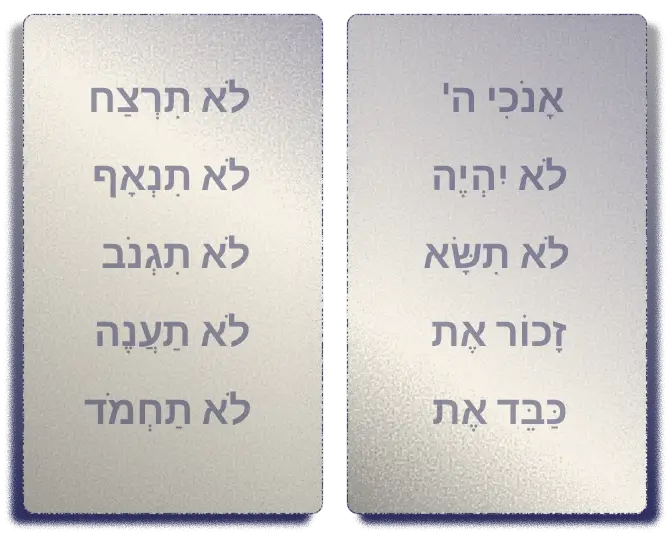
Not to murder

This page is incomplete.
Help complete the
Mitzvah Minute website.
This Mitzvah's Summary
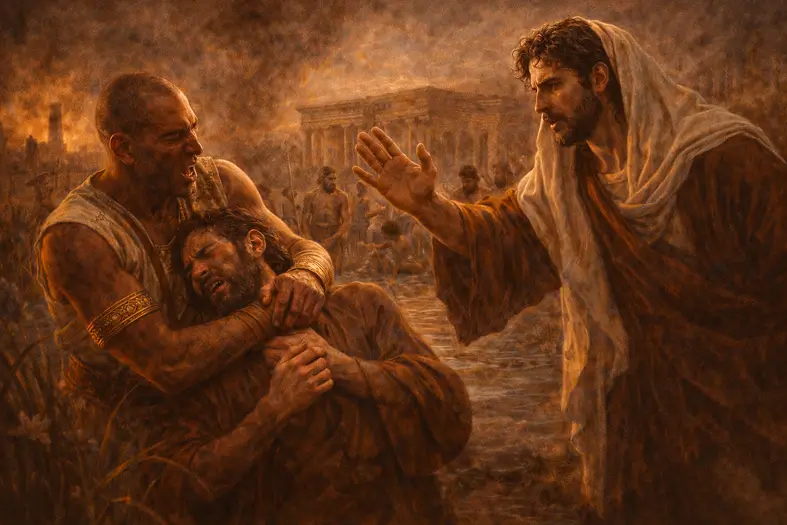
It is forbidden to intentionally take the life of an innocent human being.
This mitzvah prohibits murder in its most absolute form: the deliberate, unjust taking of human life. Unlike killing in war, execution by a court, or justified self-defense, רציחה refers specifically to criminal homicide. The Torah places this commandment at the heart of the Ten Commandments to declare that human life is inviolable because it bears the image of Hashem. Murder is not merely a crime against a person or society; it is an assault on Divine sovereignty itself. By forbidding murder absolutely, the Torah establishes life as sacred, non-negotiable, and beyond human ownership.
Commentaries
Rambam
- Source: Sefer HaMitzvos, Lo Ta’aseh 289; Hilchos Rotzeach u’Shmiras HaNefesh 1:1. Rambam defines murder as intentional killing without legal justification and rules it among the gravest sins in the Torah. Murder destroys not only a life but the moral fabric of society, and its punishment reflects the severity of violating the Divine image embedded in man.
Sefer HaChinuch
- Mitzvah 34. Chinuch explains that this mitzvah preserves the world itself, for civilization cannot exist where life is cheap. He emphasizes that Hashem, as Creator, alone has authority over life and death. When a human murders, he falsely claims ownership over what belongs only to Hashem.
Rashi / Ramban / Ibn Ezra / Sforno / Abarbanel / Midrashim
- Rashi explains that “לא תרצח” applies only to unlawful killing, excluding judicial execution and war.
- Ramban contrasts רציחה with killing permitted by Torah law, teaching that murder uniquely corrupts the soul and invites Divine judgment upon society.
- Ibn Ezra notes the brevity of the commandment, reflecting the absolute clarity of its prohibition — no elaboration is needed.
- Sforno teaches that murder negates man’s purpose, which is to perfect the world through moral choice.
- Abarbanel emphasizes that murder erodes trust, making social order impossible.
- Midrashim describe murder as the sin that cries out to Heaven, demanding response even generations later.
Talmud & Midrash
- Sanhedrin 57b establishes murder as prohibited to all humanity, one of the foundational laws binding the world.
- The Gemara teaches that one who murders destroys an entire world, because each human life contains infinite potential.
- Midrash Rabbah connects murder to spiritual exile — bloodshed drives Divine presence away.
Kuzari, Maharal, and Other Rishonim
- Kuzari frames the prohibition as recognition of Divine imprint in every human being, regardless of status or nation.
- Maharal explains that murder fractures creation itself; since life flows from Hashem, destroying life rejects the structure of reality.
- Other Rishonim highlight that murder differs from other sins because repentance cannot fully restore what was taken.
Shulchan Aruch & Halacha
- Hilchos Rotzeach codify distinctions between murder, manslaughter, and accidental death, underscoring that intent defines this prohibition.
- Halacha treats murder as unforgivable by human courts — even repentance does not erase liability without consequences.
Acharonim & Modern Torah Giants
- Chasam Sofer teaches that societies collapse not from external enemies but from internal devaluation of life.
- Rav Hirsch emphasizes that Torah morality begins with the sanctity of life — without it, no other mitzvah stands.
- Chazon Ish writes that cruelty begins when life becomes abstract rather than personal.
- Rav Kook explains that honoring life awakens compassion, unity, and spiritual sensitivity.
Chassidic & Mussar Classics
- Baal Shem Tov teaches that harming another life damages the soul’s connection to its Divine source.
- Tanya frames life as Divine energy expressed in physical form; murder extinguishes revealed G-dliness.
- Sfas Emes writes that reverence for life flows from awareness of Hashem’s constant presence.
- Ramchal explains that the righteous guard life instinctively, because holiness seeks preservation, not destruction.
Contrast with Mitzvah 489 — Not to stand idly by
- Mitzvah 482 forbids direct destruction of life.
- Mitzvah 489 forbids passive allowance of destruction.
Together they define obligations toward preserving life.
Parallel to Pikuach Nefesh
- This mitzvah grounds the principle that saving life overrides nearly all prohibitions.
- Life is not only protected from harm but prioritized above ritual law.
Applying this Mitzvah Today
Sanctity of Life in a Violent World
- Modern culture often desensitizes violence through media and rhetoric. This mitzvah demands resistance to any worldview that normalizes killing, whether through ideology, entertainment, or language that dehumanizes others.
Speech That Kills
- Chazal teach that humiliation and public shaming can destroy a person’s inner life. While not literal murder, these acts flow from the same root — treating life as disposable.
Medical and Ethical Boundaries
- Advances in medicine raise questions of life, death, and authority. This mitzvah anchors ethical decision-making by insisting that human life is not owned, engineered, or discarded at will.
Hatred and Dehumanization
- Murder begins long before violence — it begins when others are stripped of dignity. Guarding thought and speech protects life before it is threatened physically.
Awe Before Life
- Recognizing life as Divine creation cultivates restraint, humility, and reverence. The mitzvah trains the soul to pause before harming, judging, or dismissing another human being.
Notes on this Mitzvah's Fundamentals
Murder — רוֹצֵחַ
- Murder represents the most direct rebellion against the Divine order. Rambam teaches that human life is not merely valuable but belongs to Hashem, for man is created b’tzelem Elokim. To murder is therefore not only to destroy a body, but to erase a Divine imprint from the world. Unlike other sins, murder creates an absence that cannot be repaired — no repentance can return the life taken. This is why the Torah treats murder as uniquely destabilizing, capable of corrupting the land itself and driving away the Shechinah.
Justice — צֶדֶק
- Justice in Torah begins before the courtroom. While din addresses crime after the fact, this mitzvah asserts that justice requires a moral culture that protects life proactively. Ramban explains that a society that tolerates bloodshed — even indirectly — forfeits its claim to justice. Courts, laws, and punishments exist only because life is sacred; when life is cheapened, justice becomes performative rather than real.
Compassion — רַחֲמִים
- Torah compassion is rooted in recognition of Divine image, not emotional softness. Chazal teach that cruelty begins when one becomes indifferent to another’s existence. This mitzvah trains the heart to recoil from violence not because it is socially unacceptable, but because it violates Hashem’s mercy embedded in creation. True rachamim is expressed not only in kindness, but in the absolute refusal to destroy life.
Laws and Courts — דִּינִים
- Murder clarifies the purpose and limits of legal systems. Torah law treats murder as a crime beyond financial compensation or procedural leniency. The Mechilta teaches that no legal mechanism may trivialize bloodshed, because courts exist to serve life, not override it. This mitzvah anchors the entire judicial system in moral absolutes rather than utilitarian outcomes.
Community — קְהִלָּה
- A Torah community is defined by the safety of its members. Murder shatters communal trust, instilling fear where solidarity should exist. The Netziv explains that Jewish survival depends not only on belief, but on collective responsibility for life. When communities fail to guard the vulnerable, they betray their covenantal purpose and hollow out their spiritual core.
Between a Person and Their Fellow — בֵּין אָדָם לַחֲבֵרוֹ
- This mitzvah establishes the baseline for all interpersonal ethics. Respect, dignity, honesty, and compassion are meaningless if life itself is not protected absolutely. Chafetz Chaim notes that one who harms another’s life has rejected the very premise of brotherhood. Without this mitzvah, no obligation between people retains moral force.
Between a Person and G-d — בֵּין אָדָם לְמָקוֹם
- Murder is an act of defiance against Hashem’s sovereignty. Rambam frames it as a rejection of Divine ownership over creation. Preserving life, by contrast, affirms submission to Hashem’s will and recognition that humans are stewards, not masters, of existence. This mitzvah thus functions as an act of avodas Hashem through restraint.
Reverence — יִרְאַת שָׁמַיִם
- Fear of Heaven manifests not only in ritual observance, but in moral restraint. A person who truly lives before Hashem cannot treat another life as expendable. Chazal teach that one who fears Heaven fears spilling blood — even figuratively — because he knows that Hashem witnesses every act. This mitzvah converts awe into ethical responsibility.
Holiness — קְדֻשָּׁה
- Kedushah is expressed through preservation, not withdrawal. The Torah does not sanctify life by removing oneself from the world, but by guarding it within the world. By prohibiting murder absolutely, this mitzvah teaches that holiness is achieved when power is restrained and life is honored. A holy society is one in which violence is unthinkable, not merely illegal.
Faith — אֱמוּנָה
- Faith affirms that every human life carries purpose beyond what is visible. Murder denies this by asserting that one person may judge another’s existence meaningless. Emunah resists despair, utilitarian logic, and moral nihilism by insisting that Hashem’s intent governs every life. To preserve life is to trust that Hashem’s purposes exceed human calculation.
Core Beliefs — יְסוֹדוֹת הָאֱמוּנָה
- The prohibition of murder rests on foundational beliefs: that Hashem creates life, imbues it with meaning, and alone determines its end. Rambam places these principles at the heart of Torah faith. When a society abandons these beliefs, murder becomes conceivable; when they are upheld, life becomes inviolable.
Thought — מַחֲשָׁבָה
- Torah addresses murder at its earliest stage: the mind. Chazal teach that hatred, dehumanization, and contempt precede violence. By disciplining thought — refusing to reduce others to obstacles or threats — this mitzvah protects life long before physical harm occurs. Moral vigilance begins in cognition.









%201.webp)