Oppression by Paperwork: Pharaoh’s “Wisdom” and the Bureaucracy of Evil
Parshas Shemos introduces one of the Torah’s most unsettling villains—not a mad tyrant consumed by rage, but a ruler who governs through planning, caution, and “wisdom.”
Pharaoh does not erupt.
He calculates.
“הָבָה נִּתְחַכְּמָה לוֹ”
“Come, let us act wisely toward them.” (Shemos 1:10)
The Torah’s language is chilling. Pharaoh frames cruelty not as hatred, but as prudence. Oppression is not presented as violence—it is presented as policy.
Ramban sees here the Torah’s deepest warning: the most dangerous evil is not emotional excess, but organized normalcy.
Ramban notes that Pharaoh’s strategy unfolds in stages, each carefully designed to avoid moral shock.
First, population fear.
Then labor quotas.
Then gradual escalation.
Only later, open murder.
At every step, cruelty is disguised as necessity.
Ramban explains that Pharaoh understood something essential:
people resist brutality, but they adapt to systems.
Oppression survives not by spectacle, but by administration.
Violence provokes conscience.
Bureaucracy anesthetizes it.
When cruelty is:
no single individual feels responsible.
Ramban emphasizes that Pharaoh avoids sudden decrees precisely because shock awakens resistance. Instead, he builds a machine in which each person performs a task without confronting its moral end.
This is how murder becomes normalized long before it is named.
The Torah does not call Pharaoh foolish.
It calls him wise.
This is intentional.
Ramban explains that intelligence divorced from moral accountability becomes an amplifier of evil. Systems designed for efficiency can be repurposed for cruelty when conscience is removed from decision-making.
Pharaoh’s brilliance lies in making oppression feel reasonable.
That is the Torah’s most frightening insight.
Ramban’s insight explains why the Torah lingers on details that feel mundane:
These are not background details.
They are the mechanism of exile.
Evil succeeds when it no longer looks like evil.
"Geulah as Process, Not Event"
Redemption cannot merely rescue victims.
It must dismantle systems that make cruelty sustainable.
Parshas Shemos trains the reader to fear not only overt tyranny, but:
The Torah insists that moral clarity requires tracing outcomes back through layers of procedure.
Redemption begins when responsibility is reclaimed from systems.
Parshas Shemos teaches that the final barrier to redemption is not power—but plausibility.
As long as cruelty can be defended as reasonable, legal, or necessary, geulah cannot take hold.
Ramban reveals that Pharaoh’s greatest weapon was not violence, but administration.
And the Torah answers with its most enduring demand:
never allow wisdom to outpace conscience.
Redemption begins when systems are named for what they are—and dismantled, one layer at a time.
📖 Sources


Oppression by Paperwork: Pharaoh’s “Wisdom” and the Bureaucracy of Evil
Parshas Shemos introduces one of the Torah’s most unsettling villains—not a mad tyrant consumed by rage, but a ruler who governs through planning, caution, and “wisdom.”
Pharaoh does not erupt.
He calculates.
“הָבָה נִּתְחַכְּמָה לוֹ”
“Come, let us act wisely toward them.” (Shemos 1:10)
The Torah’s language is chilling. Pharaoh frames cruelty not as hatred, but as prudence. Oppression is not presented as violence—it is presented as policy.
Ramban sees here the Torah’s deepest warning: the most dangerous evil is not emotional excess, but organized normalcy.
Ramban notes that Pharaoh’s strategy unfolds in stages, each carefully designed to avoid moral shock.
First, population fear.
Then labor quotas.
Then gradual escalation.
Only later, open murder.
At every step, cruelty is disguised as necessity.
Ramban explains that Pharaoh understood something essential:
people resist brutality, but they adapt to systems.
Oppression survives not by spectacle, but by administration.
Violence provokes conscience.
Bureaucracy anesthetizes it.
When cruelty is:
no single individual feels responsible.
Ramban emphasizes that Pharaoh avoids sudden decrees precisely because shock awakens resistance. Instead, he builds a machine in which each person performs a task without confronting its moral end.
This is how murder becomes normalized long before it is named.
The Torah does not call Pharaoh foolish.
It calls him wise.
This is intentional.
Ramban explains that intelligence divorced from moral accountability becomes an amplifier of evil. Systems designed for efficiency can be repurposed for cruelty when conscience is removed from decision-making.
Pharaoh’s brilliance lies in making oppression feel reasonable.
That is the Torah’s most frightening insight.
Ramban’s insight explains why the Torah lingers on details that feel mundane:
These are not background details.
They are the mechanism of exile.
Evil succeeds when it no longer looks like evil.
"Geulah as Process, Not Event"
Redemption cannot merely rescue victims.
It must dismantle systems that make cruelty sustainable.
Parshas Shemos trains the reader to fear not only overt tyranny, but:
The Torah insists that moral clarity requires tracing outcomes back through layers of procedure.
Redemption begins when responsibility is reclaimed from systems.
Parshas Shemos teaches that the final barrier to redemption is not power—but plausibility.
As long as cruelty can be defended as reasonable, legal, or necessary, geulah cannot take hold.
Ramban reveals that Pharaoh’s greatest weapon was not violence, but administration.
And the Torah answers with its most enduring demand:
never allow wisdom to outpace conscience.
Redemption begins when systems are named for what they are—and dismantled, one layer at a time.
📖 Sources


“Geulah as Process, Not Event — Part III
Oppression by Paperwork: Pharaoh’s ‘Wisdom’ and the Bureaucracy of Evil”
וְהָלַכְתָּ בִדְרָכָיו
Ramban’s reading of Pharaoh’s “wisdom” exposes the danger of intelligence severed from conscience. Emulating Hashem’s ways requires integrating power with moral accountability—ensuring that systems, policies, and efficiencies remain subordinate to justice and compassion. Parshas Shemos teaches that walking in Hashem’s ways means refusing administrative distance from harm and insisting that responsibility remains traceable at every level of action.
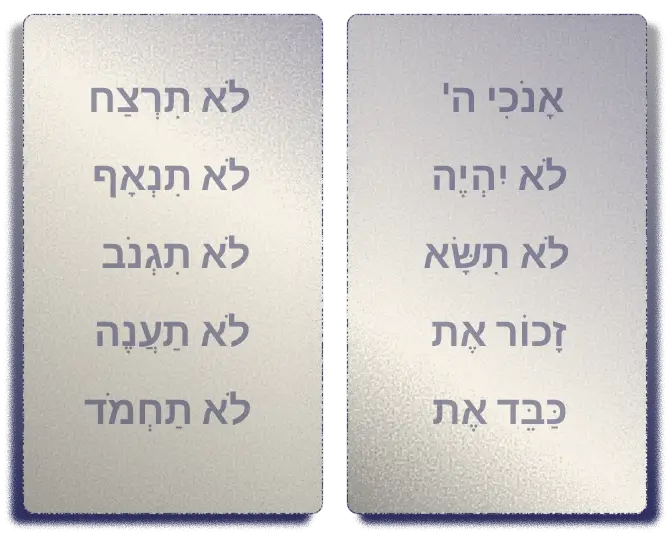
לֹא תִרְצָח
Parshas Shemos presents murder not only as an act, but as an outcome produced by systems. Pharaoh’s incremental policies normalize cruelty long before infanticide is declared openly. Ramban shows that the Torah condemns the bureaucratic pathways that make killing plausible, legal, and impersonal. The issur of murder therefore includes rejecting structures that predictably culminate in bloodshed, even when no single agent “pulls the trigger.”
לֹא תַעֲמֹד עַל דַּם רֵעֶךָ
Bureaucracy tempts moral passivity by fragmenting responsibility. Parshas Shemos teaches that standing idly by includes participation in systems that enable harm through procedure, delay, or diffusion of blame. Ramban’s analysis reframes this mitzvah as a demand to interrupt not only overt violence, but also the administrative processes that place lives at risk while shielding individuals from accountability.
אֶת־ה׳ אֱלֹקֶיךָ תִּירָא
Fear of Hashem stands as the counterweight to “wise” cruelty. Where Pharaoh calculates advantage, yiras Shamayim restores limits. Parshas Shemos teaches that reverence for Hashem restrains the misuse of intelligence and power, compelling leaders and societies to preserve moral clarity even when efficiency, security, or order argue otherwise.


“Geulah as Process, Not Event — Part III
Oppression by Paperwork: Pharaoh’s ‘Wisdom’ and the Bureaucracy of Evil”
Parshas Shemos presents oppression not as sudden violence, but as a carefully engineered system. Pharaoh’s opening strategy—“הָבָה נִּתְחַכְּמָה לוֹ”—frames cruelty as wisdom, policy, and necessity. Ramban explains that Pharaoh deliberately avoids overt brutality at first, opting instead for incremental measures: labor quotas, supervisors, and administrative control. Each stage distances individuals from responsibility, allowing cruelty to be normalized without provoking moral resistance.
The Torah lingers on procedural details to reveal the true architecture of exile. Evil succeeds not through emotional excess, but through systems that disguise harm as order. By the time infanticide becomes explicit, conscience has already been dulled by bureaucracy. Parshas Shemos thus teaches that redemption requires more than escape from oppression; it demands exposure and dismantling of the systems that make cruelty appear reasonable. Only when moral responsibility is restored at every level can geulah take root and endure.

Dive into mitzvos, tefillah, and Torah study—each section curated to help you learn, reflect, and live with intention. New insights are added regularly, creating an evolving space for spiritual growth.

Explore the 613 mitzvos and uncover the meaning behind each one. Discover practical ways to integrate them into your daily life with insights, sources, and guided reflection.

Learn the structure, depth, and spiritual intent behind Jewish prayer. Dive into morning blessings, Shema, Amidah, and more—with tools to enrich your daily connection.

Each week’s parsha offers timeless wisdom and modern relevance. Explore summaries, key themes, and mitzvah connections to deepen your understanding of the Torah cycle.