3.1 — The Danger of Looking, Boundaries, Holiness, & Freedom
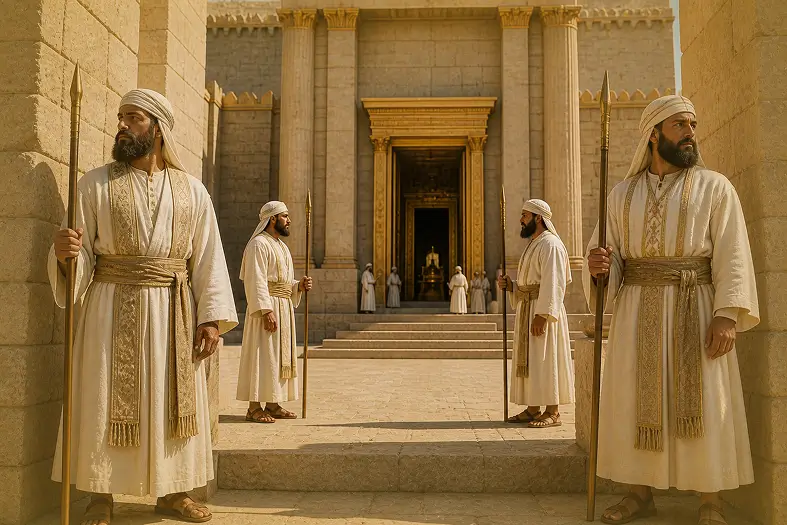
After the camp of Klal Yisrael is counted and arranged, the Torah brings us closer to the Mishkan — Sanctuary. It moves from the outer order of the nation to the inner service of Bnei Kehas, who carry the כלי הקודש — sacred vessels.
Their role is the most honored Levitic task. They carry the Aron — Ark, the Shulchan — Table, the Menorah — Candelabrum, and the inner vessels. Yet the Torah surrounds their closeness with sharp warnings. Aharon and his sons must first cover the vessels. Only afterward may Bnei Kehas enter to carry. They may not touch the holy. They may not watch the covering. The Torah says, ולא יבאו לראות כבלע את הקדש ומתו — “they shall not come to see when the holy is covered, lest they die.”
This is not distance from holiness. It is the right kind of closeness to holiness.
Rashi explains that Bnei Kehas may not see the vessels while they are being placed into their נרתק — wrapping. Their honor depends on exact obedience. They are trusted with the holiest burden, but trust does not remove boundaries. The closer the service, the greater the care.
Ramban deepens the point. The coverings are not only for transport. They express כבוד — honor, הסתר — concealment, and יראה — awe. The Aron receives a special covering of תכלת — blue wool because its kedushah — holiness is higher. Hiddenness is not weakness. It is a way of saying that some holiness is too deep to be handled casually.
Sforno makes the danger practical. Even holy enthusiasm can become destructive without assignment. A person may want to serve Hashem, but desire alone is not yet avodah — service. The value of the work comes from being מצווה ועושה — commanded and then acting. Without order, eagerness can become rushing, pushing, competition, and קלות ראש — careless lightness before the sacred.
Abarbanel gives the principle its sharp phrase: כבוד אלקים הסתר דבר — “the honor of G-d is to conceal a matter.” What is most sacred is not always meant to be exposed. The covered vessels teach הצנע לכת עם אלקיך — walking modestly with Hashem. A person can be close to Hashem without turning closeness into display.
This is deeply needed in modern life. People often assume that closeness means total visibility. What matters must be shared, shown, explained, photographed, analyzed, and made available. Seeing becomes a kind of possession. Looking can become control. Curiosity can become consumption.
Bamidbar teaches a different language. The holiest things are carried only when covered. Their hiddenness does not lessen their power. It protects their dignity.
Rambam gives this idea its form. ‘עֲבוֹדַת ה — Service of Hashem must be governed by halachah — Torah law, not personal impulse. Freedom is not the right to approach anything however one feels. True freedom is the ability to serve Hashem through דין — law, גבול — boundary, timing, and role. Boundaries do not block holy life. They make holy life livable.
The Sfas Emes adds the inner dimension. קדושה — holiness has hidden and revealed sides. A person’s revealed self may not be ready for everything his נשמה — soul longs to touch. רצון — holy desire must be joined with ביטול — self-nullification. Sometimes the deepest way to come close is to wait, lower the eyes, and receive holiness as a gift rather than seize it as an object.
Bnei Kehas teach that a life without boundaries eventually cheapens what it loves. A life shaped by יראה — awe can carry holiness without reducing it. The covered Aron teaches that the most precious things are not made smaller by being hidden. They become carryable.
The struggle of this today is emotional. People want access, clarity, experience, and closeness. That desire can be beautiful. But when it loses יראה — awe, it can turn even holy things into something casual.
A person preserves depth by learning that not every feeling needs public expression, not every question needs immediate entry, and not every sacred moment should be exposed. Some parts of ‘עֲבוֹדַת ה — service of Hashem grow best with modesty, privacy, patience, and restraint.
This is not coldness. It is protection. The heart becomes freer when it no longer needs to grab every experience. It can carry holiness quietly, because it has learned that hiddenness can also be כבוד — honor.
📖 Sources


3.1 — The Danger of Looking, Boundaries, Holiness, & Freedom
After the camp of Klal Yisrael is counted and arranged, the Torah brings us closer to the Mishkan — Sanctuary. It moves from the outer order of the nation to the inner service of Bnei Kehas, who carry the כלי הקודש — sacred vessels.
Their role is the most honored Levitic task. They carry the Aron — Ark, the Shulchan — Table, the Menorah — Candelabrum, and the inner vessels. Yet the Torah surrounds their closeness with sharp warnings. Aharon and his sons must first cover the vessels. Only afterward may Bnei Kehas enter to carry. They may not touch the holy. They may not watch the covering. The Torah says, ולא יבאו לראות כבלע את הקדש ומתו — “they shall not come to see when the holy is covered, lest they die.”
This is not distance from holiness. It is the right kind of closeness to holiness.
Rashi explains that Bnei Kehas may not see the vessels while they are being placed into their נרתק — wrapping. Their honor depends on exact obedience. They are trusted with the holiest burden, but trust does not remove boundaries. The closer the service, the greater the care.
Ramban deepens the point. The coverings are not only for transport. They express כבוד — honor, הסתר — concealment, and יראה — awe. The Aron receives a special covering of תכלת — blue wool because its kedushah — holiness is higher. Hiddenness is not weakness. It is a way of saying that some holiness is too deep to be handled casually.
Sforno makes the danger practical. Even holy enthusiasm can become destructive without assignment. A person may want to serve Hashem, but desire alone is not yet avodah — service. The value of the work comes from being מצווה ועושה — commanded and then acting. Without order, eagerness can become rushing, pushing, competition, and קלות ראש — careless lightness before the sacred.
Abarbanel gives the principle its sharp phrase: כבוד אלקים הסתר דבר — “the honor of G-d is to conceal a matter.” What is most sacred is not always meant to be exposed. The covered vessels teach הצנע לכת עם אלקיך — walking modestly with Hashem. A person can be close to Hashem without turning closeness into display.
This is deeply needed in modern life. People often assume that closeness means total visibility. What matters must be shared, shown, explained, photographed, analyzed, and made available. Seeing becomes a kind of possession. Looking can become control. Curiosity can become consumption.
Bamidbar teaches a different language. The holiest things are carried only when covered. Their hiddenness does not lessen their power. It protects their dignity.
Rambam gives this idea its form. ‘עֲבוֹדַת ה — Service of Hashem must be governed by halachah — Torah law, not personal impulse. Freedom is not the right to approach anything however one feels. True freedom is the ability to serve Hashem through דין — law, גבול — boundary, timing, and role. Boundaries do not block holy life. They make holy life livable.
The Sfas Emes adds the inner dimension. קדושה — holiness has hidden and revealed sides. A person’s revealed self may not be ready for everything his נשמה — soul longs to touch. רצון — holy desire must be joined with ביטול — self-nullification. Sometimes the deepest way to come close is to wait, lower the eyes, and receive holiness as a gift rather than seize it as an object.
Bnei Kehas teach that a life without boundaries eventually cheapens what it loves. A life shaped by יראה — awe can carry holiness without reducing it. The covered Aron teaches that the most precious things are not made smaller by being hidden. They become carryable.
The struggle of this today is emotional. People want access, clarity, experience, and closeness. That desire can be beautiful. But when it loses יראה — awe, it can turn even holy things into something casual.
A person preserves depth by learning that not every feeling needs public expression, not every question needs immediate entry, and not every sacred moment should be exposed. Some parts of ‘עֲבוֹדַת ה — service of Hashem grow best with modesty, privacy, patience, and restraint.
This is not coldness. It is protection. The heart becomes freer when it no longer needs to grab every experience. It can carry holiness quietly, because it has learned that hiddenness can also be כבוד — honor.
📖 Sources


“The Danger of Looking, Boundaries, Holiness, & Freedom”
וּמִקְדָּשִׁי תִּירָאוּ
The covered כלי הקודש — sacred vessels teach מורא מקדש — reverence for the Sanctuary. Bnei Kehas stand closest to the sacred objects, yet they must wait until the Kohanim cover them. Reverence is not created by distance alone. It is created by approaching holiness through humility, restraint, and awe.
כִּי עֲבֹדַת הַקֹּדֶשׁ עֲלֵהֶם בַּכָּתֵף יִשָּׂאוּ
Bnei Kehas carry the holiest vessels, especially the Aron — Ark, but only through commanded service. Their task shows that sacred responsibility is not self-chosen access. The Aron may be carried, but not possessed. Its holiness is borne through obedience, covering, and exact assignment.
וְעָבַד הַלֵּוִי הוּא אֶת עֲבֹדַת אֹהֶל מוֹעֵד
The Levi’im serve through defined avodah — sacred service, not personal impulse. Bnei Kehas reveal the dignity of assigned work. Their closeness to the vessels becomes holy because it follows Hashem’s order, through proper timing, preparation, and boundaries.
אַךְ אֶל כְּלֵי הַקֹּדֶשׁ וְאֶל הַמִּזְבֵּחַ לֹא יִקְרָבוּ
This mitzvah expresses the essay’s core: holy service requires גבול — boundary. Bnei Kehas may carry only after the Kohanim cover the vessels. They may not take another role, even from holy enthusiasm. The separation between Kehunah — priesthood and Levi service protects both the sacred vessels and the servants who carry them.
וְזָר לֹא יִקְרַב אֲלֵיכֶם
The warning against unauthorized service shows that access to holiness is governed by command. A person does not become closer to Hashem by entering sacred service on his own terms. The Mishkan teaches that kedushah — holiness is approached through Divine appointment, reverence, and restraint.


“The Danger of Looking, Boundaries, Holiness, & Freedom”
Parshas Bamidbar describes the service of Bnei Kehas, who carry the כלי הקודש — sacred vessels only after Aharon and his sons cover them. ואחרי כן יבאו בני קהת לשאת — “afterward Bnei Kehas shall come to carry” teaches ordered access. ולא יגעו אל הקדש ומתו — “they shall not touch the holy, lest they die” establishes that closeness requires restraint. ולא יבאו לראות כבלע את הקדש ומתו — “they shall not come to see when the holy is covered, lest they die” reveals that hiddenness itself preserves כבוד — honor and יראה — awe before the sacred.

Dive into mitzvos, tefillah, and Torah study—each section curated to help you learn, reflect, and live with intention. New insights are added regularly, creating an evolving space for spiritual growth.

Explore the 613 mitzvos and uncover the meaning behind each one. Discover practical ways to integrate them into your daily life with insights, sources, and guided reflection.

Learn the structure, depth, and spiritual intent behind Jewish prayer. Dive into morning blessings, Shema, Amidah, and more—with tools to enrich your daily connection.

Each week’s parsha offers timeless wisdom and modern relevance. Explore summaries, key themes, and mitzvah connections to deepen your understanding of the Torah cycle.