3.2 — Levi: Loyalty, Courage, Responsibility, & Holy Anger
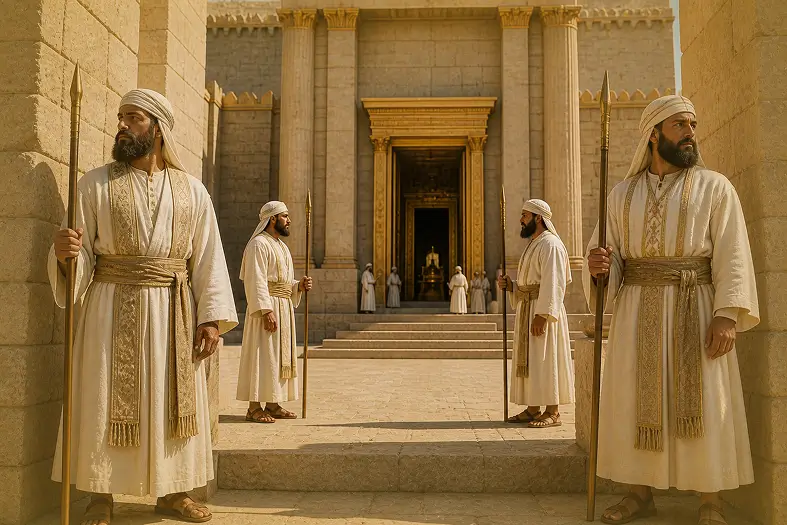
The Mishkan — Sanctuary stands at the center of the camp, but holiness does not protect itself. It needs people who will carry it, guard it, serve it, and stand for it when others step back. That is the role of Shevet Levi.
The Torah says, ואתה הפקד את הלוים על משכן העדת — “You shall appoint the Levi’im over the Mishkan of Testimony.” Levi is not counted with the military tribes. Its mission is not מלחמה — war or נחלה — inheritance in the land. Levi’s inheritance is avodah — sacred service. They encamp around the Mishkan, carry it when the nation travels, and guard it when the nation rests.
Rashi frames Levi as ליגיון של מלך — the King’s legion. They belong to the royal household of Hashem. This is not a title of pride. It is a title of service. The closer one stands to the King, the more carefully he must live.
Ramban deepens this through שמירה — guarding. Guarding the Mishkan is not ordinary security. A king’s palace is honored by the guards who stand around it. Levi’s presence declares that the Mishkan is the palace of Hashem. Their watchfulness is itself כבוד — honor.
But Levi’s closeness began with courage. After the חטא העגל — sin of the Golden Calf, Moshe cried, מי לה׳ אלי — “Who is for Hashem, to me.” The Sfas Emes teaches that Levi’s greatness was not only that they avoided the sin. Their greatness was that they stepped forward. They had חיזוק — inner firmness. They could say publicly, “I belong to Hashem.”
There is a difference between private innocence and active loyalty. A person can avoid wrong and still remain silent when truth is mocked. Levi teaches that covenant sometimes demands more. It asks a person to stand up, not from anger of ego, but from loyalty to Hashem.
This is the careful place of קנאות — zeal for Hashem. Rav Avigdor Miller helps clarify its danger and greatness. Holy anger is not temper, harshness, or personal frustration. It is the pain of seeing Hashem’s honor lowered. It must be disciplined by Torah, humility, and command. Anger that serves the self destroys. Firmness that serves Hashem protects.
That courage became halachic responsibility. The בכורות — firstborn were originally sanctified through Yetzi’as Mitzrayim — the Exodus from Egypt, when Hashem struck the firstborn of Egypt and spared the firstborn of Yisrael. After the עגל — Golden Calf, that sacred role passed to Levi. Abarbanel explains that Levi’s loyalty was rewarded with the work of the Mishkan. Their service became organized through משא — carrying, שמירה — guarding, and שירה — song.
Levi’s mission is therefore not one-dimensional. They carry holiness through the wilderness. They guard holiness from becoming casual. They give voice to holiness through song. Their closeness is practical, physical, musical, royal, and deeply responsible.
Rambam gives this courage its needed boundary. Sacred responsibility must be governed by halachah — Torah law. Levi cannot simply claim closeness and act however it wishes. The same tribe that steps forward with fire must serve through appointment, training, duty, and restraint. Loyalty without command becomes danger. Command without loyalty becomes cold. Levi holds both together.
The Torah also reminds us that closeness is not easy. Nadav and Avihu died לפני ה׳ — before Hashem. Elazar and Isamar continued serving על פני אהרן אביהם — before Aharon their father. The family of Kehunah — priesthood continued avodah in the presence of pain. Service near holiness carries weight.
Levi is not the image of religious privilege. Levi is the image of faithful responsibility. It is the soul that refuses to be passive before holiness. It stands close, guards carefully, carries humbly, sings with awe, and answers when Hashem’s honor calls.
The challenge here is moral courage. Many people want to be good without being tested publicly. They want values, but not conflict. They want peace, but sometimes confuse peace with silence.
Levi teaches that a Torah life needs loyal firmness. A person should not be harsh, reactive, or eager for argument. But he also cannot become neutral when the sacred center is being weakened. There are moments when love for Hashem must become visible through responsibility.
That may mean protecting time for Torah, guarding standards in the home, refusing mockery of holy things, or standing with dignity when Torah values feel unpopular. The goal is not anger. The goal is loyalty. Holy firmness is strongest when it is quiet, humble, and completely tied to ‘עֲבוֹדַת ה — service of Hashem.
📖 Sources


3.2 — Levi: Loyalty, Courage, Responsibility, & Holy Anger
The Mishkan — Sanctuary stands at the center of the camp, but holiness does not protect itself. It needs people who will carry it, guard it, serve it, and stand for it when others step back. That is the role of Shevet Levi.
The Torah says, ואתה הפקד את הלוים על משכן העדת — “You shall appoint the Levi’im over the Mishkan of Testimony.” Levi is not counted with the military tribes. Its mission is not מלחמה — war or נחלה — inheritance in the land. Levi’s inheritance is avodah — sacred service. They encamp around the Mishkan, carry it when the nation travels, and guard it when the nation rests.
Rashi frames Levi as ליגיון של מלך — the King’s legion. They belong to the royal household of Hashem. This is not a title of pride. It is a title of service. The closer one stands to the King, the more carefully he must live.
Ramban deepens this through שמירה — guarding. Guarding the Mishkan is not ordinary security. A king’s palace is honored by the guards who stand around it. Levi’s presence declares that the Mishkan is the palace of Hashem. Their watchfulness is itself כבוד — honor.
But Levi’s closeness began with courage. After the חטא העגל — sin of the Golden Calf, Moshe cried, מי לה׳ אלי — “Who is for Hashem, to me.” The Sfas Emes teaches that Levi’s greatness was not only that they avoided the sin. Their greatness was that they stepped forward. They had חיזוק — inner firmness. They could say publicly, “I belong to Hashem.”
There is a difference between private innocence and active loyalty. A person can avoid wrong and still remain silent when truth is mocked. Levi teaches that covenant sometimes demands more. It asks a person to stand up, not from anger of ego, but from loyalty to Hashem.
This is the careful place of קנאות — zeal for Hashem. Rav Avigdor Miller helps clarify its danger and greatness. Holy anger is not temper, harshness, or personal frustration. It is the pain of seeing Hashem’s honor lowered. It must be disciplined by Torah, humility, and command. Anger that serves the self destroys. Firmness that serves Hashem protects.
That courage became halachic responsibility. The בכורות — firstborn were originally sanctified through Yetzi’as Mitzrayim — the Exodus from Egypt, when Hashem struck the firstborn of Egypt and spared the firstborn of Yisrael. After the עגל — Golden Calf, that sacred role passed to Levi. Abarbanel explains that Levi’s loyalty was rewarded with the work of the Mishkan. Their service became organized through משא — carrying, שמירה — guarding, and שירה — song.
Levi’s mission is therefore not one-dimensional. They carry holiness through the wilderness. They guard holiness from becoming casual. They give voice to holiness through song. Their closeness is practical, physical, musical, royal, and deeply responsible.
Rambam gives this courage its needed boundary. Sacred responsibility must be governed by halachah — Torah law. Levi cannot simply claim closeness and act however it wishes. The same tribe that steps forward with fire must serve through appointment, training, duty, and restraint. Loyalty without command becomes danger. Command without loyalty becomes cold. Levi holds both together.
The Torah also reminds us that closeness is not easy. Nadav and Avihu died לפני ה׳ — before Hashem. Elazar and Isamar continued serving על פני אהרן אביהם — before Aharon their father. The family of Kehunah — priesthood continued avodah in the presence of pain. Service near holiness carries weight.
Levi is not the image of religious privilege. Levi is the image of faithful responsibility. It is the soul that refuses to be passive before holiness. It stands close, guards carefully, carries humbly, sings with awe, and answers when Hashem’s honor calls.
The challenge here is moral courage. Many people want to be good without being tested publicly. They want values, but not conflict. They want peace, but sometimes confuse peace with silence.
Levi teaches that a Torah life needs loyal firmness. A person should not be harsh, reactive, or eager for argument. But he also cannot become neutral when the sacred center is being weakened. There are moments when love for Hashem must become visible through responsibility.
That may mean protecting time for Torah, guarding standards in the home, refusing mockery of holy things, or standing with dignity when Torah values feel unpopular. The goal is not anger. The goal is loyalty. Holy firmness is strongest when it is quiet, humble, and completely tied to ‘עֲבוֹדַת ה — service of Hashem.
📖 Sources


“Levi: Loyalty, Courage, Responsibility, & Holy Anger”
וְשָׁמְרוּ אֶת מִשְׁמֶרֶת אֹהֶל מוֹעֵד
Levi’s role around the Mishkan reveals that שמירה — guarding is itself avodah — sacred service. The guards around the King’s palace express כבוד — honor for Hashem’s Presence. Holiness is not protected by feeling alone. It requires people appointed to guard its dignity with faithfulness and awe.
וּשְׁמַרְתֶּם אֵת מִשְׁמֶרֶת הַקֹּדֶשׁ
The warning not to leave the Mikdash unguarded shows that sacred responsibility cannot be passive. Levi teaches that holiness needs constant care. A Jewish community cannot only admire its center; it must protect it through watchfulness, order, and loyal responsibility.
וְעָבַד הַלֵּוִי הוּא אֶת עֲבֹדַת אֹהֶל מוֹעֵד
The Levi’im serve through defined avodah — sacred service: משא — carrying, שמירה — guarding, and שירה — song. Their closeness to Hashem becomes real through work. This mitzvah shows that spiritual identity must become disciplined action, not only emotion or inspiration.
אַךְ אֶל כְּלֵי הַקֹּדֶשׁ וְאֶל הַמִּזְבֵּחַ לֹא יִקְרָבוּ
Levi’s courage is powerful because it remains within command. Even a Levi may not seize another sacred role. This mitzvah protects the essay’s central balance: loyalty must be strong, but never self-invented. Holy fire must remain governed by halachah — Torah law.
פָּדֹה תִפְדֶּה אֵת בְּכוֹר הָאָדָם
The Levi’im replace the בכורות — firstborn after the חטא העגל — sin of the Golden Calf, while the extra firstborn are redeemed through פדיון — redemption. This mitzvah preserves the memory of transferred responsibility. Sacred opportunity can be lost, repaired, and restructured through Hashem’s command.


“Levi: Loyalty, Courage, Responsibility, & Holy Anger”
Parshas Bamidbar separates Shevet Levi from the general census because Levi’s mission is avodah — sacred service rather than military counting. ואתה הפקד את הלוים על משכן העדת — “You shall appoint the Levi’im over the Mishkan of Testimony” establishes Levi as the tribe assigned to carry, guard, and serve the Mishkan. ואני הנה לקחתי את הלוים מתוך בני ישראל תחת כל בכור — “I have taken the Levi’im from among Bnei Yisrael in place of every firstborn” connects Levi’s role to the transfer from the בכורות — firstborn, making loyalty into a permanent structure of sacred responsibility.

Dive into mitzvos, tefillah, and Torah study—each section curated to help you learn, reflect, and live with intention. New insights are added regularly, creating an evolving space for spiritual growth.

Explore the 613 mitzvos and uncover the meaning behind each one. Discover practical ways to integrate them into your daily life with insights, sources, and guided reflection.

Learn the structure, depth, and spiritual intent behind Jewish prayer. Dive into morning blessings, Shema, Amidah, and more—with tools to enrich your daily connection.

Each week’s parsha offers timeless wisdom and modern relevance. Explore summaries, key themes, and mitzvah connections to deepen your understanding of the Torah cycle.