5.2 — Rav Avigdor Miller: Emunah as Trained Thinking
Rav Avigdor Miller repeatedly insists on a definition of emunah that is bracingly demanding. Emunah is not optimism, inspiration, or emotional reassurance. It is trained thinking—the disciplined habit of interpreting reality through the lens of Hashem’s presence and purpose.
Parshas Beshalach is the proving ground for this definition. Miracles abound, yet the Torah immediately places the people in situations where miracles alone are insufficient. Hunger follows redemption. War follows song. Leadership is tested not by spectacle, but by endurance. Rav Miller reads these transitions as deliberate training: Hashem is forming minds, not moods.
Rav Miller emphasizes that feelings are unstable. They surge during miracles and evaporate under pressure. Thinking, by contrast, can be trained to persist.
This is why Beshalach moves so quickly from Shirat HaYam to complaint, from exaltation to fear. The Torah is not exposing failure; it is exposing the inadequacy of emotion-driven faith. Emunah that depends on inspiration collapses when circumstances shift.
Rav Miller teaches that the task of a Jew is to think emunah until it becomes reflexive—until the mind instinctively interprets events as purposeful, guided, and accountable to Hashem.
For Rav Miller, Amalek represents the opposite of trained emunah. Amalek does not argue theology; he empties events of meaning. Miracles become coincidence. Fatigue becomes excuse. Fear becomes justification.
This is why Amalek attacks after miracles. When people stop thinking and begin reacting, they are vulnerable. Cynicism enters where disciplined thought is absent.
The war with Amalek is therefore a mental war. Weapons matter, but orientation matters more. Victory depends on whether the people maintain clarity about who governs outcomes—even while exerting full human effort.
Rav Miller’s approach reframes leadership entirely. Leadership is not first about commanding others; it is about governing one’s own thought.
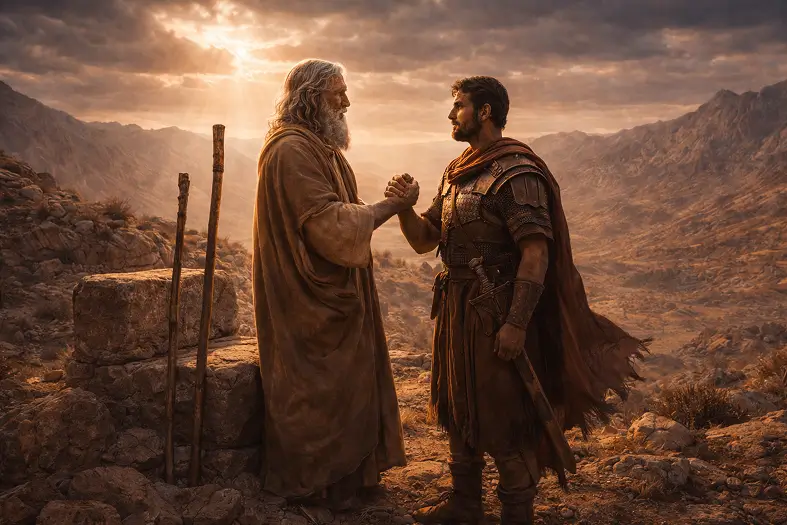
Moshe’s raised hands, Yehoshua’s endurance, and the people’s fluctuating confidence all point to the same truth: the battlefield is secondary to consciousness. Leaders who panic inwardly transmit instability outward. Leaders who maintain trained emunah stabilize others even when circumstances are dire.
This is why Rav Miller emphasizes repetition, verbalization, and deliberate reflection. Emunah must be practiced daily, not accessed occasionally.
Beshalach teaches that emunah cannot be trained only in emergencies. The manna, Shabbos, and daily dependence all serve the same function as Rav Miller’s method: forming habits of thought.
When a person learns to think:
…then crisis does not shatter faith; it activates it.
This is leadership at its deepest level: calm cognition under pressure.
Rav Miller is careful to strip emunah of fantasy. Trained thinking does not deny danger, difficulty, or human responsibility. It insists that responsibility exists within Divine order, not instead of it.
Beshalach models this balance perfectly. Yehoshua fights. Moshe prays. The people act. Hashem governs. No layer replaces another.
Emunah is not escape from reality; it is clarity within it.
Untrained minds react. Trained minds orient.
Rav Miller teaches that most spiritual failure comes not from rebellion, but from mental drift—forgetting to think about Hashem consistently. Amalek thrives in that drift. Covenant survives where thought is guarded.
This reframes the work of emunah as daily leadership of the self.
Parshas Beshalach does not seek believers who are moved; it seeks believers who are steady. Rav Avigdor Miller’s insistence on emunah as trained thinking reveals why.
Miracles inspire. Discipline endures.
When emunah is practiced as cognition—rehearsed, repeated, and reinforced—it becomes a stabilizing force capable of carrying responsibility through uncertainty. This is the inner leadership that sustains covenant long after miracles fade.
In the Torah’s vision, the strongest leaders are not those who feel the most—but those who think the clearest, even when the pressure is greatest.
📖 Sources


5.2 — Rav Avigdor Miller: Emunah as Trained Thinking
Rav Avigdor Miller repeatedly insists on a definition of emunah that is bracingly demanding. Emunah is not optimism, inspiration, or emotional reassurance. It is trained thinking—the disciplined habit of interpreting reality through the lens of Hashem’s presence and purpose.
Parshas Beshalach is the proving ground for this definition. Miracles abound, yet the Torah immediately places the people in situations where miracles alone are insufficient. Hunger follows redemption. War follows song. Leadership is tested not by spectacle, but by endurance. Rav Miller reads these transitions as deliberate training: Hashem is forming minds, not moods.
Rav Miller emphasizes that feelings are unstable. They surge during miracles and evaporate under pressure. Thinking, by contrast, can be trained to persist.
This is why Beshalach moves so quickly from Shirat HaYam to complaint, from exaltation to fear. The Torah is not exposing failure; it is exposing the inadequacy of emotion-driven faith. Emunah that depends on inspiration collapses when circumstances shift.
Rav Miller teaches that the task of a Jew is to think emunah until it becomes reflexive—until the mind instinctively interprets events as purposeful, guided, and accountable to Hashem.
For Rav Miller, Amalek represents the opposite of trained emunah. Amalek does not argue theology; he empties events of meaning. Miracles become coincidence. Fatigue becomes excuse. Fear becomes justification.
This is why Amalek attacks after miracles. When people stop thinking and begin reacting, they are vulnerable. Cynicism enters where disciplined thought is absent.
The war with Amalek is therefore a mental war. Weapons matter, but orientation matters more. Victory depends on whether the people maintain clarity about who governs outcomes—even while exerting full human effort.
Rav Miller’s approach reframes leadership entirely. Leadership is not first about commanding others; it is about governing one’s own thought.
Moshe’s raised hands, Yehoshua’s endurance, and the people’s fluctuating confidence all point to the same truth: the battlefield is secondary to consciousness. Leaders who panic inwardly transmit instability outward. Leaders who maintain trained emunah stabilize others even when circumstances are dire.
This is why Rav Miller emphasizes repetition, verbalization, and deliberate reflection. Emunah must be practiced daily, not accessed occasionally.
Beshalach teaches that emunah cannot be trained only in emergencies. The manna, Shabbos, and daily dependence all serve the same function as Rav Miller’s method: forming habits of thought.
When a person learns to think:
…then crisis does not shatter faith; it activates it.
This is leadership at its deepest level: calm cognition under pressure.
Rav Miller is careful to strip emunah of fantasy. Trained thinking does not deny danger, difficulty, or human responsibility. It insists that responsibility exists within Divine order, not instead of it.
Beshalach models this balance perfectly. Yehoshua fights. Moshe prays. The people act. Hashem governs. No layer replaces another.
Emunah is not escape from reality; it is clarity within it.
Untrained minds react. Trained minds orient.
Rav Miller teaches that most spiritual failure comes not from rebellion, but from mental drift—forgetting to think about Hashem consistently. Amalek thrives in that drift. Covenant survives where thought is guarded.
This reframes the work of emunah as daily leadership of the self.
Parshas Beshalach does not seek believers who are moved; it seeks believers who are steady. Rav Avigdor Miller’s insistence on emunah as trained thinking reveals why.
Miracles inspire. Discipline endures.
When emunah is practiced as cognition—rehearsed, repeated, and reinforced—it becomes a stabilizing force capable of carrying responsibility through uncertainty. This is the inner leadership that sustains covenant long after miracles fade.
In the Torah’s vision, the strongest leaders are not those who feel the most—but those who think the clearest, even when the pressure is greatest.
📖 Sources


Rav Avigdor Miller: Emunah as Trained Thinking
(Shemos 20:2)
Rav Miller emphasizes that knowing Hashem is not a one-time belief but an active mental state. Emunah as trained thinking fulfills this mitzvah by repeatedly interpreting reality as governed by Divine purpose rather than chance.
(Devarim 10:20)
Yiras Shamayim, in Rav Miller’s view, is sustained awareness of consequence and accountability. Trained emunah guards against complacency by revealed fear through thoughtful recognition of Hashem’s presence in daily events.
(Devarim 28:9)
Hashem governs the world with order, restraint, and intention. Emulating His ways requires disciplined cognition—responding thoughtfully rather than impulsively. Rav Miller frames this mitzvah as the intellectual imitation of Divine steadiness.
(Bamidbar 15:39)
Rav Miller repeatedly warns that untrained emotion and impulse undermine faith. This mitzvah directly supports emunah as trained thinking by demanding that judgment be guided by reflection rather than reaction.
(Devarim 25:19)
Amalek represents the collapse of meaning into coincidence. Rav Miller explains that defeating Amalek requires mental vigilance. Trained emunah resists the worldview that empties events of purpose, thereby addressing Amalek at its root.


Rav Avigdor Miller: Emunah as Trained Thinking
Parshas Beshalach is structured as a deliberate training sequence rather than a collection of miracles. The people experience dramatic salvation at the Sea, yet immediately afterward encounter fear, complaint, hunger, and war. Rav Avigdor Miller explains that this progression exposes the limits of emotion-driven faith. Inspiration spikes during miracles but dissipates under strain.
The Torah responds not by intensifying miracles, but by demanding mental engagement. The manna trains daily dependence, Shabbos trains reflective pause, and the war with Amalek tests whether Israel can maintain clarity when outcomes are uncertain. Moshe’s raised hands during the battle signify orientation of thought, not magical causation. Victory fluctuates with focus, illustrating Rav Miller’s teaching that emunah is sustained through conscious interpretation of events as purposeful and Divinely governed.
Beshalach thus becomes the parsha where faith is relocated from feeling to cognition—from reaction to trained awareness.

Dive into mitzvos, tefillah, and Torah study—each section curated to help you learn, reflect, and live with intention. New insights are added regularly, creating an evolving space for spiritual growth.

Explore the 613 mitzvos and uncover the meaning behind each one. Discover practical ways to integrate them into your daily life with insights, sources, and guided reflection.

Learn the structure, depth, and spiritual intent behind Jewish prayer. Dive into morning blessings, Shema, Amidah, and more—with tools to enrich your daily connection.

Each week’s parsha offers timeless wisdom and modern relevance. Explore summaries, key themes, and mitzvah connections to deepen your understanding of the Torah cycle.