"Mishpatim — Part V — Compassion as the Heart of Justice"

Mitzvah Minute Logo Icon

5.3 — The Cry of the Widow and Orphan

The Convert, the Widow, and the Orphan
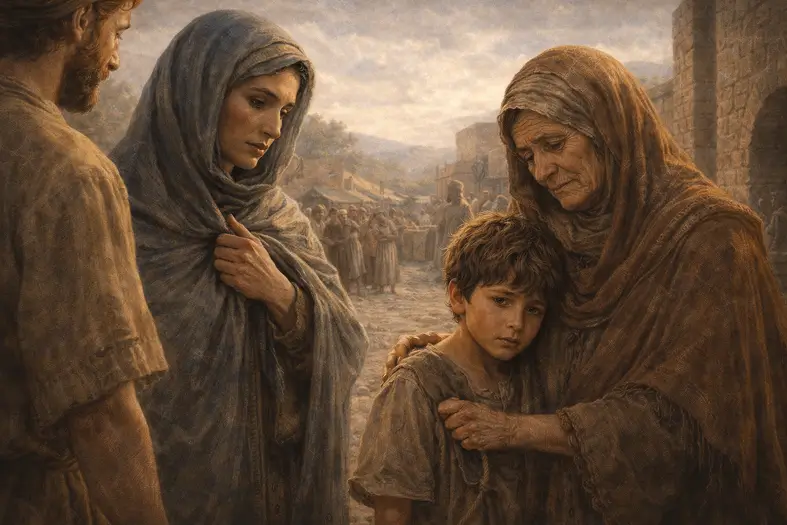
Parshas Mishpatim singles out the widow and orphan as the Torah’s moral barometer for justice. Through the warning of “כִּי אִם־צָעֹק יִצְעַק אֵלַי—שָׁמֹעַ אֶשְׁמַע צַעֲקָתוֹ,” the Torah teaches that the powerless are never truly alone; their cries rise directly to Heaven. Rashi explains that the widow and orphan represent those without natural defenders, while Rambam expands the principle to all whose spirits are broken or positions are weak. The Torah therefore binds compassion into law, measuring a society not by how it treats the strong, but by how it protects those without power. A covenantal community is built when the vulnerable feel safe—and collapses when their cries are ignored.

"Mishpatim — Part V — Compassion as the Heart of Justice"

5.3 — The Cry of the Widow and Orphan

Why the Torah singles out the vulnerable

Parshas Mishpatim devotes special attention to those who stand at the margins of power: the widow, the orphan, and the stranger. The Torah does not treat them as one group among many. It singles them out, names them explicitly, and warns of consequences that are unusually severe.

The Torah states:

שמות כ״ב:כ״א–כ״ג
“כָּל־אַלְמָנָה וְיָתוֹם לֹא תְעַנּוּן.
אִם־עַנֵּה תְעַנֶּה אֹתוֹ, כִּי אִם־צָעֹק יִצְעַק אֵלַי—שָׁמֹעַ אֶשְׁמַע צַעֲקָתוֹ.”

“You shall not afflict any widow or orphan. If you do afflict them, and they cry out to Me, I will surely hear their cry.”

The Torah does not merely forbid mistreatment. It promises a direct Divine response. The cry of the powerless does not disappear into the air. It rises upward, and the Torah assures that it is heard.

Power as a moral test

Most legal systems are designed to regulate conflicts between equals: two parties, two claims, two sides to a dispute. The Torah goes further. It directs the moral focus toward those who cannot defend themselves at all.

The widow and orphan represent the person without natural protection:

  • No strong family structure to advocate for them
  • No economic base to shield them from exploitation
  • No social status to command respect
  • No influence in the centers of power

Such people depend not on strength, but on the conscience of society. The Torah therefore measures justice not by how the strong treat one another, but by how they treat those who cannot fight back.

A society that protects the vulnerable is just. A society that ignores them is morally unstable, no matter how advanced its institutions may appear.

Rashi: the Torah speaks of the common reality

Rashi explains that the Torah mentions the widow and orphan not because only they are vulnerable, but because their situation is typical. They lack the natural defenders that others possess. Without a spouse or parent, they are easily ignored or mistreated.

For Rashi, the Torah is addressing a psychological truth. People often take advantage of those who cannot respond. They speak harshly to those who have no one to defend them. They delay payment to those who cannot protest. They treat the unprotected as though their pain carries less weight.

The Torah intervenes in that instinct. It says: precisely where a person has no defender, Hashem Himself becomes the defender.

This transforms the moral equation. The vulnerable are not alone. Their cry carries spiritual consequence.

Rambam: compassion as a legal obligation

Rambam codifies these laws with unusual emphasis. He explains that although the Torah mentions widows and orphans specifically, the principle extends to anyone whose spirit is broken or whose position is weak.

The prohibition is not limited to physical harm. It includes:

  • Harsh speech
  • Emotional mistreatment
  • Psychological pressure
  • Exploitation of vulnerability

Rambam teaches that the Torah demands a special tone when dealing with such individuals: gentle speech, patience, and dignity. The mitzvah is not only about avoiding harm. It is about actively preserving the human spirit.

This reveals an important principle: the Torah does not separate law from compassion. Compassion is itself part of the law.

The cry that reaches heaven

The Torah’s language in this passage is striking. It does not say that the court will punish the offender. It says that Hashem Himself will hear the cry.

This teaches a deeper lesson about justice. Human systems may fail. Courts may overlook a case. Society may ignore a voice. But the Torah insists that no cry is ever lost.

The moral universe has memory. It records suffering, especially when that suffering comes from the misuse of power. When the powerless cry out, their voice carries a special weight.

This is not meant to frighten. It is meant to guide. A person who remembers that every vulnerable individual is heard by Heaven will treat them with greater care.

Application for Today — building systems that protect the powerless

The Torah’s warning about the widow and orphan is not limited to ancient society. Every generation has people who stand in similar positions: those without support, influence, or protection.

Living this mitzvah today can take practical forms:

  • Speaking gently and respectfully to those in fragile emotional or financial situations.
  • Structuring workplaces, schools, and communities so the vulnerable are not overlooked or exploited.
  • Giving special attention to those who lack family support, stability, or social standing.
  • Creating policies that measure success not only by growth or efficiency, but by the protection of the weakest members.

The Torah teaches that the true test of justice is not how a society treats its leaders, but how it treats its most fragile members. When the powerless feel safe, the covenant is alive. When their cries are ignored, something essential has been lost.

📖 Sources

  • Full sources available on the Mitzvah Minute Parshas Mishpatim page under insights and commentaries.

Organized by:
Boaz Solowitch
February 9, 2026
Mitzvah Minute Logo Icon

Connections

Mitzvah Minute Logo Icon

Mitzvah Links

Mitzvah 17

Not to embarrass others
A Siddur
Learn this Mitzvah

Mitzvah 17

17
Not to embarrass others

Mitzvah 18

Not to oppress the weak
A Siddur
Learn this Mitzvah

Mitzvah 18

18
Not to oppress the weak

Mitzvah 19

Not to gossip about others
A Siddur
Learn this Mitzvah

Mitzvah 19

19
Not to gossip about others

Mitzvah 532

Not to demand collateral from a widow
A Siddur
Learn this Mitzvah

Mitzvah 532

532
Not to demand collateral from a widow

Mitzvah 562

A judge must not pervert a case involving a convert or orphan
A Siddur
Learn this Mitzvah

Mitzvah 562

562
A judge must not pervert a case involving a convert or orphan

Mitzvah 501

Not to insult or harm anybody with words
A Siddur
Learn this Mitzvah

Mitzvah 501

501
Not to insult or harm anybody with words

Mitzvah 503

Not to insult or harm a sincere convert with words
A Siddur
Learn this Mitzvah

Mitzvah 503

503
Not to insult or harm a sincere convert with words
The Luchos - Ten Commandments
View Mitzvah Notes

Mitzvah Reference Notes

"x" close page navigation button

Mitzvah Reference Notes

“The Cry of the Widow and Orphan”

Mitzvah #17 — To love converts (Deuteronomy 10:19)

“וַאֲהַבְתֶּם אֶת־הַגֵּר”
This mitzvah commands the Jewish people to show active love and care for the convert. The convert, like the orphan, often lacks natural social protection, and the Torah therefore places special emphasis on ensuring his dignity and inclusion within the covenantal community.

Mitzvah #18 — Not to oppress the weak (Exodus 22:21)

“וְגֵר לֹא תוֹנֶה”
This mitzvah forbids exploiting those who are socially or economically vulnerable. It reflects the Torah’s broader principle that power must never be used to harm those without defenders.

Mitzvah #19 — Not to gossip about others (Exodus 22:20)

“וְגֵר לֹא תִלְחָץ”
This mitzvah "Not to gossip about others" prohibits causing emotional or verbal pain to a convert. It teaches that the Torah’s concern for the vulnerable includes not only physical or financial harm, but also the dignity of a person’s inner life.

Mitzvah #532 — Not to take advantage of the weak in legal or financial contexts (Exodus 23:6)

“לֹא־תַטֶּה מִשְׁפַּט אֶבְיֹנְךָ”
This mitzvah forbids perverting justice against the poor or vulnerable. It ensures that the legal system protects those without power and does not allow strength, status, or wealth to distort fairness.

Mitzvah #562 — A judge must not pervert a case involving a convert or orphan (Deuteronomy 24:17)

“לֹא תַטֶּה מִשְׁפַּט גֵּר יָתוֹם”
This mitzvah commands the courts to exercise special care when judging cases involving the orphan or convert. It reflects the Torah’s insistence that justice must be especially vigilant on behalf of those who lack natural advocates.

Parsha Links

מִשְׁפָּטִים – Mishpatim

Haftarah: Kings II 11:17 - 12:17
A Siddur
Learn this Parsha

מִשְׁפָּטִים – Mishpatim

מִשְׁפָּטִים – Mishpatim
The Luchos - Ten Commandments
View Parsha Notes
"x" close page navigation button

Parsha Reference Notes

“The Cry of the Widow and Orphan”

Parshas Mishpatim (Shemos 22:21–23)

Mishpatim singles out the widow and orphan as individuals who lack natural defenders. The Torah forbids not only physical harm but emotional oppression, and it promises that their cries will be heard directly by Hashem. This passage establishes a central covenantal principle: the moral health of a society is measured by how it treats those without power.

Mitzvah Minute
Mitzvah Minute Logo

Learn more.

Dive into mitzvos, tefillah, and Torah study—each section curated to help you learn, reflect, and live with intention. New insights are added regularly, creating an evolving space for spiritual growth.

Luchos
Live a commandment-driven life

Mitzvah

Explore the 613 mitzvos and uncover the meaning behind each one. Discover practical ways to integrate them into your daily life with insights, sources, and guided reflection.

Learn more

Mitzvah #

87

To rest on the seventh day
The Luchos - Ten Commandments
Learn this Mitzvah

Mitzvah Highlight

Siddur
Connection through Davening

Tefillah

Learn the structure, depth, and spiritual intent behind Jewish prayer. Dive into morning blessings, Shema, Amidah, and more—with tools to enrich your daily connection.

Learn more

Tefillah

COMING SOON.
A Siddur
Learn this Tefillah

Tefillah Focus

A Sefer Torah
Study the weekly Torah portion

Parsha

Each week’s parsha offers timeless wisdom and modern relevance. Explore summaries, key themes, and mitzvah connections to deepen your understanding of the Torah cycle.

Learn more

מִשְׁפָּטִים – Mishpatim

Haftarah: Kings II 11:17 - 12:17
A Sefer Torah
Learn this Parsha

Weekly Parsha