"Mishpatim — Part V — Compassion as the Heart of Justice"

Mitzvah Minute Logo Icon

5.4 — Application: Empathy as Social Architecture

The Convert, the Widow, and the Orphan
Anchored in “וְגֵר לֹא תוֹנֶה וְלֹא תִלְחָצֶנּוּ,” Parshas Mishpatim teaches that empathy is not merely a feeling but a legal and social structure. The Torah transforms the memory of Egypt into policy, building protections for the stranger, widow, orphan, and weak into the fabric of society. Rabbi Jonathan Sacks shows how covenantal law places the vulnerable at the center of moral concern, while Rav Avigdor Miller explains that these laws refine the character of the individual as well as the community. A just society is therefore not measured by its power, but by how compassion is embedded into its systems, institutions, and daily conduct.

"Mishpatim — Part V — Compassion as the Heart of Justice"

5.4 — Application: Empathy as Social Architecture

Why a covenantal society is built on compassion

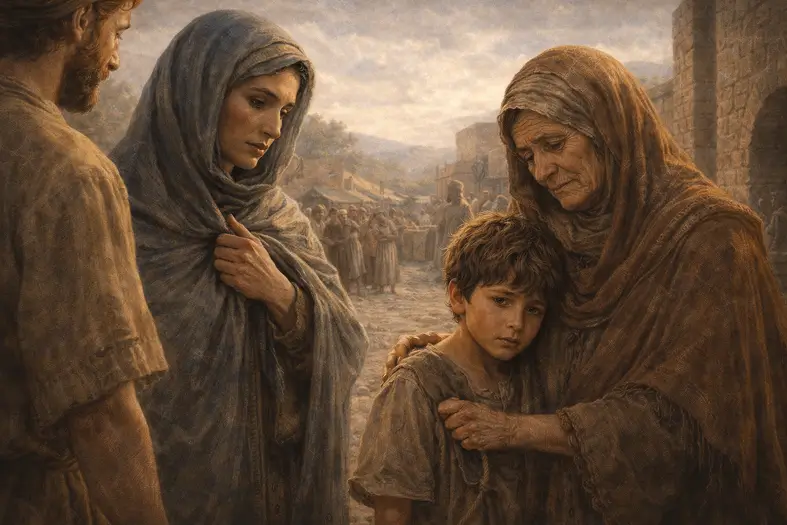
Parshas Mishpatim does not treat compassion as a private emotion or a personal virtue reserved for exceptional individuals. It builds compassion into the legal structure of society. The Torah does not say, “Be kind when you feel like it.” It says: structure your courts, your markets, your homes, and your speech so that the vulnerable are protected.

The Torah states:

שמות כ״ב:כ׳
“וְגֵר לֹא תוֹנֶה וְלֹא תִלְחָצֶנּוּ, כִּי־גֵרִים הֱיִיתֶם בְּאֶרֶץ מִצְרָיִם.”
“You shall not oppress a stranger, nor pressure him, for you were strangers in the land of Egypt.”

This command is not framed as a suggestion or a sentiment. It is law. And its justification is memory: you know what it feels like. That memory must become policy.

Empathy written into law

Modern culture often treats empathy as an inner state: a feeling of sympathy, a personal sensitivity, a moral mood. The Torah takes a different approach. It does not rely on emotion alone. It constructs a system that compels empathy through obligation.

In Mishpatim, this structure appears repeatedly:

  • Special protections for the stranger, widow, and orphan.
  • Prohibitions against verbal oppression and financial exploitation.
  • Legal safeguards in court for those without power.
  • Obligations to assist even an enemy in distress.

These laws do not wait for the heart to soften. They create conditions in which compassionate behavior becomes the normal, expected outcome of daily life.

Rabbi Jonathan Sacks: a society shaped by memory

Rabbi Jonathan Sacks taught that the Torah is unique among ancient legal systems in its moral focus. Most societies protected kings, priests, and warriors. The Torah places the vulnerable at the center of its legal concern.

This is not accidental. It is rooted in the national memory of Egypt. A people that remembers oppression must build laws that prevent its return. Memory becomes the foundation of empathy, and empathy becomes the foundation of society.

For Rabbi Sacks, this is the essence of covenantal life. A covenant is not merely a shared belief; it is a shared responsibility. It binds people together in a moral order where power is restrained and vulnerability is protected.

A society built on covenant does not ask, “How strong are our leaders?” It asks, “How safe are our weakest members?”

Rav Avigdor Miller: compassion as character training

Rav Avigdor Miller emphasized that the Torah’s social laws are not only about creating a stable society. They are tools for refining the individual.

When the Torah commands sensitivity to the stranger, it is shaping the heart of the citizen. Each interaction with the vulnerable becomes an opportunity for inner growth. A person learns to speak more gently, to notice another’s distress, and to restrain the instinct to dominate.

In this sense, the Torah’s compassion laws serve a double purpose:

  • They protect the vulnerable from harm.
  • They protect the powerful from moral corruption.

A society that ignores the weak does not only harm its victims. It damages the character of its citizens. The Torah’s laws prevent that erosion by requiring daily acts of empathy.

Law as the architecture of compassion

The Torah’s vision is both realistic and idealistic. It does not assume that people will always feel compassion. But it does insist that society can be structured so that compassion becomes the default outcome.

This means:

  • Courts must protect those without influence.
  • Employers must treat workers with dignity.
  • Communities must welcome newcomers.
  • Speech must be restrained when it wounds the vulnerable.

Empathy is therefore not left to personality. It is embedded in institutions. It becomes the architecture of the social order.

Application for Today — designing compassionate systems

The message of Mishpatim is not only for individual behavior. It is a blueprint for how communities and institutions should be built. Compassion must be designed into the structure of society.

A practical translation of this teaching can include:

  • Creating workplace policies that protect those with less status or security.
  • Building school and community environments where newcomers feel included and safe.
  • Ensuring that legal and financial systems are accessible to those without resources.
  • Speaking and writing in ways that preserve dignity, especially for the socially vulnerable.

When empathy becomes part of the system, not just the sentiment, society becomes stable and humane. When compassion depends only on personal mood, the vulnerable are left exposed.

The Torah’s vision is demanding but clear: a covenantal society is not built on strength alone. It is built on compassion that has been turned into law.

📖 Sources

  • Full sources available on the Mitzvah Minute Parshas Mishpatim page under insights and commentaries.

Organized by:
Boaz Solowitch
February 9, 2026
Mitzvah Minute Logo Icon

Connections

Mitzvah Minute Logo Icon

Mitzvah Links

Mitzvah 17

Not to embarrass others
A Siddur
Learn this Mitzvah

Mitzvah 17

17
Not to embarrass others

Mitzvah 18

Not to oppress the weak
A Siddur
Learn this Mitzvah

Mitzvah 18

18
Not to oppress the weak

Mitzvah 19

Not to gossip about others
A Siddur
Learn this Mitzvah

Mitzvah 19

19
Not to gossip about others

Mitzvah 532

Not to demand collateral from a widow
A Siddur
Learn this Mitzvah

Mitzvah 532

532
Not to demand collateral from a widow

Mitzvah 562

A judge must not pervert a case involving a convert or orphan
A Siddur
Learn this Mitzvah

Mitzvah 562

562
A judge must not pervert a case involving a convert or orphan

Mitzvah 501

Not to insult or harm anybody with words
A Siddur
Learn this Mitzvah

Mitzvah 501

501
Not to insult or harm anybody with words

Mitzvah 502

Not to cheat a sincere convert monetarily
A Siddur
Learn this Mitzvah

Mitzvah 502

502
Not to cheat a sincere convert monetarily

Mitzvah 503

Not to insult or harm a sincere convert with words
A Siddur
Learn this Mitzvah

Mitzvah 503

503
Not to insult or harm a sincere convert with words
The Luchos - Ten Commandments
View Mitzvah Notes

Mitzvah Reference Notes

"x" close page navigation button

Mitzvah Reference Notes

“Empathy as Social Architecture”

Mitzvah #17 — To love converts (Deuteronomy 10:19)

“וַאֲהַבְתֶּם אֶת־הַגֵּר”
This mitzvah commands active love for the convert, ensuring that those without natural social protection are treated with dignity and inclusion.

Mitzvah #18 — Not to oppress the weak (Exodus 22:21)

“וְגֵר לֹא תוֹנֶה”
This mitzvah forbids exploiting those who are socially or economically vulnerable, teaching that power must never be used against the defenseless.

Mitzvah #19 — Not to gossip about others (Exodus 22:20)

“וְגֵר לֹא תִלְחָצֶנּוּ”
This mitzvah "not to gossip about others" extends to the prohibition causing emotional or verbal pain to a convert, emphasizing that the Torah protects the dignity of the inner life as well as the external condition.

Mitzvah #532 — Not to take advantage of the weak in legal or financial contexts (Exodus 23:6)

“לֹא־תַטֶּה מִשְׁפַּט אֶבְיֹנְךָ”
This mitzvah ensures that justice is not distorted against the poor or vulnerable, requiring the legal system to protect those without influence.

Mitzvah #562 — A judge must not pervert a case involving a convert or orphan (Deuteronomy 24:17)

“לֹא תַטֶּה מִשְׁפַּט גֵּר יָתוֹם”
This mitzvah commands special care in judicial proceedings involving the most vulnerable, ensuring that the courts serve as guardians of their dignity and rights.

Parsha Links

מִשְׁפָּטִים – Mishpatim

Haftarah: Kings II 11:17 - 12:17
A Siddur
Learn this Parsha

מִשְׁפָּטִים – Mishpatim

מִשְׁפָּטִים – Mishpatim
The Luchos - Ten Commandments
View Parsha Notes
"x" close page navigation button

Parsha Reference Notes

“Empathy as Social Architecture”

Parshas Mishpatim (Shemos 22:20)

Mishpatim commands the people not to oppress or pressure the stranger, grounding the law in the memory of Egypt. This verse expresses a central covenantal principle: empathy is not left to emotion, but is embedded in legal and social structures. The memory of vulnerability becomes the foundation for a society that protects those without power.

Mitzvah Minute
Mitzvah Minute Logo

Learn more.

Dive into mitzvos, tefillah, and Torah study—each section curated to help you learn, reflect, and live with intention. New insights are added regularly, creating an evolving space for spiritual growth.

Luchos
Live a commandment-driven life

Mitzvah

Explore the 613 mitzvos and uncover the meaning behind each one. Discover practical ways to integrate them into your daily life with insights, sources, and guided reflection.

Learn more

Mitzvah #

87

To rest on the seventh day
The Luchos - Ten Commandments
Learn this Mitzvah

Mitzvah Highlight

Siddur
Connection through Davening

Tefillah

Learn the structure, depth, and spiritual intent behind Jewish prayer. Dive into morning blessings, Shema, Amidah, and more—with tools to enrich your daily connection.

Learn more

Tefillah

COMING SOON.
A Siddur
Learn this Tefillah

Tefillah Focus

A Sefer Torah
Study the weekly Torah portion

Parsha

Each week’s parsha offers timeless wisdom and modern relevance. Explore summaries, key themes, and mitzvah connections to deepen your understanding of the Torah cycle.

Learn more

מִשְׁפָּטִים – Mishpatim

Haftarah: Kings II 11:17 - 12:17
A Sefer Torah
Learn this Parsha

Weekly Parsha