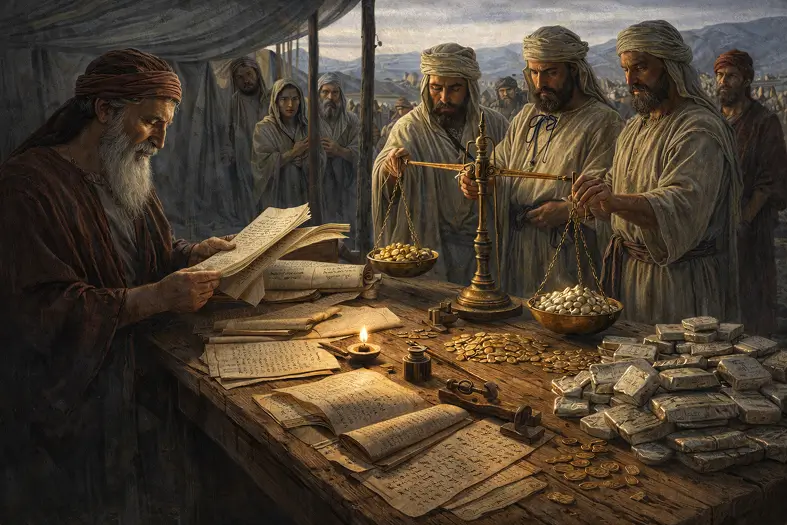
1.3 — The Mishkan as Testimony of Forgiveness
As Parshas Pekudei opens with the accounting of the Mishkan materials, the Torah introduces a striking phrase:
שמות ל״ח:כ״א
“מִשְׁכַּן הָעֵדֻת.”
“The Mishkan of Testimony.”
This title invites an important question: what exactly does the Mishkan testify to?
Ramban explains that the Mishkan represents the continuation of the revelation at Sinai. When the Torah was first given, the Divine Presence rested openly among the people. After the sin of the Golden Calf, however, that relationship was threatened. The covenant appeared to stand on fragile ground.
The construction of the Mishkan signals that the relationship has been restored.
The sanctuary becomes a visible sign that the Divine Presence once again dwells within the camp of Israel. The Mishkan therefore testifies that the covenant between Hashem and the people remains intact despite the crisis that had nearly shattered it.
Through the sanctuary, the revelation of Sinai finds a permanent home within the life of the nation.
Rashi interprets the phrase “מִשְׁכַּן הָעֵדֻת” in a slightly different but complementary way. The Mishkan is called a “testimony” because it provides evidence that Hashem has forgiven Israel for the sin of the Golden Calf.
The people had feared that their failure had permanently damaged their relationship with Hashem. The command to build the Mishkan therefore becomes an act of reassurance.
By allowing His Presence to dwell among them once again, Hashem demonstrates that the covenant has not been abandoned.
The sanctuary stands as a visible declaration that forgiveness has been granted.
The Sfas Emes emphasizes that the Mishkan does more than signal forgiveness. It represents the transformation of the very energies that once produced the sin.
The Golden Calf had been constructed from gold that the people contributed in a moment of misguided religious enthusiasm. In Parshas Vayakhel, that same impulse is redirected. The people once again bring gold and precious materials, but this time their generosity is guided by the Divine command.
The Mishkan therefore embodies a deeper form of repentance.
Rather than suppressing human passion, the Torah teaches how that passion can be transformed into constructive devotion. The same energy that once led to idolatry now becomes the force that builds a sanctuary for the Divine Presence.
In this sense, the Mishkan testifies not only to forgiveness but also to spiritual renewal.
Rabbi Jonathan Sacks often wrote that one of the most difficult challenges faced by communities is rebuilding trust after a moral failure. When a crisis disrupts relationships, reconciliation requires more than words. It requires visible actions that demonstrate a renewed commitment to shared values.
The Mishkan fulfills precisely this role.
The people respond to the forgiveness granted after Yom HaKippurim by dedicating themselves to the construction of the sanctuary. Their generosity, craftsmanship, and discipline signal that they have learned from the crisis that preceded it.
The Mishkan thus becomes a communal act of renewal.
Through their participation in building the sanctuary, the people demonstrate their desire to restore the covenantal relationship with Hashem.
Rav Avigdor Miller frequently emphasized that the Torah provides concrete reminders of Hashem’s presence in the life of the Jewish people. The Mishkan represents one of the clearest expressions of that presence.
The sanctuary is not merely a symbolic structure. It becomes the place where the Divine Presence rests among the nation. When the Mishkan stands in the center of the camp, it serves as a daily reminder that Hashem continues to guide and sustain His people.
For a nation that had recently experienced the trauma of the Golden Calf, this reassurance carried immense significance.
The Mishkan’s existence testifies that forgiveness has been granted and that the relationship between Hashem and Israel remains alive.
The title “Mishkan HaEdut” reveals that the sanctuary carries a message that extends beyond its physical structure.
Every beam, curtain, and vessel reflects the journey of the nation from failure to reconciliation. The materials that once symbolized misguided devotion now become the instruments of sacred service.
The Mishkan therefore stands as testimony—not only to forgiveness but to the possibility of transformation.
It reminds the people that even after moments of spiritual collapse, the covenant can be renewed through repentance, discipline, and renewed commitment.
The lessons of the Mishkan remain profoundly relevant in human life today.
Individuals and communities inevitably encounter moments of failure. Relationships fracture, trust is broken, and the future can appear uncertain. The Torah teaches that restoration requires more than regret; it requires visible actions that demonstrate genuine change.
The Mishkan illustrates this process.
Through generosity, collaboration, and disciplined devotion, the people transform a moment of crisis into an opportunity for renewal. Their actions rebuild the trust that had been damaged by the Golden Calf.
In every generation, communities can learn from this model. When people respond to failure with honesty, responsibility, and renewed commitment to shared values, reconciliation becomes possible.
The Mishkan stands as a timeless reminder that forgiveness and renewal are always within reach when individuals and societies commit themselves to rebuilding holiness.
📖 Sources


1.3 — The Mishkan as Testimony of Forgiveness
As Parshas Pekudei opens with the accounting of the Mishkan materials, the Torah introduces a striking phrase:
שמות ל״ח:כ״א
“מִשְׁכַּן הָעֵדֻת.”
“The Mishkan of Testimony.”
This title invites an important question: what exactly does the Mishkan testify to?
Ramban explains that the Mishkan represents the continuation of the revelation at Sinai. When the Torah was first given, the Divine Presence rested openly among the people. After the sin of the Golden Calf, however, that relationship was threatened. The covenant appeared to stand on fragile ground.
The construction of the Mishkan signals that the relationship has been restored.
The sanctuary becomes a visible sign that the Divine Presence once again dwells within the camp of Israel. The Mishkan therefore testifies that the covenant between Hashem and the people remains intact despite the crisis that had nearly shattered it.
Through the sanctuary, the revelation of Sinai finds a permanent home within the life of the nation.
Rashi interprets the phrase “מִשְׁכַּן הָעֵדֻת” in a slightly different but complementary way. The Mishkan is called a “testimony” because it provides evidence that Hashem has forgiven Israel for the sin of the Golden Calf.
The people had feared that their failure had permanently damaged their relationship with Hashem. The command to build the Mishkan therefore becomes an act of reassurance.
By allowing His Presence to dwell among them once again, Hashem demonstrates that the covenant has not been abandoned.
The sanctuary stands as a visible declaration that forgiveness has been granted.
The Sfas Emes emphasizes that the Mishkan does more than signal forgiveness. It represents the transformation of the very energies that once produced the sin.
The Golden Calf had been constructed from gold that the people contributed in a moment of misguided religious enthusiasm. In Parshas Vayakhel, that same impulse is redirected. The people once again bring gold and precious materials, but this time their generosity is guided by the Divine command.
The Mishkan therefore embodies a deeper form of repentance.
Rather than suppressing human passion, the Torah teaches how that passion can be transformed into constructive devotion. The same energy that once led to idolatry now becomes the force that builds a sanctuary for the Divine Presence.
In this sense, the Mishkan testifies not only to forgiveness but also to spiritual renewal.
Rabbi Jonathan Sacks often wrote that one of the most difficult challenges faced by communities is rebuilding trust after a moral failure. When a crisis disrupts relationships, reconciliation requires more than words. It requires visible actions that demonstrate a renewed commitment to shared values.
The Mishkan fulfills precisely this role.
The people respond to the forgiveness granted after Yom HaKippurim by dedicating themselves to the construction of the sanctuary. Their generosity, craftsmanship, and discipline signal that they have learned from the crisis that preceded it.
The Mishkan thus becomes a communal act of renewal.
Through their participation in building the sanctuary, the people demonstrate their desire to restore the covenantal relationship with Hashem.
Rav Avigdor Miller frequently emphasized that the Torah provides concrete reminders of Hashem’s presence in the life of the Jewish people. The Mishkan represents one of the clearest expressions of that presence.
The sanctuary is not merely a symbolic structure. It becomes the place where the Divine Presence rests among the nation. When the Mishkan stands in the center of the camp, it serves as a daily reminder that Hashem continues to guide and sustain His people.
For a nation that had recently experienced the trauma of the Golden Calf, this reassurance carried immense significance.
The Mishkan’s existence testifies that forgiveness has been granted and that the relationship between Hashem and Israel remains alive.
The title “Mishkan HaEdut” reveals that the sanctuary carries a message that extends beyond its physical structure.
Every beam, curtain, and vessel reflects the journey of the nation from failure to reconciliation. The materials that once symbolized misguided devotion now become the instruments of sacred service.
The Mishkan therefore stands as testimony—not only to forgiveness but to the possibility of transformation.
It reminds the people that even after moments of spiritual collapse, the covenant can be renewed through repentance, discipline, and renewed commitment.
The lessons of the Mishkan remain profoundly relevant in human life today.
Individuals and communities inevitably encounter moments of failure. Relationships fracture, trust is broken, and the future can appear uncertain. The Torah teaches that restoration requires more than regret; it requires visible actions that demonstrate genuine change.
The Mishkan illustrates this process.
Through generosity, collaboration, and disciplined devotion, the people transform a moment of crisis into an opportunity for renewal. Their actions rebuild the trust that had been damaged by the Golden Calf.
In every generation, communities can learn from this model. When people respond to failure with honesty, responsibility, and renewed commitment to shared values, reconciliation becomes possible.
The Mishkan stands as a timeless reminder that forgiveness and renewal are always within reach when individuals and societies commit themselves to rebuilding holiness.
📖 Sources


1.3 — The Mishkan as Testimony of Forgiveness
Exodus 25:8 — וְעָשׂוּ לִי מִקְדָּשׁ
The commandment to build the Mishkan establishes a dwelling place for the Divine Presence within the Israelite camp. The sanctuary becomes the visible expression of the restored covenant between Hashem and the people after the crisis of the Golden Calf.
Deuteronomy 28:9 — וְהָלַכְתָּ בִּדְרָכָיו
The rebuilding of the Mishkan reflects the Divine attributes of mercy and forgiveness that the Torah commands humanity to emulate. By responding to failure with repentance and renewed devotion, the people mirror the compassion through which Hashem restores the covenant.
Deuteronomy 10:20 — וּבוֹ תִדְבָּק
The leadership of Moshe guides the people through the process of repentance and reconciliation after the sin of the Golden Calf. By following his guidance, the nation demonstrates the Torah’s principle of attaching oneself to leaders who embody devotion to Hashem.
Deuteronomy 15:8 — פָּתֹחַ תִּפְתַּח אֶת יָדֶךָ
The voluntary donations brought for the Mishkan reflect the people’s renewed commitment to the covenant. Their generosity becomes an expression of repentance and a means of rebuilding their relationship with Hashem.


1.3 — The Mishkan as Testimony of Forgiveness
"מִשְׁכַּן הָעֵדֻת"
The Torah describes the completed sanctuary as the “Mishkan of Testimony.” According to the commentators, this title reflects the role of the Mishkan as evidence that the Divine Presence once again dwells among Israel after the sin of the Golden Calf, signaling the restoration of the covenant.

Dive into mitzvos, tefillah, and Torah study—each section curated to help you learn, reflect, and live with intention. New insights are added regularly, creating an evolving space for spiritual growth.

Explore the 613 mitzvos and uncover the meaning behind each one. Discover practical ways to integrate them into your daily life with insights, sources, and guided reflection.

Learn the structure, depth, and spiritual intent behind Jewish prayer. Dive into morning blessings, Shema, Amidah, and more—with tools to enrich your daily connection.

Each week’s parsha offers timeless wisdom and modern relevance. Explore summaries, key themes, and mitzvah connections to deepen your understanding of the Torah cycle.