www.Mitzvah-Minute.com
"Vayakhel — Part I — “וַיַּקְהֵל מֹשֶׁה”: Reassembling a Broken Nation"
1.2 — The Nation After the Golden Calf
Rashi — The Day After Forgiveness
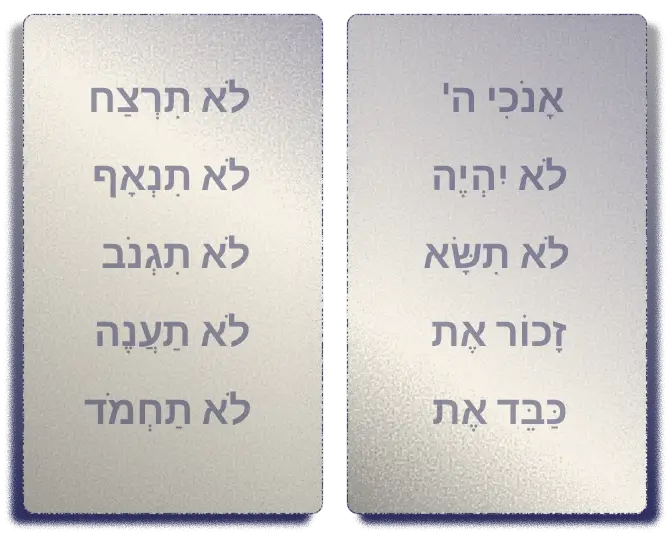
The opening of Parshas Vayakhel occurs at one of the most delicate moments in the history of the nation. The sin of the Golden Calf had nearly shattered the covenant between Hashem and the people of Yisrael. Moshe had ascended the mountain once again, pleaded for mercy, and received the second tablets — the sign that reconciliation had been granted.
According to Rashi’s chronology, the events of Vayakhel begin the day after Yom HaKippurim, the very day Moshe descended from Sinai with the second tablets in his hands.
This timing transforms the meaning of the parsha.
The command to build the Mishkan is not simply another mitzvah in the unfolding narrative of the Torah. It becomes the nation’s first collective act after forgiveness. The people stand at a fragile threshold: they have been restored to covenant, yet they still carry the memory of their failure. The Golden Calf revealed how quickly fear and uncertainty could unravel the spiritual clarity of Sinai.
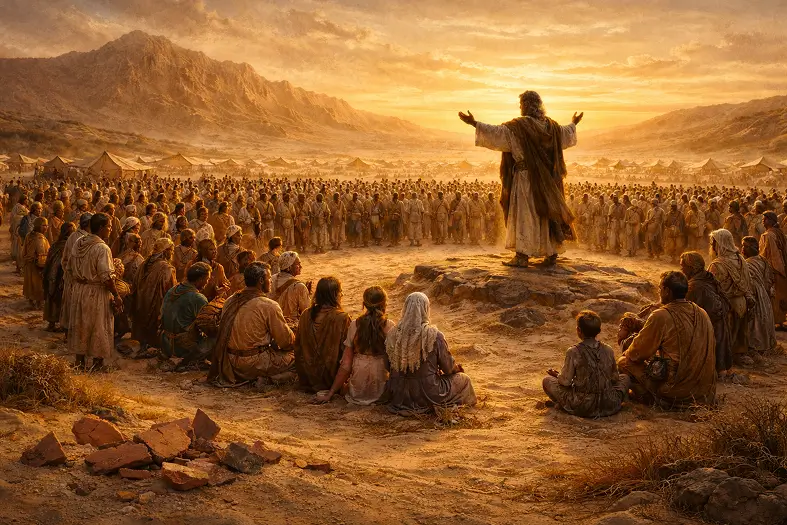
Moshe therefore gathers the nation immediately.
The Torah teaches that forgiveness alone does not complete repentance. A forgiven people must now demonstrate that their relationship with Hashem can be rebuilt through action. The Mishkan becomes the vehicle through which the nation transforms shame into service and reconciliation into renewed covenantal life.
Ramban — The Return of the Divine Presence
Ramban explains that the Mishkan represents the continuation of the revelation at Sinai. When the Torah first commanded the construction of the sanctuary earlier in Sefer Shemos, its purpose was that the Divine Presence that appeared on the mountain would dwell among the people within the camp.
The sin of the Golden Calf threatened that possibility. If the covenant had collapsed entirely, the Shechinah could no longer reside among the nation. The camp would remain physically intact, but the spiritual intimacy created at Sinai would be gone.
The command of the Mishkan now reappears after forgiveness. That repetition is profoundly significant. It signals that the relationship between Hashem and the people has not ended.
The Mishkan therefore becomes the visible sign that the covenant still lives.
The people do not build the sanctuary merely as a structure of worship. They build it as a declaration that the relationship between Heaven and the nation can still exist after failure. What once seemed broken beyond repair is now being rebuilt through collective devotion and obedience.
Abarbanel — A Nation Rebuilding Itself
Abarbanel approaches the parsha from a broader structural perspective. The central question after the Golden Calf is not only whether the people have been forgiven, but whether they can once again function as a unified nation under the covenant.
Sin fractures societies. It generates shame, mistrust, and uncertainty about the future. The people of Yisrael had witnessed the consequences of their actions: the destruction of the tablets, the punishment that followed, and Moshe’s desperate intercession on their behalf. The national psyche had been shaken.
The gathering of Vayakhel therefore marks the beginning of reconstruction.
Moshe assembles the entire nation not only to deliver commandments but to restore a shared identity. The Mishkan becomes the project through which the people rediscover themselves as a covenantal community. Each individual will contribute materials, labor, or skill. Through this shared effort, the nation transforms from a group defined by failure into a society defined by sacred purpose.
The Mishkan is not simply built by the people. It rebuilds the people themselves.
Sfas Emes — Transforming Failure into Service
The Sfas Emes offers a deeper spiritual interpretation of this moment. The very energy that led to the Golden Calf is now redirected toward holiness.
The people had sought closeness to Hashem. Their error was not the desire for nearness, but the impatience and confusion that led them to create a physical substitute. In the Mishkan, that same yearning is guided by the structure of Torah.
The sanctuary channels human longing into disciplined service. Instead of expressing spiritual desire through impulsive invention, the people now express it through obedience to Divine command.
This transformation reveals an essential principle of teshuvah. Repentance is not achieved by erasing the forces that led to failure. It occurs when those same forces are redirected toward holiness.
The longing that once produced the Golden Calf now produces the Mishkan.
Rav Avigdor Miller — Rebuilding Through Action
Rav Avigdor Miller emphasizes that Moshe does not allow the nation to remain trapped in guilt. Instead of dwelling endlessly on the sin, he immediately engages the people in constructive action.
The Mishkan becomes the perfect instrument for this transformation. Every member of the nation has an opportunity to participate in rebuilding the relationship with Hashem.
Some bring gold and silver. Others contribute fabrics, skins, or precious stones. Skilled artisans dedicate their craftsmanship. Leaders organize the work. The people move from passive remorse to active service.
This shift from regret to responsibility is essential for genuine repentance. A person or a nation cannot live indefinitely under the weight of past failure. Healing occurs when remorse becomes motivation for building something better.
The Mishkan allows the people to convert shame into contribution.
Rabbi Jonathan Sacks — Collective Responsibility After Failure
Rabbi Jonathan Sacks highlights another dimension of this moment. The sin of the Golden Calf was a collective failure. It was not the mistake of a few individuals but a collapse that swept through the entire community.
Because the failure was collective, the repair must also be collective.
The Mishkan becomes the nation’s shared response to forgiveness. Instead of allowing guilt to divide the people or paralyze them with regret, Moshe channels their energy toward a common goal. The sanctuary becomes the place where the people rediscover what it means to act together under the covenant.
Societies often struggle to recover after moral collapse. Distrust spreads. Confidence erodes. Individuals withdraw into private survival.
The Torah offers a different path. Recovery begins when people work together again toward something sacred and meaningful.
From Forgiveness to Creative Responsibility
The sequence of events in Vayakhel reveals a powerful truth about spiritual life. Forgiveness is not the final stage of repentance. It is the beginning of rebuilding.
The people leave Yom Kippur not as victims of their past but as builders of their future.
Moshe gathers them because a forgiven nation must now become a responsible nation. The Mishkan becomes the embodiment of this transformation. Out of the ashes of failure emerges a structure dedicated entirely to the service of Hashem.
In this way the sanctuary stands as a monument to the possibility of renewal. The nation that once created an idol now creates a dwelling place for the Divine Presence.
Application for Today
Communities and societies inevitably face moments of moral failure. Leaders make mistakes. Institutions lose their way. Public trust can fracture with alarming speed.
The Torah’s response to such moments is both honest and hopeful.
First comes acknowledgment and accountability. Without confronting wrongdoing, no genuine healing can occur. But the Torah does not allow communities to remain permanently defined by their failures.
After forgiveness must come rebuilding.
The story of Vayakhel teaches that the most powerful response to failure is constructive responsibility. When people dedicate themselves to creating something meaningful together, they begin to restore trust and confidence.
This principle applies in every sphere of life:
- Families rebuilding relationships after painful conflict
- Communities recovering from scandal or division
- Organizations restoring integrity after mistakes
Healing becomes possible when people move from shame to purpose.
The Mishkan stands as one of the Torah’s greatest symbols of hope. It teaches that even after a profound collapse, a society can rise again. The same people who once fell can become the builders of holiness.
Failure does not have to be the end of a story. Under the guidance of Torah, it can become the beginning of renewal.
📖 Sources
- Full sources available on the Mitzvah Minute Parshas Vayakhel page under insights and commentaries