1.3 — The Birth of Kehillah
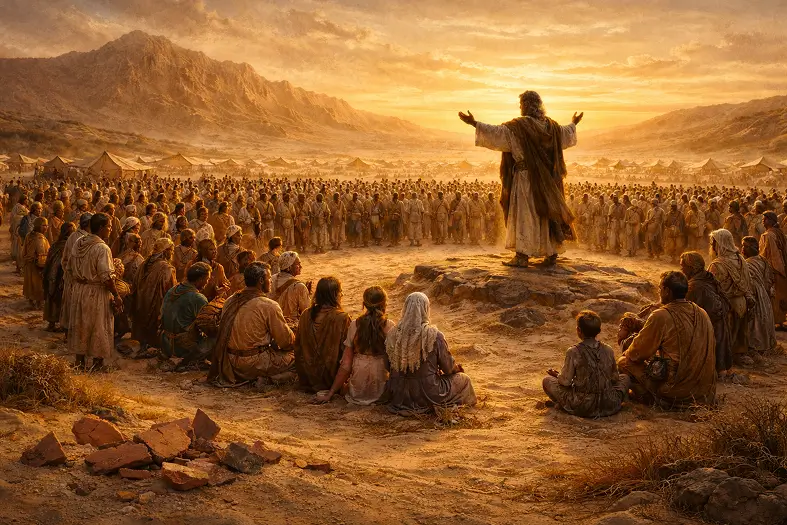
Parshas Vayakhel begins with an act that might at first appear procedural: Moshe gathers the entire nation together before delivering the commandments of the Mishkan. Yet this opening moment reveals something essential about the nature of Jewish spirituality. Before the sanctuary can be built, the people themselves must assemble as a community.
The Torah does not begin the Mishkan narrative with materials, architecture, or craftsmanship. It begins with a gathering.
This ordering is not accidental. It reflects a foundational principle of Torah life: holiness is not primarily an individual experience but a communal reality. The Torah consistently speaks of the Divine Presence dwelling among the people, not within isolated individuals pursuing private spirituality.
Rambam’s understanding of Torah society reflects this structure. The mitzvos of the Torah do not merely shape the inner life of individuals; they organize an entire community around the service of Hashem. Prayer requires a minyan. Public Torah reading requires a congregation. Courts of justice require a society governed by law. Even the festivals of the Torah are experienced through shared national celebration.
Judaism does not imagine spiritual life as a solitary ascent. It imagines holiness emerging from a community that orders its life around the Divine will.
The Mishkan therefore begins not with construction but with assembly. The people themselves must first become a unified collective capable of sustaining the Divine Presence.
Ramban highlights the central phrase that defines the purpose of the Mishkan: וְשָׁכַנְתִּי בְּתוֹכָם — “I will dwell among them.”
The Torah does not say that Hashem will dwell in the sanctuary. It says that He will dwell among the people.
The Mishkan is therefore not the ultimate goal. It is the focal point of a living covenantal community. The Divine Presence rests within the nation itself, and the sanctuary functions as the center that concentrates and expresses that presence.
This insight explains why the Torah begins the parsha with the gathering of the people. If the Shechinah is meant to dwell among the nation, then the nation itself must first exist as a unified spiritual body.
A collection of individuals cannot host the Divine Presence in the same way that a covenant community can.
The Mishkan stands in the center of the camp not merely as a building but as the heart of a living organism. The tribes encamp around it. The rhythms of national life revolve around it. The sanctuary becomes the point through which the spiritual energy of the nation flows.
Holiness in the Torah is therefore inseparable from peoplehood. The Shechinah dwells where a people gathers in covenant with Hashem.
Rav Kook expands this idea further by describing the spiritual nature of the Jewish people themselves. In his thought, the nation of Yisrael possesses a collective soul that transcends the sum of its individual members.
Each individual Jew carries a spark of holiness, but the full expression of that holiness emerges only within the life of the nation. Just as a single cell cannot fully express the vitality of the entire body, an individual cannot fully express the spiritual destiny of the Jewish people in isolation.
The Mishkan reflects this deeper structure.
It stands at the center of the camp because the spiritual life of Israel radiates outward from a shared national core. When the people gather around the sanctuary, they are not merely assembling for religious observance. They are aligning themselves with the spiritual center of the nation’s life.
In this sense, the Mishkan is not only a place of Divine service. It is the physical expression of the unity of the people themselves.
The Shechinah dwells among the nation because the nation itself is the vessel through which Divine purpose enters the world.
Rabbi Jonathan Sacks emphasizes the profound difference between a crowd and a covenant community.
A crowd is defined by proximity and emotion. People come together because of fear, anger, excitement, or shared impulse. The Golden Calf was born out of such a moment. The people gathered in panic and uncertainty, and their collective energy produced chaos rather than holiness.
A covenant community is fundamentally different. It is not defined by emotion but by shared responsibility.
Members of a covenant community understand that they are bound together by a mission that transcends individual desires. Their unity is sustained not by momentary feeling but by commitment to a shared moral vision.
The Mishkan becomes the structure through which that covenant community expresses itself. Each individual contributes something different, yet all contributions serve the same sacred purpose.
The sanctuary therefore transforms collective energy into collective responsibility. Instead of a crowd acting impulsively, the people become a community building something holy together.
Rav Avigdor Miller often emphasized that Judaism was never meant to be lived in isolation. The Torah envisions a society in which individuals strengthen one another through shared spiritual life.
When people live alone with their beliefs, those beliefs can weaken over time. Doubt grows quietly. Commitment fades gradually. But when individuals live within a community devoted to Torah, their faith is reinforced by the environment around them.
A synagogue filled with people praying together inspires a different kind of devotion than solitary prayer. A community learning Torah together creates an atmosphere where wisdom and discipline flourish. A society organized around mitzvos allows holiness to permeate everyday life.
The Mishkan represents the earliest model of such a society. It gathers the people around a shared center of Divine service and reminds them that spiritual life is sustained through collective devotion.
The strength of a community allows individuals to rise higher than they could alone.
The opening of Vayakhel therefore represents more than a national meeting. It marks the birth of kehillah — a covenant community gathered around the presence of Hashem.
The Torah begins the Mishkan narrative with assembly because the sanctuary itself cannot exist without the people who sustain it. Holiness in the Torah does not descend upon isolated individuals scattered across the desert. It rests within a people who gather, organize their lives around Torah, and dedicate themselves to a shared spiritual destiny.
The Mishkan becomes the visible center of that life. But the true sanctuary is the community itself.
Where a people gathers in faith, responsibility, and devotion to Hashem, the Shechinah dwells among them.
Modern life has created unprecedented opportunities for individual expression. People can pursue spirituality privately, study Torah online, and explore religious ideas independently. While these developments offer many benefits, they can also obscure one of the Torah’s most important insights: spiritual life is sustained through community.
Loneliness has become one of the defining challenges of the modern world. Many individuals search for meaning in isolation, disconnected from shared institutions and collective purpose. The Torah offers a different model.
Judaism begins with kehillah.
Spiritual growth flourishes when individuals belong to communities that support, challenge, and inspire them. A synagogue is more than a place for prayer. A school is more than a place for study. A Jewish community is more than a social network. Each becomes a vessel through which people participate in a larger covenantal story.
When people gather around Torah, their lives acquire depth and stability that individual experience alone cannot provide.
The opening of Vayakhel reminds us that holiness is not something we pursue alone. It is something we build together.
In a world where many feel increasingly isolated, the Torah’s vision of community offers a powerful answer: the path to spiritual life begins not with solitude but with gathering.
📖 Sources


1.3 — The Birth of Kehillah
Parshas Vayakhel begins with an act that might at first appear procedural: Moshe gathers the entire nation together before delivering the commandments of the Mishkan. Yet this opening moment reveals something essential about the nature of Jewish spirituality. Before the sanctuary can be built, the people themselves must assemble as a community.
The Torah does not begin the Mishkan narrative with materials, architecture, or craftsmanship. It begins with a gathering.
This ordering is not accidental. It reflects a foundational principle of Torah life: holiness is not primarily an individual experience but a communal reality. The Torah consistently speaks of the Divine Presence dwelling among the people, not within isolated individuals pursuing private spirituality.
Rambam’s understanding of Torah society reflects this structure. The mitzvos of the Torah do not merely shape the inner life of individuals; they organize an entire community around the service of Hashem. Prayer requires a minyan. Public Torah reading requires a congregation. Courts of justice require a society governed by law. Even the festivals of the Torah are experienced through shared national celebration.
Judaism does not imagine spiritual life as a solitary ascent. It imagines holiness emerging from a community that orders its life around the Divine will.
The Mishkan therefore begins not with construction but with assembly. The people themselves must first become a unified collective capable of sustaining the Divine Presence.
Ramban highlights the central phrase that defines the purpose of the Mishkan: וְשָׁכַנְתִּי בְּתוֹכָם — “I will dwell among them.”
The Torah does not say that Hashem will dwell in the sanctuary. It says that He will dwell among the people.
The Mishkan is therefore not the ultimate goal. It is the focal point of a living covenantal community. The Divine Presence rests within the nation itself, and the sanctuary functions as the center that concentrates and expresses that presence.
This insight explains why the Torah begins the parsha with the gathering of the people. If the Shechinah is meant to dwell among the nation, then the nation itself must first exist as a unified spiritual body.
A collection of individuals cannot host the Divine Presence in the same way that a covenant community can.
The Mishkan stands in the center of the camp not merely as a building but as the heart of a living organism. The tribes encamp around it. The rhythms of national life revolve around it. The sanctuary becomes the point through which the spiritual energy of the nation flows.
Holiness in the Torah is therefore inseparable from peoplehood. The Shechinah dwells where a people gathers in covenant with Hashem.
Rav Kook expands this idea further by describing the spiritual nature of the Jewish people themselves. In his thought, the nation of Yisrael possesses a collective soul that transcends the sum of its individual members.
Each individual Jew carries a spark of holiness, but the full expression of that holiness emerges only within the life of the nation. Just as a single cell cannot fully express the vitality of the entire body, an individual cannot fully express the spiritual destiny of the Jewish people in isolation.
The Mishkan reflects this deeper structure.
It stands at the center of the camp because the spiritual life of Israel radiates outward from a shared national core. When the people gather around the sanctuary, they are not merely assembling for religious observance. They are aligning themselves with the spiritual center of the nation’s life.
In this sense, the Mishkan is not only a place of Divine service. It is the physical expression of the unity of the people themselves.
The Shechinah dwells among the nation because the nation itself is the vessel through which Divine purpose enters the world.
Rabbi Jonathan Sacks emphasizes the profound difference between a crowd and a covenant community.
A crowd is defined by proximity and emotion. People come together because of fear, anger, excitement, or shared impulse. The Golden Calf was born out of such a moment. The people gathered in panic and uncertainty, and their collective energy produced chaos rather than holiness.
A covenant community is fundamentally different. It is not defined by emotion but by shared responsibility.
Members of a covenant community understand that they are bound together by a mission that transcends individual desires. Their unity is sustained not by momentary feeling but by commitment to a shared moral vision.
The Mishkan becomes the structure through which that covenant community expresses itself. Each individual contributes something different, yet all contributions serve the same sacred purpose.
The sanctuary therefore transforms collective energy into collective responsibility. Instead of a crowd acting impulsively, the people become a community building something holy together.
Rav Avigdor Miller often emphasized that Judaism was never meant to be lived in isolation. The Torah envisions a society in which individuals strengthen one another through shared spiritual life.
When people live alone with their beliefs, those beliefs can weaken over time. Doubt grows quietly. Commitment fades gradually. But when individuals live within a community devoted to Torah, their faith is reinforced by the environment around them.
A synagogue filled with people praying together inspires a different kind of devotion than solitary prayer. A community learning Torah together creates an atmosphere where wisdom and discipline flourish. A society organized around mitzvos allows holiness to permeate everyday life.
The Mishkan represents the earliest model of such a society. It gathers the people around a shared center of Divine service and reminds them that spiritual life is sustained through collective devotion.
The strength of a community allows individuals to rise higher than they could alone.
The opening of Vayakhel therefore represents more than a national meeting. It marks the birth of kehillah — a covenant community gathered around the presence of Hashem.
The Torah begins the Mishkan narrative with assembly because the sanctuary itself cannot exist without the people who sustain it. Holiness in the Torah does not descend upon isolated individuals scattered across the desert. It rests within a people who gather, organize their lives around Torah, and dedicate themselves to a shared spiritual destiny.
The Mishkan becomes the visible center of that life. But the true sanctuary is the community itself.
Where a people gathers in faith, responsibility, and devotion to Hashem, the Shechinah dwells among them.
Modern life has created unprecedented opportunities for individual expression. People can pursue spirituality privately, study Torah online, and explore religious ideas independently. While these developments offer many benefits, they can also obscure one of the Torah’s most important insights: spiritual life is sustained through community.
Loneliness has become one of the defining challenges of the modern world. Many individuals search for meaning in isolation, disconnected from shared institutions and collective purpose. The Torah offers a different model.
Judaism begins with kehillah.
Spiritual growth flourishes when individuals belong to communities that support, challenge, and inspire them. A synagogue is more than a place for prayer. A school is more than a place for study. A Jewish community is more than a social network. Each becomes a vessel through which people participate in a larger covenantal story.
When people gather around Torah, their lives acquire depth and stability that individual experience alone cannot provide.
The opening of Vayakhel reminds us that holiness is not something we pursue alone. It is something we build together.
In a world where many feel increasingly isolated, the Torah’s vision of community offers a powerful answer: the path to spiritual life begins not with solitude but with gathering.
📖 Sources


1.3 — The Birth of Kehillah
Exodus 25:8 — וְעָשׂוּ לִי מִקְדָּשׁ
The command to build the Mishkan reflects the Torah’s vision of a sacred center around which the life of the nation revolves. The sanctuary gathers the people into a unified community dedicated to Divine service.
Leviticus 19:18 — וְאָהַבְתָּ לְרֵעֲךָ כָּמוֹךָ
A covenant community depends on mutual responsibility and care. The mitzvah of loving fellow Jews forms the social foundation that allows the Shechinah to dwell among the people.
Deuteronomy 10:20 — וּבוֹ תִדְבָּק
Spiritual life in Judaism grows through attachment to a community guided by Torah leadership. Cleaving to those who know Hashem strengthens the collective pursuit of holiness.
Deuteronomy 28:9 — וְהָלַכְתָּ בִּדְרָכָיו
The Jewish people build communities modeled on the attributes of Hashem—compassion, justice, and holiness—creating societies that reflect the Divine presence.


1.3 — The Birth of Kehillah
"וְשָׁכַנְתִּי בְּתוֹכָם"
Although this verse appears earlier in Parshas Terumah, it defines the purpose of the Mishkan that the nation begins preparing in Parshas Vayakhel. The Torah emphasizes that the Divine Presence will dwell among the people, not merely within a structure. Vayakhel therefore opens with the gathering of the nation, teaching that the Shechinah rests within a covenant community. The Mishkan serves as the focal point of a people united in Divine service.

Dive into mitzvos, tefillah, and Torah study—each section curated to help you learn, reflect, and live with intention. New insights are added regularly, creating an evolving space for spiritual growth.

Explore the 613 mitzvos and uncover the meaning behind each one. Discover practical ways to integrate them into your daily life with insights, sources, and guided reflection.

Learn the structure, depth, and spiritual intent behind Jewish prayer. Dive into morning blessings, Shema, Amidah, and more—with tools to enrich your daily connection.

Each week’s parsha offers timeless wisdom and modern relevance. Explore summaries, key themes, and mitzvah connections to deepen your understanding of the Torah cycle.