1.4 — The Architecture of National Repair
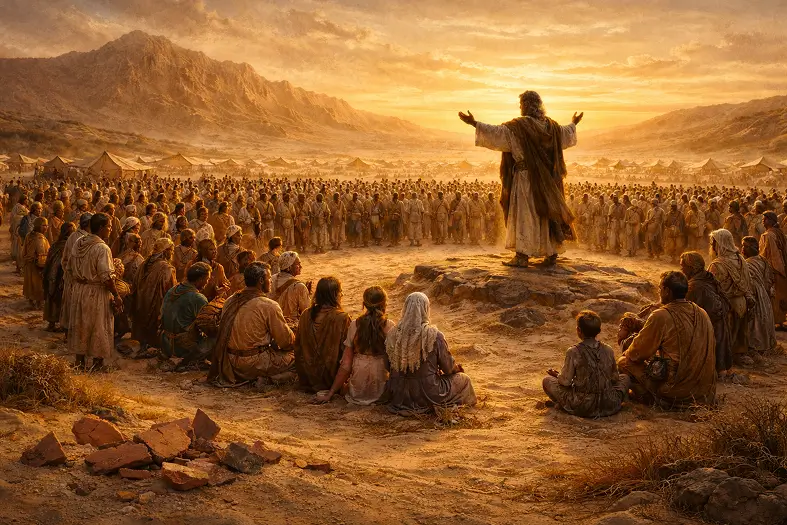
When the Torah begins describing the construction of the Mishkan, one might expect the narrative to open with architectural plans, sacred vessels, or the skilled artisans who will build the sanctuary. Instead, the Torah begins with something far more fundamental: Moshe gathers the entire nation together.
The sequence is striking. Before the Mishkan is described as a physical structure, the Torah reconstructs the people who will build it.
This ordering reflects a deeper truth about the nature of holiness in the Torah. Sacred spaces do not create holy societies. Rather, holy societies create sacred spaces. The Mishkan is therefore not the starting point of Israel’s spiritual life but its expression.
Rambam’s understanding of Torah society highlights this principle. The mitzvos of the Torah are not merely private disciplines of personal devotion. They form the framework of an ordered moral civilization. Courts of justice, communal worship, national festivals, and collective responsibility all shape a society that lives in alignment with the Divine will.
In this vision, holiness emerges through the organization of communal life.
The Mishkan stands at the center of that life, but it can only function if the nation itself has been restored to covenantal purpose. Moshe therefore begins by gathering the people, reminding them that they are not merely individuals wandering through the desert. They are a society bound together by Torah.
Only such a people can build a sanctuary capable of hosting the Divine Presence.
Abarbanel reads the opening of Vayakhel as a deliberate structural movement within the narrative of the Torah. The Mishkan cannot be understood merely as a collection of sacred objects. It represents the institutional heart of the covenant between Hashem and the people of Yisrael.
But institutions cannot function without a society that sustains them.
The sin of the Golden Calf had fractured the spiritual and social foundations of the nation. Trust had been shaken. Leadership had been challenged. The people had witnessed how quickly collective fear could unravel the clarity of Sinai.
The Torah therefore begins the Mishkan narrative not with construction but with reconstruction.
Moshe gathers כָּל עֲדַת בְּנֵי יִשְׂרָאֵל because the sanctuary must emerge from the unified life of the people. Every member of the nation will contribute to the project—through materials, craftsmanship, or labor. The Mishkan becomes the shared endeavor through which the people rediscover their identity as a covenant community.
The sanctuary is not simply built by the nation. It becomes the means through which the nation rebuilds itself.
Ramban explains that the Mishkan represents the continuation of the revelation at Sinai. When the Divine Presence descended upon the mountain, the people experienced an unparalleled moment of closeness with Hashem. The purpose of the Mishkan was to extend that presence into the daily life of the nation.
The sin of the Golden Calf threatened that possibility.
If the covenant had collapsed entirely, the Shechinah could no longer dwell among the people. The camp might remain physically intact, but the spiritual intimacy of Sinai would be lost.
The renewed command of the Mishkan therefore signals that the relationship has been restored. The sanctuary becomes the visible sign that the Divine Presence can once again reside within the nation.
But Ramban’s insight carries an important implication: the Mishkan cannot exist independently of the people who sustain it. The sanctuary is meaningful only because it stands within a living covenantal society. Without the people, the structure would be nothing more than an empty building.
The Divine Presence returns not to architecture but to a restored community.
Rabbi Jonathan Sacks often emphasized that societies recover from crisis not through words alone but through shared purpose.
After the Golden Calf, the people of Yisrael faced a profound moral rupture. The nation that had stood united at Sinai had fallen into confusion and fear. Such moments can easily produce lasting fragmentation. Distrust spreads. Confidence erodes. Communities struggle to rediscover a sense of common direction.
Moshe responds by giving the people a collective mission.
The Mishkan becomes the project through which the nation heals. Instead of remaining trapped in the memory of failure, the people are invited to build something holy together. Each individual contribution becomes part of a larger shared endeavor.
This transformation is essential for communal recovery. A society begins to heal when its members rediscover that they are responsible for building something greater than themselves.
The sanctuary therefore becomes not only a house for the Divine Presence but a structure through which the nation repairs its own unity.
Rav Avigdor Miller emphasized that the Torah does not allow people to remain paralyzed by past mistakes. Regret is necessary, but it is not the final stage of repentance.
The Mishkan represents the next step after remorse: constructive responsibility.
Moshe does not gather the people merely to remind them of their failure. He gathers them to give them a task. Every individual can contribute to rebuilding the relationship with Hashem.
Gold, silver, and copper are brought. Fabrics and skins are prepared. Skilled artisans dedicate their talents. Leaders organize the work. The entire nation becomes engaged in the creation of the sanctuary.
Through this process, the energy that once produced the Golden Calf is redirected toward holiness.
The people do not escape the memory of their mistake. Instead, they transform it into the motivation to build something greater.
Seen in its full context, the Mishkan becomes more than a sacred structure. It represents the architectural expression of a restored covenant.
The Torah deliberately places the gathering of the nation before the construction of the sanctuary because the true foundation of the Mishkan is the people themselves. Without a covenant community, sacred architecture has no meaning.
Moshe’s assembly therefore becomes the first act of rebuilding the nation after the Golden Calf. From that gathering emerges a society capable of creating a dwelling place for the Divine Presence.
The Mishkan stands as a powerful symbol of renewal. It reminds the people that even after a profound rupture, a covenant society can be rebuilt.
Out of failure comes responsibility. Out of responsibility comes unity. And out of unity emerges a sanctuary where the Shechinah can dwell.
The Torah’s description of the Mishkan offers a powerful model for societies recovering from crisis. Institutions alone cannot repair communities. Buildings, programs, and systems may provide structure, but they cannot restore trust or purpose by themselves.
True reconstruction begins with people.
When communities experience moral collapse or deep division, the instinct is often to focus on external solutions—new policies, new leadership, or new structures. While such changes may be necessary, they are not sufficient. The deeper work lies in rebuilding the shared commitments that hold a society together.
The Torah’s answer is collective responsibility.
When individuals unite around a meaningful purpose, communities begin to heal. Shared work creates renewed trust. Cooperation rebuilds relationships. Participation restores dignity.
This principle applies far beyond the wilderness of the Torah narrative. Families rebuild after conflict when members commit to caring for one another again. Communities recover from division when people work together toward common goals. Societies rediscover stability when citizens remember that they are partners in shaping the future.
The Mishkan teaches that sacred spaces are ultimately the reflection of sacred societies.
Holiness does not emerge from architecture alone. It emerges from people who gather, accept responsibility for one another, and dedicate their collective life to something greater than themselves.
When a community rebuilds itself in that spirit, the foundations of the Mishkan are laid once again.
📖 Sources


1.4 — The Architecture of National Repair
When the Torah begins describing the construction of the Mishkan, one might expect the narrative to open with architectural plans, sacred vessels, or the skilled artisans who will build the sanctuary. Instead, the Torah begins with something far more fundamental: Moshe gathers the entire nation together.
The sequence is striking. Before the Mishkan is described as a physical structure, the Torah reconstructs the people who will build it.
This ordering reflects a deeper truth about the nature of holiness in the Torah. Sacred spaces do not create holy societies. Rather, holy societies create sacred spaces. The Mishkan is therefore not the starting point of Israel’s spiritual life but its expression.
Rambam’s understanding of Torah society highlights this principle. The mitzvos of the Torah are not merely private disciplines of personal devotion. They form the framework of an ordered moral civilization. Courts of justice, communal worship, national festivals, and collective responsibility all shape a society that lives in alignment with the Divine will.
In this vision, holiness emerges through the organization of communal life.
The Mishkan stands at the center of that life, but it can only function if the nation itself has been restored to covenantal purpose. Moshe therefore begins by gathering the people, reminding them that they are not merely individuals wandering through the desert. They are a society bound together by Torah.
Only such a people can build a sanctuary capable of hosting the Divine Presence.
Abarbanel reads the opening of Vayakhel as a deliberate structural movement within the narrative of the Torah. The Mishkan cannot be understood merely as a collection of sacred objects. It represents the institutional heart of the covenant between Hashem and the people of Yisrael.
But institutions cannot function without a society that sustains them.
The sin of the Golden Calf had fractured the spiritual and social foundations of the nation. Trust had been shaken. Leadership had been challenged. The people had witnessed how quickly collective fear could unravel the clarity of Sinai.
The Torah therefore begins the Mishkan narrative not with construction but with reconstruction.
Moshe gathers כָּל עֲדַת בְּנֵי יִשְׂרָאֵל because the sanctuary must emerge from the unified life of the people. Every member of the nation will contribute to the project—through materials, craftsmanship, or labor. The Mishkan becomes the shared endeavor through which the people rediscover their identity as a covenant community.
The sanctuary is not simply built by the nation. It becomes the means through which the nation rebuilds itself.
Ramban explains that the Mishkan represents the continuation of the revelation at Sinai. When the Divine Presence descended upon the mountain, the people experienced an unparalleled moment of closeness with Hashem. The purpose of the Mishkan was to extend that presence into the daily life of the nation.
The sin of the Golden Calf threatened that possibility.
If the covenant had collapsed entirely, the Shechinah could no longer dwell among the people. The camp might remain physically intact, but the spiritual intimacy of Sinai would be lost.
The renewed command of the Mishkan therefore signals that the relationship has been restored. The sanctuary becomes the visible sign that the Divine Presence can once again reside within the nation.
But Ramban’s insight carries an important implication: the Mishkan cannot exist independently of the people who sustain it. The sanctuary is meaningful only because it stands within a living covenantal society. Without the people, the structure would be nothing more than an empty building.
The Divine Presence returns not to architecture but to a restored community.
Rabbi Jonathan Sacks often emphasized that societies recover from crisis not through words alone but through shared purpose.
After the Golden Calf, the people of Yisrael faced a profound moral rupture. The nation that had stood united at Sinai had fallen into confusion and fear. Such moments can easily produce lasting fragmentation. Distrust spreads. Confidence erodes. Communities struggle to rediscover a sense of common direction.
Moshe responds by giving the people a collective mission.
The Mishkan becomes the project through which the nation heals. Instead of remaining trapped in the memory of failure, the people are invited to build something holy together. Each individual contribution becomes part of a larger shared endeavor.
This transformation is essential for communal recovery. A society begins to heal when its members rediscover that they are responsible for building something greater than themselves.
The sanctuary therefore becomes not only a house for the Divine Presence but a structure through which the nation repairs its own unity.
Rav Avigdor Miller emphasized that the Torah does not allow people to remain paralyzed by past mistakes. Regret is necessary, but it is not the final stage of repentance.
The Mishkan represents the next step after remorse: constructive responsibility.
Moshe does not gather the people merely to remind them of their failure. He gathers them to give them a task. Every individual can contribute to rebuilding the relationship with Hashem.
Gold, silver, and copper are brought. Fabrics and skins are prepared. Skilled artisans dedicate their talents. Leaders organize the work. The entire nation becomes engaged in the creation of the sanctuary.
Through this process, the energy that once produced the Golden Calf is redirected toward holiness.
The people do not escape the memory of their mistake. Instead, they transform it into the motivation to build something greater.
Seen in its full context, the Mishkan becomes more than a sacred structure. It represents the architectural expression of a restored covenant.
The Torah deliberately places the gathering of the nation before the construction of the sanctuary because the true foundation of the Mishkan is the people themselves. Without a covenant community, sacred architecture has no meaning.
Moshe’s assembly therefore becomes the first act of rebuilding the nation after the Golden Calf. From that gathering emerges a society capable of creating a dwelling place for the Divine Presence.
The Mishkan stands as a powerful symbol of renewal. It reminds the people that even after a profound rupture, a covenant society can be rebuilt.
Out of failure comes responsibility. Out of responsibility comes unity. And out of unity emerges a sanctuary where the Shechinah can dwell.
The Torah’s description of the Mishkan offers a powerful model for societies recovering from crisis. Institutions alone cannot repair communities. Buildings, programs, and systems may provide structure, but they cannot restore trust or purpose by themselves.
True reconstruction begins with people.
When communities experience moral collapse or deep division, the instinct is often to focus on external solutions—new policies, new leadership, or new structures. While such changes may be necessary, they are not sufficient. The deeper work lies in rebuilding the shared commitments that hold a society together.
The Torah’s answer is collective responsibility.
When individuals unite around a meaningful purpose, communities begin to heal. Shared work creates renewed trust. Cooperation rebuilds relationships. Participation restores dignity.
This principle applies far beyond the wilderness of the Torah narrative. Families rebuild after conflict when members commit to caring for one another again. Communities recover from division when people work together toward common goals. Societies rediscover stability when citizens remember that they are partners in shaping the future.
The Mishkan teaches that sacred spaces are ultimately the reflection of sacred societies.
Holiness does not emerge from architecture alone. It emerges from people who gather, accept responsibility for one another, and dedicate their collective life to something greater than themselves.
When a community rebuilds itself in that spirit, the foundations of the Mishkan are laid once again.
📖 Sources


1.4 — The Architecture of National Repair
Exodus 25:8 — וְעָשׂוּ לִי מִקְדָּשׁ
The command to build the Mishkan represents the physical expression of the restored covenant between Hashem and the people. The sanctuary becomes the central institution through which the nation organizes its service of the Divine.
Numbers 5:7 — וְהִתְוַדּוּ אֶת חַטָּאתָם אֲשֶׁר עָשׂוּ
The rebuilding of the nation through the Mishkan reflects the process of teshuvah following the Golden Calf. Repentance culminates not only in confession but in the transformation of life through renewed devotion to Hashem.
Leviticus 19:18 — וְאָהַבְתָּ לְרֵעֲךָ כָּמוֹךָ
The Mishkan is built through the collective contributions of the entire nation. This shared effort reinforces the bonds of responsibility and unity that allow a covenant community to flourish.
Deuteronomy 28:9 — וְהָלַכְתָּ בִּדְרָכָיו
The restoration of the covenant after the Golden Calf reflects the Divine attributes of mercy and patience. A society that walks in the ways of Hashem rebuilds itself through justice, compassion, and responsibility.


1.4 — The Architecture of National Repair
Moshe gathers the entire nation before presenting the instructions for the Mishkan. This sequence reveals that the rebuilding of the covenant community precedes the construction of sacred space. The Torah emphasizes that the sanctuary emerges from a restored society united in service of Hashem. The architectural project of the Mishkan therefore reflects the deeper reconstruction of the nation itself after the rupture of the Golden Calf.

Dive into mitzvos, tefillah, and Torah study—each section curated to help you learn, reflect, and live with intention. New insights are added regularly, creating an evolving space for spiritual growth.

Explore the 613 mitzvos and uncover the meaning behind each one. Discover practical ways to integrate them into your daily life with insights, sources, and guided reflection.

Learn the structure, depth, and spiritual intent behind Jewish prayer. Dive into morning blessings, Shema, Amidah, and more—with tools to enrich your daily connection.

Each week’s parsha offers timeless wisdom and modern relevance. Explore summaries, key themes, and mitzvah connections to deepen your understanding of the Torah cycle.