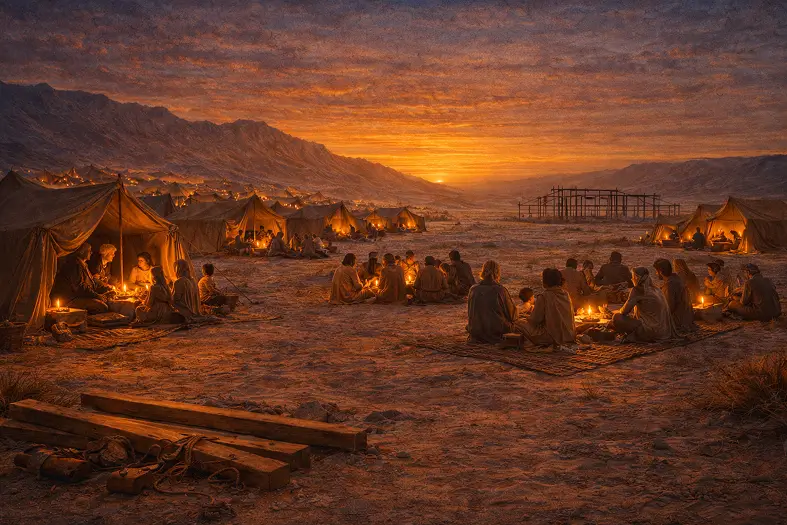
2.1 — Why Shabbos Comes First
Immediately after Moshe gathers the people, the Torah delivers an unexpected command. Before describing the donations for the Mishkan, before mentioning the artisans, and before discussing any details of the sanctuary’s construction, Moshe reminds the nation about Shabbos:
“שֵׁשֶׁת יָמִים תֵּעָשֶׂה מְלָאכָה וּבַיּוֹם הַשְּׁבִיעִי יִהְיֶה לָכֶם קֹדֶשׁ שַׁבַּת שַׁבָּתוֹן לַה׳.”
At first glance, this placement seems puzzling. The parsha is about building the Mishkan. Why interrupt the narrative with a command about Shabbos?
Rashi explains that the Torah introduces Shabbos here in order to establish a critical boundary. The construction of the Mishkan, despite its sacred purpose, does not override the sanctity of Shabbos. Even the most holy national project must stop when the seventh day arrives.
This clarification is essential. The Mishkan is the dwelling place of the Divine Presence. Its construction is among the most elevated acts the people can perform. Yet the Torah insists that this work must pause every seventh day.
By placing Shabbos first, the Torah teaches that holiness is not defined only by what we build, but by the limits we are willing to observe.
Ramban deepens the meaning of this ordering. The Mishkan represents the continuation of the revelation at Sinai — a place where the Divine Presence dwells among the people. Yet even such a sanctuary does not eclipse the sanctity of Shabbos.
The Torah therefore places the commandment of Shabbos before the instructions for the Mishkan to establish a hierarchy of holiness.
Sacred space is extraordinary. It allows human beings to gather around a visible center of Divine service. But sacred time is more fundamental. Shabbos is woven directly into the rhythm of creation itself. Long before the Mishkan was commanded, the seventh day had already been sanctified by Hashem at the beginning of the world.
The Mishkan belongs to history. Shabbos belongs to creation.
This is why the Torah emphasizes that even the work of building the sanctuary must cease when Shabbos arrives. The holiness of time sets the boundaries within which the holiness of space can exist.
This hierarchy becomes even clearer in halachah itself: the Torah commands not only that labor cease on Shabbos, but that even the courts suspend judgment, teaching that sacred time governs productivity, construction, and even the administration of justice within the covenant community.
Rambam’s approach to mitzvos highlights another dimension of this teaching. Torah life is structured through disciplined boundaries. Holiness emerges not only through activity but through restraint.
Human societies naturally gravitate toward productivity. People measure success through achievement, construction, and progress. These instincts can produce remarkable accomplishments, but they can also create a world in which constant work becomes the defining rhythm of life.
Shabbos interrupts that rhythm.
By commanding that all labor cease on the seventh day, the Torah establishes a weekly reminder that human beings are not defined solely by what they produce. Even the building of the Mishkan—an undertaking of immense spiritual importance—cannot override this principle.
The discipline of Shabbos protects the dignity of the human soul. It reminds the nation that its ultimate purpose is not endless activity but alignment with the Divine order.
Rabbi Jonathan Sacks often described Shabbos as one of the Torah’s most revolutionary ideas. Ancient societies organized life around relentless labor, political power, or economic survival. The Torah introduced a radically different vision: a civilization built around sacred rest.
The placement of Shabbos before the Mishkan expresses this vision with remarkable clarity.
If the Torah had described the sanctuary first, readers might assume that building sacred institutions was the highest religious priority. Instead, the Torah pauses the narrative to remind the people that the rhythm of time itself carries holiness.
Shabbos democratizes spiritual life. Not everyone can build a sanctuary. Not everyone possesses artistic skill or material wealth. But every member of the nation can participate in the sanctification of time.
For one day each week, the entire society steps back from labor and recognizes that the world ultimately belongs to Hashem.
This shared experience creates a rhythm that unites the nation across generations.
Rav Avigdor Miller often emphasized how difficult the commandment of Shabbos can be for human beings. People naturally want to keep working, producing, and accomplishing. The instinct to build never truly disappears.
Shabbos teaches a different lesson: the ability to stop.
The people of Yisrael were about to begin constructing the Mishkan, the most sacred project of their generation. They might easily have believed that such work justified continuous effort. Surely the dwelling place of the Shechinah deserved every available hour.
The Torah insists otherwise.
Even the holiest construction must pause when Shabbos arrives. The builders must put down their tools. The artisans must stop their craftsmanship. The leaders must suspend the project entirely.
This weekly pause trains the soul to remember that the world is not sustained by human effort alone. Hashem is the true Creator, and the sanctity of Shabbos reminds the nation of that reality.
Learning when to stop becomes a form of spiritual wisdom.
Seen in its full context, the placement of Shabbos before the Mishkan reveals a profound principle of Torah life.
The Mishkan represents sacred space—a location where the Divine Presence dwells among the people. But the Torah reminds us that holiness does not begin with buildings. It begins with time.
Shabbos creates the rhythm through which a covenant community lives. Every week, the people pause from their labor and return their attention to the Creator of the world. This rhythm shapes the moral and spiritual character of the nation.
Only a society that understands the sanctity of time can properly build a sanctuary in space.
The Mishkan therefore stands within the framework established by Shabbos. Sacred architecture emerges within a civilization already shaped by sacred time.
This is why the Torah places Shabbos before the Mishkan to establish the priority of sacred time, yet in a remarkable reversal the very labors used to build the Mishkan become the definition of the labors forbidden on Shabbos, revealing that sacred space ultimately teaches us how to guard sacred time.
Modern life is defined by extraordinary productivity. Technology allows work to continue at every hour of the day. Messages arrive instantly. Businesses operate around the clock. The boundary between work and rest grows increasingly thin.
In such a world, the wisdom of Shabbos becomes even more striking.
The Torah teaches that a healthy society cannot exist without limits on productivity. Without such limits, people gradually lose the ability to step back from their work and reflect on the meaning of their lives.
Shabbos restores those boundaries.
For one day each week, the constant flow of activity stops. The tools of production are set aside. Families gather. Communities pray and learn together. Time itself becomes sacred.
This rhythm offers a powerful response to the pressures of modern culture. Instead of measuring life solely by productivity, Shabbos invites people to rediscover reflection, connection, and gratitude.
Technology may expand the possibilities of human achievement, but the Torah reminds us that achievement alone cannot define a meaningful life.
The holiness of Shabbos teaches that true freedom begins when we remember that the world does not belong to our work. It belongs to Hashem.
📖 Sources


2.1 — Why Shabbos Comes First
Immediately after Moshe gathers the people, the Torah delivers an unexpected command. Before describing the donations for the Mishkan, before mentioning the artisans, and before discussing any details of the sanctuary’s construction, Moshe reminds the nation about Shabbos:
“שֵׁשֶׁת יָמִים תֵּעָשֶׂה מְלָאכָה וּבַיּוֹם הַשְּׁבִיעִי יִהְיֶה לָכֶם קֹדֶשׁ שַׁבַּת שַׁבָּתוֹן לַה׳.”
At first glance, this placement seems puzzling. The parsha is about building the Mishkan. Why interrupt the narrative with a command about Shabbos?
Rashi explains that the Torah introduces Shabbos here in order to establish a critical boundary. The construction of the Mishkan, despite its sacred purpose, does not override the sanctity of Shabbos. Even the most holy national project must stop when the seventh day arrives.
This clarification is essential. The Mishkan is the dwelling place of the Divine Presence. Its construction is among the most elevated acts the people can perform. Yet the Torah insists that this work must pause every seventh day.
By placing Shabbos first, the Torah teaches that holiness is not defined only by what we build, but by the limits we are willing to observe.
Ramban deepens the meaning of this ordering. The Mishkan represents the continuation of the revelation at Sinai — a place where the Divine Presence dwells among the people. Yet even such a sanctuary does not eclipse the sanctity of Shabbos.
The Torah therefore places the commandment of Shabbos before the instructions for the Mishkan to establish a hierarchy of holiness.
Sacred space is extraordinary. It allows human beings to gather around a visible center of Divine service. But sacred time is more fundamental. Shabbos is woven directly into the rhythm of creation itself. Long before the Mishkan was commanded, the seventh day had already been sanctified by Hashem at the beginning of the world.
The Mishkan belongs to history. Shabbos belongs to creation.
This is why the Torah emphasizes that even the work of building the sanctuary must cease when Shabbos arrives. The holiness of time sets the boundaries within which the holiness of space can exist.
This hierarchy becomes even clearer in halachah itself: the Torah commands not only that labor cease on Shabbos, but that even the courts suspend judgment, teaching that sacred time governs productivity, construction, and even the administration of justice within the covenant community.
Rambam’s approach to mitzvos highlights another dimension of this teaching. Torah life is structured through disciplined boundaries. Holiness emerges not only through activity but through restraint.
Human societies naturally gravitate toward productivity. People measure success through achievement, construction, and progress. These instincts can produce remarkable accomplishments, but they can also create a world in which constant work becomes the defining rhythm of life.
Shabbos interrupts that rhythm.
By commanding that all labor cease on the seventh day, the Torah establishes a weekly reminder that human beings are not defined solely by what they produce. Even the building of the Mishkan—an undertaking of immense spiritual importance—cannot override this principle.
The discipline of Shabbos protects the dignity of the human soul. It reminds the nation that its ultimate purpose is not endless activity but alignment with the Divine order.
Rabbi Jonathan Sacks often described Shabbos as one of the Torah’s most revolutionary ideas. Ancient societies organized life around relentless labor, political power, or economic survival. The Torah introduced a radically different vision: a civilization built around sacred rest.
The placement of Shabbos before the Mishkan expresses this vision with remarkable clarity.
If the Torah had described the sanctuary first, readers might assume that building sacred institutions was the highest religious priority. Instead, the Torah pauses the narrative to remind the people that the rhythm of time itself carries holiness.
Shabbos democratizes spiritual life. Not everyone can build a sanctuary. Not everyone possesses artistic skill or material wealth. But every member of the nation can participate in the sanctification of time.
For one day each week, the entire society steps back from labor and recognizes that the world ultimately belongs to Hashem.
This shared experience creates a rhythm that unites the nation across generations.
Rav Avigdor Miller often emphasized how difficult the commandment of Shabbos can be for human beings. People naturally want to keep working, producing, and accomplishing. The instinct to build never truly disappears.
Shabbos teaches a different lesson: the ability to stop.
The people of Yisrael were about to begin constructing the Mishkan, the most sacred project of their generation. They might easily have believed that such work justified continuous effort. Surely the dwelling place of the Shechinah deserved every available hour.
The Torah insists otherwise.
Even the holiest construction must pause when Shabbos arrives. The builders must put down their tools. The artisans must stop their craftsmanship. The leaders must suspend the project entirely.
This weekly pause trains the soul to remember that the world is not sustained by human effort alone. Hashem is the true Creator, and the sanctity of Shabbos reminds the nation of that reality.
Learning when to stop becomes a form of spiritual wisdom.
Seen in its full context, the placement of Shabbos before the Mishkan reveals a profound principle of Torah life.
The Mishkan represents sacred space—a location where the Divine Presence dwells among the people. But the Torah reminds us that holiness does not begin with buildings. It begins with time.
Shabbos creates the rhythm through which a covenant community lives. Every week, the people pause from their labor and return their attention to the Creator of the world. This rhythm shapes the moral and spiritual character of the nation.
Only a society that understands the sanctity of time can properly build a sanctuary in space.
The Mishkan therefore stands within the framework established by Shabbos. Sacred architecture emerges within a civilization already shaped by sacred time.
This is why the Torah places Shabbos before the Mishkan to establish the priority of sacred time, yet in a remarkable reversal the very labors used to build the Mishkan become the definition of the labors forbidden on Shabbos, revealing that sacred space ultimately teaches us how to guard sacred time.
Modern life is defined by extraordinary productivity. Technology allows work to continue at every hour of the day. Messages arrive instantly. Businesses operate around the clock. The boundary between work and rest grows increasingly thin.
In such a world, the wisdom of Shabbos becomes even more striking.
The Torah teaches that a healthy society cannot exist without limits on productivity. Without such limits, people gradually lose the ability to step back from their work and reflect on the meaning of their lives.
Shabbos restores those boundaries.
For one day each week, the constant flow of activity stops. The tools of production are set aside. Families gather. Communities pray and learn together. Time itself becomes sacred.
This rhythm offers a powerful response to the pressures of modern culture. Instead of measuring life solely by productivity, Shabbos invites people to rediscover reflection, connection, and gratitude.
Technology may expand the possibilities of human achievement, but the Torah reminds us that achievement alone cannot define a meaningful life.
The holiness of Shabbos teaches that true freedom begins when we remember that the world does not belong to our work. It belongs to Hashem.
📖 Sources


2.1 — Why Shabbos Comes First
Exodus 23:12 — שֵׁשֶׁת יָמִים תַּעֲשֶׂה מַעֲשֶׂיךָ וּבַיּוֹם הַשְּׁבִיעִי תִּשְׁבֹּת
The Torah introduces the commandment of Shabbos at the beginning of Parshas Vayakhel to establish that sacred rest governs the rhythm of Jewish life. Even the construction of the Mishkan must cease on the seventh day, demonstrating that the sanctity of Shabbos stands above human productivity.
Exodus 20:10 — לֹא תַעֲשֶׂה כָל מְלָאכָה
The prohibition of melachah on Shabbos defines the boundary that protects sacred time. Chazal derive the categories of forbidden labor from the very activities used to construct the Mishkan, emphasizing that even this sacred project cannot override the sanctity of Shabbos.
Exodus 35:3 — לֹא תְבַעֲרוּ אֵשׁ
The Torah teaches that even the judicial system must pause on Shabbos. Courts may not administer punishments or carry out legal sentences on the seventh day. This mitzvah shows that the sanctity of Shabbos governs not only labor and construction but even the administration of justice within the covenant community.
Exodus 20:8 — זָכוֹר אֶת יוֹם הַשַּׁבָּת לְקַדְּשׁוֹ
The mitzvah of sanctifying Shabbos affirms that the seventh day is not merely a pause from work but a positive act of holiness. Through Kiddush and Havdalah, the Jewish people mark sacred time as a central pillar of covenant life.
Exodus 25:8 — וְעָשׂוּ לִי מִקְדָּשׁ
Although the Mishkan represents the dwelling place of the Divine Presence among the people, its construction remains subject to the sanctity of Shabbos. The Torah’s placement of the Shabbos commandment before the Mishkan instructions reveals that sacred time sets the framework within which sacred space is created.


2.1 — Why Shabbos Comes First
"שֵׁשֶׁת יָמִים תֵּעָשֶׂה מְלָאכָה וּבַיּוֹם הַשְּׁבִיעִי יִהְיֶה לָכֶם קֹדֶשׁ"
Moshe introduces the commandment of Shabbos immediately before presenting the instructions for building the Mishkan. The Torah deliberately establishes that the sanctity of Shabbos governs even the construction of the sanctuary. From this placement Chazal derive that the work of the Mishkan must cease on Shabbos, demonstrating that sacred time precedes sacred space in the hierarchy of holiness.

Dive into mitzvos, tefillah, and Torah study—each section curated to help you learn, reflect, and live with intention. New insights are added regularly, creating an evolving space for spiritual growth.

Explore the 613 mitzvos and uncover the meaning behind each one. Discover practical ways to integrate them into your daily life with insights, sources, and guided reflection.

Learn the structure, depth, and spiritual intent behind Jewish prayer. Dive into morning blessings, Shema, Amidah, and more—with tools to enrich your daily connection.

Each week’s parsha offers timeless wisdom and modern relevance. Explore summaries, key themes, and mitzvah connections to deepen your understanding of the Torah cycle.