Mitzvah #482 — Not to Murder: The Parsha Built on the Refusal to Kill
Parshas Shemos opens with a society that has crossed a moral threshold.
Pharaoh does not merely oppress.
He legislates death.
First through covert instruction to midwives.
Then through public decree:
“כָּל־הַבֵּן הַיִּלּוֹד הַיְאֹרָה תַּשְׁלִיכֻהוּ”
“Every newborn boy shall be cast into the Nile.” (Shemos 1:22)
This is not private violence. It is institutionalized murder.
The Torah’s response is equally deliberate: Parshas Shemos constructs a chain of resistance — midwives, women, a princess, and finally Moshe — each refusing, in a different way, to allow death to become normal.
Mitzvah #482 — Not to Murder — is not introduced here as a technical prohibition.
It is presented as the foundation of covenantal civilization.
The Torah is precise in its escalation.
Pharaoh begins by exploiting ambiguity — instructing the midwives quietly. When resistance frustrates him, he moves to open decree. Murder, once normalized, must become public to be sustained.
Rashi notes the moral inversion at work: Egypt reframes murder as policy, necessity, even security.
The issur of murder is not merely about individual acts. It is about what a society permits itself to become.
Once killing is justified for the sake of order, power, or fear, no life remains protected.
The Torah introduces the first resistance:
“וַתִּירֶאןָ הַמְיַלְּדֹת אֶת־הָאֱלֹקִים”
“The midwives feared G-d.” (Shemos 1:17)
Rashi emphasizes a crucial detail:
they did not merely refuse to kill — וַתְּחַיֶּיןָ — they gave life.
They provided food and water.
They sustained infants beyond the moment of birth.
Here the Torah defines yiras Shamayim not as inner piety, but as active protection of life under threat.
Murder is defeated not only by restraint, but by chessed that restores vulnerability to safety.
Next comes Pharaoh’s own daughter.
Bat-Paroh knows the decree. She knows the risk. And she knows exactly what the basket contains.
“וַתִּרְאֵהוּ אֶת־הַיֶּלֶד וְהִנֵּה־נַעַר בֹּכֶה”
“She saw the child — and behold, the boy was crying.” (Shemos 2:6)
The Torah lingers on seeing. Bat-Paroh refuses the anonymity required for murder. She recognizes a face.
The issur (prohibition) of murder is not yet legislated — yet it is intuitively upheld. The Torah teaches that the prohibition against killing is woven into the moral fabric of creation itself.
The final movement is Moshe.
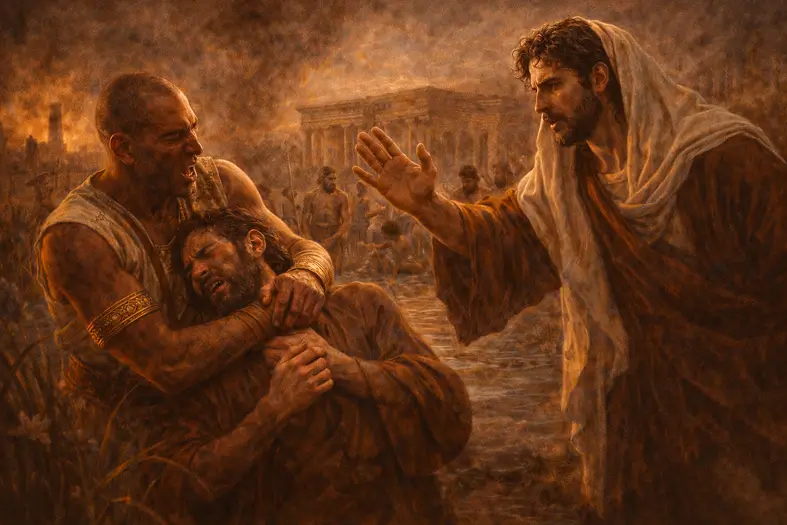
“וַיַּרְא אִישׁ מִצְרִי מַכֶּה אִישׁ עִבְרִי”
“He saw an Egyptian striking a Hebrew man.” (Shemos 2:11)
Moshe does not speak.
He does not wait.
He intervenes.
Ramban is careful here. He asks:
The Torah insists that even righteous intervention creates legal and moral complexity. Murder must be stopped — but the stopping itself demands scrutiny.
This tension will define Jewish law forever: urgency does not abolish responsibility.
From beginning to end, Shemos constructs a society-level refusal to kill:
This is not coincidence. It is architecture.
The Torah is teaching that civilization begins where murder ends — and ends where murder is tolerated.
Mitzvah #482 is not merely a negative commandment.
It is the precondition of all mitzvos.
A society that permits murder cannot sustain Torah, law, or holiness. Life must be protected before covenant can be received.
Parshas Shemos teaches that every generation faces Pharaoh’s temptation: to justify killing in the name of necessity.
The Torah answers unequivocally:
Redemption begins with the refusal to kill — and with the courage to protect life, even when power demands otherwise.
Before Sinai.
Before law.
Before revelation.
The Torah draws its first moral line in blood — and then refuses to cross it.
Parshas Shemos teaches that the issur retzichah is not only a commandment.
It is the bedrock of Jewish moral existence.
Where life is defended, covenant can begin.
📖 Sources


Mitzvah #482 — Not to Murder: The Parsha Built on the Refusal to Kill
Parshas Shemos opens with a society that has crossed a moral threshold.
Pharaoh does not merely oppress.
He legislates death.
First through covert instruction to midwives.
Then through public decree:
“כָּל־הַבֵּן הַיִּלּוֹד הַיְאֹרָה תַּשְׁלִיכֻהוּ”
“Every newborn boy shall be cast into the Nile.” (Shemos 1:22)
This is not private violence. It is institutionalized murder.
The Torah’s response is equally deliberate: Parshas Shemos constructs a chain of resistance — midwives, women, a princess, and finally Moshe — each refusing, in a different way, to allow death to become normal.
Mitzvah #482 — Not to Murder — is not introduced here as a technical prohibition.
It is presented as the foundation of covenantal civilization.
The Torah is precise in its escalation.
Pharaoh begins by exploiting ambiguity — instructing the midwives quietly. When resistance frustrates him, he moves to open decree. Murder, once normalized, must become public to be sustained.
Rashi notes the moral inversion at work: Egypt reframes murder as policy, necessity, even security.
The issur of murder is not merely about individual acts. It is about what a society permits itself to become.
Once killing is justified for the sake of order, power, or fear, no life remains protected.
The Torah introduces the first resistance:
“וַתִּירֶאןָ הַמְיַלְּדֹת אֶת־הָאֱלֹקִים”
“The midwives feared G-d.” (Shemos 1:17)
Rashi emphasizes a crucial detail:
they did not merely refuse to kill — וַתְּחַיֶּיןָ — they gave life.
They provided food and water.
They sustained infants beyond the moment of birth.
Here the Torah defines yiras Shamayim not as inner piety, but as active protection of life under threat.
Murder is defeated not only by restraint, but by chessed that restores vulnerability to safety.
Next comes Pharaoh’s own daughter.
Bat-Paroh knows the decree. She knows the risk. And she knows exactly what the basket contains.
“וַתִּרְאֵהוּ אֶת־הַיֶּלֶד וְהִנֵּה־נַעַר בֹּכֶה”
“She saw the child — and behold, the boy was crying.” (Shemos 2:6)
The Torah lingers on seeing. Bat-Paroh refuses the anonymity required for murder. She recognizes a face.
The issur (prohibition) of murder is not yet legislated — yet it is intuitively upheld. The Torah teaches that the prohibition against killing is woven into the moral fabric of creation itself.
The final movement is Moshe.
“וַיַּרְא אִישׁ מִצְרִי מַכֶּה אִישׁ עִבְרִי”
“He saw an Egyptian striking a Hebrew man.” (Shemos 2:11)
Moshe does not speak.
He does not wait.
He intervenes.
Ramban is careful here. He asks:
The Torah insists that even righteous intervention creates legal and moral complexity. Murder must be stopped — but the stopping itself demands scrutiny.
This tension will define Jewish law forever: urgency does not abolish responsibility.
From beginning to end, Shemos constructs a society-level refusal to kill:
This is not coincidence. It is architecture.
The Torah is teaching that civilization begins where murder ends — and ends where murder is tolerated.
Mitzvah #482 is not merely a negative commandment.
It is the precondition of all mitzvos.
A society that permits murder cannot sustain Torah, law, or holiness. Life must be protected before covenant can be received.
Parshas Shemos teaches that every generation faces Pharaoh’s temptation: to justify killing in the name of necessity.
The Torah answers unequivocally:
Redemption begins with the refusal to kill — and with the courage to protect life, even when power demands otherwise.
Before Sinai.
Before law.
Before revelation.
The Torah draws its first moral line in blood — and then refuses to cross it.
Parshas Shemos teaches that the issur retzichah is not only a commandment.
It is the bedrock of Jewish moral existence.
Where life is defended, covenant can begin.
📖 Sources


“The Anti-Murder Axis — Part I
Mitzvah #482 — Not to Murder: The Parsha Built on the Refusal to Kill”
לֹא תִרְצָח
The Torah introduces the prohibition of murder long before it is formally commanded at Sinai. In Parshas Shemos, murder becomes state policy through Pharaoh’s decree of infanticide, marking the collapse of moral civilization. The Torah’s response is deliberate and cumulative: the midwives actively preserve life, Bat-Paroh refuses to anonymize a threatened child, and Moshe intervenes to stop lethal violence. These acts establish that the issur of murder is not merely a legal boundary, but a foundational moral truth that precedes legislation.
When the command “לֹא תִרְצָח” is finally given in Parshas Yisro, it does not introduce a new ethic—it ratifies one already lived. The Torah teaches that covenantal society can only exist where life is inviolable, where killing is never normalized, justified, or bureaucratized. Mitzvah #482 thus functions as the bedrock upon which Torah law, justice, and redemption are built: before revelation can be received, murder must be refused.
אֶת־ה׳ אֱלֹקֶיךָ תִּירָא
The Torah explicitly links the midwives’ actions to yiras Elokim:
“וַתִּירֶאןָ הַמְיַלְּדֹת אֶת־הָאֱלֹקִים”.
Rashi explains that this fear was not emotional reverence, but courageous moral resolve. They did not merely refrain from killing; “וַתְּחַיֶּיןָ”—they actively sustained life with food and water. Parshas Shemos thus defines yiras Shamayim as the willingness to defy authority when authority demands blood. Fear of Hashem is revealed not in ritual alone, but in the refusal to participate in murder, even at personal risk.
לֹא תַעֲמֹד עַל דַּם רֵעֶךָ
Parshas Shemos repeatedly condemns moral passivity in the face of lethal danger. The midwives refuse silence, Bat-Paroh intervenes rather than withdrawing, and Moshe acts when he sees an Egyptian striking a Hebrew. Each episode illustrates that preventing murder requires more than abstention—it requires action. Mitzvah #489 emerges here as the active counterpart to “לֹא תִרְצָח”: not only must one refrain from killing, one must refuse to be a bystander. The Torah teaches that a society that tolerates indifference to bloodshed has already surrendered the sanctity of life.


“The Anti-Murder Axis — Part I
Mitzvah #482 — Not to Murder: The Parsha Built on the Refusal to Kill”
Parshas Shemos presents the Torah’s first sustained confrontation with murder as a societal policy. Pharaoh escalates from covert instructions to the midwives into an open decree of infanticide, transforming killing into state law. In response, the Torah constructs a chain of life-preserving resistance: the midwives actively sustain newborns, Bat-Paroh refuses to anonymize a threatened child, and Moshe intervenes directly to stop lethal violence. These episodes are not isolated moral anecdotes; together they form a narrative framework in which the refusal to kill becomes the condition for redemption. Shemos thus establishes the ethical groundwork of Mitzvah #482 before it is formally commanded, teaching that covenantal society cannot exist where murder is normalized or justified.
Parshas Yisro transforms the moral resistance of Shemos into binding law. At Sinai, the prohibition of murder is articulated explicitly within the Ten Commandments:
“לֹא תִרְצָח”
“You shall not murder.” (Exodus 20:13)
By placing this commandment at the heart of revelation, the Torah affirms that the defense of life is not merely pragmatic ethics, but a Divine imperative foundational to covenantal existence. The transition from Shemos to Yisro reveals the Torah’s method: lived resistance to injustice precedes legislation, and moral intuition is ratified through command. The narrative refusal to kill becomes the legal boundary upon which Torah society is built, establishing Mitzvah #482 as a pillar of law, justice, and holiness.

Dive into mitzvos, tefillah, and Torah study—each section curated to help you learn, reflect, and live with intention. New insights are added regularly, creating an evolving space for spiritual growth.

Explore the 613 mitzvos and uncover the meaning behind each one. Discover practical ways to integrate them into your daily life with insights, sources, and guided reflection.

Learn the structure, depth, and spiritual intent behind Jewish prayer. Dive into morning blessings, Shema, Amidah, and more—with tools to enrich your daily connection.

Each week’s parsha offers timeless wisdom and modern relevance. Explore summaries, key themes, and mitzvah connections to deepen your understanding of the Torah cycle.