"The Light That Never Went Out"

Mitzvah Minute Logo Icon

Chanukah and the Hidden Presence of Hashem Within the World

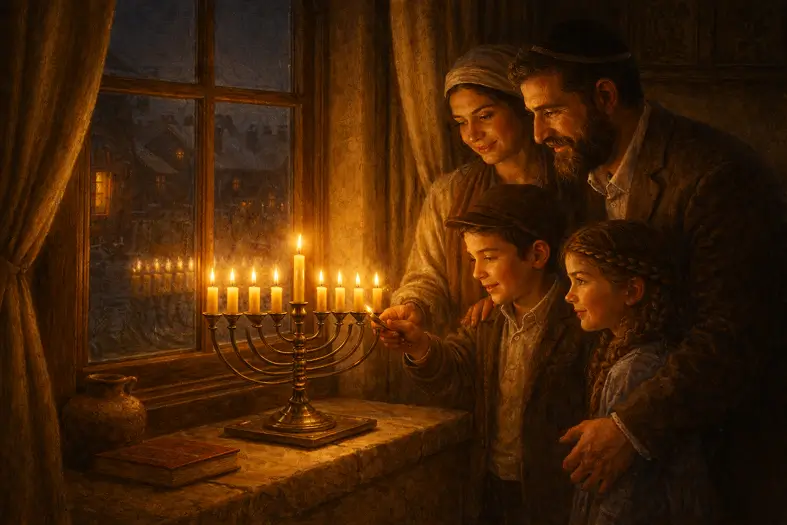
A family lighting Chanukah Menorah
Chanukah is often framed as the victory of light over darkness, but this essay reveals a deeper Chassidic truth: the light of Chanukah does not abolish darkness—it enters it. Drawing on the teachings of the Baal Shem Tov, Kedushas Levi, and Sfas Emes, The Light That Never Went Out explores Chanukah as a miracle that unfolds within the natural world, through human action, humility, and spiritual searching. From the holiness of the unusable flame to the hidden Menorah that still burns within every soul, this Dvar Torah traces how Divine presence is revealed not by escaping the world, but by sanctifying it. Chanukah emerges not as a commemoration of the past, but as a living avodah—teaching how to find Hashem’s light precisely in concealment, struggle, and ordinary life.

"The Light That Never Went Out"

Chanukah and the Hidden Presence of Hashem Within the World

Chanukah is often described as the festival of light triumphing over darkness. Yet this formulation, while poetic, risks missing the deeper Chassidic truth of the days. Chanukah is not merely about light defeating darkness, nor even about miracles interrupting history. It is about something far more subtle and demanding: the revelation of Divine light within concealment, inside the natural order, and through human action. The light of Chanukah does not abolish darkness; it enters it. It does not replace the world; it sanctifies it.

This is why the miracle of Chanukah is described in the blessing as [בַּיָּמִים הָהֵם בַּזְּמַן הַזֶּה – “in those days, at this time”]. Unlike the miracles of Yetziat Mitzrayim, which shattered nature from above, the miracle of Chanukah unfolds within time, within history, within the very structures of human effort and resistance. The Chashmonaim fought; oil was sought; candles were lit. And yet, precisely there—within the realm of the ordinary—the light revealed itself as something infinite.

A Miracle That Wears the Garments of Nature

Chassidic thought consistently emphasizes that Chanukah represents נס בתוך הטבע—a miracle clothed in nature. The Kedushas Levi explains that while on Rosh Hashanah and Yom Kippur Hashem decrees goodness from above, on Chanukah Israel sees the good with the intellect, through perception and understanding. Chanukah is therefore celebrated with נרות, with light that is meant to be seen. As the Torah says, [נֵר מִצְוָה וְתוֹרָה אוֹר – “A mitzvah is a candle and Torah is light”] (Mishlei 6:23). The candle is the vessel; the light is what fills it.

This distinction is essential. The candle itself is physical—oil, wick, flame. It belongs to the world of action. But the light that emerges transcends the material form that carries it. So too, the miracle of Chanukah did not negate the human struggle; it illuminated it. The Chashmonaim acted with courage and sacrifice, yet they never attributed victory to their own strength. They were called [חַלָּשִׁים – “weak”] not because they lacked might, but because they understood that true power does not originate in human hands. Their weakness was spiritual humility—the recognition that [כִּי לַה׳ הַמִּלְחָמָה – “the battle belongs to Hashem”].

This is why we recite after lighting the candles the verse [וִיהִי נֹעַם ה׳ אֱלֹקֵינוּ עָלֵינוּ… מַעֲשֵׂה יָדֵינוּ כּוֹנְנָה עָלֵינוּ – “May the pleasantness of Hashem our G-d be upon us… establish the work of our hands”] (Tehillim 90:17). The work is ours; the establishment is His. Chanukah sanctifies human action without divinizing it.

  • Chanukah represents a נס בתוך הטבע — a miracle revealed within human action, not apart from it.
  • The Hasmoneans’ strength lay not in power, but in humility, recognizing that victory flows only from Hashem.
  • Human effort is sanctified on Chanukah — the work is ours, the success is His.
  • Light on Chanukah is meant to be seen and understood, not merely celebrated emotionally.

Why the Light May Not Be Used

One of the most striking halachic features of Chanukah is the prohibition [אֵין לָנוּ רְשׁוּת לְהִשְׁתַּמֵּשׁ בָּהֶם – “we are not permitted to make use of them”]. The Kedushas Levi offers a penetrating parable: a great king visits the home of a poor man. One person rejoices in seeing the king’s wealth; another rejoices simply in the fact that the king has entered his home. The first joy is about benefit; the second is about presence.

To use the light would be to reduce it to utility—to treat it as a means rather than an encounter. Chanukah light represents not what Hashem gives, but that Hashem is present. It is the joy of intimacy, not advantage. This is why the light is holy. It is not meant to illuminate our tasks; it is meant to illuminate us.

This distinction reveals a profound spiritual posture. There are times when a person serves Hashem for blessing, clarity, success. And there are rarer moments when a person serves Hashem simply because He is there. Chanukah invites us into that higher posture—not escape from the world, but elevation of our relationship within it.

  • Chanukah light represents Divine presence, not practical benefit.
  • To “use” the light would reduce encounter to utility.
  • True joy on Chanukah is not receiving something from Hashem, but hosting Hashem with us.
  • The prohibition reflects a higher spiritual posture: relationship over reward.

The Menorah That Was Never Extinguished

Chassidic teaching goes even further. According to the Sfas Emes, the Menorah was not merely destroyed or lost; it was hidden. And what is hidden is not absent. The light that burned by miracle in the Beit HaMikdash continues to burn, concealed, awaiting reawakening. The mitzvah of lighting Chanukah candles does not create new light; it awakens existing light.

This is why the blessing is formulated not as “to light a candle on Chanukah,” but [לְהַדְלִיק נֵר חֲנֻכָּה – “to kindle the Chanukah light”]. There is a Chanukah light already. Our task is to reveal it.

The Sfas Emes explains that the Mishkan and the Mikdash are not only historical structures; they exist within every Jew. As the verse states, [וְשָׁכַנְתִּי בְּתוֹכָם – “I will dwell within them”] (Shemot 25:8)—not within it, but within them. Each soul contains a נקודה טהורה, a pure inner point that remains untouched by exile, failure, or spiritual fatigue. That point is often hidden, buried beneath layers of habit, fear, and distraction. To find it requires light.

This is the deeper meaning of the verse [נֵר ה׳ נִשְׁמַת אָדָם חֹפֵשׂ כָּל חַדְרֵי בָטֶן – “The candle of Hashem is the soul of man, searching all the inner chambers”] (Mishlei 20:27). Candles are tools of searching. They do not erase darkness; they allow one to navigate it. Chanukah teaches that the hidden chambers of the soul are not to be feared—they are to be illuminated.

  • The Menorah was not destroyed — it was hidden, and hidden light still exists.
  • The mitzvah of lighting does not create holiness; it reveals what already burns.
  • Every Jew contains a נקודה טהורה, untouched by exile or failure.
  • Chanukah reactivates dormant holiness rather than introducing something new.

Searching with Candles: Avodah in the Dark

The Sfas Emes emphasizes that darkness itself is what necessitates candles. When the Mikdash stood, Divine vitality was obvious. Today, it is concealed. But concealment does not negate reality; it demands effort. The Gemara teaches, [אֲחַפֵּשׂ אֶת יְרוּשָׁלַיִם בַּנֵּרוֹת – “I will search Jerusalem with candles”] (Tzephaniah 1:12). Searching implies confidence that something is there.

Chanukah thus becomes a discipline of spiritual searching. Through mitzvot performed with vitality—דְּחִילוּ וּרְחִימוּ, awe and love—the candle becomes a vessel capable of receiving light. Even when enthusiasm fades, even when inspiration wanes, the act itself still holds power. As Chazal debate whether הַדְלָקָה עוֹשָׂה מִצְוָה or הַנָּחָה עוֹשָׂה מִצְוָה, Chassidut teaches that both are true. Ideally, a mitzvah is performed with flame-like passion. But even when one can only “set” the candle without fire, the act still matters. The vessel remains.

This is one of Chanukah’s most compassionate teachings: spiritual life is not invalidated by dimness. Even a small flame pushes back vast darkness.

  • Darkness does not negate holiness; it necessitates searching.
  • Candles are tools for discovery, not erasure of concealment.
  • Mitzvos performed even without inspiration still function as vessels for light.
  • Chanukah validates spiritual persistence when enthusiasm wanes.

Hallel and Hoda’ah: Two Ways of Seeing Light

Chanukah is marked by Hallel and Hoda’ah—praise and gratitude. Chassidic tradition links these to two modes of spiritual perception. Hallel is praise for revealed goodness, for miracles that are unmistakably light. Hoda’ah, by contrast, is gratitude that emerges after struggle, when one recognizes that what once appeared as darkness was also part of Divine kindness.

As the verse states, [אוֹדְךָ ה׳ כִּי עֲנִיתָנִי – “I thank You, Hashem, for You afflicted me”] (Tehillim 118:21). Only in hindsight can affliction be seen as grace. Chanukah includes both: the open miracle of victory and oil, and the deeper realization that even the exile of Greece—its intellectual arrogance, its assault on holiness—served to refine and clarify Israel’s bond with Torah.

This duality is essential. Without Hallel, one risks spiritual exhaustion. Without Hoda’ah, one risks shallow faith. Chanukah weaves both together, teaching that light exists both in clarity and in complexity.

  • Hallel praises revealed kindness; Hoda’ah thanks Hashem for struggles understood in hindsight.
  • Chanukah requires both: joy in victory and gratitude for the refining exile itself.
  • Mature faith includes the ability to thank Hashem not only despite difficulty, but for it.
  • Light is recognized both in clarity and in complexity.

The Light That Never Went Out

Chanukah ultimately testifies that Divine light is not fragile. It does not depend on ideal conditions, pristine sanctuaries, or uninterrupted inspiration. It burns in impurity, in scarcity, in concealment. It burns within the world, not outside it. And it burns within the human soul.

The Menorah was hidden—but it was never extinguished. Each year, when we light the Chanukah candles, we are not reenacting history. We are participating in an ongoing reality. We stand at the doorway—between inside and outside, between light and darkness—and we declare that even here, especially here, Hashem is present.

That is why the light may not be used. It is not functional illumination; it is relational illumination. It does not help us see what we are doing—it reminds us who we are.

And perhaps this is the deepest gift of Chanukah: not that darkness disappears, but that we learn how to live faithfully within it, carrying a flame that no exile can extinguish, a light that never truly went out.

📖 Sources

Organized by:
Boaz Solowitch
December 17, 2025
Mitzvah Minute Logo Icon

Connections

Mitzvah Minute Logo Icon

Mitzvah Links

Mitzvah 1

To know there is a G‑d
A Siddur
Learn this Mitzvah

Mitzvah 1

1
To know there is a G‑d

Mitzvah 3

To know that He is One
A Siddur
Learn this Mitzvah

Mitzvah 3

3
To know that He is One

Mitzvah 4

To love Him
A Siddur
Learn this Mitzvah

Mitzvah 4

4
To love Him

Mitzvah 5

To fear Him
A Siddur
Learn this Mitzvah

Mitzvah 5

5
To fear Him

Mitzvah 6

To sanctify His Name
A Siddur
Learn this Mitzvah

Mitzvah 6

6
To sanctify His Name

Mitzvah 11

To emulate His ways
A Siddur
Learn this Mitzvah

Mitzvah 11

11
To emulate His ways

Mitzvah 22

To learn Torah and teach it
A Siddur
Learn this Mitzvah

Mitzvah 22

22
To learn Torah and teach it

Mitzvah 76

To say the Shema twice daily
A Siddur
Learn this Mitzvah

Mitzvah 76

76
To say the Shema twice daily

Mitzvah 121

To afflict and cry out before G‑d in times of catastrophe
A Siddur
Learn this Mitzvah

Mitzvah 121

121
To afflict and cry out before G‑d in times of catastrophe
The Luchos - Ten Commandments
View Mitzvah Notes

Mitzvah Reference Notes

"x" close page navigation button

Mitzvah Reference Notes

"The Light That Never Went Out"

Mitzvah #1 — To Know There Is a G-d (Exodus 20:2)

Chanukah’s central teaching is not merely that miracles occur, but that Hashem is present within the natural world. The light of the Menorah reveals knowledge of Hashem not through suspension of reality, but through illumination within it. This mitzvah is fulfilled on Chanukah not through abstract belief alone, but through lived recognition — seeing Divine presence revealed through history, effort, and time.

Mitzvah #3 — To Know That He Is One (Deuteronomy 6:4)

The Chanukah light affirms Divine unity by demonstrating that nature and miracle are not competing forces. By revealing a נס בתוך הטבע, Chanukah teaches that all domains — physical and spiritual alike — emerge from a single, unified Source. The oneness of Hashem is perceived not only in transcendence, but in the seamless integration of holiness within the ordinary.

Mitzvah #4 — To Love Him (Deuteronomy 6:5)

The prohibition against using the Chanukah light reflects a relationship rooted in love rather than benefit. Loving Hashem means seeking closeness, not utility — presence, not reward. Chanukah cultivates a form of ahavah expressed through intimacy: delighting in Divine nearness without turning it into a means for personal gain.

Mitzvah #5 — To Fear Him (Deuteronomy 10:20)

The sanctity of the Chanukah flame demands reverence. By setting the light apart — visible yet untouchable — Chanukah instills yirah: an awareness that one stands before holiness. This reverence does not distance the individual from the world, but refines one’s engagement with it, teaching restraint, humility, and awe within daily life.

Mitzvah #6 — To Sanctify His Name (Leviticus 22:32)

The Chashmonaim’s actions embodied Kiddush Hashem through courage, humility, and fidelity to Torah under pressure. Their victory was not framed as human triumph, but as the revelation of Divine sovereignty through human commitment. Each lighting of the Chanukah candles continues this sanctification, proclaiming that Hashem’s presence endures even in exile and concealment.

Mitzvah #11 — To Emulate His Ways (Deuteronomy 28:9)

Just as Hashem brings light into darkness, the avodah of Chanukah calls upon the individual to do the same — gently, persistently, and without erasing complexity. By acting with patience, humility, and moral clarity within an imperfect world, one imitates Divine conduct, revealing light through compassionate and faithful action.

Mitzvah #22 — To Learn Torah and Teach It (Deuteronomy 6:7)

Chanukah emphasizes seeing and understanding rather than spectacle alone. Torah study on Chanukah deepens perception, enabling the intellect to recognize Divine order within history. The Chanukah lights themselves become a form of teaching — silent yet profound — transmitting Torah insight through illumination rather than words.

Mitzvah #76 — To Say the Shema Twice Daily (Deuteronomy 6:7)

The message of Chanukah resonates with the declaration of [שְׁמַע יִשְׂרָאֵל… ה׳ אֶחָד – “Hear, O Israel… Hashem is One”], reinforcing awareness of Divine unity amid fragmentation. Lighting the Menorah near the threshold of the home echoes the Shema’s call to affirm faith both inside and outside, privately and publicly.

Mitzvah #121 — To Cry Out to Hashem in Times of Distress (Numbers 10:9)

Chanukah emerges from a period of spiritual and cultural siege. The response was not despair, but turning toward Hashem through action and trust. The festival thus models how calling out to Hashem need not be verbal alone; steadfast mitzvah observance and quiet faith can themselves become a cry that summons Divine light.

Parsha Links

מִקֵּץ – Mikeitz

Haftarah : Kings I 3:15-4:1
A Siddur
Learn this Parsha

מִקֵּץ – Mikeitz

מִקֵּץ – Mikeitz

וַיִּגַּשׁ – Vayigash

Haftarah: Ezekiel 37:15-28
A Siddur
Learn this Parsha

וַיִּגַּשׁ – Vayigash

וַיִּגַּשׁ – Vayigash
The Luchos - Ten Commandments
View Parsha Notes
"x" close page navigation button

Parsha Reference Notes

"The Light That Never Went Out"

Parshas Mikeitz (Bereishit 41–44)

Yosef Before Pharaoh — Light Within the System (41:16)
[בִּלְעָדָי אֱלֹקִים יַעֲנֶה אֶת שְׁלוֹם פַּרְעֹה – “Not from myself; G-d will answer Pharaoh’s peace.”]
Yosef stands at the height of political power, fully embedded within Egypt’s natural order, yet explicitly removes himself as the source of wisdom or success. His stance embodies the Chanukah model of Divine light revealed within human action, not outside it. Yosef acts decisively, but the illumination he brings is rooted in humility and recognition that all insight flows from Hashem.

Wisdom Through Vision — Seeing the Good Intellectually (41:33–36)
Yosef’s plan for Egypt does not rely on supernatural spectacle, but on clear perception, foresight, and disciplined action. This reflects the Chanukah emphasis on ראייה—seeing and understanding goodness with the intellect. Like the Chanukah lights, Yosef’s wisdom is meant to be seen and recognized, revealing Divine order within the natural processes of famine and abundance.

Hidden Providence During Famine (41:53–57)
The years of scarcity conceal blessing within hardship, forcing Egypt and the surrounding nations to confront dependence and vulnerability. This mirrors the Chanukah teaching that concealment does not negate Divine presence, but invites deeper recognition of it. Just as light emerges specifically in darkness, Yosef’s leadership reveals Hashem’s guidance precisely through crisis.

Parshas Vayigash (Bereishit 44:18–47:27)

Yehudah Steps Forward — Moral Light in Darkness (44:18)
[וַיִּגַּשׁ אֵלָיו יְהוּדָה – “And Yehudah approached him.”]
Yehudah’s courageous approach represents light emerging from moral responsibility rather than force. His willingness to confront power without certainty of outcome parallels the Chanukah stance of acting within darkness while trusting Divine presence. The redemption of the family begins not with revelation, but with ethical clarity.

Yosef Revealed — Light Long Concealed (45:1–3)
When Yosef finally reveals himself, the Torah emphasizes years of hidden identity and silent endurance. This moment reflects the Chanukah principle that hidden light was never extinguished, only concealed until its time to emerge. Yosef’s disclosure is not the creation of something new, but the unveiling of what was present all along.

Goshen — Sanctity Preserved Within Exile (47:6)
Yosef’s placement of his family in Goshen establishes a space of spiritual continuity inside Egyptian exile. Without walls or miracles, holiness is preserved through structure and intention. This anticipates the Chanukah message that sanctity can exist within the world, not only apart from it, and that Divine light can dwell even in foreign terrain.

Mitzvah Minute
Mitzvah Minute Logo

Learn more.

Dive into mitzvos, tefillah, and Torah study—each section curated to help you learn, reflect, and live with intention. New insights are added regularly, creating an evolving space for spiritual growth.

Luchos
Live a commandment-driven life

Mitzvah

Explore the 613 mitzvos and uncover the meaning behind each one. Discover practical ways to integrate them into your daily life with insights, sources, and guided reflection.

Learn more

Mitzvah #

378

To light the Menorah every day
The Luchos - Ten Commandments
Learn this Mitzvah

Mitzvah Highlight

Siddur
Connection through Davening

Tefillah

Learn the structure, depth, and spiritual intent behind Jewish prayer. Dive into morning blessings, Shema, Amidah, and more—with tools to enrich your daily connection.

Learn more

Tefillah

COMING SOON.
A Siddur
Learn this Tefillah

Tefillah Focus

A Sefer Torah
Study the weekly Torah portion

Parsha

Each week’s parsha offers timeless wisdom and modern relevance. Explore summaries, key themes, and mitzvah connections to deepen your understanding of the Torah cycle.

Learn more

תְּצַוֶּה – Tetzaveh

Haftarah: Samuel I 15:1-34
A Sefer Torah
Learn this Parsha

Weekly Parsha