Parshas Vayechi
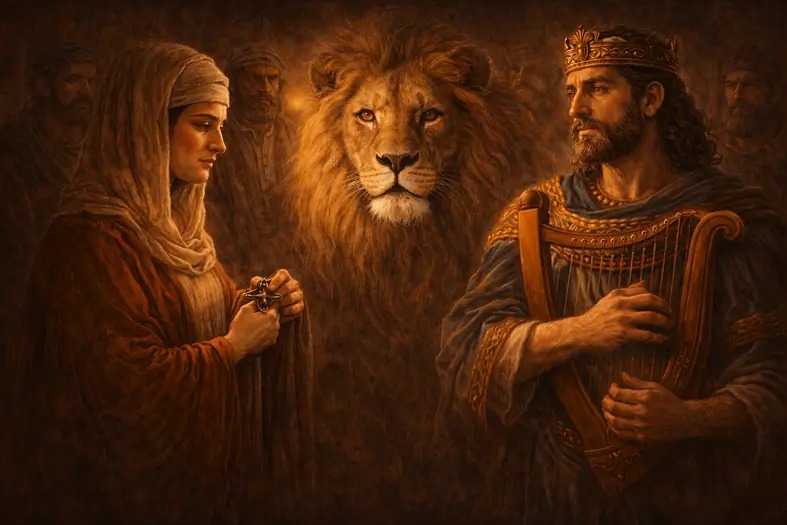
Parshas Vayechi offers the Torah’s most enduring definition of leadership — not through conquest, charisma, or dominance, but through moral gravity. When Yaakov blesses his sons, Yehudah emerges as the bearer of kingship. Yet nothing in Yehudah’s life resembles conventional power.
He does not rule politically.
He does not command armies.
He does not prevail through force.
Instead, Yehudah earns kingship through a moment of surrender — when he admits guilt publicly and accepts responsibility privately. Vayechi teaches that leadership in Torah is not seized; it is conferred upon those who demonstrate the courage to stand exposed before truth.
Yehudah’s defining moment occurs earlier, in the episode with Tamar. Confronted with evidence of his wrongdoing, Yehudah does not evade, reinterpret, or dominate the narrative. He declares:
צָדְקָה מִמֶּנִּי
[“She is more righteous than I.”]
This is not confession under coercion. No one forces Yehudah’s hand. He could have remained silent. Instead, he relinquishes status to preserve truth.
That single act becomes the moral foundation of his kingship.
Vayechi frames Yehudah as a lion — גּוּר אַרְיֵה יְהוּדָה. But the lion here is not depicted mid-attack. He crouches. He restrains. He knows when not to strike.
This is Torah’s redefinition of strength.
Yehudah’s leadership is marked by:
His offer to substitute himself for Binyamin in Egypt completes this arc. Yehudah does not argue law. He accepts consequence. Leadership, the Torah teaches, belongs to those who choose responsibility over self-preservation.
Why does Yehudah, not Yosef, receive the mantle of kingship?
Because Yosef’s greatness is unassailable — but Yehudah’s is human. Kingship requires a soul that can survive failure without denial. A leader who cannot admit error becomes brittle, defensive, and eventually tyrannical.
Yehudah’s strength is not that he never falls. It is that he does not fracture when he does.
Kingship demands:
This is why monarchy flows from Yehudah. Not because he dominates, but because he remains intact when tested.
Yaakov’s blessing does not grant Yehudah power. It recognizes it.
The staff will not depart from Yehudah because people gravitate toward leaders who carry truth without coercion. Authority rooted in admission inspires loyalty rather than fear.
The Torah thus frames kingship as earned trust — not imposed order.
Parshas Vayechi teaches that leadership begins where ego ends. Yehudah becomes king not by claiming greatness, but by standing unprotected before moral reality.
This is the Torah’s enduring model of power:
Strength that restrains itself
Authority that admits failure
Leadership that protects others even when it costs everything
Kingship belongs to those who can say “I was wrong” — and remain standing.
📖 Sources


Parshas Vayechi
Parshas Vayechi offers the Torah’s most enduring definition of leadership — not through conquest, charisma, or dominance, but through moral gravity. When Yaakov blesses his sons, Yehudah emerges as the bearer of kingship. Yet nothing in Yehudah’s life resembles conventional power.
He does not rule politically.
He does not command armies.
He does not prevail through force.
Instead, Yehudah earns kingship through a moment of surrender — when he admits guilt publicly and accepts responsibility privately. Vayechi teaches that leadership in Torah is not seized; it is conferred upon those who demonstrate the courage to stand exposed before truth.
Yehudah’s defining moment occurs earlier, in the episode with Tamar. Confronted with evidence of his wrongdoing, Yehudah does not evade, reinterpret, or dominate the narrative. He declares:
צָדְקָה מִמֶּנִּי
[“She is more righteous than I.”]
This is not confession under coercion. No one forces Yehudah’s hand. He could have remained silent. Instead, he relinquishes status to preserve truth.
That single act becomes the moral foundation of his kingship.
Vayechi frames Yehudah as a lion — גּוּר אַרְיֵה יְהוּדָה. But the lion here is not depicted mid-attack. He crouches. He restrains. He knows when not to strike.
This is Torah’s redefinition of strength.
Yehudah’s leadership is marked by:
His offer to substitute himself for Binyamin in Egypt completes this arc. Yehudah does not argue law. He accepts consequence. Leadership, the Torah teaches, belongs to those who choose responsibility over self-preservation.
Why does Yehudah, not Yosef, receive the mantle of kingship?
Because Yosef’s greatness is unassailable — but Yehudah’s is human. Kingship requires a soul that can survive failure without denial. A leader who cannot admit error becomes brittle, defensive, and eventually tyrannical.
Yehudah’s strength is not that he never falls. It is that he does not fracture when he does.
Kingship demands:
This is why monarchy flows from Yehudah. Not because he dominates, but because he remains intact when tested.
Yaakov’s blessing does not grant Yehudah power. It recognizes it.
The staff will not depart from Yehudah because people gravitate toward leaders who carry truth without coercion. Authority rooted in admission inspires loyalty rather than fear.
The Torah thus frames kingship as earned trust — not imposed order.
Parshas Vayechi teaches that leadership begins where ego ends. Yehudah becomes king not by claiming greatness, but by standing unprotected before moral reality.
This is the Torah’s enduring model of power:
Strength that restrains itself
Authority that admits failure
Leadership that protects others even when it costs everything
Kingship belongs to those who can say “I was wrong” — and remain standing.
📖 Sources


“Yehudah’s Kingship: Leadership Earned Through Admission”
אֶת־ה׳ אֱלֹקֶיךָ תִּירָא
Yehudah’s rise to kingship is rooted in yirat Hashem expressed through moral accountability. His willingness to admit fault—both in the episode of Tamar and in his confrontation with Yosef—reflects reverence that places truth above ego. Vayechi teaches that fear of Hashem is not demonstrated through domination, but through submission to truth even when it diminishes personal stature.
וְהָלַכְתָּ בִדְרָכָיו
Hashem governs with patience, restraint, and justice tempered by mercy. Yehudah mirrors these Divine attributes by exercising power only after moral repair. His leadership emerges not from force, but from alignment with Divine ways—demonstrating that true authority is earned through humility and self-mastery.
וְהִתְוַדּוּ אֶת־חַטָּאתָם
Yehudah’s kingship is rooted in confession. His admission — צָדְקָה מִמֶּנִּי — establishes teshuvah as the prerequisite for leadership. Vayechi affirms that authority in Torah is not earned through flawlessness, but through truthful self-reckoning that restores moral credibility.
וְאָהַבְתָּ לְרֵעֲךָ כָּמוֹךָ
Yehudah’s willingness to sacrifice himself for Binyamin reveals ahavat Yisrael grounded in responsibility rather than sentiment. Leadership in Vayechi is defined by the capacity to place another’s life and dignity above one’s own advancement. This mitzvah frames Yehudah’s kingship as covenantal, not hierarchical.
לֹא תִקֹּם
Yehudah does not seek to reclaim lost authority through aggression or retaliation. Instead, he accepts diminished status and rebuilds through moral courage. Vayechi teaches that leadership purified of revenge is capable of enduring, whereas power rooted in grievance corrodes from within.
וְלֹא תִטֹּר
Yehudah’s growth requires release from resentment—toward Yosef, toward his brothers, and toward himself. This mitzvah underscores that kingship cannot coexist with lingering grievance. Torah leadership demands emotional clarity that allows responsibility to replace resentment.
לֹא תַעֲמֹד עַל דַּם רֵעֶךָ
Yehudah’s defining act—offering himself in place of Binyamin—embodies this mitzvah in its fullest sense. He refuses passive righteousness and accepts personal cost to prevent another’s destruction. Vayechi reveals that kingship is forged not through command, but through readiness to bear consequence for another’s survival.


“Yehudah’s Kingship: Leadership Earned Through Admission”
Parshas Vayechi provides the Torah’s definitive articulation of Yehudah’s kingship. Yaakov’s blessing—“גּוּר אַרְיֵה יְהוּדָה”—does not crown Yehudah for power, charisma, or dominance, but for restraint and moral authority. The parsha emphasizes that Yehudah’s leadership emerges at the end of a long ethical arc: his willingness to admit failure, accept responsibility, and subordinate ego to covenant. Vayechi thus frames kingship as earned through character rather than seized through force, presenting admission of truth as the foundation of enduring authority.
Vayeishev establishes the moral crisis that will later define Yehudah’s rise. His role in the sale of Yosef and his subsequent descent from leadership expose the cost of unexamined power. Yehudah’s fall is not incidental; it is preparatory. This parsha introduces the fracture that must be repaired before kingship can emerge, teaching that leadership untempered by accountability cannot endure.
The episode of Tamar stands at the center of Yehudah’s transformation. Yehudah’s declaration, “צָדְקָה מִמֶּנִּי,” marks the Torah’s first explicit moment where leadership is reclaimed through admission rather than victory. This moment redefines strength as moral courage and restraint, laying the ethical groundwork for Yehudah’s future role as progenitor of kingship. Vayechi’s blessing only makes sense in light of this earlier confession.
Vayigash reveals the matured Yehudah. No longer reactive or self-protective, he steps forward to assume responsibility for Binyamin, offering himself in place of another. This act demonstrates leadership rooted in accountability rather than authority. Vayigash shows Yehudah earning trust through self-sacrifice, preparing the moral conditions for Yaakov’s final blessing in Vayechi.
Shemos introduces the transition from tribal leadership to national destiny, where the qualities of Yehudah’s kingship—restraint, responsibility, and admission—become essential for survival in exile. Though kingship is not yet realized, the parsha situates Yehudah’s legacy within the broader arc of redemption, reinforcing Vayechi’s message that true power is sustained by ethical discipline rather than force.

Dive into mitzvos, tefillah, and Torah study—each section curated to help you learn, reflect, and live with intention. New insights are added regularly, creating an evolving space for spiritual growth.

Explore the 613 mitzvos and uncover the meaning behind each one. Discover practical ways to integrate them into your daily life with insights, sources, and guided reflection.

Learn the structure, depth, and spiritual intent behind Jewish prayer. Dive into morning blessings, Shema, Amidah, and more—with tools to enrich your daily connection.

Each week’s parsha offers timeless wisdom and modern relevance. Explore summaries, key themes, and mitzvah connections to deepen your understanding of the Torah cycle.