The Mitzvah Minute newsletter brings the beauty of Torah learning to your inbox — exploring mitzvos, parsha insights, and timeless Jewish wisdom in a clear, uplifting format. Browse our latest issue below, or explore past editions to keep growing one mitzvah at a time.
This week, explore Parshas Tazria-Metzora through a focused and accessible format. You’ll find highlighted mitzvos, key insight sections from the Parsha page, and a newly refined series of divrei Torah—short, powerful three-to-four-minute reads designed for clarity, depth, and reflection.
*Sourced from Rashi, Ramban, Sforno, Abarbanel, Rambam, Ralbag, Rav Avigdor Miller, Rav Kook, Rabbi Jonathan Sacks, and more.

וּבַיּ֖וֹם הַשְּׁמִינִ֑י יִמּ֖וֹל בְּשַׂ֥ר עׇרְלָתֽוֹ׃"
"And on the eighth day, the flesh of his foreskin shall be circumcised."
— Vayikra 12:3
Bris Milah establishes that kedushah — holiness — begins at the very origin of life. Parshas Tazria introduces this mitzvah at birth to teach that האדם is defined not only by what he is, but by the movement from potential to expression. The eighth day represents transcendence beyond nature, embedding the human body itself within covenant. In the broader arc of the parsha, which explores formation, impurity, and restoration, Milah stands as the first act of alignment—declaring that even the physical is directed toward purpose. It reminds us that becoming whole begins not with reinvention, but with uncovering the covenant already inscribed within us.
Explore the full mitzvah →
https://www.mitzvah-minute.com/613-mitzvahs/to-circumcise-all-males-on-the-eighth-day-after-their-birth

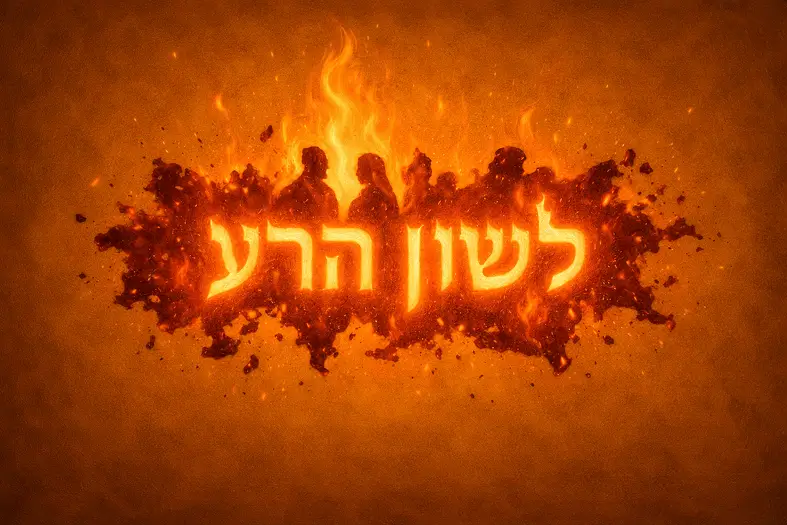
לֹא־תֵלֵ֤ךְ רָכִיל֙ בְּעַמֶּ֔יךָ לֹ֥א תַעֲמֹ֖ד עַל־דַּ֣ם רֵעֶ֑ךָ אֲנִ֖י ה׳׃"
"You shall not go around as a gossipmonger amidst your people. You shall not stand by [the shedding of] your fellow's blood. I am the L-rd."
— Vayikra 19:16
At the heart of Tazria-Metzora is the creative and destructive power of speech. Chazal link tzaraas directly to lashon hara, revealing that words are not neutral—they shape reality. The metzora’s isolation mirrors the social damage caused by careless speech. In modern life, where communication is constant and amplified, this mitzvah becomes even more urgent. Tazria teaches that speech must be treated as a כלי — instrument — that builds or destroys. Guarding it is not restraint; it is responsibility.
Explore the full mitzvah →
https://www.mitzvah-minute.com/613-mitzvahs/not-to-gossip-about-others

Parshas Tazria–Metzora presents a system of becoming. It begins with birth and formation, moves through exposure and disruption, and culminates in return and reconstruction.
The Torah reveals that what appears as breakdown is often the beginning of revelation. The body becomes a language through which the inner becomes visible, the Kohen defines reality, distance creates awareness, and ultimately, the same reality is transformed through how it is seen.
Explore Parshas Tazria-Metzora through an in-depth Parsha Narrative or a shorter Parsha Summary.
Read the Parsha Summaries →
View → Tazria — View → Metzora
Rashi reveals what is happening on the surface. Ramban reveals the deeper system beneath it.
Together, they show that tzaraas is not a physical condition, but a structured revelation—where what is hidden becomes visible in order to be corrected.
Read the Parsha Classical Insights by Rashi and Ramban →
View → Tazria — View → Metzora
Rambam reveals how Torah builds the אדם through disciplined systems. Ralbag reveals the deeper structure behind reality itself.
Together, they show that tumah and taharah are not abstract ideas, but frameworks that train perception, awareness, and alignment.
Read the Parsha Philosophical Thought by Rambam and Ralbag →
View → Tazria — View → Metzora
Chassidus reveals the inner experience of the process.
What appears externally as נגע reflects an inner misalignment—and the path of return unfolds through awareness, humility, and renewed connection.
Read the Parsha Chassidic Reflection by Baal Shem Tov, Kedushas Levi and Sfas Emes →
View → Tazria — View → Metzora
Rabbi Jonathan Sacks reveals how speech and responsibility shape society. Rav Kook reveals the inner transformation of the soul.
Together, they show that the journey from breakdown to rebuilding is both personal and communal.
Read the Parsha Modern Voice by Rabbi Jonathan Sacks and Rav Kook →
View → Tazria — View → Metzora
Explore how Tazria–Metzora speaks directly to modern life—how identity is formed, how speech shapes reality, and how moments of disruption can become the beginning of transformation.
Read the Parsha's Application for Today →
View → Tazria — View → Metzora
This 8-part series uncovers the full journey of the אדם—from formation, to exposure, to breakdown, to return, and finally to transformed perception.
Drawing from classical mefarshim, philosophy, Chassidus, and modern application, it presents a system where nothing is wasted—where even breakdown becomes the beginning of clarity.
Each is designed as a focused three-to-four-minute read, delivering a clear and lasting idea.
Explore the Parshas Tazria-Metzora Torah Series →
https://www.mitzvah-minute.com/divrei-torah---archive

The Torah begins with human limitation to show that growth depends on חסרון, not perfection.
Exposure creates an inner rupture — where a person can no longer hide from himself, and אמת begins.
Speech does not describe reality — it brings reality into being.
Separation is not the end — it is the first stage in a process that leads a person back differently.
A person’s home reflects his inner state — and sometimes what breaks is what reveals the hidden good within.
The same reality does not change — but the way it is seen is transformed, turning breakdown into the very source of joy.
Parshas Tazria–Metzora teaches that nothing in a person’s life is incidental. What appears as disruption may be revelation. What feels like distance may be preparation. And what seems like breakdown may be the beginning of rebuilding.
It invites us to see reality differently—to recognize that growth does not come from avoiding imperfection, but from confronting it, refining it, and transforming it.

Dive into mitzvot, prayer, and Torah study—each section curated to help you learn, reflect, and live with intention. New insights are added regularly, creating an evolving space for spiritual growth.

Explore the 613 mitzvot and uncover the meaning behind each one. Discover practical ways to integrate them into your daily life with insights, sources, and guided reflection.

Learn the structure, depth, and spiritual intent behind Jewish prayer. Dive into morning blessings, Shema, Amidah, and more—with tools to enrich your daily connection.

Each week’s parsha offers timeless wisdom and modern relevance. Explore summaries, key themes, and mitzvah connections to deepen your understanding of the Torah cycle.