The Mitzvah Minute newsletter brings the beauty of Torah learning to your inbox — exploring mitzvot, parsha insights, and timeless Jewish wisdom in a clear, uplifting format. Browse our latest issue below, or explore past editions to keep growing one mitzvah at a time.
This week’s Vayakhel–Pekudei Divrei Torah series explores how a fractured nation rebuilds its covenant with Hashem through generosity, craftsmanship, discipline, and sacred responsibility.
Generous Hearts → Sacred Craftsmanship → Leadership Through Responsibility → Communal Trust → Precision in Divine Service → Building the Mishkan → The Descent of the Shechinah → Rebuilding the World for the Divine Presence
*Sourced from Rashi, Ramban, Sforno, Abarbanel, Rambam, Ralbag, Rav Avigdor Miller, Rav Kook, Rabbi Jonathan Sacks, and more.

כִּי לֹא־יֶחְדַּ֥ל אֶבְי֖וֹן מִקֶּ֣רֶב הָאָ֑רֶץ עַל־כֵּ֞ן אָנֹכִ֤י מְצַוְּךָ֙ לֵאמֹ֔ר פָּתֹ֠חַ תִּפְתַּ֨ח אֶת־יָדְךָ֜ לְאָחִ֧יךָ לַעֲנִיֶּ֛ךָ וּלְאֶבְיֹנְךָ֖ בְּאַרְצֶֽךָ׃"
"For there will never cease to be needy within the land. Therefore I command you, saying: you shall surely open your hand to your brother, to your poor one, and to your needy one in your land."
— Devarim 15:11
The Mishkan was built through the generosity of the people. Each person brought what their heart inspired them to give, transforming personal wealth into a dwelling place for the Divine Presence. The mitzvah of tzedakah reflects this same principle: a holy society is sustained when individuals open their hands to support one another and strengthen the covenant community.
Explore the full mitzvah →
https://www.mitzvah-minute.com/613-mitzvahs/to-give-charity

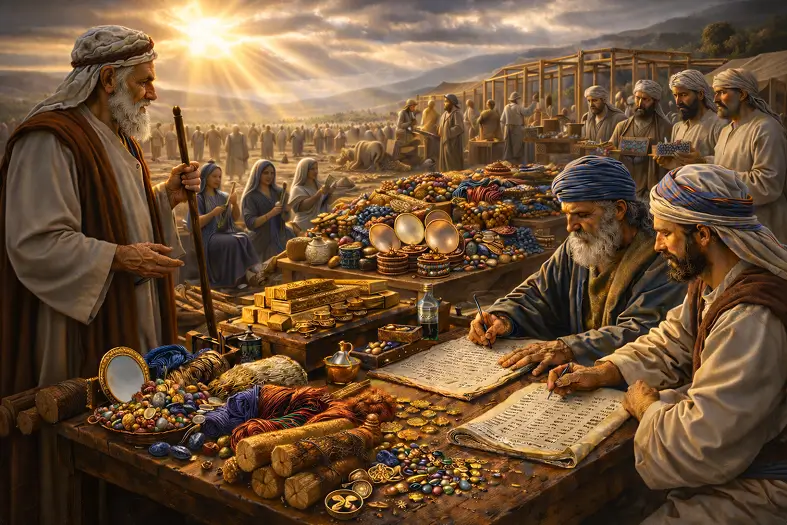
Parshas Vayakhel begins the rebuilding of the covenant after the crisis of the Golden Calf. The nation gathers to construct the Mishkan, bringing their offerings with generous hearts and contributing their skills to the sacred work. Through generosity, craftsmanship, and shared responsibility, the people transform their resources into a dwelling place for the Divine Presence.
Read the Parsha insights and commentaries →
https://www.mitzvah-minute.com/parshiyot/vayakhel

Parshas Pekudei concludes the construction of the Mishkan and records the careful accounting of its sacred materials. The Torah emphasizes that every contribution was measured, recorded, and dedicated to the service of Hashem. When the work is completed and the sanctuary is assembled, the Divine Presence descends and fills the Mishkan, signaling that the covenant between Hashem and Israel has been restored.
Read the Parsha insights and commentaries →
https://www.mitzvah-minute.com/parshiyot/pekudei

וּבַיּוֹם הַשְּׁבִיעִי שַׁבָּת שַׁבָּתוֹן לַה׳ כָּל הָעֹשֶׂה בּוֹ מְלָאכָה יוּמָת."
"On the seventh day there shall be a complete rest for Hashem; whoever performs labor on it shall be put to death."
— Shemos 35:2
The detailed work required for the Mishkan — weaving, building, crafting, and forging — forms the conceptual basis for the categories of melachah prohibited on Shabbos. Vayakhel therefore highlights the profound paradox that the very labors used to build the sanctuary must cease on the day that sanctifies time itself.
Explore the full mitzvah →
https://www.mitzvah-minute.com/613-mitzvahs/not-to-do-prohibited-labor-on-the-seventh-day

וּבַיּוֹם הַשְּׁבִיעִי שַׁבָּת שַׁבָּתוֹן לַה׳ כָּל הָעֹשֶׂה בּוֹ מְלָאכָה יוּמָת."
"On the seventh day there shall be a complete rest for Hashem; whoever performs labor on it shall be put to death."
— Shemos 35:2
The Torah’s prohibition of kindling fire on Shabbos underscores the sanctity of the day. Chazal derive from this verse that even judicial punishments involving fire may not be carried out on Shabbos. Vayakhel therefore reinforces the principle that Shabbos suspends even the functioning of the judicial system.
Explore the full mitzvah →
https://www.mitzvah-minute.com/613-mitzvahs/the-court-must-not-inflict-punishment-on-shabbat

וְעָשׂוּ לִי מִקְדָּשׁ וְשָׁכַנְתִּי בְּתוֹכָם."
"They shall make for Me a sanctuary, and I will dwell among them."
— Shemos 25:8
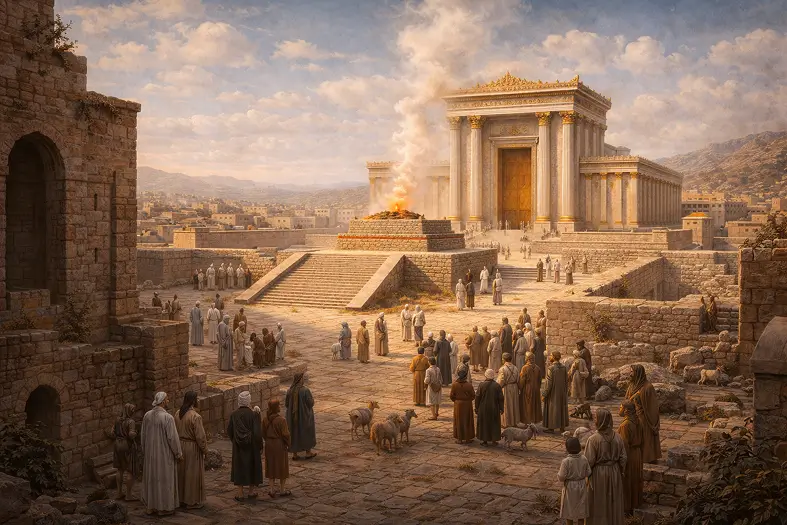
Parshas Vayakhel and Pekudei describe the fulfillment of this command through the construction of the Mishkan. Every vessel, garment, and structure is fashioned precisely according to the Divine instruction, transforming human craftsmanship into a dwelling place for the Shechinah. The sanctuary becomes the spiritual center of Israel’s life, where the Divine Presence rests among the people.
Explore the full mitzvah →
https://www.mitzvah-minute.com/613-mitzvahs/to-build-a-sanctuary-holy-temple

וְשִׁנַּנְתָּם לְבָנֶיךָ וְדִבַּרְתָּ בָּם."
"You shall teach them diligently to your children and speak of them."
— Devarim 6:7
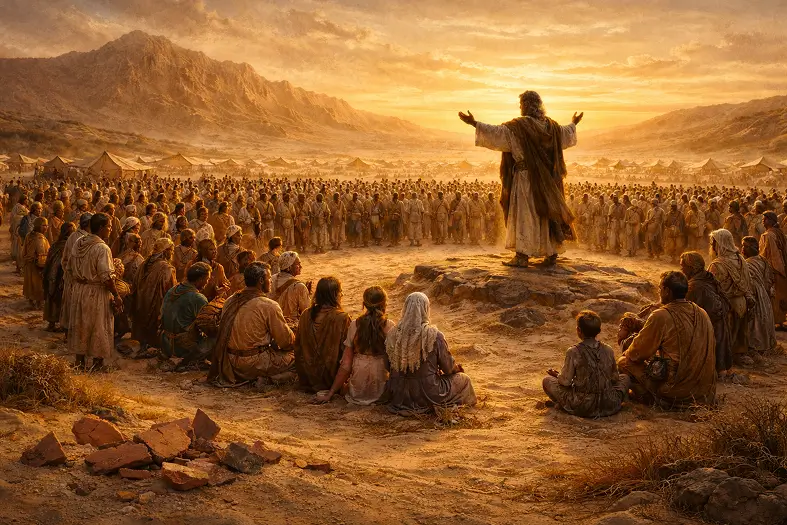
Moshe gathers the people in order to transmit the Divine commands regarding Shabbos and the Mishkan. The assembly itself becomes an act of Torah instruction, demonstrating the central role of teaching and learning in sustaining covenantal life. Vayakhel highlights how leadership and education shape a nation capable of building holiness.
Explore the full mitzvah →
https://www.mitzvah-minute.com/613-mitzvahs/to-learn-torah-and-teach-it
The Vayakhel–Pekudei Divrei Torah series explores the completion of the Mishkan as a profound journey of communal responsibility, sacred craftsmanship, and covenant renewal. Each part examines another dimension of how a nation transforms failure into disciplined service and builds a dwelling place for the Divine Presence.
Explore Vayakhel-Pekudei Torah Series →

After the crisis of the Golden Calf, Moshe gathers the people to begin rebuilding the covenant. The act of assembly itself becomes the first step toward restoring unity and transforming a fractured nation into a community capable of sacred purpose.
Before the Mishkan can be built, the Torah commands the observance of Shabbos. The parsha teaches that holiness begins with sanctified time, reminding Israel that even the work of building a sanctuary must yield to the rhythm of divine rest.

The Mishkan is built not through coercion but through voluntary generosity. The outpouring of gifts reveals how a transformed heart can turn material resources into instruments of holiness.
Betzalel and the artisans embody the union of wisdom, skill, and spiritual purpose. Their craftsmanship demonstrates how human creativity becomes sacred when guided by Divine instruction.
The Torah carefully records every contribution used in the Mishkan. This detailed accounting reveals that holiness depends not only on inspiration but also on transparency, responsibility, and trust.
Again and again the Torah repeats that each element was made exactly as Hashem commanded. Sacred service requires precision and discipline, teaching that holiness is sustained through faithful attention to Divine instruction.
Moshe erects the Mishkan, bringing together the work of the entire nation. Human effort prepares the sanctuary, but its ultimate purpose is fulfilled only when it becomes ready to receive the Divine Presence.

When the work is completed, the cloud of Hashem fills the Mishkan. The book of Shemos concludes with a powerful message: when a community builds with unity, discipline, and devotion, the Divine Presence rests among them.
Explore Vayakhel-Pekudei Torah Series →
https://www.mitzvah-minute.com/divrei-torah---archive
(Click any title to read the full essay.)
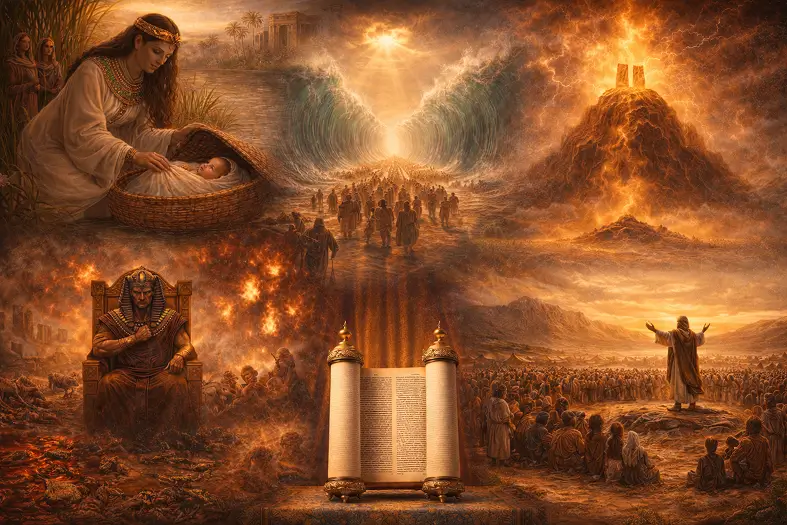
Sefer Shemos Finale: This special essay reflects on the completion of Sefer Shemos and the deeper meaning of the Mishkan within the Torah’s narrative. Drawing on classical commentators and philosophical insight, it explores how the construction of the Mishkan repairs the rupture of the Golden Calf and transforms a fractured nation into a community capable of hosting the Shechinah. I wrote this longer reflection to conclude the Vayakhel–Pekudei series and to examine how the Torah’s vision of the Mishkan continues to illuminate the task of building holiness in our world.
*Note: 4.6 is an extended essay and is longer than the typical 5-minute reads.
After the crisis of the Golden Calf, Moshe gathers the nation to begin rebuilding the covenant. This essay explores how the structure of communal responsibility transforms a fractured people into a unified covenant community.
Before the Mishkan can be built, the Torah commands Shabbos. This essay examines why sacred time must precede sacred space, teaching that holiness begins not with construction but with restraint.
The women’s mirrors — once instruments of physical beauty — become part of the Mishkan. This essay explores how the Torah transforms ordinary human experiences into vessels of spiritual elevation.
Betzalel represents a unique model of leadership grounded in humility, craftsmanship, and devotion to the Divine command. This essay reflects on how sacred leadership emerges from wisdom of heart rather than authority alone.
Parshas Pekudei opens with a detailed accounting of the Mishkan’s materials. This essay explores how transparency and accountability form the ethical foundation upon which the Divine Presence can dwell among a community.
When the Mishkan is completed, the cloud of Hashem rests upon it and guides the nation’s journey. This essay reflects on how the Divine Presence transforms the Mishkan into the spiritual center of Israel’s movement through the wilderness.
Parshas Vayakhel–Pekudei reminds us that holiness is built through discipline, generosity, and shared responsibility.
Shabbos teaches the sanctity of time.
The generous heart builds sacred space.
The wisdom of craftsmanship transforms human creativity into divine service.
The careful accounting of the Mishkan teaches integrity and trust.
And when the work is complete, the Shechinah rests among the people.
Through unity, humility, and devotion, a community can transform its efforts into a dwelling place for Hashem — bringing the light of Torah into the world.


Dive into mitzvot, prayer, and Torah study—each section curated to help you learn, reflect, and live with intention. New insights are added regularly, creating an evolving space for spiritual growth.

Explore the 613 mitzvot and uncover the meaning behind each one. Discover practical ways to integrate them into your daily life with insights, sources, and guided reflection.

Learn the structure, depth, and spiritual intent behind Jewish prayer. Dive into morning blessings, Shema, Amidah, and more—with tools to enrich your daily connection.

Each week’s parsha offers timeless wisdom and modern relevance. Explore summaries, key themes, and mitzvah connections to deepen your understanding of the Torah cycle.