Parshas Vayechi
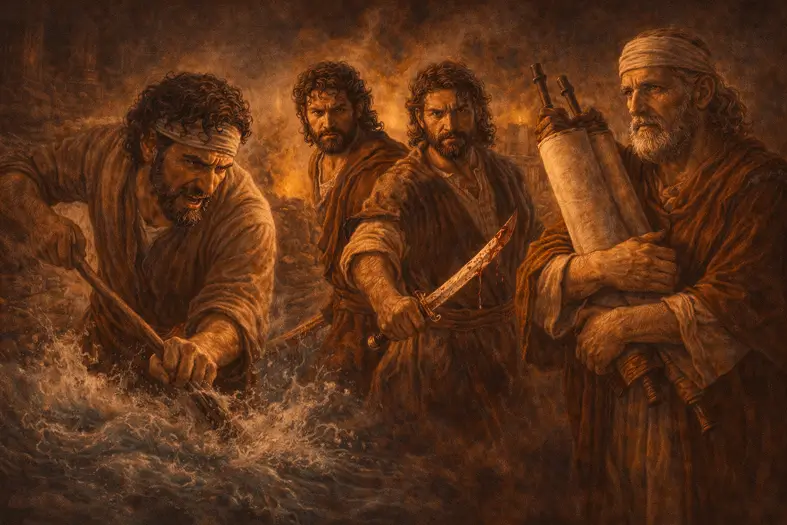
Parshas Vayechi reaches one of its most uncomfortable moments when Yaakov blesses his sons. These are not blessings in the conventional sense. They are moral evaluations — precise, restrained, and unsentimental.
Reuven, Shimon, and Levi are not condemned as evil, nor dismissed as failures. They are diagnosed. Yaakov does not punish them for isolated acts; he names the traits that shaped those acts. Vayechi teaches that destiny in the Torah is not arbitrary. It grows organically from character.
This essay explores how passion, when undisciplined, becomes destructive — and how Torah leadership demands not the suppression of intensity, but its moral containment.
Reuven is Yaakov’s firstborn, described as:
פַּחַז כַּמַּיִם אַל־תּוֹתַר
[“Impulsive like water — you cannot excel.”]
Water is essential, powerful, and life-giving — yet shapeless. Rashi explains that Reuven’s failing was not immorality, but haste. His intervention in Yaakov’s household was driven by concern for his mother’s honor, yet executed without restraint or permission.
The Torah does not deny Reuven’s good intentions. It critiques his lack of self-mastery. Passion without governance becomes volatility. Leadership requires patience, not urgency.
Reuven teaches that moral instinct alone is insufficient. Without discipline, even righteous impulse erodes authority.
Shimon and Levi are addressed together, bound by shared intensity:
כְּלֵי חָמָס מְכֵרֹתֵיהֶם
[“Instruments of violence are their tools.”]
Their destruction of Shechem was fueled by moral outrage. A violation occurred. Justice was demanded. Yet Yaakov condemns not the emotion, but the method.
Their sin was not anger — it was uncontrolled anger. Passion untethered from proportionality becomes cruelty. Rashi emphasizes that Yaakov feared their temperament more than their act.
Unchecked zeal, the Torah teaches, does not protect holiness. It desecrates it.
Vayechi offers a taxonomy of moral failure rooted in excess rather than absence:
Each reflects passion detached from discipline. None lack moral concern. All lack containment.
The Torah’s critique is subtle: intensity must be shaped, not silenced.
Levi’s inclusion with Shimon is not final. History intervenes.
Levi later stands with Moshe after the Golden Calf, acting decisively yet under command. Their passion becomes aligned with Divine will. What once destroyed now protects.
This transformation teaches a crucial principle: character is not erased — it is refined.
Passion does not disappear. It learns obedience.
Yaakov’s words are prophetic not because they predict the future, but because they reveal its source. Destiny emerges from repeated moral patterns.
Leadership, the Torah insists, is not awarded for strength alone. It is entrusted to those who can govern themselves.
Vayechi teaches that greatness requires:
Where passion submits, it sanctifies. Where it rebels, it destroys.
Parshas Vayechi refuses to romanticize intensity. It honors discipline.
Reuven loses leadership not for caring too much, but for acting too quickly. Shimon and Levi are scattered not for demanding justice, but for unleashing it without restraint. Levi alone redeems passion by binding it to command.
The Torah’s lesson is exacting and enduring:
Strength shapes destiny —
but discipline determines whether that destiny builds or breaks.
📖 Sources


Parshas Vayechi
Parshas Vayechi reaches one of its most uncomfortable moments when Yaakov blesses his sons. These are not blessings in the conventional sense. They are moral evaluations — precise, restrained, and unsentimental.
Reuven, Shimon, and Levi are not condemned as evil, nor dismissed as failures. They are diagnosed. Yaakov does not punish them for isolated acts; he names the traits that shaped those acts. Vayechi teaches that destiny in the Torah is not arbitrary. It grows organically from character.
This essay explores how passion, when undisciplined, becomes destructive — and how Torah leadership demands not the suppression of intensity, but its moral containment.
Reuven is Yaakov’s firstborn, described as:
פַּחַז כַּמַּיִם אַל־תּוֹתַר
[“Impulsive like water — you cannot excel.”]
Water is essential, powerful, and life-giving — yet shapeless. Rashi explains that Reuven’s failing was not immorality, but haste. His intervention in Yaakov’s household was driven by concern for his mother’s honor, yet executed without restraint or permission.
The Torah does not deny Reuven’s good intentions. It critiques his lack of self-mastery. Passion without governance becomes volatility. Leadership requires patience, not urgency.
Reuven teaches that moral instinct alone is insufficient. Without discipline, even righteous impulse erodes authority.
Shimon and Levi are addressed together, bound by shared intensity:
כְּלֵי חָמָס מְכֵרֹתֵיהֶם
[“Instruments of violence are their tools.”]
Their destruction of Shechem was fueled by moral outrage. A violation occurred. Justice was demanded. Yet Yaakov condemns not the emotion, but the method.
Their sin was not anger — it was uncontrolled anger. Passion untethered from proportionality becomes cruelty. Rashi emphasizes that Yaakov feared their temperament more than their act.
Unchecked zeal, the Torah teaches, does not protect holiness. It desecrates it.
Vayechi offers a taxonomy of moral failure rooted in excess rather than absence:
Each reflects passion detached from discipline. None lack moral concern. All lack containment.
The Torah’s critique is subtle: intensity must be shaped, not silenced.
Levi’s inclusion with Shimon is not final. History intervenes.
Levi later stands with Moshe after the Golden Calf, acting decisively yet under command. Their passion becomes aligned with Divine will. What once destroyed now protects.
This transformation teaches a crucial principle: character is not erased — it is refined.
Passion does not disappear. It learns obedience.
Yaakov’s words are prophetic not because they predict the future, but because they reveal its source. Destiny emerges from repeated moral patterns.
Leadership, the Torah insists, is not awarded for strength alone. It is entrusted to those who can govern themselves.
Vayechi teaches that greatness requires:
Where passion submits, it sanctifies. Where it rebels, it destroys.
Parshas Vayechi refuses to romanticize intensity. It honors discipline.
Reuven loses leadership not for caring too much, but for acting too quickly. Shimon and Levi are scattered not for demanding justice, but for unleashing it without restraint. Levi alone redeems passion by binding it to command.
The Torah’s lesson is exacting and enduring:
Strength shapes destiny —
but discipline determines whether that destiny builds or breaks.
📖 Sources


“Character as Destiny: Reuven, Shimon, and Levi”
אֶת־ה׳ אֱלֹקֶיךָ תִּירָא
Parshas Vayechi presents yirat Hashem as the inner discipline that restrains passion. Reuven, Shimon, and Levi each possess powerful moral energy, yet their failures emerge where fear of Hashem does not sufficiently govern impulse. The parsha teaches that reverence is not intensity, but regulation — the capacity to pause, weigh consequence, and submit emotion to Divine command.
וְנִקְדַּשְׁתִּי בְּתוֹךְ בְּנֵי יִשְׂרָאֵל
Yaakov’s rebuke reveals that uncontrolled zeal can produce chillul Hashem even when motivations are moral. Shimon and Levi act מתוך קנאות, yet the absence of discipline transforms righteous anger into public desecration. Vayechi teaches that sanctifying Hashem’s Name requires not only correct values, but measured execution that reflects Divine order.
וְלֹא תְחַלְּלוּ אֶת־שֵׁם קָדְשִׁי
The violence at Shechem becomes a case study in how moral passion can collapse into chillul Hashem. Yaakov’s reaction focuses not on intent, but on outcome. This mitzvah anchors the Torah’s insistence that even justified outrage must be constrained, lest it undermine the very holiness it seeks to defend.
וְהָלַכְתָּ בִדְרָכָיו
Hashem’s ways are marked by patience, proportion, and justice. Reuven’s impulsiveness and Shimon and Levi’s excess reveal lives not yet aligned with Divine restraint. Vayechi teaches that emulating Hashem means shaping character so that power, emotion, and conviction are exercised with balance rather than force.
לֹא תַעֲמֹד עַל דַּם רֵעֶךָ
Reuven’s failure lies not in malice, but in hesitation. Though intending to save Yosef, his lack of decisive follow-through enables tragedy. The parsha frames this mitzvah not only as physical rescue, but as moral responsibility: when one has the capacity to intervene, delay itself becomes culpable.
שֹׁפְטִים וְשֹׁטְרִים תִּתֵּן לְךָ
Shimon and Levi’s vigilante justice exposes the danger of bypassing lawful process. Even righteous goals require structured judgment. Vayechi positions this mitzvah as the antidote to passion without discipline, insisting that justice must be administered through measured systems rather than personal wrath.


“Character as Destiny: Reuven, Shimon, and Levi”
Parshas Vayechi presents Yaakov Avinu’s final assessment of his sons, revealing that destiny in the Torah is shaped less by isolated actions than by enduring traits of character. Yaakov’s words to Reuven, Shimon, and Levi are not retrospective punishments but moral diagnoses. Reuven’s instability, and Shimon and Levi’s unchecked anger, are identified as patterns that disqualify them from leadership continuity. Vayechi teaches that blessing is inseparable from self-mastery: passion untethered from discipline may achieve momentary success, but it cannot sustain covenantal responsibility across generations.
Vayishlach provides the formative events that underlie Yaakov’s words in Vayechi. Reuven’s impulsive act and Shimon and Levi’s violent response at Shechem reveal character traits that later crystallize into destiny. This parsha demonstrates that moral energy, when not governed by restraint, becomes destructive even when motivated by righteous outrage. Vayechi’s rebuke is thus rooted not in isolated failure, but in patterns already visible earlier in life.
Vayeishev contrasts uncontrolled passion with disciplined moral growth. While Reuven attempts to save Yosef but lacks the steadiness to follow through, Yehudah begins the slow process of transformation through responsibility and accountability. This parsha highlights the Torah’s ethical taxonomy: leadership emerges not from good intentions alone, but from the ability to channel impulse into sustained, constructive action. Vayechi later confirms this principle in Yaakov’s final words.
Vayigash completes the contrast by presenting Yehudah as the embodiment of disciplined passion. His speech before Yosef demonstrates emotional intensity governed by responsibility rather than anger. This parsha clarifies why Yehudah receives leadership while Reuven, Shimon, and Levi do not: destiny follows character that has learned restraint. Vayechi’s assessments thus emerge as the culmination of a long moral arc rather than a sudden judgment.

Dive into mitzvos, tefillah, and Torah study—each section curated to help you learn, reflect, and live with intention. New insights are added regularly, creating an evolving space for spiritual growth.

Explore the 613 mitzvos and uncover the meaning behind each one. Discover practical ways to integrate them into your daily life with insights, sources, and guided reflection.

Learn the structure, depth, and spiritual intent behind Jewish prayer. Dive into morning blessings, Shema, Amidah, and more—with tools to enrich your daily connection.

Each week’s parsha offers timeless wisdom and modern relevance. Explore summaries, key themes, and mitzvah connections to deepen your understanding of the Torah cycle.