"The Tears Yosef Hides: Compassion Toward Those Who Harmed You"

Mitzvah Minute Logo Icon

Mercy Behind Tough Love

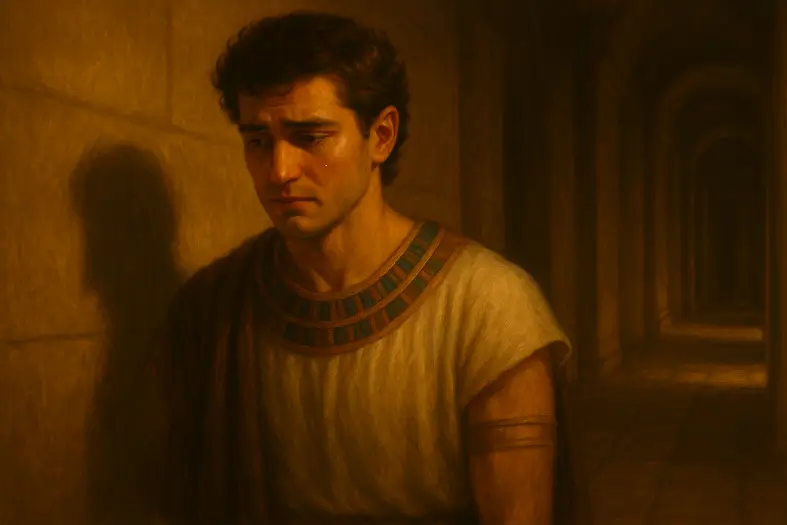
Yosef alone in a palace hallway shedding tears out of compassion for his brothers.
Yosef’s story is filled with strategy and strength, yet the Torah reveals a hidden dimension behind his mastery: the quiet tears he sheds when no one is watching. Far from weakness, those tears reflect a soul refined enough to feel deeply while still leading with purpose. This essay uncovers how Yosef’s compassion toward the very brothers who betrayed him becomes the engine of their healing and the beginning of redemption itself. Through Ralbag, Rav Kook, and the emotional narrative of Mikeitz, we learn that true gevurah is not the ability to stay unmoved, but the courage to remain soft-hearted without surrendering clarity or justice. Yosef shows us that forgiveness does not erase the past — compassion reshapes the future. And sometimes the holiest act is to hope for those who once hurt us, leaving a door open for reconciliation and geulah.

"The Tears Yosef Hides: Compassion Toward Those Who Harmed You"

Mercy Behind Tough Love

The Yosef story is filled with power, strategy, and emotional tension — but woven through it all are quiet moments where Yosef turns away and weeps. He cries when no one can see. The Torah exposes his heart: a man wounded, moved, hopeful, and restrained all at once. His tears are not weakness; they are a window into a soul trying to heal a family without breaking them further.

This essay explores why Yosef weeps, how compassion guides his plan, and how we can learn to respond to our own hurts with strength wrapped in mercy.

Yosef’s Hidden Tears — Strength That Still Feels

Each time the brothers take a step toward responsibility, Yosef’s emotions overflow. He maintains the façade of the Egyptian ruler, but his inner world trembles. His tears reflect the depth of someone who is still connected — despite betrayal.

Yosef cries because he sees possibility where others see danger, and because he feels the fragile hope that his family may yet be healed. His tears teach a profound truth:
you can be strong, decisive, and disciplined — and still feel deeply.

Yosef’s tears reveal:

  • Love that survived betrayal
  • Sensitivity beneath authority
  • Hope for transformation

He shows us that compassion does not contradict strength — it elevates it.

Ralbag: Compassion Even for Those Who Caused Pain

Ralbag explains that Yosef’s tears flow from empathy rather than anger. He understands his brothers’ fear, guilt, and confusion. Though they harmed him terribly, he does not allow hatred to shape his decisions. He wants justice — but he wants healing more.

Yosef could have acted out of resentment. Instead, he orchestrates a process of growth that demands accountability while preserving dignity. His emotional reaction underscores his desire not to punish, but to rebuild.

Ralbag’s insight highlights:

  • Compassion guiding justice
  • Emotional honesty guiding leadership
  • The ability to confront wrong while still hoping for repair

This is the rare strength of someone who has mastered his own heart.

Rav Kook: Healing Others as the Beginning of Redemption

Rav Kook teaches that geulah begins when we choose to respond to pain with generosity rather than defensiveness. Yosef embodies this ideal. He creates a scenario that brings the brothers face-to-face with their past — but also face-to-face with who they can become.

His tears mark the turning points of the story. Each time Yosef cries, something in the brothers softens, and something in the family heals. According to Rav Kook, these tears are the first drops of redemption, because redemption begins wherever compassion triumphs over vengeance.

Rav Kook’s themes:

  • Healing precedes revelation
  • Compassion precedes redemption
  • Tears can be the beginning of teshuvah

Yosef shows that emotional courage builds spiritual future.

Tough Love Guided by Rachamim

Yosef does not pretend nothing happened. He does not rush to embrace his brothers. Real healing is not naïve; it requires responsibility and truth. But the entire process — from the accusations to the goblet to the staged pressure — is soaked in compassion.

He wants them to grow. He wants them to face themselves. He wants to see if brotherhood can emerge from the wreckage.

His approach blends:

  • Accountability
  • Structure
  • Emotional restraint

with a heart that aches for reconciliation.

This is tough love not meant to punish, but to elevate.

How to Bring Yosef’s Tears Into Our Lives

All of us face people who have caused us pain. Yosef’s model teaches us that compassion is not surrender — it is leadership of the soul.

Instead of holding resentment, we can take one small step toward healing.

Try one exercise this week:

  • Pray for someone who hurt you.
  • Notice signs of growth in someone you once judged.
  • Hold back a harsh reaction and allow space for change.

These small acts can transform relationships — and transform us.

A Lesson of Healing

Yosef’s hidden tears are the emotional backbone of the entire story. They show that justice without compassion cannot heal, and compassion without accountability cannot last. Yosef balances both.

Forgiveness does not erase the past.
Compassion reshapes the future.

His tears remind us that sometimes the holiest thing we can do is to hope for someone who once hurt us —
and to leave open a doorway where reconciliation might one day walk through.

📖 Sources

  • Full sources available on the Mitzvah Minute Parshas Mikeitz page under insights and commentaries.

Organized by:
Boaz Solowitch
December 10, 2025
Mitzvah Minute Logo Icon

Connections

Mitzvah Minute Logo Icon

Mitzvah Links

Mitzvah 13

To love other Jews
A Siddur
Learn this Mitzvah

Mitzvah 13

13
To love other Jews

Mitzvah 15

Not to hate fellow Jews
A Siddur
Learn this Mitzvah

Mitzvah 15

15
Not to hate fellow Jews

Mitzvah 16

To reprove wrongdoers
A Siddur
Learn this Mitzvah

Mitzvah 16

16
To reprove wrongdoers

Mitzvah 17

Not to embarrass others
A Siddur
Learn this Mitzvah

Mitzvah 17

17
Not to embarrass others

Mitzvah 18

Not to oppress the weak
A Siddur
Learn this Mitzvah

Mitzvah 18

18
Not to oppress the weak

Mitzvah 20

Not to take revenge
A Siddur
Learn this Mitzvah

Mitzvah 20

20
Not to take revenge

Mitzvah 21

Not to bear a grudge
A Siddur
Learn this Mitzvah

Mitzvah 21

21
Not to bear a grudge
The Luchos - Ten Commandments
View Mitzvah Notes

Mitzvah Reference Notes

"x" close page navigation button

Mitzvah Reference Notes

The Tears Yosef Hides: Compassion Toward Those Who Harmed You

13. To love other Jews — Leviticus 19:18

Yosef’s tears show that his love for his brothers never died, even after betrayal. Instead of cutting them off, he holds onto the bond of family and seeks a path toward reconciliation — a living expression of “v’ahavta l’rei’acha kamocha” even when it hurts.

15. Not to hate fellow Jews — Leviticus 19:17

Though he was wronged, Yosef does not nurture silent hatred. His hidden weeping reflects a heart in pain, but not a heart of sin’ah; he chooses inner rachamim over inner resentment, fulfilling this mitzvah in its most demanding form.

16. To reprove wrongdoers — Leviticus 19:17

Yosef’s staged confrontations are a form of tochecha with love. He creates a process that pushes the brothers to confront their past, admit fault, and grow — rebuke designed not to break them, but to bring them to teshuvah.

17. Not to embarrass others — Leviticus 19:17

Even while testing them harshly, Yosef ultimately protects his brothers’ dignity, especially when the time comes to reveal himself. His careful control of when and how truth is exposed reflects the mitzvah to correct without humiliating.

18. Not to oppress the weak — Exodus 22:21

As viceroy, Yosef could easily have crushed his vulnerable brothers, now desperate for food. Instead, his “power plays” are limited, purposeful, and aimed at their moral elevation — a refusal to use strength to exploit those in a weaker position.

20. Not to take revenge — Leviticus 19:18

With full authority to repay measure for measure, Yosef chooses a different route. His tears testify that he is not exacting revenge; he is guiding them through a journey that will end in forgiveness, not payback.

21. Not to bear a grudge — Leviticus 19:18

By the time Yosef reveals himself, he has let go of the inner ledger. “You did not send me here, but Hashem” embodies this mitzvah: he releases the grudge, reframing his suffering as part of Hashem’s plan and opening the door for true reconciliation.

Parsha Links

וַיֵּשֶׁב – Vayeishev

Haftarah: Amos 2:6 - 3:8
A Siddur
Learn this Parsha

וַיֵּשֶׁב – Vayeishev

וַיֵּשֶׁב – Vayeishev

מִקֵּץ – Mikeitz

Haftarah : Kings I 3:15-4:1
A Siddur
Learn this Parsha

מִקֵּץ – Mikeitz

מִקֵּץ – Mikeitz

וַיִּגַּשׁ – Vayigash

Haftarah: Ezekiel 37:15-28
A Siddur
Learn this Parsha

וַיִּגַּשׁ – Vayigash

וַיִּגַּשׁ – Vayigash
The Luchos - Ten Commandments
View Parsha Notes
"x" close page navigation button

Parsha Reference Notes

"The Tears Yosef Hides: Compassion Toward Those Who Harmed You"

Vayeishev

The brothers’ betrayal sets the emotional foundation for Yosef’s tears. Their act of cruelty creates the wound Yosef must later confront with compassion, not vengeance — shaping the inner struggle that follows him into Egypt.

Mikeitz

Yosef repeatedly turns aside to weep as he witnesses signs of his brothers’ growth. His tears reveal a heart still tied to family, even through pain. These moments mark the spiritual turning points of the parsha, showing compassion guiding tough love.

Vayigash

Judah’s plea awakens Yosef’s deepest emotions. He can no longer hold back his tears, signaling that transformation has occurred — in his brothers, and in the family. Compassion and reconciliation triumph over hurt, and the path to geulah opens.

Mitzvah Minute
Mitzvah Minute Logo

Learn more.

Dive into mitzvos, tefillah, and Torah study—each section curated to help you learn, reflect, and live with intention. New insights are added regularly, creating an evolving space for spiritual growth.

Luchos
Live a commandment-driven life

Mitzvah

Explore the 613 mitzvos and uncover the meaning behind each one. Discover practical ways to integrate them into your daily life with insights, sources, and guided reflection.

Learn more

Mitzvah #

378

To light the Menorah every day
The Luchos - Ten Commandments
Learn this Mitzvah

Mitzvah Highlight

Siddur
Connection through Davening

Tefillah

Learn the structure, depth, and spiritual intent behind Jewish prayer. Dive into morning blessings, Shema, Amidah, and more—with tools to enrich your daily connection.

Learn more

Tefillah

COMING SOON.
A Siddur
Learn this Tefillah

Tefillah Focus

A Sefer Torah
Study the weekly Torah portion

Parsha

Each week’s parsha offers timeless wisdom and modern relevance. Explore summaries, key themes, and mitzvah connections to deepen your understanding of the Torah cycle.

Learn more

תְּצַוֶּה – Tetzaveh

Haftarah: Samuel I 15:1-34
A Sefer Torah
Learn this Parsha

Weekly Parsha