Parshas Vayechi
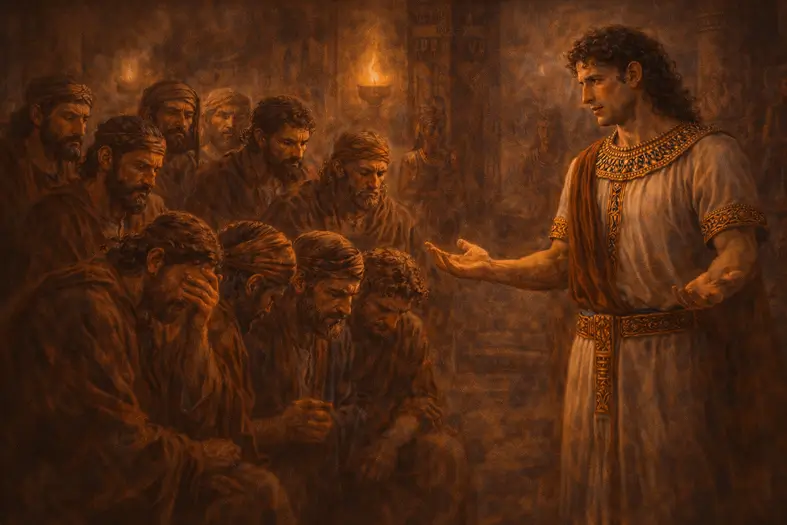
Parshas Vayechi presents one of the Torah’s most radical moral moments. Yosef stands at the apex of power: ruler of Egypt, master of resources, arbiter of life and death. His brothers, who once sold him into slavery, now stand defenseless before him. The Torah has already resolved the narrative tension — Yosef is revealed, reconciliation has occurred — yet the brothers remain afraid. After Yaakov’s death, they fear that Yosef has merely postponed vengeance out of filial respect.
Yosef’s response reshapes the Torah’s moral universe:
הֲתַחַת אֱלֹהִים אָנִי
[“Am I in the place of Elokim?”]
Yosef’s declaration rejects three forms of moral overreach:
This is not rhetorical humility. It is a refusal of moral tyranny — the rejection of power that claims the right to judge, punish, and define another’s future. Vayechi teaches that Torah leadership is not measured by the ability to act, but by the restraint to refuse.
Rashi reads Yosef’s declaration as a categorical boundary. Yosef does not deny that wrongdoing occurred. He does not minimize the brothers’ guilt. He simply rejects the premise that moral authority resides with him.
By asking “Am I in the place of Elokim?”, Yosef affirms that ultimate judgment belongs only to Hashem. Even when human beings possess overwhelming power, they are not authorized to assume Divine prerogatives. Rashi’s insight reframes forgiveness not as emotional generosity, but as theological discipline.
Yosef recognizes that vengeance would not merely punish the past — it would redefine the present. To retaliate would be to claim mastery over destiny itself. Vayechi thus teaches that moral restraint is not weakness, but obedience to boundaries that preserve the Divine order.
Rambam provides the philosophical architecture underlying Yosef’s stance. In Hilchos Teshuvah, Rambam distinguishes sharply between justice and vengeance. Accountability is necessary; retaliation is corrosive. Human beings may demand repair, confession, and change — but not domination over another’s future.
Yosef embodies this distinction. He acknowledges responsibility without weaponizing it. He recognizes Hashem’s role in transforming harm into purpose without denying human agency. His statement — “You intended evil, but Elokim intended it for good” — does not absolve the brothers; it reassigns ultimate causality.
According to Rambam, Torah morality requires:
For Rambam, revenge traps both parties in the past. Teshuvah, by contrast, restores moral freedom. Yosef refuses to become the permanent judge of his brothers because doing so would bind him to their failure. Moral leadership, Rambam teaches, creates space for repair rather than control.
Rav Sacks identifies Yosef as the Torah’s first fully articulated model of forgiveness. Not forgetfulness. Not denial. But liberation.
Forgiveness, Rav Sacks explains, is the refusal to let yesterday determine tomorrow. Yosef remembers the betrayal vividly. He weeps repeatedly. He names the harm honestly. Yet he refuses to allow memory to govern the future.
This is why Yosef’s words come only after Yaakov’s death. The brothers fear delayed retribution precisely because power often waits for permission to reveal itself. Yosef’s response dismantles that fear. He demonstrates that restraint is not situational — it is principled.
Rav Sacks notes that societies built on grievance become trapped in cycles of retaliation. Yosef breaks that cycle by refusing to define himself as victim or judge. He chooses covenant over control.
Vayechi exposes a subtle danger: the abuse of moral clarity. One may be correct and still destructive. One may be justified and still tyrannical.
Yosef had every reason to punish. He possessed proof, power, and moral standing. Yet the Torah teaches that righteousness does not license domination. To hold another’s life hostage to their past is to deny the possibility of teshuvah — and to deny Hashem’s ongoing governance of history.
True moral authority, the Torah insists, knows when to stop.
Yosef’s refusal of vengeance is not sentimental. It is disciplined, restrained, and deeply theological. He chooses to live in a world where Hashem, not trauma, governs outcomes.
Parshas Vayechi teaches that power reaches its highest form when it relinquishes control. Leadership sanctifies itself not by enforcing memory, but by freeing the future.
By refusing moral tyranny, Yosef models a Torah ethic capable of sustaining life in exile: justice without domination, memory without revenge, and authority that knows its limits.
This is not the absence of strength.
It is strength that knows when not to act.
📖 Sources


Parshas Vayechi
Parshas Vayechi presents one of the Torah’s most radical moral moments. Yosef stands at the apex of power: ruler of Egypt, master of resources, arbiter of life and death. His brothers, who once sold him into slavery, now stand defenseless before him. The Torah has already resolved the narrative tension — Yosef is revealed, reconciliation has occurred — yet the brothers remain afraid. After Yaakov’s death, they fear that Yosef has merely postponed vengeance out of filial respect.
Yosef’s response reshapes the Torah’s moral universe:
הֲתַחַת אֱלֹהִים אָנִי
[“Am I in the place of Elokim?”]
Yosef’s declaration rejects three forms of moral overreach:
This is not rhetorical humility. It is a refusal of moral tyranny — the rejection of power that claims the right to judge, punish, and define another’s future. Vayechi teaches that Torah leadership is not measured by the ability to act, but by the restraint to refuse.
Rashi reads Yosef’s declaration as a categorical boundary. Yosef does not deny that wrongdoing occurred. He does not minimize the brothers’ guilt. He simply rejects the premise that moral authority resides with him.
By asking “Am I in the place of Elokim?”, Yosef affirms that ultimate judgment belongs only to Hashem. Even when human beings possess overwhelming power, they are not authorized to assume Divine prerogatives. Rashi’s insight reframes forgiveness not as emotional generosity, but as theological discipline.
Yosef recognizes that vengeance would not merely punish the past — it would redefine the present. To retaliate would be to claim mastery over destiny itself. Vayechi thus teaches that moral restraint is not weakness, but obedience to boundaries that preserve the Divine order.
Rambam provides the philosophical architecture underlying Yosef’s stance. In Hilchos Teshuvah, Rambam distinguishes sharply between justice and vengeance. Accountability is necessary; retaliation is corrosive. Human beings may demand repair, confession, and change — but not domination over another’s future.
Yosef embodies this distinction. He acknowledges responsibility without weaponizing it. He recognizes Hashem’s role in transforming harm into purpose without denying human agency. His statement — “You intended evil, but Elokim intended it for good” — does not absolve the brothers; it reassigns ultimate causality.
According to Rambam, Torah morality requires:
For Rambam, revenge traps both parties in the past. Teshuvah, by contrast, restores moral freedom. Yosef refuses to become the permanent judge of his brothers because doing so would bind him to their failure. Moral leadership, Rambam teaches, creates space for repair rather than control.
Rav Sacks identifies Yosef as the Torah’s first fully articulated model of forgiveness. Not forgetfulness. Not denial. But liberation.
Forgiveness, Rav Sacks explains, is the refusal to let yesterday determine tomorrow. Yosef remembers the betrayal vividly. He weeps repeatedly. He names the harm honestly. Yet he refuses to allow memory to govern the future.
This is why Yosef’s words come only after Yaakov’s death. The brothers fear delayed retribution precisely because power often waits for permission to reveal itself. Yosef’s response dismantles that fear. He demonstrates that restraint is not situational — it is principled.
Rav Sacks notes that societies built on grievance become trapped in cycles of retaliation. Yosef breaks that cycle by refusing to define himself as victim or judge. He chooses covenant over control.
Vayechi exposes a subtle danger: the abuse of moral clarity. One may be correct and still destructive. One may be justified and still tyrannical.
Yosef had every reason to punish. He possessed proof, power, and moral standing. Yet the Torah teaches that righteousness does not license domination. To hold another’s life hostage to their past is to deny the possibility of teshuvah — and to deny Hashem’s ongoing governance of history.
True moral authority, the Torah insists, knows when to stop.
Yosef’s refusal of vengeance is not sentimental. It is disciplined, restrained, and deeply theological. He chooses to live in a world where Hashem, not trauma, governs outcomes.
Parshas Vayechi teaches that power reaches its highest form when it relinquishes control. Leadership sanctifies itself not by enforcing memory, but by freeing the future.
By refusing moral tyranny, Yosef models a Torah ethic capable of sustaining life in exile: justice without domination, memory without revenge, and authority that knows its limits.
This is not the absence of strength.
It is strength that knows when not to act.
📖 Sources


“Yosef and the Refusal of Moral Tyranny”
אֶת־ה׳ אֱלֹקֶיךָ תִּירָא
Yosef’s declaration, “הֲתַחַת אֱלֹהִים אָנִי,” embodies yirat Hashem as moral restraint. Fear of Hashem here is not emotional awe, but recognition of limits: the refusal to assume authority that belongs only to Hashem. Vayechi teaches that reverence is expressed through self-restriction, especially when power and justification invite overreach.
וְהָלַכְתָּ בִדְרָכָיו
Hashem governs the world without haste, allowing space for teshuvah and moral repair. Yosef mirrors this Divine attribute by declining to dominate his brothers’ future despite possessing absolute power. Emulating Hashem in Vayechi means exercising patience, mercy, and restraint rather than enforcing final judgment.
וְאָהַבְתָּ לְרֵעֲךָ כָּמוֹךָ
Yosef’s love for his brothers is not sentimental, but covenantal. He refuses to define them solely by their sin and chooses relational continuity over justified rupture. Vayechi presents ahavat Yisrael as the capacity to preserve unity even when memory of harm remains intact.
לֹא תִקֹּם
Yosef’s restraint gives narrative form to this mitzvah. Though empowered to retaliate, he declines to convert injury into control. Vayechi teaches that revenge is not only an action but a mindset — one that freezes the future in the shape of the past.
וְלֹא תִטֹּר
Beyond refraining from punishment, Yosef releases resentment itself. His recognition of Hashem’s governance over events allows him to remember the past without remaining imprisoned by it. The parsha frames this mitzvah as essential for moral freedom in exile, where unresolved grievance can quietly become tyranny.
לֹא תַעֲמֹד עַל דַּם רֵעֶךָ
Yosef’s provision for his brothers and their families after Yaakov’s death reflects responsibility rather than retaliation. He ensures their survival during famine instead of exploiting their vulnerability. Vayechi thus reframes this mitzvah to include preventing emotional and existential collapse, not only physical harm.


“Yosef and the Refusal of Moral Tyranny”
Parshas Vayechi presents the Torah’s clearest articulation of moral restraint in the face of absolute power. After Yaakov’s death, Yosef’s brothers fear that forgiveness was merely deferred, not genuine. Yosef’s response—“הֲתַחַת אֱלֹהִים אָנִי”—establishes a permanent boundary between human authority and Divine judgment. The parsha teaches that even justified power must be restrained, and that leadership rooted in Torah refuses to claim ownership over another’s future. Vayechi thus frames forgiveness not as emotional concession, but as theological discipline that preserves covenantal life in exile.
Vayigash lays the groundwork for Yosef’s later refusal of vengeance. Yosef’s revelation to his brothers reframes betrayal through Divine providence—“כִּי לְמִחְיָה שְׁלָחַנִי אֱלֹקִים”—without erasing human responsibility. This parsha introduces the distinction between acknowledging wrongdoing and weaponizing it, teaching that moral clarity does not license domination. Yosef’s restraint in Vayigash becomes the ethical foundation for his final declaration in Vayechi.
Mikeitz presents Yosef at the height of political power, managing famine, wealth, and survival for an entire civilization. His treatment of his brothers during this period—testing without cruelty, pressure without punishment—demonstrates controlled authority. The parsha shows how Yosef learns to govern without becoming tyrannical, preparing him to later refuse vengeance even when fear and vulnerability invite it.
Vayeishev establishes the origin of Yosef’s trauma and moral testing. Betrayed by his brothers, sold into slavery, and falsely imprisoned, Yosef experiences injustice without losing his ethical center. This parsha frames the magnitude of Yosef’s later restraint: forgiveness in Vayechi is not naïveté, but the culmination of a long moral formation shaped by suffering endured without corruption of character.

Dive into mitzvos, tefillah, and Torah study—each section curated to help you learn, reflect, and live with intention. New insights are added regularly, creating an evolving space for spiritual growth.

Explore the 613 mitzvos and uncover the meaning behind each one. Discover practical ways to integrate them into your daily life with insights, sources, and guided reflection.

Learn the structure, depth, and spiritual intent behind Jewish prayer. Dive into morning blessings, Shema, Amidah, and more—with tools to enrich your daily connection.

Each week’s parsha offers timeless wisdom and modern relevance. Explore summaries, key themes, and mitzvah connections to deepen your understanding of the Torah cycle.