Brothers at a Crossroads — Teshuvah in Real Time
One of the most dramatic moments in Sefer Bereishis is Yosef’s test of his brothers with Binyamin. It is not simply a political maneuver, nor a personal act of vengeance. It is a spiritual laboratory — a reconstruction of the original sin of the Shevatim — designed to reveal whether love can rewrite memory, whether growth can overcome old jealousy, and whether a broken family can become the foundation of a nation.
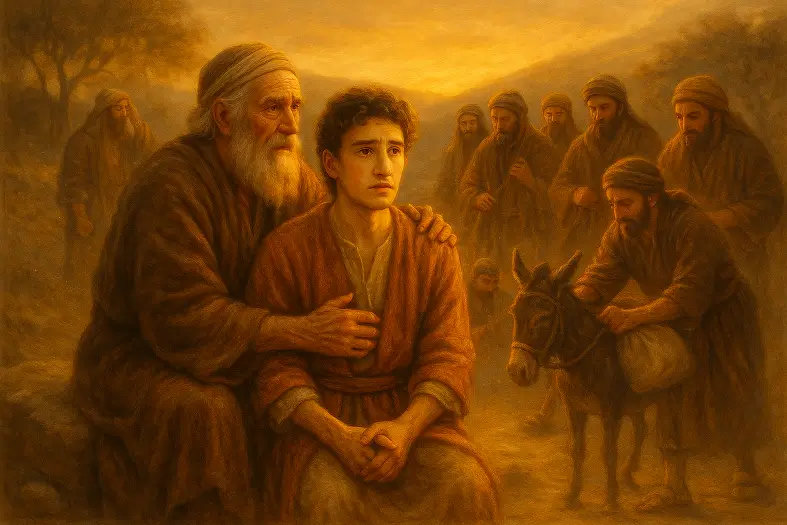
Years earlier, the brothers had faced a moment of decision. Yosef, the beloved son of Yaakov, stood before them vulnerable and alone. They chose to get rid of Yosef and they believed they were right.
Now, Yosef recreates the scene — except this time with Binyamin, the other son of Rachel. Vulnerable. Accused. Seemingly guilty. Once again the brothers face a crossroads.
Will they abandon Rachel’s second son as they abandoned the first?
Or will they choose responsibility, loyalty, and unity?
This is the test of Binyamin.
This essay explores how Rashi, Ramban, and Rav Kook illuminate this pivotal moment — and how the Torah teaches that true teshuvah is not proven by regret, but by rectifying the past with different choices.
Yosef carefully rebuilds the emotional landscape of his own betrayal. Nothing is random.
The Torah describes the moment the goblet is found:
וַיִּמָּצֵ֥א הַגָּבִ֖יעַ בְּאַמְתַּ֥חַת בִּנְיָמִֽן
[“And the goblet was found in Binyamin’s sack.”]
— Bereishis 44:12
The brothers stand stunned. This is the moment that echoes the past — a replay of Yosef’s own downfall.
But the question now is not:
Did Yosef do it?
but
Will the brothers abandon another beloved son?
Teshuvah, according to the Rambam, is proven when a person faces the same situation as before and chooses differently.
Yosef is giving them exactly that opportunity.
Rashi, quoting Midrash, makes a stunning observation in Vayigash: every one of Binyamin’s ten sons is named after Yosef — or after Yosef’s suffering.
For example:
בֶּ֥לַע — “swallowed,”
בֶּ֖כֶר — “firstborn,”
אַֽחִירָ֑ם — “my brother is exalted,”
מֻפִּֽים — “he was beaten,”
חֻפִּֽים — “he did not witness my wedding.”
Rashi reveals that Binyamin has lived his entire life grieving a brother he never knew:
“עַל שֵׁם אֲחִי שֶׁאָמַר אָבִי טָרֹף טֹרַף יוֹסֵף.”
[“He named them for my brother, whom my father said was torn apart.”]
This matters because it shows the emotional pressure on the brothers.
Binyamin is not merely Yaakov’s youngest son — he is Yosef’s living memory.
If they abandon him, the betrayal is even deeper.
If they protect him, the repair is greater.
Ramban explains that Yosef is not acting out of spite. He is constructing a process that will lead his brothers to full teshuvah and full reconciliation.
Ramban writes that Yosef wanted to see:
He wanted them to face the moment they once failed and triumph this time.
Yosef is not seeking apology — he is seeking transformation.
A superficial “sorry” does not heal a family.
A changed heart, different choices, and action does.
By pressuring them into a recreated crisis, Yosef reveals whether their character has matured.
And it has.
The Torah says:
וַיִּקְרַ֤ע יְהוּדָה֙ אֶת־בְּגָדָ֔יו
[“Judah tore his garments.”]
— Bereishis 44:13
This is not the response of the brothers in Vayeishev. Then, they tore Yosef’s garment.
Now, Yehudah tears his own.
This is repentance in symbolic form:
Then Yehudah speaks the words that become the pivot of the story:
כִּֽי־כָמ֥וֹךָ כְּפַרְעֹֽה
[“For you are like Pharaoh himself.”]
— Bereishis 44:18
He pleads with dignity and respect, but also with courage.
He is ready to stand in for Binyamin, even to become a slave in his place:
וְעַבְדְּךָ֖ יֵשֵׁ֣ב תַּֽחַת־הַנַּ֑עַר
[“Let your servant remain instead of the lad.”]
— Bereishis 44:33
This moment proves the brothers have rewritten the past by choosing differently.
They failed Yosef.
They will not fail Binyamin.
Rav Kook teaches that unity is not the outcome of redemption — it is the spark that ignites it. The Shevatim cannot become the tribes of Israel until they learn to see each other through compassion rather than suspicion.
According to Rav Kook:
The test of Binyamin is therefore not about stealing or about a goblet.
It is about whether the brothers can choose unity after years of fracture.
Yosef has been waiting not for confession, but for connection.
When the brothers stand with Binyamin, the exile that began with Yosef’s sale begins to reverse.
Healing begins.
Geulah begins.
Yosef knows that people rarely change from speeches.
They change from encounters.
So he creates an encounter:
He reconstructs the emotional pattern of his own betrayal to see if their hearts have changed.
Teshuvah is not proven by regret alone — but by repeating the test and choosing correctly.
Every family has old wounds, old patterns, old roles we fall back into — even when we know better. Yosef’s test teaches that we can rewrite those patterns.
We cannot erase the past, but we can re-enter it with new choices.
You rewrite memory not by forgetting it —
but by overlaying it with better decisions.
The sale of Yosef shattered the unity of Yaakov’s sons.
The test of Binyamin heals it.
Yehudah becomes the guarantor.
The brothers become protectors.
Binyamin becomes the bridge.
Yosef becomes the conductor of teshuvah.
And in that moment, the family becomes a nation.
Love can rewrite memory.
Responsibility can reverse betrayal.
Teshuvah can transform a wound into a foundation.
When we choose love and solidarity over rivalry, geulah begins.
📖 Sources


Brothers at a Crossroads — Teshuvah in Real Time
One of the most dramatic moments in Sefer Bereishis is Yosef’s test of his brothers with Binyamin. It is not simply a political maneuver, nor a personal act of vengeance. It is a spiritual laboratory — a reconstruction of the original sin of the Shevatim — designed to reveal whether love can rewrite memory, whether growth can overcome old jealousy, and whether a broken family can become the foundation of a nation.
Years earlier, the brothers had faced a moment of decision. Yosef, the beloved son of Yaakov, stood before them vulnerable and alone. They chose to get rid of Yosef and they believed they were right.
Now, Yosef recreates the scene — except this time with Binyamin, the other son of Rachel. Vulnerable. Accused. Seemingly guilty. Once again the brothers face a crossroads.
Will they abandon Rachel’s second son as they abandoned the first?
Or will they choose responsibility, loyalty, and unity?
This is the test of Binyamin.
This essay explores how Rashi, Ramban, and Rav Kook illuminate this pivotal moment — and how the Torah teaches that true teshuvah is not proven by regret, but by rectifying the past with different choices.
Yosef carefully rebuilds the emotional landscape of his own betrayal. Nothing is random.
The Torah describes the moment the goblet is found:
וַיִּמָּצֵ֥א הַגָּבִ֖יעַ בְּאַמְתַּ֥חַת בִּנְיָמִֽן
[“And the goblet was found in Binyamin’s sack.”]
— Bereishis 44:12
The brothers stand stunned. This is the moment that echoes the past — a replay of Yosef’s own downfall.
But the question now is not:
Did Yosef do it?
but
Will the brothers abandon another beloved son?
Teshuvah, according to the Rambam, is proven when a person faces the same situation as before and chooses differently.
Yosef is giving them exactly that opportunity.
Rashi, quoting Midrash, makes a stunning observation in Vayigash: every one of Binyamin’s ten sons is named after Yosef — or after Yosef’s suffering.
For example:
בֶּ֥לַע — “swallowed,”
בֶּ֖כֶר — “firstborn,”
אַֽחִירָ֑ם — “my brother is exalted,”
מֻפִּֽים — “he was beaten,”
חֻפִּֽים — “he did not witness my wedding.”
Rashi reveals that Binyamin has lived his entire life grieving a brother he never knew:
“עַל שֵׁם אֲחִי שֶׁאָמַר אָבִי טָרֹף טֹרַף יוֹסֵף.”
[“He named them for my brother, whom my father said was torn apart.”]
This matters because it shows the emotional pressure on the brothers.
Binyamin is not merely Yaakov’s youngest son — he is Yosef’s living memory.
If they abandon him, the betrayal is even deeper.
If they protect him, the repair is greater.
Ramban explains that Yosef is not acting out of spite. He is constructing a process that will lead his brothers to full teshuvah and full reconciliation.
Ramban writes that Yosef wanted to see:
He wanted them to face the moment they once failed and triumph this time.
Yosef is not seeking apology — he is seeking transformation.
A superficial “sorry” does not heal a family.
A changed heart, different choices, and action does.
By pressuring them into a recreated crisis, Yosef reveals whether their character has matured.
And it has.
The Torah says:
וַיִּקְרַ֤ע יְהוּדָה֙ אֶת־בְּגָדָ֔יו
[“Judah tore his garments.”]
— Bereishis 44:13
This is not the response of the brothers in Vayeishev. Then, they tore Yosef’s garment.
Now, Yehudah tears his own.
This is repentance in symbolic form:
Then Yehudah speaks the words that become the pivot of the story:
כִּֽי־כָמ֥וֹךָ כְּפַרְעֹֽה
[“For you are like Pharaoh himself.”]
— Bereishis 44:18
He pleads with dignity and respect, but also with courage.
He is ready to stand in for Binyamin, even to become a slave in his place:
וְעַבְדְּךָ֖ יֵשֵׁ֣ב תַּֽחַת־הַנַּ֑עַר
[“Let your servant remain instead of the lad.”]
— Bereishis 44:33
This moment proves the brothers have rewritten the past by choosing differently.
They failed Yosef.
They will not fail Binyamin.
Rav Kook teaches that unity is not the outcome of redemption — it is the spark that ignites it. The Shevatim cannot become the tribes of Israel until they learn to see each other through compassion rather than suspicion.
According to Rav Kook:
The test of Binyamin is therefore not about stealing or about a goblet.
It is about whether the brothers can choose unity after years of fracture.
Yosef has been waiting not for confession, but for connection.
When the brothers stand with Binyamin, the exile that began with Yosef’s sale begins to reverse.
Healing begins.
Geulah begins.
Yosef knows that people rarely change from speeches.
They change from encounters.
So he creates an encounter:
He reconstructs the emotional pattern of his own betrayal to see if their hearts have changed.
Teshuvah is not proven by regret alone — but by repeating the test and choosing correctly.
Every family has old wounds, old patterns, old roles we fall back into — even when we know better. Yosef’s test teaches that we can rewrite those patterns.
We cannot erase the past, but we can re-enter it with new choices.
You rewrite memory not by forgetting it —
but by overlaying it with better decisions.
The sale of Yosef shattered the unity of Yaakov’s sons.
The test of Binyamin heals it.
Yehudah becomes the guarantor.
The brothers become protectors.
Binyamin becomes the bridge.
Yosef becomes the conductor of teshuvah.
And in that moment, the family becomes a nation.
Love can rewrite memory.
Responsibility can reverse betrayal.
Teshuvah can transform a wound into a foundation.
When we choose love and solidarity over rivalry, geulah begins.
📖 Sources


"The Test of Binyamin: Can Love Rewrite Memory?"
The heart of Yosef’s test is whether the brothers will now act from ahavah rather than rivalry. Their willingness to stand with Binyamin, even at personal cost, fulfills the Torah’s demand to love one’s fellow as oneself — the very opposite of what happened in Vayeishev.
The sin of the original sale began with hidden hatred. Yosef recreates a scenario in which the brothers must reject that inner midah. Their defense of Binyamin demonstrates obedience to this commandment: the uprooting of animosity from within.
In Vayigash, Yehudah implicitly rebukes the brothers’ past by declaring a new standard: shared responsibility, accountability, and moral courage. His speech is the fulfillment of proper tochachah — naming wrongs without humiliation, motivating growth without destruction.
Yosef’s entire choreography is designed to avoid public humiliation. He tests them privately, shields the family’s reputation, and protects Binyamin’s dignity. The brothers’ united defense protects Binyamin from disgrace, aligning with this mitzvah.
Binyamin — the youngest, the most vulnerable, Yaakov’s remaining child from Rachel — represents the “weak” of the family. Their refusal to abandon him fulfills the Torah’s prohibition against exploiting or neglecting the vulnerable.
Abarbanel explicitly notes that the original sin involved lashon hara and false suspicions against Yosef. Yosef recreates conditions to purge that failing. The brothers’ new solidarity — without accusation, suspicion, or blame — is a living repair of this mitzvah.
Yosef’s test could have been vengeance; instead it becomes a path to teshuvah. His restraint is a fulfillment of the Torah’s demand to resist revenge, even when one has every justification.
Despite their past betrayal, Yosef engineers their rehabilitation, not their punishment. His ability to guide rather than resent is a model of this mitzvah: releasing grudges to allow healing.
Yosef imitates Hashem’s ways — balancing justice with compassion, truth with mercy. His orchestration of teshuvah mirrors Divine guidance: creating opportunities for growth rather than crushing failure.
By acting with compassion and moral clarity, the brothers elevate themselves spiritually. Their new unity and responsibility draw them closer to the Divine ideal of brotherhood, aligning with the mitzvah of deveikus.
Though indirectly related, this mitzvah illuminates an ethic of care for the vulnerable outsider — a value Yosef applies within his own family. He tests to rebuild inclusion, not division.


"The Test of Binyamin: Can Love Rewrite Memory?"
The original fracture occurs here: Yosef is isolated, accused, and handed over while his brothers stand by. This becomes the template Yosef later reconstructs. The pain of Vayeishev sets the emotional and spiritual groundwork for the test in Mikeitz — a scenario Yosef will deliberately recreate so the brothers can choose differently.
Yosef’s orchestration unfolds. By placing Binyamin in the spotlight and engineering a crisis around him, Yosef mirrors the past with precision. He watches to see whether the brothers will abandon another son of Rachel or step into a new posture of responsibility and unity. Mikeitz becomes the stage on which teshuvah is not spoken about, but lived.
The brothers’ transformation reaches its climax. Yehudah steps forward, not with excuses or blame, but with self-sacrifice: “וְעַבְדְּךָ יֵשֵׁב תַּחַת הַנַּעַר” — “Let your servant remain instead of the lad.” This is the moment Yosef has been waiting for. The repair of Vayeishev, the test of Mikeitz, and the emergence of brotherhood all converge into revelation and reconciliation.

Dive into mitzvos, tefillah, and Torah study—each section curated to help you learn, reflect, and live with intention. New insights are added regularly, creating an evolving space for spiritual growth.

Explore the 613 mitzvos and uncover the meaning behind each one. Discover practical ways to integrate them into your daily life with insights, sources, and guided reflection.

Learn the structure, depth, and spiritual intent behind Jewish prayer. Dive into morning blessings, Shema, Amidah, and more—with tools to enrich your daily connection.

Each week’s parsha offers timeless wisdom and modern relevance. Explore summaries, key themes, and mitzvah connections to deepen your understanding of the Torah cycle.